MANLY MONDAY – Lupin III Part IV “The Italian Adventure” TV Series – (Review and Episode Recommendations)

lupins 2015.jpg

In one of my latest Manly Mondays, I talked about the Lupin III films by director Takeshi Koike, and how the hardboiled tone really fits the series.

As already mentioned in that article, the beauty of the now 50 year old “Lupin The Third” franchise is that it comes in many shapes, zeitgeists and forms: long running TV series, big cinema releases or short-running experimental shows.

Koike’s films in 2014 and 2017 were intended for a mature audience, given the depiction of violence and intensity of the themes it portrayed, and director Saya Yamamoto’s entry in 2012, A Woman Called Fujiko Mine, was equally adult – yet with a different focus as it explored sexuality and identity of the long-established characters.

However, Lupin III had always long-running TV series as a main focus, which were split into “Parts”. In addition, each of these Parts had a different suit jacket colour for protagonist Lupin to wear, so that it was immediately clear from the first glance which series you were watching: Part 1: Green Jacket (1971-1972), Part 2: Red Jacket (1977-1980), Part 3: Pink Jacket (1984-1985).

Each “jacket colour” is also unique in feel and tone, I highly recommend checking some episodes out to see what you might like the best. As these series are very often of episodic nature, you may pick and choose to your heart’s content.

And in 2015, a new TV series came around – Part 4: Blue Jacket (2015-2016).

Let’s take a look at this new series in retrospective, what did it do and what was added to the long-running legacy of the franchise?
lupin2.jpg

A Love Letter to Italy

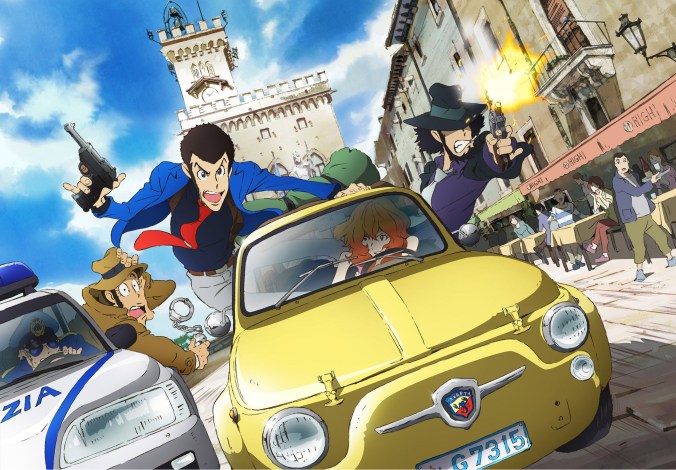
The story of Lupin III is very much grounded in the usual set-up: Lupin is a thief, roaming the lands with Jigen, his gun-slinging friend, in a tiny yellow Fiat 500, where they will be entangled in all sorts of adventures. On this journey, they will be supported by Goemon, a friendly yet stern samurai, and Fujiko Mine, a rival thief and love interest to Lupin. They are constantly chased by Inspector Zenigata from the ICPO, whose only goal in life it is to finally bring Lupin behind bars.

Lupin III Part 4 “L’avventura italiana” takes place, as the title says, in Italy, which makes for a gorgeous setting. The Mediterranean feeling with the sunny, bright lighting is always is a beautiful sight, and as the team has to flee and chase very often, we see a lot of Italy – the countryside, the beaches, the castles, and old inner cities.

city

goe castle

Dgzvjv-WkAEjVqs

Dg75pVHXkAAhD__.jpg

Apart from the usual sights and landmarks, the care that went into the details is astounding: euros are used throughout as currency, license plates are in the European style, and even newspapers, signs and police cars are in Italian, really selling the setting as a graspable place to be. In addition, Part 4 aired in Italy before it did in Japan, which is unusual, but fitting for this series, as Lupin III enjoys its cult status in this country.

New Friends and Foes
88c52a5142354d12ba114dbf38ce9285.jpg

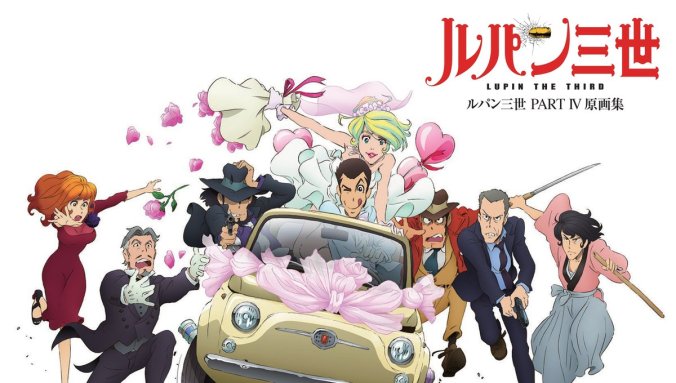
Part 4 brings some new additions to the usual cast, most notably Rebecca and Nix. It’s difficult to introduce new characters to a web of already established relationships, but this series manages it quite well.

Rebecca Rossellini is a rich, spoiled, but quirky and fun girl with green-yellow hair, who has an acting career, a financial empire and good looks. Having lost her parents and now the sole heir of the conglomerate, she seeks thrills in her perfect life, things she cannot buy with money.

Lupin makes a marriage proposal to her, and surprisingly, she agrees – and after less than a month, they are standing in front of the altar. It turns out, of course, that this was all an elaborate plot by Lupin to steal a certain treasure, however, all the paperwork for the marriage already went through: Rebecca has become Ms. Lupin. What should have been a short scam turns out to be more complicated, and Lupin is officially married now – it will be one of his main goals over the course of the series to get Rebecca to sign the divorce papers.

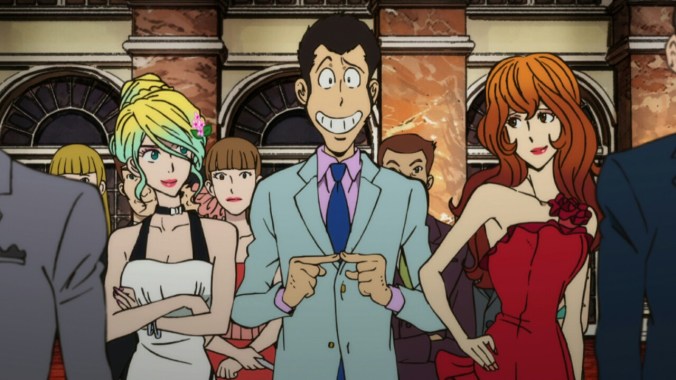
But this creates an interesting love triangle with Fujiko Mine, as well as a thematic clash of femininity: Rebecca, the fun, young and quirky girl on one side, and Fujiko, the classy, mature and experienced woman on the other side. And while they are not explicitly fighting over Lupin, the banter, conflicts and hijinks that ensue are quite fun, even from Jigen and Goemon’s side who both cannot believe that Lupin is a “husband” now.
lupin3adultswim.jpg

Time to decide, Lupin!

Rebecca makes for a fun rival/romantic interest, but she is not universally present in every episode, nor does she have major influence on the complicated main story.

For me, it was the other new character that I was very fond of:

Nix, a British MI6 agent. He strictly follows his orders and thus has a few run-ins with Lupin’s crew, eiter because he actively has to fight them, or because their paths randomly cross.

nix.jpg

Agent Nix. (“Nix” being colloquial German for “Nothing”, not sure if intended.)

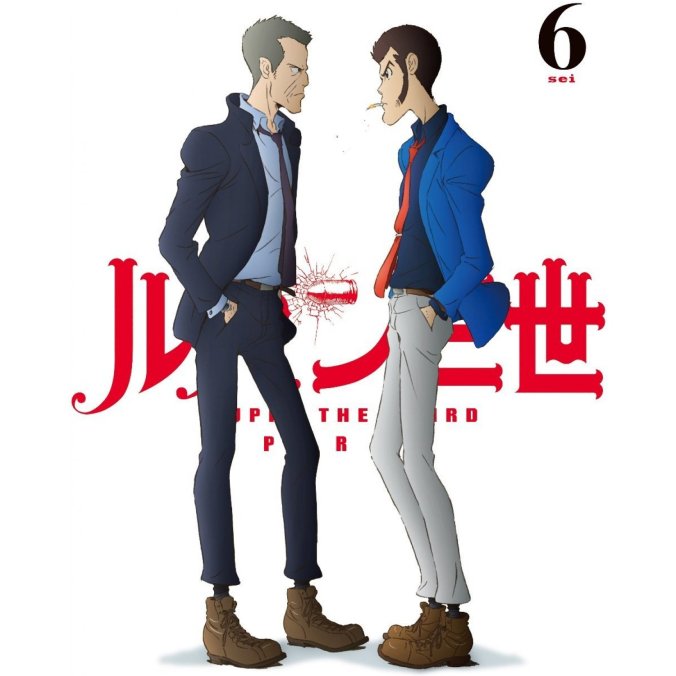
His design was a standout for me: the short slightly military-tinged haircut, the stern look, the wrinkles that give his face age and character, and especially the pointy ears (which serve not only an aesthetic purpose!)

While Nix seems like an uptight and efficient spy who doesn’t do anything besides following orders to 100%, more and more details about him will be revealed over the course of the series, and in the end, I was immensely happy to have him in this series.

As it turns out, Nix has problems to keep his emotions under control, and is often in danger of “snapping”, which might be hazardous for everyone involved. When his missions carry out well, he stays calm, but if he fails or a loved one is in danger, hell breaks loose. Nix is not only a spy, he is also a family man, with three cute daughters and a strong wife, so may God have mercy on your soul if you ever intend on hurting his family.

Nix carries emotional weight in his job and in his private life, and his role of being a responsible father clashes with his dangerous profession. He is a well-round character with a slightly tragic side too, but his likability and his switching between “deadpan serious” and “full on burning rage” serves for impressive, as well as funny moments within the story.
lupin-iii-part-iv-vol-6-468053.2.jpg

Nix, a great rival for Lupin.

As Nix is an important character with a lot of action segments and character acting, he gets some amazing animation cuts in Part 4, for example this cut by Shinya Ohira, where he fights a rebel spy. The unusual artstyle break and the pencil shading outlines give Nix’ actions visual power and strength.

Story and Standout Episodes

The story of Lupin III Part 4 is not the tightest, as not all episodes are here to drive the main plot forward. It is episodic, with an “Adventure of the Week” format, where you can enjoy every episode on its own, and occasionally be reminded of the big scheme in the background. The story goes off the rails somewhat to longer it goes, with some pretty incredible story twists and introductions, but it is all in good fun, as the strong cast can hold any outlandish plot together. The season finale might not have the biggest impact, but a nice ending overall.

However, there are some episodes that are able to absolutely stand on their own. If you want to get a taste, or if you simply want to visit the highlights this series has to offer, here is a small selection from my personal experience:
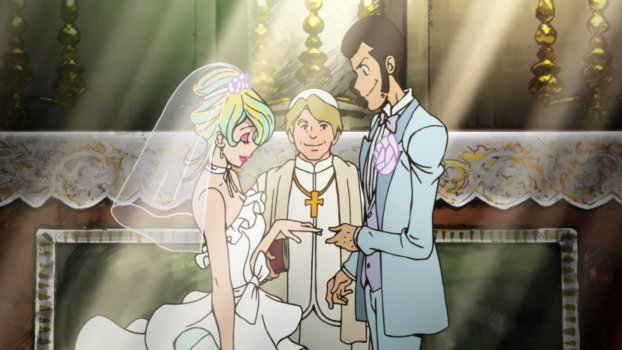
Themarriageoflupiniii_1

Episode 1: Lupin’s Wedding

“Rating”: Give it a Try!

Obvious choice to take the season opener, but this episode is a great character piece, with Lupin’s and Rebecca’s wedding and the controversy it causes with Fujiko, Jigen and Goemon. In addition, the animation is top-notch and delievers movie-quality action scenes to establish Rebecca’s character. A fun intro to the series!

img_30_m.jpg

Episode 3, 7 and 19: 0.2% Chance of SurvivalThe Zapping Operation and Dragons Sleep Soundly

“Rating”: Give it a Try!

Three episodes for Agent Nix, one being his introduction to his character and his skillset, being on par with Lupin and Jigen, and the other episode to show his family side and the caring father that he is. The third episode however takes a very dark spin on the spy business, with harsh violence and great danger to the protagonists. It makes for a strong tonal break that is worth checking out, if you are interested. (Keep in mind though that his episodes are more intertwined with the main plot and are not “pure” standalones!)
img_3344.jpg

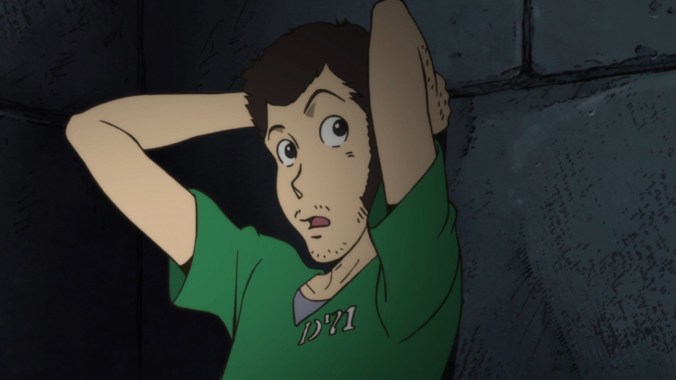
Episode 13: The End of Lupin III

“Rating”: MUST WATCH

The mid-season finale and the episode that deeply touched me emotionally. In a surprising twist of events, Zenigata catches Lupin. Now that he has achieved his life goal, he gets a new goal: Keep Lupin behind bars. By removing the rest of the cast and only leaving Lupin and Zenigata in a 1-on-1 theatre piece in prison and total isolation, it goes far into the relationship of the two rivals.

I was highly impressed by this episode, and I would recommend it blindly to absolutely anyone.
DgDxdt0XcAAVp7n

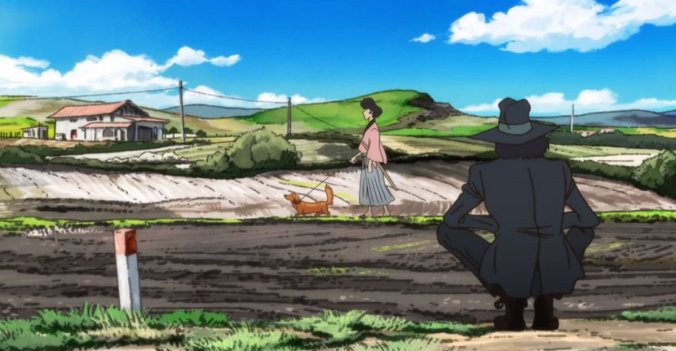
Episode 16: Lupin’s Day Off

“Rating”: MUST WATCH

A simple premise: Lupin, Jigen and Goemon have a day off, so they book a table at a fancy sushi restaurant. They have to arrive at 6 PM, and it is only a short drive through the countryside to get there.

This episode is slice of life beauty with perfect comedic delivery, and how much a simple idea can escalate into madness. This one had me in stitches, from the fast action to the quick jokes. A jolly good time of an episode.
1516610431894.jpg

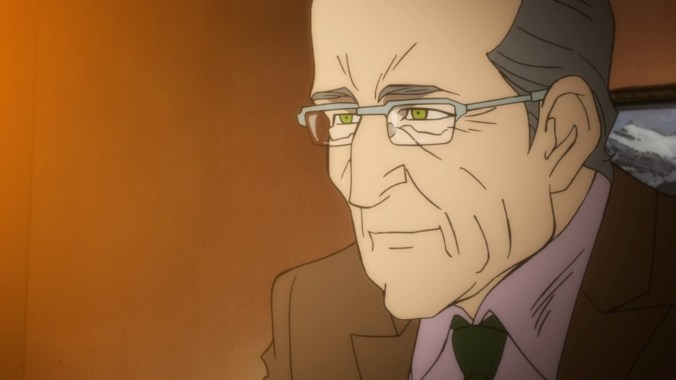
Episode 20: To Hear You Sing Again

“Rating”: Highly Recommended

A melancholic episode that I don’t want to spoil too much of. It is the story of an old Italian diva and her husband, and how long such a love can last through all the ages, through the good and the bad. A touching story that may move you to tears.

1646249_English_KeyArt-OfficialVideoImage_88e80ffd-4ba2-e711-8175-020165574d09

Episode 26: Nonstop Rendezvous

“Rating”: ABSOLUTE MUST WATCH

This second special Bluray episode, sometimes called “Episode 26”, serves as a prequel to all of Part 4 and is an all out action romp with everything you could wish for: Fun character interaction, high-speed chase scenes, action shenanigans and full on physical comedy of the first degree. It reminds me of other amazing car chases I have only seen in films so far, and it will have you thoroughly entertained! The last few minutes may be a bit slow, as it only serves as a lead-up to Episode 1, but everything before that is pure fun and the essence of Lupin III comedy action.

Conclusion

Lupin III Part 4 was a good time, and especially cosy to watch over a long time, basically like it aired, one episode per week and going faster if you feel like it. Not all episodes are stellar, some are outright bland, such as Episode 15 where Lupin infiltrates a high school to simply fight against bumbling teachers, but overall, I had a splendid time with a few amazing highlights.

If you want to get into the Lupin III franchise, I would maybe recommend other films instead, (The Castle of Cagliostro, The Fuma Conspiracy or Jigen’s Gravestone) as you may already need a bit of a grasp on who all these characters are, before you see them interact with newer ones. I’m still happy about the introduction of Nix, I hope that he may return for the next currently airing Part 5 in 2018.

The Italian adventure makes for a comfortable series to watch as a mood piece, to just see the cast hang out and enjoy themselves, with some great action sprinkled in here and there. It’s not the best of the franchise, but a very solid entry that you can check out if you want to – and if not, you can enjoy the standalone episodes I recommended to you as short film snacks.

Overall, I’m happy that I watched it, and I look forward to more adventures of the wonderful Lupin III cast.
end.png

The End.

Sources: Wikipedia “Lupin III”, MyAnimeList “Lupin III Part 4”
“Kaiji” – An Introduction to One of my Favourite Anime

kaiji-and-group.png

Genres: Seinen | Thriller | Psychological | Gambling

Rating: R (17+)

Studio: Madhouse

Year: 2007 (Season 1) | 2011 (Season 2)

Streaming License: Crunchyroll

What is this?

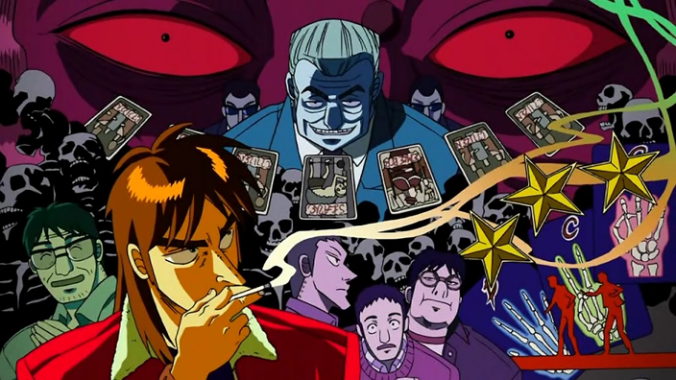
“Kaiji” is an adaptation of the manga by the same name, by author and mangaka Nobuyuki Fukumoto. “Kaiji” is his highly regarded, most popular manga. Running since 1996 and still ongoing today, it is a very influential piece and a beloved franchise. Like other long-running series, it is split up into story parts. The manga is currently in Part 5, and Part 1 and 2 were adapted into anime by Studio Madhouse, with Season 1 and 2 respectively.

Story

In the financial crisis of 90’s Japan, Kaiji, a young good-for-nothing guy, is failing at life. Accumulating small gambling debts, drinking and smoking, being jobless, living alone in his tiny apartment – he lives a sad life that he wants to change. Due to a stroke of tragic destiny, he suddenly gains a lot more debt, as he absent-mindedly signed a contract for one of his co-workers a few years ago. Now a mafia loan-shark stands in front of him, telling him that he is 3,850,000 Yen (~35,500$) in debt. And they want their money back. Now.

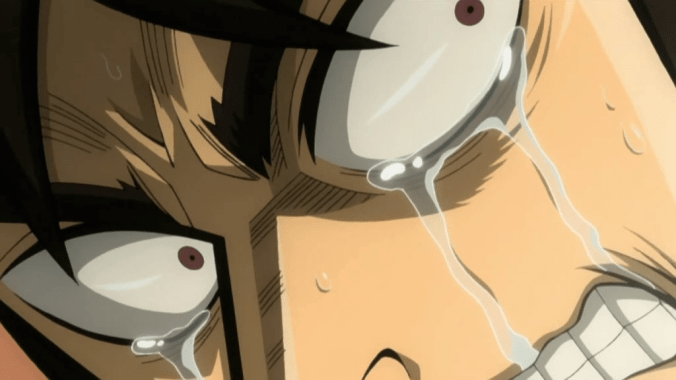
Thus starts the adventure of Kaiji, through a lot of manly tears, addiction, hype, tragedy, happiness, gambles, pain and twisted gameshows.

kaiji-cry

Eh.

What?

I have seen this, I don’t like the art style. It looks ugly.

Don’t worry, there are perfectly good reasons for the art style to be like that.

Firstly, this is Fukumoto’s style. His character design is sharp, angular and instantly recognisable. And Madhouse did a fantastic job of brushing up his style and giving it a fresh coat of paint. Here is a comparison between the first chapter of the manga (1996) and the first episode of the anime (2007).

00.png

This slideshow requires JavaScript.

Sharper, cleaner and more modern, while keeping the spirit.

They made the initial artwork more accessible and more timeless, the same way Studio David Productions handled the modern adaptation of Jojo’s Bizarre Adventure.

Secondly, this style fits perfectly for the stories Fukumoto is telling. Kaiji is a story of the lowlifes of this generation, the ones without hope and money, the shady business of loan sharks and the dark empire of the yakuzas. This is not a pleasant world, and the art reflects that. It is not supposed to be beautiful. The creators were in on the joke for Season 2 and straight up advertised it as “It’s the anti-moe anime.”

You will grow to you like it, once you see it in context and motion, trust me!

Characters

The main protagonist is Kaiji Itou, a man in his early twenties, our first grade procrastinator and overly emotional underdog. He may be one of the most relatable characters, without being a self-insert MC. Today’s anime landscape is saturated with overpowered light novel edgelords and insanely dense harem “comedy” protagonists, who can’t express any emotions except embarrassment when confronted with any form of sexuality.

Kaiji is emotional, he cries a lot, but he is annoyed by this fact – he doesn’t like it. He wants to change his life, he wants to do something! But life is not that easy sometimes. Some obstacles are thrown in his way, some obstacles he creates himself.

Significant to notice is: He is emotional, not whiny.

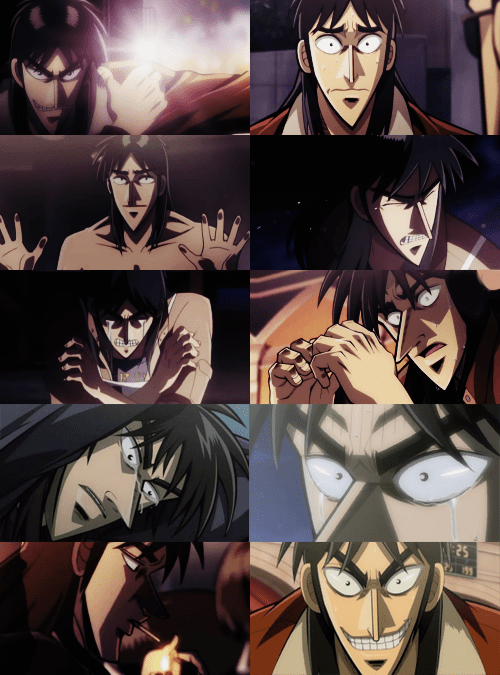
His emotional range goes both ways. From happy to sad, from destroyed to gleeful, this man has everything. He is expressive and vivid, in Season 1 and even more in Season 2.

kaiji compo v2.png

Season 1

kaiji compo 2

Season 2

Kaiji as a protagonist is an outright joy to watch, and that paired with the intense, unpredictable, serious Seinen plot, makes an emotional rollercoaster. Will he win? Will he lose? Will his plans work out for him?

When he is thrown into this unusual situation of fighting to survive, kill or be killed, he will reach his limits; but here is the important fact: He will not give up, he will fight. The harder he is pushed, the harder he will fight back. Even if that means suffering and dealing with the consequences of lost gambles.

And the yakuza do not take kindly to people screwing with them. Believe me, there is a reason “Kaiji” is rated R. Expect physical and psychological violence. This series gets intense. Manly tears shall flow.

tumblr_mkz5tcLoLO1r5kw8so3_1280.png

Life isn’t all sunshine and rainbows.

Voice Acting

What makes Kaiji also work as a protagonist is not only the story and the characterisation; it’s also the voice work of Masato Hagiwara as Kaiji. He is not a voice actor, he is a film actor – often playing roles in drama and thriller movies. He is able to pull this emotional range off, and give it a realistic, non-anime touch. The main character breathes and comes to life.

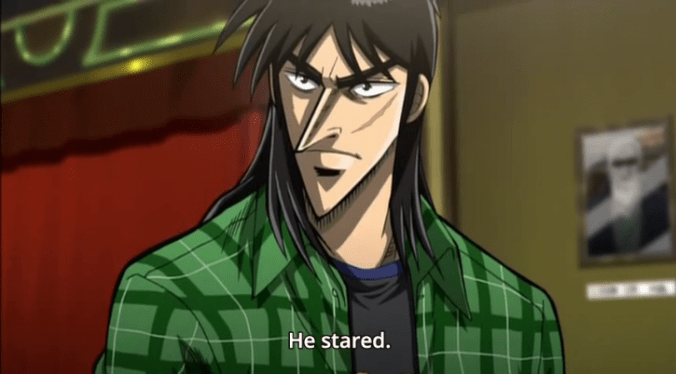
The other important character is the “Narrator”. With a big, booming voice, he will explain and announce, and sometimes even have his own monologues. Over the top and full of ham, this performance is pure fun. You may recognise this voice: It’s Fumihiko Tachiki a.k.a. “Gendou Ikari” from Neon Genesis Evangelion.

This rift between realism and overstatement creates both moments of comedy and drama. Having these two voices clash is bliss.

stare.png

The narrator knows what’s up!

Soundtrack

Absolutely fantastic. As this anime is mostly about mind-battles and has heavy use of internal monologue and dialogues between characters, you need something to accompany this mass of words. And the OST by Hideki Taniuchi is stellar. You could watch this series for its soundtrack alone.

The whole OST is an effective blend between “hype”, “melancholy” and “INTENSE” . I can only call this OST “depressingly uplifting”. It fits the tone of the show like a glove. (I do not wish to spoil the soundtrack, but here is a selection if you want to check it out beforehand.)

Hype

Fate | Wish | Don’t Give Up | High Max

Melancholy

Beginning | Regret | Elegie | Child’s Mind

INTENSE

Middle Zawa | Black Sun | Prologue | ZAWA ZAWA~

What is this “Zawa”?

As most long-running influential series, some aspects gain a form of an iconic status.

For example, in Jojo’s Bizarre Adventure, it’s the use of  ゴゴゴゴゴ, the “menacing” sound effect used by Araki. Fukumoto also has his own sound effect that he uses: ざわ‥ or “Zawa…” meaning “unnerving/muttering/whispers/uncomfortable”. Madhouse, like David Productions, incorporated these sound words into the anime, and in this case, even into the soundtrack. It has a unique effect in creating an uneasy atmosphere.

kaiji.png

ZAWA…

Any downsides?

The animation is not the most mindblowing of all – it is solid, sharp and polished, but it takes a backseat compared to the dialogue, the characters, the intrigue and the soundtrack. Sakuga moments do exist, and they are great, especially in the realm of character acting – but most are reserved for big reveals and story twists. The use of CGI is unfortunately there, a bit more so in Season 1 – but it is mostly used as a 3D camera for establishing shots and sweeping shots through rooms and across tables. But: CGI is never used on characters or crowds. They are always hand-drawn, which is a big plus.

Another thing would be the sort-of slow beginning. Season 1 does not immediately start with life-or-death scenarios and Kaiji, the old procrastinator, needs a good slap in the face before he gets going. He needs to understand his position first. But once it gets into the hype flow, you will be binging this series. His character development is beautiful to watch.

Season 1 is great, but Season 2 clearly outshines it, with better soundtrack, better animation, better characterisation of the villains and even more intense mind battles. Fukumoto gets better with every part, in his writing and his artwork, and it shows.

Also, Studio Madhouse made a season 2 for once, hurray! Therefore, Season 3 never. But you can immediately pick up the manga for Part 3 after finishing Season 2, if you so desire. The adaptation is very faithful.

(And stay away from the live action movies. They’re bloody awful adaptations. But that is a rant for another day.)

Influence and Conclusion

ka

Kaiji was highly influential for the mid-nineties, by having a humane main character, who has his own flaws and occupies the position of an underdog. He is not overpowered, he has to work, scheme and think hard in order to win. And there is no way to tell if it will work out.

The ending for Season 1 conveys this feeling quite beautifully. The slow walk with a grave, Western style song, that nearly feels tarantino-esque, is delightfully elegant. Simple, yet effective.

In contrast to other gambling manga from this time period, Kaiji’s gambles are all original games. There is no Poker, Uno, Roulette, or Black Jack – everything and anything can be a gamble. This makes it easier for the audience to understand the situations, as no previous knowledge is needed and we, the audience, can figure out a way to beat the game with Kaiji together.

And little references to “Kaiji” are still present in anime today, either in direct form or as parody. Kaiji recently even got a “Monster Hunter” DLC, complete with little word clouds of ZAWA that surround your character. (Trailer, Attention: Little visual spoilers for Kaiji!)

It is a cherished franchise, still today, after 20 years.

“Kaiji” is a unique, intense, historically important manga, winning the Kodansha Manga Award in 1998. It has been treated and remade with great care and love in anime form, and I think that you will enjoy it. Both seasons have great ratings, but they are criminally underwatched. Maybe it’s your turn to check them out!

Watch this if…

– you like Jojo’s Bizarre Adventure. As already mentioned above, it’s an old manga series that has been brought to life again with a lot of care and love for the influential, beloved source material. The mix of intense battles and manly emotions is similar – just with a lot less muscles and longer hair. Important: If you loved the D’Arby Brothers fights in “Stardust Crusaders”, this is absolutely for you.

– you like Gen Urobuchi, especially Madoka Magica. Yes, you read that correctly. Both series share a common theme of likable characters going through a lot of pain and suffering. You might like Kaiji if you enjoyed Madoka for this melancholy feel. Get ready for another form of despair: Urobuchi is more tragedy and personal destiny, while Fukumoto is more human drama and moral dilemmas. It’s different, but in the same tradition.

– you like Sports Anime: Gambling is a sport! Just with more “card-throwing” and less “ball-tossing”. Some episodes feel as if only 5 minutes had passed. The hype soundtrack and insane cliffhangers will have you on the edge of your seat, as per usual for the genre. I can’t possibly fathom how people could have watched this series while airing. Kaiji is highly binge-watchable.

– you like Mind Battles: “Death Note” or the manga “Liar Game” are some examples that fit the genre. They are cat and mouse games, where the roles can easily switch from the hunter to the hunted.

you have been feeling down lately. There is nothing more cathartic and supportive than watching a character who is in an equal, or even worse position than you are. You are not alone. Aren’t we all procrastinators? Do you also just work when somebody forces you, or gives you a deadline? Haven’t we all got hope that our lives get better? Instead of looking for escapism – go for confrontation.

TL;DR Kaiji is a long-running manga, starting from 1996 and still ongoing today. It currently has 5 parts, Part 1 and 2 both got an anime series. Kaiji has ludicrous amounts of debts that he has to pay back to the yakuza. Join him in his adventures and his life-or-death gambles to get money. It’s a depressingly uplifting tale, with an endearing, overly-emotional protagonist who is all too relatable.

UPDATE July 2023: Kaiji was mentioned as one of the main influences on the Netflix hit series “Squid Game”, and the anime has a US Bluray release! Please enjoy!

kaiji-and-group

The End.