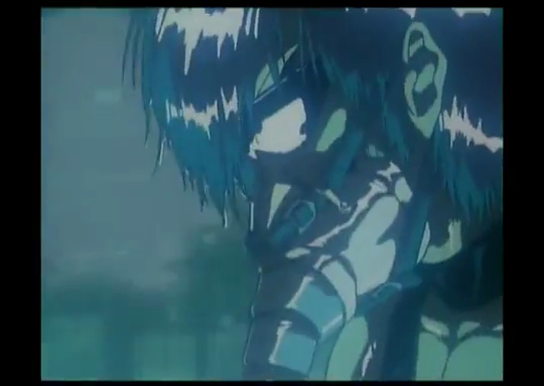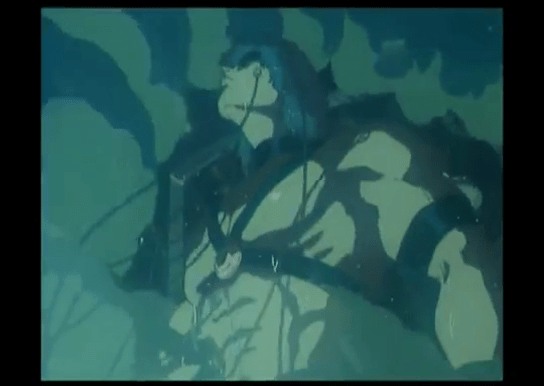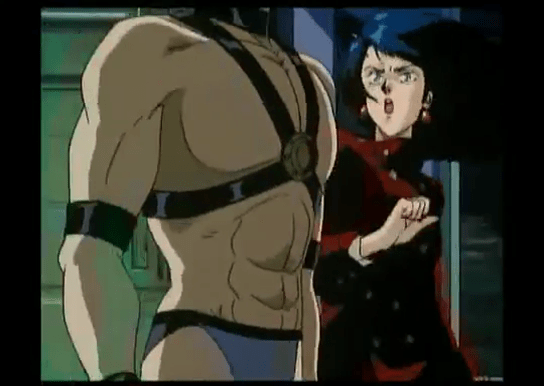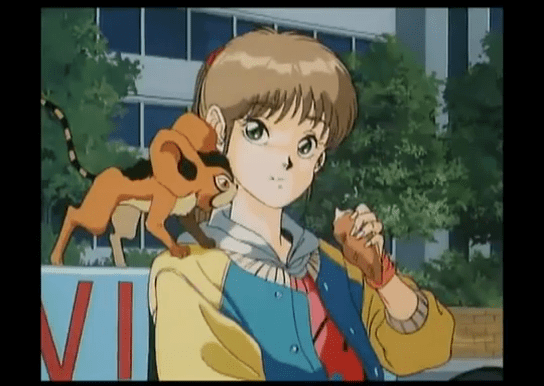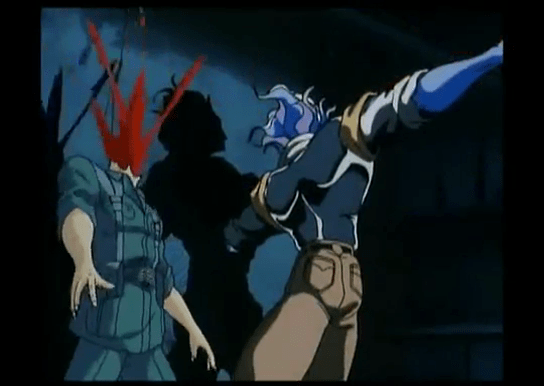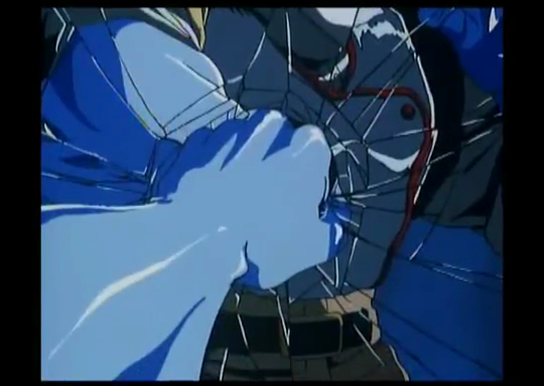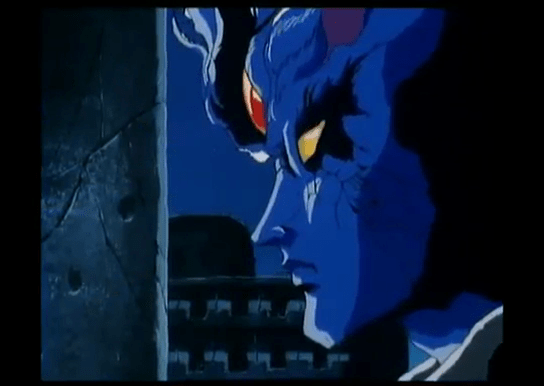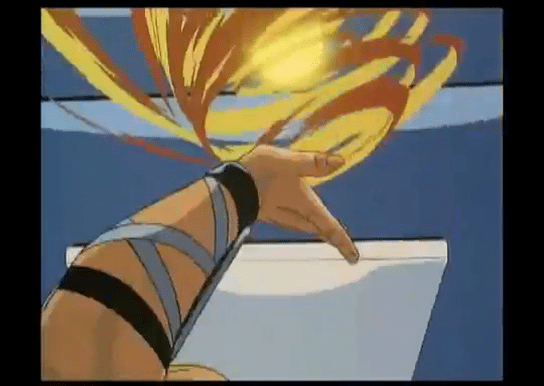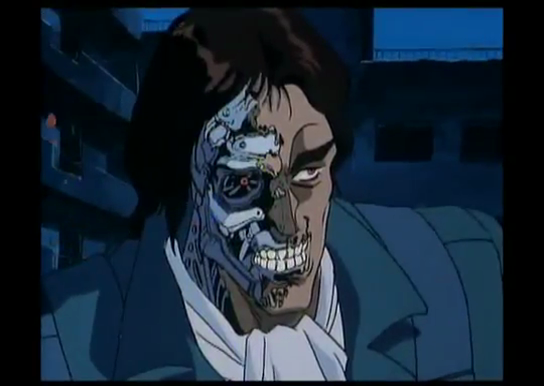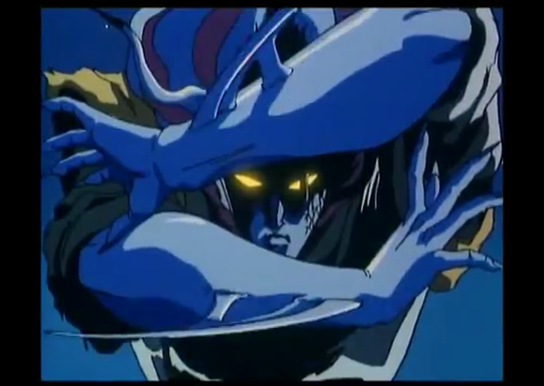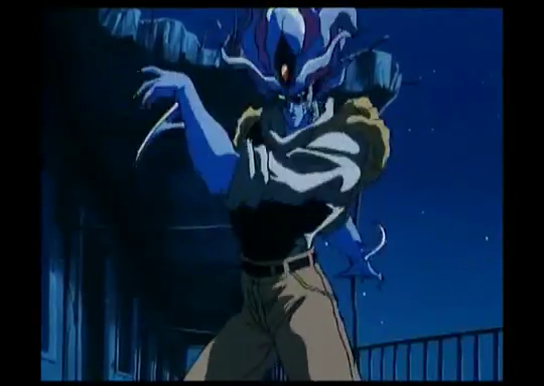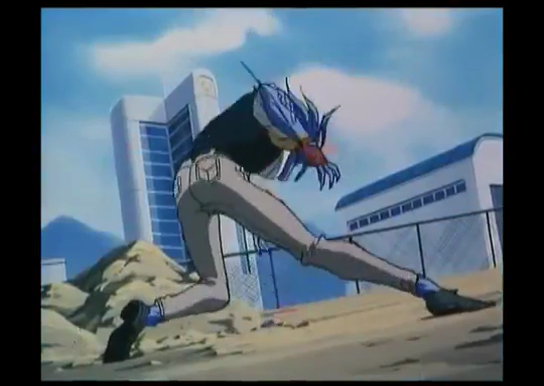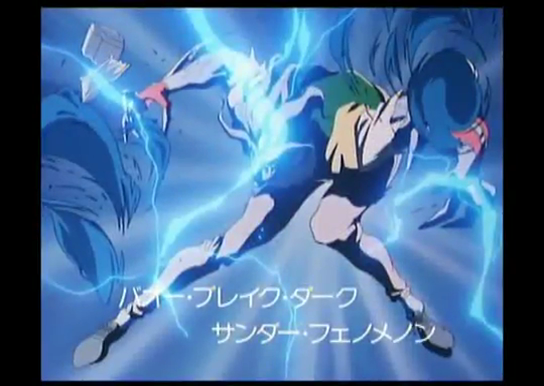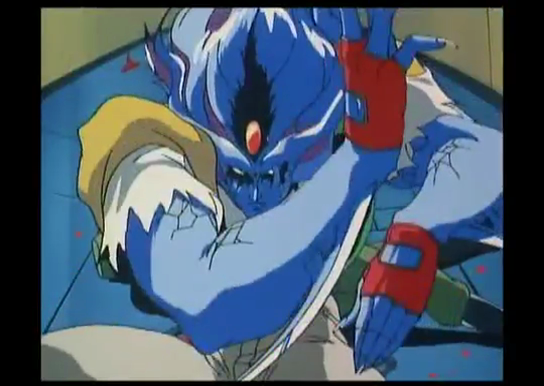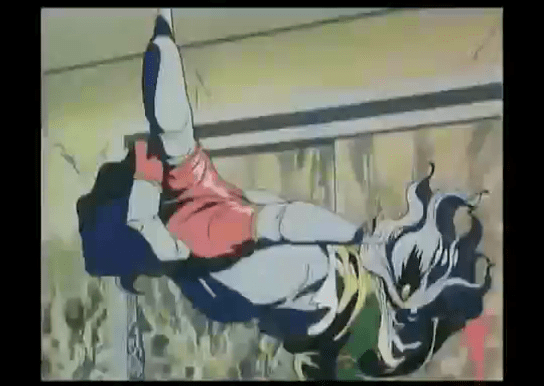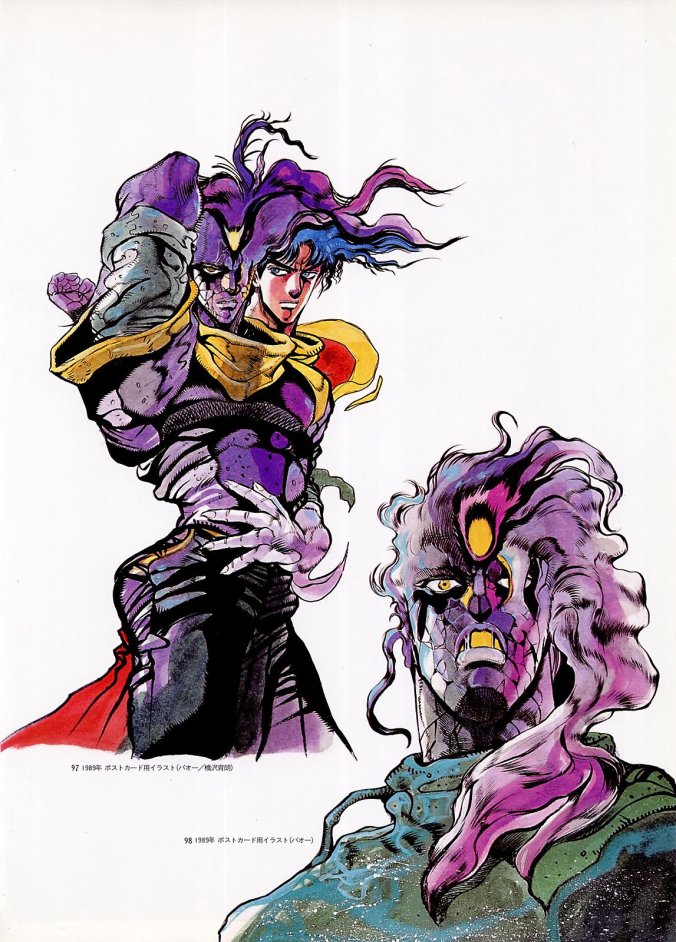
MANLY MONDAY – Golgo 13 (TV): First Impressions of a Sniper’s Life

vlcsnap-2018-04-22-23h55m20s777

The Golgo 13 series has been one of the longest running manga series of all time, first published in 1968, and still being going on today without a break. Artist Takao Saito is still drawing the series, and even with his over 80 years of age, he is still keeping up the schedule and the series he had created.

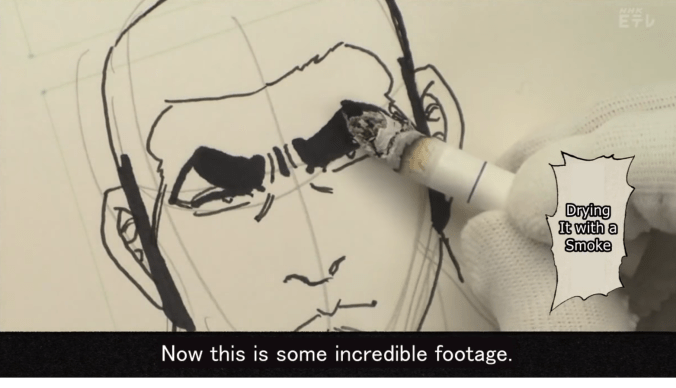
He has a fantastic drive and creative spirit, and if you wish to see how he does his work, I highly recommend the “Manben” documentary series, where his work process if recorded and commented by himself. For example, he uses his own cigarette to dry the white-out spaces on the page. To the question if he has burned the page before, he simply answers with “Yes, many times.”
manben2.png

A technique as rad as his own drawings. (Source)

And of course, his works have been adapted many times, into films and TV series of all sorts.

Golgo 13: The Professional (1983) by acclaimed and beloved director Osamu Dezaki is a fantastic way to enter the franchise, as it tells a self-contained hard-boiled story of a family drama that professional sniper “Golgo 13”, or Duke Togo as he calls himself, gets pulled into. This film is also widely known as the first anime to ever use CGI in its animation, and it truly is something to marvel at how far we have come. Seeing the 2D and 3D segments clash is simply astonishing, especially since Dezaki’s directional style is very aesthetic and precise in its framing, which is then broken with a free camera moving low poly helicopter scene. I recommend this film to anyone who enjoys a good adult crime or spy thriller, and to fans of the medium for Dezaki’s superb style, action and framing.

While the film is fondly remembered and often discussed, there is another adaptation that I wish to talk about. The 2008 TV series, simply named Golgo 13.

This series spans 50 episodes in total, I have now seen 8 episodes and want to give you my first impressions.
vlcsnap-2018-04-23-00h22m29s104.png

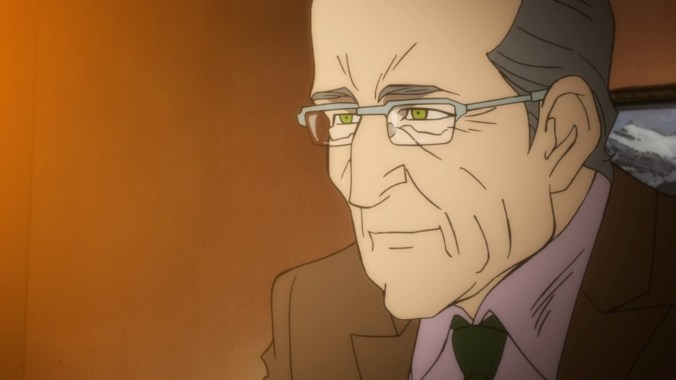
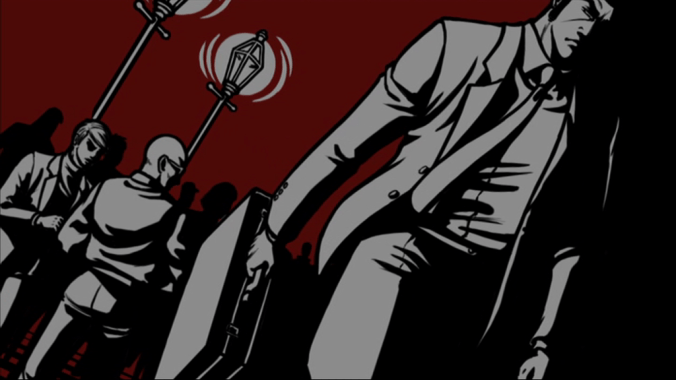
Duke Togo is a professional sniper, the best in the trade. He works under the codename “Golgo 13” and practically no information is given about him: we don’t know his age, his nationality, his background or anything else. All we have is a stone-faced hitman with no internal monologue – we cannot see inside his head, neither the narrator, nor the viewer.

Togo’s days seem to follow the same structure every time. He is called by a client, he is told his mission, he starts preparing, he shoots said target, and then disappears as silently as he arrived. He gets a job, then he gets the job done. As simple as that.

While this may sound monotonous on paper, it’s the execution and variation that makes this series.

Maybe Duke will be caught halfway through the episode, and the rest is just him trying to escape the police’s grasp with mindgames. Or maybe, his client falls in love with him, so he needs to deal with this inconvenience. Or maybe, Duke is supposed to interrupt a weapon’s deal from happening.
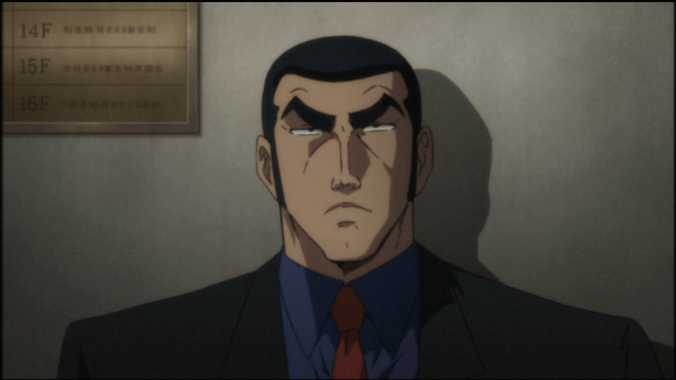
vlcsnap-2018-07-19-20h32m10s645.png

Duke Togo. The man, the mystery, the person with the single most permanent scowl.

Essentially, Golgo 13 excels in the creativity of its cases and how these are framed. As a sniper, the main goal is not to kill some, it is to shoot somebody or something. And these can range from killing a corrupt politican, to killing a yakuza boss, but also towards shooting a violin string.

A violin master is humiliated during an important concert when one of his strings snaps. As this string is vital for the performance, he cannot play anymore and is booed off-stage. When he hears that one of his most hated rival musicians is supposed to replace him, he wants to humiliate him just the way the audience did back then: Duke is supposed to shoot the fourth string of his violin during a concert. With everyone watching. Without the musician noticing that this was sabotage. And the whole episode is dedicated to this music feud and Duke figuring out on how to do such an impossible job – planning, observing, gathering tools and then executing this complicated plan.

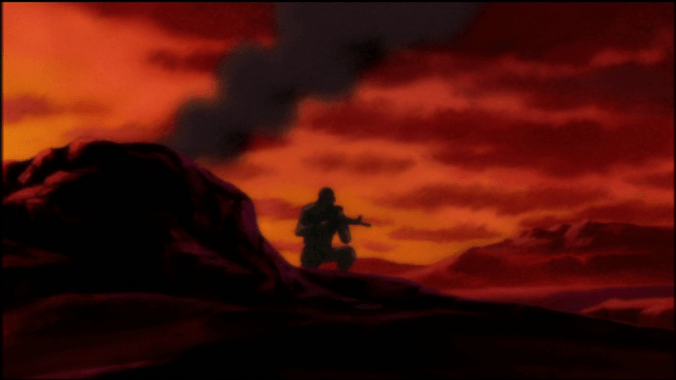
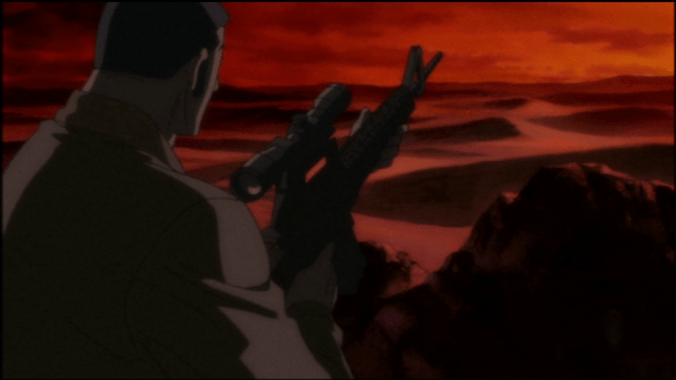
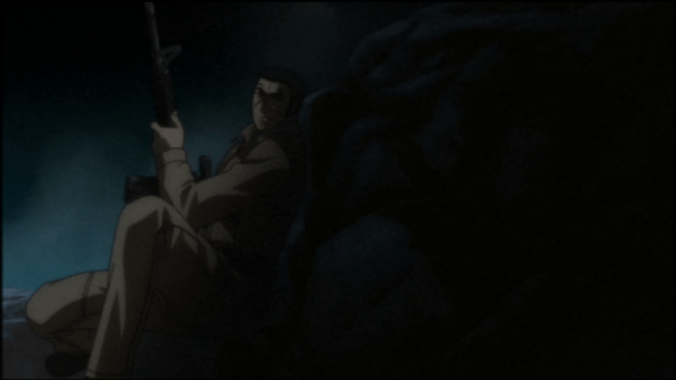
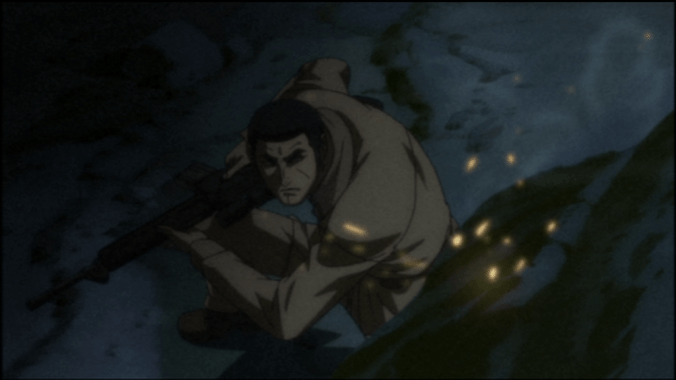
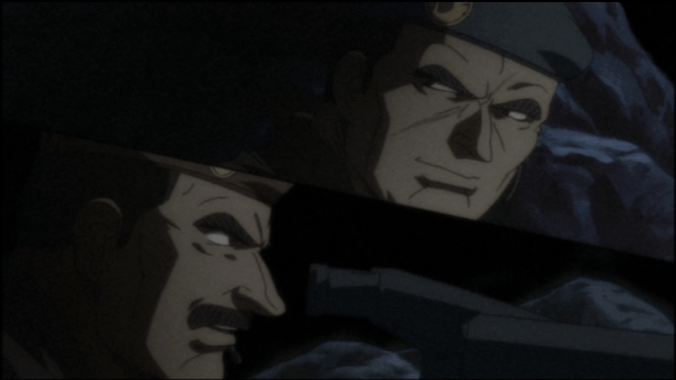
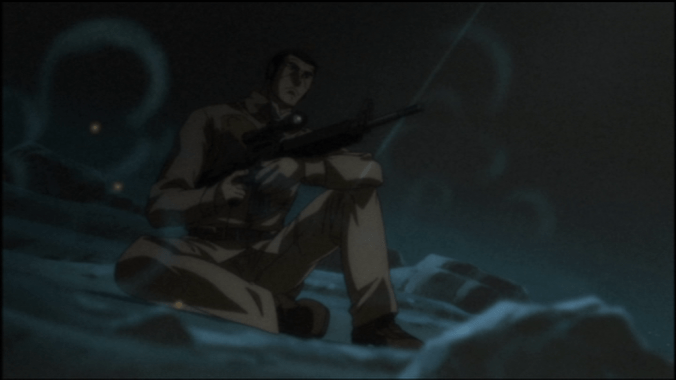
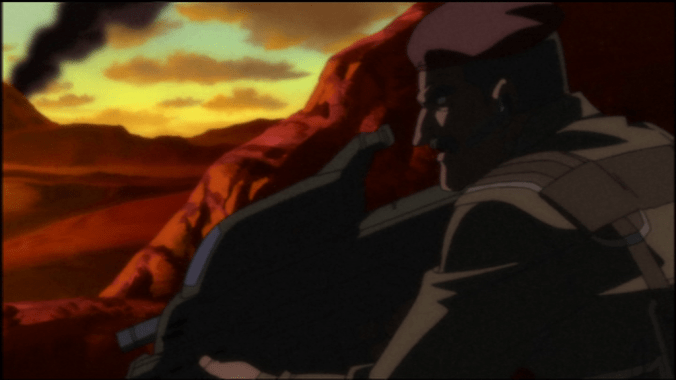
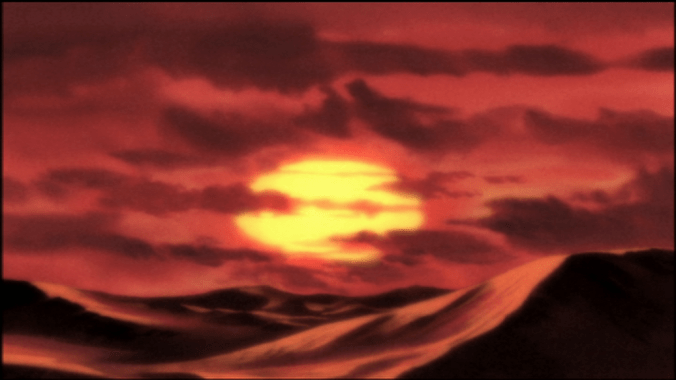
In another episode, Duke must fight again two ultra-modern military snipers in a desert, which slowly unfolds in a delicate and deadly game of hiding and seeking in the sand. And as these episodes tend to be quite slow and careful in its depiction of a sniper’s work, the surroundings can shine with their beautiful designs and atmosphere.
vlcsnap-2018-04-24-00h01m06s610 - Kopie

vlcsnap-2018-04-24-00h01m26s016

vlcsnap-2018-04-24-00h01m36s654

vlcsnap-2018-04-24-00h05m53s009

vlcsnap-2018-04-24-00h06m50s529

vlcsnap-2018-04-24-00h07m38s027

vlcsnap-2018-04-24-00h07m39s703

vlcsnap-2018-04-24-00h09m31s510

vlcsnap-2018-04-24-00h10m10s023

vlcsnap-2018-04-24-00h11m05s077

The battle goes far into the night, and the colour work is fantastic.

For a sniper, the surroundings are essential to their work, making a shot possible or impossible, so it is extraordinary to see how much care the Golgo 13 TV series puts into those. They may not be of the highest quality or most elaborate architecture, but the backgrounds and setting make everything grounded and easy to grasp.

But a world is nothing without the characters it inhabits. And here, Golgo 13 has great fun in its episodic structure, always building a little microcosm of relationships and people to visit. And this is where Duke Togo shines.

Looking at this unit of a man, one might think that he is an emotionless killer machine who just does his job and nothing else. Here is where this initial impression is wrong: By pairing him with different foes and friends to play off of, his deadpan attitude and seemingly emotionless face achieves either strong respect or a blissful comedic status.

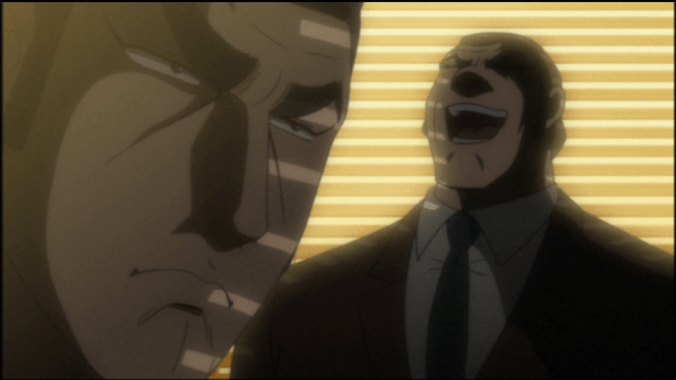
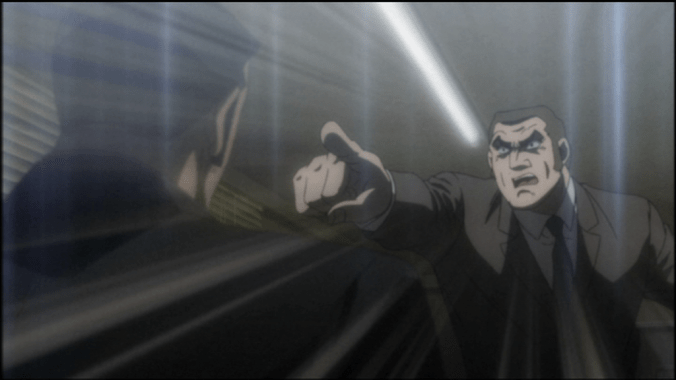
Especially in one episode where Duke gets caught after an assassination by an equally bearish police commissioner, who is dead-set on arresting Duke. The whole argument and trying to unmask him as the true culprit feels similar to a bonkers court case, where evidence and testimonies are thrown against each other in rapid fashion.
vlcsnap-2018-07-19-22h15m41s135

You!

vlcsnap-2018-07-19-22h12m55s814

Duke Togo’s unmoving face truly is the best.

And so, this stone face becomes one of the greatest assets of the series, be it as a comedic reaction, an expression of repressed melancholy, or maybe even something more enigmatic when Duke gets entangled in romantic or life-threatening situations. And if you see his face move, be it just a twitch of the eyebrow or a silent drip of sweat running down his temples, you know that the situation is drastic.

Those rare moments really make for a nice treat, and so, Golgo 13 delivers its emotional core just a bit differently – but to great effect.

Conclusion

Of course, giving a final rating to a 50-episode show after only 8 episodes is nonsensical. However, the direction it has taken looks absolutely entertaining, and reading from other reviews, the series is not dropping its episodic structure. And so, we will get 50 little adventures in the life of Duke Togo, the sniper called “Golgo 13”.

If one looks at the staff list, we find 20 different episode directors, and maybe this is also why everything feels so fresh every time: Many different creators telling stories about the same man, all from different angles and perspectives.

Will he win every time? Sure he will, he is Duke Togo – one of the best marksmen in the world. He has done this job for over 50 real-life years now. Many stories, many cases, many clients – and yet, he continues with that unwavering face of his.

And this is what made this show a very comfy watch for me, something lovely to put on in the evening to relax. The slow preparing and planning of his jobs, the certainty that all will go well, but mixed with that light suspense of not know exactly “how”. The creativity and the wonderful execution make this simple concept shine, and I can’t wait to continue watching this series. Will it be funny, will it be dramatic? Who will he fight against, the FBI, the yakuza, or just a private person? We can only find out by taking more short but serene glimpses into the life of a Duke Togo, the sniper called “Golgo 13”.

The End.

Sources: Manben Episode “Takao Saito”, Wikipedia, AnimeNewsNetwork & MyAnimeList “Golgo 13 (TV)”

All images are taken from my French release DVD.

MANLY MONDAY – Lupin III Part IV “The Italian Adventure” TV Series – (Review and Episode Recommendations)

lupins 2015.jpg

In one of my latest Manly Mondays, I talked about the Lupin III films by director Takeshi Koike, and how the hardboiled tone really fits the series.

As already mentioned in that article, the beauty of the now 50 year old “Lupin The Third” franchise is that it comes in many shapes, zeitgeists and forms: long running TV series, big cinema releases or short-running experimental shows.

Koike’s films in 2014 and 2017 were intended for a mature audience, given the depiction of violence and intensity of the themes it portrayed, and director Saya Yamamoto’s entry in 2012, A Woman Called Fujiko Mine, was equally adult – yet with a different focus as it explored sexuality and identity of the long-established characters.

However, Lupin III had always long-running TV series as a main focus, which were split into “Parts”. In addition, each of these Parts had a different suit jacket colour for protagonist Lupin to wear, so that it was immediately clear from the first glance which series you were watching: Part 1: Green Jacket (1971-1972), Part 2: Red Jacket (1977-1980), Part 3: Pink Jacket (1984-1985).

Each “jacket colour” is also unique in feel and tone, I highly recommend checking some episodes out to see what you might like the best. As these series are very often of episodic nature, you may pick and choose to your heart’s content.

And in 2015, a new TV series came around – Part 4: Blue Jacket (2015-2016).

Let’s take a look at this new series in retrospective, what did it do and what was added to the long-running legacy of the franchise?

lupin2.jpg

A Love Letter to Italy

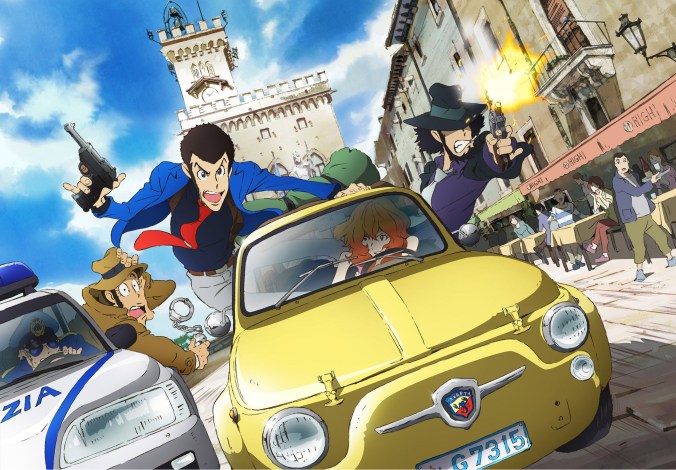
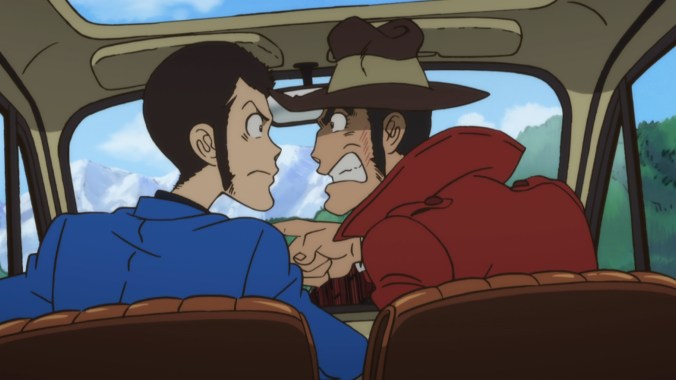
The story of Lupin III is very much grounded in the usual set-up: Lupin is a thief, roaming the lands with Jigen, his gun-slinging friend, in a tiny yellow Fiat 500, where they will be entangled in all sorts of adventures. On this journey, they will be supported by Goemon, a friendly yet stern samurai, and Fujiko Mine, a rival thief and love interest to Lupin. They are constantly chased by Inspector Zenigata from the ICPO, whose only goal in life it is to finally bring Lupin behind bars.

Lupin III Part 4 “L’avventura italiana” takes place, as the title says, in Italy, which makes for a gorgeous setting. The Mediterranean feeling with the sunny, bright lighting is always is a beautiful sight, and as the team has to flee and chase very often, we see a lot of Italy – the countryside, the beaches, the castles, and old inner cities.

city

goe castle

Dgzvjv-WkAEjVqs

Dg75pVHXkAAhD__.jpg

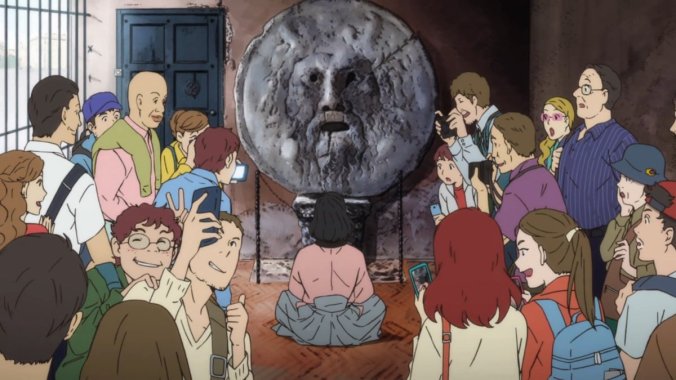
Apart from the usual sights and landmarks, the care that went into the details is astounding: euros are used throughout as currency, license plates are in the European style, and even newspapers, signs and police cars are in Italian, really selling the setting as a graspable place to be. In addition, Part 4 aired in Italy before it did in Japan, which is unusual, but fitting for this series, as Lupin III enjoys its cult status in this country.

New Friends and Foes

88c52a5142354d12ba114dbf38ce9285.jpg

Part 4 brings some new additions to the usual cast, most notably Rebecca and Nix. It’s difficult to introduce new characters to a web of already established relationships, but this series manages it quite well.

Rebecca Rossellini is a rich, spoiled, but quirky and fun girl with green-yellow hair, who has an acting career, a financial empire and good looks. Having lost her parents and now the sole heir of the conglomerate, she seeks thrills in her perfect life, things she cannot buy with money.

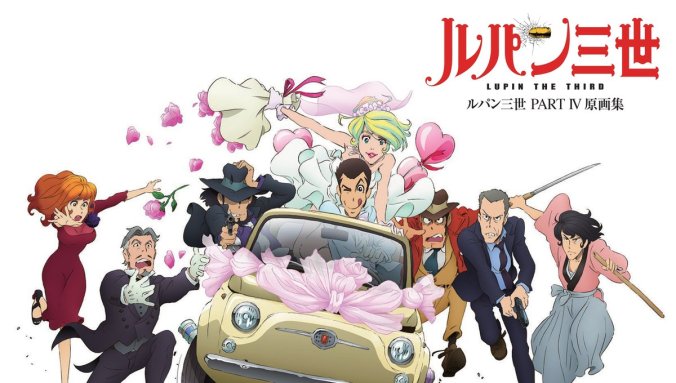
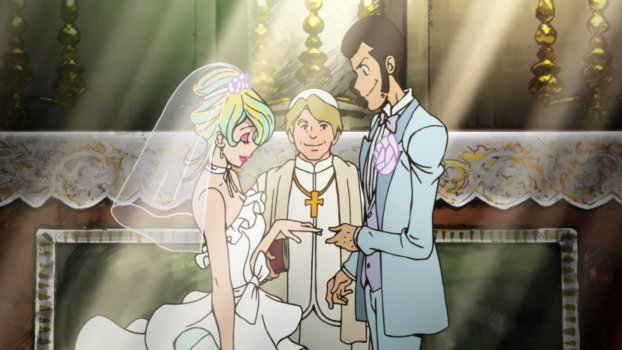
Lupin makes a marriage proposal to her, and surprisingly, she agrees – and after less than a month, they are standing in front of the altar. It turns out, of course, that this was all an elaborate plot by Lupin to steal a certain treasure, however, all the paperwork for the marriage already went through: Rebecca has become Ms. Lupin. What should have been a short scam turns out to be more complicated, and Lupin is officially married now – it will be one of his main goals over the course of the series to get Rebecca to sign the divorce papers.

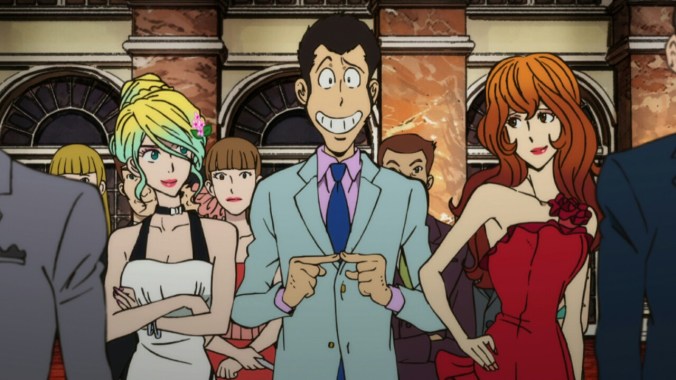
But this creates an interesting love triangle with Fujiko Mine, as well as a thematic clash of femininity: Rebecca, the fun, young and quirky girl on one side, and Fujiko, the classy, mature and experienced woman on the other side. And while they are not explicitly fighting over Lupin, the banter, conflicts and hijinks that ensue are quite fun, even from Jigen and Goemon’s side who both cannot believe that Lupin is a “husband” now.

lupin3adultswim.jpg

Time to decide, Lupin!

Rebecca makes for a fun rival/romantic interest, but she is not universally present in every episode, nor does she have major influence on the complicated main story.

For me, it was the other new character that I was very fond of:

Nix, a British MI6 agent. He strictly follows his orders and thus has a few run-ins with Lupin’s crew, eiter because he actively has to fight them, or because their paths randomly cross.

nix.jpg

Agent Nix. (“Nix” being colloquial German for “Nothing”, not sure if intended.)

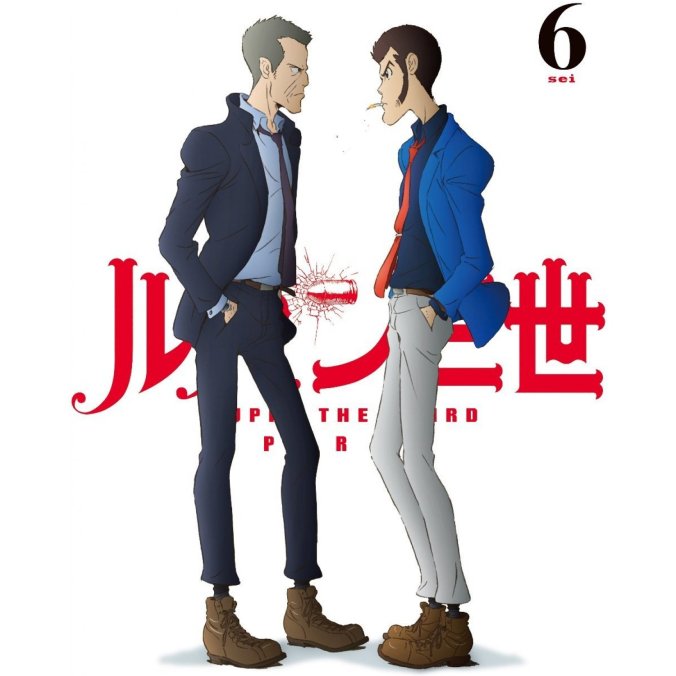
His design was a standout for me: the short slightly military-tinged haircut, the stern look, the wrinkles that give his face age and character, and especially the pointy ears (which serve not only an aesthetic purpose!)

While Nix seems like an uptight and efficient spy who doesn’t do anything besides following orders to 100%, more and more details about him will be revealed over the course of the series, and in the end, I was immensely happy to have him in this series.

As it turns out, Nix has problems to keep his emotions under control, and is often in danger of “snapping”, which might be hazardous for everyone involved. When his missions carry out well, he stays calm, but if he fails or a loved one is in danger, hell breaks loose. Nix is not only a spy, he is also a family man, with three cute daughters and a strong wife, so may God have mercy on your soul if you ever intend on hurting his family.

Nix carries emotional weight in his job and in his private life, and his role of being a responsible father clashes with his dangerous profession. He is a well-round character with a slightly tragic side too, but his likability and his switching between “deadpan serious” and “full on burning rage” serves for impressive, as well as funny moments within the story.

lupin-iii-part-iv-vol-6-468053.2.jpg

Nix, a great rival for Lupin.

As Nix is an important character with a lot of action segments and character acting, he gets some amazing animation cuts in Part 4, for example this cut by Shinya Ohira, where he fights a rebel spy. The unusual artstyle break and the pencil shading outlines give Nix’ actions visual power and strength.

Story and Standout Episodes

The story of Lupin III Part 4 is not the tightest, as not all episodes are here to drive the main plot forward. It is episodic, with an “Adventure of the Week” format, where you can enjoy every episode on its own, and occasionally be reminded of the big scheme in the background. The story goes off the rails somewhat to longer it goes, with some pretty incredible story twists and introductions, but it is all in good fun, as the strong cast can hold any outlandish plot together. The season finale might not have the biggest impact, but a nice ending overall.

However, there are some episodes that are able to absolutely stand on their own. If you want to get a taste, or if you simply want to visit the highlights this series has to offer, here is a small selection from my personal experience:

Themarriageoflupiniii_1

Episode 1: Lupin’s Wedding

“Rating”: Give it a Try!

Obvious choice to take the season opener, but this episode is a great character piece, with Lupin’s and Rebecca’s wedding and the controversy it causes with Fujiko, Jigen and Goemon. In addition, the animation is top-notch and delievers movie-quality action scenes to establish Rebecca’s character. A fun intro to the series!

img_30_m.jpg

Episode 3, 7 and 19: 0.2% Chance of SurvivalThe Zapping Operation and Dragons Sleep Soundly

“Rating”: Give it a Try!

Three episodes for Agent Nix, one being his introduction to his character and his skillset, being on par with Lupin and Jigen, and the other episode to show his family side and the caring father that he is. The third episode however takes a very dark spin on the spy business, with harsh violence and great danger to the protagonists. It makes for a strong tonal break that is worth checking out, if you are interested. (Keep in mind though that his episodes are more intertwined with the main plot and are not “pure” standalones!)

img_3344.jpg

Episode 13: The End of Lupin III

“Rating”: MUST WATCH

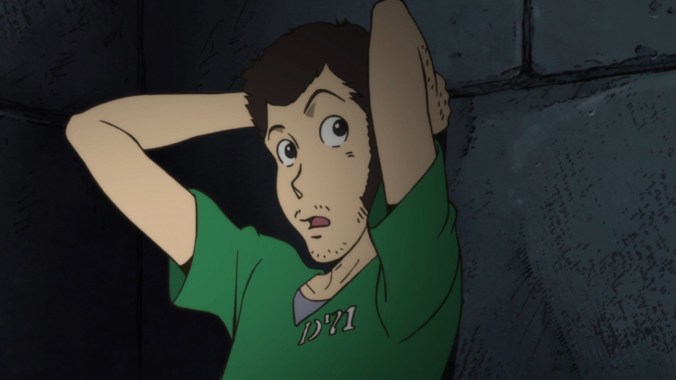
The mid-season finale and the episode that deeply touched me emotionally. In a surprising twist of events, Zenigata catches Lupin. Now that he has achieved his life goal, he gets a new goal: Keep Lupin behind bars. By removing the rest of the cast and only leaving Lupin and Zenigata in a 1-on-1 theatre piece in prison and total isolation, it goes far into the relationship of the two rivals.

I was highly impressed by this episode, and I would recommend it blindly to absolutely anyone.

DgDxdt0XcAAVp7n

Episode 16: Lupin’s Day Off

“Rating”: MUST WATCH

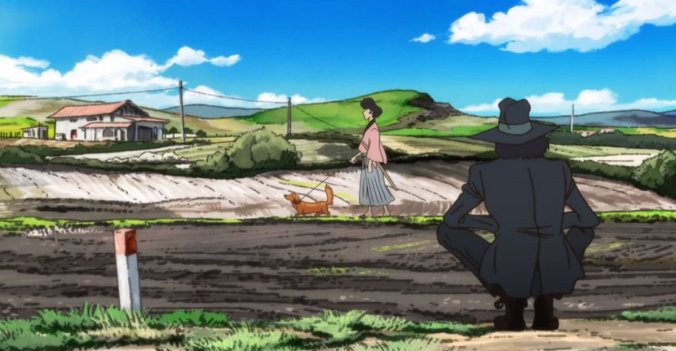
A simple premise: Lupin, Jigen and Goemon have a day off, so they book a table at a fancy sushi restaurant. They have to arrive at 6 PM, and it is only a short drive through the countryside to get there.

This episode is slice of life beauty with perfect comedic delivery, and how much a simple idea can escalate into madness. This one had me in stitches, from the fast action to the quick jokes. A jolly good time of an episode.

1516610431894.jpg

Episode 20: To Hear You Sing Again

“Rating”: Highly Recommended

A melancholic episode that I don’t want to spoil too much of. It is the story of an old Italian diva and her husband, and how long such a love can last through all the ages, through the good and the bad. A touching story that may move you to tears.

1646249_English_KeyArt-OfficialVideoImage_88e80ffd-4ba2-e711-8175-020165574d09

Episode 26: Nonstop Rendezvous

“Rating”: ABSOLUTE MUST WATCH

This second special Bluray episode, sometimes called “Episode 26”, serves as a prequel to all of Part 4 and is an all out action romp with everything you could wish for: Fun character interaction, high-speed chase scenes, action shenanigans and full on physical comedy of the first degree. It reminds me of other amazing car chases I have only seen in films so far, and it will have you thoroughly entertained! The last few minutes may be a bit slow, as it only serves as a lead-up to Episode 1, but everything before that is pure fun and the essence of Lupin III comedy action.

Conclusion

Lupin III Part 4 was a good time, and especially cosy to watch over a long time, basically like it aired, one episode per week and going faster if you feel like it. Not all episodes are stellar, some are outright bland, such as Episode 15 where Lupin infiltrates a high school to simply fight against bumbling teachers, but overall, I had a splendid time with a few amazing highlights.

If you want to get into the Lupin III franchise, I would maybe recommend other films instead, (The Castle of Cagliostro, The Fuma Conspiracy or Jigen’s Gravestone) as you may already need a bit of a grasp on who all these characters are, before you see them interact with newer ones. I’m still happy about the introduction of Nix, I hope that he may return for the next currently airing Part 5 in 2018.

The Italian adventure makes for a comfortable series to watch as a mood piece, to just see the cast hang out and enjoy themselves, with some great action sprinkled in here and there. It’s not the best of the franchise, but a very solid entry that you can check out if you want to – and if not, you can enjoy the standalone episodes I recommended to you as short film snacks.

Overall, I’m happy that I watched it, and I look forward to more adventures of the wonderful Lupin III cast.

end.png

The End.

Sources: Wikipedia “Lupin III”, MyAnimeList “Lupin III Part 4”

MANLY MONDAY – “Zombiepowder.” Tite Kubo’s Early Western Fun

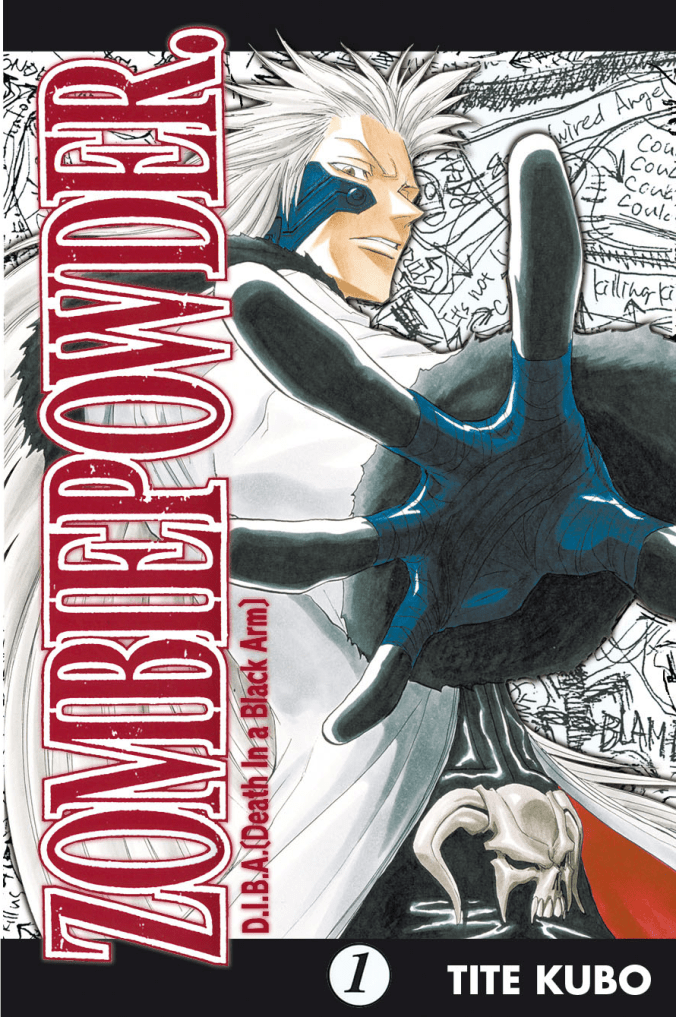
zombie-powder-vol-1.png

Back in the day when I was a little kid, the book shop was my world. I read many manga there, even right into the teenage years, as the store had comfy couches and chairs to sit on, so that you could browse and read for an unlimited time. It was here that I found Zombiepowder for the first time, by an author I had only heard a bit about: Tite Kubo, most famous for his series Bleach.

I would later find out in school exchanges and travels outside of Germany that Bleach was actually a huge thing. The internet told me that it was on the level with One Piece and Naruto, the “Big Three” of Shonen Jump, and I was quite surprised. Bleach was never a gigantic thing in Germany, most likely due to the anime not being widely available, especially in the “golden early days”. (One Piece ran since 2003, Naruto since 2006 – in a dreadful version, don’t remind me of the opening, the One Piece one is amazing, watch that instead – both on the big channel RTL II, while Bleach started only in 2010, on a niche channel called Animax.)

And so, in 2008, I held a volume of Zombiepowder in my hands, not knowing about Bleach, and started reading this new series I had never seen before. 10 years later, I revisited it.

02-03

Zombiepowder is the story of Gamma Akutabi, a silverhaired hero with a big sword and big heart, in a Wild Western world. He is a “powder hunter”, someone who is on the quest to hunt down the “Rings of Death”. If you collect all twelve rings, you can produce the eponymous “zombie powder”, a substance that brings life: If used on a dead person, that person becomes alive again, and if used on a living person, that person becomes immortal.

Hence, many people are after these rings for different reasons, and so far, no one has managed to gather all twelve into one place. Gamma Akutabi is after it for the immortality, and on his quest three other characters will join: C.T. Smith, his partner in crime, a very upright classy gunslinger complete with suit and bowler hat, Elwood, a young teenage pickpocket, and Wolfina, an energetic paparazzi  lady who fights with forged press releases and a modified tripod.

x2 (1)

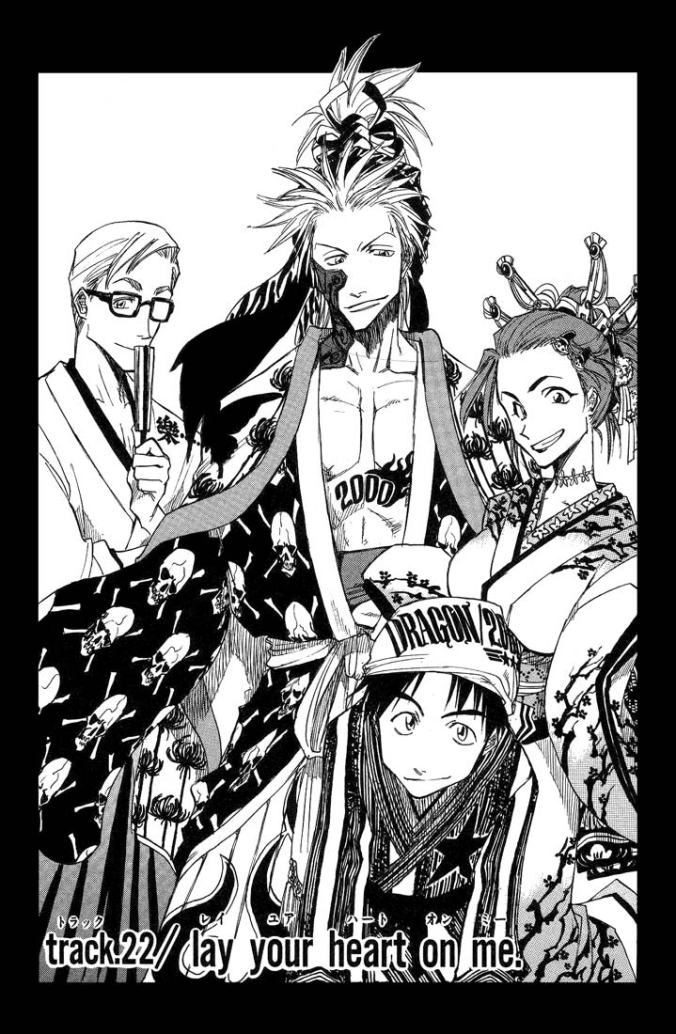
From left to right: Elwood, Smith, Gamma and Wolfina.

As this manga is quite short, with 27 chapters only before it was cancelled by Shonen Jump, I wish to talk less about the plot and more about the characters and style that Kubo shows us here.

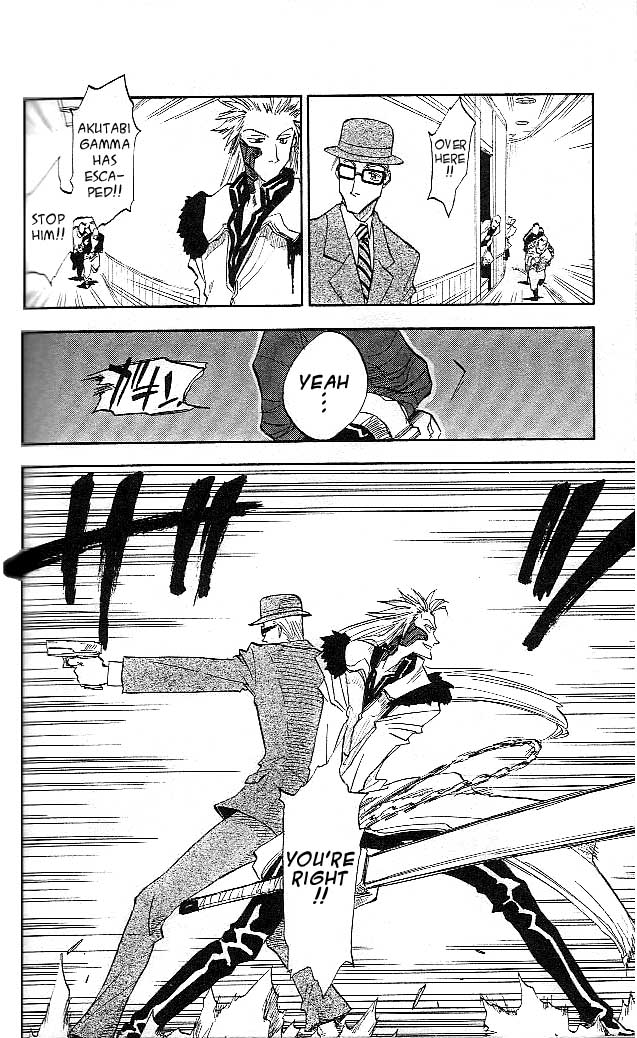
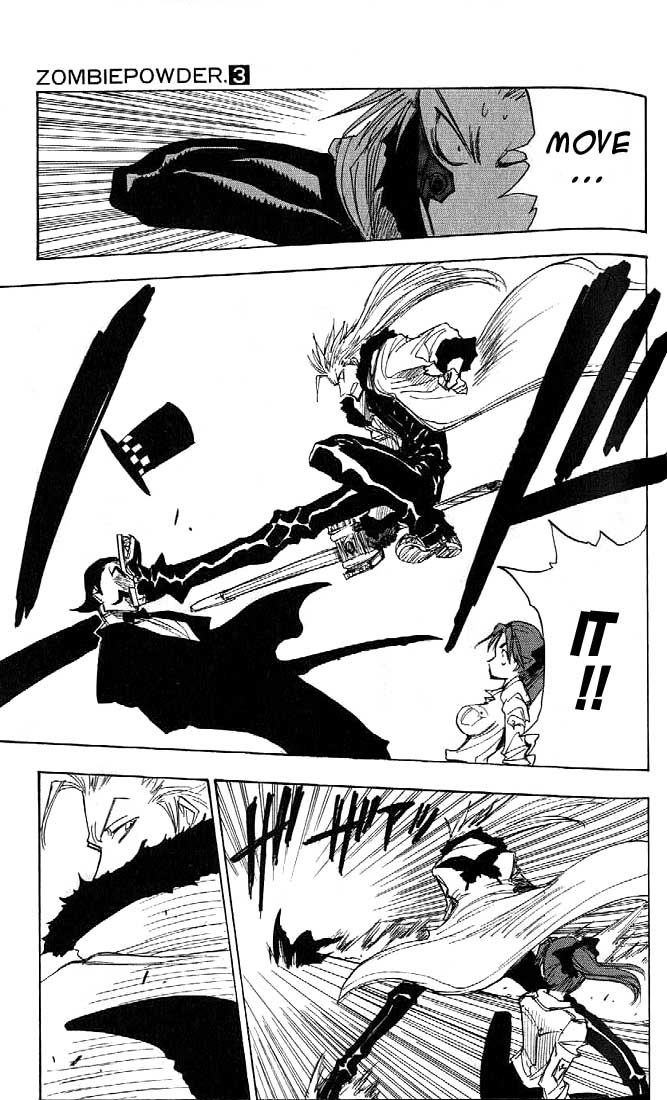
Kubo’s artstyle and linework have always been immensely stylish. Even though I have never seen or read much of Bleach, I can tell you that his design is instantly recognisable and very pleasing to look at. Clothes are wonderfully designed and fitted, characters have sleek shapes and sharp features, and the action makes it all shine with simple to understand panelling and framing.

x11

x17 (1)

x18

Simple, clear, and straight to the point.

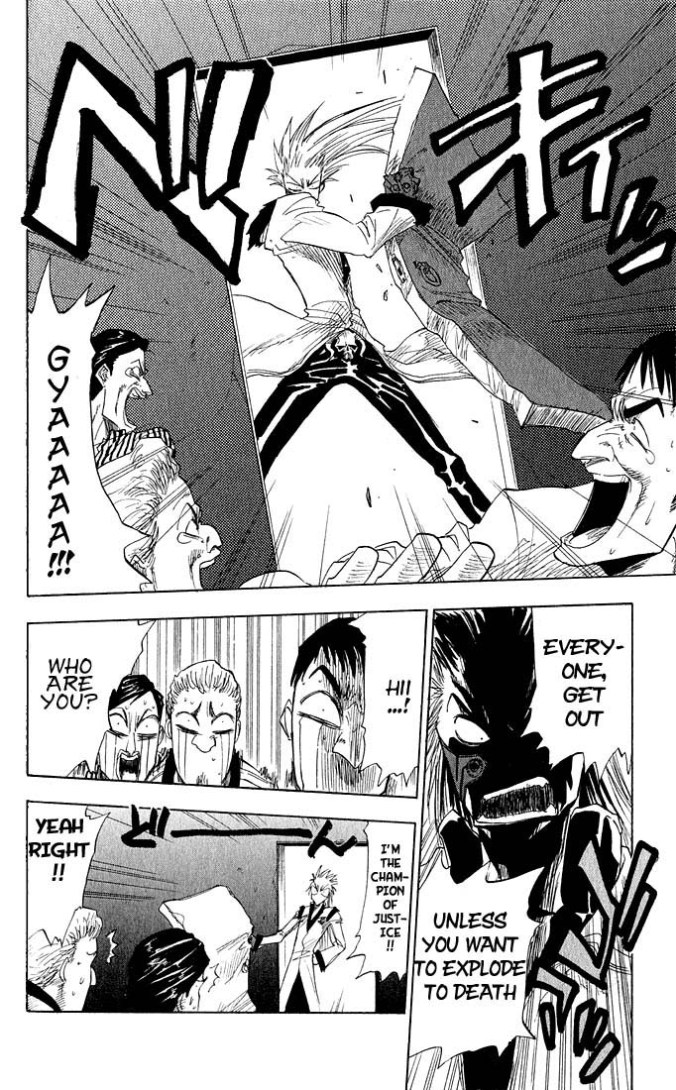
The tone of the series alternates between “serious” and “goofy” quite easily, and the characters can carry it as well. The more outlandish moments serve as nice breathers between the onslaught of action.

x37

From serious busting through a wall…

x9.jpg

…to silly busting through a door.

And there is A LOT of action in Zombiepowder, the series consists of battles pretty much every chapter, and – surprisingly – it works! Characterisation is interwoven with the respective fighting styles of the protagonists, everyone with their own strengths and weaknesses. Cool stuff happening with cool people, nice.

Gamma Akutabi’s design, the silver hair and coat, together with his chainsaw sword and later magic use was a design I particularly loved, and sadly it had to go too soon. He could have been a classic Shonen protagonist to stand alongside others, even with the slight accusations of Kubo taking too much visual inspiration of Trigun and Western/Mad Max settings à la Fist of the North Star and Battle Angel Alita.

xff46

That’s rad.

While I recommend reading Zombiepowder to everyone, it’s going to be interesting what you take away from it.

It’s pre-Bleach, opening itself up to comparison, but it’s also its own thing of a young upcoming artist trying to find his voice.

It’s also a short Shonen riddled with strange decisions, as Kubo says in the behind-the-scenes: This was his first work in the magazine Shonen Jump, and he was under “great emotional trauma” while drawing Zombiepowder – due to the crushing workload of having to produce a chapter each week, and due to him not knowing how to communicate with his editor, sometimes taking decisions he didn’t want to, accepting them without discussion.

The manga ends abruptly as well, it manages to round off its first arc, and then suddenly introduces three finishing chapters with many new characters and a sort of style-breaking feeling. While I was not a fan of how it leads to the ending – it leaves two protagonists behind in an uncertain path and has some questionable character designs – it does leave on a nice, if short bitter-sweet note.

If you wish to read Zombiepowder, I will recommend the physical release in 4 volumes, as it comes with a lot of making-ofs, other early Tite Kubo manga (which are all worth of analysis as well), special artwork and even a playlist of music for every character in the manga. Hey, I didn’t knew Kubo liked Rhapsody, an Italian powermetal band, one of my absolute favourites!

Conclusion

Essentially, this manga is a great stepping stone into a genre that Kubo would help to shape, and a short fun romp by someone who would later on do great things. To my personal shame, I must confess that Zombiepowder was the reason I put off Bleach for a decade: Gamma Akutabi and his gang were so energetic and fun, that Ichigo Kurosaki and his friends paled for me in comparison. Given, of course, that I had only read the first volume of Bleach, but alas, I was having more fun with this Wacky Western than Supernatural Highschool.

10 years later, it’s still very fun, even if a bit wonky in retrospect, and I will check out Bleach soon, it’s about time I reckon. And while I do that, walk the path into the other direction, and check out Zombiepowder, and see how you will like it. It may not be your new favourite, but it will be a powerful time capsule to rediscover.

x3 (3)

The End.

Sources: Zombiepowder Wikipedia, Zombiepowder making-ofs (Physical Release, Tokyopop)

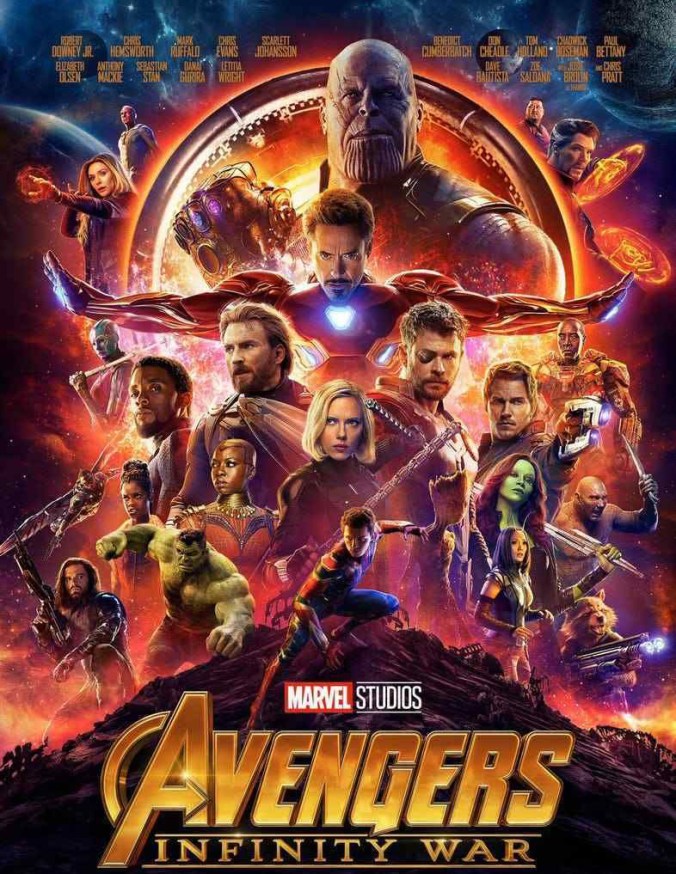
MANLY MONDAY – “Avengers: Infinity War”, The Grand Finale 10 Years in the Making (SPOILER-FREE REVIEW)

dadd9e76fa61ca787557cf8ce6a7d8a1.jpg

Way, way back when I was a little kid in the midst of Europe, I didn’t grew up with superhero comics. My heroes were “normal heroes” with inseparable partners: Astérix and Obélix, Tintin and Haddock, Don Rosa’s Donald Duck and Uncle Scrooge stories, Vicky the Viking and the crew of his dad, or Alfred J. Kwak and his friends.

This all somewhat changed, when Spiderman by Sam Raimi hit the theatres, I must have been around 11 years old. I was just so fun! Spiderman 2 cemented that wonderful feeling, I went to see them with my childhood friend several times in the cinema.

The Spiderman 2 Gamecube game thus also holds a special place in my heart, not only for being a splendid game with a fantastic open world, but also for my childhood friend and me beating the final boss together. We both held the controller together, one pushing the button to dodge, the other with the punch button to wait for an opening to finally take down that villainous Doctor Octopus. What a wonderful time that was, to see the joined effort come together and to celebrate in the flicker of the end credits.

Many years later then, when I was in middle school, I heard of Iron Man in 2008, and I was surprised. There are even more heroes? And apparently they had been around for many decades? In comics? Like my Tintin and Astérix? My nostalgia was not for them, Spiderman was a lovely memory of my past, but nothing that would carry significantly into the present.

Iron Man and Thor were fun, the rest was so-so or didn’t even catch my interest, and when it was finally revealed that all these heroes would come together in a thing called “Avengers”, a name I had never heard before, I remember sitting in the cinema and muttering after the title came on screen: “Oh man, I would so laugh if this film sucks.”

I would be very wrong.

rFtsE7Lhlc2jRWF7SRAU0fvrveQ

Because it was very, very fun.

Avengers showed that the big superhero crossover was possible. Many heroes with backstories in their own films, then coming together in another movie, leaving time for the crossover event itself, not needing additional time for character introductions or presentations. Even the villain, Loki, had been introduced before, getting his chance to shine – with many jokes, big action setpieces and a simple, yet engaging plot, Avengers took the world by storm. In the background, it was also building up to something.

More heroes got introduced, the universe got bigger. Antman got my interest, as it was by one of my favourite directors, Edgar Wright, and even if he didn’t direct it in the end, his tone shined through, making it immensely fun. Guardians of the Galaxy came in with technicolour rainbow fun and an oldschool groovin’ soundtrack, and then the second Avengers rolled around, not as super satisfying as the first one, but still a great time in the theatre. And it was still building up to something.

Phase Three rolled around, where Marvel really got into their groove, and here you will find my favourites: Thor: Ragnarök and Guardians of the Galaxy Vol.2, films which combined emotional strength and comedy to entertaining cohesive bundles of joy – Doctor Strange and Spiderman: Homecoming also being very strong entries that I would wholeheartedly recommend. And they continued to build up to something.

That something has now arrived, after being 10 years in the making:

Avengers Infinity War.

https_blogs-images.forbes.comscottmendelsonfiles201804MV5BMTU3NDExMjQyNl5BMl5BanBnXkFtZTgwMjk2MTUwNTM@._V1_SX1500_CR001500999_AL_-1200x675

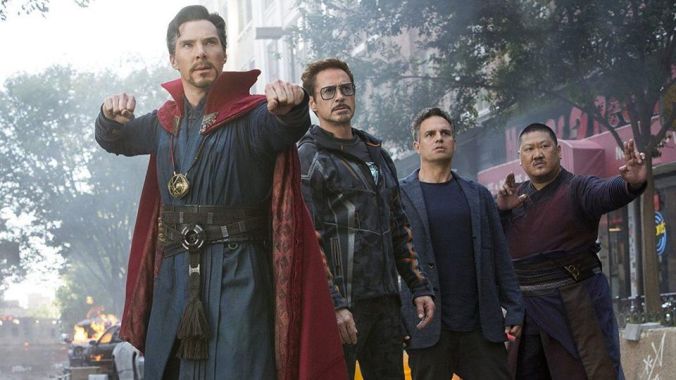
Just a fraction of the gigantic main cast, with three intersecting franchises: Doctor Strange, Iron Man and Hulk.

A gigantic threat is looming upon the galaxy: Thanos. A galactic overlord who wants to collect all six Infinity Stones, which grant the power to rewrite reality if they are combined into one weapon – a gauntlet in this case. In many different films before that, we know where the Infinity Stones are, and in some, they even played very big roles.

The plot is simple, yet effective: Thanos is coming, he must be stopped. And in order to do that, the power of all the Avengers and their friends is needed. Good guys set out to defeat the bad guy. Simple, straightforward, boom, done.

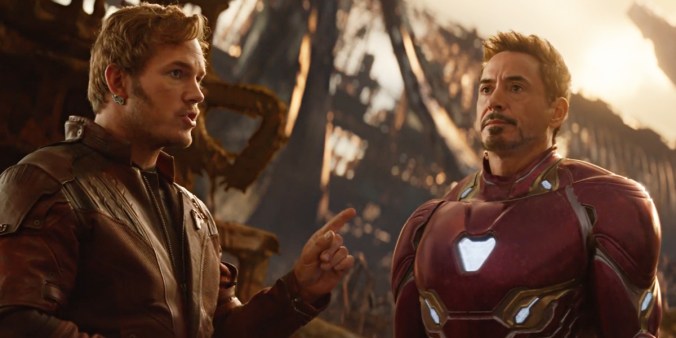
However: It’s the execution where this film shines. To take over 20 main characters and fit them into one big story is not an easy task, but it succeeds in an entertaining and satisfying way. Not all characters appear at the same time, they enter the stories at different points, and then get split up into groups. Some combinations are logical, the Guardians of the Galaxy are one group, surely, and Iron Man will team up with Spiderman, that much is clear from the previous films.

Avengers-Infinity-War-Cover

This team-up can only go well. Just look at them.

But over the course of the film, they get re-shuffled, and go to their own intertwining substories, and this is where the main fun is to be had. As the audience already knows all of these characters, the burning question is: How will they all react to each other? Will they get along? Will there be banter? Or will they end up as a harmonious bunch? Some of these combinations I had never seen coming, and also never expected them to work so well. Especially [backwards: tibbar hsart eht dna dog esron eht] was a duo that really hit home, and if you would have told me that before, I wouldn’t have believed you.

The character interactions are where the fun lies, and the smaller teams with unique combinations keep everything fresh and interesting. (Hence, I would also recommend that you watch many of the MCU films before Infinity War, if not all. Some people will tell you different things on what to skip or not, but I think most people will agree that you will absolutely need Thor: Ragnarök and Guardians of the Galaxy Vol.2, as the events of the two lead directly into this film.)

Of course, not everything is fun and games in this film, there will be emotional moments as well, and these blend perfectly into the comedic segments. It never feels like one mood is overstaying its welcome, the mix between “funny and sad” is balanced out extremely well, and gives a great flow to the film. In the 149 minutes of film, I never felt as if it had lengths or dragged out moments, everything felt snappy, powerful and going forward.

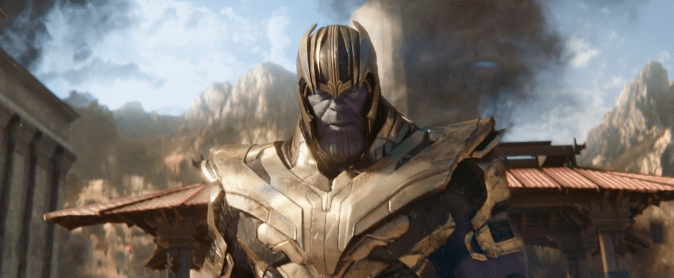
In addition, the villain of the story, Thanos, is given enough room, and even his own parallel plotline, so that he receives depth as well, making him one of the best, if not the best villain in the MCU so far. All I can say is: This finale (or rather, the first part of the finale, as the continuation will be next year) was absolutely worth the time waiting.

Screen-Shot-2018-03-16-at-12.50.13-PM.png

Sidenote: I also want to praise Klaus-Dieter Klebsch as the German voice of Thanos, he is one of my favourite voice actors, and he was born for that role. He has spoken many villains from my childhood as well, maybe adding that little bit of extra to my enjoyment.

Conclusion

Back in 2008, when I was saw Iron Man with doubtful eyes, I could have never imagined where it would all lead. I was proven very wrong in my prediction, and I am pretty sure that many were too, such a big film franchise had never been attempted before, and some other franchises have tried to copy it afterwards, but nobody achieving it to this extend.

While some initial films of Phase 1 or 2 were drab or not very engaging, Marvel has now found the perfect formula of entertainment, big bombastic fun with an equally big, beating heart, that ties everything together emotionally.

And Avengers Infinity War also managed something that many films hadn’t done recently: to surprise me. Not only in shocking moments, but also in emotional ones I hadn’t seen coming, without being “out of nowhere”. It’s a tight bundle of many cohesive and strong storylines, that comes together after many, many years. And it was beautiful.

Behind me in the cinema was a little kid with their parents, maybe 11 years old or so, and it was very well behaved, didn’t interrupt others, enjoyed the film and only occasionally spoke something out loud. And yet, I couldn’t help but smile at the little hollers and exclamations of “Oh no!”, “Yes!”, “Whoa!” and several very big “What?!”.

I remember a little kiddo also sitting in the cinema, being very excited about Spiderman 2, and looking forward to seeing my fantastic super heroes on screen, and going to see the films several times in the theatre, smiling at the visual fireworks of action and heart in front of my gleaming eyes.

The eyes full of doubt from a decade ago were finally shining again like they did on this very day.

The End.

MANLY MONDAY – “Blacksad” When Ex-Disney goes Film Noir

The Disney Company owns quite a lot of franchises these days: From Star Wars to Marvel, the Big Mouse has accumulated a vast gallery of rights, artists and studios under its white-gloved hands. Many wonder what Disney doesn’t own at this point.

This poses a more important and certainly more intriguing question: What if someone leaves Disney? What do they do after their time at one of the biggest companies in the world? Here is one of them: Juanjo Guarnido.

Juanjo Guarnido, born 1967 in Spain, always had a love for comics. He drew and joined many fanzines, gained the attention of Marvel, and started doing work for them. In 1993, Guarnido became an animator at Disney Animation Studios in Montreuil, France, and I am fairly certain that you have seen some of his animation work: strong and classy “Helga” in Atlantis: The Lost Empire, the expressive and emotional “Hades” in Hercules, and he was the lead animator of villainous leopard “Sabor” in Tarzan.

However, Guarnido decided to leave Disney and to rejoin with one of his older friends from his comic days in Spain: Juan Díaz Canales – they had been discussing producing comics together for a long time. And so, both of them came together as an artist-writer team to produce their own original comic, which was published in 2000: Blacksad.

They surely couldn’t imagine what this comic would later become: Universally loved by critics and the public, a strong, respected and recognisable franchise with 5 comics in total, and several outstanding awards, such as the Eisner Award in 2011 for the whole series. Let us take a look at this wonderful graphic novel:

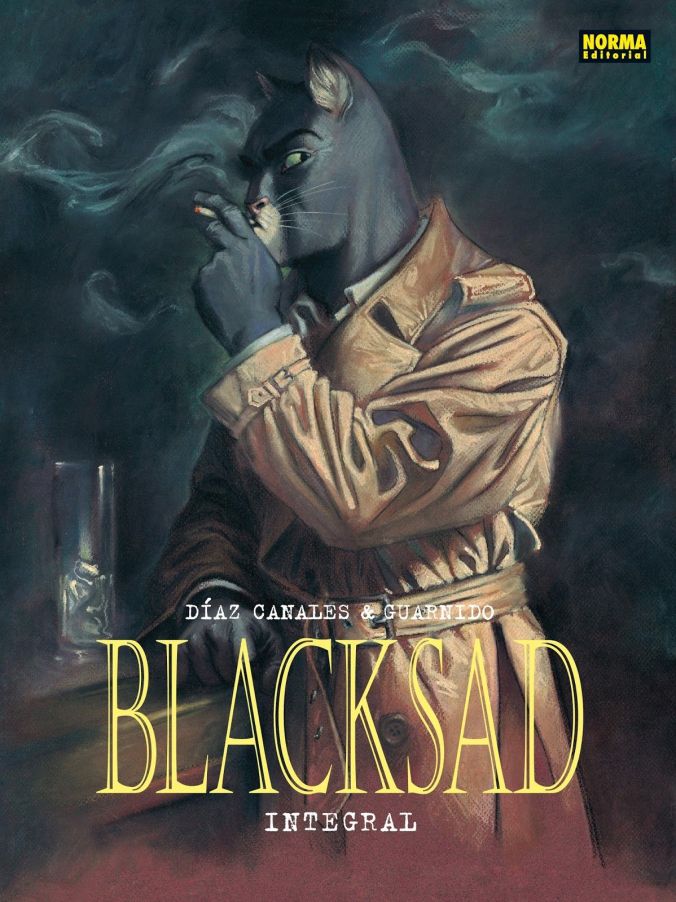
68d33259fd0a85a9a028db27ad0a9db3

[Spanish Complete Edition Cover.]

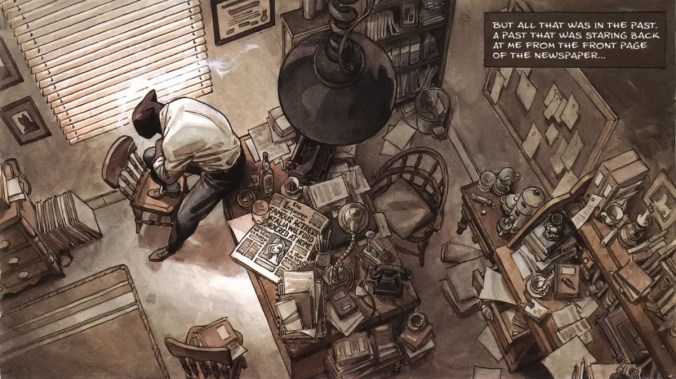
Blacksad is the story of the title-giving John Blacksad, black cat and private detective. His cases range from investigating a murder, to being a bodyguard, to simply fighting for his life which has gone downhill. Blacksad himself is the classic Film Noir protagonist, complete with badass traits and strength, but also emotional vulnerability and other flaws. The first volume, Somewhere Within The Shadows, shows the broken cat man in his messy yet functional office, telling of the character that works here.

blacksad-2

Guarnido’s backgrounds are brimming with detail.

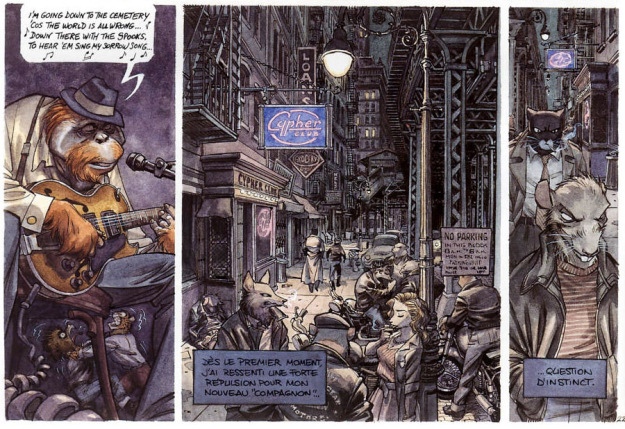
The first volume is a celebration of all that makes the Noir genre, chiseled men who believe in justice, bad guys who must be defeated, shady bars full of questionable characters, and a looming sense of villainy seeping through every rusty crack of the city. The Blacksad series is the distillation of 1950’s America: freedom, style, beatnik, jazz, but also racism, inequality, street violence, and everpresent crime.

blacksad_within-shadows_2000_03.jpg

Every volume plays in a different setting with a different theme, keeping the feeling fresh and interesting, with a reoccuring cast of colourful characters introduced slowly over time. And of course, these adventures will be intense, as the hardboiled genre asks it – action will go down.

blacksad

C54FNQ5

blacksad19

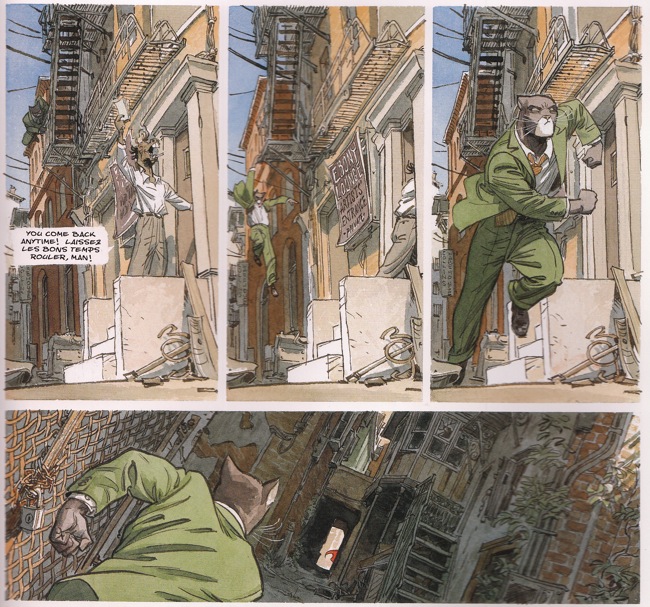
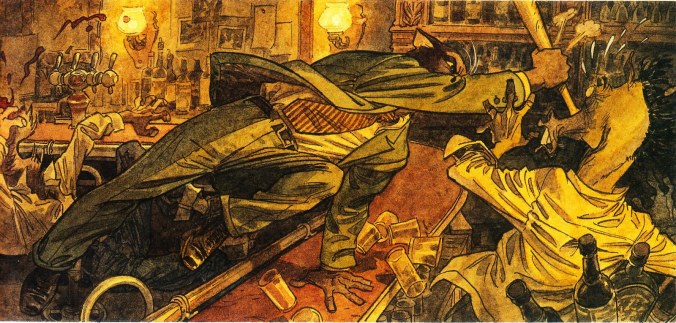
Action inBlacksad” is strong, clear and perfectly framed.

Here is where Guranido’s artwork shows its pure strength: Due to his experience as an animator, of drawing art in motion, he is masterful in his depiction of movement. Shots, punches, beatdowns and explosions all look visceral, right in the execution, as if stopped in a wonderous intense timeframe where one can look at all the details that only a comic book can allow.

If you wish to explore his animation style a bit closer, to also understand his way of framing action, look no further than his animated music video Freak of the Week by Swedish metal band Freak Kitchen. This 5-minute kickstarter-funded marvel is filled with some of the most vivid and expressive character animation in recent years, showing musicians in their fiery strong element, with rough outlines full of camera turns and fluid motion.

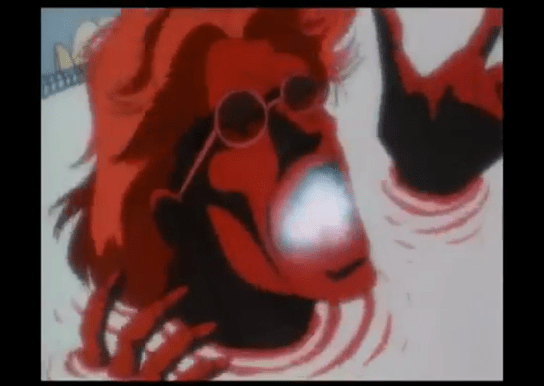
Especially that wonderful metal hair animation, fantastic. Sakugabooru.

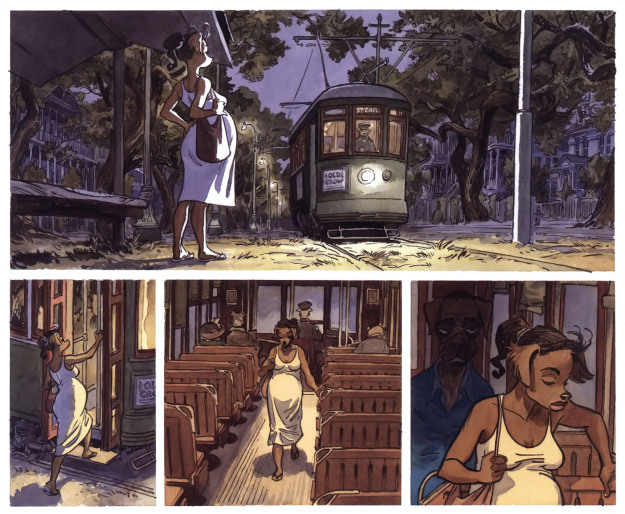
But not only is the action stellar, the colouring and lighting are wonderfully crafted as well. The watercolour settings spring to life, with astonishing detail and such a graspable sense of space that one wishes to simply step into the frame.

blacksad_a-silent-hell_2012_02blacksad_a-silent-hell_2012_04blacksad_a-silent-hell_2012_03blacksad_a-silent-hell_2012_06

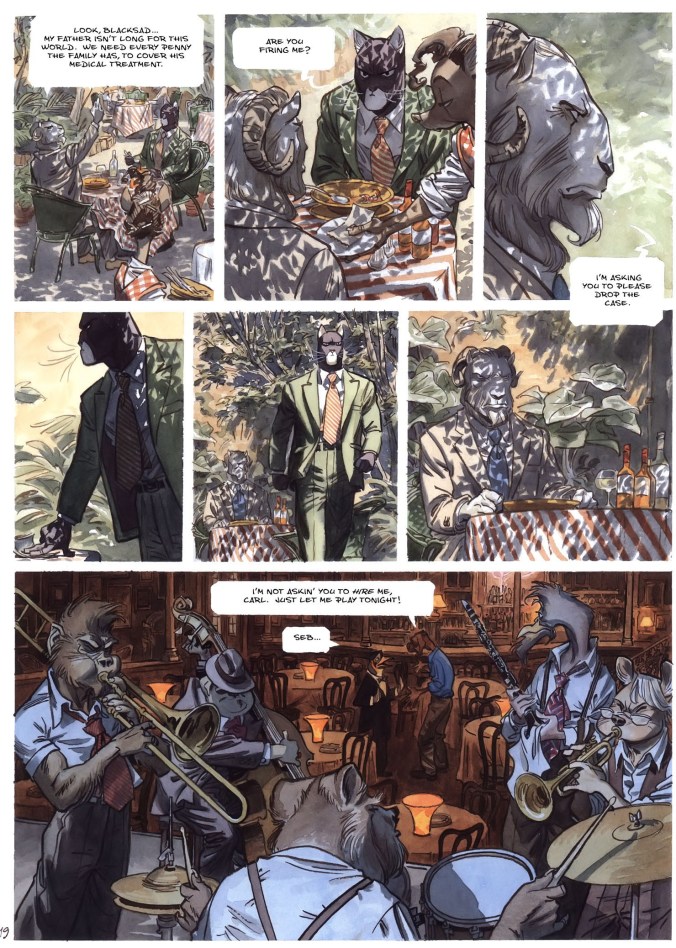
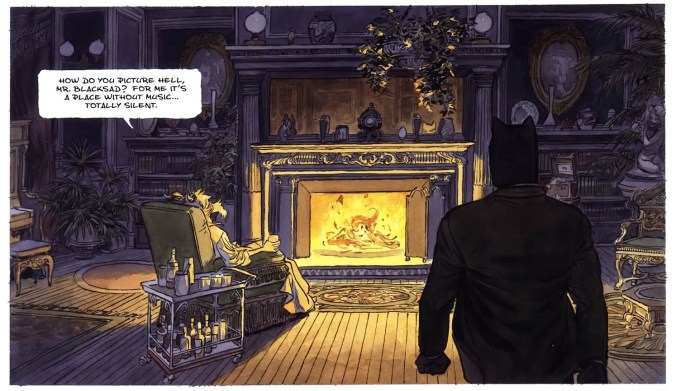
All frames from Vol. 4, “Hell, Silence”, which focuses on the world of jazz.

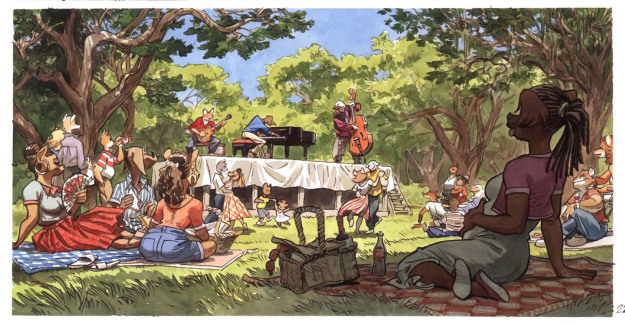
To adress the elephant in the room and the reason many people start this series in the first place: the world is inhabited by anthropomorphised animals. And to see these Disney-esque character designs in dark stories is intriguing as a concept in itself. Together with the brilliant execution and talent of artist Guarnido and writer Díaz Canales, it has an inescapable charm and fascination – and when these bright character designs clash with the harsh reality of society, it is exponentially more shocking.

blacksad-5-750

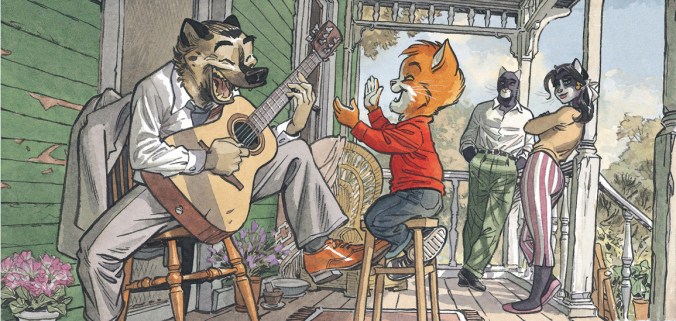
From happy times with friends…

565587.jpg

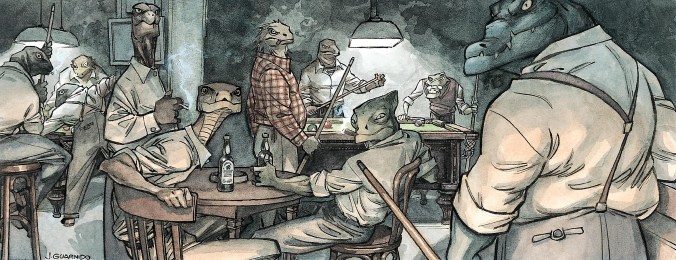
…to shady places of the underground…

blacksad_arctic-nation_2003_02

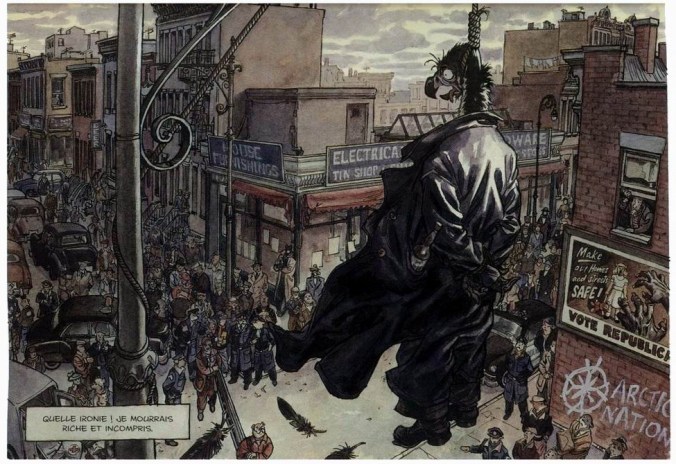
…to the hatecrime against a black-feathered bird in a small town.

This “Disney but not-Disney” feel is one of the main points that draws readers initially in. These themes and topics would never be touched by the family friendly corporation, but with Blacksad, it opens the possibility to a dreamland what-if scenario: What if Disney had never left 2D animation, and had started becoming adult with its content?

However, one should not reduce this graphic novel series to the past of one of the creators. These are expertly crafted comic books with masterful artwork, and I highly recommend that you experience this series yourself. (There was even word around of a Hollywood adaptation with a budget of up to 100 million dollars, however, the project seems to be stuck in development hell since 2009. This is not a problem, as the comics can easily stand on their own.)

An additional note I want to make here: Blacksad was released in France first, and was thus intended for the standard publishing size of that market. Franco-Belgian comic books have a larger format than their international brethren, which is perfect for detailed artwork and has a long tradition in itself. Hence, I would not recommend buying Blacksad digitally, as it can easily lose its impact on a small screen. Treat yourself to the physical release of your choice, Collector’s Edition or single volumes, and enjoy Blacksad as it was intended.

20180525_101112.jpg

From left to right: manga size, American comic size, and the French standard size. Above, you see the full effect of the artwork if the book is flipped open.

Blacksad is a fantastic graphic novel series that I would recommend to anyone who is even remotely interested in comics, artwork and/or colouring. For fans of the Noir genre, this is an absolute must, and even if you are not into the genre – open the pages and let yourself soak in this retro atmosphere of a time long gone, now told with a charismatic cat man by a beloved and insanely talented artist/writer duo.

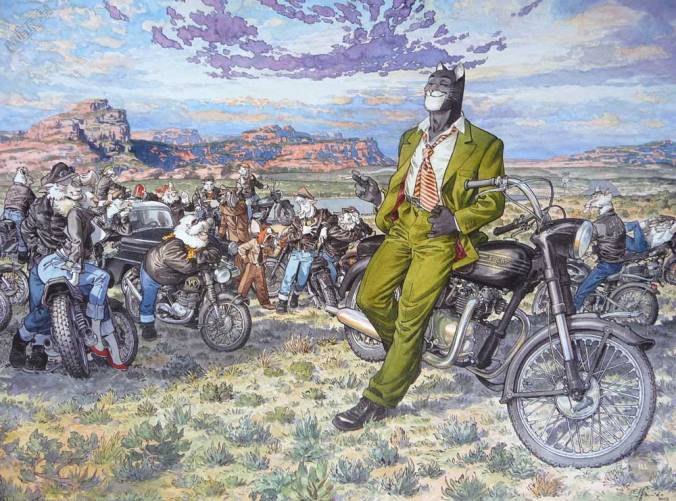
juanjo-guarnido-affiche-art-poster-bd-deco-illustration-blacksad-amarillo-road

The End.

Sources: Wikipedia “Junjo Guarnido” “Blacksad”, Disney Wiki “Juanjo Guarnido”, Sakugabooru.

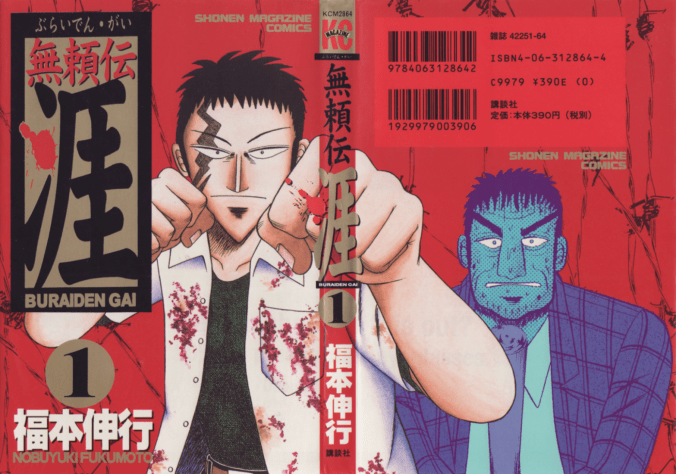
MANLY MONDAY – “Buraiden Gai”: The Unique Shonen Outlaw

wwwww

It is a good time for Nobuyuki Fukumoto’s works. Gin to Kin and Akagi both have successful TV dramas, the Kaiji manga has started a new arc, Zero is getting a steampunk TV adaptation, and the highly anticipated Tonegawa anime is on the horizon, with a release scheduled for July 2018.

In this big “Fukumotoverse” with its prequels, sequels and spinoffs, lies one smaller work that is on its own. No continuation, no adaptation, there it stands, alone and completed – fitting for its own story, themes and characters.

This is the manga Buraiden Gai, or “Legend of Outlaw Gai”. This manga was published from 2000 – 2001 in the Weekly Shonen Magazine, (not related to JUMP) which has more popular and successful series in the past and present than you might think: Devilman, Ashita no Joe, Hajime no Ippo, GTO, and recently, Koe no Katachi, Fairy Tail and AKB49.

In Buraiden Gai, the eponymous Gai, a young 13 year old schoolchild, is running. Running away from the police.

x14

And so, he is cornered in a dead end street.

The city is in chaos, the media is all over the place and the police is unable to cope with all this confusion. Why is everybody on their feet trying to catch this young boy?

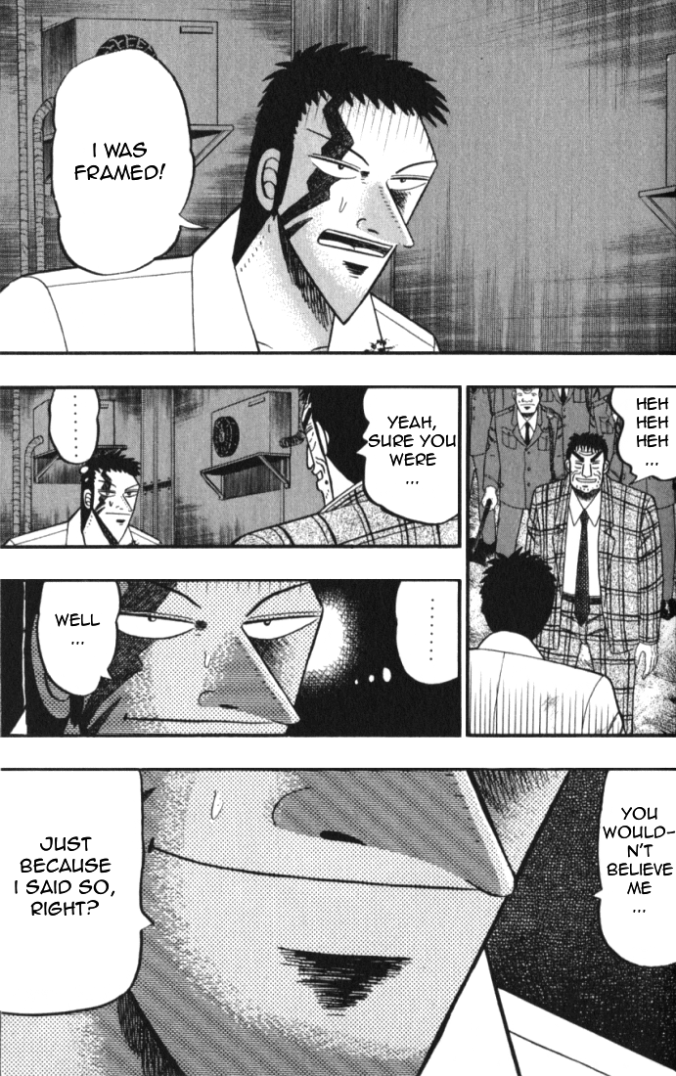
As it turns out, he murdered an older man. Not any man, however, but the patriarch of a big and influential yakuza clan. As Gai faces the overwhelming police force with nothing but his bare fists, he proclaims: “I was framed!”

x28

Of course, no one believes Gai.

The evidence points absolutely against Gai: his fingerprints are on the murder weapon, on the body, at the site and his escape from the crime scene is recorded on a security tape, directly after the point of murder.

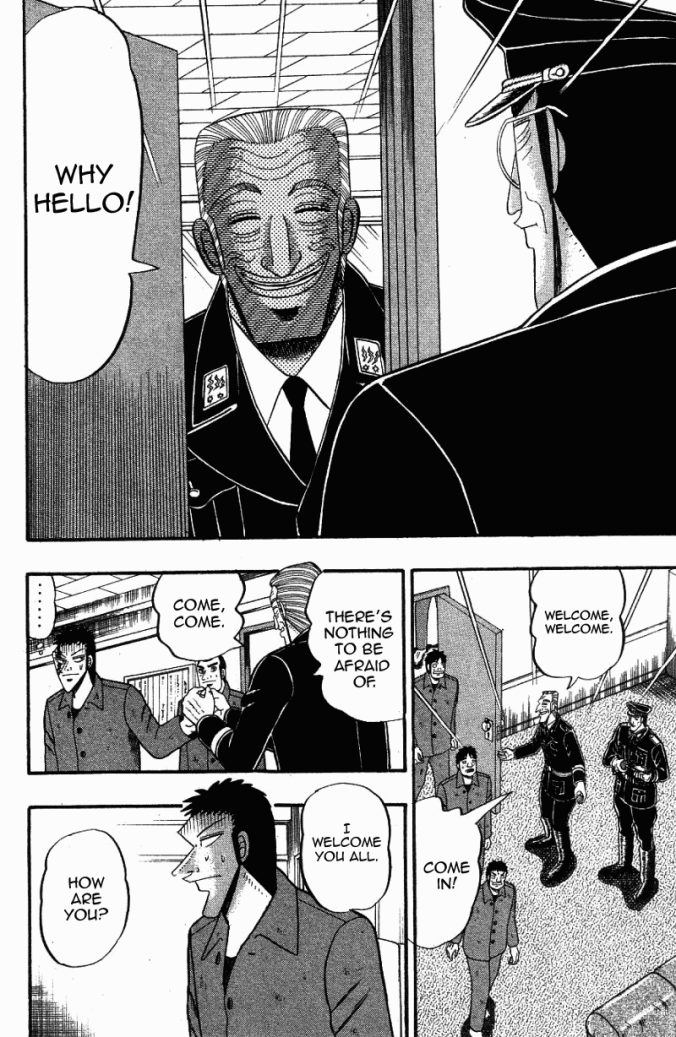
After a long verbal battle and a short physical one with the police inspector, which Gai surprisingly wins despite his age and size, he is arrested. Too young to go to prison, he will be sent to a youth rehabilitation facility before his trial. However, as he arrives, he finds out that this is not better than prison, in fact, it’s worse.

x8 (2)

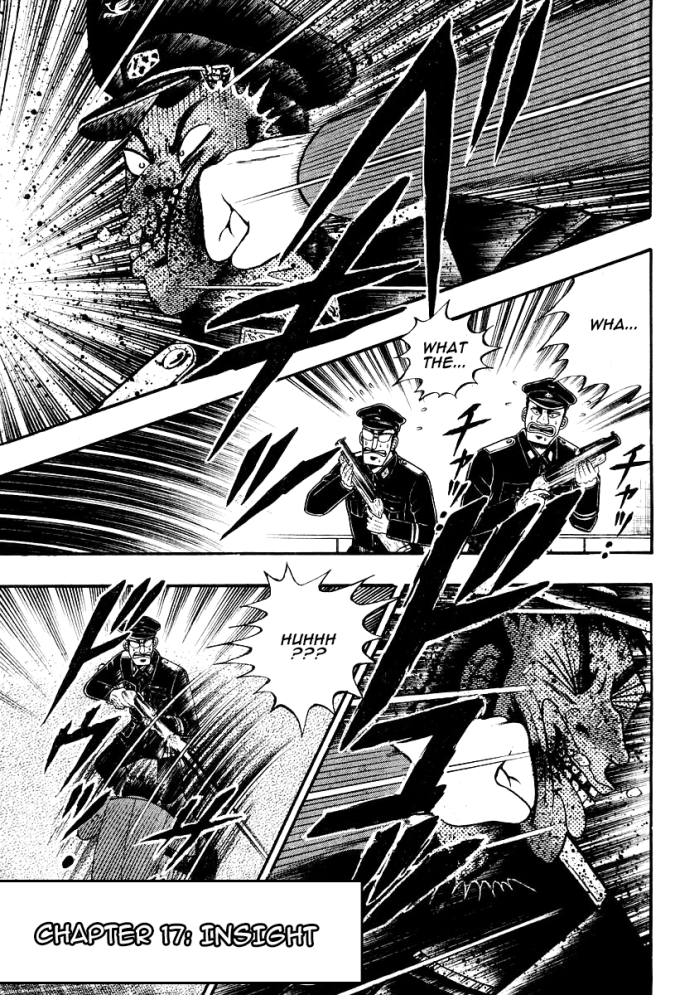
Something is fishy. Especially the visual historical weight of those uniform designs, if you look at them more closely.

This is more than prison, this an institution of cruelty with one goal only: turning young people into honourable and upright citizens, with any means necessary. It immediately becomes clear to Gai: He has to get out of here, but more importantly, he has to prove his innocence. The police officer believes him, however, there is no proof that the evidence is forged.

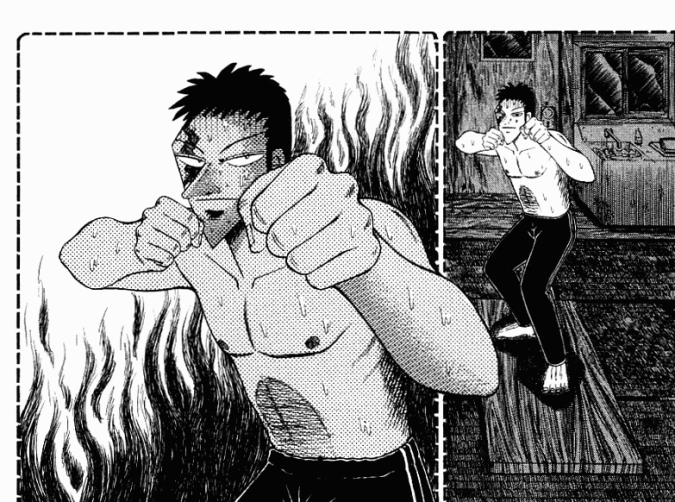
And so, the adventure of Outlaw Gai begins: Regain your freedom, fight for justice, crash the abusive system of the adults. “Prison Break Plot” meets “Philosophy Hour”.

Inherently, this sounds like a very Shonen plot, but the seriousness and intensity of Fukumoto’s Seinen spirit shines through, which I will not spoil here. The way the young prisoners are treated is very violent and shocking, and the themes he addresses are important to anyone, not just teenagers who are the target group of this manga. And it is definitely not for the faint of heart. There will be violence and questionable “education” methods, ranging from physical discomfort to psychological terror.

We see several themes in this manga: What is “freedom”? What is “strength”? What does it mean to “grow up”?

x5 (4).png

School settings are rare for Fukumoto, and thus very welcome.

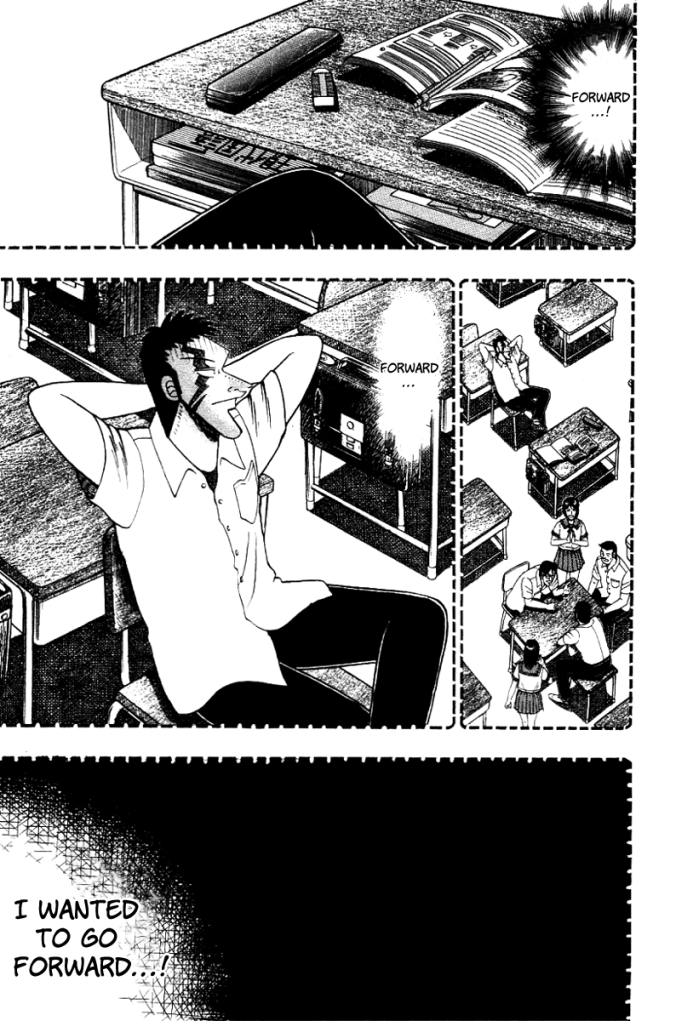
Gai is a great protagonist for this story: young, with a clear, straight outlook on life, and he does what he thinks is right. He receives a proper backstory as well, which fleshes out his character even more – a rare thing for Fukumoto, who normally does not give big flashbacks to his protagonists, as they are characterised by their actions in the present, such as Kaiji, Akagi or Kurosawa. For Gai, it fits, as we see him in his middle school days, struggling with the decisions of life before he was thrown into the prison setting.

And much like Kurosawa, Gai uses predominantly his fists to solve problems. Fukumoto’s intense, visceral, sharp style lends itself perfectly to these violent outbursts that carry gravitas within the story.

x1 (3).png

Smash the system. Right in the face.

If there is one word I can use for Buraiden Gai, it’s “condensed”. With its 5 volumes and 38 chapters in total, it is one of the shortest series Fukumoto has ever done, some of his series have been going for over 20 years – and yet, it brushes and discusses a lot of topics, through flashbacks, monologues and dialogues, all neatly woven into the story, which is equally busy: a prison break and a yakuza crime story all rolled into one.

From my research, I could only find information that the series was cancelled by the Weekly Shonen magazine, and that Fukumoto was unhappy with the ending he had to re-write, but nothing very concrete or any reasoning behind the decision to scrap it. As it stands, I like the ending, but one can feel the change in direction in the story. After about 3/4 of the chapters, the focus shifts and the narration speed slows down for a few chapters, only to pick up again – most likely to steer into the direction of the new finale.

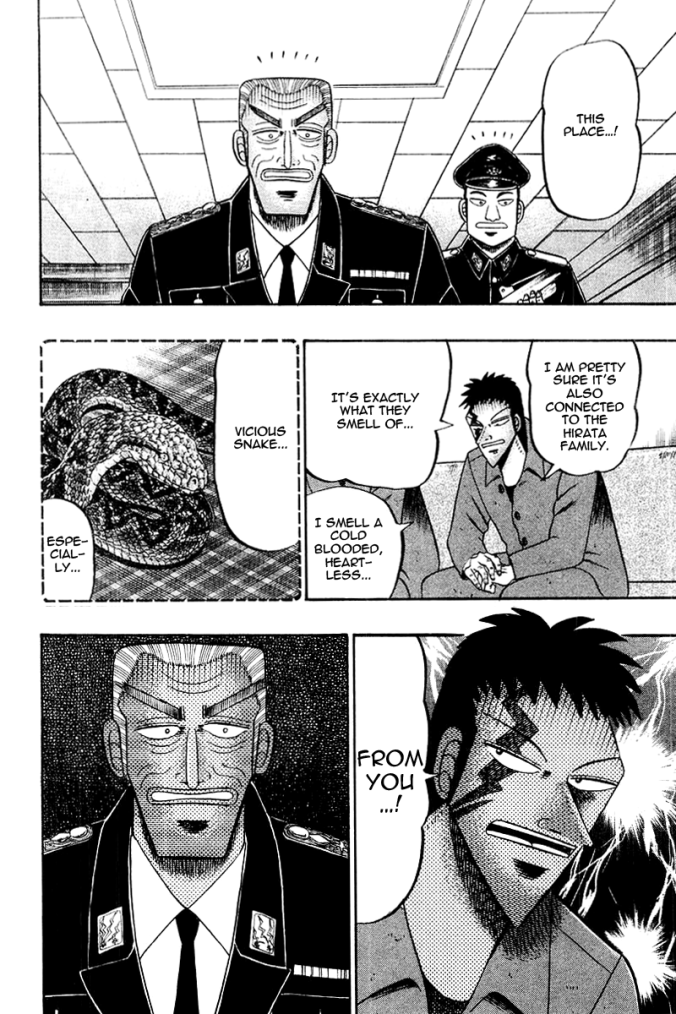
It is a bit sad that Buraiden Gai was not allowed not fully unfold itself, as the potential is there. A young hero with a no-nonsense direction but lacking life experience and maturity, against a smooth-talking villainous prison guard who thinks his own askew methods of education are right. In addition, the Hirata Clan, the powerful yakuza family, is maybe holding more threads than they seem.

x18 (2).png

Everything is connected. Is there a way out for Gai?

Even if the story is cut short, it still delivers the themes and questions it wants to. One can only wonder what it would have looked like if Fukumoto had the time to give it the vision he intended. Buraiden Gai could have been a big epic about the struggle of growing up and wishing for independence, as well as the conflict of generations. But as it stands, it is now a short, quick Shonen that delivers its punches and disappears again into the night, to leave you with its thoughts. Other Shonen might have pushed the boundary already what goes on in the genre, from Go Nagai’s Devilman to Hajime Isayama’s Attack on Titan, both violent and intense as well, but Buraiden Gai manages to even stand out among these. If a series can make me actively queasy with its ideas without being too graphic, then we got something unique here.

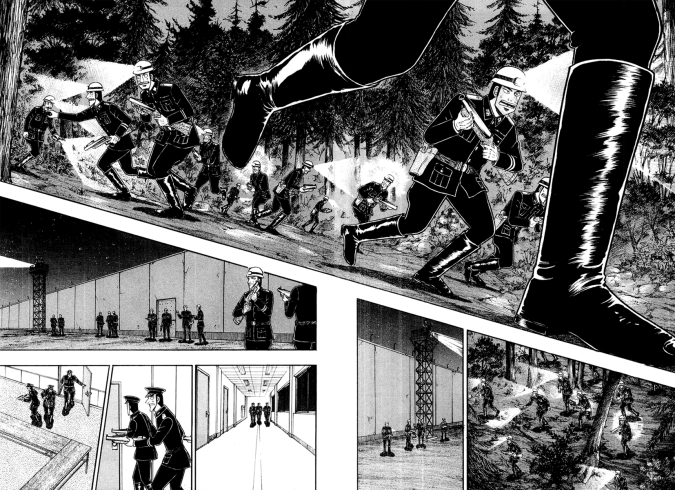
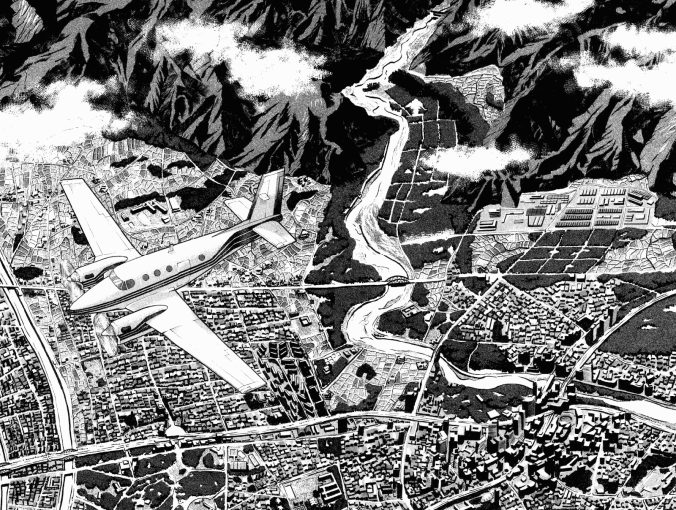
You can read all of Buraiden Gai in one or two days, maybe even in one sitting, and I highly recommend doing so. Not only for its intense story and philosophy, but also for Fukumoto’s artstyle. His longer stories rarely change settings, but Buraiden Gai displays a surprising amount of setting changes, brought to great effect in great spreads.

x5 (8).png

x14 (2).png

Some double-spreads are absolutely beautiful.

Buraiden Gai is the unique little Shonen outlaw in Fukumoto’s catalogue, without gambling themes or spinoffs, and I highly recommend reading it – for seeing what can be done in a Shonen Magazine, and for its philosophic content that it delivers with a sympathetic, strong and likeable protagonist.

The series had no time to show its true potential, but what it did was great, and it can nicely sit with all the other Fukumoto series in a big serious universe full of intense life stories. Will Gai break out of the youth detention prison? Will Gai defeat the yakuza? And will Gai find what he wants in life?

Give Gai a chance, he won’t take much out of your time, but I’m sure that he will stay with you for a longer while.

bura

The End.

PS: And once you’re done, check out this fantastic mock-up of an Anime OP, in the style of the Death Note OP2.

Sources: Wikipedia entry: “Nobuyuki Fukumoto”, MyAnimeList entry: “Weekly Shounen Magazine” and “Buraiden Gai”

MANLY MONDAY – “Baoh: The Visitor” OVA or “Jojo before Jojo”

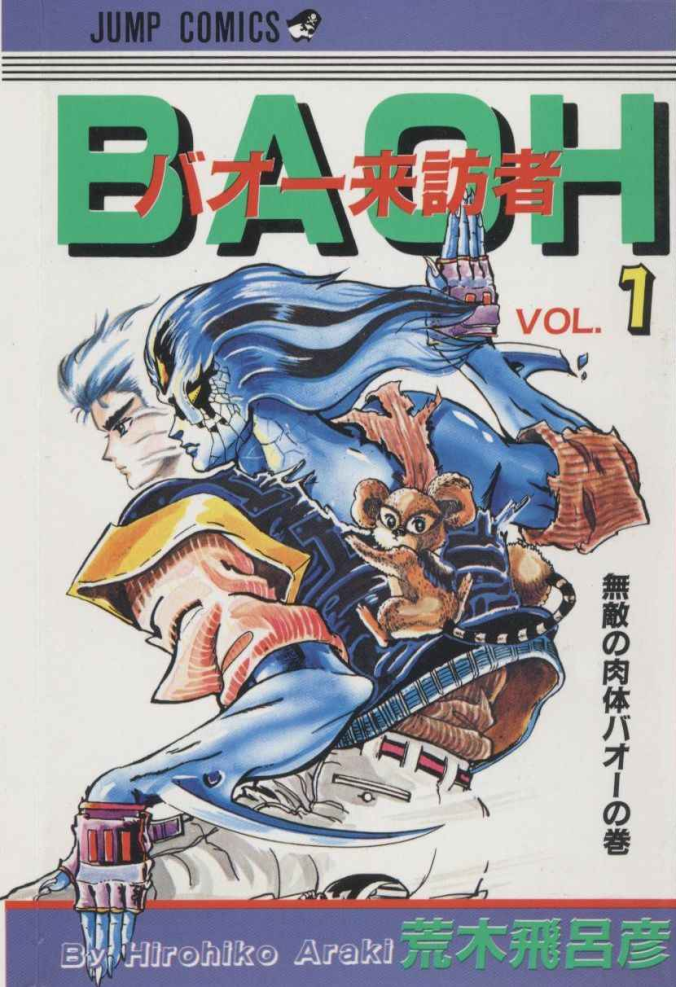
Baoh_Volume_001.png

Before there was the phenomenon “Jojo’s Bizarre Adventure”, there was “Baoh: The Visitor”.

By the same mangaka, Hirohiko Araki, this manga was “Jojo before Jojo”. The series ran in Shonen Jump in 1984, for just 9 chapters, or 2 volumes as a whole, in only five months. And yet, in this short period of time, Araki would show his craftsmanship that would fully shine in the future. From the art, to the story, to the characters, this is a unique and fantastic piece of history.

With a manga this brief, an OVA that tells the whole story was made in 1989, by Studio Pierrot. We’ll take a look at the story, the animation and reoccuring ideas of Hirohiko Araki. This is “Baoh: The Visitor”.

Story and Characters

An evil corporation tests out a new biochemical weapon, an alien larva called “Baoh”, that turns any living being into an over-powered killing machine. They tested it on animals, and now for the first time, on a human. Unfortanetly, this human, named Ikuro, escapes when being transported by train.

vlcsnap-2016-08-17-09h42m37s824vlcsnap-2016-08-17-10h02m24s305vlcsnap-2016-08-21-18h49m59s363vlcsnap-2016-08-21-18h50m08s659vlcsnap-2016-08-21-18h50m28s661

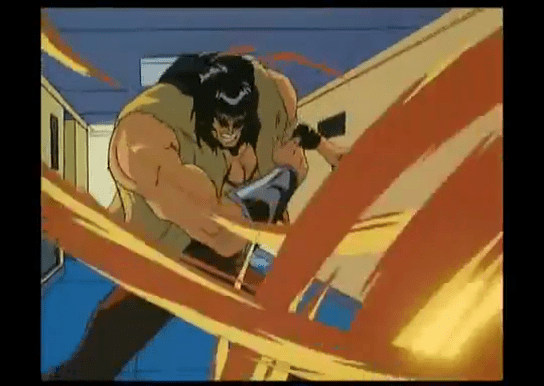
The lighting and angles give it a great grim sci-fi vibe. But it wouldn’t be Araki if the muscular guy were not in a fabulous outfit.

vlcsnap-2016-08-21-18h51m22s665.png

“Excuse me, madam, I need to get through here. Don’t mind the leather and general nakedness.”

Our protagonist jumps off the train, but gets hurt by electric cables that he tried to hold on to. He is saved by a little psychic girl, Sumire, that has visions of the future.

vlcsnap-2016-08-21-18h53m16s004.png

Araki can do moe!

vlcsnap-2016-08-21-18h53m40s072vlcsnap-2016-08-21-19h08m12s759vlcsnap-2016-08-21-19h08m25s542vlcsnap-2016-08-21-19h08m28s751vlcsnap-2016-08-21-19h08m30s677vlcsnap-2016-08-21-19h08m34s588

BLEH! Araki’s creative visuals are already here!

It turns out that an assassin has been hired to kill Ikuro. He is now on the run with Sumire, and a lot of fight scenes ensue, where Ikuro starts to realise the potential of his newly gained supernatural powers. When a SWAT team led by a cyborg sniper comes after him, Ikuro a.k.a. “Baoh” goes on a violent blood-drenched rampage.

vlcsnap-2016-08-22-00h31m10s204

That is practically harmless. The violence in the OVA is much more graphic.

vlcsnap-2016-08-22-00h32m20s759vlcsnap-2016-08-22-00h32m22s834vlcsnap-2016-08-22-00h32m25s954vlcsnap-2016-08-22-00h32m28s056vlcsnap-2016-08-22-00h32m32s512

But what has he become?

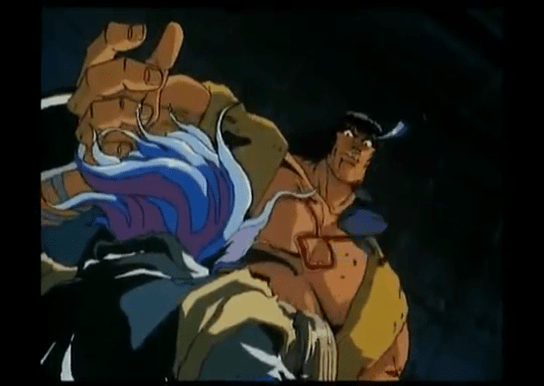
The evil corporation kidnaps Sumire, in order to lure Ikuro back to the laboratory. Here, the action gets even more intense, with a psychic villain called “Walken”.

vlcsnap-2016-08-22-00h38m46s311vlcsnap-2016-08-22-00h39m45s803vlcsnap-2016-08-22-00h39m47s764vlcsnap-2016-08-22-00h39m48s840

He has fire powers that are animated in impressive swirls.

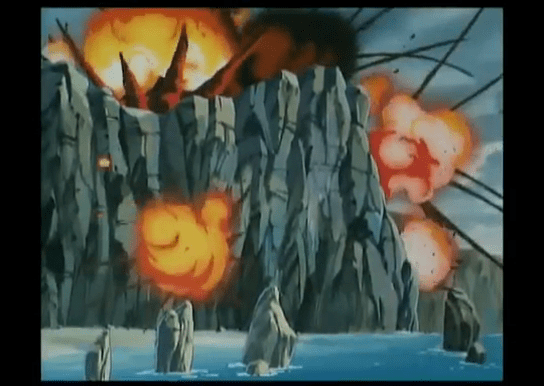
And so, a big battle takes place, the laboratory is destroyed, and “Baoh” goes down with the explosion and the debris. The final fight between him and Walken is well animated and serves as a great climax.

vlcsnap-2016-08-22-00h45m17s020vlcsnap-2016-08-22-00h46m06s467vlcsnap-2016-08-22-00h48m34s499vlcsnap-2016-08-22-00h49m07s639

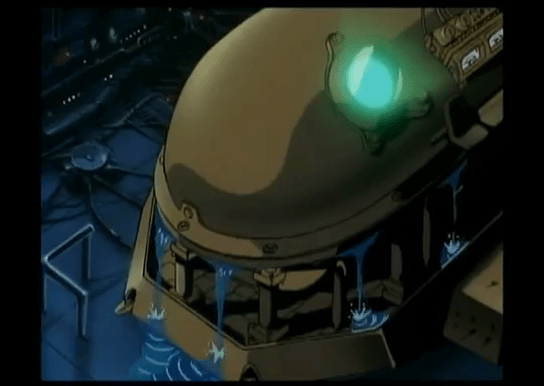
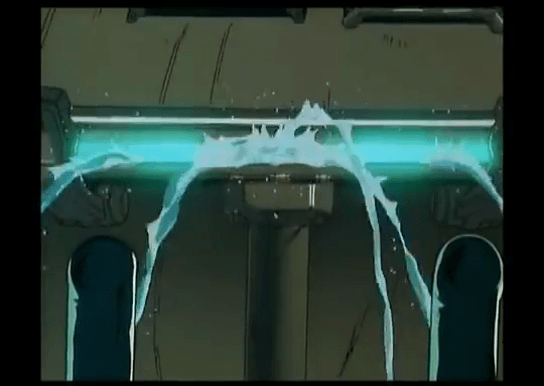
Big laser cannon, big muscles, big explosions. Yes!

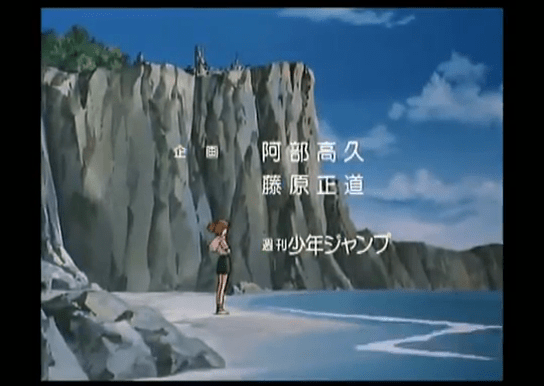
And so, the anime ends with Sumire standing on a beach, waiting for Baoh’s return. He’ll be back one day.

vlcsnap-2016-08-22-15h34m25s694.png

While the story seems simple and easy, the scenes in itself are crafted with care, as great action set pieces. I have excluded a lot of scenes here, in order not to spoil them for you. But we are not really here to discuss the story, let us take a look at the themes and the style, which are all very “Proto-Jojo”.

Jojo before Jojo

Araki has a love of naming characters after songs and artists he likes, like “Killer Queen” by Queen, “Speedwagon” as in the band “REO Speedwagon”, and most famously, “Dio”, after heavy metal legend “Ronnie James Dio”.

For the name of the Native American psychic warrior, he went for “Walken”, named after actor “Christopher Walken”.

Perfect!

The concept of “Baoh”, a perfect immortal being and what it would mean, was revisited in several parts of Jojo’s Bizarre Adventure, mostly with the characters of “Dio” and “Cars”.

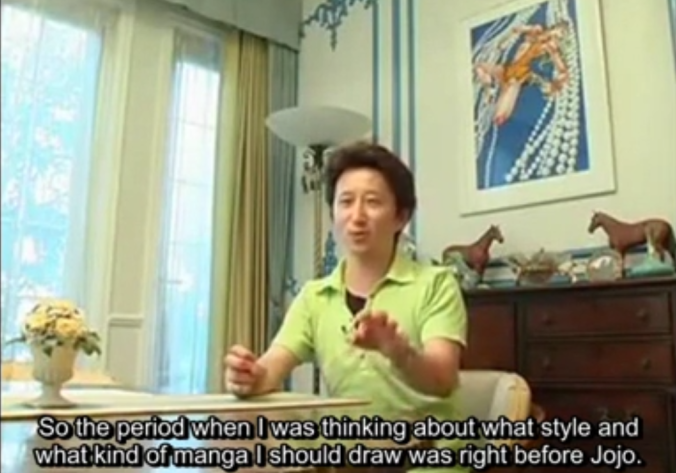
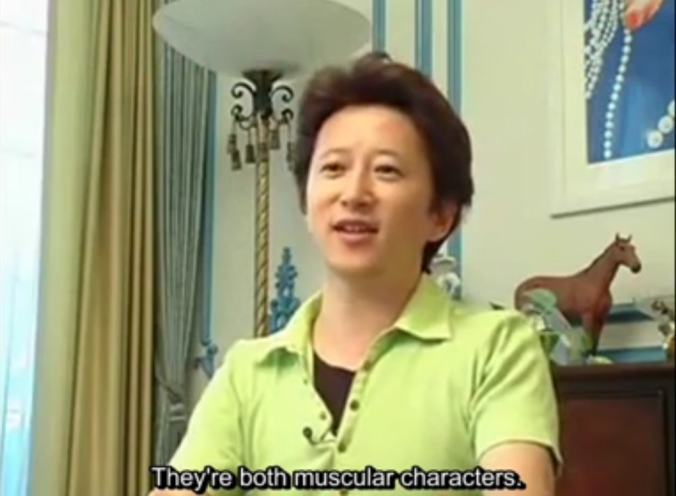
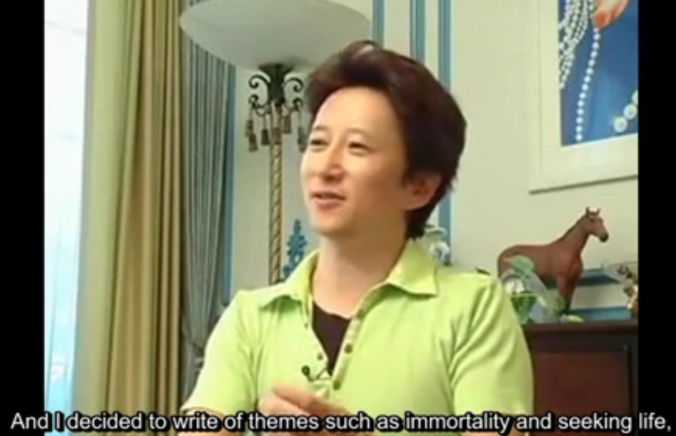
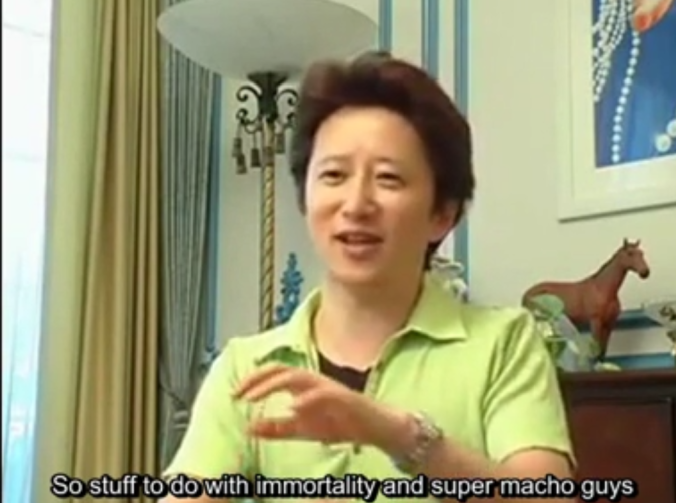
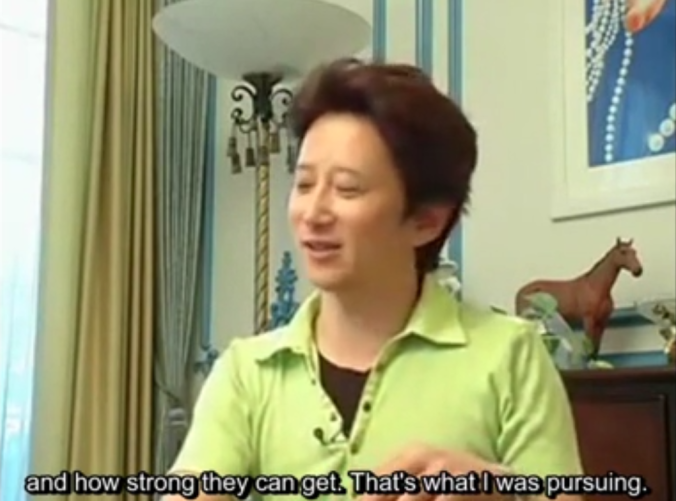
Hirohiko Araki, when he started the series in the 80’s, was really fascinated by the idea of macho and strength, and asked himself: how strong do they get, and how is strength measured? And what if a person is immortal? Are they then unbeatable? This is a prominent theme in the first parts of JJBA, and it appears already in “Baoh”.

araki 1araki 2araki 3araki 4araki 5araki 6araki 8araki 9

Hirohiko Araki in an interview about the story of Part 1 of Jojo’s Bizarre Adventure.

(Source. Warning: Araki is too pure for this world.)

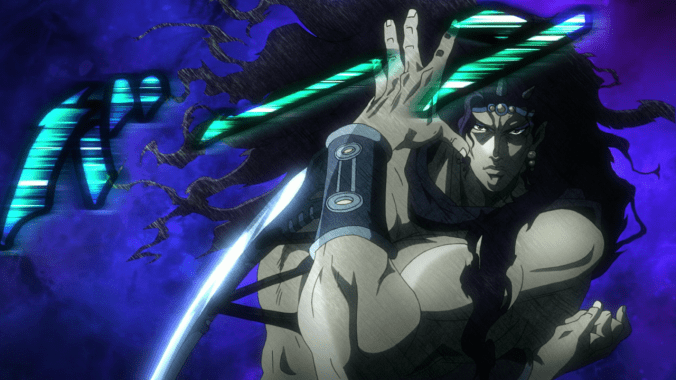
Also, Araki took the design of Baoh and redid it for Cars, the one of the main villains in JJBA Part 2, complete with lots of muscles, long hair, and arm scythes.

BadassKars.png

vlcsnap-2016-08-22-00h38m03s112

Cars in Jojo’s Bizarre Adventure Part 2: Battle Tendency compared to “Baoh”.

baoh.png

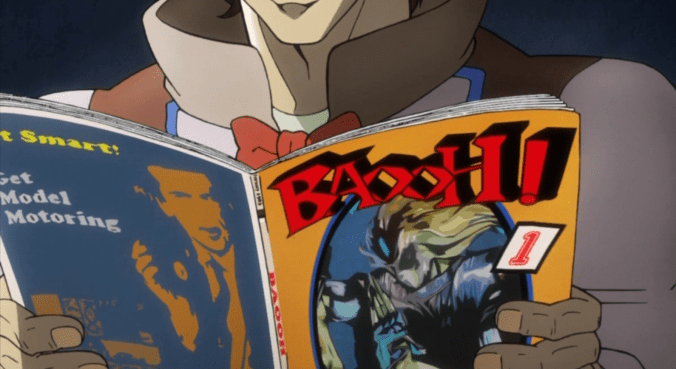
“Baoh” easteregg in the JJBA anime adaptation by David Productions. Joseph Joestar is reading the manga on a plane.

maxresdefault

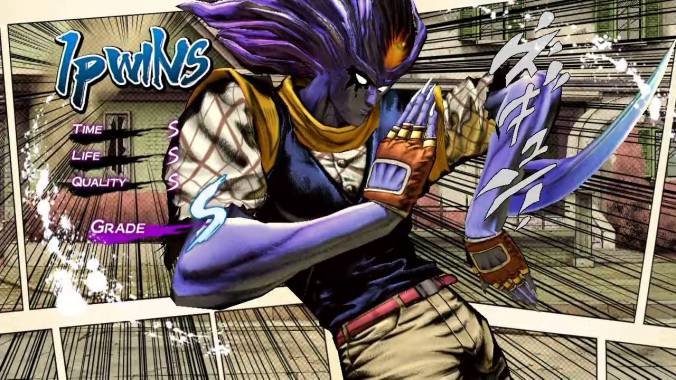
Baoh also makes an appearance in the “JJBA: All Star Battle” video game as a DLC character.

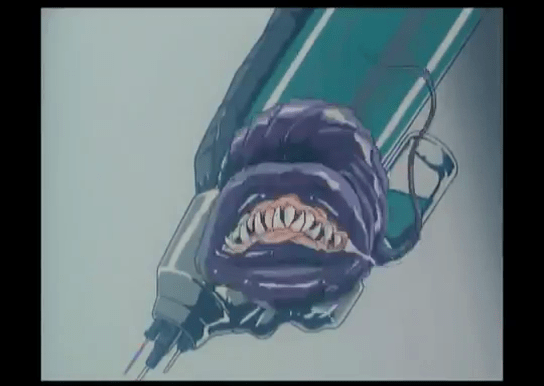
As Araki has a deep love for Western pop culture, other references are found as well, like the melting of faces in “Raiders of the Lost Ark”, an alien larva seeking for a host from “Alien”, and the cyborg villain aesthetic of the “Terminator” movies.

vlcsnap-2016-08-22-00h27m25s020.png

vlcsnap-2016-08-22-00h33m57s151.png

Only two of many references. Not pictured here: very graphic face-melting.

Tiny observation: The investors wear masks, not unlike the mask from JJBA.

Animation & Early “Posing Style”

The animation still holds up very well for being 27 years old, with outstanding sakuga moments fit for an action series, featuring debris, explosions and gunfire.

Scenes from Sakugabooru:

Impressive shot of Baoh escaping the military and Walken in a cave.

Shot of Baoh getting hunted down by a SWAT team.

Shot of ocean waves in the ED.

(WARNING!) The fight scene between the Baoh monster and the tiger is gruesome, with trademark 80’s hyperviolent gore and blood, and Araki’s odd habit of “animals getting hurt to show how evil the scene is”, which would appear in Jojo prominently as well.
But a special highlight are the early forms of “poses” that would become one of the beloved main attributes of “Jojo’s Bizarre Adventure”.
vlcsnap-2016-08-22-00h31m41s339vlcsnap-2016-08-22-00h31m42s886vlcsnap-2016-08-22-00h37m34s174vlcsnap-2016-08-22-00h38m03s112vlcsnap-2016-08-22-00h38m06s767vlcsnap-2016-08-22-00h38m38s077vlcsnap-2016-08-22-00h41m15s500
All of Baoh’s fighting moves feel very stylish!

Even those inbetweens!

On a side note, I cannot really recommend the dub of this OVA, except if you really want badly acted voices, which have a strange, campy charm in itself. (Baoh himself unfortunately sounds like he was dubbed by someone who happend to stand in the recording booth by accident.) The original voices give the anime more of a proper, serious feel.

Conclusion

BAOH

“Baoh: The Visitor” is a fantastic trip to the past. Not only to see Hirohiko Araki’s evolution as an artist, but also to revisit the age of 80’s anime. It is only 48 minutes long, but time really flies by in this action packed OVA. The hyperviolence and gore are very much in the zeitgeist of the decade, but the Araki spin on it makes it all the more entertaining. Instead of being just a boring gallery of violence, this anime becomes a camp celebration of 80’s. From the animation, to the character designs, to the music.

If you are a fan of Jojo’s Bizarre Adventure, give this anime a watch. If you just want to check out the 80’s aesthetic, I recommend this as well. While today is the age of “moe” and “slice of life”, this was the age of musclebound men and hyperviolence. It is interesting to see how preferences, overall artstyles and the general anime culture change. You may just need a strong stomach for all those strong visuals. If you do, sit back and enjoy this little gem from Hirohiko Araki.

vlcsnap-2016-08-17-09h39m25s666.png

The End.