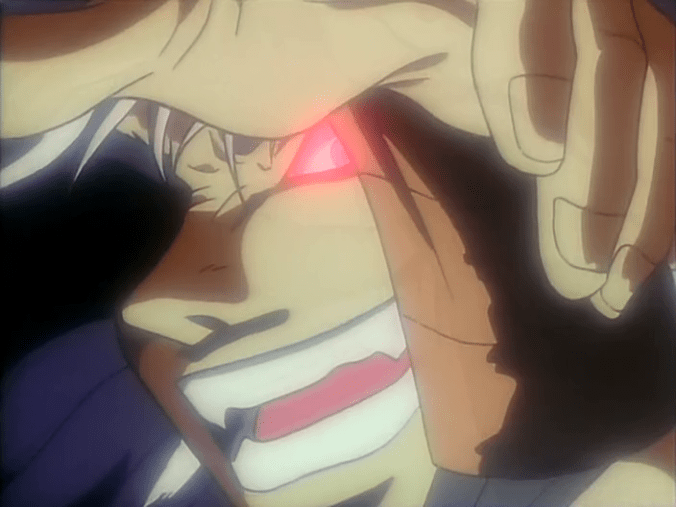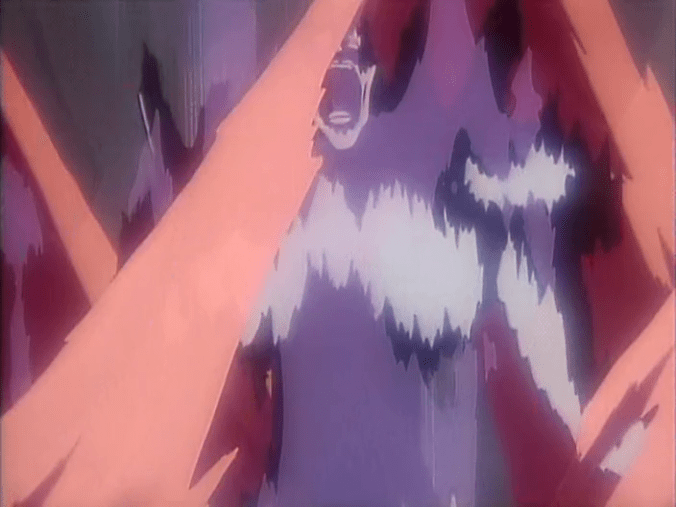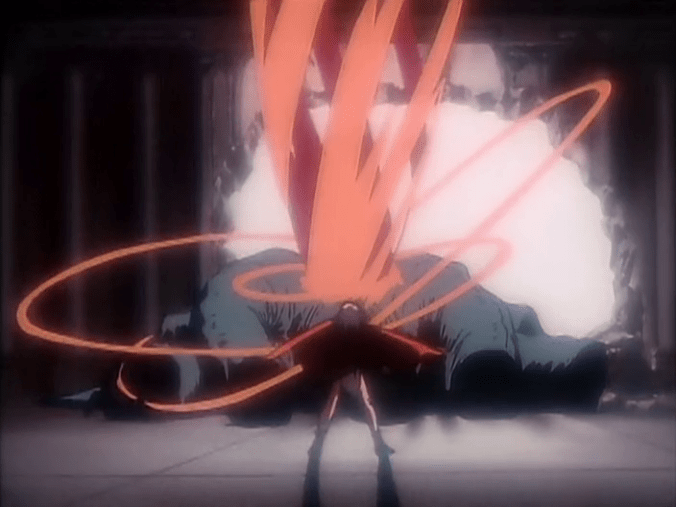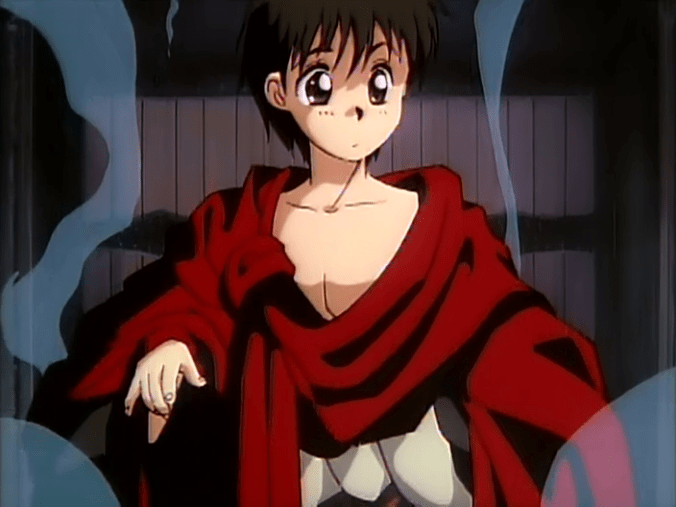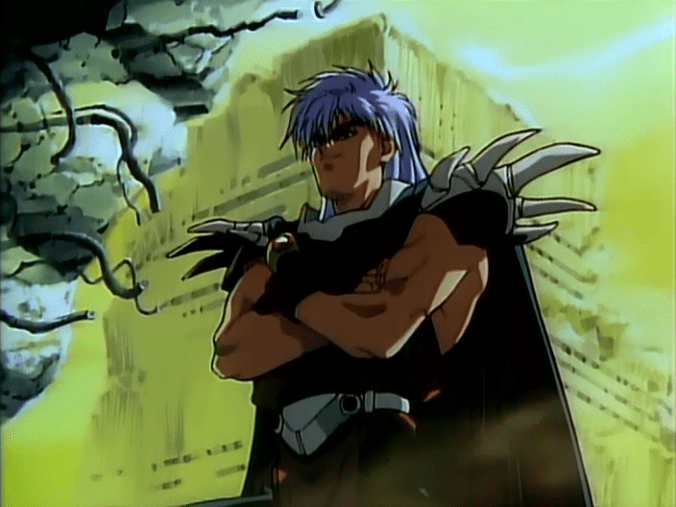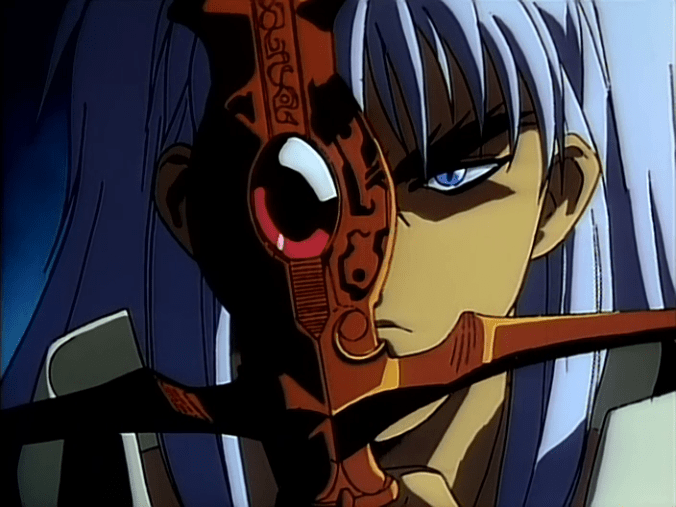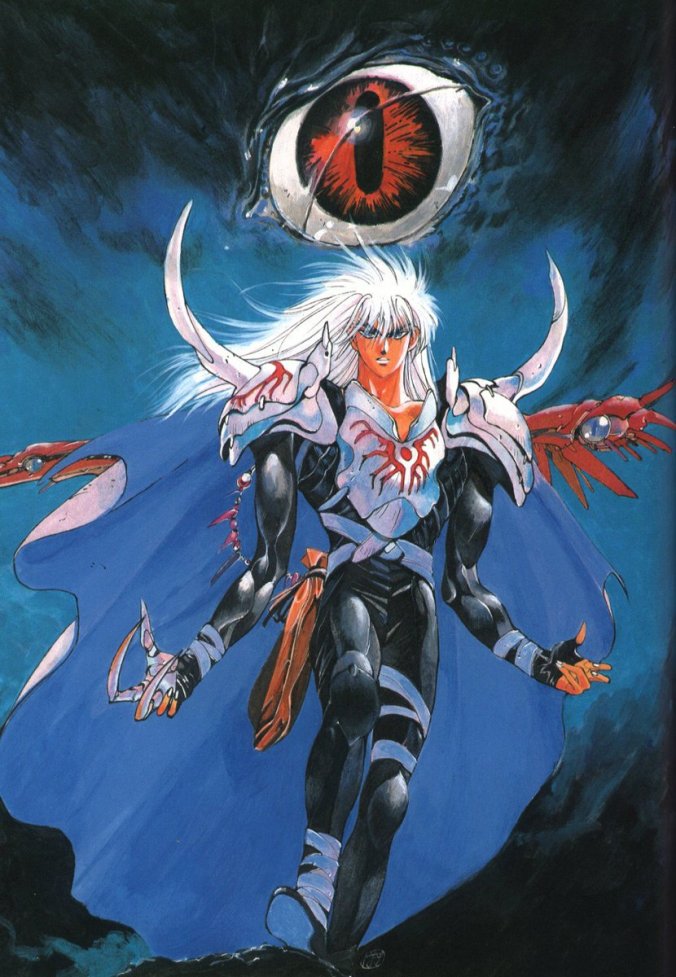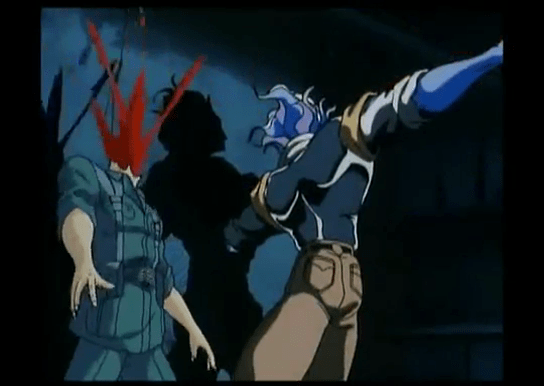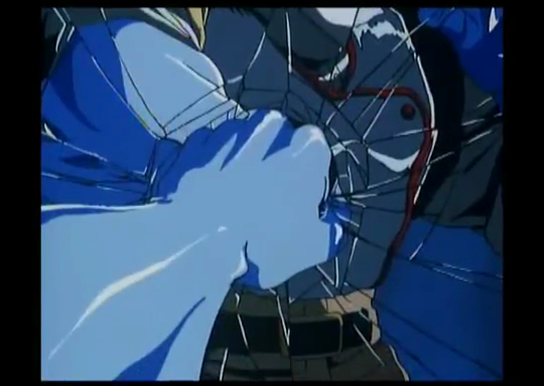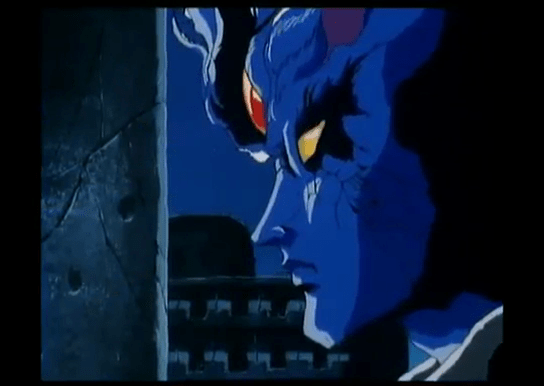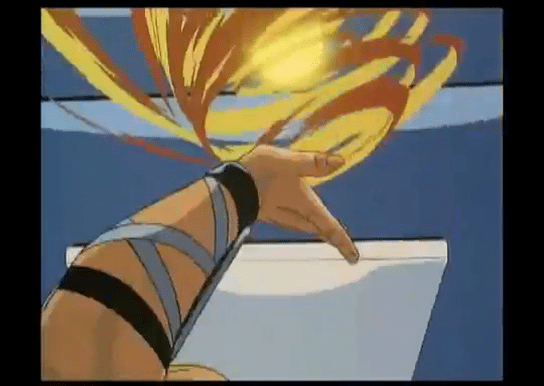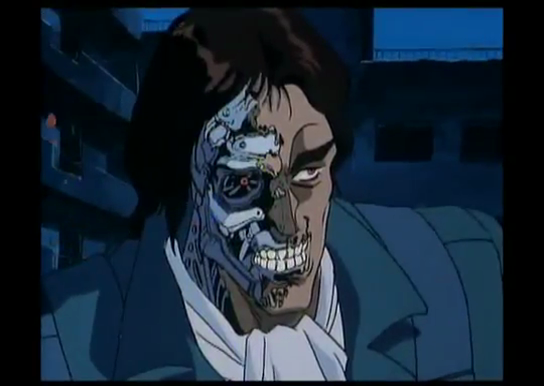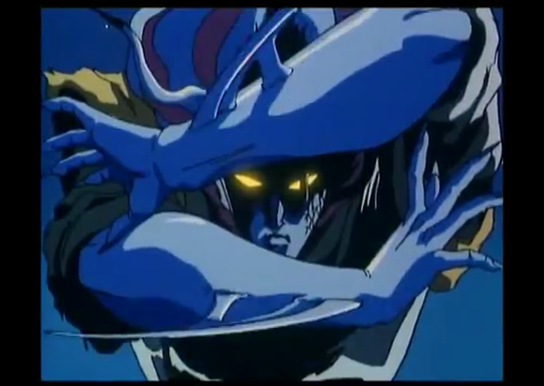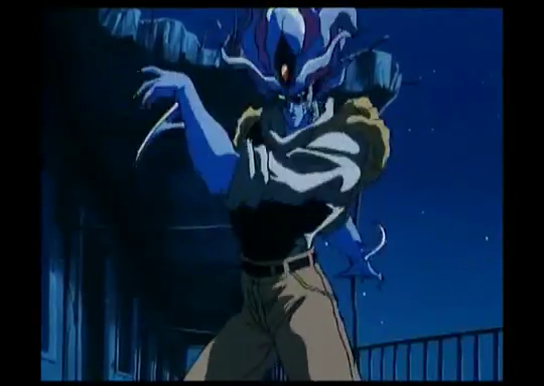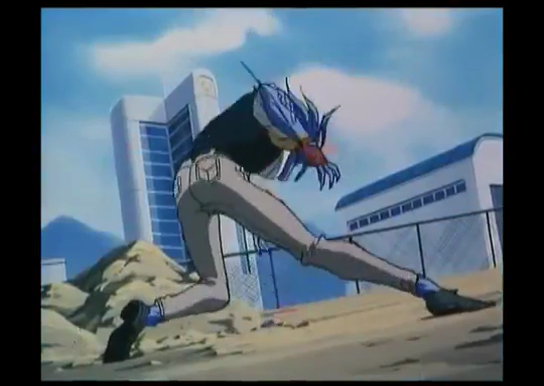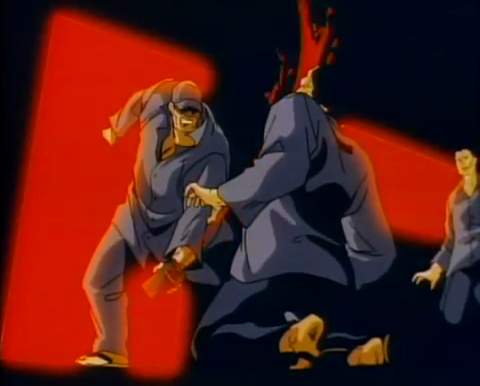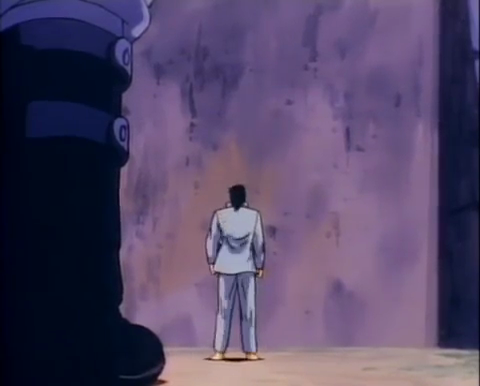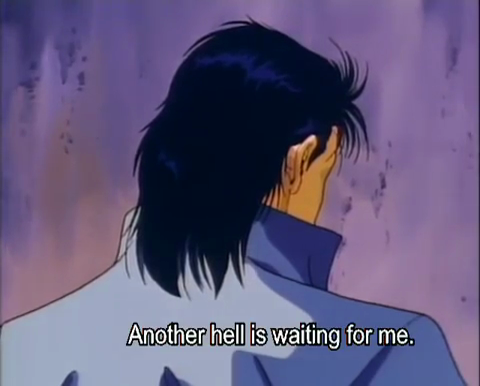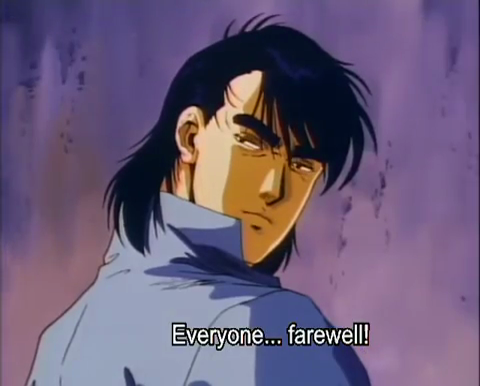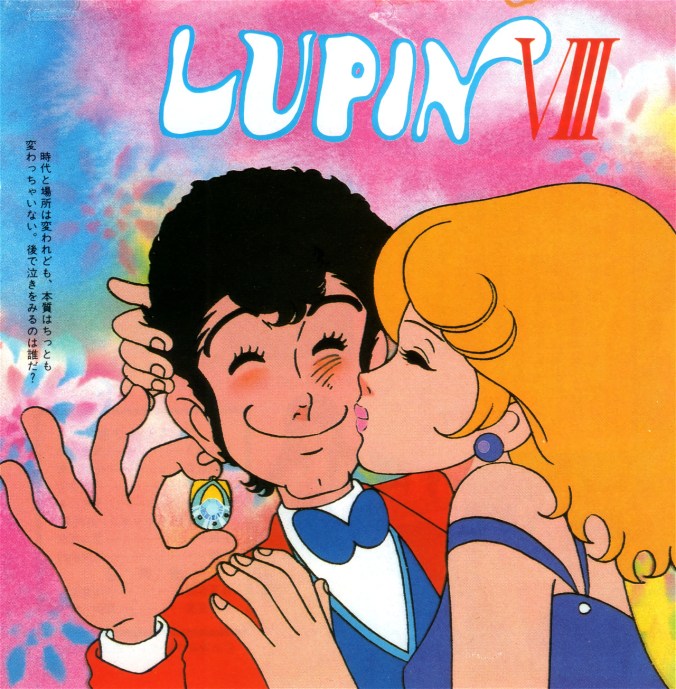
MANLY MONDAY: Lupin VIII – The Story of a Cancelled Sci-Fi Pilot

lupin viii.png

The Lupin III franchise is now celebrating its 50th anniversary, with countless entries and works over many years. While I covered a few of my favourite works already, it is interesting to look not only look at the beloved, but also at the ones that are overlooked.

Or in this specific case, the ones that never made it to the public. Not every entry can be successful in this fast world of entertainment, and some get outright cancelled before they see the light of day. Such as this little pilot episode to a new series called Lupin VIII in 1982.

Let’s take a look at this unusual pilot and what lead to its early cancellation.
vlcsnap-2018-09-16-15h42m31s060

Lupin VIII, “Arsène & Company” in French.

Story and Changes

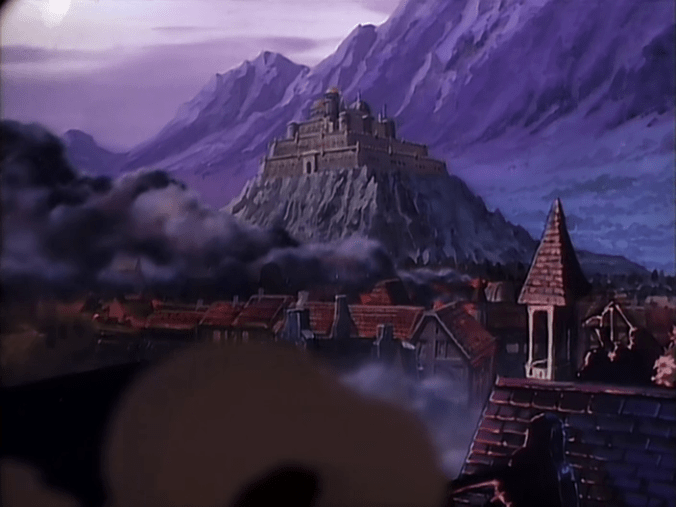
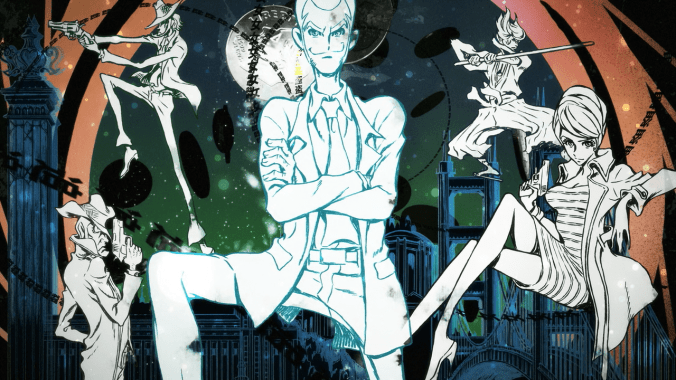
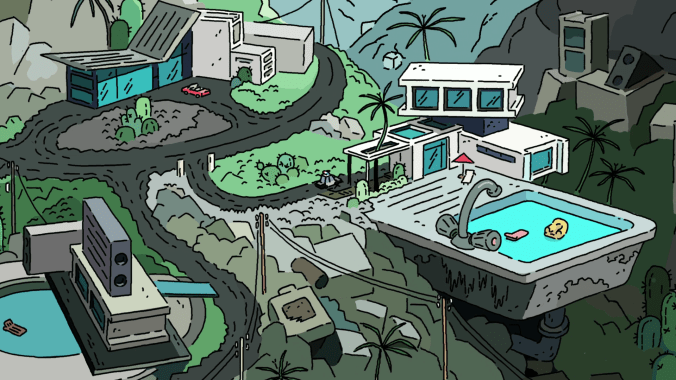
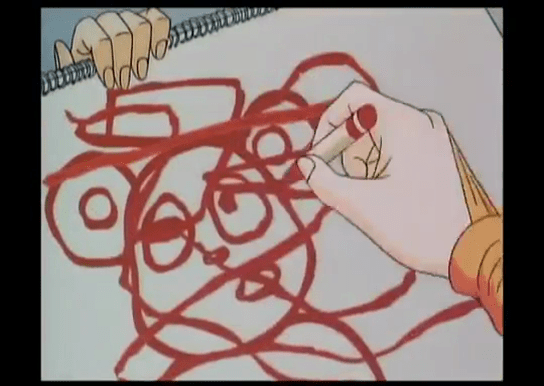
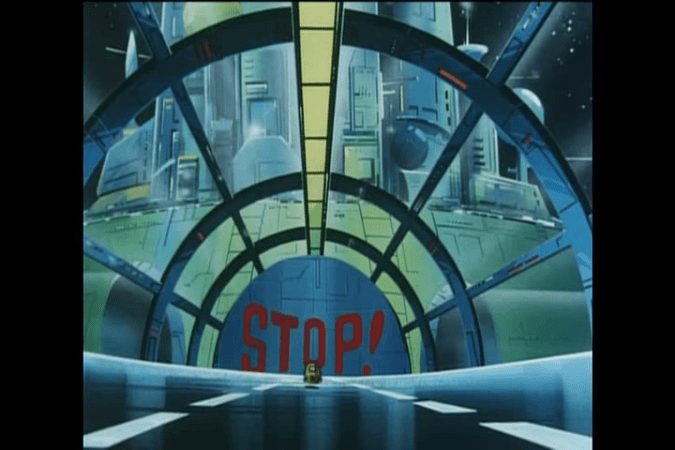
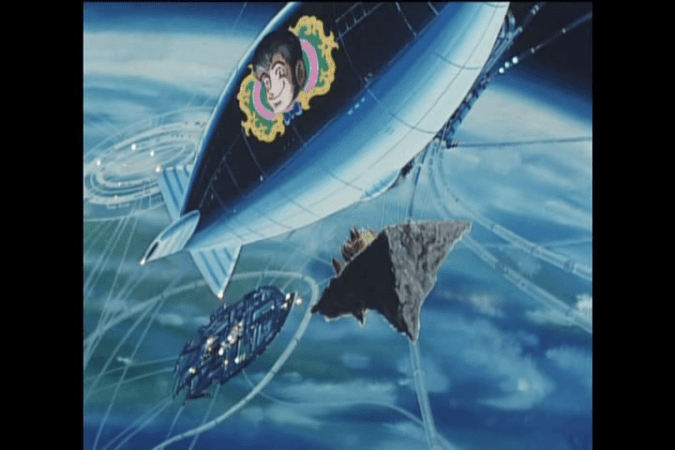
Lupin VIII takes place in the far future, space travel is a day-to-day occurrence and Earth’s orbit is full of space stations, galactic highways and private rockets, big and small.

This slideshow requires JavaScript.

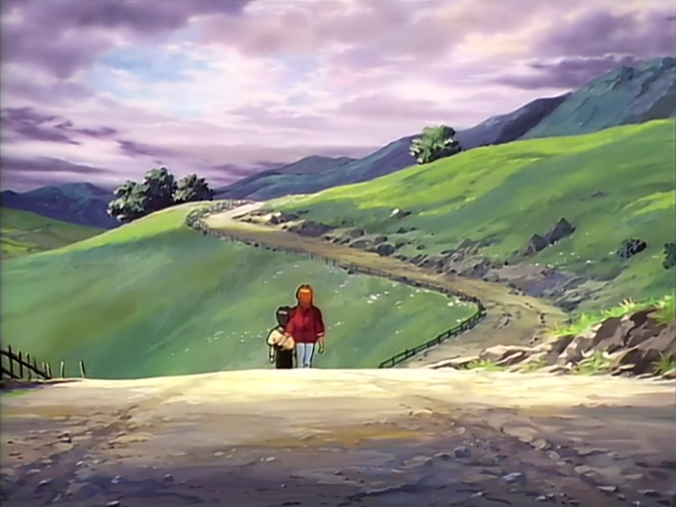
Lovingly designed backgrounds that establish the world in the intro.

Inmidst all of these flies a space ship in the shape of a zeppelin – it’s the office of freelance detective Lupin VIII. Together with his friends Jigen The Fifth and Goemon XVIII, they solve mysteries for many clients. Love interest Fujiko Mine (no extra number given) is also around, but having her own adventures that intersect with the other main characters coincidentally.

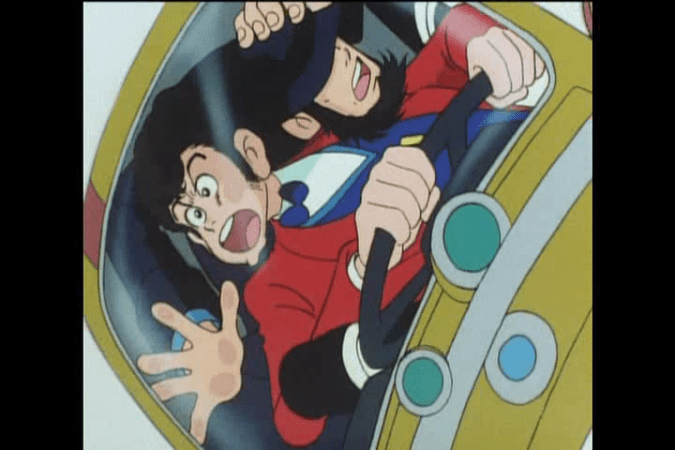
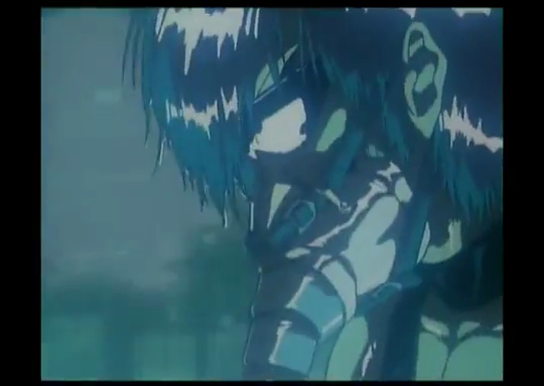
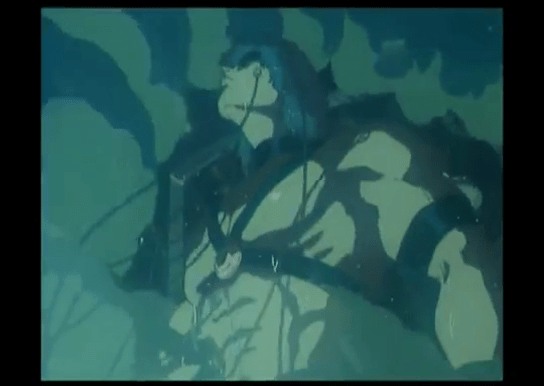
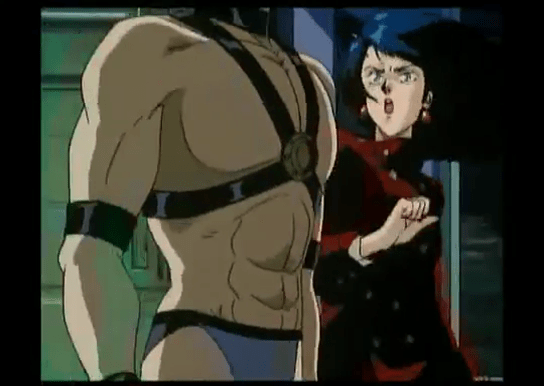
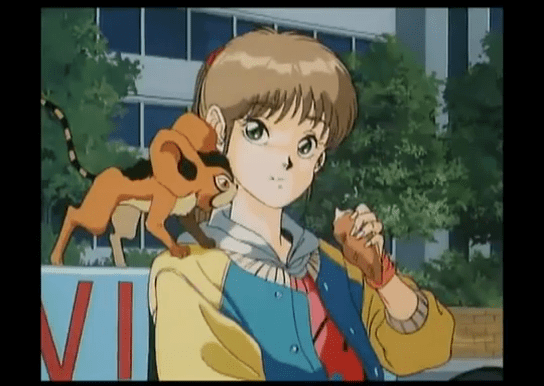
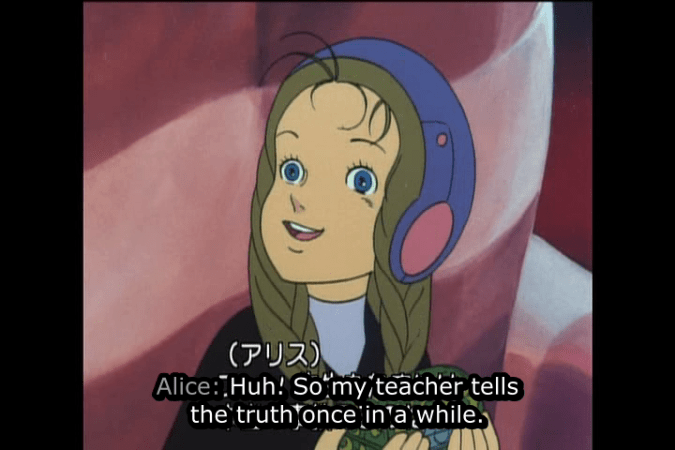
In this pilot, a little girl comes to visit the detective agency of Lupin VIII. She has a message in a music box from one of her ancestors to “wake him up” after 100 years. Those 100 years are nearly over, and she doesn’t know what to do about it. Lupin VIII and Jigen V accept the case and go on a mission, which will involve car chases on galactic highways, shootouts, a treasure hidden on the Moon and evil greedy villains to defeat.

vlcsnap-2018-09-16-17h55m24s296vlcsnap-2018-09-16-17h55m26s828

A girl giving them a mission…

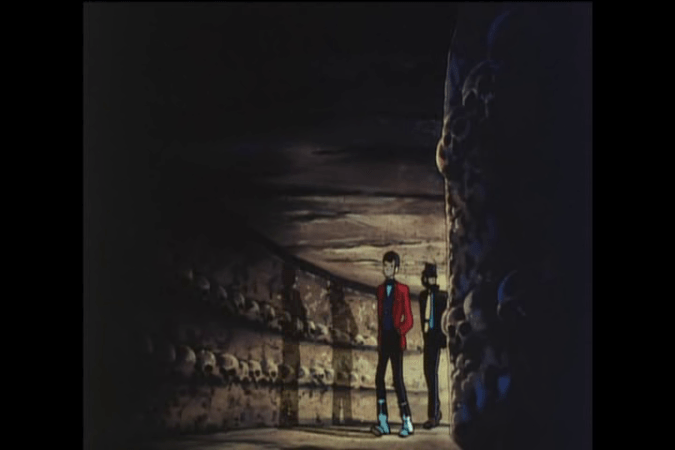
vlcsnap-2018-09-16-12h43m58s363vlcsnap-2018-09-16-12h44m27s333vlcsnap-2018-09-16-12h51m09s274vlcsnap-2018-09-16-12h51m20s017

…ends in damp catacombs and with raging robot sharks.

If one reads this plot outline, it leads to the natural conclusion of “So, it’s Lupin III in Space?”, and while that is largely true, the amount of minor changes add up to quite a significant deviation from the original series’ topics and feeling.

Lupin VIII was supposed to be a kid’s show, and hence, it couldn’t have a “thief” as a main character – stealing is illegal, so a good example needs to be set – protagonist Lupin VIII is a detective now.

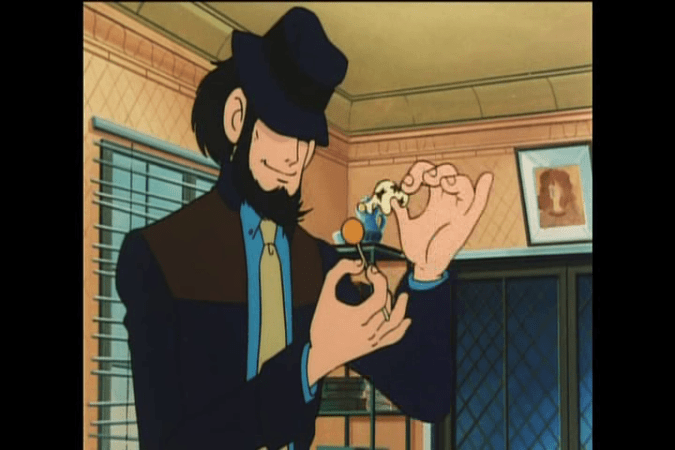
In addition, weapons and tobacco are also taboo. This means that both Lupin and Jigen swap their signature pistol and revolver for laser guns, and Goemon receives a lightsaber. This decision is fine, as it fits with the given sci-fi setting, but it also means that Jigen Daisuke (who is normally seen smoking) has a lollipop 24/7.
vlcsnap-2018-09-16-15h43m08s744

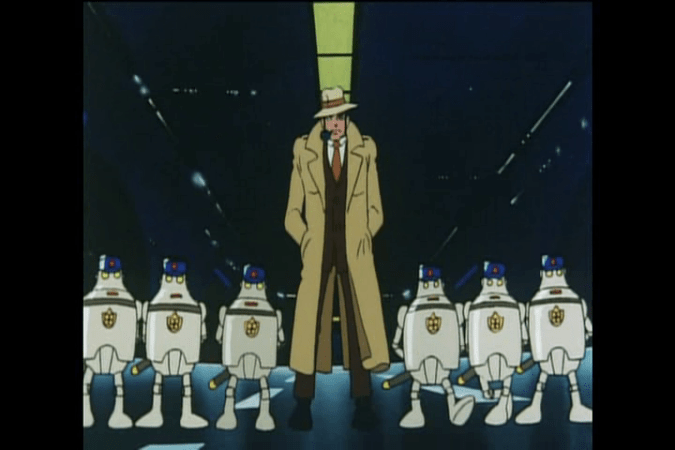
The change from “thief” to “detective” poses another problem if one thinks of the original cast: What does Zenigata, Lupin’s adversary, do now? Lupin VIII is not a criminal, he follows a normal job.

Here is the kicker: Zenigata still thinks Lupin VIII is worth suspecting, and that one day he might show his “true colours”. Convinced that he is the descendant of many criminals from several generations ago, he certainly must be up to no good.
vlcsnap-2018-09-16-18h02m56s108vlcsnap-2018-09-16-18h03m02s680

His little robo police is very adorable, though. (And the pipe is a communicator!)

This fact is played for laughs (with Lupin VIII flatly saying that this outlook is “Good for him” to have), it feels a bit out of place for Zenigata, a capable police inspector, to have someone under general suspicion purely for their ancestry.

To have the cast look exactly the same (just add five generations as a number and you’re done) feels like a concept held back by its own self. Instead of creating its own character design, it simply repeats the classic and censors them for a younger audience.

“Descendants of the Lupin III cast in a sci-fi future” could be a very interesting visual design to tackle, but some decisions feel a bit out of place – such as Goemon’s space suit being futuristic samurai armour. It makes sense as an idea, but the armour is not giving him the visual finesse and elegance he normally has and that is part of his character. But it is positively goofy and grand, and thus very fitting for a kid’s show!

vlcsnap-2018-09-16-12h54m50s658

vlcsnap-2018-09-16-12h54m58s602

Not his usual sleek self, but still as cool.

So, a few elements are changed, giving this pilot its own visual identity and feel, why was that?

An International Production

Lupin VIII was a French-Japanese production, collaborating with DiC Entertainment, who are known to many as the creators of the Inspector Gadget animated series, as well as co-productions with US studios on series such as Sonic The Hedgehog and Captain N. As a studio that mainly produced kid’s shows, it was only logical to make their Lupin VIII also one.

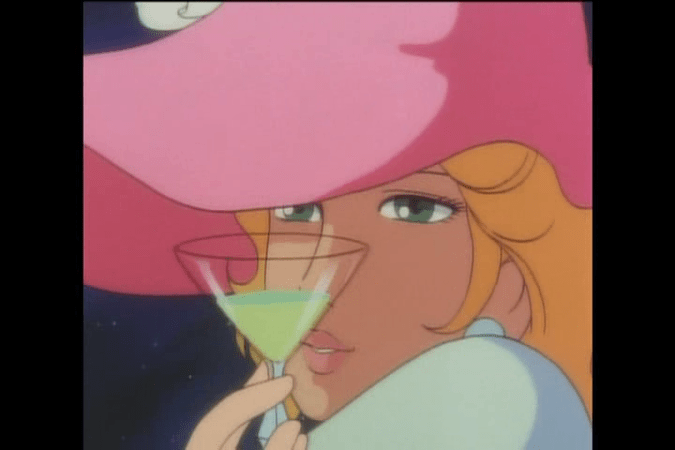
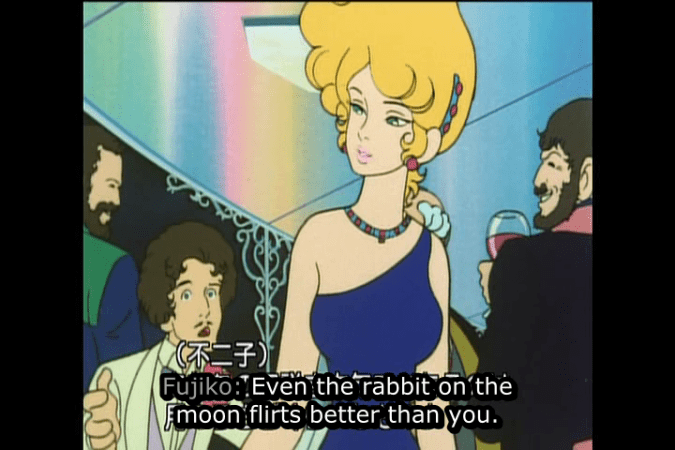
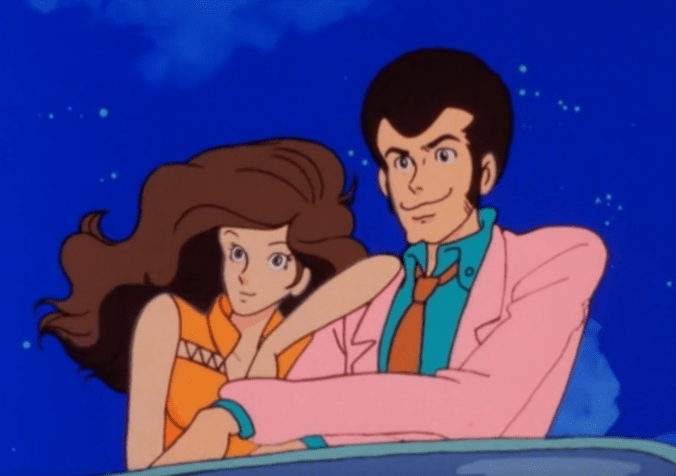
This international creative process may explain some of the character designs by Shingo Araki, who also did the designs for Part III (Pink Jacket Lupin) from 1984-1985. His character designs in Lupin VIII, especially his Fujiko Mine, feel more oriented towards a “80’s Western Animation” aesthetic. Fujiko especially reminded me personally of Jem and the Holograms (which is also a Japanese co-production!) or Michel Vaillant, if we compare her directly to her Part III contemporary.
vlcsnap-2018-09-16-12h46m39s365

vlcsnap-2018-09-16-18h39m28s206

To compare: Fujiko Mine in “Lupin VIII” in 1982…
part iii

…and Fujiko Mine in “Lupin Part III” in 1984. Same character designer, different feel.

Why was it cancelled?

Lupin VIII was cancelled not due to its content, but due to the use of the nameLupin VIII / Arsene & Company. The heir of the original author, Maurice Leblanc, who wrote the Arsène Lupin novels in 1905, did not give his permission for this anime, and thus, the project was doomed to fail – production was cancelled before the pilot could be finished.

Regarding the production and checking available sources, it seems like 6 episodes were planned, 2 were scripted, and only 1 episode made it to a near-finished stage. Some sources credit Rintaro as the director of this pilot, an acclaimed veteran who has worked on many anime such as Astro Boy, Space Pirate Captain Harlock and Metropolis, but no bullet-proof confirmation is given.

Should you by this point have checked out the pilot for yourself, you will notice a sad fact: there is no voice acting. Music and sound effects are present (and are nice!), but the dialogue only exists in subtitles. It never got to the production stage of “recording voice actors”. Unfortunately, these subtitles were hardsubbed [i.e. burned] into the visuals, so I apologise for those in the screenshots.

This pilot, in its mute and unfinished form, was released in the 2012 Lupin III Master File box set, as a relic and an inside look into a project that could have been lost in time entirely, and thankfully has survived.

Conclusion

All in all, Lupin VIII really is an interesting glance at a thing that never was – but also something that maybe wouldn’t have had the critical success as its contemporaries. To make a “Lupin for kids” is a noble goal, and could have been a hit with children – however, as a personal opinion, it would have been a better decision to do a “Lupin for everyone”, such as Hayao Miyazaki’s Castle of Cagliostro or Masayuki Ōzeki’s The Fuma Conspiracy, which can be enjoyed by the whole family as fun and action-packed adventures without the need to censor any original element. It also could have been its own thing with brand-new character design ideas, not held back by the legacy and influence of the original Lupin III.

However, one should not think too much about the “what ifs” and “should haves” of life, but rather see what is present. And so, we have Lupin VIII, a pilot for a show that never got the chance to prove itself – but that was nonetheless a brave attempt and beautifully crafted in its world design and animation, with a unique mix of French and Japanese art and aesthetic. I sincerely hope that we may get another attempt one day, as the idea of “Lupin III in Space” with rocket ships, orbital highways, robo police and lightsabers is too good to miss.
vlcsnap-2018-09-16-18h02m33s665

The End.

Sources: “Lupin VIII” entries on AnimeNewsNetwork, Lupin III Encyclopedia, Wikipedia. DiC Entertainment Wikipedia Article, in French and English.
MANLY MONDAY – “Bastard!!” (OVA): When Shonen Jump met Heavy Metal

000

The Weekly Shonen Jump magazine is one of the biggest and most influential around the globe when it comes to manga and pop culture in general.

One Piece, Naruto, Dragon Ball, Yu-Gi-Oh!, Bleach, Jojo’s Bizarre Adventure and many, many more were published in the magazine, where they would gain worldwide popularity, critical acclaim and the love of millions of fans all around the globe. However, there are also the smaller ones that time has forgotten, even though they sold millions.

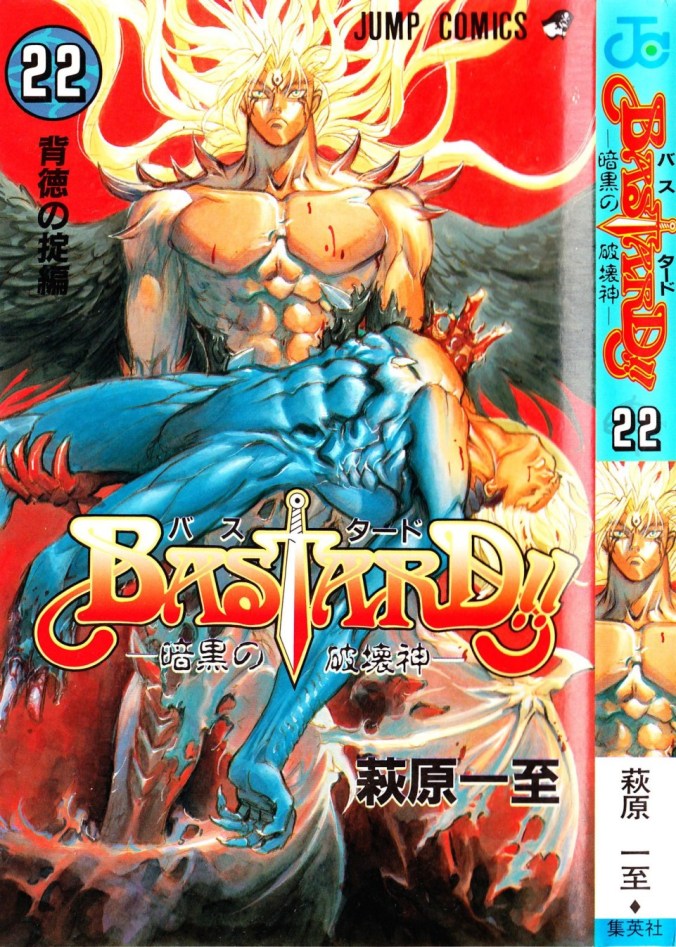
One of those is “Bastard!!”.

Bastard has been running since 1988 uninterrupted in Shonen Jump, then switched to the Seinen-oriented Ultra Jump in 2000, and continues today, making it one of the longest running series in the magazine. The series has about 30 million copies in circulation, which makes it one of the higher ranked manga series. (To give you a point of reference, Death Note is also at 30 million, Sailor Moon is at 35 million, and Haikyuu!! at 28 million.)

The Bastard manga doesn’t seem to have the same reach as the others in that league, but it still is a very interesting piece of media to look at, even if it may not be as popular as its contemporaries.

Instead of going through 31 years of manga, we will look at the standalone OVA series, which came out in 1992, and see what makes this 6-episode series a beautiful time capsule of the 80’s.

vlcsnap-2018-08-08-22h48m15s429

Bastard!! – Destroyer of Darkness!

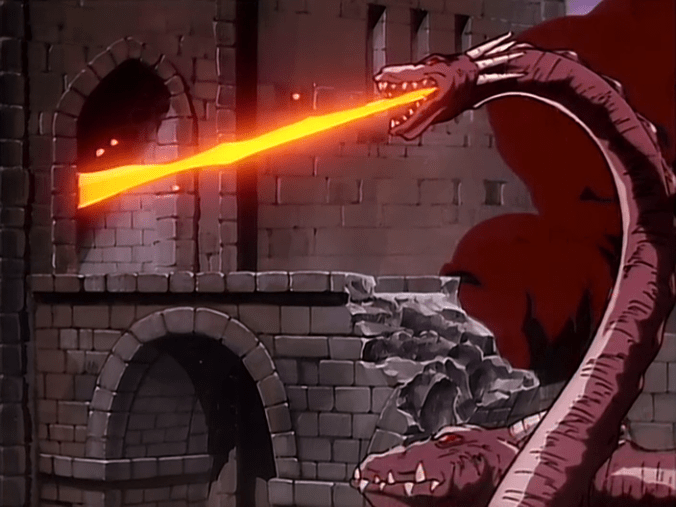
The high fantasy adventure story unfolds in the lands of “Metallicana”, where the four “Evil Lords of Havoc” are attacking the castle of the king. They have sent in the powerful wizard Osborn to attack the fortress with a gigantic Hydra.

vlcsnap-2018-08-08-22h49m22s933

vlcsnap-2018-08-08-22h50m47s178

In the castle, the magicians and knights are helpless. They are losing all their men, the damage done to the castle walls is getting worse by the second with this raging beast that cannot be stopped.

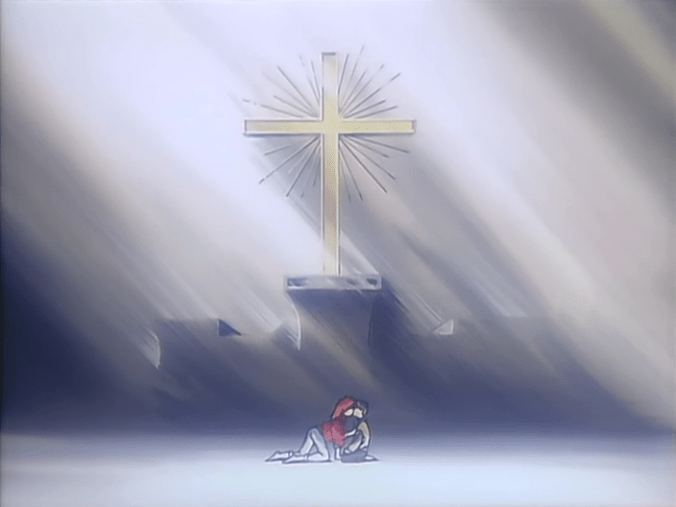
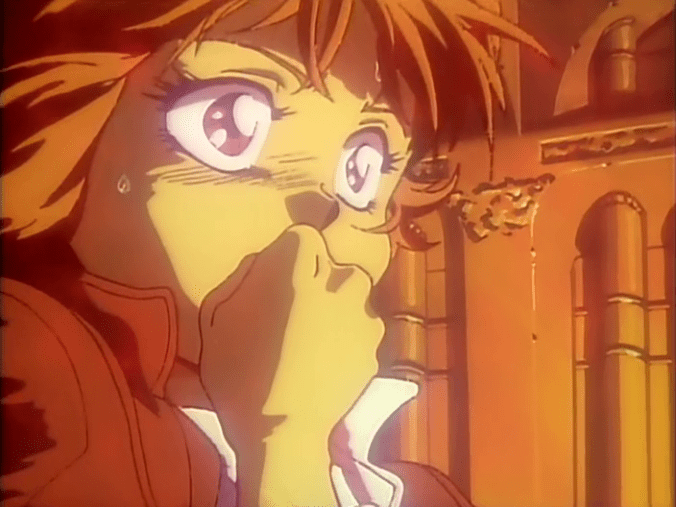
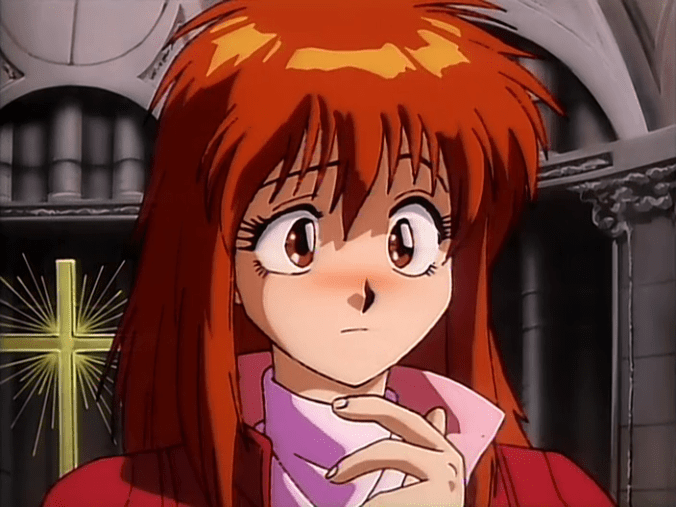
Somewhere in the castle, the young priestess Tia is told by the Great Priest that she holds the key to turning this desperate situation around: If she kisses her childhood friend Ruche, she will release the legendary wizard who was sealed inside him a long time ago. Reluctantly, she agrees – and promptly, hell breaks loose.

vlcsnap-2018-08-08-23h01m12s592vlcsnap-2018-08-08-23h02m10s065vlcsnap-2018-08-08-23h02m14s236vlcsnap-2018-08-08-23h02m16s742vlcsnap-2018-08-08-23h02m18s199vlcsnap-2018-08-08-23h02m34s926vlcsnap-2018-08-08-23h02m39s643

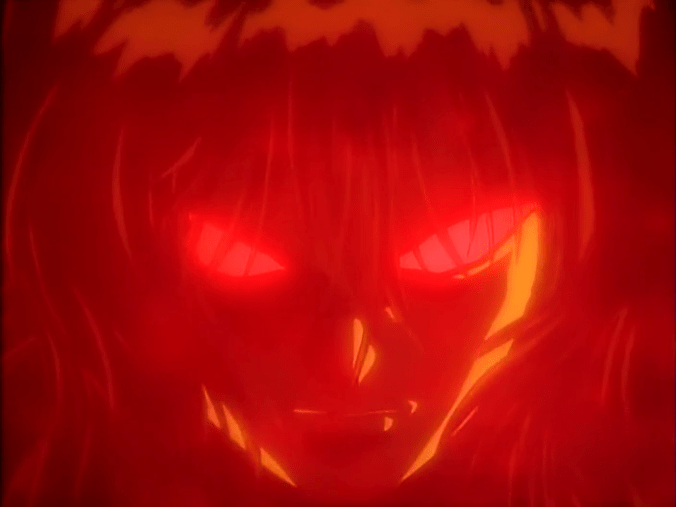
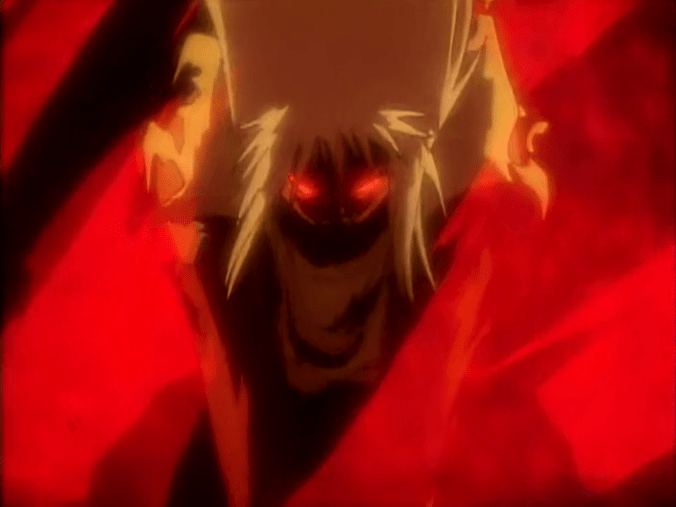
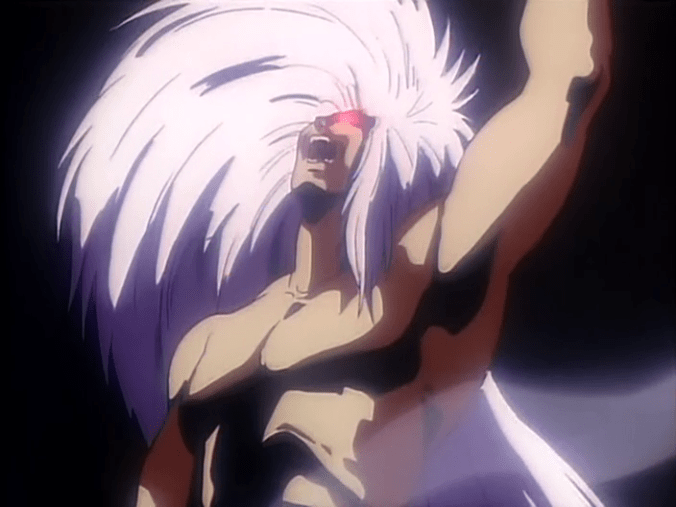
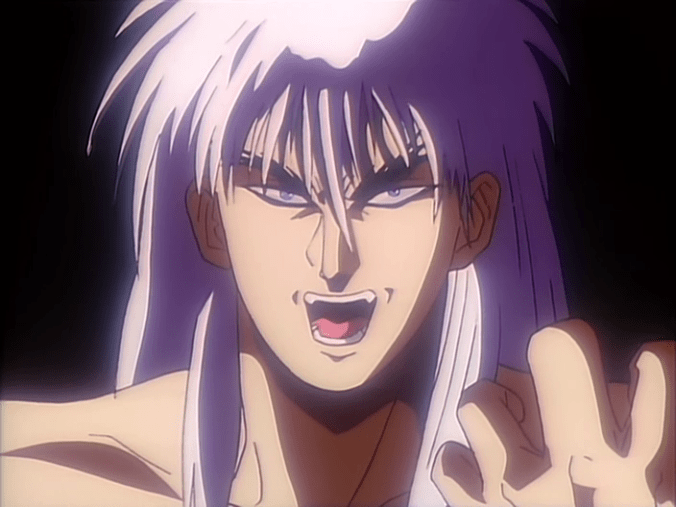
She has awoken one of the ancient enemies of the kingdom: Dark Schneider.

A powerful dark wizard and egoistic tyrant, who once belonged to the four “Evil Lords of Havoc” – they were once a team of five. And he is quite upset about having been sealed away for the last 15 years. He wishes to destroy everyone in his path and go back to being an overlord, but as it turns out, his host Ruche did more than just sealing him away: As he is using the young teenage boy’s body, he is changed by the empathy and friendship he had towards Priestess Tia – even if it’s just marginally, he cannot do her harm.

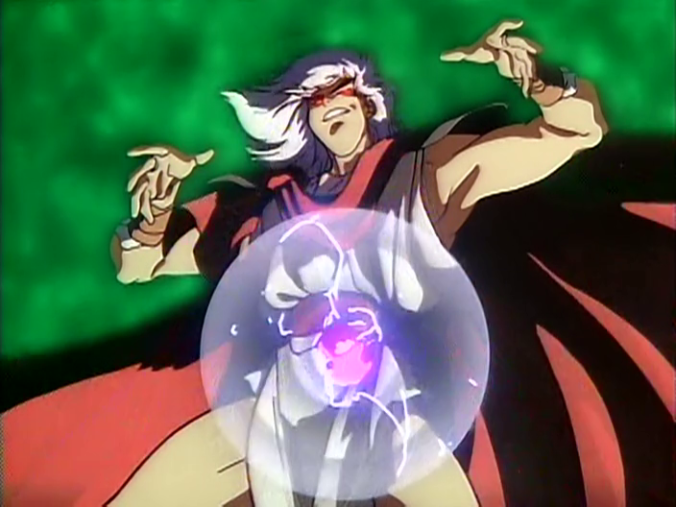
Meanwhile, the Hydra and Osborn arrive in the throne room, sure of their victory. As they spot Dark Schneider, they freeze: He was believed dead for the last 15 years, and now the old ally is back? However, Dark Schneider has had it with all this mayhem around him, and simply decimates the attackers with a dark spell.

vlcsnap-2018-08-08-23h08m56s441vlcsnap-2018-08-08-23h09m00s311vlcsnap-2018-08-08-23h09m04s442vlcsnap-2018-08-08-23h09m08s607vlcsnap-2018-08-08-23h09m10s151

The “Slayer’d” spell, turning Osborn into dust.

And so, the new Dark Schneider is back, slightly changed, and having feelings for Tia, the childhood friend he never actively met, but knows that she is important to him as a person. As the episode ends, he kisses her and thus accidentally turns back into his host’s form, Rushe, who has no clue what happened to him.

Tia and Rushe embark on an adventure together, to fight the four “Evil Lords of Havoc”, and stop their plans to destroy the world.

vlcsnap-2018-08-08-23h10m42s001vlcsnap-2018-08-08-23h10m50s580vlcsnap-2018-08-08-23h10m58s887vlcsnap-2018-08-08-23h11m00s806vlcsnap-2018-08-08-23h11m33s427 Episode 1 ends, the adventure ahead of them.
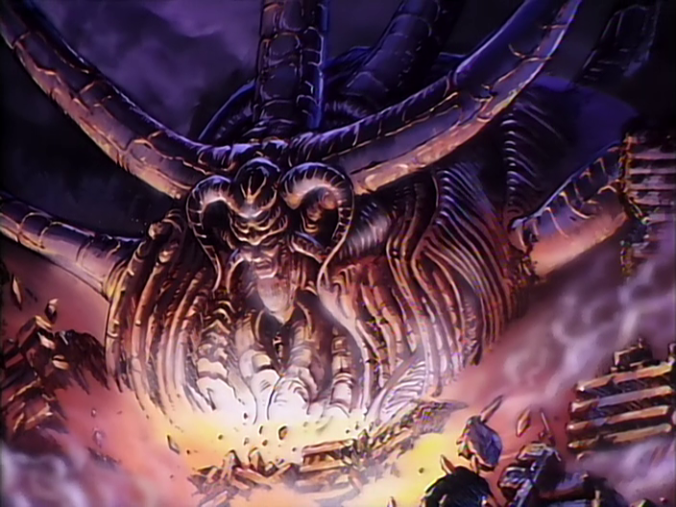
This is how Bastard begins, and immediately, three stylistic choices will jump at the viewer at full force: The very 80’s design, the high fantasy setting straight out of a Dungeons and Dragons session, and the abundant use of Heavy Metal references.

Triple the Style, Triple the Fun

I. Heavy Metal

Dark Schneider is a reference to German heavy metal singer Udo Dirkschneider, the country of Metallicana is pointing to Metallica, and Captain Bon Jovina at Bon Jovi. And it doesn’t stop here, there are 5 more episodes to go, we will meet King Di Amon (a vampire lord who wears Kiss-like facepaint), and other different dark magic spells, such as HellionBooryan Deado, Gunsun-Ro or the all-destroying MEGADESU.

(Depending on translation, the names might be changed to avoid copyright issues, the anime goes for example for “Meta-Rikana” instead of “Metallicana”, while my German manga copy left the name unchanged.)

Similar to Jojo’s Bizarre Adventure, another long-running Shonen series, the names of real life bands and singers will be used for characters, and this becomes its own brand of fun to ‘spot the references’. Some will be more out in the open, such as the castle of Whitesnake, but some more obscure, like the Dark Priestess Abigail.

However, it is not only a way to pay homage to a whole music genre, but it also weaves itself to the fantasy setting, which also had its influence in the metal genre.

II. Fantasy Aesthetics

One thing that I have to immediately point out, is the beauty of the world design, especially in its use of backgrounds.

This slideshow requires JavaScript.

Gallery of Backgrounds, swipe/click right to flick through

The hand-painted landscapes and architectural designs make the world grounded and graspable, and the different settings every episode make for new, unpredictable highlights of carefully crafted art.

Together with the grand scope of armies fighting, the world being in danger, and the heroes roaming the lands together, we get a grand, bookish feeling of worldbuilding. There is history and depth here, even in this short running time.

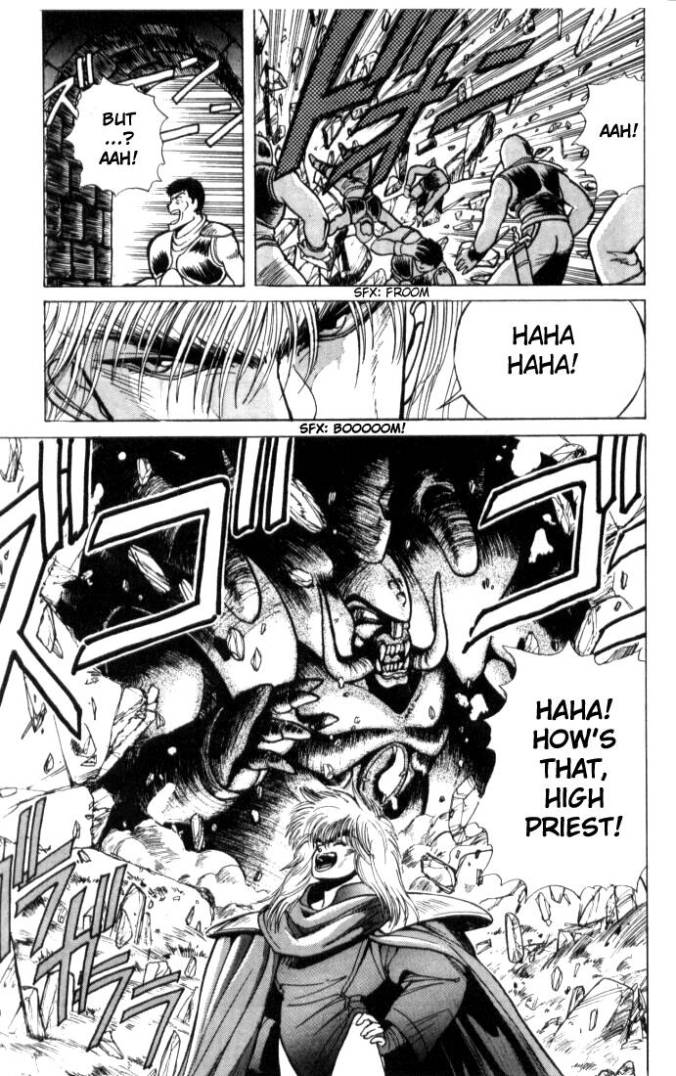
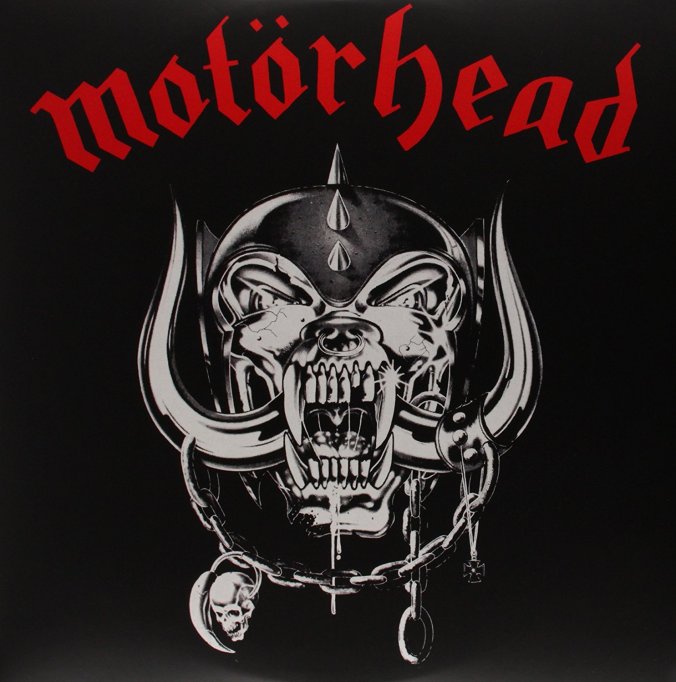
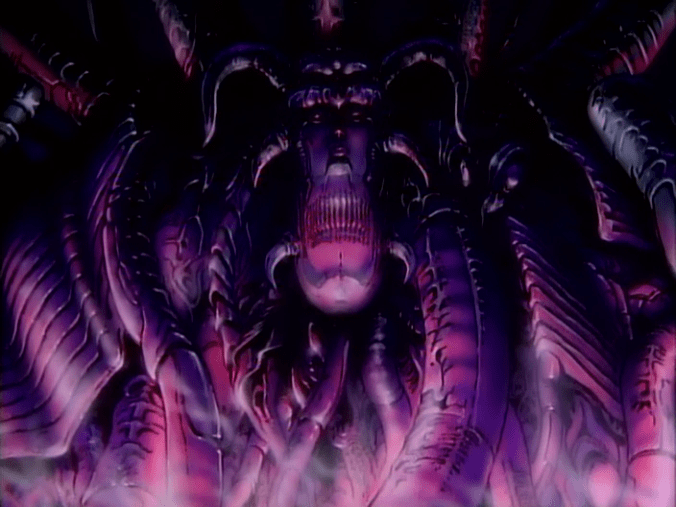
In addition, some heavy metal influenced designs will be found in this fantasy, for example the evil deity Anthrasax, which looks straight out of H.R. Giger’s mind (who had made NSFW album covers for Danzig, Tryptikon and Celtic Frost), or the (sadly manga-only) “Golem” that Dark Schneider summons, which strongly resembles Snaggletooth, the mascot of the band Motörhead.

vlcsnap-2018-08-08-22h47m44s083.png

vlcsnap-2018-08-12-16h42m23s824.png

The Giger God Anthrasax. (I personally suspect a mix of Anthrax and Saxon)

snag

Dark Schneider’s Golem…

snagmoto.jpg

…and Motörhead’s Snaggletooth.

III. It’s 80’s as heck

Bastard fits in with other 80s Shonen anime franchises, in all good and bad ways.

The protagonist is strong and powerful, and in addition, is someone who has a teenage boy as a host – but with no drawbacks. Even if Ruche can’t remember what Dark Schneider does when he takes over his body, it is never portrayed as something bothersome or negative: The contrasting example would be Naruto, who suffers under the demon sealed inside of him. And, of course, a kiss is the trigger to swap them both around, so romantic tension is always automatically given. The comedic banter between Tia and Ruche/Dark Schneider is also a highlight that is accentuated in goofy expressions and fast timed physical comedy.

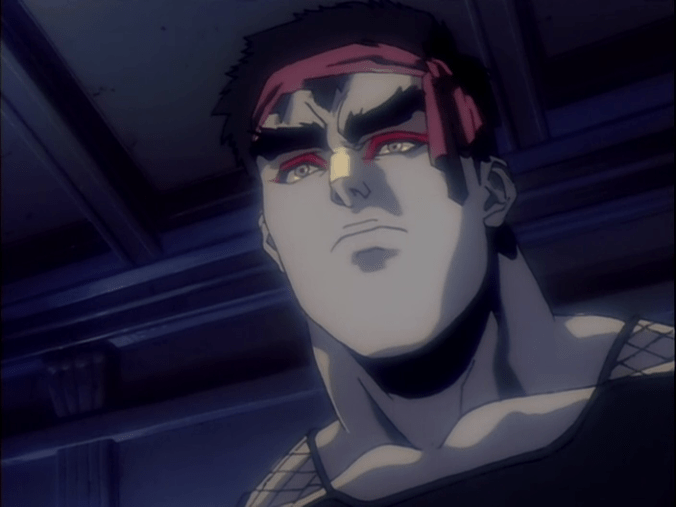
The other “good” way would be the OVA format: This anime did not run on TV, it was made for home release, and hence, it can go all out on violence and nudity. The additional short length makes for a condensed and straight-to-the-point experience without filler or downtime. Together with the late-80’s-early-90’s anime aesthetic, it is a marvel to watch, a true time capsule of this period. Big poofy hair, ladies in leotards, muscular protagonists, very ugly and very evil demons, metrosexual heroes – shoutout to my personal favourite character in this whole OVA, the Ninja Gara, who wears a black fishnet t-shirt and absolutely stunning red eye shade.

vlcsnap-2018-08-09-13h38m09s764vlcsnap-2018-08-10-14h25m11s181

The “bad” ways, so to speak, are the problems that can come with very early Shonen OVA adaptations: They are incomplete. Bastard is only 6 episodes long, but it seemingly adapts smaller arcs here and there, with only loose connection. One episode, a new hero will join the protagonists at the end of the episode, only to be completely missing in the next one. In addition – and here I found only minimal sources – it seems like 8 episodes were planned, and the last two were scrapped. One source suggests that this was because on of the “creators” (not specified) was arrested during production. But even with its open end, the OVA makes for a fun snack-sized Shonen watch that really trims the fat on all sides and polishes what is there to full brightness.

Yet, I must also point out some decisions in the story that would most likely not fly nowadays, most notably some character’s parental figures. Tia’s father is not the most supportive, the King and his high priestess daughter are equally rough, but the relationship between Dark Schneider and his adopted child Ashes Ney is the crowning debatable jewel in this 80’s treasure – which is never questioned and given quite some focus.

It will make for some uncomfortable moments, but as the layer of campy schlock is already so thick, it manages to lay low in the grand scheme of things. (Just listen to that wonderful ending theme!)

vlcsnap-2018-08-09-13h49m46s302

Conclusion

Bastard is truly “the 80’s condensed into 6 episodes of anime”, with all its up- and downsides. Not only makes it for a great throwback to another time in anime history, but also in Shonen Jump history, to see what was one of the big series back in the day. You can spot references and preferences in retrospect now that you are looking back from the future: The Jojo’s Bizarre Adventure-like way of naming characters, the evil antihero with his gory fighting style that is reminiscent of Devilman, or the Dragon Ball Z style wizard fights of flying around and flinging energy blasts.

Although Bastard is still around, it is far away from the reach it once had, and has changed its aesthetics and focus radically, being more ecchi-focused than aiming for the grand high fantasy stories of rivaling countries, all out war, and armies of good and evil.

If you like this time period in anime history, I highly recommend checking it out, purely for the stellar art and animation, and then for the wonderful pulp story that has its own  rough charm. It watches very quickly, so enjoy a great time with this little overlooked gem!

DHCVWAtXsAETClz

The End.

Sources: Entries on “Bastard!!” on Wikipedia, ANN, and MAL.

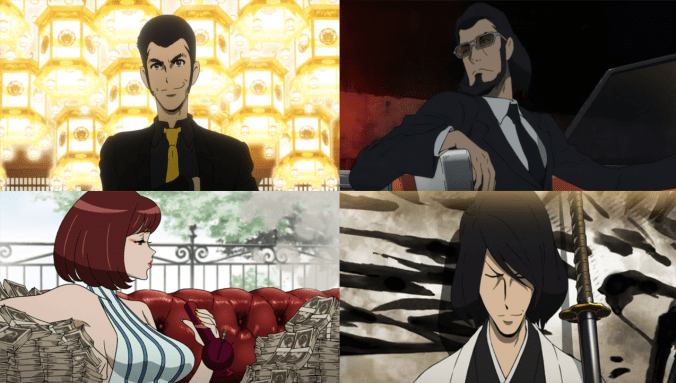
MANLY MONDAY – The Hardboiled Beauty of Takeshi Koike’s “Lupin III”

vlcsnap-2014-12-16-00h33m42s199.png

The beauty of any long-running franchise is to see the different interpretations over time. How does the zeitgeist influence an adaptation? How does the director influence the style on a narrative or visual level? What does the new look or re-design say about the characters?

Here comes Lupin III into the game. This franchise about a suave thief and his team has had many entries over the decades, from the original manga by Monkey Punch in 1967, to long-form TV series 1969 and 1977, to many OVAs and films in the 80s and 90s – some even by great and popular names in the industry like Hayao Miyazaki’s Castle of Cagliostro and Osamu Dezaki’s Harimao’s Treasure. And every creator brought their signature styles to the table.

lup.gif

From Miyazaki’s bouncy fun and super-smooth animation… 

dezaki.png

… to Dezaki’s signature style “Postcard Memories” still frames.

This, to me, is the fun of Lupin III.

It’s essentially a gigantic toybox where any creator can come along and pick up the characters to play out a story for you, and in the end, they put the toys back for the next one to pick up. Do you have a favourite creator? Look up if they did anything on any Lupin III, they most likely will have an entry somewhere! You can explore freely through many styles and time periods, and find the Lupin III adaptation that you will like the most.

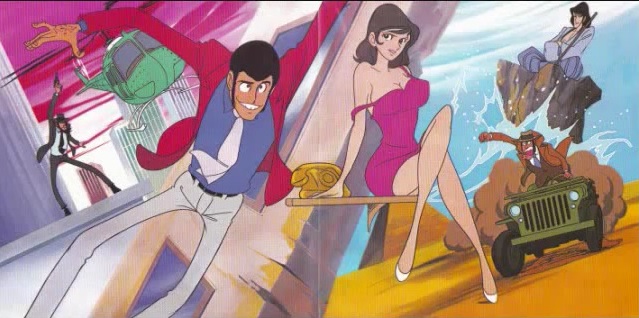
You only need to know the very basics and you’re good to go: Lupin is a thief, Fujiko is a rival thief and love/lust interest, Jigen is a relaxed gunslinger, Goemon is a honourable samurai, and frantic INTERPOL Inspector Zenigata is always hunting them. And then, adventures happen – car chases, shootouts, sword fights, trickery and thievery, helping friends and defeating foes, you name it.
This toybox freedom allows for great experiments and more outlandish interpretations of the characters. Lupin III: A Woman Called Fujiko Mine (2012) by Sayo Yamamoto for example told the story from Fujiko’s side of things, with heavy themes and explorations of sexuality – heterosexual and homosexual alike – giving the franchise a very adult and interesting not-very-canon-feeling entry.

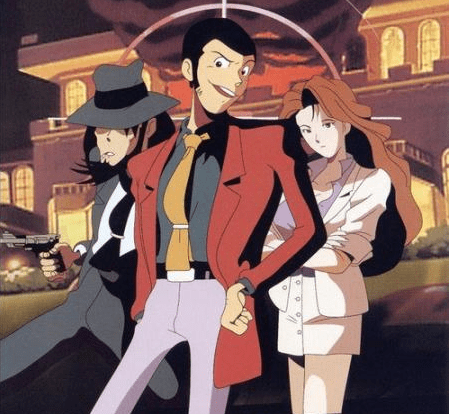
To give you a short overview of styles through the ages:

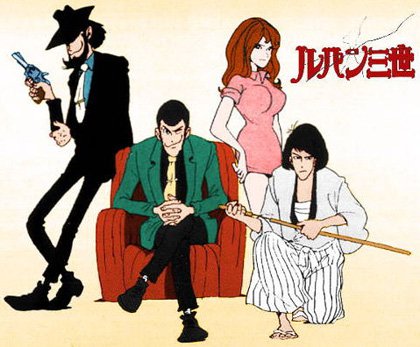
cast.jpg

Lupin III: Part 1 (1972)

Lpn3

Lupin III: Part 2 (1977)

voy.png

Lupin III: Voyage to Danger (Special, 1993)

Fujiko-Mine

Lupin III: A Woman Called Fujiko Mine (2012)

lupin

Lupin III: Part V (2018)

In 2015, the next Lupin III TV series started, called Part IV, with a light fun tone, classic thieving hijinks, and new characters to add to the roster. The opening alone will tell you the fun it has with itself, it certainly is a feel-good series where you can relax with a big smile. This year, in 2018, Lupin III Part V has started airing, with a heavier focus on the internet and the digital world, giving it its unique spin on the world too – and again, it has a fun opening, which underlines the sci-fi and digital aspect more, with Lupin’s little  signature Fiat 500 flying into space to install a camera on a satellite.

So, the TV series are doing fine and are absolutely fun, what else is going on? We have the funny Lupin III airing on TV, is there a serious Lupin III at the moment too? Some other interpretation? Another creator putting their own spin on the franchise?

Enter director and animator Takeshi Koike.

goemon.jpg

Takeshi Koike’s character design for Goemon Ichikawa.

Takeshi Koike made a name for himself with the animated film Redline, which is an absolute MUST-WATCH for any fan of animation. A story about intergalactic racers, a yakuza plot, three friends who must grow together, and the most insane race the universe has ever seen – I could speak for hours about this film, as it is one of my favourites. Koike was the director, storyboarder, character and machine designer (and probably even more, as he mostly went uncredited in his own work) for this film, and it is simply a masterpiece in the medium.

Even before his directorial debut with Redline he was a talented animator and worked on many projects: Koike is the protégée of Yoshiaki Kawajiri, the stellar director behind aesthetic and atmospheric masterpieces such as Vampire Hunter D Bloodlust, Ninja Scroll and Running Man. Koike even worked on some of these films under his mentor. And the influence is more than visible: Both use stylish sharp character design, precise and breathtaking slow motion, strong shadows with stark contrast. To this, Koike adds his own flavour: extreme and atmospheric camera angles, immense power and speed in action, and some realistic violence with impressive outlandish sword- and gunplay. (For more information and examples: Here is a sakuga compilation of his work and here a piece by The Canipa Effect.)

So, what happens if such a skilled director takes on the Lupin III franchise?

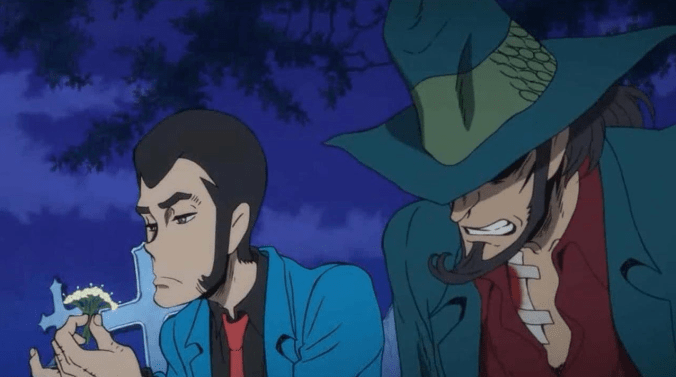
Detailed, powerful, well-directed pure fun. (Source: Jigen’s Gravestone)

Koike’s Lupin III films are intense, fun and an absolute blast.

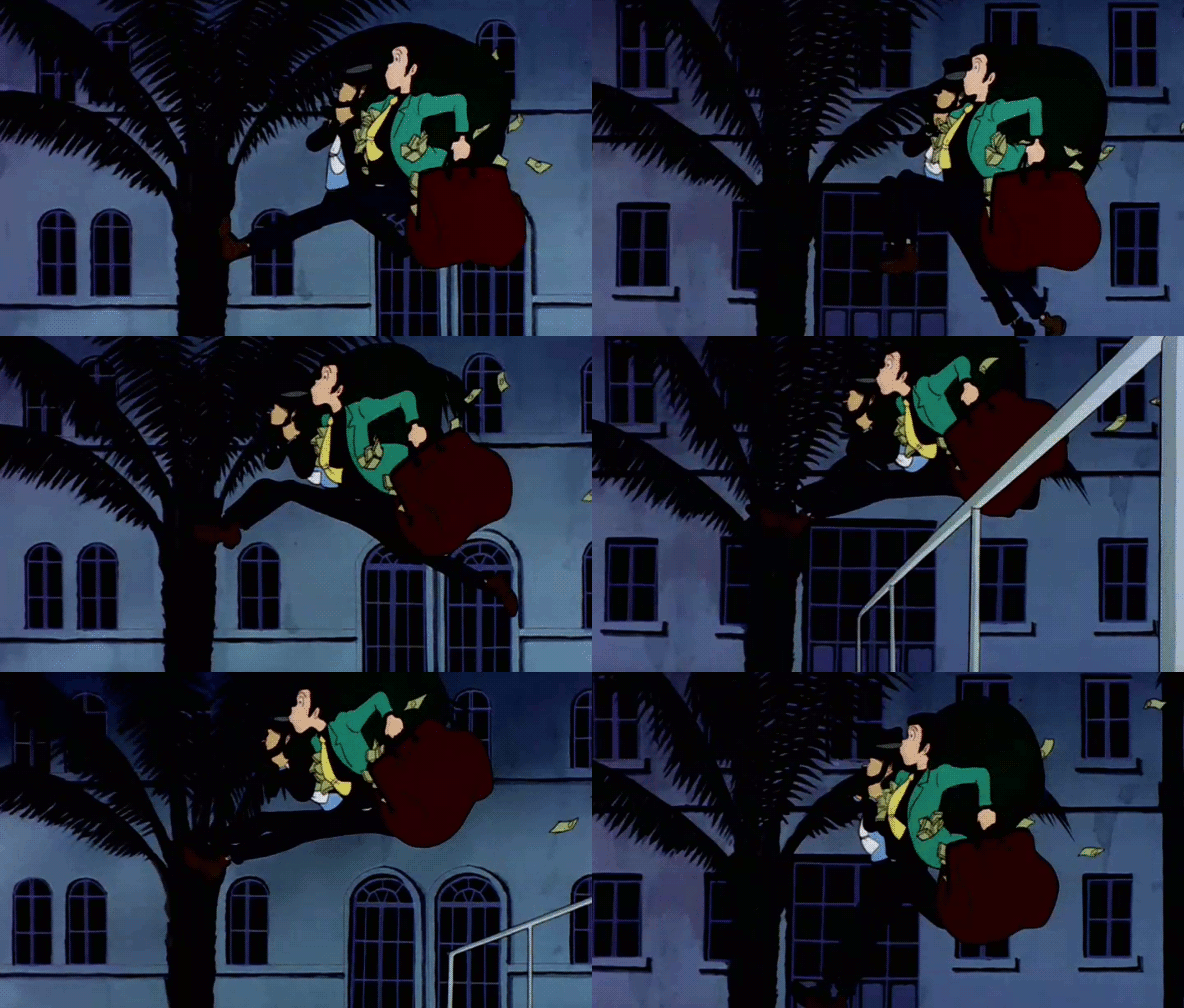
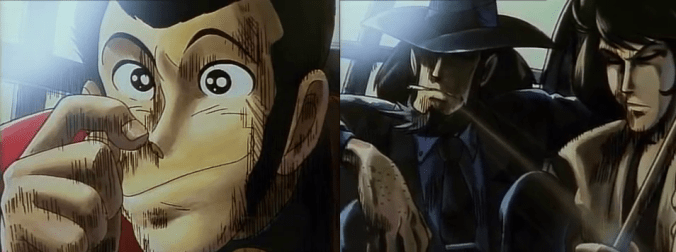
As you can see from the scene above, Koike brings the fantastic car sequences from Redline into the mix, and as the franchise always has had outstanding chase sequences, it fits perfectly into the whole canon. Little details can be found as well, like Lupin cranking down the window and covering his ears before Jigen shoots, the outline smear on the villain when he the cars collide, or Lupin’s expressive yelling you can hear even without sound.

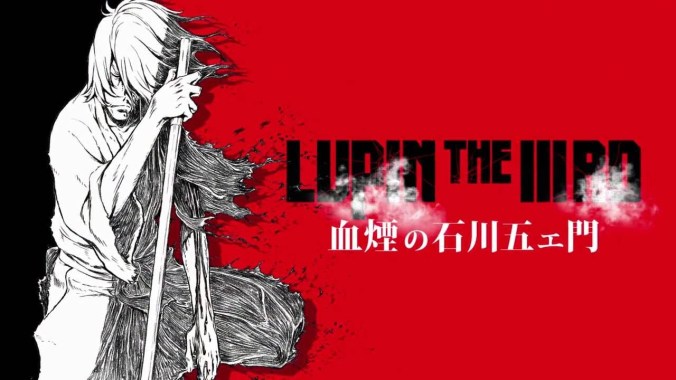
Takeshi Koike has so far directed and designed two Lupin III films, Jigen’s Gravestone (2014) and Goemon’s Spray of Blood (2017). They are considered “spin-off continuations” of A Woman Called Fujiko Mine (2012), however, the Fujiko series is not needed in order to watch these two, they work as a standalone duo of movies and do not reference the previous series.

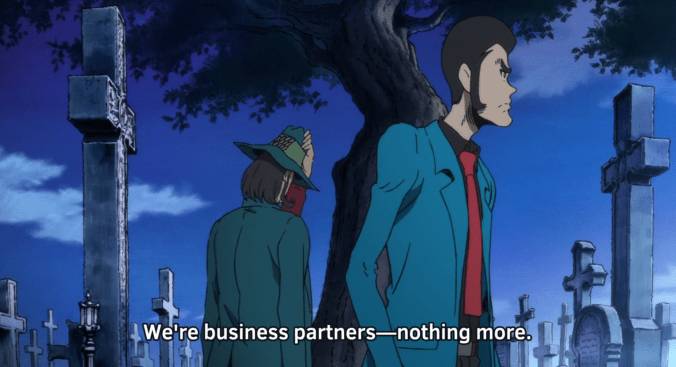
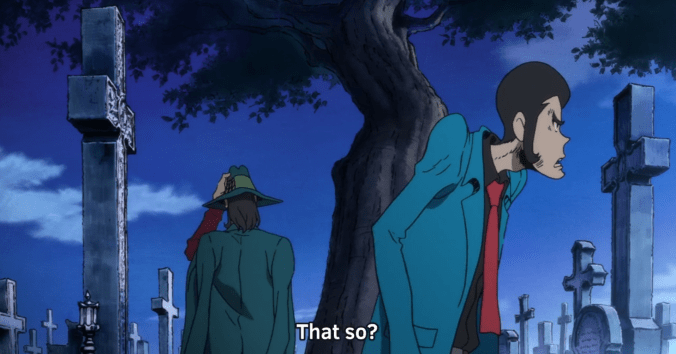
In the first film, Jigen’s Gravestone, Lupin the 3rd and Jigen Daisuke are a team of a thief and a sharpshooter – however, they are not yet the “best friends” they will grow into, they are only business partners at this point. But it soon turns out that the two are being trailed by a dangerous sniper, Okuzaki, who is set out to kill them – he already has prepared their graves for them to see: The titular gravestones. Jigen is not ok with this, as this sniper has also recently killed a client Jigen swore to protect. And so, the hunt and battle between the two begins.

grave-1.png

Jigen is upset, but Lupin is rather calm about getting a death threat.

In the second film, Goemon’s Spray of Blood, the two heroes Lupin and Jigen meet Goemon, a samurai they have seen a few times around. Goemon is the body guard of a yakuza boss, but as he fails to protect him, the clan turns against him. Not only that, Goemon’s spirit will be broken by the assassin of his former boss, a man called Hawk, a big, bearish unit of a lad who fights with heavy dual-wielding axes. This is the story of how Goemon joins the Lupin team and how he became what is today: one of the best samurai in the world.

e70f4aaaae1d123dd2045a6ef7118997d853e0b5_hq.jpg

Goemon vs. Hawk. This won’t go well.

As these films are quite short, about 50 minutes long each, I do not wish to talk too much about the plot of these. The are essentially introduction films, one for Jigen and his friendship to Lupin, and the other one as a character piece for Goemon, all held neatly together by the charming ensemble cast of the Lupin III franchise and charismatic villains they need to fight.

The big center pieces of the two films are the two main conflicts: Jigen vs. Okuzaki and Goemon vs. Hawk. And let me tell you that these are absolutely worth it – battles of strength, mentally and physically, but also of wit, observation and skill.

These are some of the more serious Lupin III entries, far away from the current jolly TV adaptations of Part IV and V. All of the fun aspects are still there, the car chases, the banter and the fights – however, they are all presented through a lens of hardboiled intensity. Meaning, if characters get hurt, they get hurt. It’s violent. Some of the most violent I have ever seen in the animated medium, and I like watching hyperviolent OVAs from the 80’s.

C-Iaa1-XUAAGURP

This is tame.

If you say: “But I can deal with splatter, no problem!”, then I will warn you of some of the body horror that swords, blades and guns can produce. You will definitely do your sharp air inhale of “Oooouh, that must’ve hurt.

And it’s this hardboiled intensity that is so strong and refreshing. It’s not trying to be “edgy” or deliberately over the top, it’s a whole new adaptation that paints the Lupin III franchise in the colours it always had if one thinks about it: Theft, murder, yakuza, gunmen, samurai, and the general underworld. The darker tone fits like a glove. It wants to be that, and it is exactly that.

But more than that, Koike finds the perfect balance between the fun action segments and heavier dramatic scenes, never feeling like a tonal break or betrayal of itself or the source material. These characters suffer, fight and grow, battle their fears and rivals, and in the end, you will be immensely satisfied.

Goemon’s Spray of Blood was such an adrenaline ride for me, that I watched the whole film with a smile, alternating between laughter at outlandish action scenes and quick comedy bits, and being in awe of the violence and intensity of the fights that carry importance to the characters and the overall story.

In addition, Takeshi Koike’s signature character design and artwork with thicker outlines than usual just fits perfectly to the Lupin III franchise. It is safe to say that the cast has rarely looked so suave.

codmp.png

Especially in “Goemon’s Spray of Blood”, with its yakuza setting.

Every character is animated extraordinarily well, not only in the big set-pieces, but also in dialogue scenes and small movements. Let’s take the scene I showed you a still frame earlier, the first round of Goemon vs. Hawk – katana against axe, samurai against biker, on an exploding ship, while Lupin, Jigen and Fujiko get away on a boat.

This is only the beginning. (Source: Goemon’s Spray of Blood)

The gigantic flames in the background, the water animation, the debris of flying roof tiles, the heaviness of Hawk, Goemon putting his sword away, the wind flying through his hair – there is so much love and care poured into film, from the big scenes, all the way into these tiny details.

Everything comes together perfectly, Koike’s style, animation, tone, action and drama, even the soundtrack, which, for example, gives gunslinger Jigen a James Bond style opening credits theme – I’m sure you will find something that especially stands out for you in these marvelous films.

Conclusion

I highly recommend watching Takeshi Koike’s two Lupin III films, Jigen’s Gravestone and Goemon’s Spray of Blood, purely because they are such fun, intense and wonderful productions, that ooze style and power in every second they are on screen. You can go in blind, or maybe check out another Lupin III adaptation that catches your interest, many start with Castle of Cagliostro, for example, for the taste of a young and fresh pre-Ghibli Hayao Miyazaki.

In the end, you will have a marvellous duo of films by one of the best directors in the industry. Two films that belong together, which also describe how one of the most beautiful friendships in the medium came to be. Lupin and Jigen – a friendship that has now existed for over 50 years.

And that alone is absolutely beautiful.

dai

dai2

dai3

dai4

The End.

Sources: Sakugabooru, Wikipedia entry “Lupin III: Jigen’s Gravestone“, MyAnimelist, Anime News Network

MANLY MONDAY – “Vermin” French Animation Goodness with Buddy Cop Insects

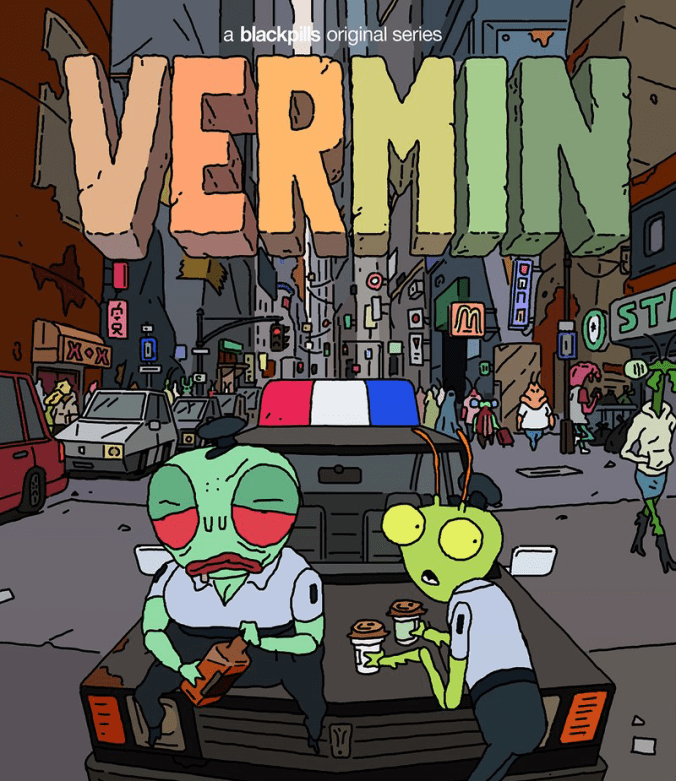
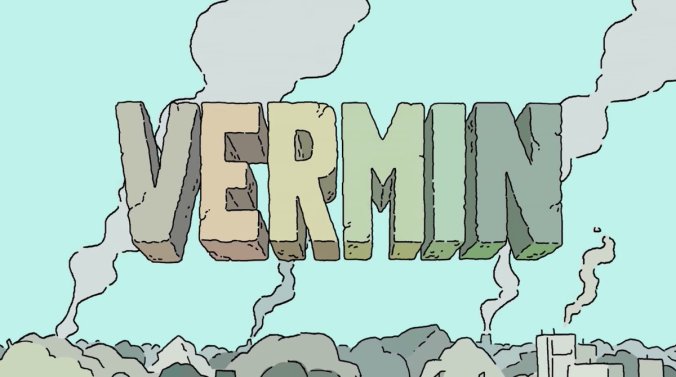
title.png

When talking about “Modern Animation” today, the focus tends to be predominantly on North-American and Japanese productions. But outside of this massive circle are other international productions that are absolutely worth of your attention.

One of these are the works of Balak and Studio Bobbypills (former Bobby Prod), a studio specifically setting out to do adult animation. In this case, “adult” meaning crass, explicit humour, satire and imagery, with the intensity and directness of an oncoming truck.

Previous works from the same staff include Les Kassos (or “The Wakos” in English), a French webseries about many popular pop culture figures trying to solve their problems with the help of a social worker.

For example: The Teletubbies fighting their drug problems, Han Solo not being able to cope with his father-in-law Mr. Vader, or Ash Ketchum getting into trouble for animal fighting, and many, many others. While these sound like classic jokes or “dark” concepts that have been already done, it’s the fast and direct presentation with snappy dialogue and impeccable comedic timing that makes these little skits shine. Especially the wild character design remakes which can go from parody to the straight-up grotesque, are fantastic highlights.

From “Star Wars” to “Game of Thrones”, over to “Teenage Mutant Ninja Turtles”, the “Smurfs” and “Astérix & Obélix”, you will find everyone in “Les Kassos”.

The whole series of Les Kassos can be found for free on Youtube, in French with English subtitles, or on the free Blackpills App in an English Dub. Three complete seasons exist, and they make for a very fun and highly inappropriate romp through nostalgic properties and through your laugh muscles.

So, what if this team sets out to do a new series that is not a sketch show, but an adult drama with original characters? Let us look at their newest production: Vermin.

DbOgjTMUQAAO1BE

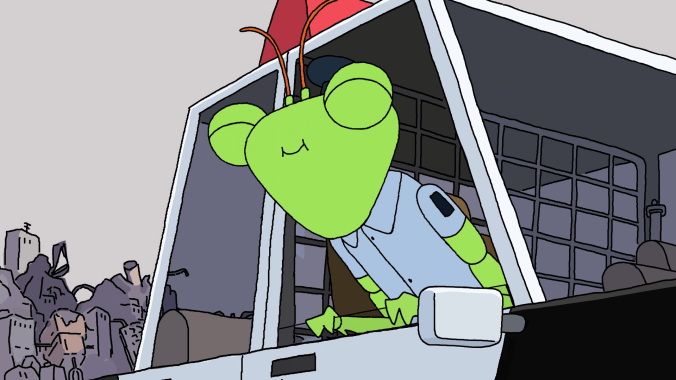
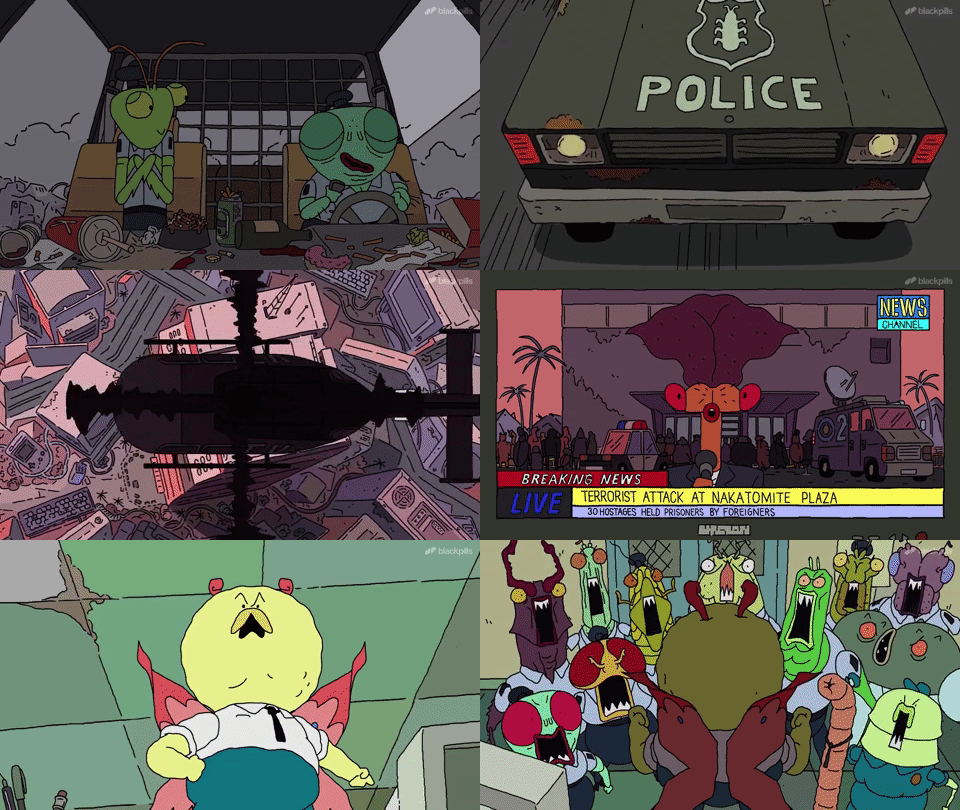
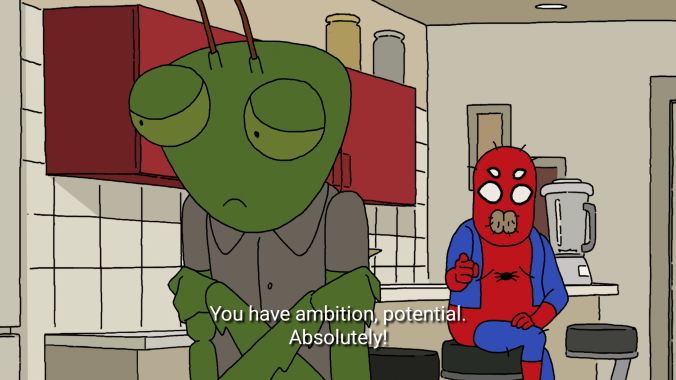
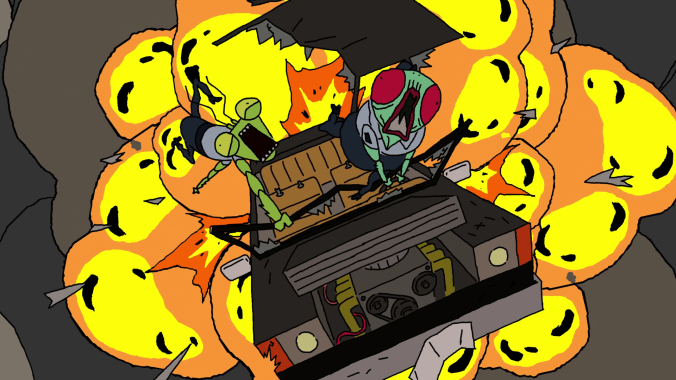
Vermin is the story of Mantos, a young praying mantis, who is finally old enough to start his job in the big city. Saying goodbye to his family and beloved fiancee, he is ready to walk into the foot steps of his father before him: to become a proper police officer.

Screenshot_20180425-003657.png

So young, so innocent.

And so, he embarks on his adventure.

Then all goes wrong.

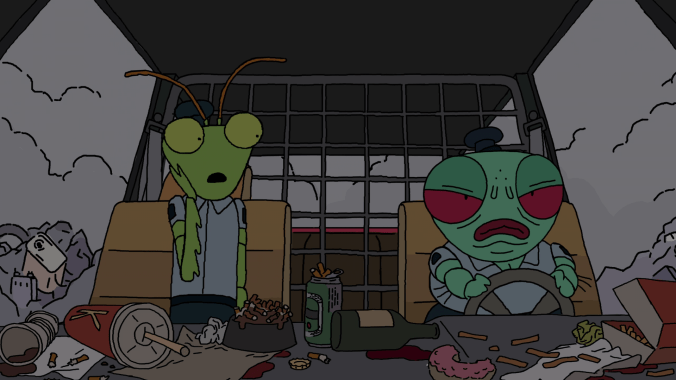
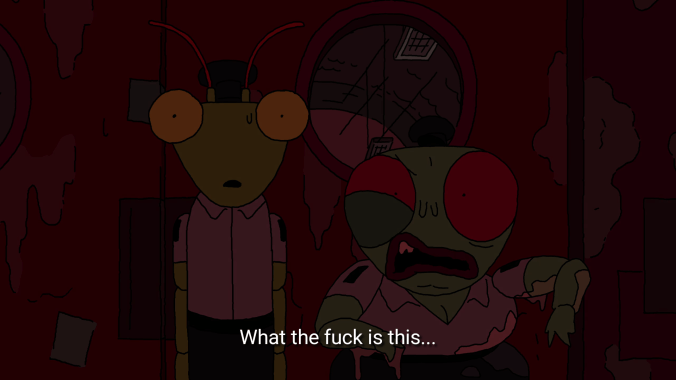
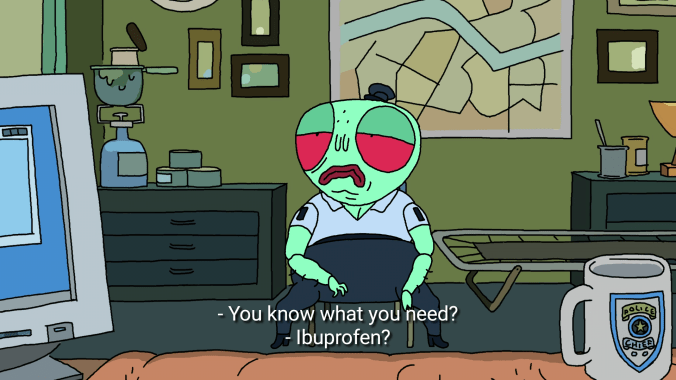
As it turns out, the big city is rough. Gang wars, prostitution, violence everywhere, decaying cityscape, crumbling society and his co-workers are a equally tough bunch. He is paired with Shermock, a fly, middle aged hard-drinking lady with a shady past and even shadier mindset.

Screenshot_20180425-003711

They don’t get along, really.

As these two worlds crash, this unlikely duo of Mantos and Shermock must solve cases, stop crime and grow together as a team, in 10 episodes, each 8 minutes long.

It is essentially the set-up for a classic buddy cop film, however, the two main characters are splendid. Especially refreshing is the middle-aged lady Shermock as a lead, who has seen far too much in life, and who has her own arc, together with Mantos, who in return must learn to be strong in this harsh world. The duo goes through many episodic adventures, with re-occuring characters and many different cases, from abductions to robberies.

While this still sounds like your standard cop story business, it’s the presentation, detail and care that his been put into this series that makes it shine brightly.

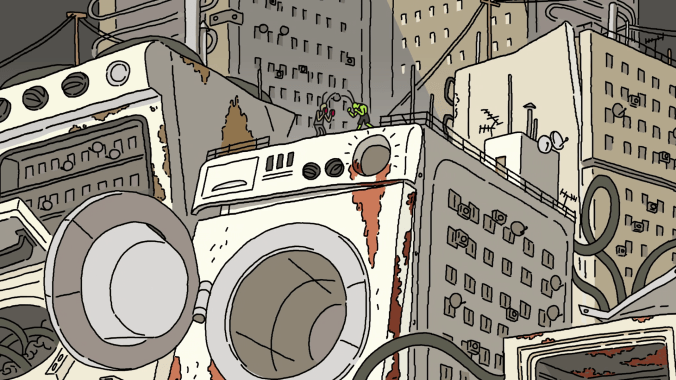
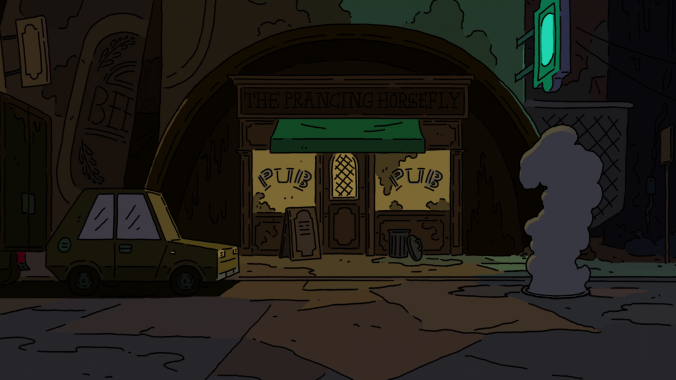
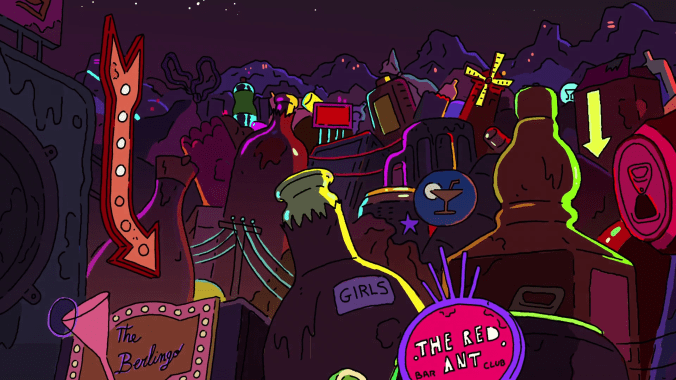
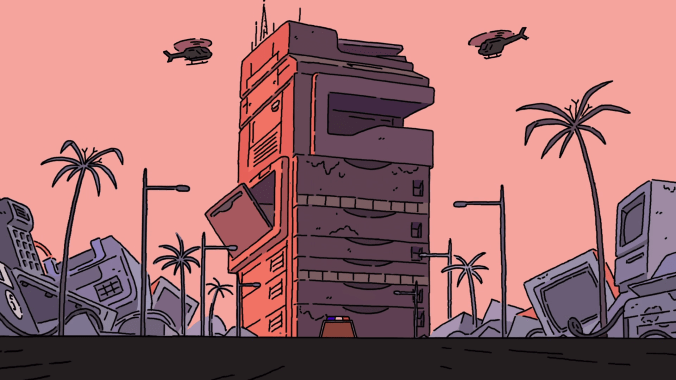
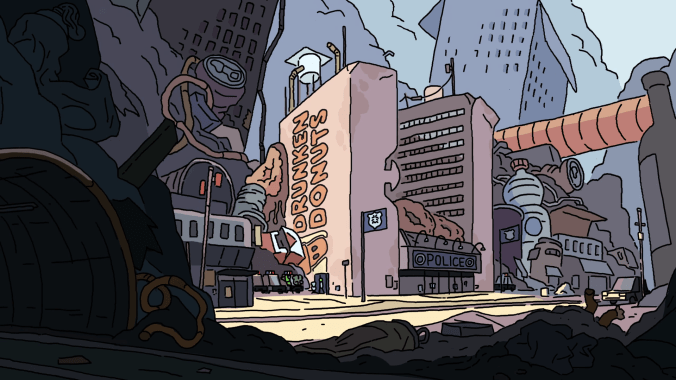
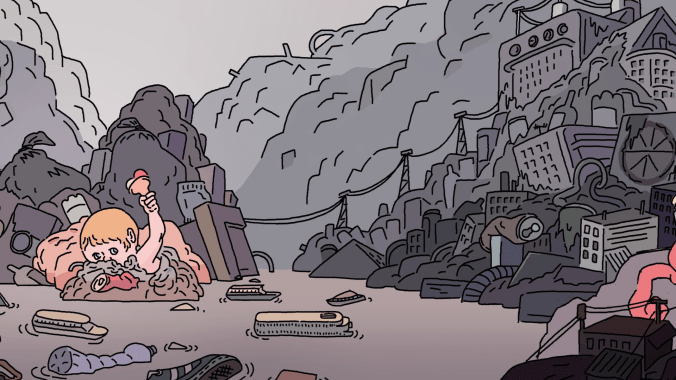
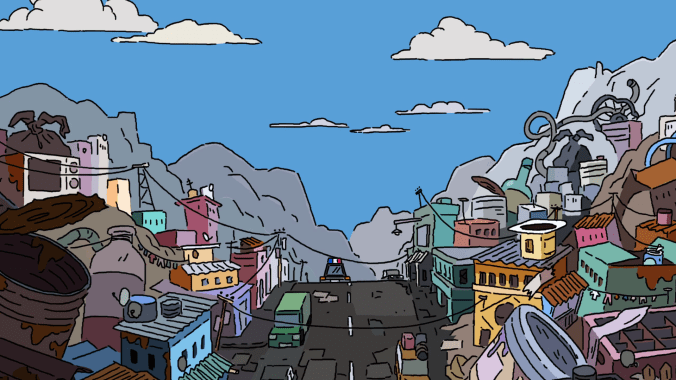
First of all, the art and animation. This megalopolis of insects has a unique and creative design of thrown away household items and trash, with many backdrops and fittingcolour choice that feel all unique, dirty and run-down at the same time: The worldbuilding and backgrounds are simply amazing.

Screenshot_20180425-003608Screenshot_20180425-003646Screenshot_20180425-003830Screenshot_20180425-003924Screenshot_20180428-180214Screenshot_20180428-181300Screenshot_20180428-181803Screenshot_20180428-182055Screenshot_20180428-182311Screenshot_20180428-183734Screenshot_20180428-183810Screenshot_20180428-184444

These backgrounds are fantastic highlights.

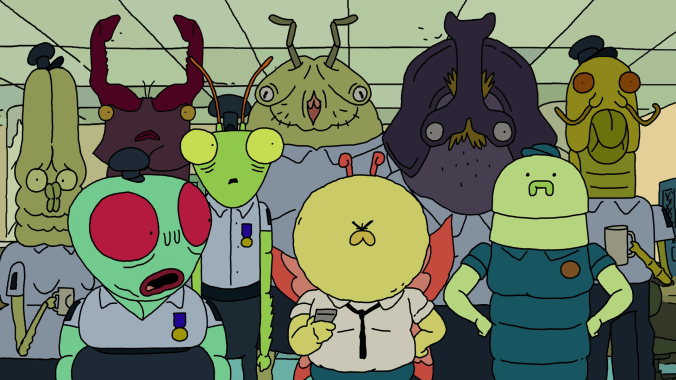
Same goes for the inhabitants of the city, who are mostly insects, some are smaller animals, like scorpions or snails for example, and some are pure original designs, where you can feel different animal elements coming together. In short, the visual design is unique and worth it, and fits the darker humour and adult themes of the story.

Screenshot_20180428-184408.png

The Police Department, many shapes and forms!

Not only is the artstyle of this series fitting, but the animation as well. The style is reminiscent of Les Kassos – however, while their previous series only dealt with one static POV camera as a stylistic choice, Vermin has the complete added benefit of being a buddy cop film, with fantastically framed and choreographed action scenes, which I won’t spoil here.

The animation seems to run on carefully chosen keyframes with not many inbetweens, giving a choppy feel to the look, but this is used to great effect, most notably in the comedic timing and immense speed of the action. Movement feels rapid, fast, frantic, and so energetic, that it brings the whole cast to life. Together with the “ligne claire” style of Franco-Belgian comic that date back to Hergé’s “The Adventures of Tintin” and its bold colour choice, it feels clean, snappy, and very satisfying.

giphy (1).gif

Movement makes a difference! (Source: Trailer)

There is, however, another thing that I must point out when approaching Vermin: Similar to Les Kassos, this series humour is dark, crass, on-the-nose, and to a level it will offend someone somewhere. We are talking full on NSFW scenes in nightclubs, crass language, alcohol and drug abuse, a high amount of graphic violence, and dark adult themes.

Screenshot_20180428-183747

A random tweet on my timeline brought me to this series, and it described Vermin as “a mix of Zootopia and Devilman crybaby” and this is quite fitting on many levels.

For one, the small town character going to the big city to become a great police officer and the city of animals setting feels very Zootopia, but it is the Devilman crybaby part I wish to elaborate on.

Masaaki Yuasa’s Devilman crybaby, a Netflix exclusive anime that aired in early 2018, was a new adaptation of Go Nagai’s classic manga Devilman from 1972. It built on the source material, putting a new modern spin on a long-running franchise, with many NSFW and explicit scenes of violence and sexual content – fitting for the equally groundbreaking source material.

However, this was mostly only possible due to this anime series being a web-exclusive. All of this content would have been omitted or adapted differently if it had to conform to the rules and restrictions of TV productions. With the freedom of being a series that doesn’t need to change itself in order to be broadcast, the creators can act with complete liberty in their own visions and ambitions. And this is a great step in animation, reminiscent of the times when hyperviolent OVAs could flourish in the 80’s and 90’s, simply because they did not run on television. Hidden behind a paywall, behind a VHS back in the day, and behind an app download or stream service today, they can do however they please. And this artistic freedom that allows for unique, new and surprising projects.

Just make sure that you know this going into Vermin. This show can get very intense and dark. And very, very explicit. Very much.

Screenshot_20180428-180427.png

Nope. Can’t show that here.

If you can deal with the direct approach this series takes to everything, you will have a fantastic time. The characters are endearing, the dialogue is snappy and fast, the action is intense and strong, and the comedy will have you in stitches.

In this raunchy, violent world are characters that look out for each other and try to do their best, even if their friendships start off on the wrong foot. Mantos is a great main character, one who has to grow and learn, and Shermock has to overcome her bad habits, sombre past and terrible lifestyle.

Screenshot_20180428-175554.png

Mantos. Young and inexperienced.

(Spider-Spider gives support. He is a superhero spider. Spider-Spider. Swings around with his butt.)

Screenshot_20180425-003517

Shermock. Shining justice.

Screenshot_20180425-004044

Mantos and Shermock. An unstoppable team.

Vermin is a great production by Studio Bobbypills that you should check out if you are even remotely interested (and if you have no problem with raunchy, violent and intense imagery). With its short runtime of 10 episodes à 8 minutes, you can easily binge the series in one or two days. Vermin is exclusive to the app Blackpills, a new streaming platform for short webseries, which is free to use, with only one or two 5-second ad breaks inbetween.

On the question of which version you should watch, there is a French Dub, an English Dub and a Spanish Dub, which you can all combine to your heart’s content with a plethora of subtitles, ranging from German, to Italian, to Arabic.

I watched Vermin in its French Dub with English subtitles, as it had the added benefit of a few re-occurring stellar voice actors I already knew from Les Kassos. I especially wish to praise French female rapper Casey for her performance as Shermock, who really breathed her character to life with her rough charme and deep lovable voice.

(I looked into the English and Spanish Dubs as well, and from a first impression, they sound absolutely fine to me too. Down below I have linked all three trailer versions, you are free to choose, as you can put your favourite subtitles under any version whatsoever.)

Conclusion

Vermin is one of those series that nail the premise of: “It’s not for everyone, but if it’s for you, it’s for you.” Not many comedy series can make me laugh so hard that I fall into a minute-long coughing fit, and I highly respect Vermin for that. In the end, it even felt too short, this series could have easily been full-length instead of short-form, as I wanted more of this world, these characters and their adventures. The finale was surprising and a bit abrupt, but fitting, and I certainly would be immensely happy about a Season 2.

Studio Bobbypills, (especially director Alexis Beaumont, producers Hafid F. Benamar and Balak) really have produced a little gem here that deserves more praise, coverage and spotlight. I had a ton of fun, and I will rewatch some of these episodes as they make me laugh hard, and more than once. As I said, if you are interested, check it out, and if not, at least keep this studio on the radar – they will do some more great productions in the future, I can already feel it.

The End.

ENGLISH TRAILER:

FRENCH TRAILER:

SPANISH TRAILER:

Sources: Wikipedia entry “OVA”, Vermin IMDB, Bobbypills, Bobby Prod [1 2 3 4]

MANLY MONDAY – “Baoh: The Visitor” OVA or “Jojo before Jojo”

Baoh_Volume_001.png

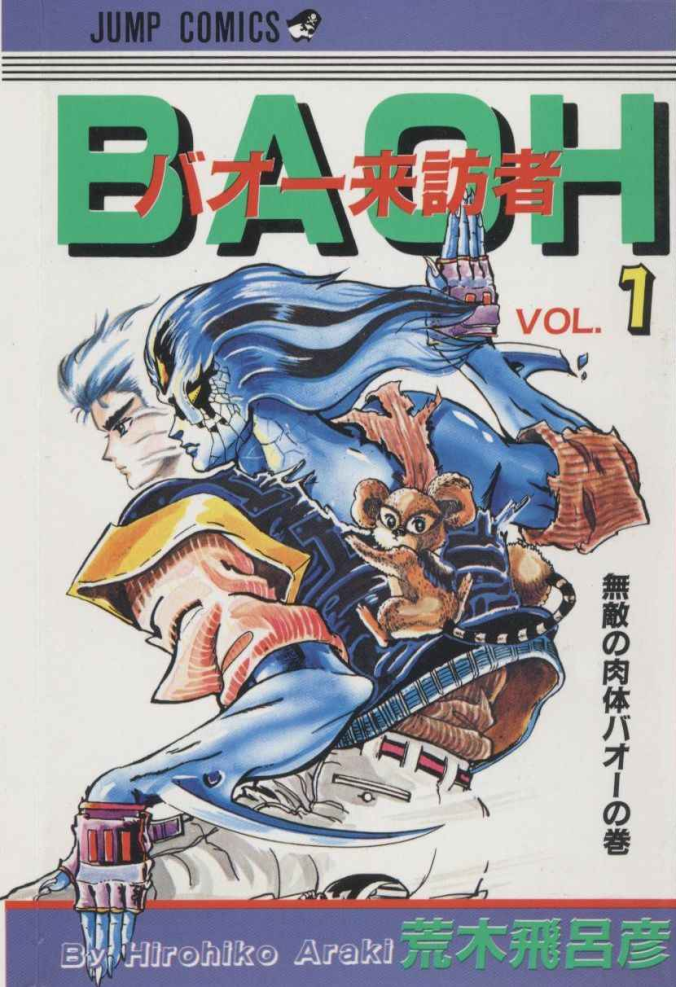
Before there was the phenomenon “Jojo’s Bizarre Adventure”, there was “Baoh: The Visitor”.

By the same mangaka, Hirohiko Araki, this manga was “Jojo before Jojo”. The series ran in Shonen Jump in 1984, for just 9 chapters, or 2 volumes as a whole, in only five months. And yet, in this short period of time, Araki would show his craftsmanship that would fully shine in the future. From the art, to the story, to the characters, this is a unique and fantastic piece of history.

With a manga this brief, an OVA that tells the whole story was made in 1989, by Studio Pierrot. We’ll take a look at the story, the animation and reoccuring ideas of Hirohiko Araki. This is “Baoh: The Visitor”.

Story and Characters

An evil corporation tests out a new biochemical weapon, an alien larva called “Baoh”, that turns any living being into an over-powered killing machine. They tested it on animals, and now for the first time, on a human. Unfortanetly, this human, named Ikuro, escapes when being transported by train.

vlcsnap-2016-08-17-09h42m37s824vlcsnap-2016-08-17-10h02m24s305vlcsnap-2016-08-21-18h49m59s363vlcsnap-2016-08-21-18h50m08s659vlcsnap-2016-08-21-18h50m28s661

The lighting and angles give it a great grim sci-fi vibe. But it wouldn’t be Araki if the muscular guy were not in a fabulous outfit.

vlcsnap-2016-08-21-18h51m22s665.png

“Excuse me, madam, I need to get through here. Don’t mind the leather and general nakedness.”

Our protagonist jumps off the train, but gets hurt by electric cables that he tried to hold on to. He is saved by a little psychic girl, Sumire, that has visions of the future.

vlcsnap-2016-08-21-18h53m16s004.png

Araki can do moe!

vlcsnap-2016-08-21-18h53m40s072vlcsnap-2016-08-21-19h08m12s759vlcsnap-2016-08-21-19h08m25s542vlcsnap-2016-08-21-19h08m28s751vlcsnap-2016-08-21-19h08m30s677vlcsnap-2016-08-21-19h08m34s588

BLEH! Araki’s creative visuals are already here!

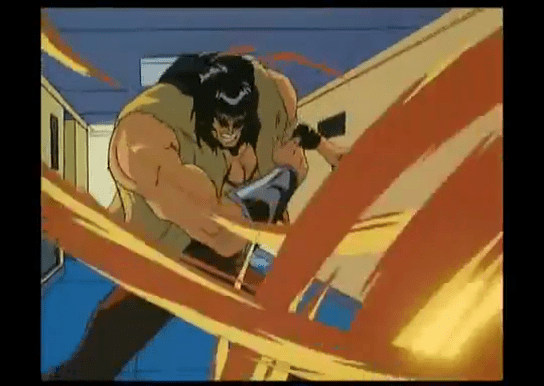
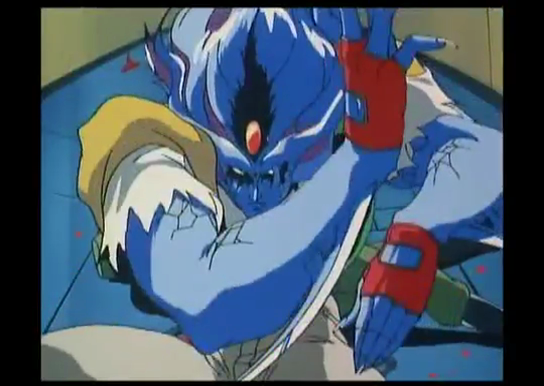
It turns out that an assassin has been hired to kill Ikuro. He is now on the run with Sumire, and a lot of fight scenes ensue, where Ikuro starts to realise the potential of his newly gained supernatural powers. When a SWAT team led by a cyborg sniper comes after him, Ikuro a.k.a. “Baoh” goes on a violent blood-drenched rampage.

vlcsnap-2016-08-22-00h31m10s204

That is practically harmless. The violence in the OVA is much more graphic.

vlcsnap-2016-08-22-00h32m20s759vlcsnap-2016-08-22-00h32m22s834vlcsnap-2016-08-22-00h32m25s954vlcsnap-2016-08-22-00h32m28s056vlcsnap-2016-08-22-00h32m32s512

But what has he become?

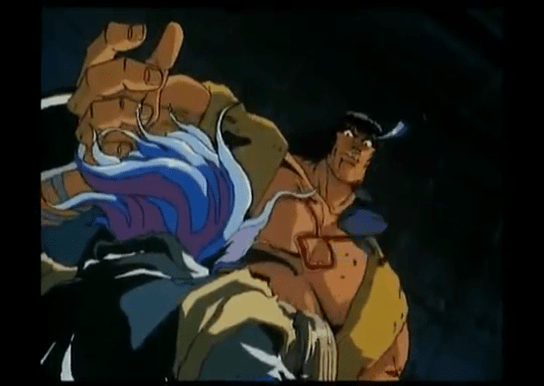
The evil corporation kidnaps Sumire, in order to lure Ikuro back to the laboratory. Here, the action gets even more intense, with a psychic villain called “Walken”.

vlcsnap-2016-08-22-00h38m46s311vlcsnap-2016-08-22-00h39m45s803vlcsnap-2016-08-22-00h39m47s764vlcsnap-2016-08-22-00h39m48s840

He has fire powers that are animated in impressive swirls.

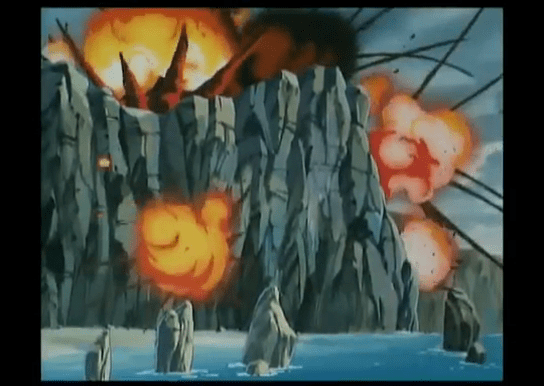
And so, a big battle takes place, the laboratory is destroyed, and “Baoh” goes down with the explosion and the debris. The final fight between him and Walken is well animated and serves as a great climax.

vlcsnap-2016-08-22-00h45m17s020vlcsnap-2016-08-22-00h46m06s467vlcsnap-2016-08-22-00h48m34s499vlcsnap-2016-08-22-00h49m07s639

Big laser cannon, big muscles, big explosions. Yes!

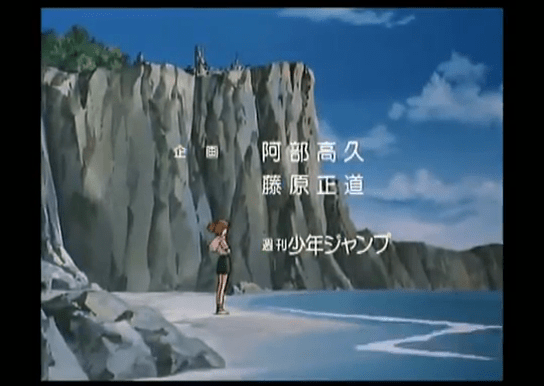
And so, the anime ends with Sumire standing on a beach, waiting for Baoh’s return. He’ll be back one day.

vlcsnap-2016-08-22-15h34m25s694.png

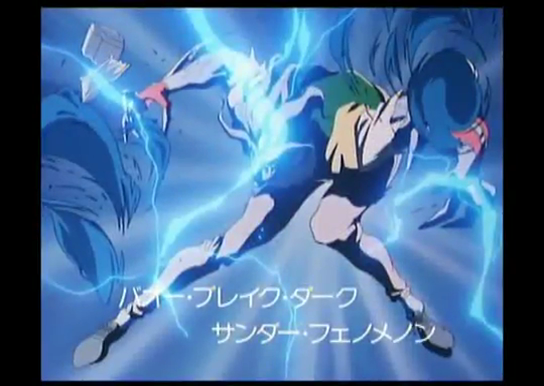
While the story seems simple and easy, the scenes in itself are crafted with care, as great action set pieces. I have excluded a lot of scenes here, in order not to spoil them for you. But we are not really here to discuss the story, let us take a look at the themes and the style, which are all very “Proto-Jojo”.

Jojo before Jojo

Araki has a love of naming characters after songs and artists he likes, like “Killer Queen” by Queen, “Speedwagon” as in the band “REO Speedwagon”, and most famously, “Dio”, after heavy metal legend “Ronnie James Dio”.

For the name of the Native American psychic warrior, he went for “Walken”, named after actor “Christopher Walken”.

Perfect!

The concept of “Baoh”, a perfect immortal being and what it would mean, was revisited in several parts of Jojo’s Bizarre Adventure, mostly with the characters of “Dio” and “Cars”.

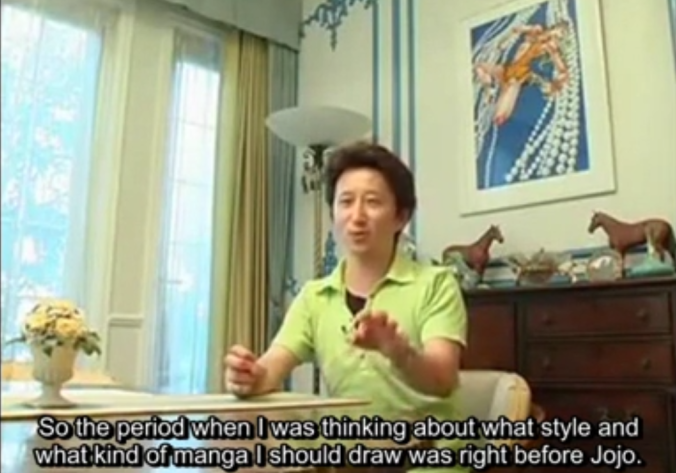
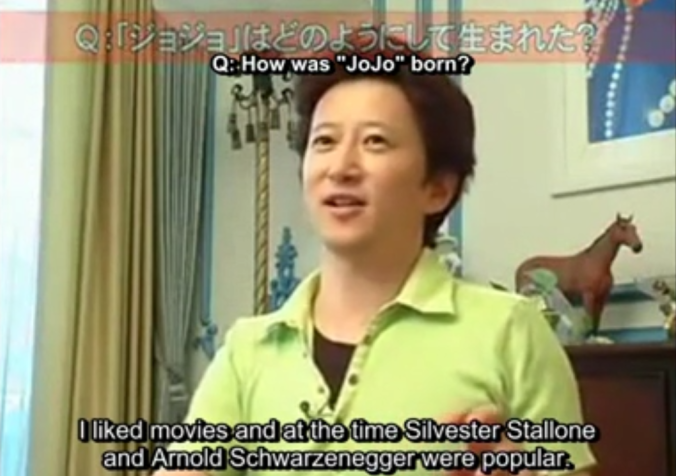
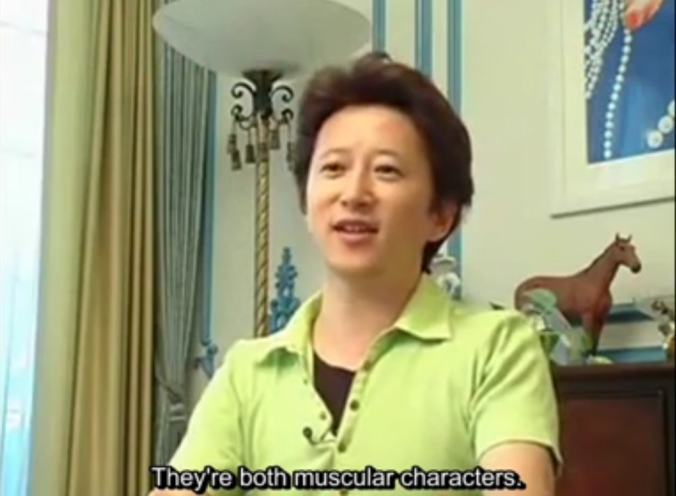
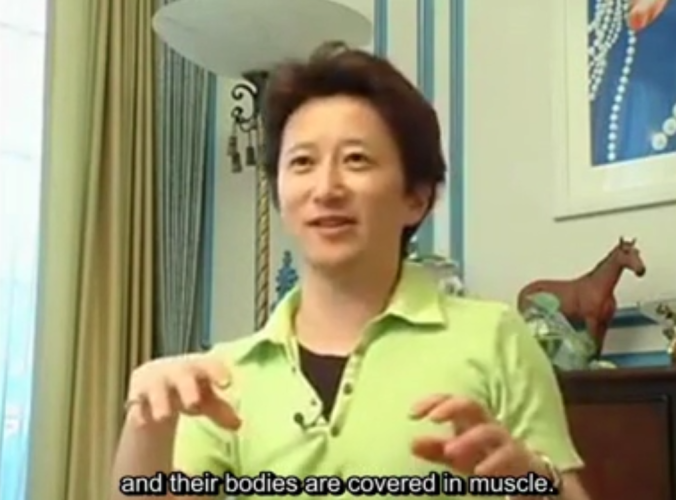
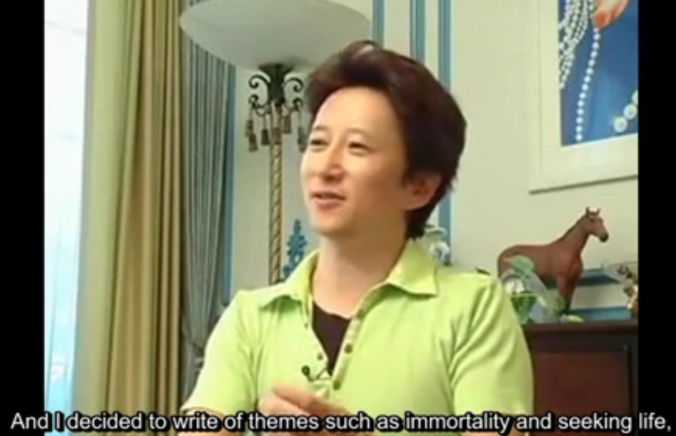
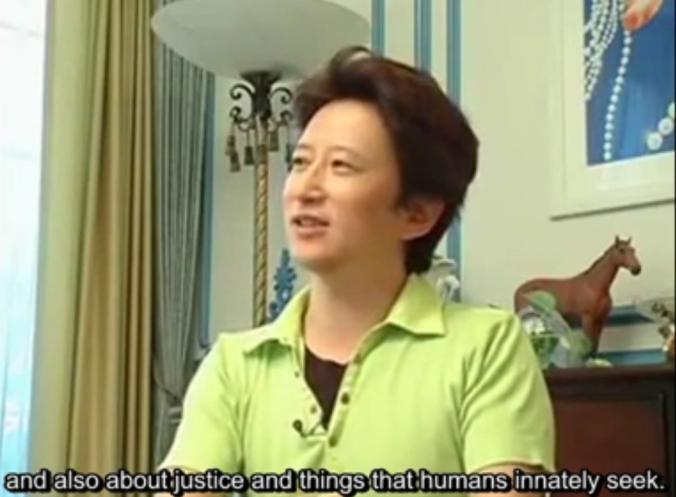
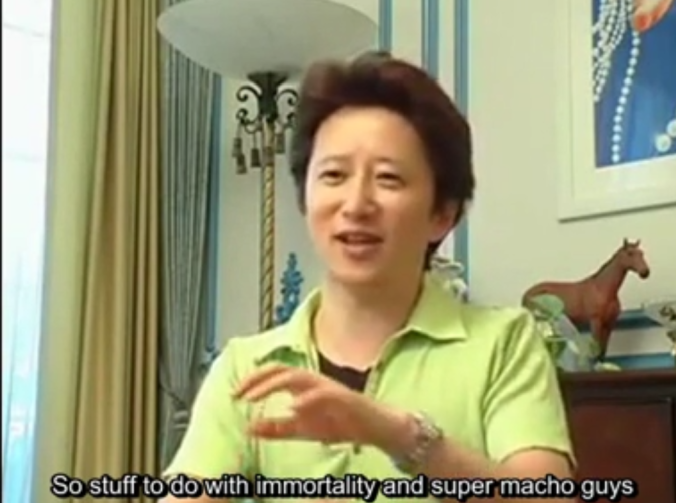
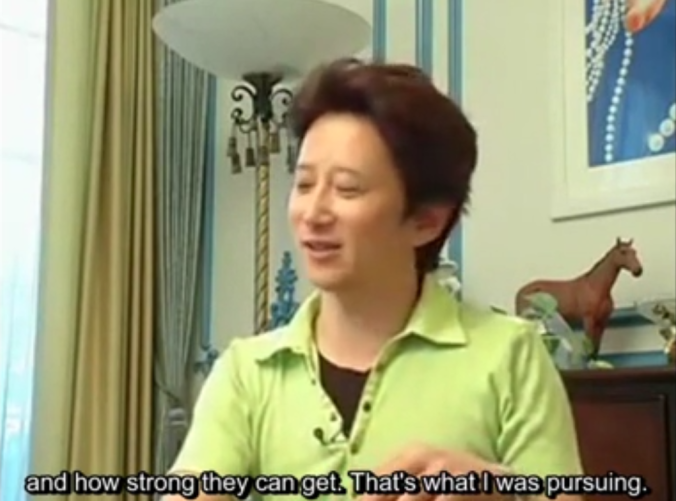
Hirohiko Araki, when he started the series in the 80’s, was really fascinated by the idea of macho and strength, and asked himself: how strong do they get, and how is strength measured? And what if a person is immortal? Are they then unbeatable? This is a prominent theme in the first parts of JJBA, and it appears already in “Baoh”.

araki 1araki 2araki 3araki 4araki 5araki 6araki 8araki 9

Hirohiko Araki in an interview about the story of Part 1 of Jojo’s Bizarre Adventure.

(Source. Warning: Araki is too pure for this world.)

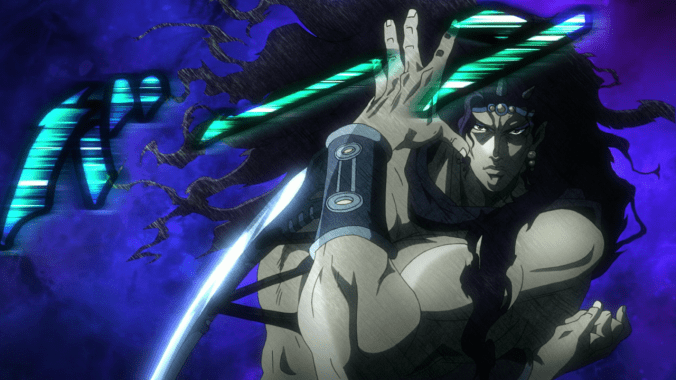
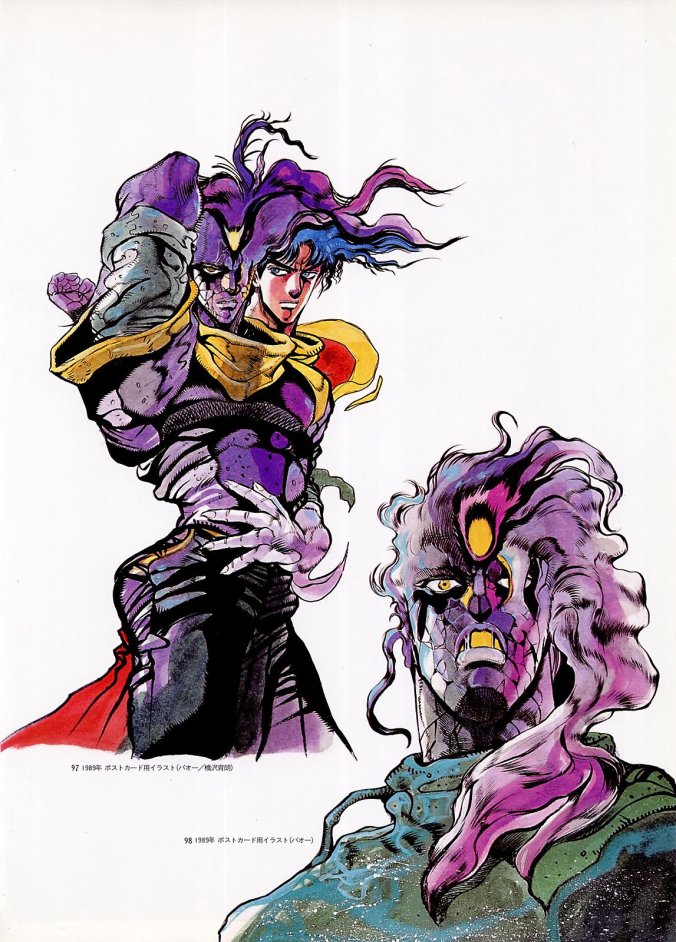
Also, Araki took the design of Baoh and redid it for Cars, the one of the main villains in JJBA Part 2, complete with lots of muscles, long hair, and arm scythes.

BadassKars.png

vlcsnap-2016-08-22-00h38m03s112

Cars in Jojo’s Bizarre Adventure Part 2: Battle Tendency compared to “Baoh”.

baoh.png

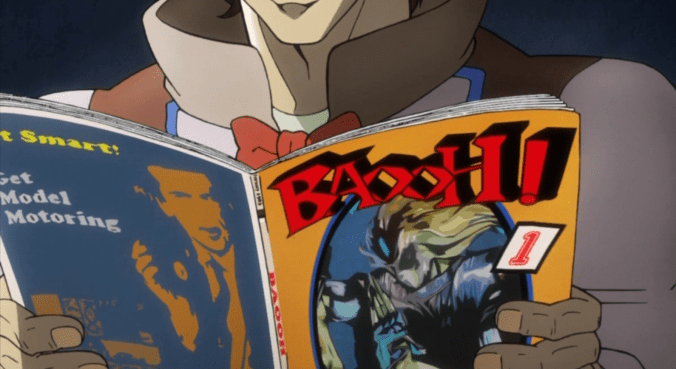
“Baoh” easteregg in the JJBA anime adaptation by David Productions. Joseph Joestar is reading the manga on a plane.

maxresdefault

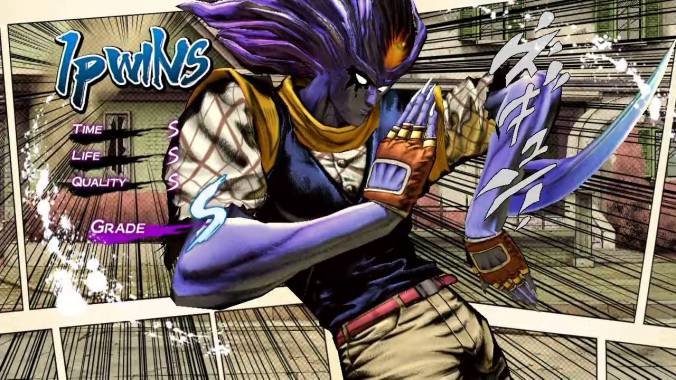
Baoh also makes an appearance in the “JJBA: All Star Battle” video game as a DLC character.

As Araki has a deep love for Western pop culture, other references are found as well, like the melting of faces in “Raiders of the Lost Ark”, an alien larva seeking for a host from “Alien”, and the cyborg villain aesthetic of the “Terminator” movies.

vlcsnap-2016-08-22-00h27m25s020.png

vlcsnap-2016-08-22-00h33m57s151.png

Only two of many references. Not pictured here: very graphic face-melting.

Tiny observation: The investors wear masks, not unlike the mask from JJBA.

Animation & Early “Posing Style”

The animation still holds up very well for being 27 years old, with outstanding sakuga moments fit for an action series, featuring debris, explosions and gunfire.

Scenes from Sakugabooru:

Impressive shot of Baoh escaping the military and Walken in a cave.

Shot of Baoh getting hunted down by a SWAT team.

Shot of ocean waves in the ED.

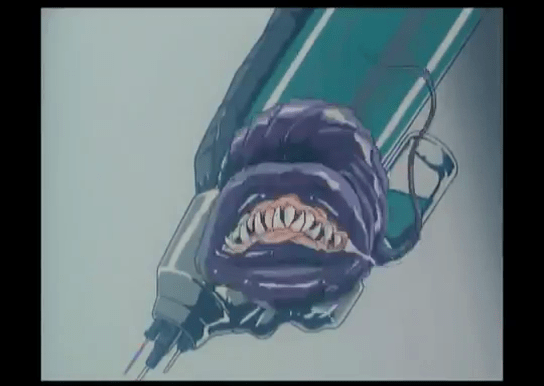
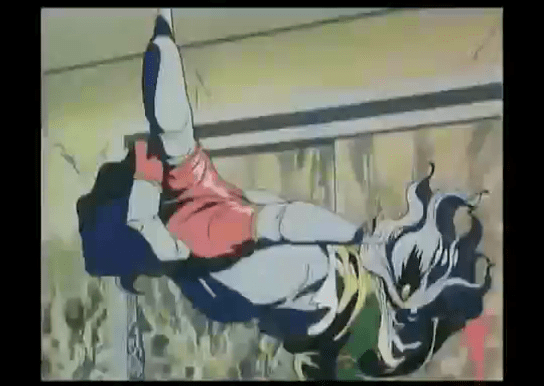
(WARNING!) The fight scene between the Baoh monster and the tiger is gruesome, with trademark 80’s hyperviolent gore and blood, and Araki’s odd habit of “animals getting hurt to show how evil the scene is”, which would appear in Jojo prominently as well.

But a special highlight are the early forms of “poses” that would become one of the beloved main attributes of “Jojo’s Bizarre Adventure”.

vlcsnap-2016-08-22-00h31m41s339vlcsnap-2016-08-22-00h31m42s886vlcsnap-2016-08-22-00h37m34s174vlcsnap-2016-08-22-00h38m03s112vlcsnap-2016-08-22-00h38m06s767vlcsnap-2016-08-22-00h38m38s077vlcsnap-2016-08-22-00h41m15s500
All of Baoh’s fighting moves feel very stylish!

Even those inbetweens!

On a side note, I cannot really recommend the dub of this OVA, except if you really want badly acted voices, which have a strange, campy charm in itself. (Baoh himself unfortunately sounds like he was dubbed by someone who happend to stand in the recording booth by accident.) The original voices give the anime more of a proper, serious feel.

Conclusion

BAOH

“Baoh: The Visitor” is a fantastic trip to the past. Not only to see Hirohiko Araki’s evolution as an artist, but also to revisit the age of 80’s anime. It is only 48 minutes long, but time really flies by in this action packed OVA. The hyperviolence and gore are very much in the zeitgeist of the decade, but the Araki spin on it makes it all the more entertaining. Instead of being just a boring gallery of violence, this anime becomes a camp celebration of 80’s. From the animation, to the character designs, to the music.

If you are a fan of Jojo’s Bizarre Adventure, give this anime a watch. If you just want to check out the 80’s aesthetic, I recommend this as well. While today is the age of “moe” and “slice of life”, this was the age of musclebound men and hyperviolence. It is interesting to see how preferences, overall artstyles and the general anime culture change. You may just need a strong stomach for all those strong visuals. If you do, sit back and enjoy this little gem from Hirohiko Araki.

vlcsnap-2016-08-17-09h39m25s666.png

The End.

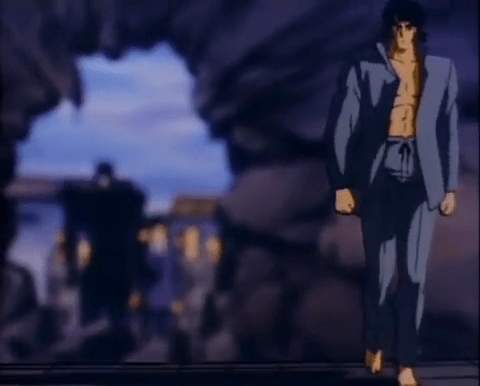
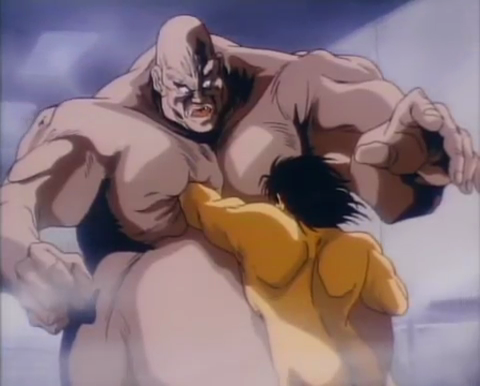
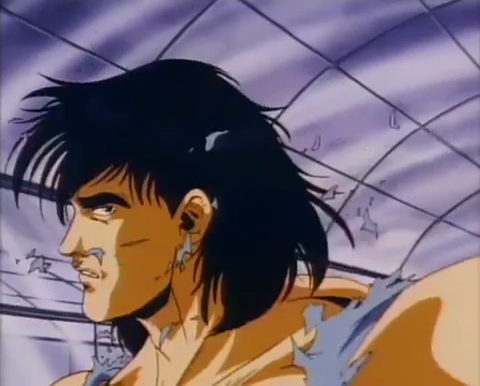
MANLY MONDAY – Riki-Oh: The Wall of Hell OVA

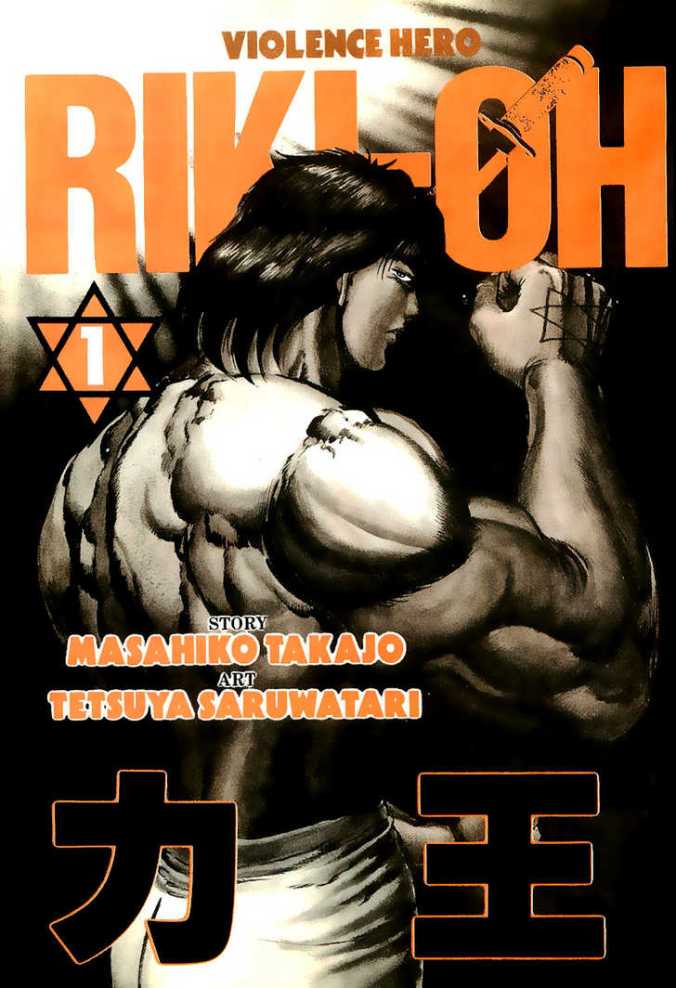
riki_oh_v01c01p003

The 80’s are a wonderful time capsule for media. It presents an aesthetic that is out of fashion now, but still beloved by the general consensus for its zeitgeist of the decade.

In this age, the manly, hypermasculine hero was the protagonist to have. Muscles, Justice, Violence and lot of Punching – this is the formula most of 80’s media pieces follow. Not only in films, with well-oiled Arnold Schwarzenegger and Silvester Stallone, between Robocop and the Terminator: The same goes for anime and manga, where “Fist of the North Star” and “Jojo’s Bizarre Adventure” were born and would take the world by storm. But many of these series are forgotten by time and widespread media, sitting still placidly in the 80’s, waiting for someone to come and look at them.
And this is exactly what we will do now!

“Riki-Oh” is one of these series. Published in Buisness Jump, a Seinen magazine from Shueisha’s Jump family, this is a manga that has all the tropes you could wish for: dystopia, yakuza, martial arts, manlyness galore, and prison hell. The manga ran for 12 volumes, between 1988 and 1990. Two OVAs have been released, and a live action movie as well, that received a cult following for being an over the top, trash, silly gorefest with a lot of mindblowing practical effects. But this is a story for another day, we will focus on the first OVA, from 1989. Off we go!
riki 1.png

Story and Characters

In a post-apocalyptic Japan, everything is awful. People are dying, injustice is roaming the streets and the air is polluted. In this dreadful world, Riki is one hard dude. A mysterious vibe is around him, he bears a star on his right hand, and he is insanely strong. After his girlfriend dies by the hands of the yakuza, he battles the man responsible, but gets caught while performing his revenge.

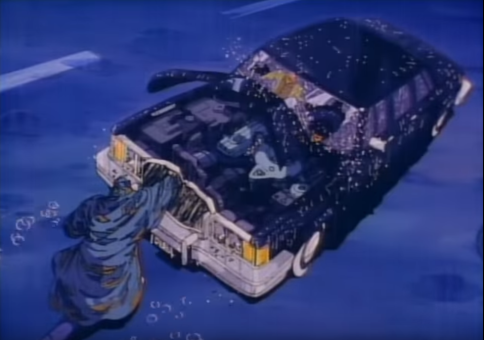
car.png

Screw your car!

Our protagonist finds himself in a Tokyo State Prison that is now privately owned. Injustice is a daily matter, people are hurt or killed, and life is hell. Riki makes some friends, but loses them to the cruelties of prison pecking order, and therefore, tries to take the bad guys down.

vlcsnap-2016-08-13-23h10m43s012

Prison life is not lovely.

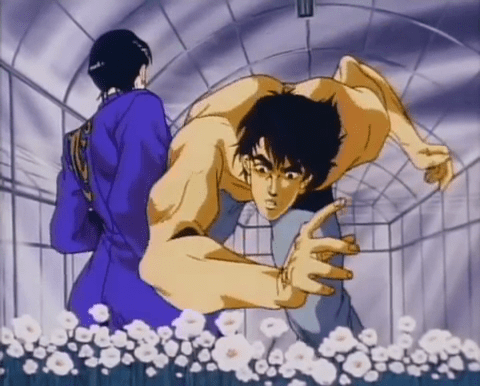
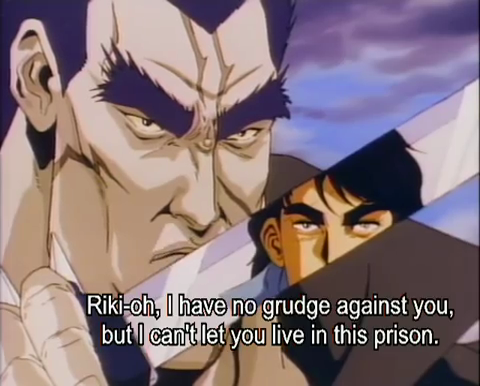
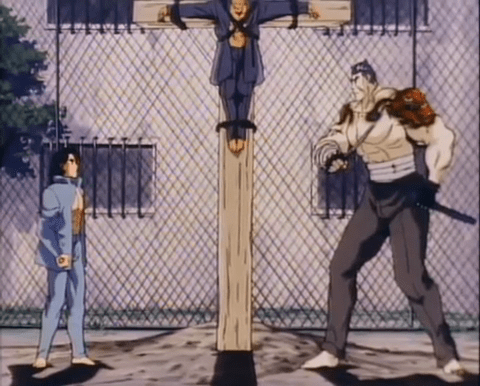
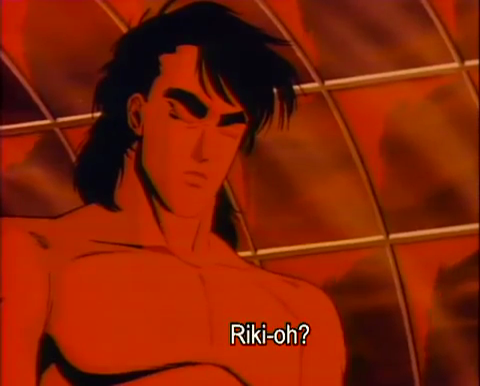
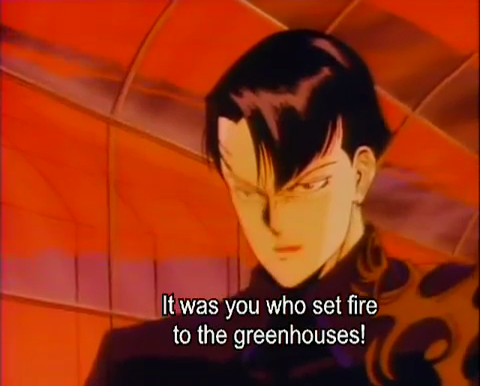
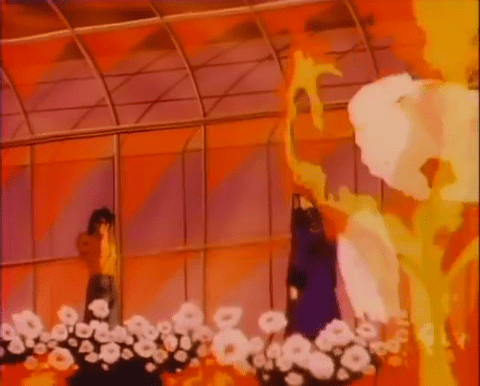
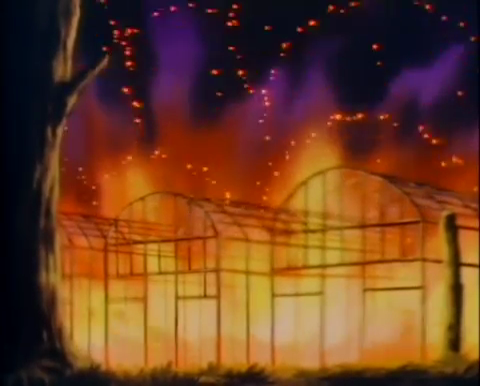
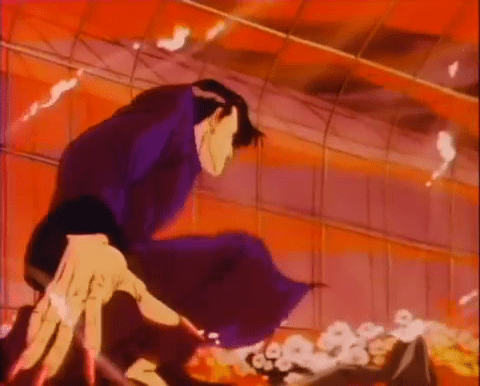
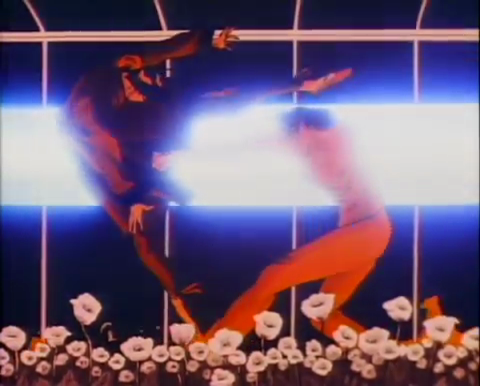
Everything escalates as Riki finds out that the prison is using the inmate’s workforce as a drug producing factory. He burns down the greenhouses and confronts the bosses of the prison, the chairman, his yakuza boss and their right hand fighter. More on him later.

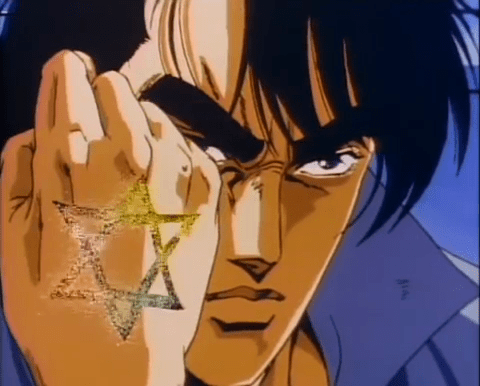
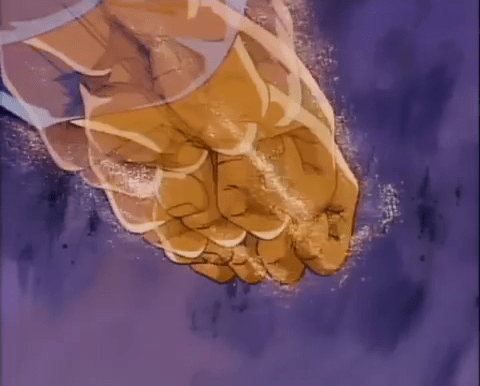
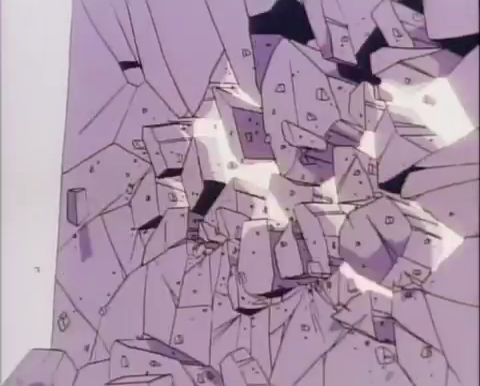
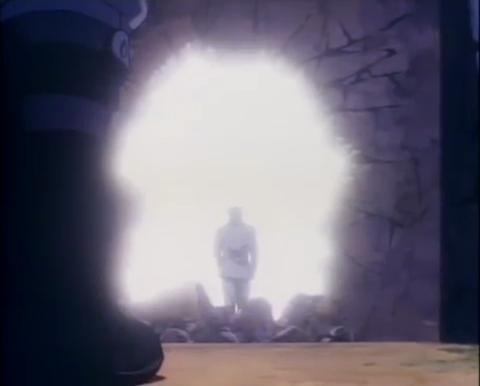
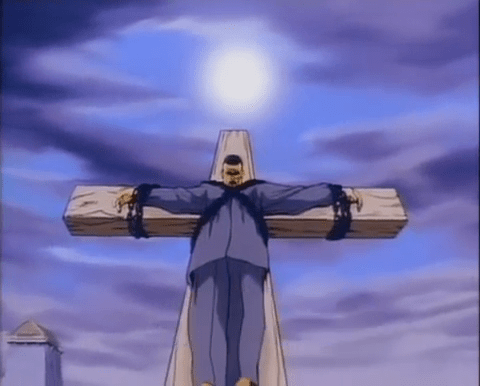
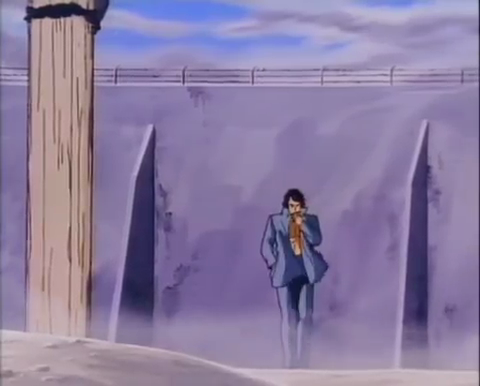
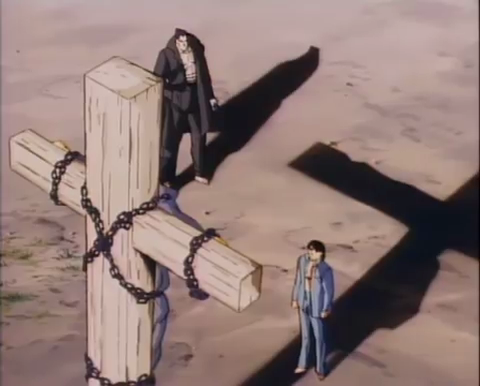
After a lot of violence, a prison riot, and people getting hurt, Riki punches through the prison wall and leaves, towards new adventures.

vlcsnap-2016-08-14-00h23m54s143

vlcsnap-2016-08-14-00h23m58s394

vlcsnap-2016-08-14-00h24m00s804

vlcsnap-2016-08-14-00h24m06s070

vlcsnap-2016-08-14-00h24m08s520

vlcsnap-2016-08-14-00h24m11s160

vlcsnap-2016-08-14-00h24m15s411

vlcsnap-2016-08-14-00h24m25s257

vlcsnap-2016-08-14-00h24m27s678

This is how you exit.

The story is streamlined and not as complex as in the manga, there is for example only one main prison fighter, instead of four, and characters are omitted, while others are changed completely. But it does not hurt the story, it becomes its own thing.

As you can see, the story is explained pretty fast, but it is not the main focus of the OVA anyway. When you watch Riki-Oh, you are here for the spectacle.

Artstyle and Visuals

There is no point in denying that this OVA puts a great emphasis on bodies and the presentation thereof. Given that the violence involves a lot of body horror, it makes sense, but the amount of half-naked men in a prison is through the roof. The hypermasculinity of the 80’s comes with a fetish-isation and cult of manlyness that ends up being so over the top that it becomes ridiculous. And I wouldn’t want it any other way.

vlcsnap-2016-08-13-23h17m37s357.png

Naked fight in a prison shower. Man gets punched in boobs. I never thought these two sentences go together.

vlcsnap-2016-08-13-23h58m16s079.png

Riki gets punched and his clothes explode, leaving him topless.

vlcsnap-2016-08-14-00h06m16s522

His sit-ups sparkle!

vlcsnap-2016-08-14-00h03m26s885.png

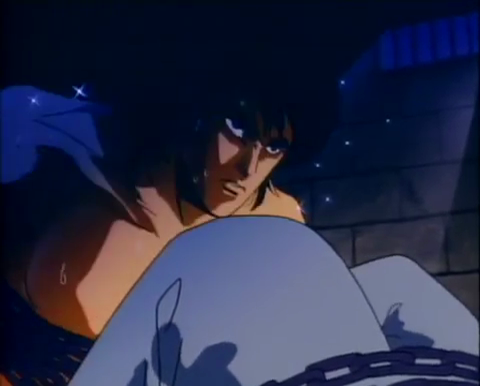
Naked Riki is in chains, BDSM undertones included.

The 80’s fetish of men, and the muscles they have are one thing, but another aspect impressed me, a trope that I really much like in these types of shows: The feminine guy. If everybody has gigantic muscles, strong jawlines and incredible punching power, the nimble, slender and soft-faced guy visually stands out. And that can only mean one thing: That guy is going to kick immense amount of ass. Contrasting gender performances seeing eye to eye and are to be taken seriously!

vlcsnap-2016-08-13-23h55m46s928.png

OH SHIT

vlcsnap-2016-08-13-23h57m47s056.png

Now that is one badass man who can rock those fingernails! (Not pictured here: His superdeep voice.)

vlcsnap-2016-08-13-23h58m33s531vlcsnap-2016-08-13-23h58m38s827vlcsnap-2016-08-13-23h58m46s058

On the matter of framing and presentation, Riki-Oh has some beautifully composed shots, that really do shine in the fight scenes. The animation is not extraordinary, but it gets the job done. Gory shots and violence are animated well, the rest is very static, but still pleasing to the eye. The cinematography in those scenes is lifted straight from the manga and it really shines.

 vlcsnap-2016-08-13-23h34m58s750

vlcsnap-2016-08-13-23h35m57s343

vlcsnap-2016-08-13-23h36m03s730

vlcsnap-2016-08-13-23h36m11s486

vlcsnap-2016-08-13-23h37m25s651

Simple, clean, nicely framed shots that look good. What more do you need?

vlcsnap-2016-08-13-23h39m09s590

vlcsnap-2016-08-13-23h39m15s725

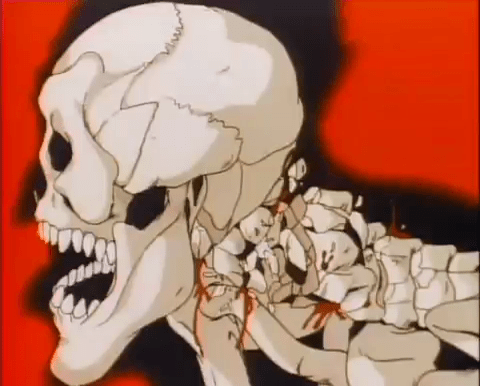
X-ray “impact frame” that shows up only for less than a second. A nice touch.

vlcsnap-2016-08-14-00h12m31s434

vlcsnap-2016-08-14-00h12m32s889

vlcsnap-2016-08-14-00h12m39s280

vlcsnap-2016-08-14-00h16m15s972

vlcsnap-2016-08-14-00h16m24s388

vlcsnap-2016-08-14-00h16m34s301

vlcsnap-2016-08-14-00h16m35s276

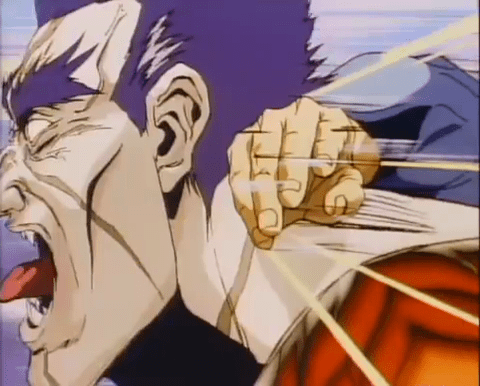
The final fight in the burning greenhouse. Visually pretty impressive!

Conclusion

While Riki-Oh is a neat OVA that is very much a child of its time, I would personally love to read the manga some more, for the “way-too-realistic”, yet “too-over-the-top” violence. The violence in the OVA is toned down. Yes, the OVA is tame in comparison to the manga. Eyes get stabbed, people get skinned and the violence never stops. It becomes an insane gallery you walk through and go “Oh, no I never thought you could actually do that!” In addition, it does seem that the OVA does not give the original artwork 100% justice.

riki_oh_v01c05p160_161vlcsnap-2016-08-14-00h12m39s280

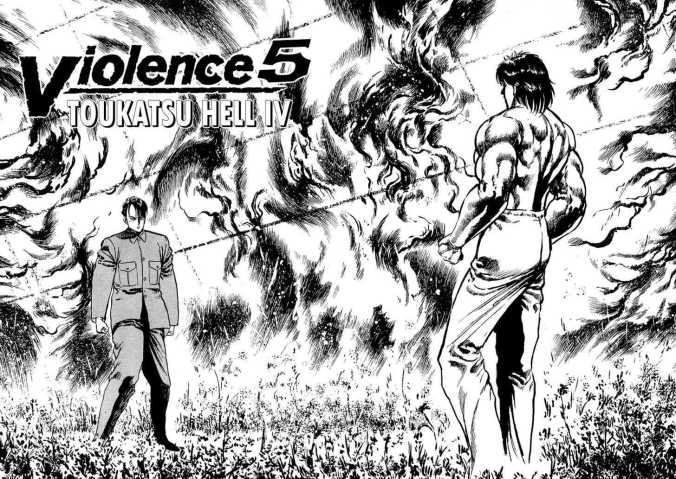
The balancing of black and white, as well as the artstyle are stylish. The OVA loses a bit of the “oomph”.

While the original story is a lot longer and features more characters, the Riki-Oh OVA does not waste your time. The pacing is fast and it trims the fat so strongly, that you are only left with the crucial plot points and main fights. Is that bad? No. Instead of an epos, it becomes a snack-sized anime of condensed 80’s that you can watch in one go and think: “Oh yeah, that was a nice trip to the past!”

If you are interested in the time capsule that is Riki-Oh, give it a watch. It is not a landmark of the genre, but a cult classic – well, that title would rather go to the manga and the live action adaptation – but it is a nice short action flick for a rainy afternoon, when you craving fun and camp goodness.

end

This has been Riki-Oh: Toukatsu Jigoku (The Wall of Hell)

MAL

Wikipedia