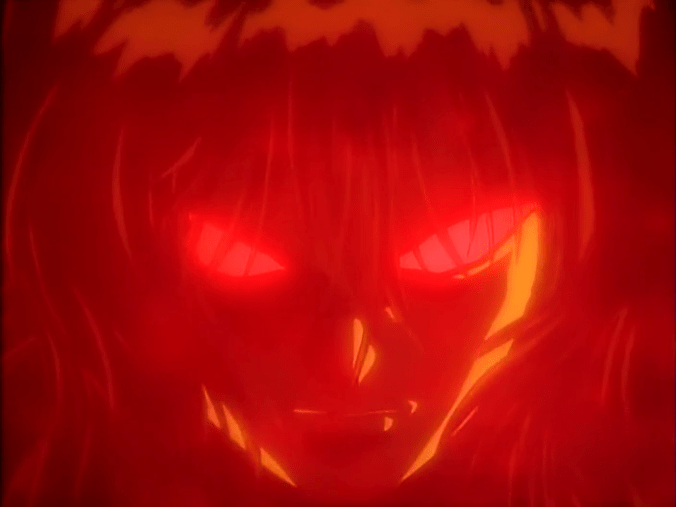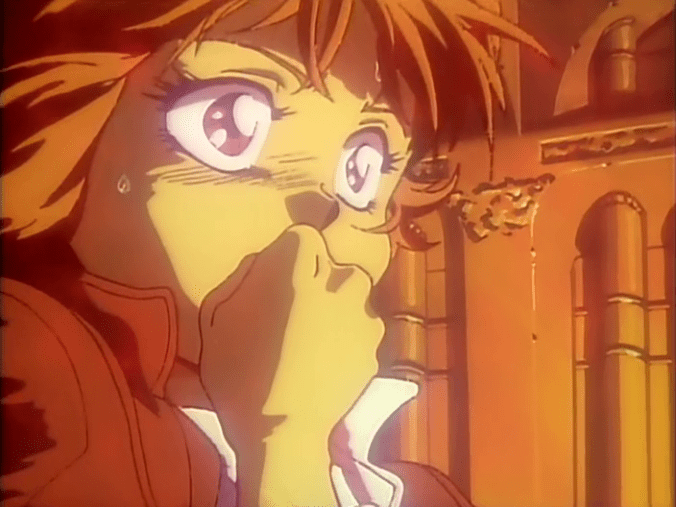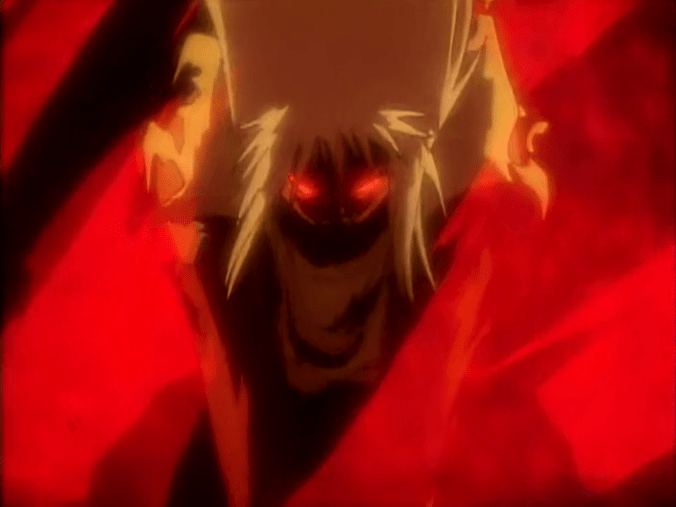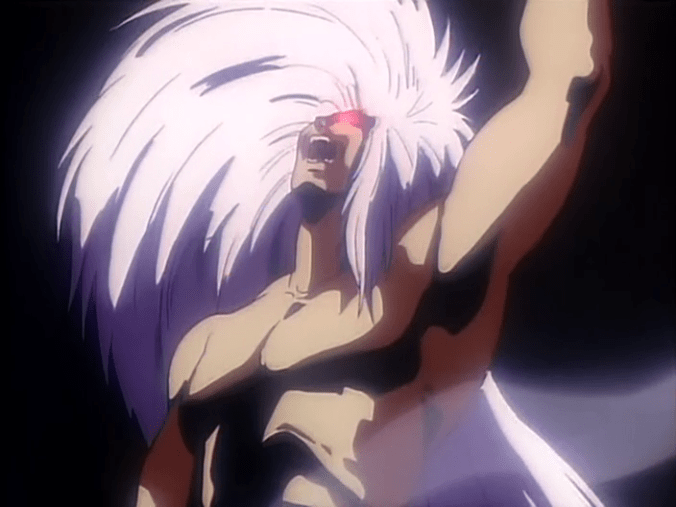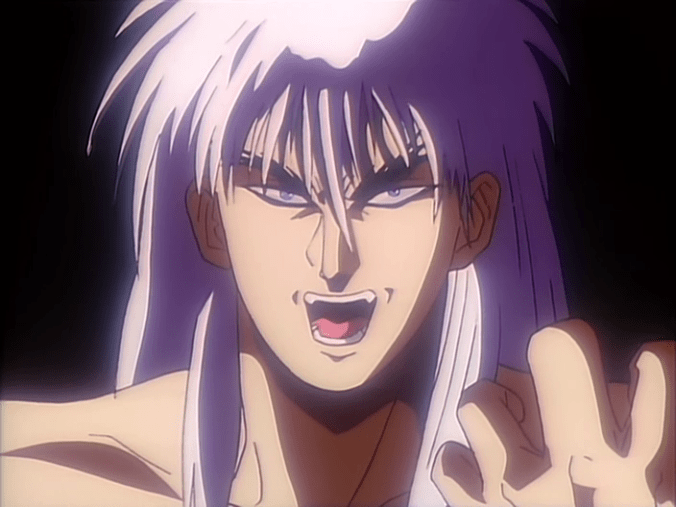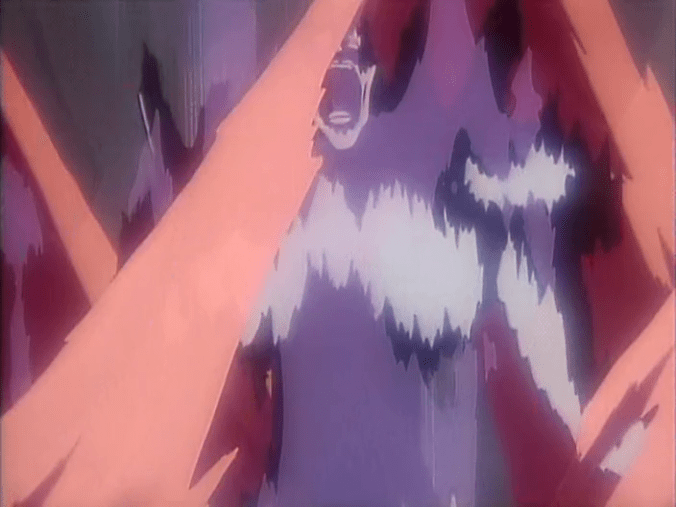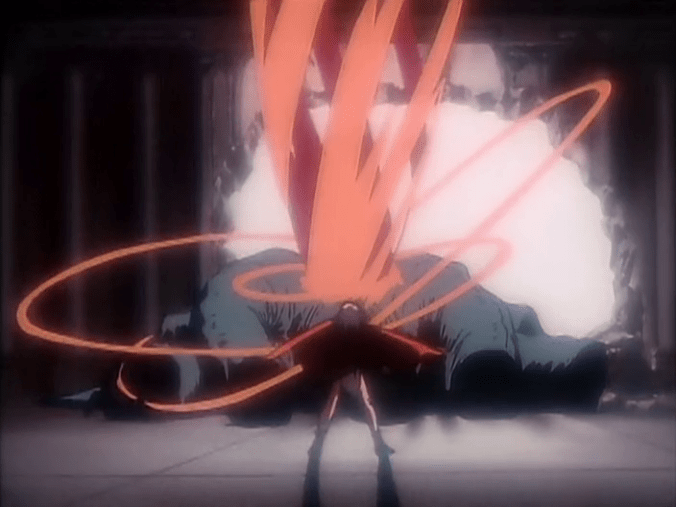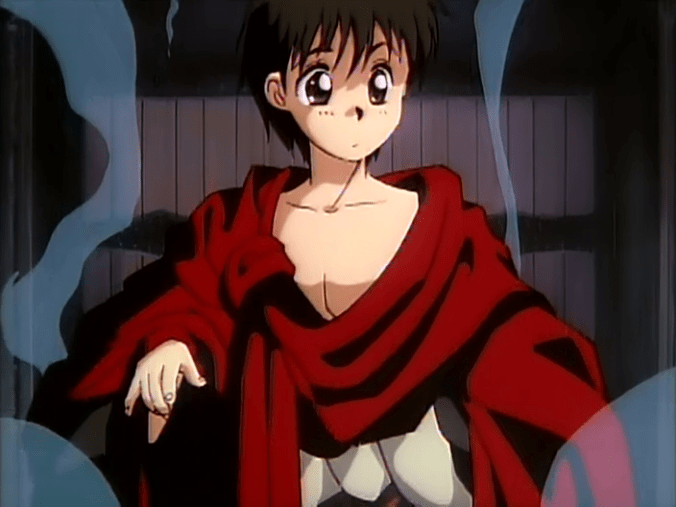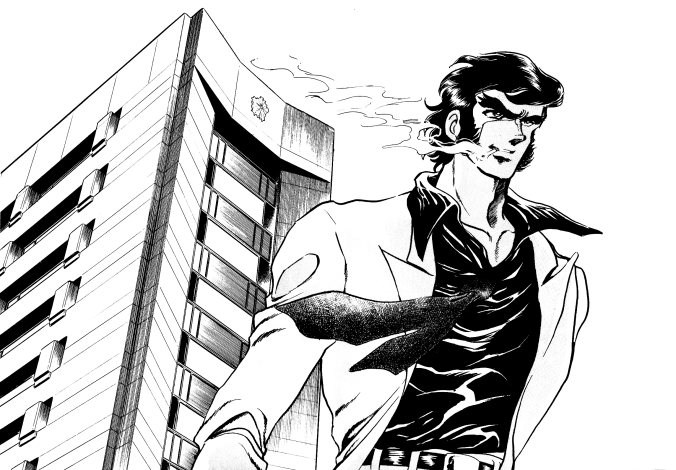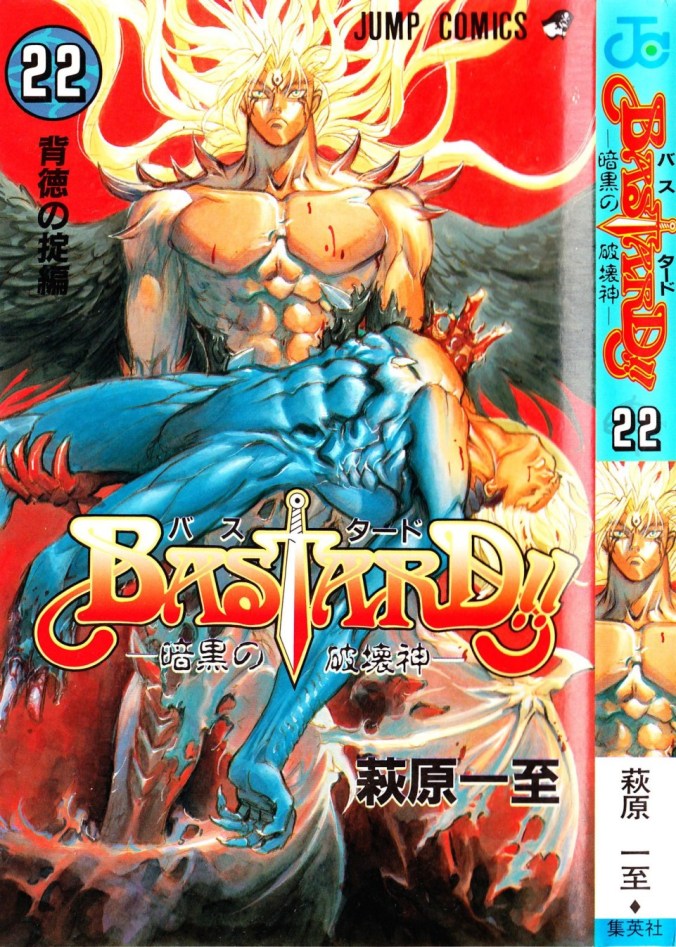
MANLY MONDAY – “Bastard!!” (OVA): When Shonen Jump met Heavy Metal

000

The Weekly Shonen Jump magazine is one of the biggest and most influential around the globe when it comes to manga and pop culture in general.

One Piece, Naruto, Dragon Ball, Yu-Gi-Oh!, Bleach, Jojo’s Bizarre Adventure and many, many more were published in the magazine, where they would gain worldwide popularity, critical acclaim and the love of millions of fans all around the globe. However, there are also the smaller ones that time has forgotten, even though they sold millions.

One of those is “Bastard!!”.

Bastard has been running since 1988 uninterrupted in Shonen Jump, then switched to the Seinen-oriented Ultra Jump in 2000, and continues today, making it one of the longest running series in the magazine. The series has about 30 million copies in circulation, which makes it one of the higher ranked manga series. (To give you a point of reference, Death Note is also at 30 million, Sailor Moon is at 35 million, and Haikyuu!! at 28 million.)

The Bastard manga doesn’t seem to have the same reach as the others in that league, but it still is a very interesting piece of media to look at, even if it may not be as popular as its contemporaries.

Instead of going through 31 years of manga, we will look at the standalone OVA series, which came out in 1992, and see what makes this 6-episode series a beautiful time capsule of the 80’s.
vlcsnap-2018-08-08-22h48m15s429

Bastard!! – Destroyer of Darkness!

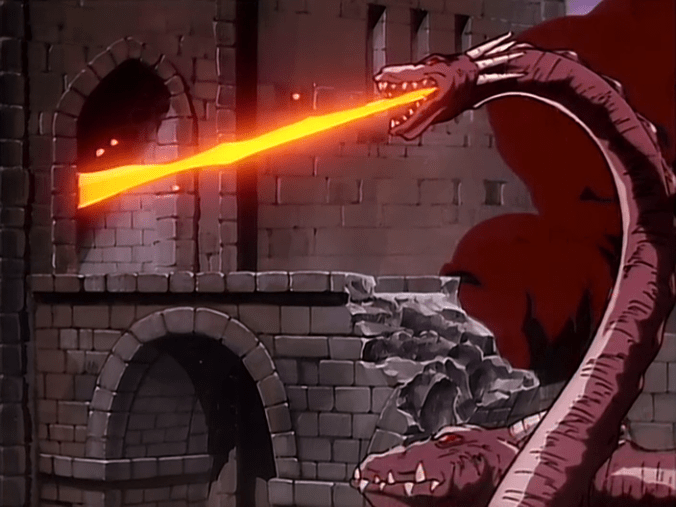
The high fantasy adventure story unfolds in the lands of “Metallicana”, where the four “Evil Lords of Havoc” are attacking the castle of the king. They have sent in the powerful wizard Osborn to attack the fortress with a gigantic Hydra.
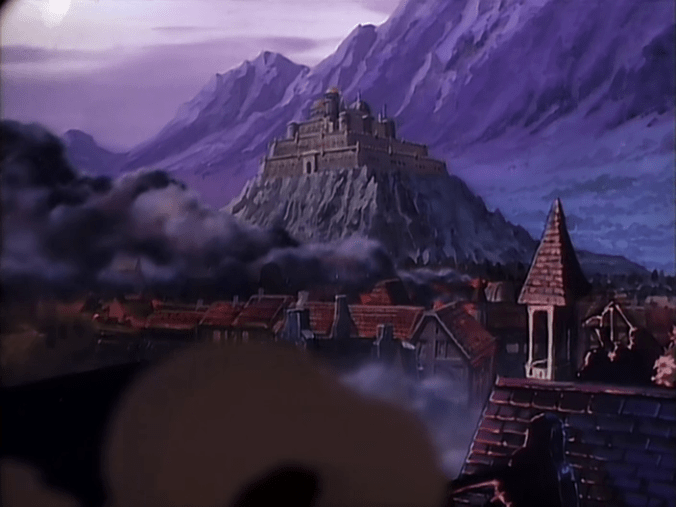
vlcsnap-2018-08-08-22h49m22s933

vlcsnap-2018-08-08-22h50m47s178

In the castle, the magicians and knights are helpless. They are losing all their men, the damage done to the castle walls is getting worse by the second with this raging beast that cannot be stopped.

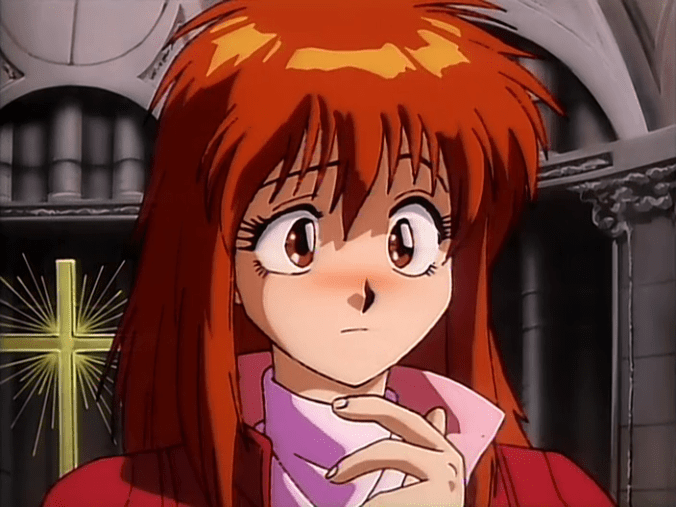
Somewhere in the castle, the young priestess Tia is told by the Great Priest that she holds the key to turning this desperate situation around: If she kisses her childhood friend Ruche, she will release the legendary wizard who was sealed inside him a long time ago. Reluctantly, she agrees – and promptly, hell breaks loose.
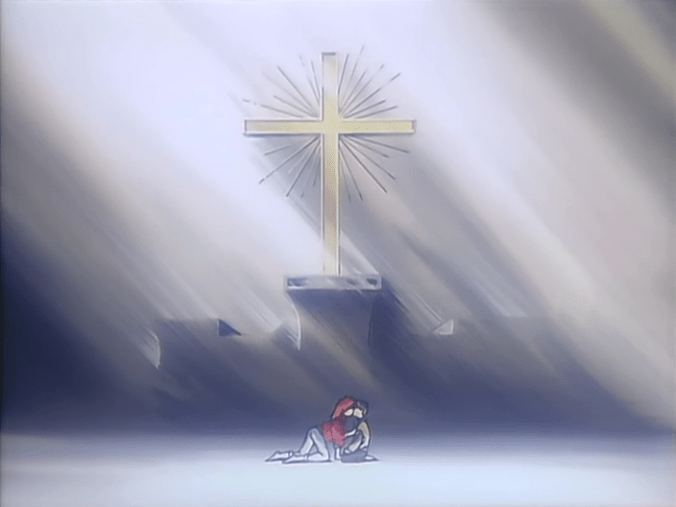
vlcsnap-2018-08-08-23h01m12s592vlcsnap-2018-08-08-23h02m10s065vlcsnap-2018-08-08-23h02m14s236vlcsnap-2018-08-08-23h02m16s742vlcsnap-2018-08-08-23h02m18s199vlcsnap-2018-08-08-23h02m34s926vlcsnap-2018-08-08-23h02m39s643

She has awoken one of the ancient enemies of the kingdom: Dark Schneider.

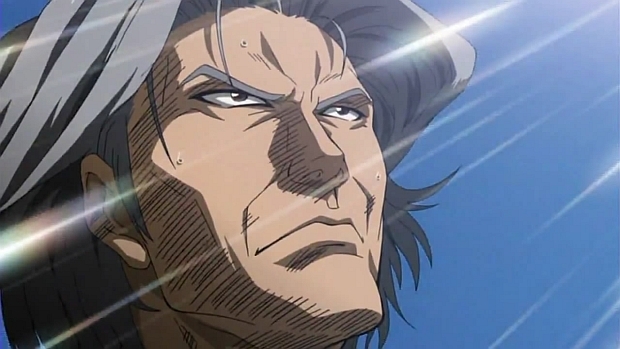
A powerful dark wizard and egoistic tyrant, who once belonged to the four “Evil Lords of Havoc” – they were once a team of five. And he is quite upset about having been sealed away for the last 15 years. He wishes to destroy everyone in his path and go back to being an overlord, but as it turns out, his host Ruche did more than just sealing him away: As he is using the young teenage boy’s body, he is changed by the empathy and friendship he had towards Priestess Tia – even if it’s just marginally, he cannot do her harm.

Meanwhile, the Hydra and Osborn arrive in the throne room, sure of their victory. As they spot Dark Schneider, they freeze: He was believed dead for the last 15 years, and now the old ally is back? However, Dark Schneider has had it with all this mayhem around him, and simply decimates the attackers with a dark spell.
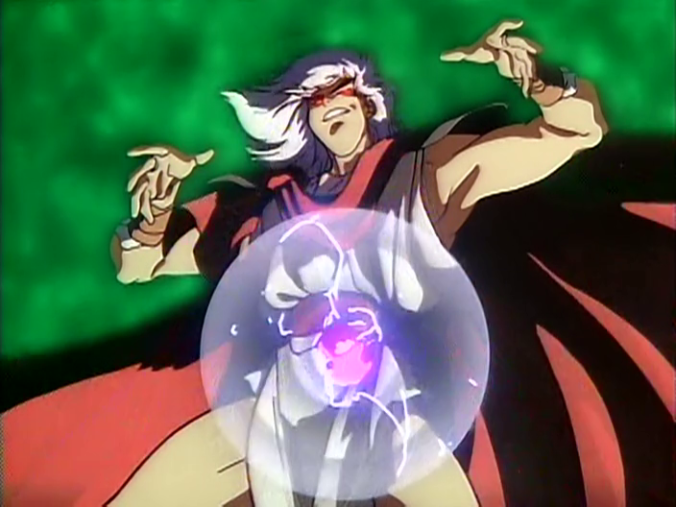
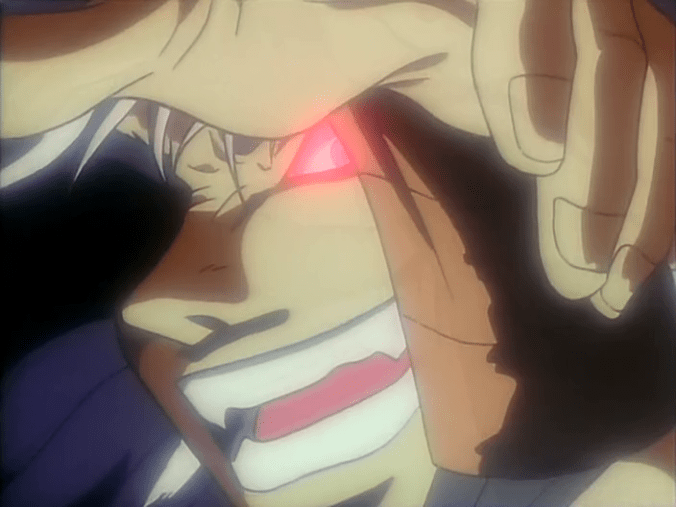
vlcsnap-2018-08-08-23h08m56s441vlcsnap-2018-08-08-23h09m00s311vlcsnap-2018-08-08-23h09m04s442vlcsnap-2018-08-08-23h09m08s607vlcsnap-2018-08-08-23h09m10s151

The “Slayer’d” spell, turning Osborn into dust.

And so, the new Dark Schneider is back, slightly changed, and having feelings for Tia, the childhood friend he never actively met, but knows that she is important to him as a person. As the episode ends, he kisses her and thus accidentally turns back into his host’s form, Rushe, who has no clue what happened to him.

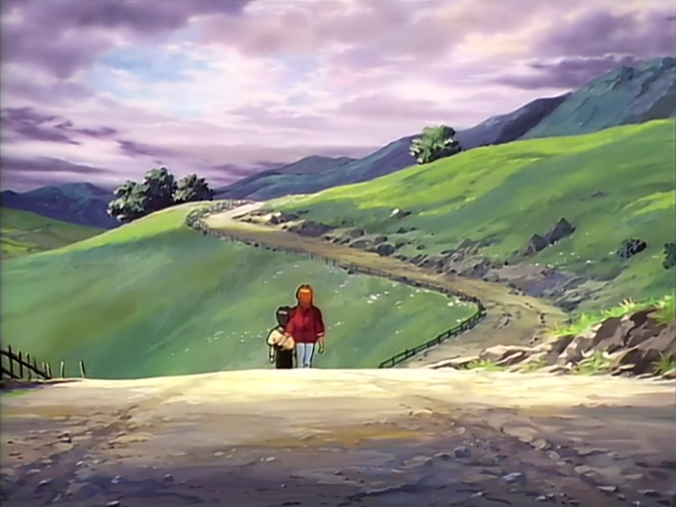
Tia and Rushe embark on an adventure together, to fight the four “Evil Lords of Havoc”, and stop their plans to destroy the world.

vlcsnap-2018-08-08-23h10m42s001vlcsnap-2018-08-08-23h10m50s580vlcsnap-2018-08-08-23h10m58s887vlcsnap-2018-08-08-23h11m00s806vlcsnap-2018-08-08-23h11m33s427 Episode 1 ends, the adventure ahead of them.

This is how Bastard begins, and immediately, three stylistic choices will jump at the viewer at full force: The very 80’s design, the high fantasy setting straight out of a Dungeons and Dragons session, and the abundant use of Heavy Metal references.

Triple the Style, Triple the Fun

I. Heavy Metal

Dark Schneider is a reference to German heavy metal singer Udo Dirkschneider, the country of Metallicana is pointing to Metallica, and Captain Bon Jovina at Bon Jovi. And it doesn’t stop here, there are 5 more episodes to go, we will meet King Di Amon (a vampire lord who wears Kiss-like facepaint), and other different dark magic spells, such as HellionBooryan Deado, Gunsun-Ro or the all-destroying MEGADESU.

(Depending on translation, the names might be changed to avoid copyright issues, the anime goes for example for “Meta-Rikana” instead of “Metallicana”, while my German manga copy left the name unchanged.)

Similar to Jojo’s Bizarre Adventure, another long-running Shonen series, the names of real life bands and singers will be used for characters, and this becomes its own brand of fun to ‘spot the references’. Some will be more out in the open, such as the castle of Whitesnake, but some more obscure, like the Dark Priestess Abigail.

However, it is not only a way to pay homage to a whole music genre, but it also weaves itself to the fantasy setting, which also had its influence in the metal genre.

II. Fantasy Aesthetics

One thing that I have to immediately point out, is the beauty of the world design, especially in its use of backgrounds.

This slideshow requires JavaScript.

Gallery of Backgrounds, swipe/click right to flick through

The hand-painted landscapes and architectural designs make the world grounded and graspable, and the different settings every episode make for new, unpredictable highlights of carefully crafted art.

Together with the grand scope of armies fighting, the world being in danger, and the heroes roaming the lands together, we get a grand, bookish feeling of worldbuilding. There is history and depth here, even in this short running time.

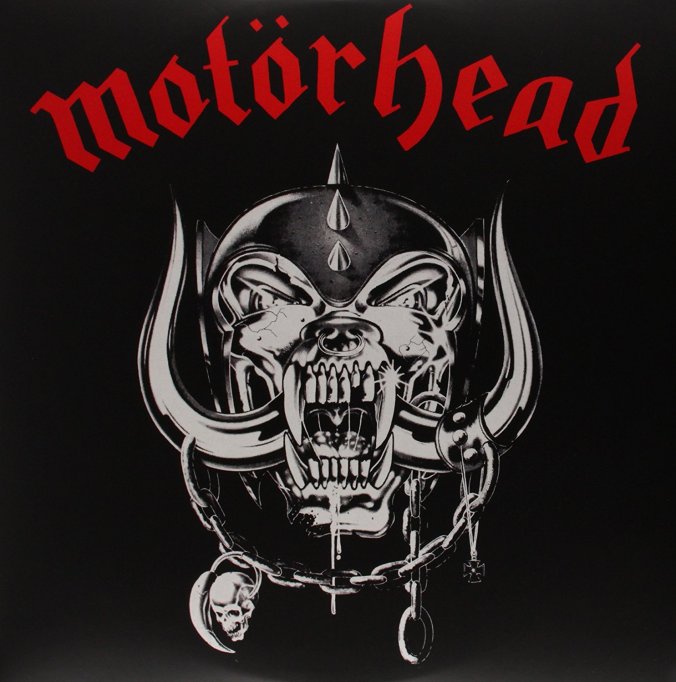
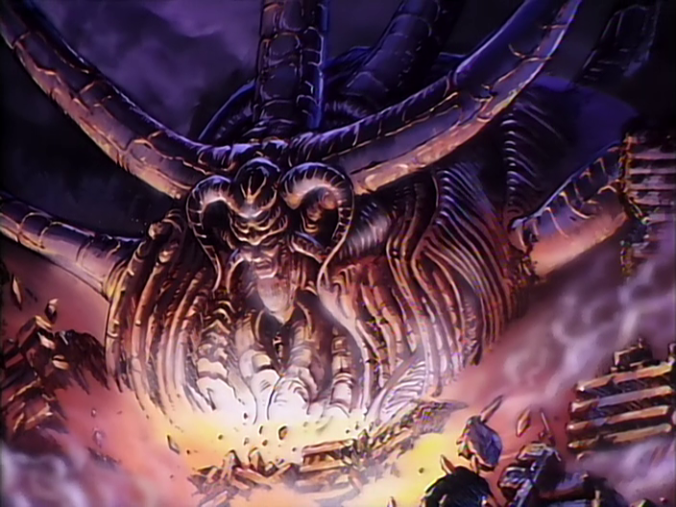
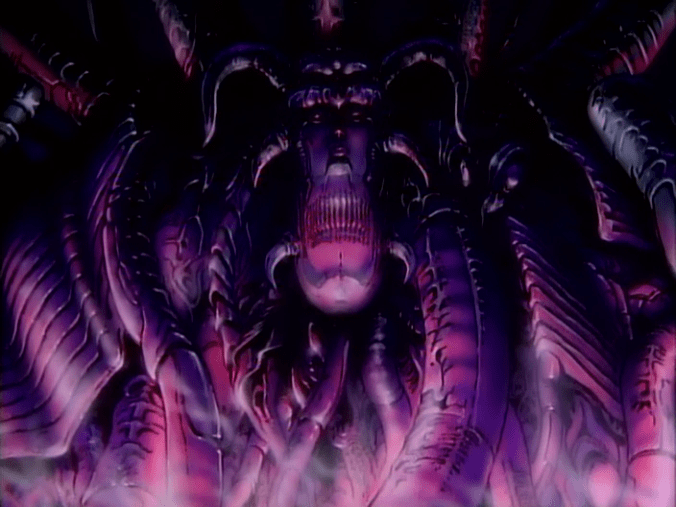
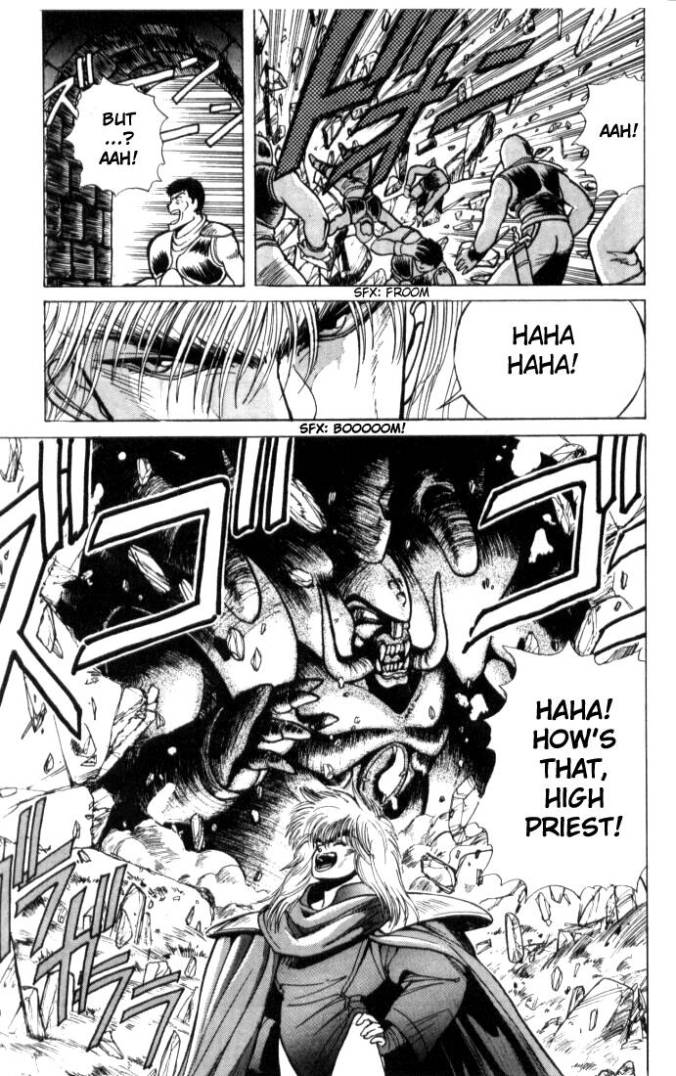
In addition, some heavy metal influenced designs will be found in this fantasy, for example the evil deity Anthrasax, which looks straight out of H.R. Giger’s mind (who had made NSFW album covers for Danzig, Tryptikon and Celtic Frost), or the (sadly manga-only) “Golem” that Dark Schneider summons, which strongly resembles Snaggletooth, the mascot of the band Motörhead.
vlcsnap-2018-08-08-22h47m44s083.png

vlcsnap-2018-08-12-16h42m23s824.png

The Giger God Anthrasax. (I personally suspect a mix of Anthrax and Saxon)
snag

Dark Schneider’s Golem…

snagmoto.jpg

…and Motörhead’s Snaggletooth.

III. It’s 80’s as heck

Bastard fits in with other 80s Shonen anime franchises, in all good and bad ways.

The protagonist is strong and powerful, and in addition, is someone who has a teenage boy as a host – but with no drawbacks. Even if Ruche can’t remember what Dark Schneider does when he takes over his body, it is never portrayed as something bothersome or negative: The contrasting example would be Naruto, who suffers under the demon sealed inside of him. And, of course, a kiss is the trigger to swap them both around, so romantic tension is always automatically given. The comedic banter between Tia and Ruche/Dark Schneider is also a highlight that is accentuated in goofy expressions and fast timed physical comedy.

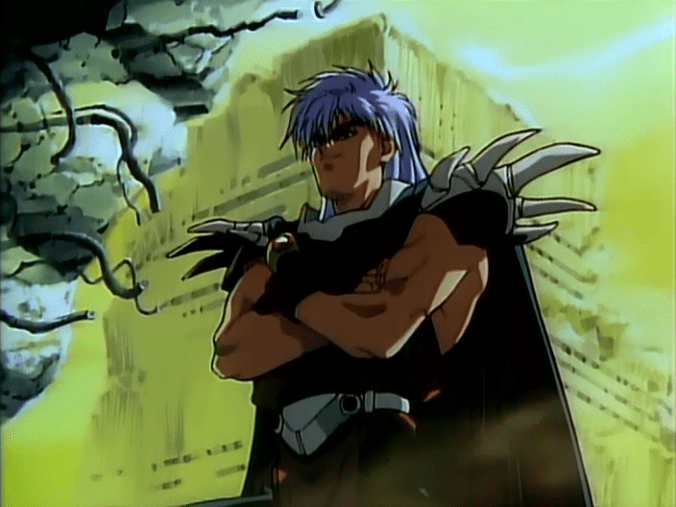
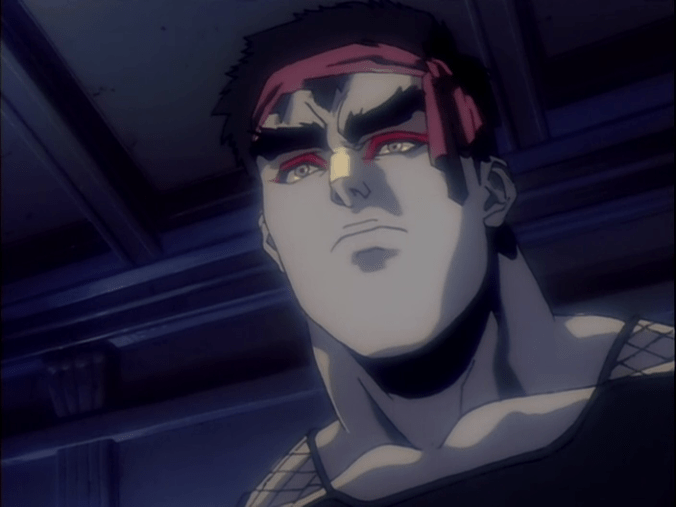
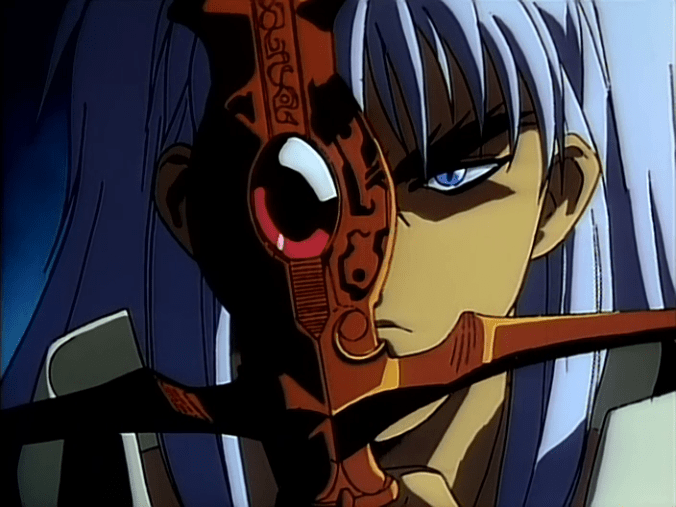
The other “good” way would be the OVA format: This anime did not run on TV, it was made for home release, and hence, it can go all out on violence and nudity. The additional short length makes for a condensed and straight-to-the-point experience without filler or downtime. Together with the late-80’s-early-90’s anime aesthetic, it is a marvel to watch, a true time capsule of this period. Big poofy hair, ladies in leotards, muscular protagonists, very ugly and very evil demons, metrosexual heroes – shoutout to my personal favourite character in this whole OVA, the Ninja Gara, who wears a black fishnet t-shirt and absolutely stunning red eye shade.
vlcsnap-2018-08-09-13h38m09s764vlcsnap-2018-08-10-14h25m11s181

The “bad” ways, so to speak, are the problems that can come with very early Shonen OVA adaptations: They are incomplete. Bastard is only 6 episodes long, but it seemingly adapts smaller arcs here and there, with only loose connection. One episode, a new hero will join the protagonists at the end of the episode, only to be completely missing in the next one. In addition – and here I found only minimal sources – it seems like 8 episodes were planned, and the last two were scrapped. One source suggests that this was because on of the “creators” (not specified) was arrested during production. But even with its open end, the OVA makes for a fun snack-sized Shonen watch that really trims the fat on all sides and polishes what is there to full brightness.

Yet, I must also point out some decisions in the story that would most likely not fly nowadays, most notably some character’s parental figures. Tia’s father is not the most supportive, the King and his high priestess daughter are equally rough, but the relationship between Dark Schneider and his adopted child Ashes Ney is the crowning debatable jewel in this 80’s treasure – which is never questioned and given quite some focus.

It will make for some uncomfortable moments, but as the layer of campy schlock is already so thick, it manages to lay low in the grand scheme of things. (Just listen to that wonderful ending theme!)
vlcsnap-2018-08-09-13h49m46s302

Conclusion

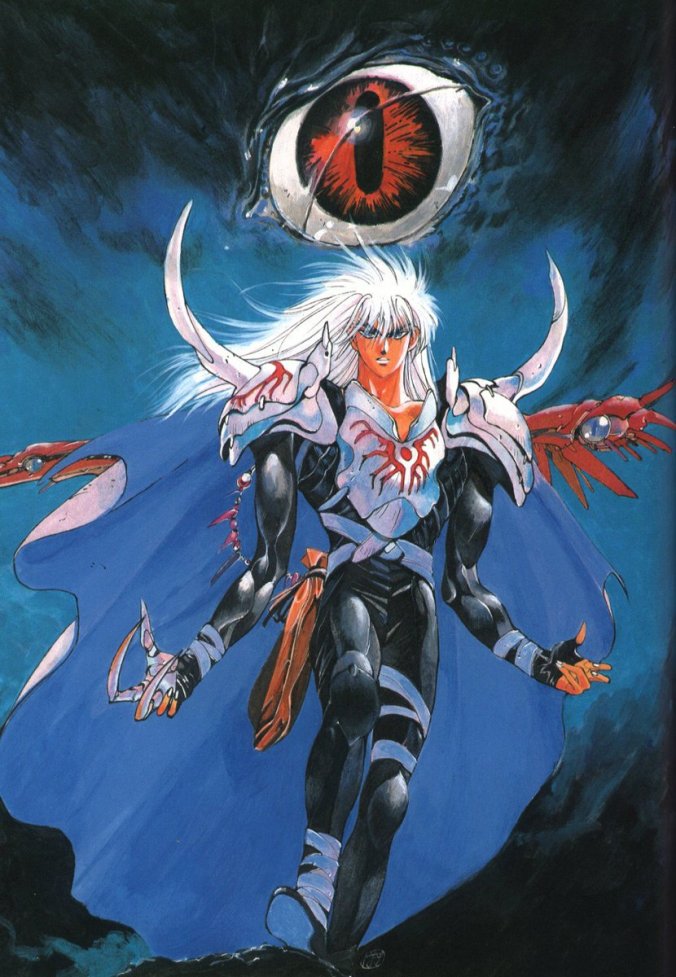
Bastard is truly “the 80’s condensed into 6 episodes of anime”, with all its up- and downsides. Not only makes it for a great throwback to another time in anime history, but also in Shonen Jump history, to see what was one of the big series back in the day. You can spot references and preferences in retrospect now that you are looking back from the future: The Jojo’s Bizarre Adventure-like way of naming characters, the evil antihero with his gory fighting style that is reminiscent of Devilman, or the Dragon Ball Z style wizard fights of flying around and flinging energy blasts.

Although Bastard is still around, it is far away from the reach it once had, and has changed its aesthetics and focus radically, being more ecchi-focused than aiming for the grand high fantasy stories of rivaling countries, all out war, and armies of good and evil.

If you like this time period in anime history, I highly recommend checking it out, purely for the stellar art and animation, and then for the wonderful pulp story that has its own  rough charm. It watches very quickly, so enjoy a great time with this little overlooked gem!
DHCVWAtXsAETClz

The End.

Sources: Entries on “Bastard!!” on Wikipedia, ANN, and MAL.
MANLY MONDAY – “Death Pie”: Like James Bond with Mahjong

T4.png

There are many niches in the manga world, and one of the most unique ones is the “mahjong manga”. The monthly magazine Kindai Mahjong by the publishing house Takeshobo first hit the shelves in 1972 as a text magazine, and a manga magazine followed in 1980. Ever since then it has brought many interesting beloved series to the world, and even kickstarted the career of Nobuyuki Fukumoto, who would gain critical and popular success with his two hit series Akagi: Yami ni Oritatta Tensai and Ten: Tenhou-doori no Kaidanji.

Now, the idea of a mahjong magazine seems odd: All the manga that are released here have to feature this game of tiles – something not everyone is familiar with, especially outside Japan. It poses a simple yet deserved question: If everything is centered around a single game that must be the focus, doesn’t it get awfully stale or boring really fast? Surely the authors must be limited in their choice of stories and characters, right?

Surprisingly, this is not the case.

In fact, if one looks at it closer, it gives a lot of freedom. There must be mahjong in it, surely, but the rest can be chosen freely and this has led to some amazing series: Akagi and Ten both combine yakuza and villain plots with deep human drama, Tetsunaki no Kirinji by Uhyosuke is about a divorced single father dealing with his online mahjong addiction to take care of his daughter, Getter Robo High! mixes Go Nagai mecha, mahjong and high school, and Legend of Koizumi by Hideki Oowada is, well, world politics on crack.

12928-620x-snapshot20100102011631

If you haven’t seen Legend of Koizumi, I highly recommend that you do.

The best proof of this freedom is that Kindai Mahjong is not only still going after 38 years, but also that it has spawned many spinoff magazines with different readerships. Kindai Mahjong is not one of the biggest magazines out there, but it enjoys its stable cult status and continues its run.

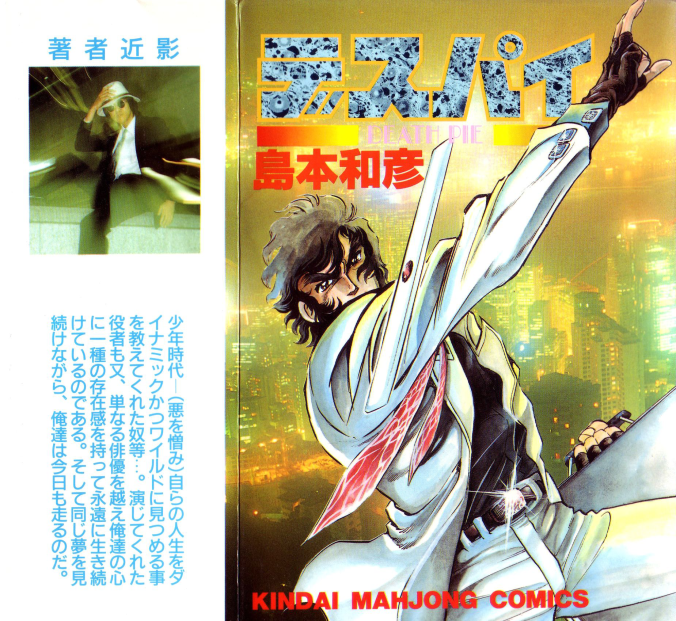
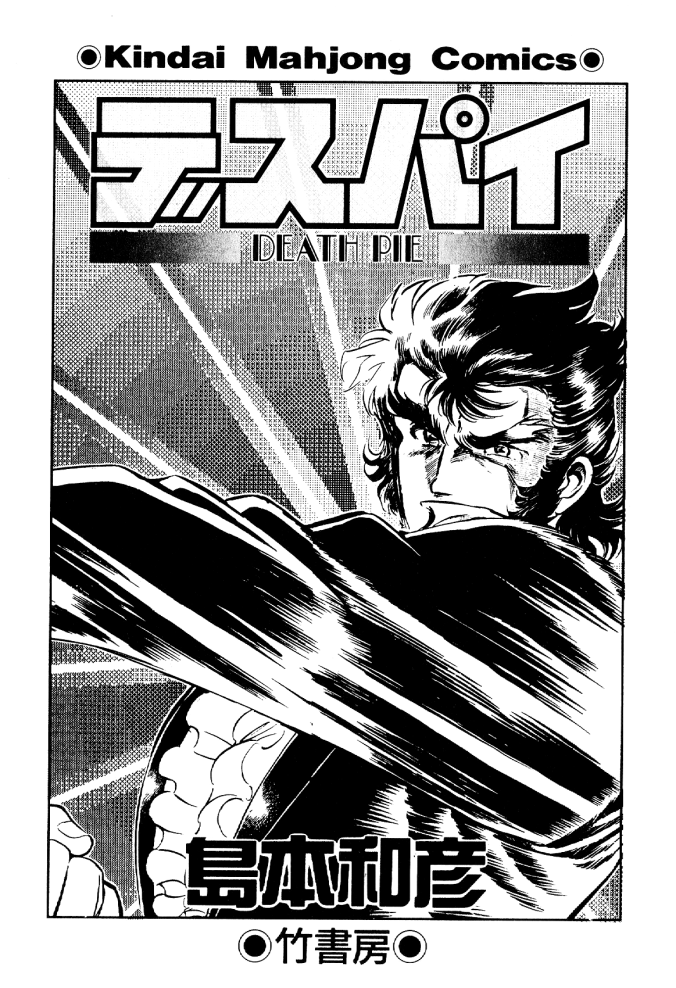
I wish to present one short series from this magazine, to show what is possible within this mahjong frame: Death Pie by Kazuhiko Shimamoto, from 1989.

img000001 (1).png

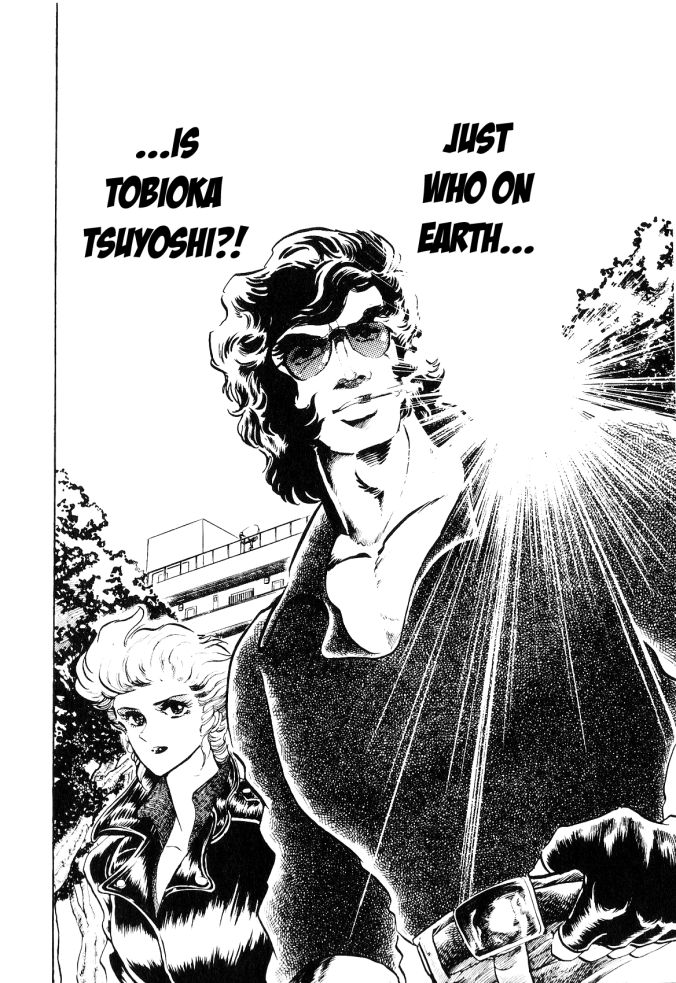
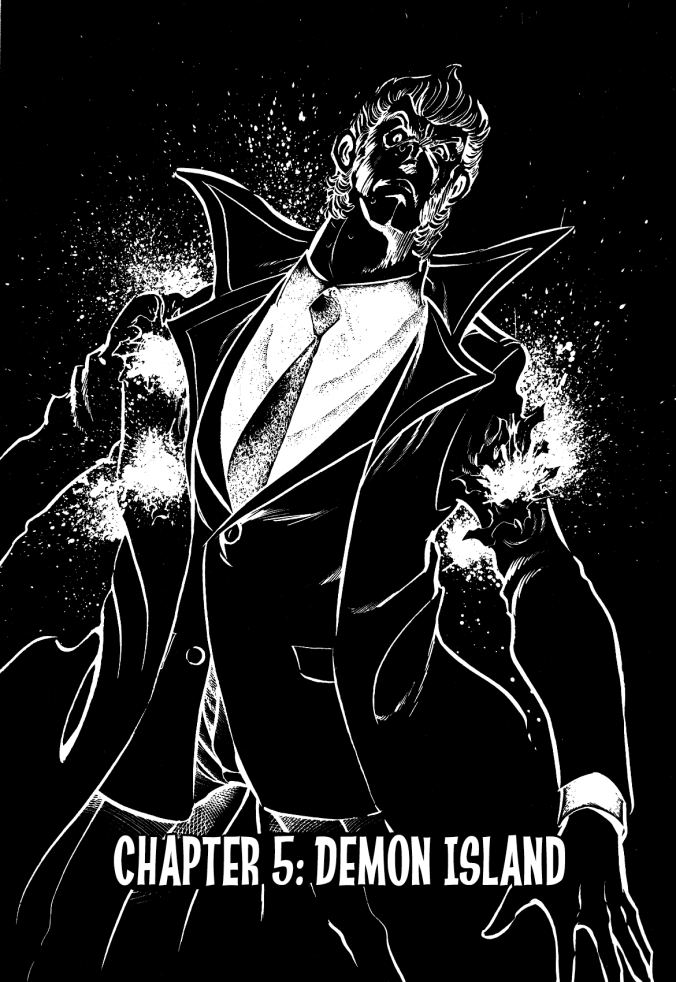
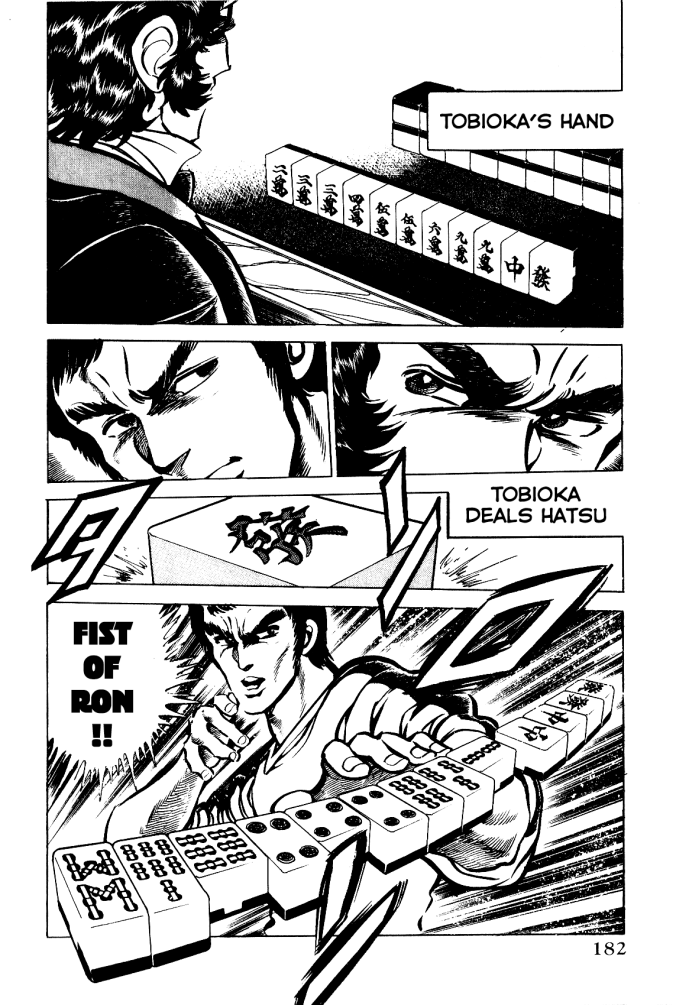
Death Pie is the story of Tobioka Tsuboshi, an ex-cop fighting against drug cartels, who plays mahjong against big yakuza clans and defeats them monetarily. Of course, more plot threads will open: undercover missions, secret infiltrations, backstabbings and fights for life and death with tiles and guns. It feels distinctly “James Bond” in its story beats, but in its look and characters as well:

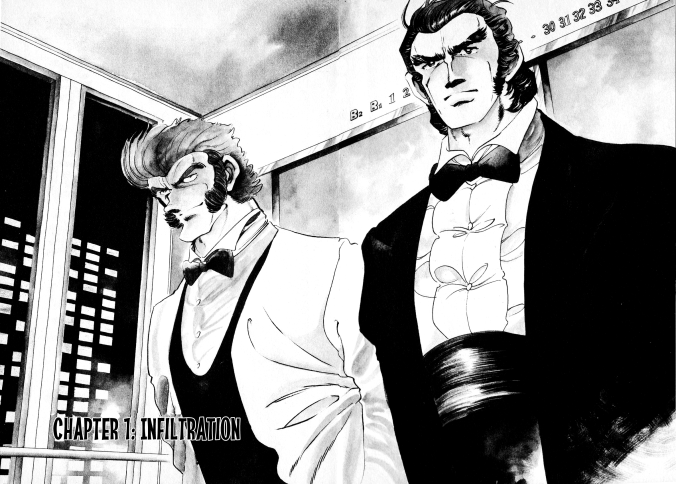
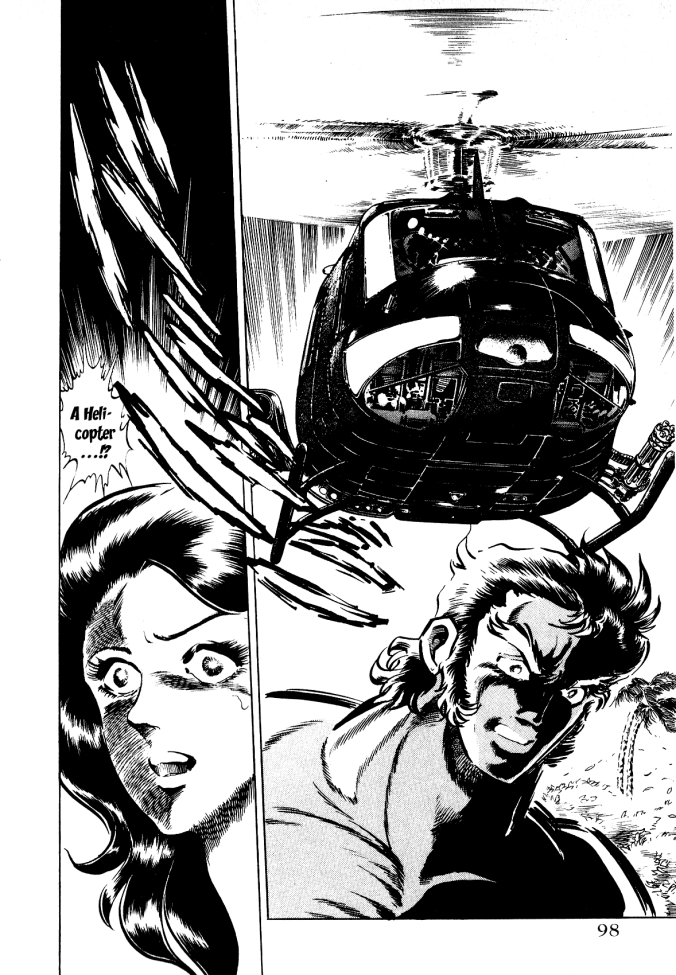
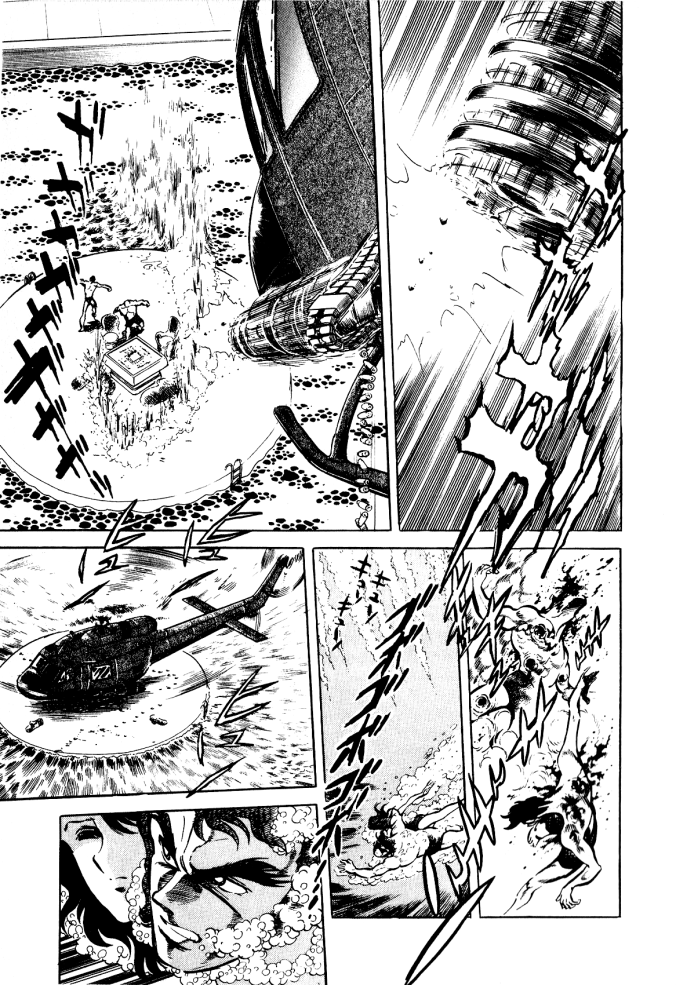
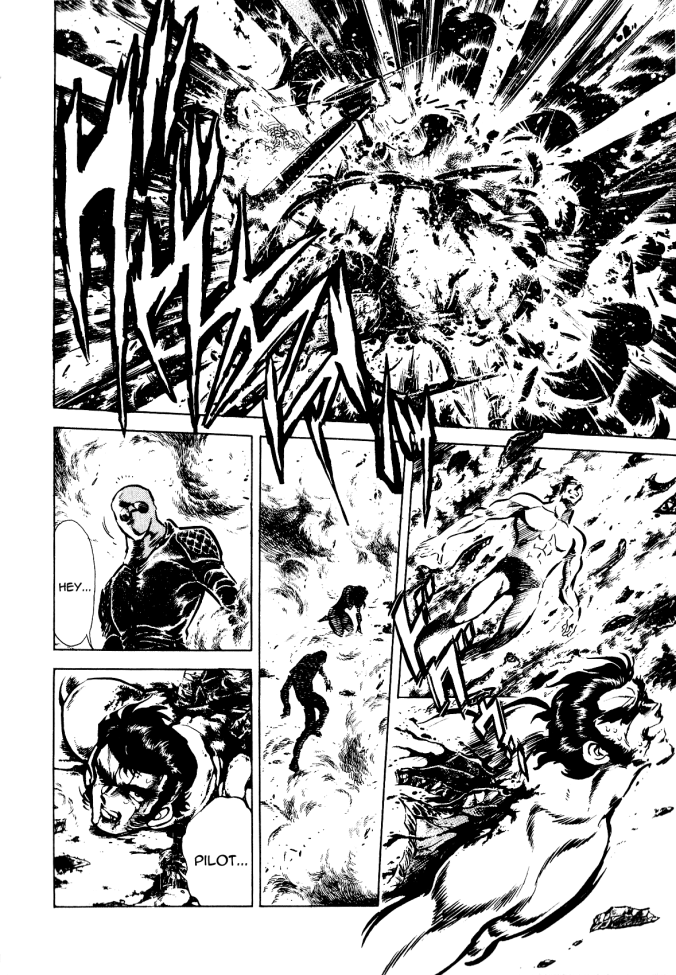
Smooth manly men in suits, good-looking classy women, overly evil villains, capable dangerous henchmen, high stakes gambling, secret casinos, action scenes and explosions in helicopters, cars and ships – everything that simply says “007” is here. Despite its yakuza setting, it borrows the feel of a Western style action film, and it fits.

img000007

img000022

img000028

A very rad action protagonist. Who also plays mahjong.

The look of the series brings me to another great quality this manga has: the art by Kazuhiko Shimamoto. He is mostly known for his “Blazing Transfer Student” series, but also other series that feature flames and blazes in the title, such as the autobiographical “Blue Blazes” (which has a fantastic TV adaptation) and “Burning Pen”. “Blazing Transfer Students REBORN” also received a Netflix live action reboot/revival in 2017, which I also highly recommend.

And as you can probably tell from that selection,  his series are characterised by BURNING PASSION and HOTBLOODED ACTION. Here you will find big emotions, huge clashes, and energetic characters who will fight for what they believe in. This is reflected in his artstyle, which is drawn with the same amount of power. Shimamoto does not only tell stories with fire, he IS the fire.

x16

Shimamoto explaining HOTBLOODED DRAWING.

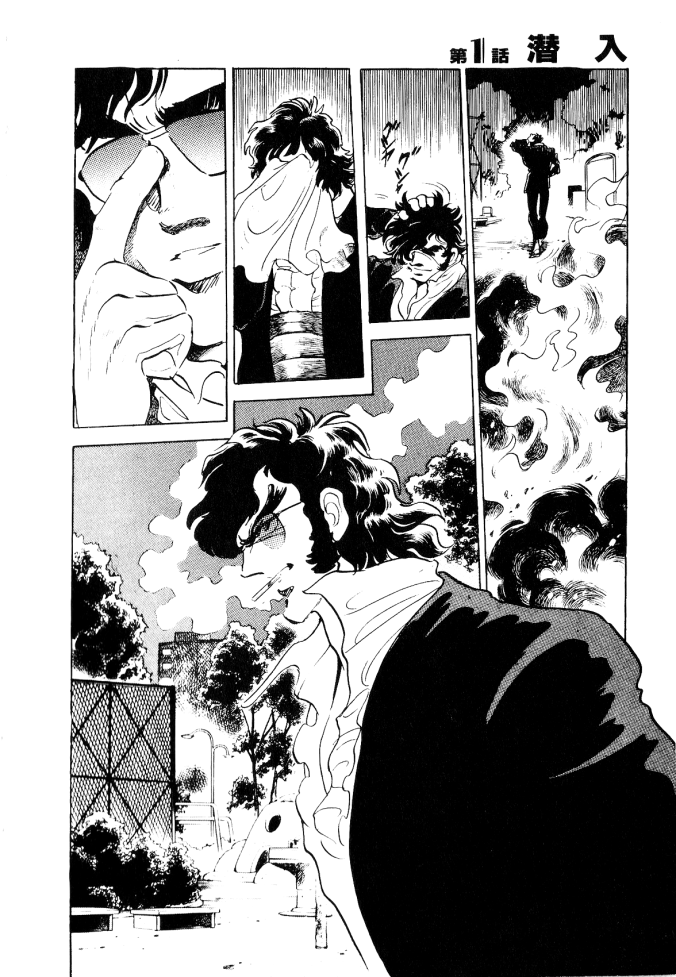
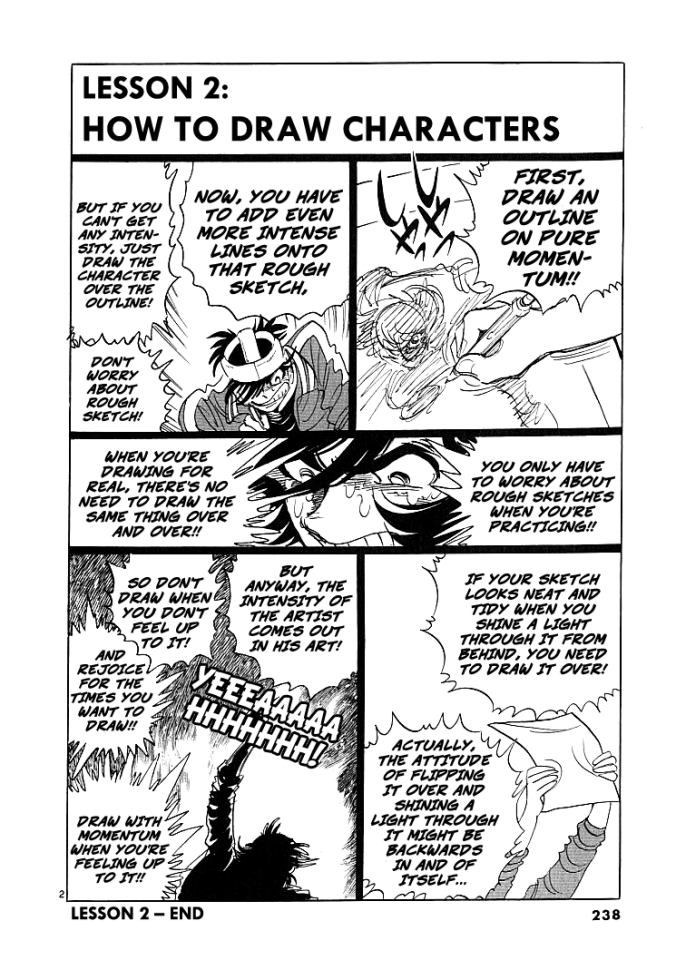
In his making-of/behind the scenes manga Burning Pen he describes his approach to drawing: Have the same amount of passion as your characters, and bring that directly onto the paper. And it shows, with heavy contrast, stark brushstrokes modeling his characters, and thick outlines that make objects and sound words come alive.

z15

z16

z19

That’s one way to end a mahjong pool party.

I wish to especially point out the use of ink brushes, especially to draw the male characters hair, which gives everything a great sense of movement. The linework is outstanding, and gives the whole series an immense energetic feel.

r1 (1)

Of course, as Death Pie is very short, with only 9 chapters, I do not wish to talk a lot more about the story, and as I already said earlier, the plot feels distinctly James Bond, with the personal touch of Shimamoto.

But how does mahjong fit in with all of this?

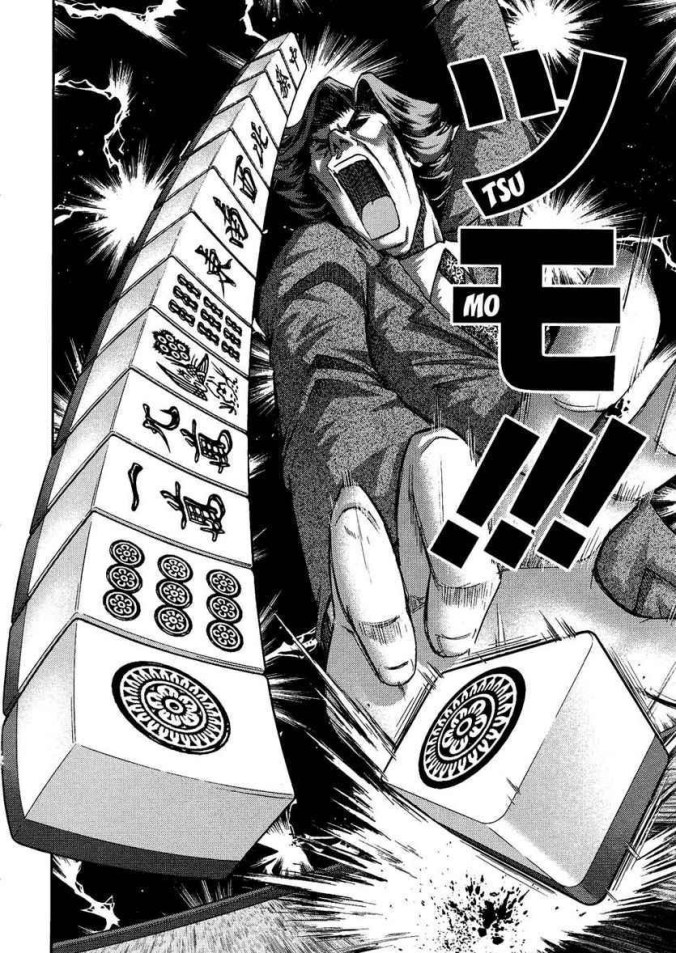
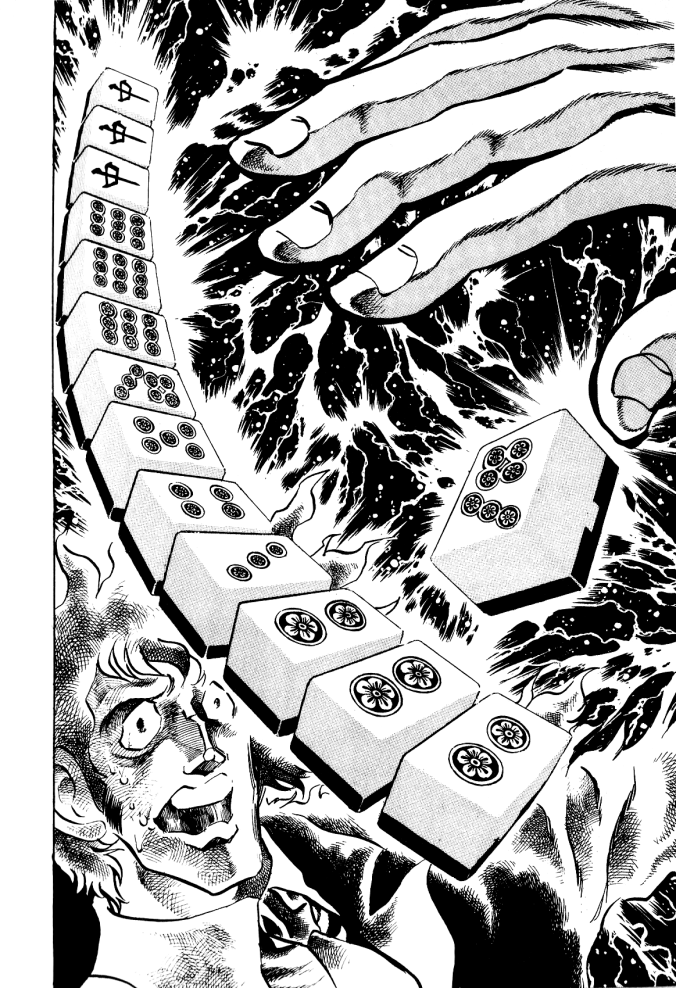
The underworld and gambling go together hand in hand already, and so it does in this story as well. But Shimamoto’s presentation lifts it to another level. Most mahjong manga have intense games with outlandishly gigantic imagery, such as the visual metaphors in Akagi, or the special attacks in Legend of Koizumi, and Shimamoto’s trademark HOTBLOODEDNESS brings it’s own visual look to the table.

DLge8gjVwAAkUFt

For comparison: Nobuyuki Fukumoto’s Akagi…

a2829e3e8e5173ed190b69585bf65c801.jpeg

…Hideki Oowada’s Legend of Koizumi…

X23.png

… and Kazuhiko Shimamoto’s Death Pie.

And for those worrying about not knowing the rules of mahjong, this series does not put an immense focus on it. It is rather the surroundings and settings that make it fun, as well as the villains. The serious action film look with the over the top presentation of the mahjong manga creates a fantastic feeling, that is worth reading this series for. The plot can get a bit convoluted, or you may lose track of some characters, but in the end, it is all worth it: for the artstyle, the character design, the drawings, and the fact that one of the henchmen is Mahjong Bruce Lee.

img000020

Death Pie is a little gem that I would like to recommend to everybody. With its very short run of 9 chapters, you can easily read it in an afternoon and enjoy it to your heart’s content.

There will be something for everyone in here, be it the thrill of mahjong, the energetic artstyle, the larger than life characters, or simply the interest to check something out from a decade long past, in a niche manga magazine that has lived for many years and will for many years to come.

img000011.png

The End.

Sources: Wikipedia: Kindai Mahjong, MyAnimeList: Death Pie, Mahjongkrazy Scanlation Notes

MANLY MONDAY – “Zombiepowder.” Tite Kubo’s Early Western Fun

zombie-powder-vol-1.png

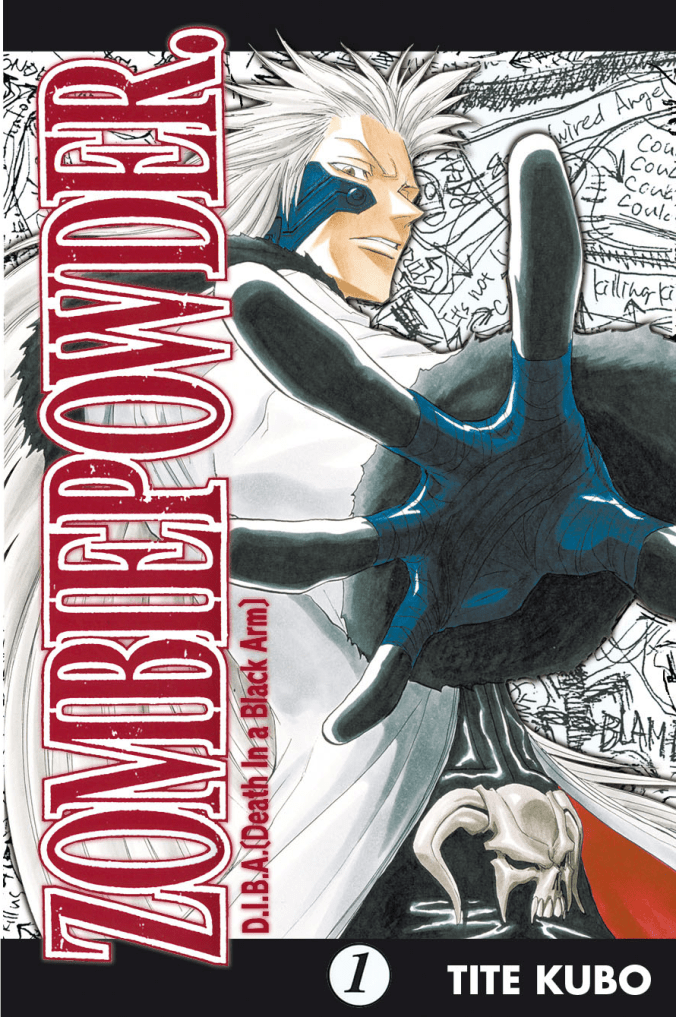
Back in the day when I was a little kid, the book shop was my world. I read many manga there, even right into the teenage years, as the store had comfy couches and chairs to sit on, so that you could browse and read for an unlimited time. It was here that I found Zombiepowder for the first time, by an author I had only heard a bit about: Tite Kubo, most famous for his series Bleach.

I would later find out in school exchanges and travels outside of Germany that Bleach was actually a huge thing. The internet told me that it was on the level with One Piece and Naruto, the “Big Three” of Shonen Jump, and I was quite surprised. Bleach was never a gigantic thing in Germany, most likely due to the anime not being widely available, especially in the “golden early days”. (One Piece ran since 2003, Naruto since 2006 – in a dreadful version, don’t remind me of the opening, the One Piece one is amazing, watch that instead – both on the big channel RTL II, while Bleach started only in 2010, on a niche channel called Animax.)

And so, in 2008, I held a volume of Zombiepowder in my hands, not knowing about Bleach, and started reading this new series I had never seen before. 10 years later, I revisited it.

02-03

Zombiepowder is the story of Gamma Akutabi, a silverhaired hero with a big sword and big heart, in a Wild Western world. He is a “powder hunter”, someone who is on the quest to hunt down the “Rings of Death”. If you collect all twelve rings, you can produce the eponymous “zombie powder”, a substance that brings life: If used on a dead person, that person becomes alive again, and if used on a living person, that person becomes immortal.

Hence, many people are after these rings for different reasons, and so far, no one has managed to gather all twelve into one place. Gamma Akutabi is after it for the immortality, and on his quest three other characters will join: C.T. Smith, his partner in crime, a very upright classy gunslinger complete with suit and bowler hat, Elwood, a young teenage pickpocket, and Wolfina, an energetic paparazzi  lady who fights with forged press releases and a modified tripod.

x2 (1)

From left to right: Elwood, Smith, Gamma and Wolfina.

As this manga is quite short, with 27 chapters only before it was cancelled by Shonen Jump, I wish to talk less about the plot and more about the characters and style that Kubo shows us here.

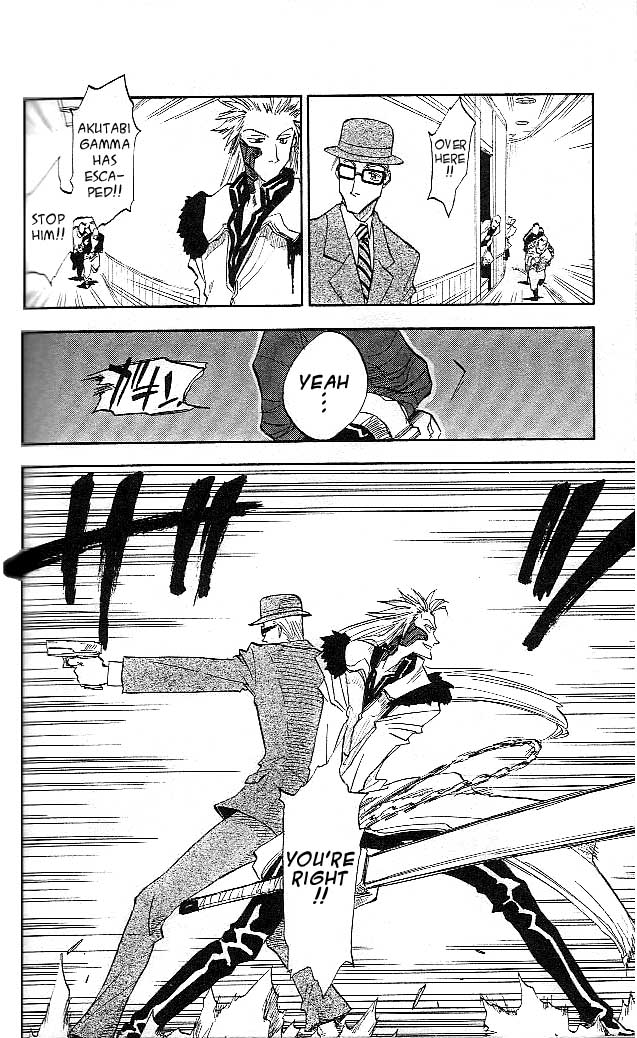
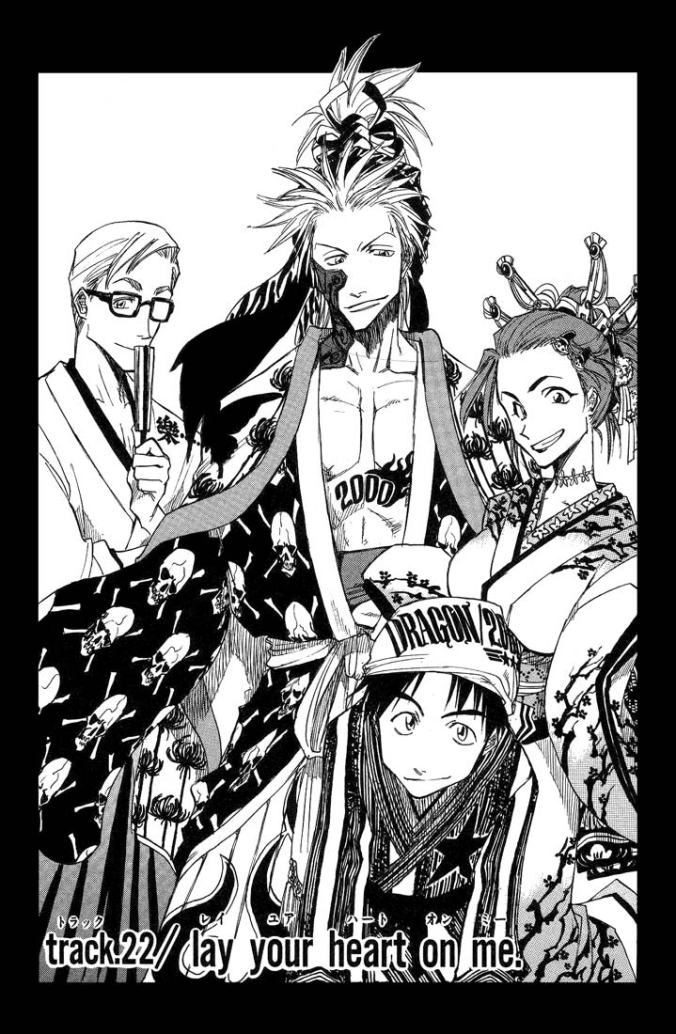
Kubo’s artstyle and linework have always been immensely stylish. Even though I have never seen or read much of Bleach, I can tell you that his design is instantly recognisable and very pleasing to look at. Clothes are wonderfully designed and fitted, characters have sleek shapes and sharp features, and the action makes it all shine with simple to understand panelling and framing.

x11

x17 (1)

x18

Simple, clear, and straight to the point.

The tone of the series alternates between “serious” and “goofy” quite easily, and the characters can carry it as well. The more outlandish moments serve as nice breathers between the onslaught of action.

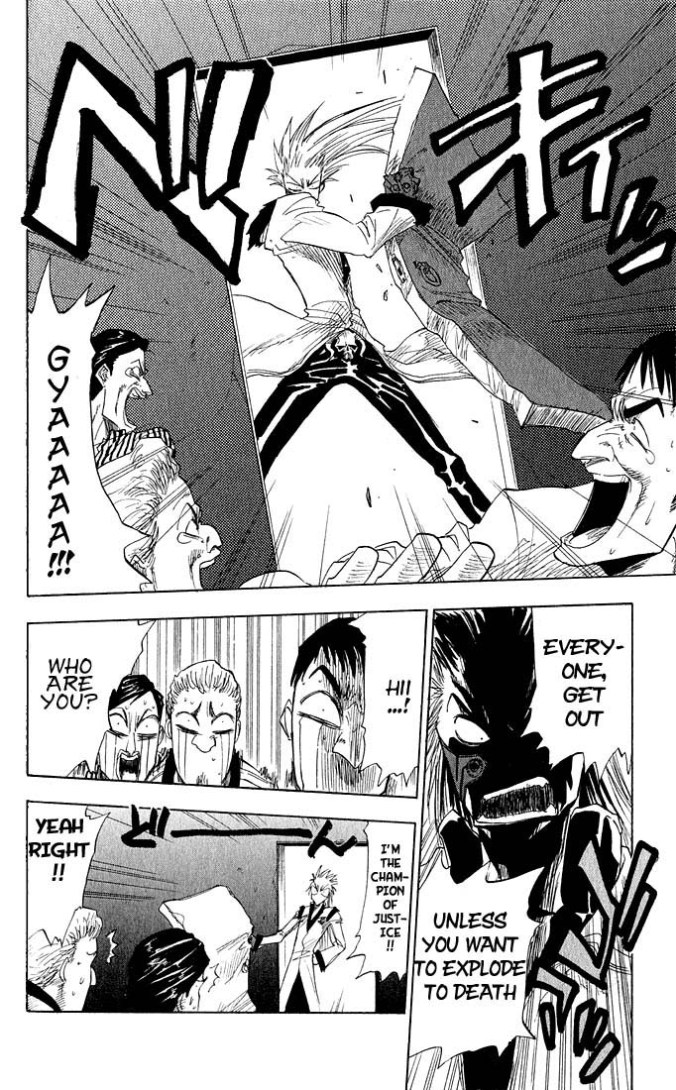
x37

From serious busting through a wall…

x9.jpg

…to silly busting through a door.

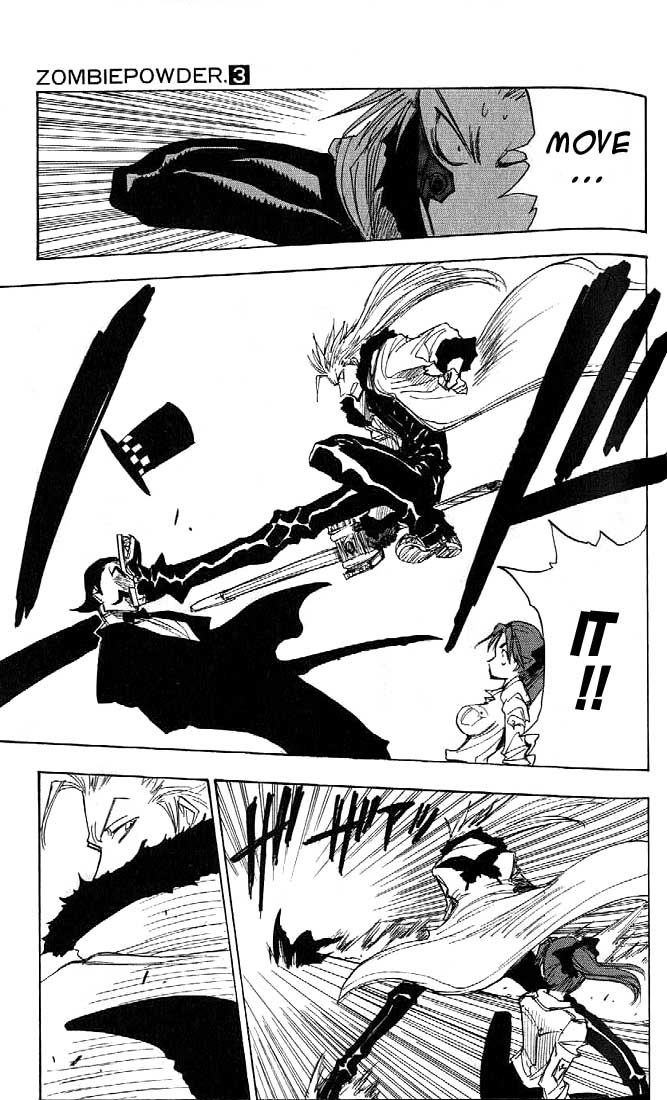
And there is A LOT of action in Zombiepowder, the series consists of battles pretty much every chapter, and – surprisingly – it works! Characterisation is interwoven with the respective fighting styles of the protagonists, everyone with their own strengths and weaknesses. Cool stuff happening with cool people, nice.

Gamma Akutabi’s design, the silver hair and coat, together with his chainsaw sword and later magic use was a design I particularly loved, and sadly it had to go too soon. He could have been a classic Shonen protagonist to stand alongside others, even with the slight accusations of Kubo taking too much visual inspiration of Trigun and Western/Mad Max settings à la Fist of the North Star and Battle Angel Alita.

xff46

That’s rad.

While I recommend reading Zombiepowder to everyone, it’s going to be interesting what you take away from it.

It’s pre-Bleach, opening itself up to comparison, but it’s also its own thing of a young upcoming artist trying to find his voice.

It’s also a short Shonen riddled with strange decisions, as Kubo says in the behind-the-scenes: This was his first work in the magazine Shonen Jump, and he was under “great emotional trauma” while drawing Zombiepowder – due to the crushing workload of having to produce a chapter each week, and due to him not knowing how to communicate with his editor, sometimes taking decisions he didn’t want to, accepting them without discussion.

The manga ends abruptly as well, it manages to round off its first arc, and then suddenly introduces three finishing chapters with many new characters and a sort of style-breaking feeling. While I was not a fan of how it leads to the ending – it leaves two protagonists behind in an uncertain path and has some questionable character designs – it does leave on a nice, if short bitter-sweet note.

If you wish to read Zombiepowder, I will recommend the physical release in 4 volumes, as it comes with a lot of making-ofs, other early Tite Kubo manga (which are all worth of analysis as well), special artwork and even a playlist of music for every character in the manga. Hey, I didn’t knew Kubo liked Rhapsody, an Italian powermetal band, one of my absolute favourites!

Conclusion

Essentially, this manga is a great stepping stone into a genre that Kubo would help to shape, and a short fun romp by someone who would later on do great things. To my personal shame, I must confess that Zombiepowder was the reason I put off Bleach for a decade: Gamma Akutabi and his gang were so energetic and fun, that Ichigo Kurosaki and his friends paled for me in comparison. Given, of course, that I had only read the first volume of Bleach, but alas, I was having more fun with this Wacky Western than Supernatural Highschool.

10 years later, it’s still very fun, even if a bit wonky in retrospect, and I will check out Bleach soon, it’s about time I reckon. And while I do that, walk the path into the other direction, and check out Zombiepowder, and see how you will like it. It may not be your new favourite, but it will be a powerful time capsule to rediscover.

x3 (3)

The End.

Sources: Zombiepowder Wikipedia, Zombiepowder making-ofs (Physical Release, Tokyopop)

MANLY MONDAY – “Buraiden Gai”: The Unique Shonen Outlaw

wwwww

It is a good time for Nobuyuki Fukumoto’s works. Gin to Kin and Akagi both have successful TV dramas, the Kaiji manga has started a new arc, Zero is getting a steampunk TV adaptation, and the highly anticipated Tonegawa anime is on the horizon, with a release scheduled for July 2018.

In this big “Fukumotoverse” with its prequels, sequels and spinoffs, lies one smaller work that is on its own. No continuation, no adaptation, there it stands, alone and completed – fitting for its own story, themes and characters.

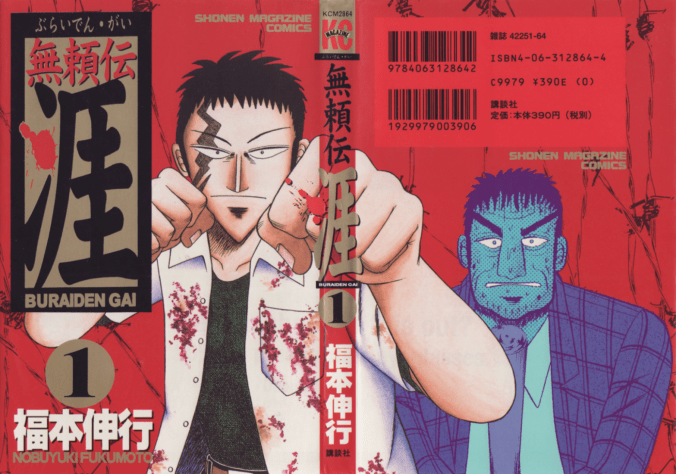
This is the manga Buraiden Gai, or “Legend of Outlaw Gai”. This manga was published from 2000 – 2001 in the Weekly Shonen Magazine, (not related to JUMP) which has more popular and successful series in the past and present than you might think: Devilman, Ashita no Joe, Hajime no Ippo, GTO, and recently, Koe no Katachi, Fairy Tail and AKB49.

In Buraiden Gai, the eponymous Gai, a young 13 year old schoolchild, is running. Running away from the police.

x14

And so, he is cornered in a dead end street.

The city is in chaos, the media is all over the place and the police is unable to cope with all this confusion. Why is everybody on their feet trying to catch this young boy?

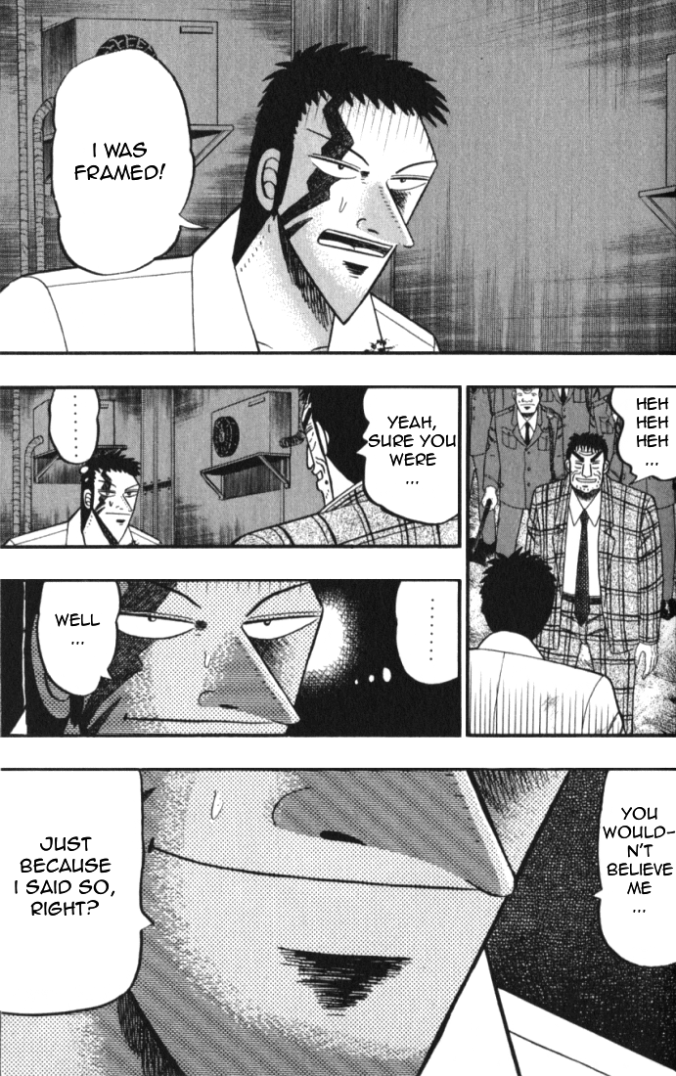
As it turns out, he murdered an older man. Not any man, however, but the patriarch of a big and influential yakuza clan. As Gai faces the overwhelming police force with nothing but his bare fists, he proclaims: “I was framed!”

x28

Of course, no one believes Gai.

The evidence points absolutely against Gai: his fingerprints are on the murder weapon, on the body, at the site and his escape from the crime scene is recorded on a security tape, directly after the point of murder.

After a long verbal battle and a short physical one with the police inspector, which Gai surprisingly wins despite his age and size, he is arrested. Too young to go to prison, he will be sent to a youth rehabilitation facility before his trial. However, as he arrives, he finds out that this is not better than prison, in fact, it’s worse.

x8 (2)

Something is fishy. Especially the visual historical weight of those uniform designs, if you look at them more closely.

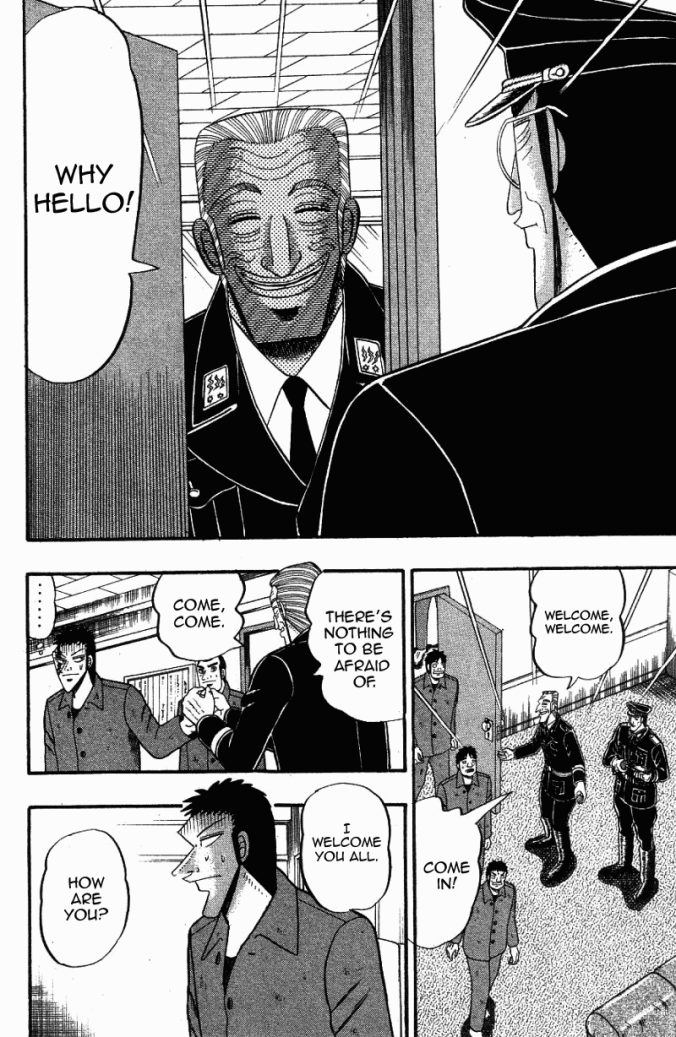
This is more than prison, this an institution of cruelty with one goal only: turning young people into honourable and upright citizens, with any means necessary. It immediately becomes clear to Gai: He has to get out of here, but more importantly, he has to prove his innocence. The police officer believes him, however, there is no proof that the evidence is forged.

And so, the adventure of Outlaw Gai begins: Regain your freedom, fight for justice, crash the abusive system of the adults. “Prison Break Plot” meets “Philosophy Hour”.

Inherently, this sounds like a very Shonen plot, but the seriousness and intensity of Fukumoto’s Seinen spirit shines through, which I will not spoil here. The way the young prisoners are treated is very violent and shocking, and the themes he addresses are important to anyone, not just teenagers who are the target group of this manga. And it is definitely not for the faint of heart. There will be violence and questionable “education” methods, ranging from physical discomfort to psychological terror.

We see several themes in this manga: What is “freedom”? What is “strength”? What does it mean to “grow up”?

x5 (4).png

School settings are rare for Fukumoto, and thus very welcome.

Gai is a great protagonist for this story: young, with a clear, straight outlook on life, and he does what he thinks is right. He receives a proper backstory as well, which fleshes out his character even more – a rare thing for Fukumoto, who normally does not give big flashbacks to his protagonists, as they are characterised by their actions in the present, such as Kaiji, Akagi or Kurosawa. For Gai, it fits, as we see him in his middle school days, struggling with the decisions of life before he was thrown into the prison setting.

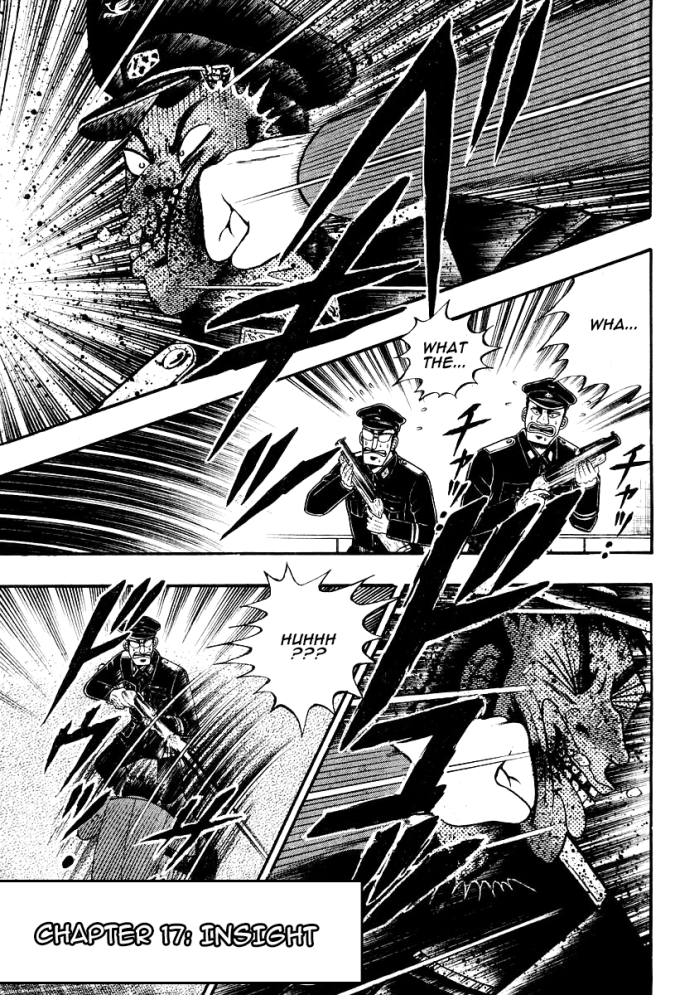
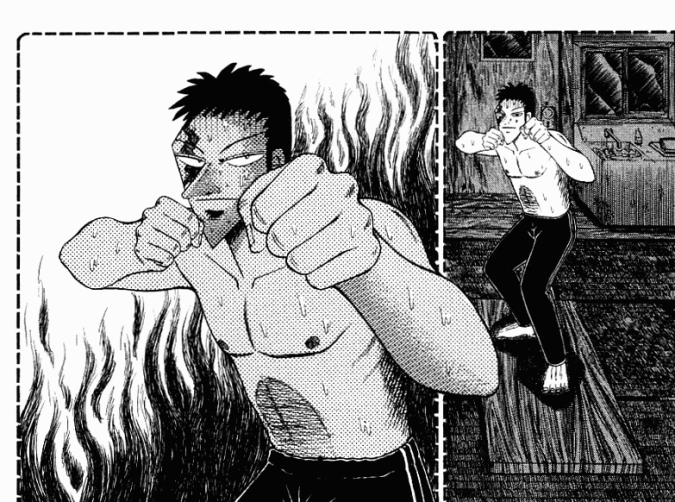
And much like Kurosawa, Gai uses predominantly his fists to solve problems. Fukumoto’s intense, visceral, sharp style lends itself perfectly to these violent outbursts that carry gravitas within the story.

x1 (3).png

Smash the system. Right in the face.

If there is one word I can use for Buraiden Gai, it’s “condensed”. With its 5 volumes and 38 chapters in total, it is one of the shortest series Fukumoto has ever done, some of his series have been going for over 20 years – and yet, it brushes and discusses a lot of topics, through flashbacks, monologues and dialogues, all neatly woven into the story, which is equally busy: a prison break and a yakuza crime story all rolled into one.

From my research, I could only find information that the series was cancelled by the Weekly Shonen magazine, and that Fukumoto was unhappy with the ending he had to re-write, but nothing very concrete or any reasoning behind the decision to scrap it. As it stands, I like the ending, but one can feel the change in direction in the story. After about 3/4 of the chapters, the focus shifts and the narration speed slows down for a few chapters, only to pick up again – most likely to steer into the direction of the new finale.

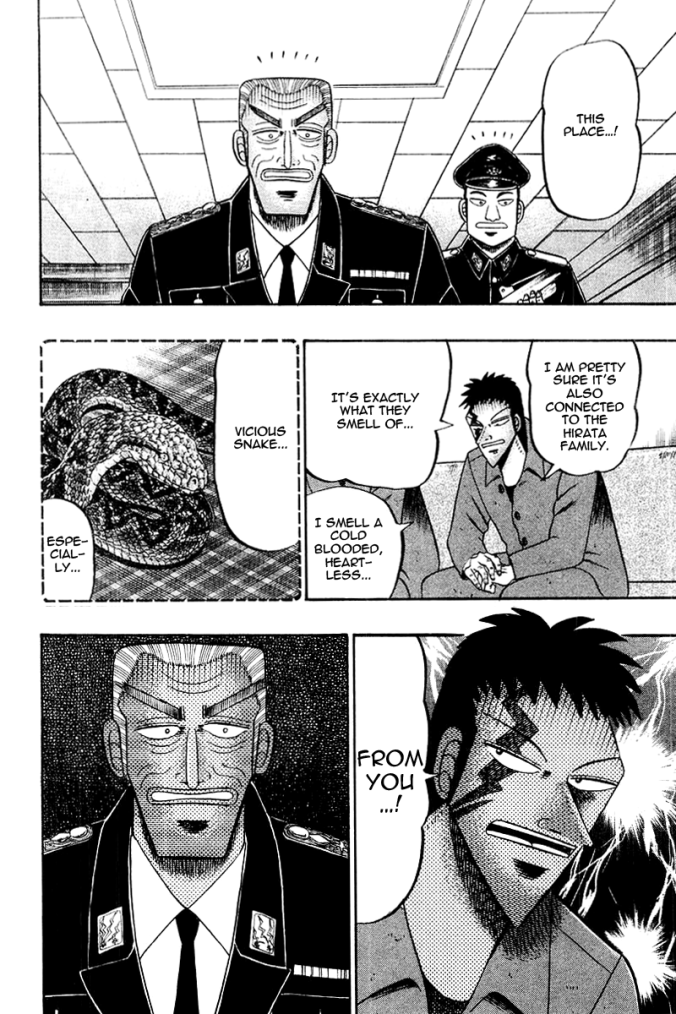
It is a bit sad that Buraiden Gai was not allowed not fully unfold itself, as the potential is there. A young hero with a no-nonsense direction but lacking life experience and maturity, against a smooth-talking villainous prison guard who thinks his own askew methods of education are right. In addition, the Hirata Clan, the powerful yakuza family, is maybe holding more threads than they seem.

x18 (2).png

Everything is connected. Is there a way out for Gai?

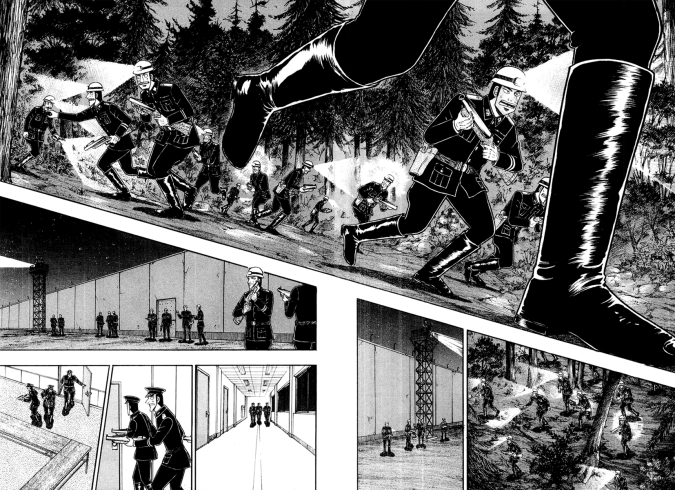
Even if the story is cut short, it still delivers the themes and questions it wants to. One can only wonder what it would have looked like if Fukumoto had the time to give it the vision he intended. Buraiden Gai could have been a big epic about the struggle of growing up and wishing for independence, as well as the conflict of generations. But as it stands, it is now a short, quick Shonen that delivers its punches and disappears again into the night, to leave you with its thoughts. Other Shonen might have pushed the boundary already what goes on in the genre, from Go Nagai’s Devilman to Hajime Isayama’s Attack on Titan, both violent and intense as well, but Buraiden Gai manages to even stand out among these. If a series can make me actively queasy with its ideas without being too graphic, then we got something unique here.

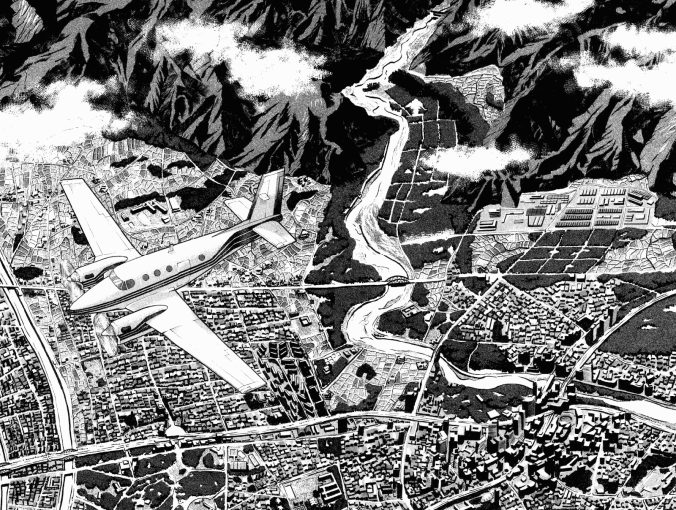
You can read all of Buraiden Gai in one or two days, maybe even in one sitting, and I highly recommend doing so. Not only for its intense story and philosophy, but also for Fukumoto’s artstyle. His longer stories rarely change settings, but Buraiden Gai displays a surprising amount of setting changes, brought to great effect in great spreads.

x5 (8).png

x14 (2).png

Some double-spreads are absolutely beautiful.

Buraiden Gai is the unique little Shonen outlaw in Fukumoto’s catalogue, without gambling themes or spinoffs, and I highly recommend reading it – for seeing what can be done in a Shonen Magazine, and for its philosophic content that it delivers with a sympathetic, strong and likeable protagonist.

The series had no time to show its true potential, but what it did was great, and it can nicely sit with all the other Fukumoto series in a big serious universe full of intense life stories. Will Gai break out of the youth detention prison? Will Gai defeat the yakuza? And will Gai find what he wants in life?

Give Gai a chance, he won’t take much out of your time, but I’m sure that he will stay with you for a longer while.

bura

The End.

PS: And once you’re done, check out this fantastic mock-up of an Anime OP, in the style of the Death Note OP2.

Sources: Wikipedia entry: “Nobuyuki Fukumoto”, MyAnimeList entry: “Weekly Shounen Magazine” and “Buraiden Gai”

MANLY MONDAY – “Vermin” French Animation Goodness with Buddy Cop Insects

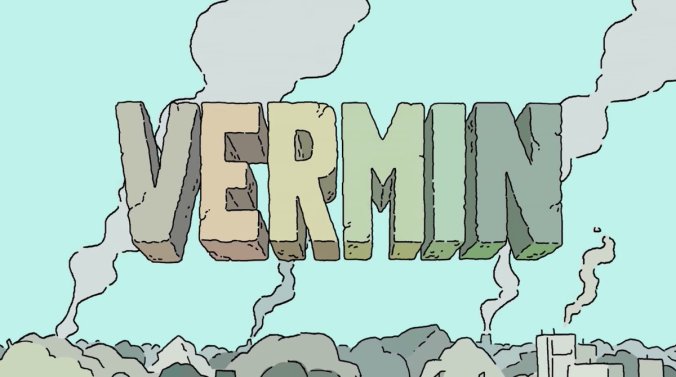
title.png

When talking about “Modern Animation” today, the focus tends to be predominantly on North-American and Japanese productions. But outside of this massive circle are other international productions that are absolutely worth of your attention.

One of these are the works of Balak and Studio Bobbypills (former Bobby Prod), a studio specifically setting out to do adult animation. In this case, “adult” meaning crass, explicit humour, satire and imagery, with the intensity and directness of an oncoming truck.

Previous works from the same staff include Les Kassos (or “The Wakos” in English), a French webseries about many popular pop culture figures trying to solve their problems with the help of a social worker.

For example: The Teletubbies fighting their drug problems, Han Solo not being able to cope with his father-in-law Mr. Vader, or Ash Ketchum getting into trouble for animal fighting, and many, many others. While these sound like classic jokes or “dark” concepts that have been already done, it’s the fast and direct presentation with snappy dialogue and impeccable comedic timing that makes these little skits shine. Especially the wild character design remakes which can go from parody to the straight-up grotesque, are fantastic highlights.

From “Star Wars” to “Game of Thrones”, over to “Teenage Mutant Ninja Turtles”, the “Smurfs” and “Astérix & Obélix”, you will find everyone in “Les Kassos”.

The whole series of Les Kassos can be found for free on Youtube, in French with English subtitles, or on the free Blackpills App in an English Dub. Three complete seasons exist, and they make for a very fun and highly inappropriate romp through nostalgic properties and through your laugh muscles.

So, what if this team sets out to do a new series that is not a sketch show, but an adult drama with original characters? Let us look at their newest production: Vermin.

DbOgjTMUQAAO1BE

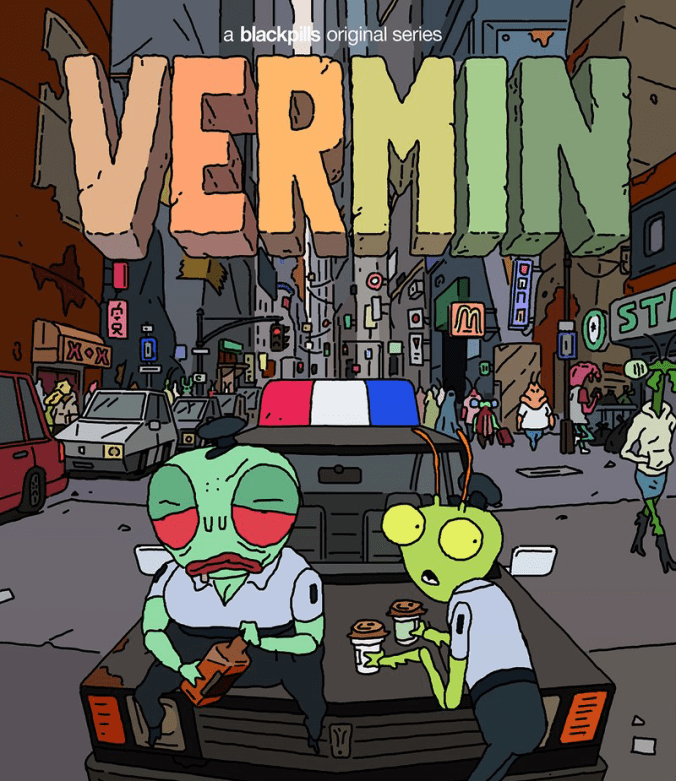
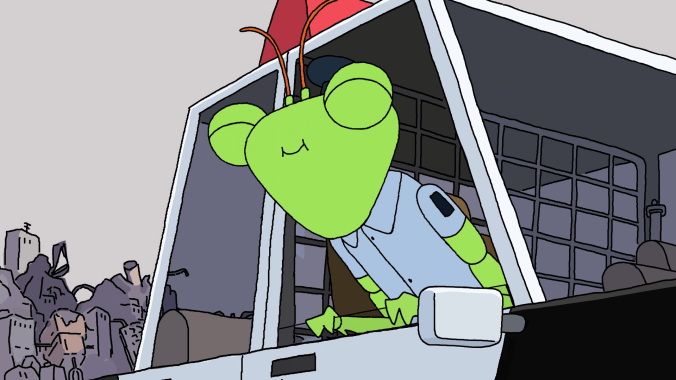
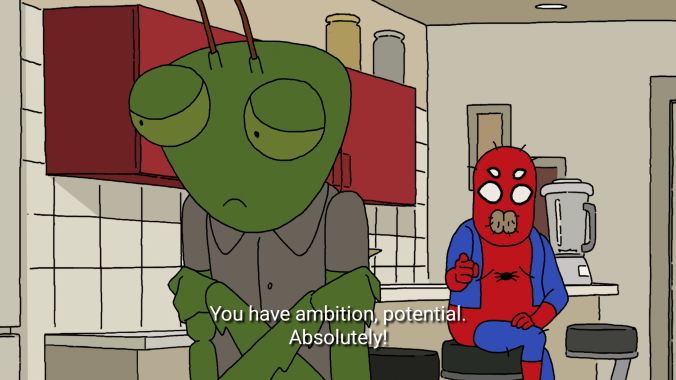
Vermin is the story of Mantos, a young praying mantis, who is finally old enough to start his job in the big city. Saying goodbye to his family and beloved fiancee, he is ready to walk into the foot steps of his father before him: to become a proper police officer.

Screenshot_20180425-003657.png

So young, so innocent.

And so, he embarks on his adventure.

Then all goes wrong.

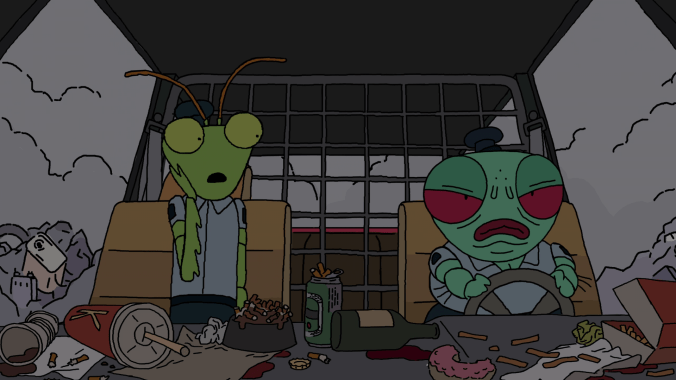
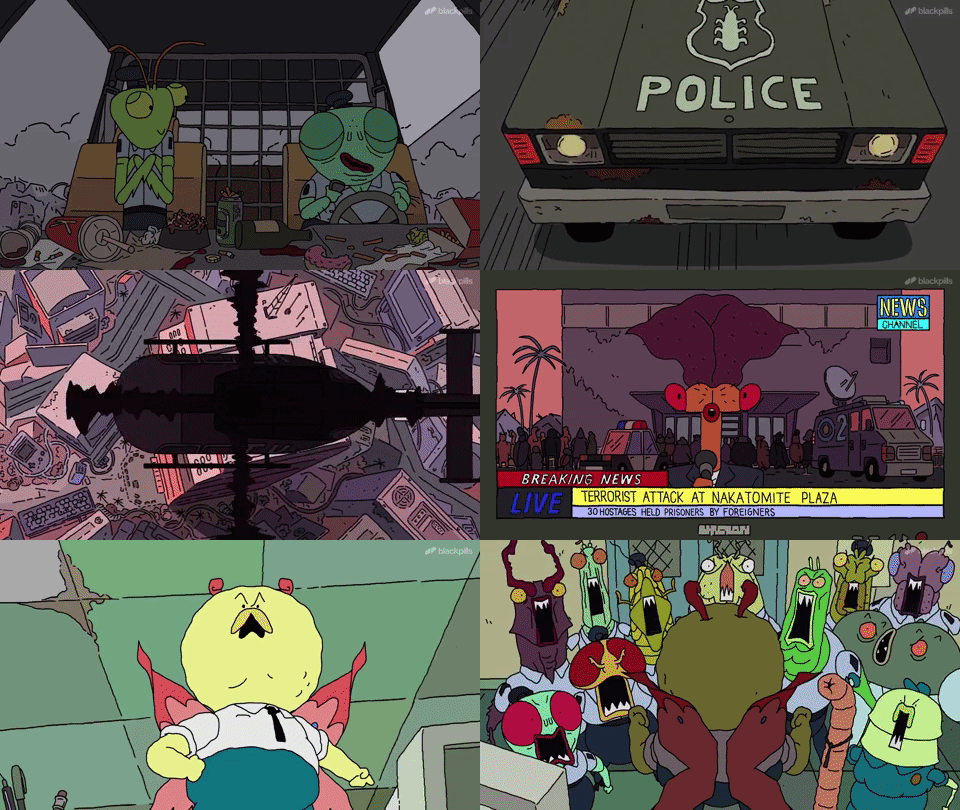
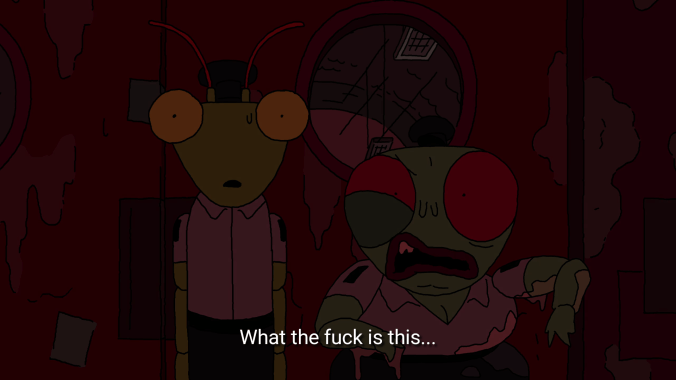
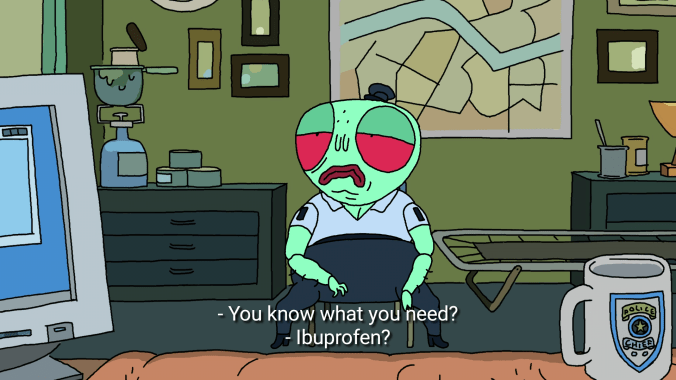
As it turns out, the big city is rough. Gang wars, prostitution, violence everywhere, decaying cityscape, crumbling society and his co-workers are a equally tough bunch. He is paired with Shermock, a fly, middle aged hard-drinking lady with a shady past and even shadier mindset.

Screenshot_20180425-003711

They don’t get along, really.

As these two worlds crash, this unlikely duo of Mantos and Shermock must solve cases, stop crime and grow together as a team, in 10 episodes, each 8 minutes long.

It is essentially the set-up for a classic buddy cop film, however, the two main characters are splendid. Especially refreshing is the middle-aged lady Shermock as a lead, who has seen far too much in life, and who has her own arc, together with Mantos, who in return must learn to be strong in this harsh world. The duo goes through many episodic adventures, with re-occuring characters and many different cases, from abductions to robberies.

While this still sounds like your standard cop story business, it’s the presentation, detail and care that his been put into this series that makes it shine brightly.

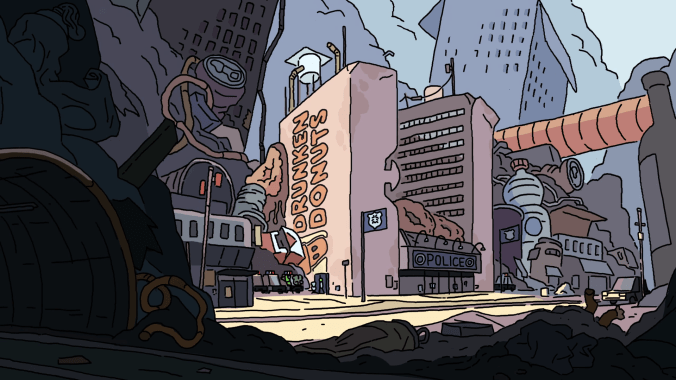
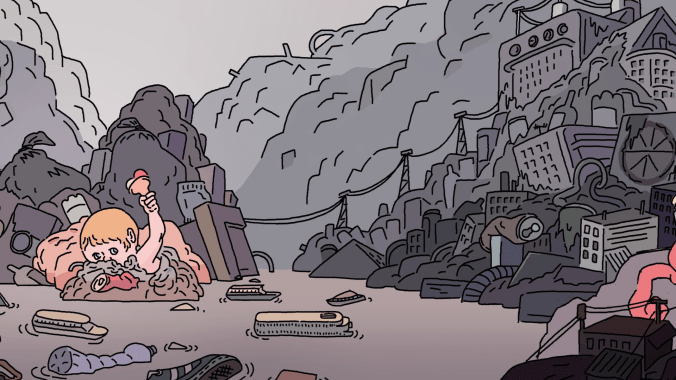
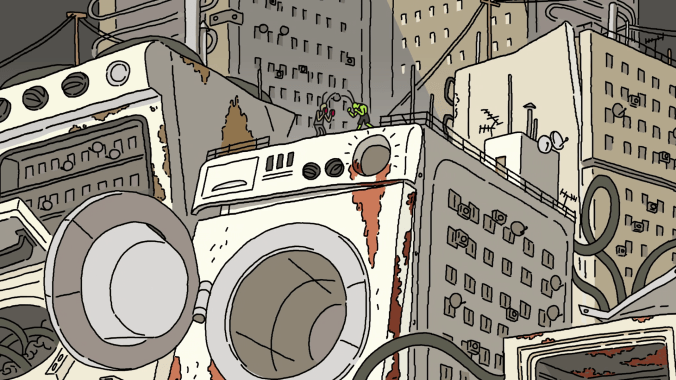
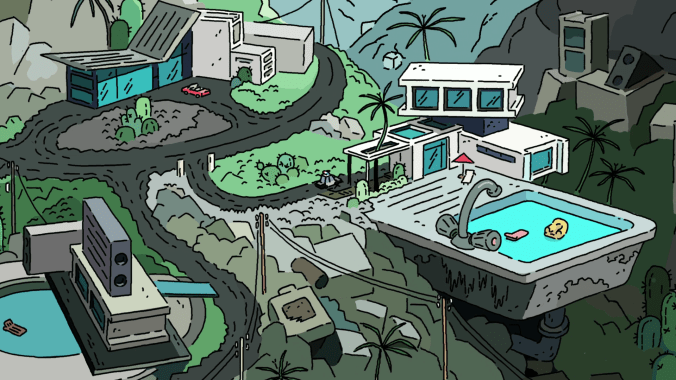
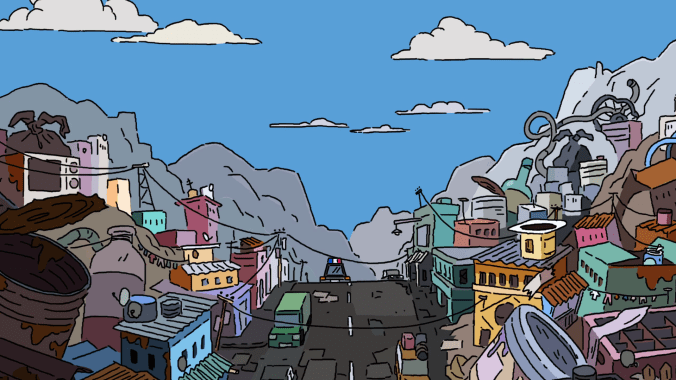
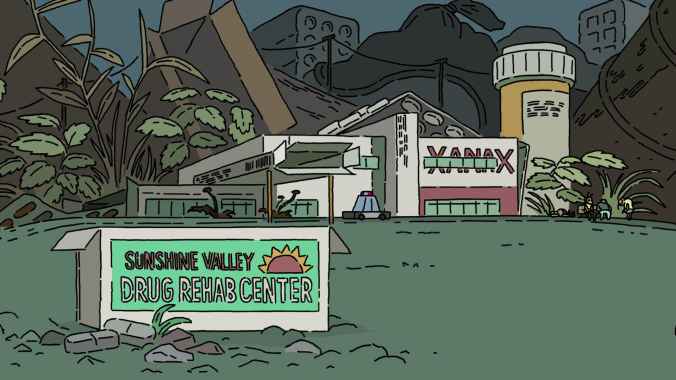
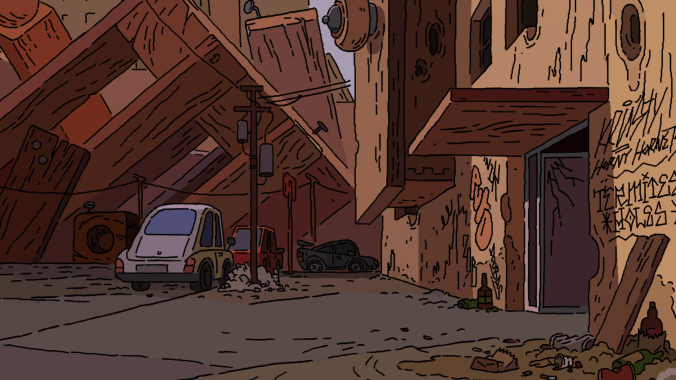
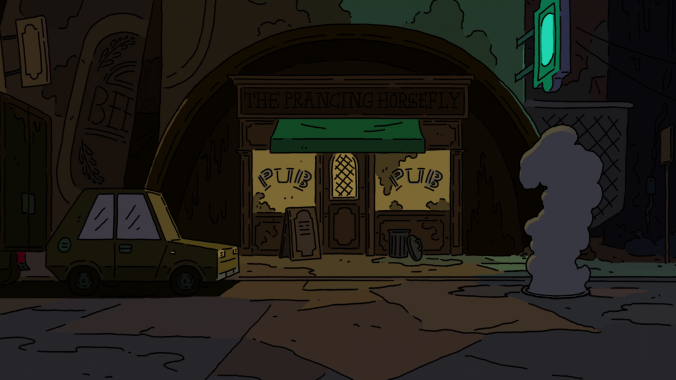
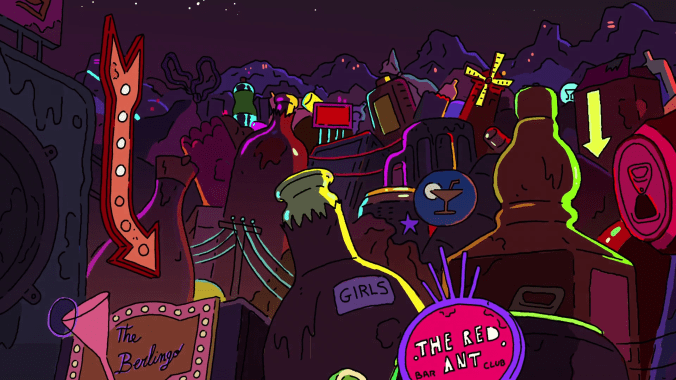
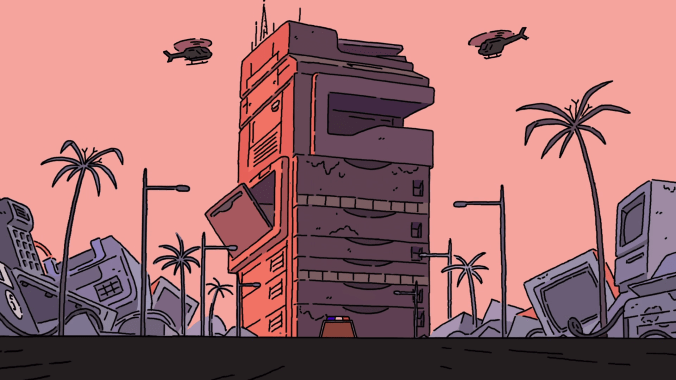
First of all, the art and animation. This megalopolis of insects has a unique and creative design of thrown away household items and trash, with many backdrops and fittingcolour choice that feel all unique, dirty and run-down at the same time: The worldbuilding and backgrounds are simply amazing.

Screenshot_20180425-003608Screenshot_20180425-003646Screenshot_20180425-003830Screenshot_20180425-003924Screenshot_20180428-180214Screenshot_20180428-181300Screenshot_20180428-181803Screenshot_20180428-182055Screenshot_20180428-182311Screenshot_20180428-183734Screenshot_20180428-183810Screenshot_20180428-184444

These backgrounds are fantastic highlights.

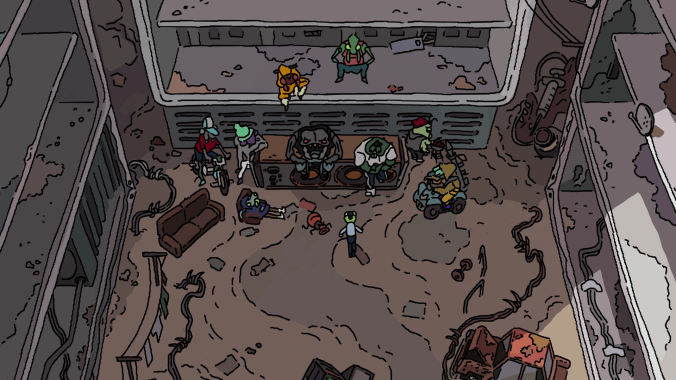
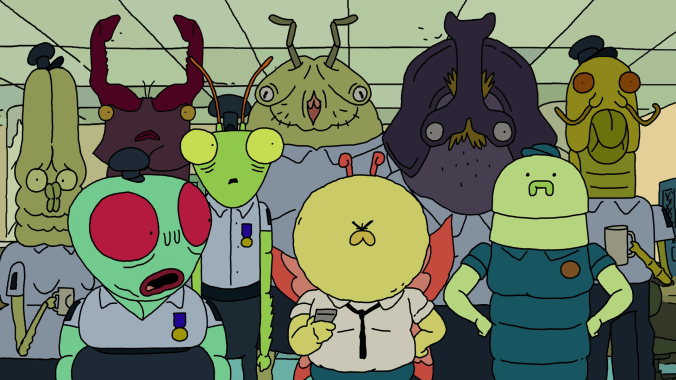
Same goes for the inhabitants of the city, who are mostly insects, some are smaller animals, like scorpions or snails for example, and some are pure original designs, where you can feel different animal elements coming together. In short, the visual design is unique and worth it, and fits the darker humour and adult themes of the story.

Screenshot_20180428-184408.png

The Police Department, many shapes and forms!

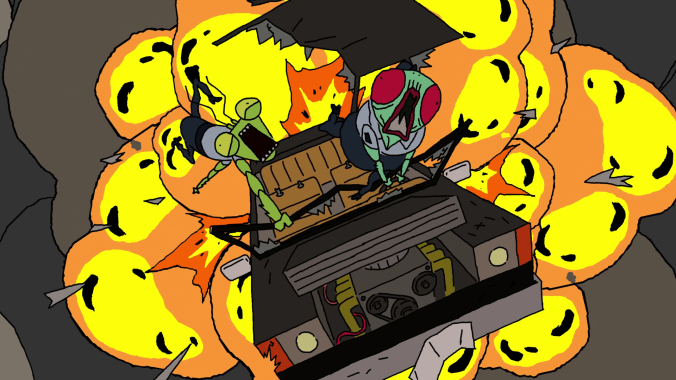
Not only is the artstyle of this series fitting, but the animation as well. The style is reminiscent of Les Kassos – however, while their previous series only dealt with one static POV camera as a stylistic choice, Vermin has the complete added benefit of being a buddy cop film, with fantastically framed and choreographed action scenes, which I won’t spoil here.

The animation seems to run on carefully chosen keyframes with not many inbetweens, giving a choppy feel to the look, but this is used to great effect, most notably in the comedic timing and immense speed of the action. Movement feels rapid, fast, frantic, and so energetic, that it brings the whole cast to life. Together with the “ligne claire” style of Franco-Belgian comic that date back to Hergé’s “The Adventures of Tintin” and its bold colour choice, it feels clean, snappy, and very satisfying.

giphy (1).gif

Movement makes a difference! (Source: Trailer)

There is, however, another thing that I must point out when approaching Vermin: Similar to Les Kassos, this series humour is dark, crass, on-the-nose, and to a level it will offend someone somewhere. We are talking full on NSFW scenes in nightclubs, crass language, alcohol and drug abuse, a high amount of graphic violence, and dark adult themes.

Screenshot_20180428-183747

A random tweet on my timeline brought me to this series, and it described Vermin as “a mix of Zootopia and Devilman crybaby” and this is quite fitting on many levels.

For one, the small town character going to the big city to become a great police officer and the city of animals setting feels very Zootopia, but it is the Devilman crybaby part I wish to elaborate on.

Masaaki Yuasa’s Devilman crybaby, a Netflix exclusive anime that aired in early 2018, was a new adaptation of Go Nagai’s classic manga Devilman from 1972. It built on the source material, putting a new modern spin on a long-running franchise, with many NSFW and explicit scenes of violence and sexual content – fitting for the equally groundbreaking source material.

However, this was mostly only possible due to this anime series being a web-exclusive. All of this content would have been omitted or adapted differently if it had to conform to the rules and restrictions of TV productions. With the freedom of being a series that doesn’t need to change itself in order to be broadcast, the creators can act with complete liberty in their own visions and ambitions. And this is a great step in animation, reminiscent of the times when hyperviolent OVAs could flourish in the 80’s and 90’s, simply because they did not run on television. Hidden behind a paywall, behind a VHS back in the day, and behind an app download or stream service today, they can do however they please. And this artistic freedom that allows for unique, new and surprising projects.

Just make sure that you know this going into Vermin. This show can get very intense and dark. And very, very explicit. Very much.

Screenshot_20180428-180427.png

Nope. Can’t show that here.

If you can deal with the direct approach this series takes to everything, you will have a fantastic time. The characters are endearing, the dialogue is snappy and fast, the action is intense and strong, and the comedy will have you in stitches.

In this raunchy, violent world are characters that look out for each other and try to do their best, even if their friendships start off on the wrong foot. Mantos is a great main character, one who has to grow and learn, and Shermock has to overcome her bad habits, sombre past and terrible lifestyle.

Screenshot_20180428-175554.png

Mantos. Young and inexperienced.

(Spider-Spider gives support. He is a superhero spider. Spider-Spider. Swings around with his butt.)

Screenshot_20180425-003517

Shermock. Shining justice.

Screenshot_20180425-004044

Mantos and Shermock. An unstoppable team.

Vermin is a great production by Studio Bobbypills that you should check out if you are even remotely interested (and if you have no problem with raunchy, violent and intense imagery). With its short runtime of 10 episodes à 8 minutes, you can easily binge the series in one or two days. Vermin is exclusive to the app Blackpills, a new streaming platform for short webseries, which is free to use, with only one or two 5-second ad breaks inbetween.

On the question of which version you should watch, there is a French Dub, an English Dub and a Spanish Dub, which you can all combine to your heart’s content with a plethora of subtitles, ranging from German, to Italian, to Arabic.

I watched Vermin in its French Dub with English subtitles, as it had the added benefit of a few re-occurring stellar voice actors I already knew from Les Kassos. I especially wish to praise French female rapper Casey for her performance as Shermock, who really breathed her character to life with her rough charme and deep lovable voice.

(I looked into the English and Spanish Dubs as well, and from a first impression, they sound absolutely fine to me too. Down below I have linked all three trailer versions, you are free to choose, as you can put your favourite subtitles under any version whatsoever.)

Conclusion

Vermin is one of those series that nail the premise of: “It’s not for everyone, but if it’s for you, it’s for you.” Not many comedy series can make me laugh so hard that I fall into a minute-long coughing fit, and I highly respect Vermin for that. In the end, it even felt too short, this series could have easily been full-length instead of short-form, as I wanted more of this world, these characters and their adventures. The finale was surprising and a bit abrupt, but fitting, and I certainly would be immensely happy about a Season 2.

Studio Bobbypills, (especially director Alexis Beaumont, producers Hafid F. Benamar and Balak) really have produced a little gem here that deserves more praise, coverage and spotlight. I had a ton of fun, and I will rewatch some of these episodes as they make me laugh hard, and more than once. As I said, if you are interested, check it out, and if not, at least keep this studio on the radar – they will do some more great productions in the future, I can already feel it.

The End.

ENGLISH TRAILER:

FRENCH TRAILER:

SPANISH TRAILER:

Sources: Wikipedia entry “OVA”, Vermin IMDB, Bobbypills, Bobby Prod [1 2 3 4]