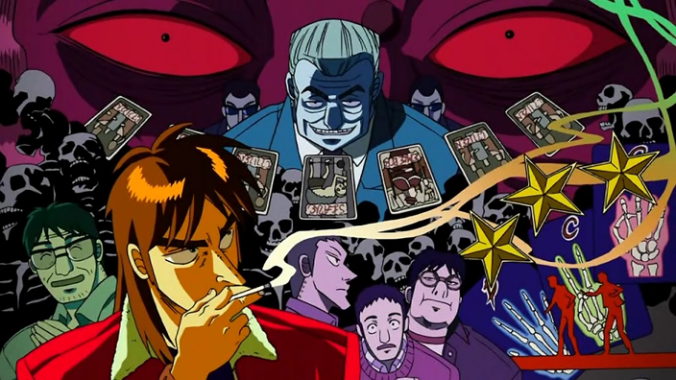
“Kaiji” – An Introduction to One of my Favourite Anime

kaiji-and-group.png

Genres: Seinen | Thriller | Psychological | Gambling

Rating: R (17+)

Studio: Madhouse

Year: 2007 (Season 1) | 2011 (Season 2)

Streaming License: Crunchyroll

What is this?

“Kaiji” is an adaptation of the manga by the same name, by author and mangaka Nobuyuki Fukumoto. “Kaiji” is his highly regarded, most popular manga. Running since 1996 and still ongoing today, it is a very influential piece and a beloved franchise. Like other long-running series, it is split up into story parts. The manga is currently in Part 5, and Part 1 and 2 were adapted into anime by Studio Madhouse, with Season 1 and 2 respectively.

Story

In the financial crisis of 90’s Japan, Kaiji, a young good-for-nothing guy, is failing at life. Accumulating small gambling debts, drinking and smoking, being jobless, living alone in his tiny apartment – he lives a sad life that he wants to change. Due to a stroke of tragic destiny, he suddenly gains a lot more debt, as he absent-mindedly signed a contract for one of his co-workers a few years ago. Now a mafia loan-shark stands in front of him, telling him that he is 3,850,000 Yen (~35,500$) in debt. And they want their money back. Now.

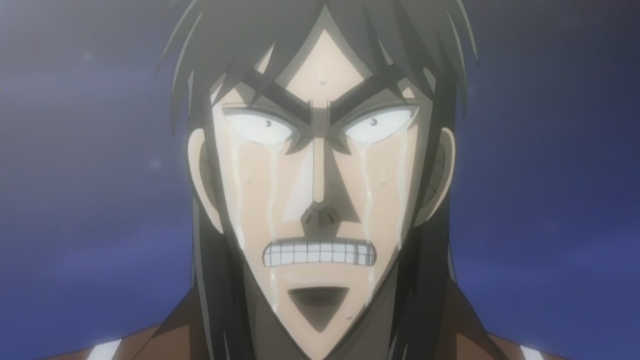
Thus starts the adventure of Kaiji, through a lot of manly tears, addiction, hype, tragedy, happiness, gambles, pain and twisted gameshows.
kaiji-cry

Eh.

What?

I have seen this, I don’t like the art style. It looks ugly.

Don’t worry, there are perfectly good reasons for the art style to be like that.

Firstly, this is Fukumoto’s style. His character design is sharp, angular and instantly recognisable. And Madhouse did a fantastic job of brushing up his style and giving it a fresh coat of paint. Here is a comparison between the first chapter of the manga (1996) and the first episode of the anime (2007).

00.png

This slideshow requires JavaScript.

Sharper, cleaner and more modern, while keeping the spirit.

They made the initial artwork more accessible and more timeless, the same way Studio David Productions handled the modern adaptation of Jojo’s Bizarre Adventure.

Secondly, this style fits perfectly for the stories Fukumoto is telling. Kaiji is a story of the lowlifes of this generation, the ones without hope and money, the shady business of loan sharks and the dark empire of the yakuzas. This is not a pleasant world, and the art reflects that. It is not supposed to be beautiful. The creators were in on the joke for Season 2 and straight up advertised it as “It’s the anti-moe anime.”

You will grow to you like it, once you see it in context and motion, trust me!

Characters

The main protagonist is Kaiji Itou, a man in his early twenties, our first grade procrastinator and overly emotional underdog. He may be one of the most relatable characters, without being a self-insert MC. Today’s anime landscape is saturated with overpowered light novel edgelords and insanely dense harem “comedy” protagonists, who can’t express any emotions except embarrassment when confronted with any form of sexuality.

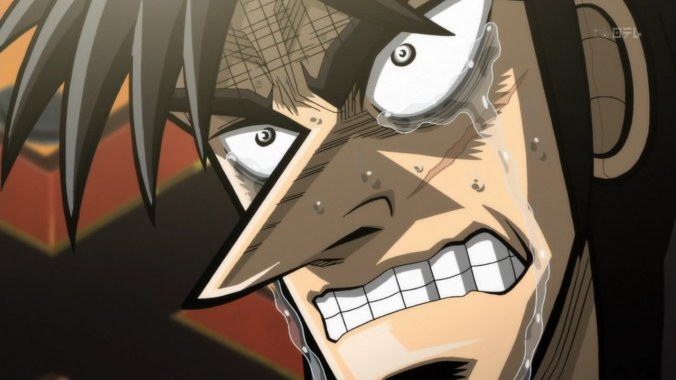
Kaiji is emotional, he cries a lot, but he is annoyed by this fact – he doesn’t like it. He wants to change his life, he wants to do something! But life is not that easy sometimes. Some obstacles are thrown in his way, some obstacles he creates himself.

Significant to notice is: He is emotional, not whiny.

His emotional range goes both ways. From happy to sad, from destroyed to gleeful, this man has everything. He is expressive and vivid, in Season 1 and even more in Season 2.
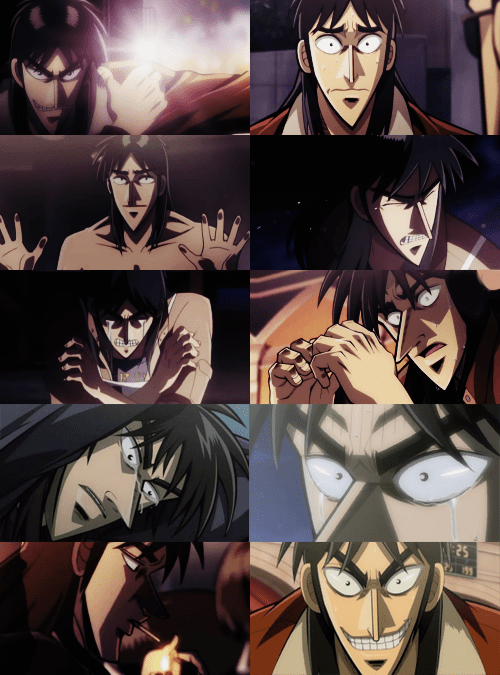
kaiji compo v2.png

Season 1

kaiji compo 2

Season 2

Kaiji as a protagonist is an outright joy to watch, and that paired with the intense, unpredictable, serious Seinen plot, makes an emotional rollercoaster. Will he win? Will he lose? Will his plans work out for him?

When he is thrown into this unusual situation of fighting to survive, kill or be killed, he will reach his limits; but here is the important fact: He will not give up, he will fight. The harder he is pushed, the harder he will fight back. Even if that means suffering and dealing with the consequences of lost gambles.

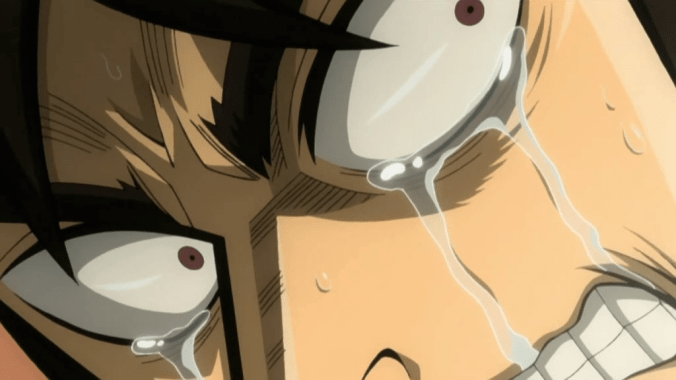
And the yakuza do not take kindly to people screwing with them. Believe me, there is a reason “Kaiji” is rated R. Expect physical and psychological violence. This series gets intense. Manly tears shall flow.
tumblr_mkz5tcLoLO1r5kw8so3_1280.png

Life isn’t all sunshine and rainbows.

Voice Acting

What makes Kaiji also work as a protagonist is not only the story and the characterisation; it’s also the voice work of Masato Hagiwara as Kaiji. He is not a voice actor, he is a film actor – often playing roles in drama and thriller movies. He is able to pull this emotional range off, and give it a realistic, non-anime touch. The main character breathes and comes to life.

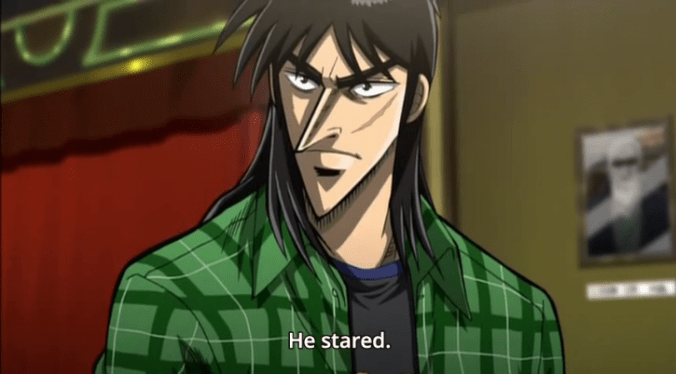
The other important character is the “Narrator”. With a big, booming voice, he will explain and announce, and sometimes even have his own monologues. Over the top and full of ham, this performance is pure fun. You may recognise this voice: It’s Fumihiko Tachiki a.k.a. “Gendou Ikari” from Neon Genesis Evangelion.

This rift between realism and overstatement creates both moments of comedy and drama. Having these two voices clash is bliss.
stare.png

The narrator knows what’s up!

Soundtrack

Absolutely fantastic. As this anime is mostly about mind-battles and has heavy use of internal monologue and dialogues between characters, you need something to accompany this mass of words. And the OST by Hideki Taniuchi is stellar. You could watch this series for its soundtrack alone.

The whole OST is an effective blend between “hype”, “melancholy” and “INTENSE” . I can only call this OST “depressingly uplifting”. It fits the tone of the show like a glove. (I do not wish to spoil the soundtrack, but here is a selection if you want to check it out beforehand.)

Hype

Fate | Wish | Don’t Give Up | High Max

Melancholy

Beginning | Regret | Elegie | Child’s Mind

INTENSE

Middle Zawa | Black Sun | Prologue | ZAWA ZAWA~

What is this “Zawa”?

As most long-running influential series, some aspects gain a form of an iconic status.

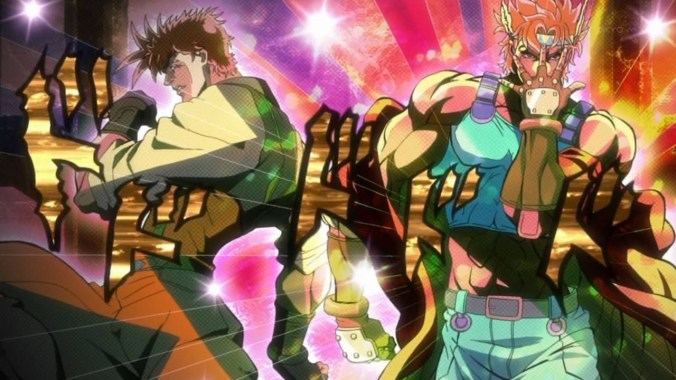
For example, in Jojo’s Bizarre Adventure, it’s the use of  ゴゴゴゴゴ, the “menacing” sound effect used by Araki. Fukumoto also has his own sound effect that he uses: ざわ‥ or “Zawa…” meaning “unnerving/muttering/whispers/uncomfortable”. Madhouse, like David Productions, incorporated these sound words into the anime, and in this case, even into the soundtrack. It has a unique effect in creating an uneasy atmosphere.

kaiji.png

ZAWA…

Any downsides?

The animation is not the most mindblowing of all – it is solid, sharp and polished, but it takes a backseat compared to the dialogue, the characters, the intrigue and the soundtrack. Sakuga moments do exist, and they are great, especially in the realm of character acting – but most are reserved for big reveals and story twists. The use of CGI is unfortunately there, a bit more so in Season 1 – but it is mostly used as a 3D camera for establishing shots and sweeping shots through rooms and across tables. But: CGI is never used on characters or crowds. They are always hand-drawn, which is a big plus.

Another thing would be the sort-of slow beginning. Season 1 does not immediately start with life-or-death scenarios and Kaiji, the old procrastinator, needs a good slap in the face before he gets going. He needs to understand his position first. But once it gets into the hype flow, you will be binging this series. His character development is beautiful to watch.

Season 1 is great, but Season 2 clearly outshines it, with better soundtrack, better animation, better characterisation of the villains and even more intense mind battles. Fukumoto gets better with every part, in his writing and his artwork, and it shows.

Also, Studio Madhouse made a season 2 for once, hurray! Therefore, Season 3 never. But you can immediately pick up the manga for Part 3 after finishing Season 2, if you so desire. The adaptation is very faithful.

(And stay away from the live action movies. They’re bloody awful adaptations. But that is a rant for another day.)

Influence and Conclusion
ka

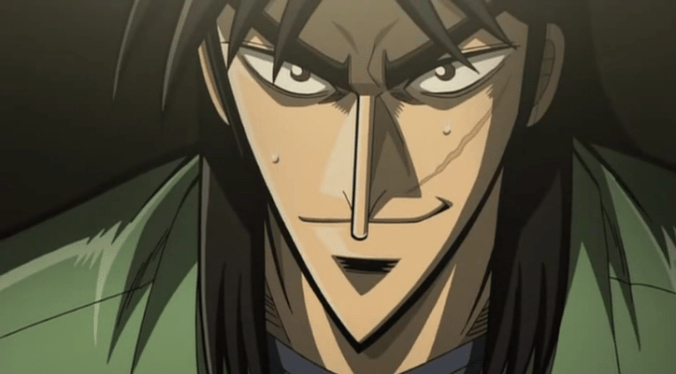
Kaiji was highly influential for the mid-nineties, by having a humane main character, who has his own flaws and occupies the position of an underdog. He is not overpowered, he has to work, scheme and think hard in order to win. And there is no way to tell if it will work out.

The ending for Season 1 conveys this feeling quite beautifully. The slow walk with a grave, Western style song, that nearly feels tarantino-esque, is delightfully elegant. Simple, yet effective.

In contrast to other gambling manga from this time period, Kaiji’s gambles are all original games. There is no Poker, Uno, Roulette, or Black Jack – everything and anything can be a gamble. This makes it easier for the audience to understand the situations, as no previous knowledge is needed and we, the audience, can figure out a way to beat the game with Kaiji together.

And little references to “Kaiji” are still present in anime today, either in direct form or as parody. Kaiji recently even got a “Monster Hunter” DLC, complete with little word clouds of ZAWA that surround your character. (Trailer, Attention: Little visual spoilers for Kaiji!)

It is a cherished franchise, still today, after 20 years.

“Kaiji” is a unique, intense, historically important manga, winning the Kodansha Manga Award in 1998. It has been treated and remade with great care and love in anime form, and I think that you will enjoy it. Both seasons have great ratings, but they are criminally underwatched. Maybe it’s your turn to check them out!

Watch this if…

– you like Jojo’s Bizarre Adventure. As already mentioned above, it’s an old manga series that has been brought to life again with a lot of care and love for the influential, beloved source material. The mix of intense battles and manly emotions is similar – just with a lot less muscles and longer hair. Important: If you loved the D’Arby Brothers fights in “Stardust Crusaders”, this is absolutely for you.

– you like Gen Urobuchi, especially Madoka Magica. Yes, you read that correctly. Both series share a common theme of likable characters going through a lot of pain and suffering. You might like Kaiji if you enjoyed Madoka for this melancholy feel. Get ready for another form of despair: Urobuchi is more tragedy and personal destiny, while Fukumoto is more human drama and moral dilemmas. It’s different, but in the same tradition.

– you like Sports Anime: Gambling is a sport! Just with more “card-throwing” and less “ball-tossing”. Some episodes feel as if only 5 minutes had passed. The hype soundtrack and insane cliffhangers will have you on the edge of your seat, as per usual for the genre. I can’t possibly fathom how people could have watched this series while airing. Kaiji is highly binge-watchable.

– you like Mind Battles: “Death Note” or the manga “Liar Game” are some examples that fit the genre. They are cat and mouse games, where the roles can easily switch from the hunter to the hunted.

you have been feeling down lately. There is nothing more cathartic and supportive than watching a character who is in an equal, or even worse position than you are. You are not alone. Aren’t we all procrastinators? Do you also just work when somebody forces you, or gives you a deadline? Haven’t we all got hope that our lives get better? Instead of looking for escapism – go for confrontation.

TL;DR Kaiji is a long-running manga, starting from 1996 and still ongoing today. It currently has 5 parts, Part 1 and 2 both got an anime series. Kaiji has ludicrous amounts of debts that he has to pay back to the yakuza. Join him in his adventures and his life-or-death gambles to get money. It’s a depressingly uplifting tale, with an endearing, overly-emotional protagonist who is all too relatable.

UPDATE July 2023: Kaiji was mentioned as one of the main influences on the Netflix hit series “Squid Game”, and the anime has a US Bluray release! Please enjoy!

kaiji-and-group

The End.

My 3×3 Favourite Anime

mosaic23cb9526a46e7711e81413c3071f852802708cca

This is my 3×3 of “My Favourite Animes”. What are they and why do I love them? What makes them special to me? Here are my thoughts, come and join me!

Kaiji

tugeCq9

I have a weakness for remakes and old mangas getting new adaptations. Seeing classics being brushed up, cleaned and given a fresh coat of paint makes me happy. It often shows how timeless a series really is, how it precisely captured a zeitgeist, or what beauty is hidden under timely dust. “Kaiji” is one of those.

In the financial crisis of 90’s Japan, Kaiji, a young good-for-nothing dude, is failing at life. Racking gambling debts with friends, drinking and smoking, jobless, living alone in his tiny apartment, he lives a sad life that he wants to change. Due to a stroke of tragic destiny, he suddenly gains a lot more debt, as he absent-mindedly signed a contract for one of his co-workers a few years ago. Now a loan-shark stands in front of him, telling him that he is  3,850,000 Yen (~35,500$) in debt. And they want their money back. Now.

Thus starts the adventure of Kaiji, through a lot of manly tears, addiction, tragedy, happiness, gambles, pain and twisted gameshows. It’s a depressingly uplifting tale, with an endearing, overly-emotional protagonist who is all too relatable. Aren’t we all procrastinators, who will only work if pushed to the extreme?

Jojo’s Bizarre Adventure

maxresdefault

Another classic in a new dress. From the 80s, that brought you the manly action genre starring Arnold Schwarzenegger and Silvester Stallone, comes this blast from the past.

Stretching many generations and many story parts, the Joestar family will be involved in bizarre incidents, starting in the 1800’s in Victorian England. From there, we will see vampires using ice powers, undead Mayan gods being incredibly fabulous, a French muscly man wanting to be a mangaka, Japanese high schoolers solving crimes Scooby-Doo style, Italian mafia with superpowers and all-female prisons with Spiderwoman. And that’s not even all the parts and settings!

The series knows exactly what it wants to be, and has gigantic amounts of fun rolling around in its lore. It works simultaneously as a parody of Shonen, while also being a straight-up Shonen. And its importance for the whole manga and anime, and even beyond that, towards fashion and video games, is mind-blowing. It’s fun, it’s fabulous, every part is different, and there will be a big universe for you to dive into.

Kill la Kill

36918_kill_la_kill

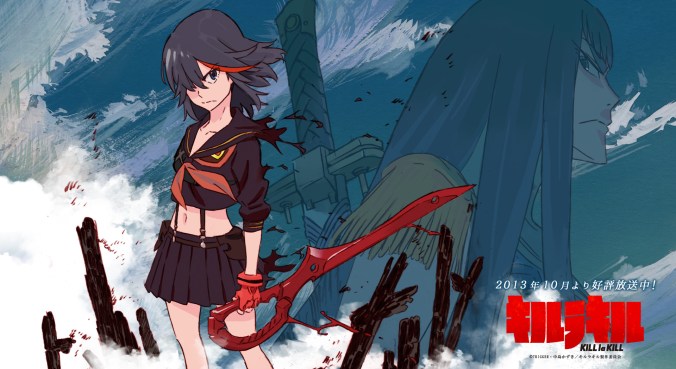
This series refuelled my love for anime. I came back to anime in 2013, and this was the hype-filled beauty that I didn’t know I needed.

Poking fun at anime tropes and fanservice, while slowly evolving from a simple revenge story to a Greek tragedy was beautiful. The characters, from their designs to their story arcs, were all fascinating to watch. The middle part dragged on a bit, but the ending picked itself up so well, that I was literally on the edge of my seat. Trigger has become my favourite studio next to Madhouse for making this series. A satisfying ending, and a lovely final OVA make this series a round, well-polished treasure.

Saint Young Men (The Film)

tumblr_static_tumblr_static__640

Jesus and Buddha, after hanging out for millennia in the afterlife, are best friends – as Nirvana and Heaven just happen to be next to each other. They want to take a break from all this being-gods business, and take a vacation on Earth. So, they decide to live in Tokyo, as they are so many Shinto gods there, they’ll surely don’t stick out, do they? (Also, Buddha gets ill from the water in India and Jesus cannot live without a decent internet connection – well, Japan it is.) Living together in a little flat as roommates, we will see a whole year in the life of Jesus and Buddha on Earth, from spring to winter.

The main strength of this film is the double lead of the two gods – as they are canonical to their religious selves. Jesus is a man of simple carpenter background, a happy-go-lucky bachelor, who writes reviews of TV shows on the internet, loves Santa, and is generally outgoing and caring. He loves people and people love him. (He is also often confused by people for being Johnny Depp.) Buddha is an aristocrat, who threw his privileged life away in order to become in ascetic. He is very calm and overly caring, very careful with money, prefers loneliness and meditation, and is a vegetarian, as he can command all animals, even if he doesn’t want to. Both protagonists respect each other, admire each other’s approach to life in general and support each other. For example, Jesus takes loneliness-loving Buddha to Disneyland for a fun day and Buddha has to stop tech-happy Jesus from buying a new gaming PC. (Heaven has a tight budget, you know?)

It’s a beautiful friendship, two foreigners discovering the culture of Japan, and an acoustic soundtrack that is so soothing, you want to smile through the whole day. The sketchy artstyle with strong colours paints a dazzling, gorgeous image of Tokyo. This is one of the most heartwarming slice-of-life masterpieces I have ever seen.

One Piece: Baron Omatsuri and the Secret Island

mni-one-piece-movie-6-baron-omatsuri-and-the-secret-island-720p-mkv_snapshot_00-06-52_2015-02-21_16-28-19

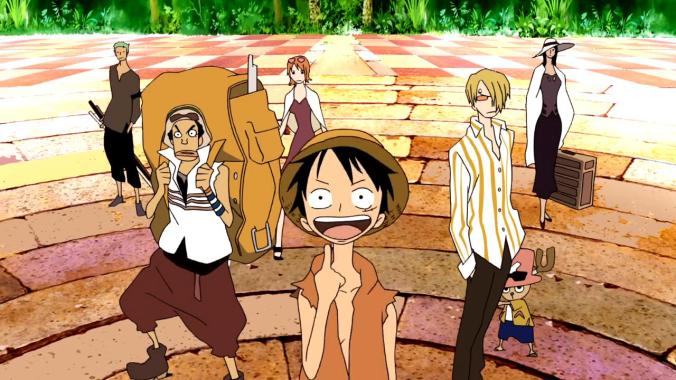
“One Piece” has been a big part of my life. I discovered the anime and then the manga, and I have been in love ever since. I own all the books, including all the making-of books and some artbooks, and I am intensely proud of my collection. It is my #1 manga of all time.

One day, young teenage me discovered that my local anime/manga store had a section on Japanese DVDs. I went through it and saw some One Piece movies. Overly happy with joy, I picked the one with the pretty flowers on the cover and went home, in order to watch some new Strawhat Pirate adventures! Hurray!

What followed was one of the most harrowing experiences of my film life. It felt as if I was had been smacked in the face, with a unique artstyle, overwhelming sakuga, finest voice acting, an excellently executed story and some of the heaviest themes I have ever seen touched upon in One Piece. And that means something. Little did I know that this was the work of a certain Mamoru Hosoda.

I think this should tell you everything you need to know, as Hosoda also did my favourite Digimon film: “Our War Game”. This man knows how to add gravitas to a light-hearted series, keeping the spirit of the original without feeling like a grimdark rip-off. Thank you, Hosoda, for showing just how good anime can be.

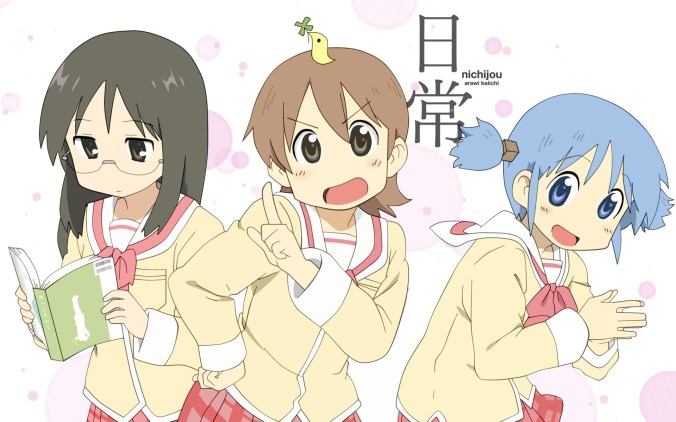
Nichijou

37745_nichijou

Ah, Nichijou. You marvellous bundle of joy. Before I start talking about this series, let me tell you something about comedy.

I love comedy. I really do. I loooove it. Intensely. Monty Python and Edgar Wright are my personal heroes. I specified in comedy during my film theory classes, analysed many films, know a lot of theory, have written many papers on comedy, started playing improv at my university and read way too many books on the topic. But as it often is… if you specify in something, you become a snob. A big one. My taste has become extreme. Either I love the humour and it clicks immediately, getting gigantic laughing fits out of me, or it collapses right there on the spot, not even wringing a chuckle out of me. I noticed it strongly at a screening of the “Love Live: The School Idol Movie” at an anime film festival. Everyone was laughing and having a blast, and I am sitting there thinking: “Yes, I recognise that this was a joke. It fell flat because of reasons A, B, and C. It wasn’t funny. I am not laughing.” I laughed once during the entire film, due to a fantastic, unexpected line by best girl Rin. Rinse and repeat for other “comedy” series. I sit there like an addict: Only the really good stuff gets a reaction out of me. Which is a bit sad. But that reaction will be amazing. It’s hardcore black and white.

And then, I found the series which hit exactly that sweet spot of comedy that I had yearned for so long. It came in the form of “Nichijou”. The surrealism, the adorable characters, the slow twisting of loose story strings, the overstatements, the intense animation, the relatable situations, the perfect execution of comedic rules: it is a masterpiece. The laughing fits I had from this series were hysterical. The charismatic, heart warming cast of characters makes this anime shine like sun. The longer this show runs, the more you understand the universe, and the whole structure that keeps this world of “Nichijou” going. This is, to this day, my favourite show by Kyoto Animation.

Redline

1446257210-5a9e8468d1227862508b8657f11ee00e

Well, one of my favourite studio is Madhouse, as I already mentioned above. (Come to think of it, 4 out of my 9 favourite series are Madhouse. Huh.) And this may be one of the most visually appealing work of art they have ever done. If you were to ask me how much sakuga is in it, I would say: “All of it.” Every shot, every camera movement, every little character animation is filled to the brim with charm, talent, and pure beauty.

The story is simple, yet effective. A young man, called J.P., is the best race driver around, yet he cannot take off, as his friend and business partner is entangled into illegal betting deals. These races, akin to Star Wars Pod Races, just with more speed and hype, are the most watched sport in all the galaxy. The eponymous Redline race is the main event, but the film takes time to introduce all the racers and gives them personality and backstories. By the point the race actually starts, you know them all, and are in for the most hype ride of your life. See it in the best quality possible, with a dub, as you, believe me, do not want subtitles with this crowning jewel of animation.

Paprika

maxresdefault1

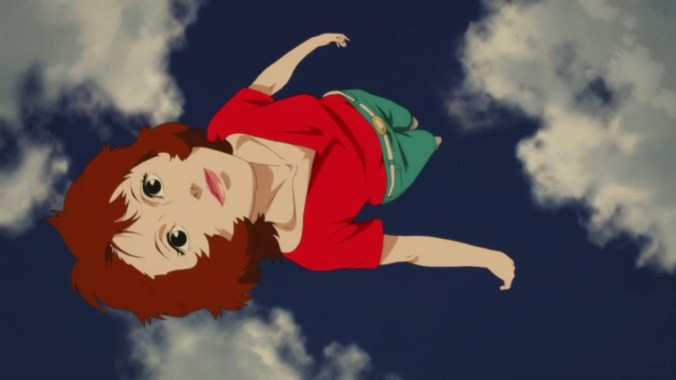
If there is one thing that a film student will go crazy about, it’s “editing”. Satoshi Kon was one of the greatest in this field, and his talent did not stop there. His scene transitions and shot compositions were nothing short of amazing, and his stories are in-depth character studies.

It is only natural that one of his films would feature a psychologist one day. But not any old psychotherapy is presented here, the central theme is dreams. The main protagonist enters her patients dreams to analyse and help them – but one day, one of the dream-entering devices is stolen. With this machine, it is possible to simulate dreams and making people think that they could do anything. What happens when the border between dream and reality is broken? What is real, what can be trusted, how does this dream logic work? How do you hold on to yourself? Can this power be used for good?

All these many questions are wrapped into a colourful, vibrant, eye-opening film which is so densely edited, that you have to give it several watches just to catch the whole scope of this movie.

Akagi

ba76c81e1aeb5b76037753fdcccb1c0c1378825468_full

Another Fukumoto adaptation? Another Madhouse series? Another character with a big nose? Didn’t we have “Kaiji” already?

Well, the 9th spot was hard to pick. My guilty pleasure “Symphogear” was a contender, but I haven’t seen the third season (GX) yet, and I have been told that all goes downhill from there. I have to watch it for myself before I can judge. Another runner-up was “Shouwa Genroku Rakugo Shinjuu”. I acknowledge its beauty and narrative craftsmanship, but in the end, it felt like an extended prequel for season two, that got announced immediately after S1 finished. If season two continues with the same quality, it will catapult itself into the godly heaven of anime. Don’t screw this up, Studio DEEN!

Anyways!

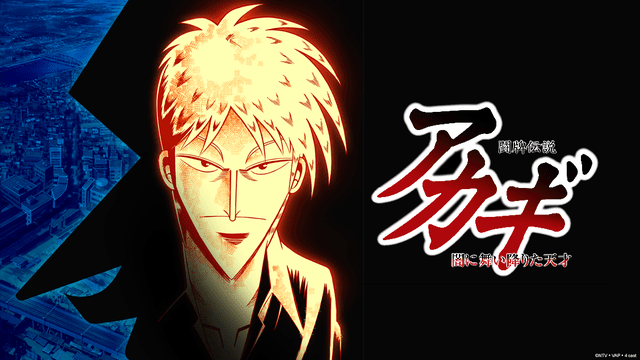
“Akagi” is, to me at least, a little miracle. It should not work and yet it does. It’s Fukumoto at his best: angular artstyle, thick outlines, sharp character design, gambling, psychological and hard-boiled, serious Seinen. It’s essentially “Kaiji’s big brother”, from the source material to the anime staff. Both protagonists even share the same voice actor.

But it is so radically different. In post-WWII Japan, everything is awful. Gambling runs rampant, violence is in the streets, yakuzas control nearly everything, and politicians are corrupt and dysfunctional.

Out of a dark storm, in midst rain and thunder, a young boy, 13 years old, enters a Majong parlor. He doesn’t speak much, he is soaked in water, he has an uneasy vibe about him. And he starts obliterating his opponents in a game of Majong. This is no ordinary boy. This is Akagi. This is a demon. From there on, we follow Akagi, on his self-proclaimed quest to destroy the yakuza. He hits them where it hurts the most: their wallets.

This is how you do an “overpowered main character” right: By showing the surrounding people’s thoughts, not the MCs inner monologue. Akagi is flat out a creepy, scary character. Always speaking in monotone, with narrow, piercing eyes that will never let you go. He is screwed up, he doesn’t care about his own safety, and will always be cold and calculating. If he doesn’t risk his life, he is bored. This is the perfect character for this twisted setting and he is an absolute blast to watch. He makes Majong interesting. Full of hype, even. How does this even work? It does, with perfect characterisation, intense OST, and interesting mind games. I just never want to meet Akagi in person. He gives me shivers, guargh. With Kaiji however, I want to share a beer and give him a huge pat on the shoulder.

Conclusion

I love all of the above series and films, and they all hold a special place in my heart. This is just a little overview, as I could easily write full reviews on all of them, which I will hopefully do in the future! I hope you enjoyed this little overview of my 9 favourite series. I will continue watching anime and discover new favourites to love! Have a wonderful day!