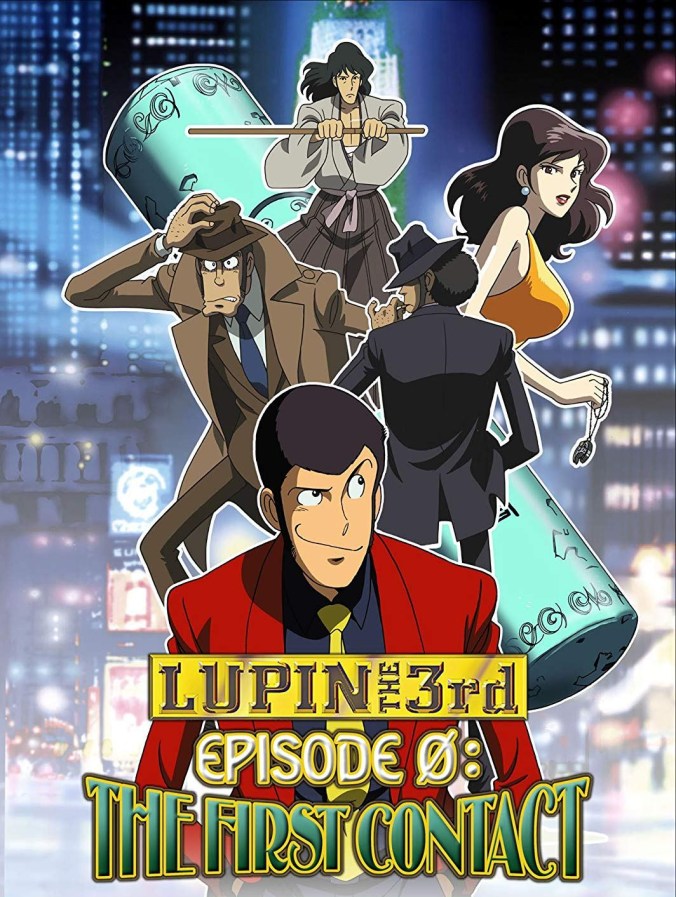
The beauty of the Lupin III franchise is that it has so many diverse entries over the last five decades that you are bound to find the one that fits your taste perfectly.
However, the sheer number of works can seem overwhelming for someone looking in from the outside. Where do you even start with a series that strong in numbers?
I will shed a light on this in this special LUPIN MONTH of September 2018, where I present little gems and oddities from the franchise that can all be enjoyed without previous knowledge. I covered Takeshi Koike’s two films and the 2015 Part IV TV series already, but want to diver deeper with you all to explore this wonderful world.
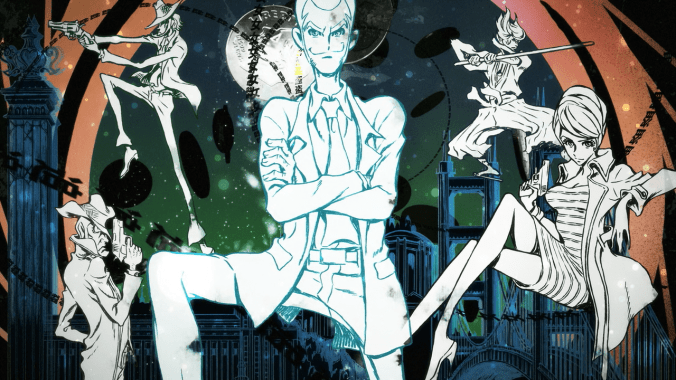
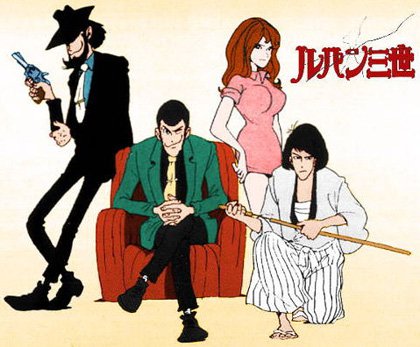
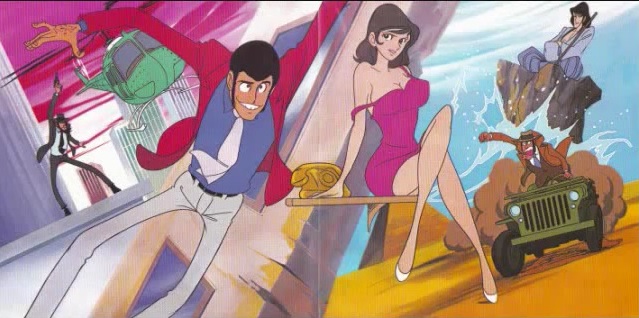
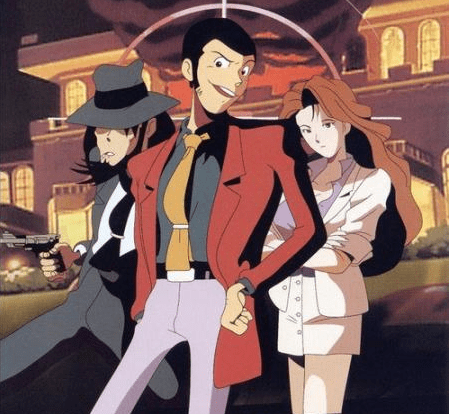
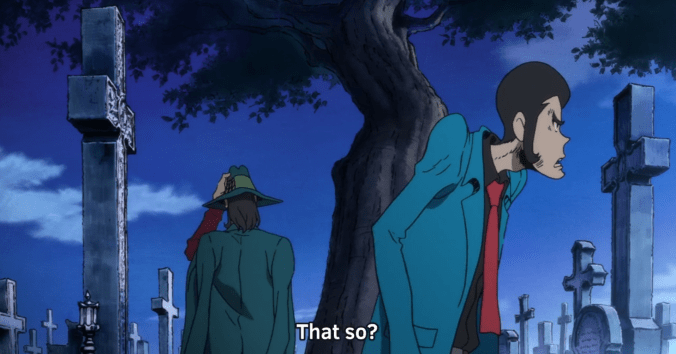
The status quo is always the same in all entries, making it accessible to everyone once you got the characters down: “Lupin The Third” is happy-go-lucky thief, “Jigen Daisuke” is a gunslinger with a 0.3 second quickdraw and is his partner in crime, “Goemon Ichikawa” is a stern samurai with a heart of gold who helps them, “Fujiko Mine” is Lupin’s love interest and thief rival, and bumbling “Inspector Zenigata” is always on the prowl to catch Lupin, in a never-ending game of cat and mouse.
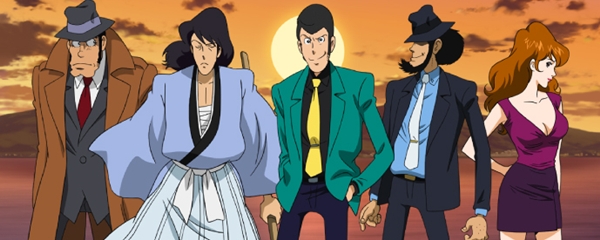
From left to right: Zenigata, Goemon, Lupin, Jigen, Fujiko.
Here is where some specific entries will stand out which give the backstory to this cast of colourful characters. In 2013, A Woman Called Fujiko Mine reset the canon and told ist own continuity in an adult setting, being a starting point for many with ist unique direction and artstyle. But before that recent adaptation, some others have also set out to tell the story of how the Lupin cast found each other. One of these is the stellar 2002 film „Episode 0: First Contact“.

In a smoke-filled pub in some dinghy backroad, Jigen Daisuke is asked by a reporter to tell the story of how he met Lupin. The young woman is interested in writing a book about their adventures, the publishers are already supporting the idea without her having any info yet – the people just want to know.
Reluctantly, he starts, and as he dives deeper into long-forgotten memories that come back into the light clear as day, an unbelievable story of friendship, love and death unfolds.
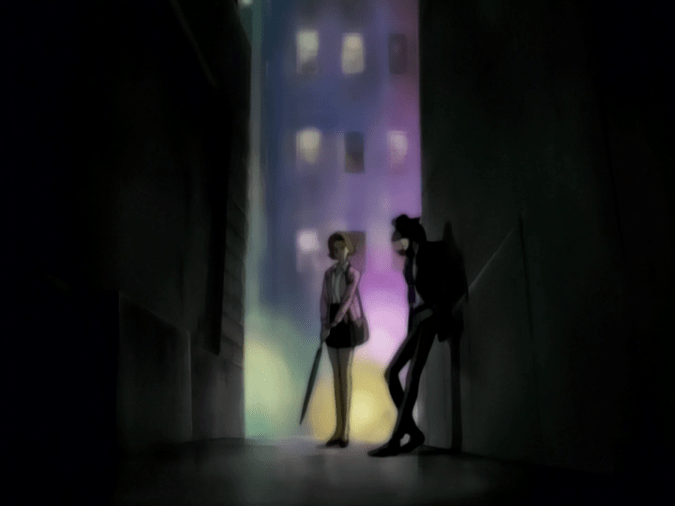
Going outside into the calm night, Jigen reminisces.
New York, many years ago.
Jigen is a hired gun for a high profile mafia boss, protecting him and his goods – Jigen’s life is calm and uninteresting. He is free to go wherever he wants to and earns good money, but the spark is missing.
This changes one day as a man is breaking into the mafia boss’ villa, challenging Jigen for the first time in his career. He is playing with sneaky disguises and tricks, and manages to run away while dodging all of Jigen’s bullets. Jigen wins, the intruder is scared away, the boss is unharmed, the treasure in the safe remains untouched, but… Who was that man? One of the other henchmen responds: “That was Lupin! Lupin the Third!”

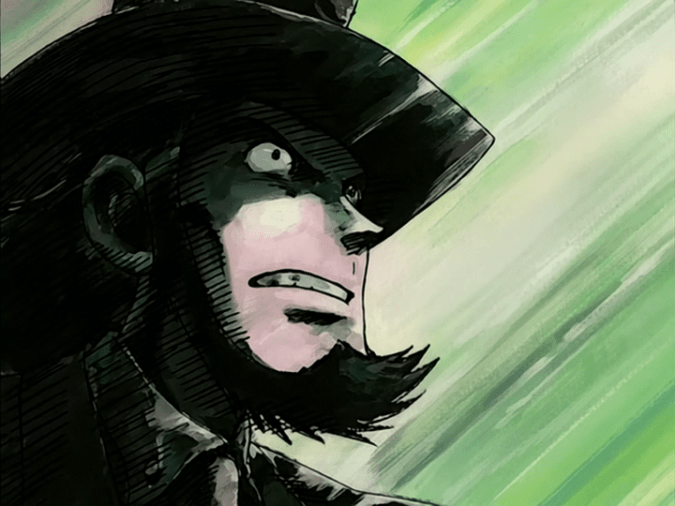

A short, but life-changing moment: Lupin and Jigen meet for the first time.
As it turns out, the treasure Jigen has to protect is quite valuable: It is a metal tube, called the “Cram of Hermes”, and inside it is the alchemy instruction to create one of the hardest metal substances ever, however, it can only be opened with a special key. And for different reasons, everyone of the core Lupin III characters will be involved around this object.
Essentially, we see how the original cast gets together: How Lupin and Fujiko find each other, and even see them interact as a romantic couple – which is very wholesome and a rare sight, as Fujiko is the on-and-off girlfriend and rival of Lupin. Goemon makes his appearance as well, Zenigata builds his passion of hunting Lupin and Jigen learns to accept the friendship of Lupin.
This will all be woven into one big fun adventure – involving bank heists, chase sequences on highways, in subways and even on water, and of course many hijinks, disguises and plans to trick one another. This is a very fun film that also takes time to unwind in some scenes, finding a great mix between “bouncy” and “chill”.

Fun for everyone!
Themes and Execution
Lupin and Jigen form the thematic main axis of the film, two men who are destined to become partners in crime, but meet under conflicting circumstances, on different sides. While Lupin finds an immediate liking to his future friend, it is Jigen who is very reluctant and even dismissive of Lupin’s attempts of befriending him – resulting in many comedic and tension-filled scenes of action and banter.
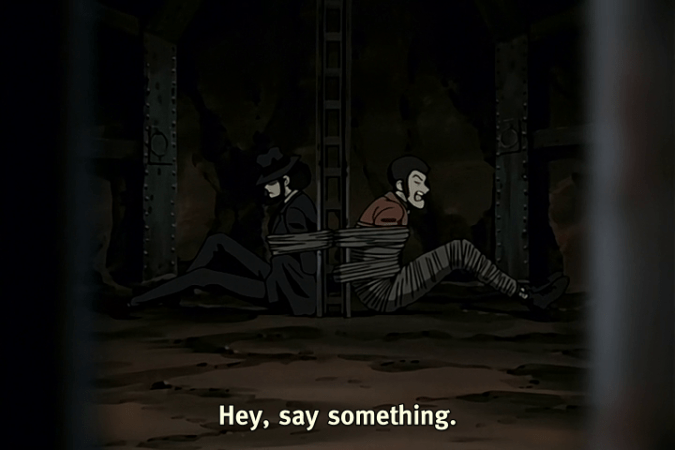

If you pay attention, there is a charming reoccurring visual metaphor of Lupin trying to light Jigen’s cigarette on several occasions, (figuratively lightening up this partnership with a tiny flame), and Jigen refusing in many non-verbal ways: spitting out his cigarette, turning his head away to dodge the match or simply swatting Lupin‘s hand away.
To see this relationship grow from „deadly rivals“ to „bromance through thick and thin“ within a single film is a wholesome experience, and definitely a highlight in this movie.
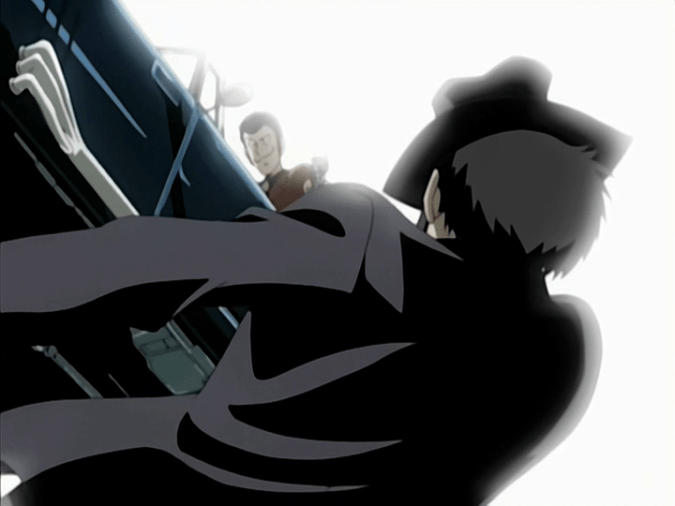
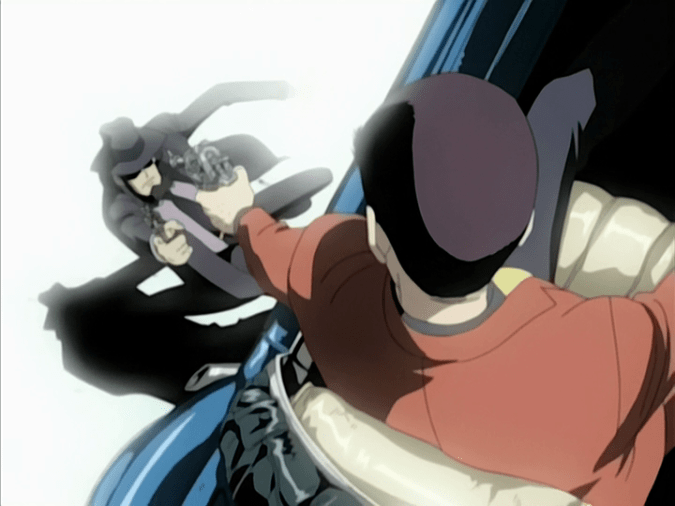
From foes to friends. But in the beginning, they are more preoccupied with trying to kill each other.
One of the most fun elements in the film is Inspector Zenigata. How does someone become so obsessed as to dedicate your whole being to chasing one single criminal? And especially: How was he before he found his purpose? Young Zenigata is a member of the Japanese police, and is sent to New York. It is here where his prequel-characterisation goes hand in hand with his position in the story, creating a fitting and fun substory that weaves itself into the main plot.
Zenigata is a capable police inspector – as he always loses against Lupin, he seems like a bumbling fool, he has to lose so that the protagonist can win. However, Zenigata is a police inspector, who later joins INTERPOL, so: This is a skilled cop right here. We might just not always see it.
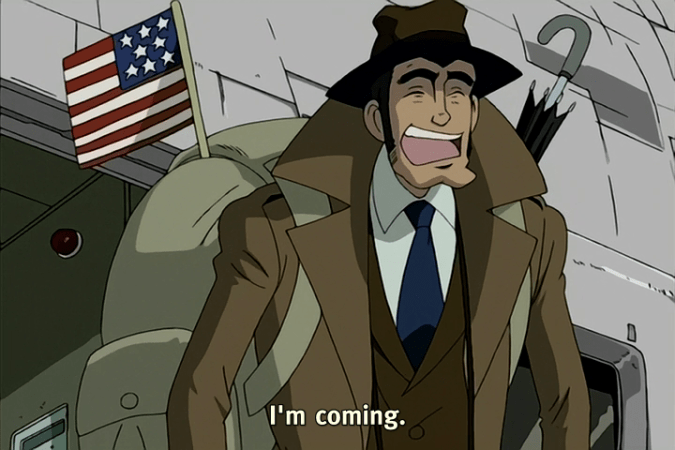

A young Zenigata dealing with the American way of doing things. There will be many culture crashes and yellings between him and his new boss.
Seeing Zenigata fight street crime and rigid US legal systems is a joy, and really shows that he deserves to be Lupin’s adversary. If the concept of “Zenigata vs. USA” sounds intriguing to you, then you could easily watch it for that alone.
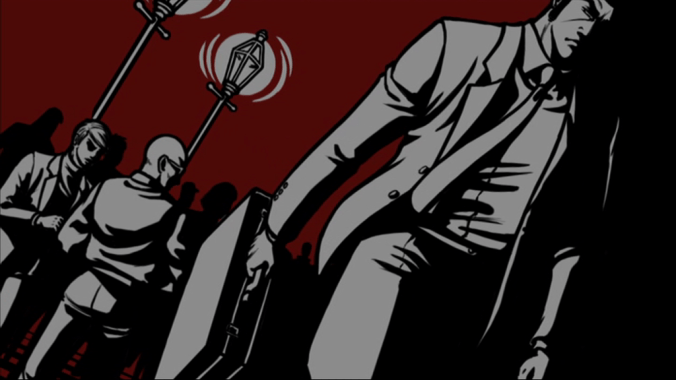
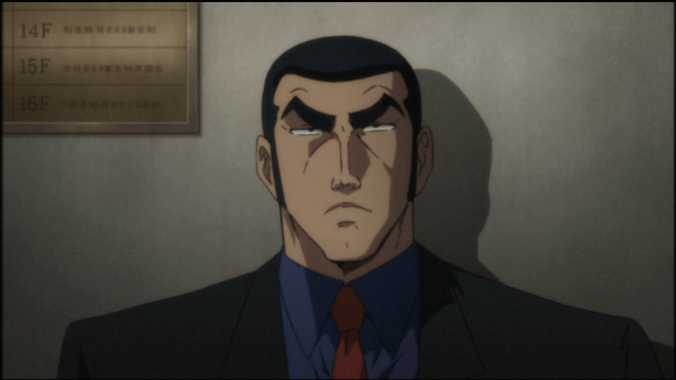
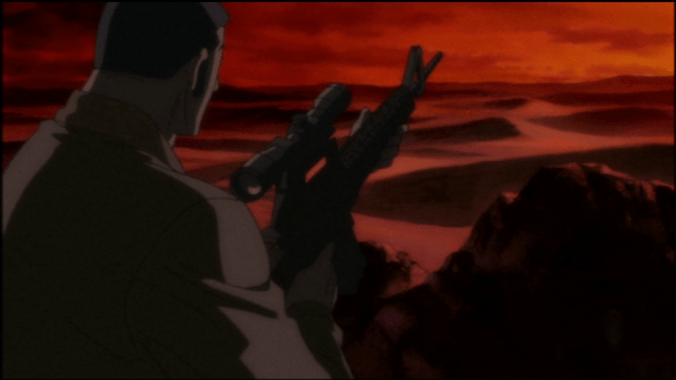
This film takes place, as already mentioned, in New York City, and the metropolis looks simply marvelous. From well known sights to little back alleys, everything feels grounded, real and visually stunning. Together with the beautiful framing and storyboarding, this film is a beauty.
Here is just a small selection, I adore the overall “gritty yet warm” aesthetic.
There are people who are opposed to the early- to mid-2000s anime aesthetics, as it was a time where the 90s left, but the new zeitgeist hadn’t quite formed yet. Some anime from that time period hasn’t aged quite well in retrospect. However, Lupin III Episode 0 does not fall into the category. It wears its look with full pride and well-polished execution, showing no sign of bad ageing.
In addition to the visual flair, I must point out the fantastic soundtrack that accompanies this scenery. The Lupin III franchise always had catchy big band and jazz sounds and this is no exception: A great rendition of the main theme with a funky gospel-like choir makes for perfect opener and the orchestral sweeping scores that feel right out of an oldschool Hollywood film really sell New York as a setting.
Adding to the city’s melting pot status, two other additions were surprising, but more than welcome: A flamenco character theme for Jigen, and a bossa nova soundtrack for the whole film. The decision to give Jigen a dramatic acoustic guitar cue and castanets as a character theme is a perfect fit, making not only his appearances more dramatic, but give him a melancholic yet passionate melody, underlining his characterisation in the film – somebody who is stuck with an unsatisfying gangster job and who might need someone to pull him out to find his true call.
The bossa nova soundtrack, sung in authentic Brasilian Portuguese as well, gave the whole film a soft, laidback and immensely relaxing tone, underlining what the frame narrative already set up: it is the story of a late night reminiscence, of somebody recalling how they got to their point in life. The inclusion of these two Hispanic/Latin elements was a personal highlight for me, and made me very happy.
Have a listen here:
I was immensely smitten this soundtrack.
Conclusion
Lupin III Episode 0: First Contact is a heartwarming reboot prequel, that really delivers on all sides: fun character interaction, expressive animation, lovingly crafted backgrounds, and a great introduction for new fans. And even for older fans of the franchise, it delivers with its own lovely take on an established cast, and that is always fun to see.
With its comfortably snack-sized runtime of just 90 minutes and a lovely early 2000s aesthetic, it makes for a great adventure I would wholeheartedly recommend to anyone, be it old or new fan. It makes for a relaxing yet entertaining ride, so give it a watch when you feel like visiting the warm world of Lupin III in big, buzzing New York City.

The End.
LUPIN MONTH! For every Monday in September 2018, one more Lupin III entry!









































 Elena DS