MANLY MONDAY – “Zombiepowder.” Tite Kubo’s Early Western Fun

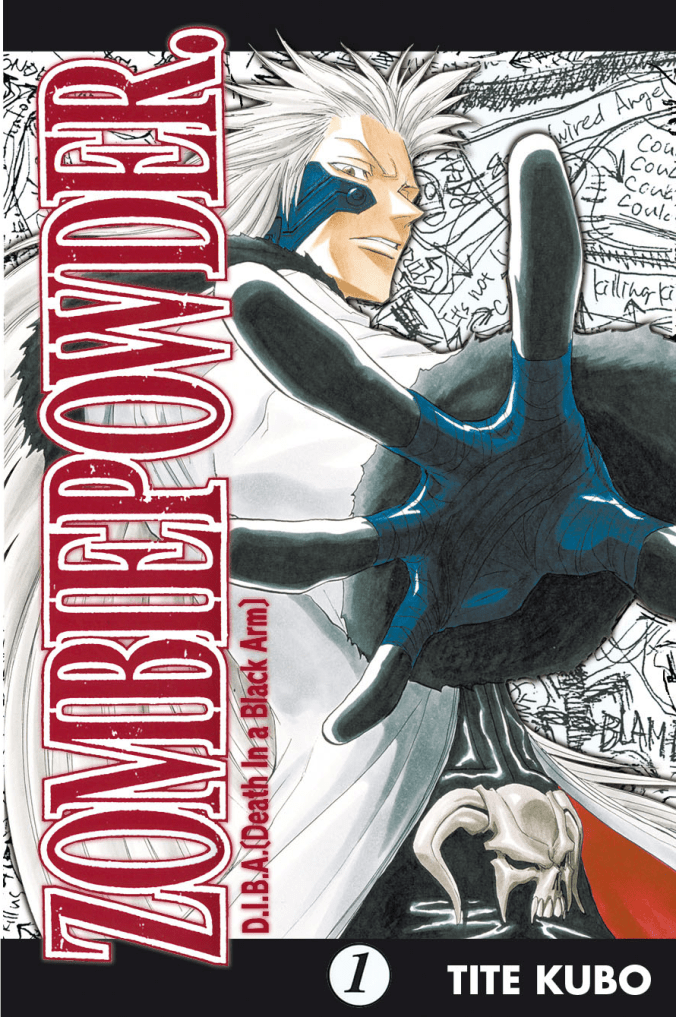
zombie-powder-vol-1.png

Back in the day when I was a little kid, the book shop was my world. I read many manga there, even right into the teenage years, as the store had comfy couches and chairs to sit on, so that you could browse and read for an unlimited time. It was here that I found Zombiepowder for the first time, by an author I had only heard a bit about: Tite Kubo, most famous for his series Bleach.

I would later find out in school exchanges and travels outside of Germany that Bleach was actually a huge thing. The internet told me that it was on the level with One Piece and Naruto, the “Big Three” of Shonen Jump, and I was quite surprised. Bleach was never a gigantic thing in Germany, most likely due to the anime not being widely available, especially in the “golden early days”. (One Piece ran since 2003, Naruto since 2006 – in a dreadful version, don’t remind me of the opening, the One Piece one is amazing, watch that instead – both on the big channel RTL II, while Bleach started only in 2010, on a niche channel called Animax.)

And so, in 2008, I held a volume of Zombiepowder in my hands, not knowing about Bleach, and started reading this new series I had never seen before. 10 years later, I revisited it.

02-03

Zombiepowder is the story of Gamma Akutabi, a silverhaired hero with a big sword and big heart, in a Wild Western world. He is a “powder hunter”, someone who is on the quest to hunt down the “Rings of Death”. If you collect all twelve rings, you can produce the eponymous “zombie powder”, a substance that brings life: If used on a dead person, that person becomes alive again, and if used on a living person, that person becomes immortal.

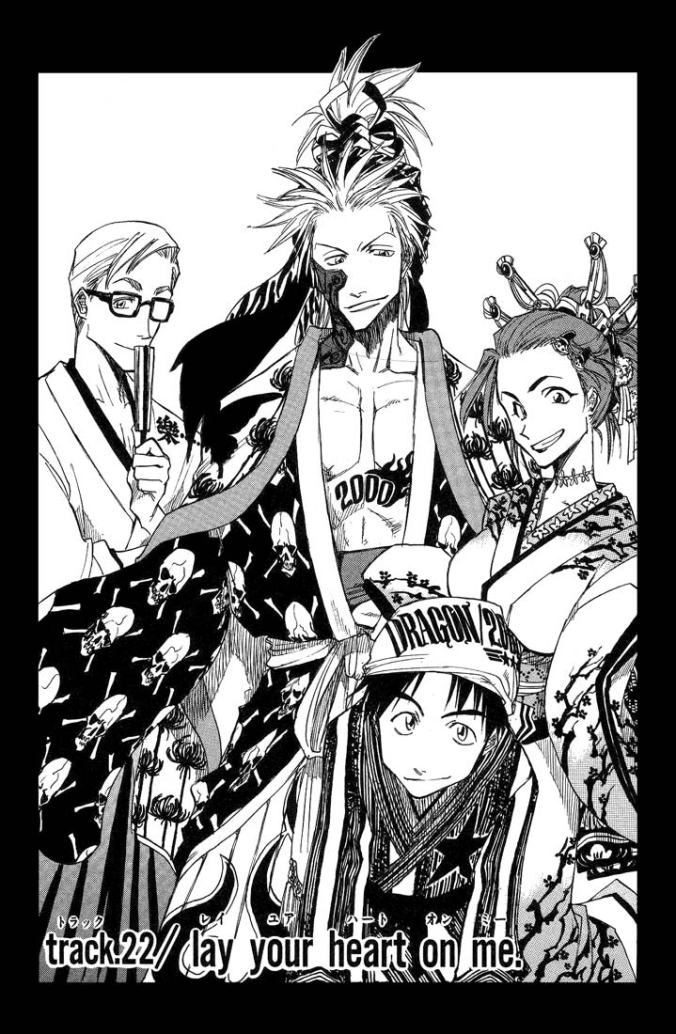
Hence, many people are after these rings for different reasons, and so far, no one has managed to gather all twelve into one place. Gamma Akutabi is after it for the immortality, and on his quest three other characters will join: C.T. Smith, his partner in crime, a very upright classy gunslinger complete with suit and bowler hat, Elwood, a young teenage pickpocket, and Wolfina, an energetic paparazzi  lady who fights with forged press releases and a modified tripod.

x2 (1)

From left to right: Elwood, Smith, Gamma and Wolfina.

As this manga is quite short, with 27 chapters only before it was cancelled by Shonen Jump, I wish to talk less about the plot and more about the characters and style that Kubo shows us here.

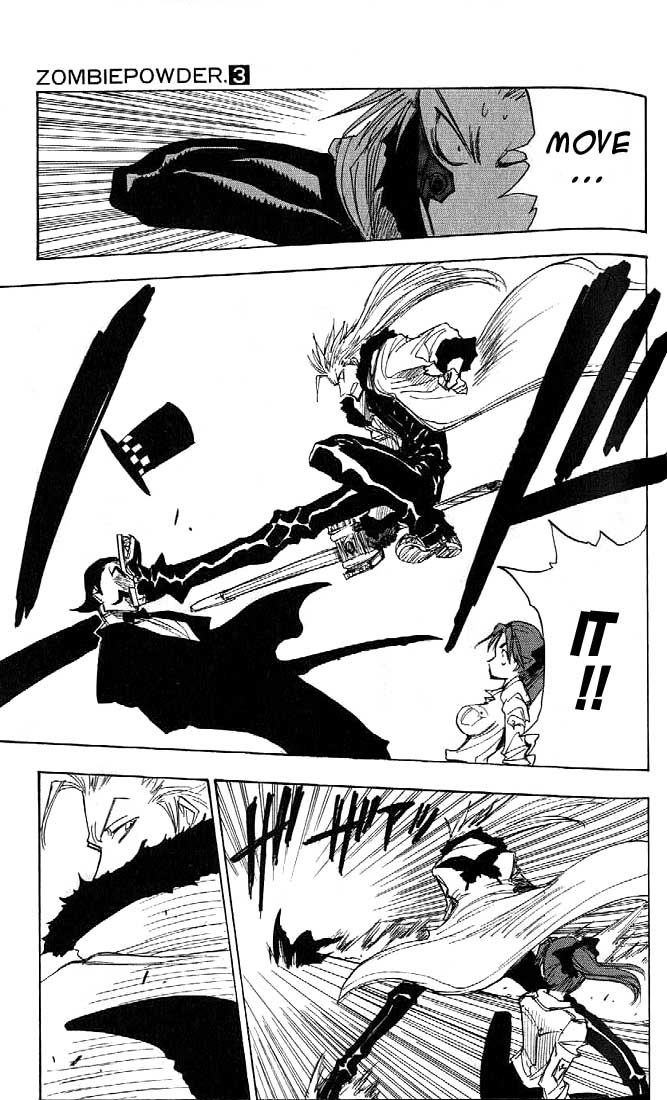
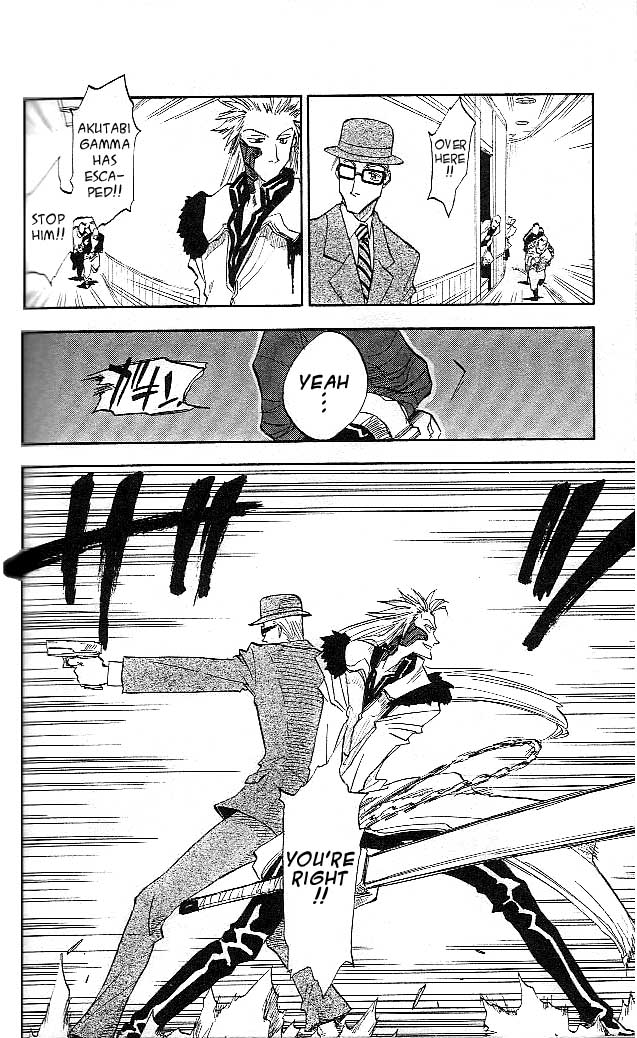
Kubo’s artstyle and linework have always been immensely stylish. Even though I have never seen or read much of Bleach, I can tell you that his design is instantly recognisable and very pleasing to look at. Clothes are wonderfully designed and fitted, characters have sleek shapes and sharp features, and the action makes it all shine with simple to understand panelling and framing.
x11

x17 (1)

x18

Simple, clear, and straight to the point.

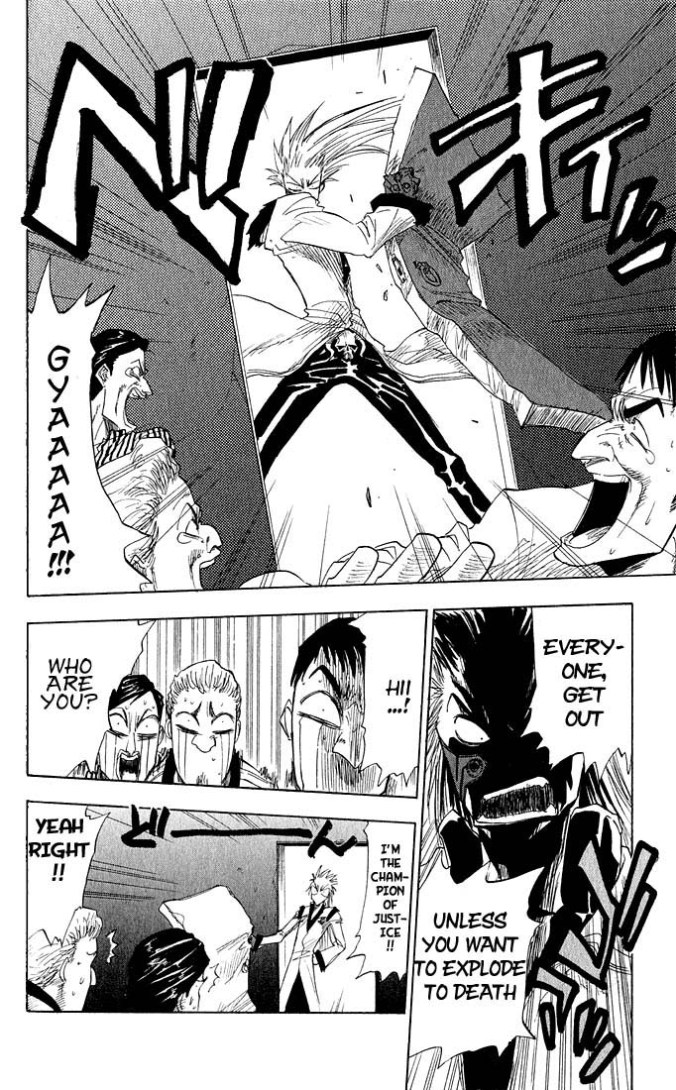
The tone of the series alternates between “serious” and “goofy” quite easily, and the characters can carry it as well. The more outlandish moments serve as nice breathers between the onslaught of action.

x37

From serious busting through a wall…

x9.jpg

…to silly busting through a door.

And there is A LOT of action in Zombiepowder, the series consists of battles pretty much every chapter, and – surprisingly – it works! Characterisation is interwoven with the respective fighting styles of the protagonists, everyone with their own strengths and weaknesses. Cool stuff happening with cool people, nice.

Gamma Akutabi’s design, the silver hair and coat, together with his chainsaw sword and later magic use was a design I particularly loved, and sadly it had to go too soon. He could have been a classic Shonen protagonist to stand alongside others, even with the slight accusations of Kubo taking too much visual inspiration of Trigun and Western/Mad Max settings à la Fist of the North Star and Battle Angel Alita.

xff46

That’s rad.

While I recommend reading Zombiepowder to everyone, it’s going to be interesting what you take away from it.

It’s pre-Bleach, opening itself up to comparison, but it’s also its own thing of a young upcoming artist trying to find his voice.

It’s also a short Shonen riddled with strange decisions, as Kubo says in the behind-the-scenes: This was his first work in the magazine Shonen Jump, and he was under “great emotional trauma” while drawing Zombiepowder – due to the crushing workload of having to produce a chapter each week, and due to him not knowing how to communicate with his editor, sometimes taking decisions he didn’t want to, accepting them without discussion.

The manga ends abruptly as well, it manages to round off its first arc, and then suddenly introduces three finishing chapters with many new characters and a sort of style-breaking feeling. While I was not a fan of how it leads to the ending – it leaves two protagonists behind in an uncertain path and has some questionable character designs – it does leave on a nice, if short bitter-sweet note.

If you wish to read Zombiepowder, I will recommend the physical release in 4 volumes, as it comes with a lot of making-ofs, other early Tite Kubo manga (which are all worth of analysis as well), special artwork and even a playlist of music for every character in the manga. Hey, I didn’t knew Kubo liked Rhapsody, an Italian powermetal band, one of my absolute favourites!

Conclusion

Essentially, this manga is a great stepping stone into a genre that Kubo would help to shape, and a short fun romp by someone who would later on do great things. To my personal shame, I must confess that Zombiepowder was the reason I put off Bleach for a decade: Gamma Akutabi and his gang were so energetic and fun, that Ichigo Kurosaki and his friends paled for me in comparison. Given, of course, that I had only read the first volume of Bleach, but alas, I was having more fun with this Wacky Western than Supernatural Highschool.

10 years later, it’s still very fun, even if a bit wonky in retrospect, and I will check out Bleach soon, it’s about time I reckon. And while I do that, walk the path into the other direction, and check out Zombiepowder, and see how you will like it. It may not be your new favourite, but it will be a powerful time capsule to rediscover.
x3 (3)

The End.

Sources: Zombiepowder Wikipedia, Zombiepowder making-ofs (Physical Release, Tokyopop)
MANLY MONDAY – “Thumper” That Inescapable Lovecraftian Rhythm Violence

thumper_cover_loop.png

I love rhythm games. The combination of music and gameplay that comes together with precise timing and satisfying crispy button presses is always great fun. It can make your adrenaline rise like nothing else, make yourself dissolve into music, thinking only about keeping and following the rhythm. And once you succeed at a very hard level, you can relax and marvel how you even made it through that onslaught of notes.

Quite a few games have accompanied me in the past, some even right into the present, Donkey Konga (with bongo controllers!), Elite Beat Agents (basically Proto-Osu!), Love Live School Idol Festival (my first entry point into the Love Live franchise, don’t look at me like that), Final Fantasy Theatrhythm (Why is “One-Winged Angel” DLC?), and Audiosurf 1 & 2 (which let you play your own music!). It is a little dream of mine to own a Dance Dance Revolution arcade machine one day, as I ever saw them in films and my country doesn’t have arcades – and people who know me in real life know that I will immediately play it if I encounter one. I’m not super good at DDR, but, goddamn, do I love it.

Once I saw the trailer for this specific game here last year ago, I was interested. It looked sort of like Audiosurf, but more intense, far more intense. However, it just trickled to the back of my mind to stay there, not a huge wish to immediately pick it up, but maybe I would give it a shot one day. And as one Steam sale rolled around, I finally bought it for myself.

It was a trip I had never experienced before.

437132-Thumper crystalline

The game was called Thumper. You are a little metallic space beetle, rushing along a single path in an unknown galaxy. Little spots of light are on your track, you press a button to hit them with a shockwave. Some metallic barriers will spring up in curves, so you need to lean in with the control stick to not frontally hit them. And sometimes, laser barriers will get into your path that you must speed through while holding the same button. Essentially, all you need it a control stick and a button. These obstacles follow the same rhythm as the music, no problem. It’s one big track separated into little segments, you can even quit midway through a song and return at a later time. As simple as that.

Or so one might think.

This world is visceral, dark, haunting and fast. Two hits and you’re dead. When you hit a curve barrier or a laser, your metal wings get blown off, leaving you only with your riffled little beetle body whizzing along a nightmarish highway through space. Of course, you get your wings back if you finish a section of a level, but it puts pressure on you. You want to protect yourself and your beetle. What your beetle does or what they feel, but the goal is clear: forward. The only way is forward for you and your space beetle.

And the most driving factor of your quest forward is the music. Although, can it be described as music? I had extraordinary fun with Donkey Konga and Elite Beat Agents, as they feature songs from Earth, Wind and Fire, Queen and even Smash Mouth, all songs you recognise and can sing along to to your heart’s content. They make you tap your foot and bop your head to the music, and they will be earworms for the rest of the day!

Not so in Thumper. You cannot sing to Thumper.

The music is a beat, from ‘calm and eerie’ to ‘loud and clanging’, and you are building on the beat by interacting with the obstacles that come at you: barriers make a “clank” sound and “swoosh” past you as you lean so far into the curve that the rear end of your beetle touches the wall for a second, the spots of light go “booom” as you give them a shockwave, and the laser barriers break with high “click click” sounds. To that, once you notice that you can spread your wings to fly, a risky but rewarding move, you can add “ding ding dings” as your metal wings break little light arcs above the track. And once you manage to successfully fly and land from soundwave to soundwave spot, you smash downwards with a satisfying “FOOOOMF” that even makes your screen go into slow-motion for a second.

To all of this rhythmic noise in time signatures foreign to untrained ears comes the background – a deep, heavy sound carpet that spreads all over, a dissonant and intimidating soundscape that does more than just to amplify the empty space you fly in. You notice it, this is more than just a long metal highway through the galaxy, it is something else. And as the track suddenly grows insect-like legs and narrow geometric tunnels that close in on you, the doom orchestra in the background doesn’t stop with its loud drums and haunting strings, all it does is pushing you forward, forward, forward – towards what? What is the goal? What is the purpose? The bosses are too big to understand, too strange to grasp, fighting in ways you need to analyse to survive, twisting, disrupting, blocking your path, that never ending path hurtling towards them. You need to follow the beat to continue. The droning beat dictating your heart.

thumper4.png

To make a long story short: Thumper is a lovecraftian rhythm horror game.

“Horror” not the sense of spooky imagery or jumpscares, “horror” in the sense of existential dread and the fear of not knowing what will come next. New types of enemies may appear, the music might change, or tunnels might block your view, pushing the reaction time further down. All with that fast and immense pressure of timing, understanding and reading in a matter of seconds. The visuals in combination with the music alone are haunting, putting you in a state of alertness, but what is the true kicker is the gameplay, which merges perfectly with the rest – creating one cohesive dark beauty.

This game is difficult. The learning curve is steep, but it remains always 100% fair. If you died, it was absolutely your own fault for not reacting in time. Every obstacle is clearly telegraphed, not only with a distinguishable colour and look (sound spots are blue, barriers are red-silver and appear vertically, lasers are red-only and appear horizontally) but also with a sound. Barriers come up with a big “clack“, lasers shoot in from the side with a “clink” and enemies slither in with a “shhhhh” or intimidate you with a loud “BWAAM“. Combining with all of these sound words I already described earlier: That’s a lot of noise. Noise that becomes music. Noise that is useful.

I have talked a lot about this game now, and haven’t actually shown you any gameplay footage yet. Take a look at the trailer:

It’s an onslaught of information, strange imagery and rhythmic loudness that wants your full concentration and focus. Game marketing loves to talk about “immersive gameplay”, but I have rarely seen it more fitting here. The game draws you in with its carpet of noise, the ungraspable atmosphere and quick, unforgiving, but fair judgement of your skills. As I said, the game is fair, the learning curve is steep, but it never feels disheartening. This game pushes you to go forward, forward, forward – the same way your little beetle goes forward, forward, forward. And the only way to do that is to simply ‘git gud’.

I only played it with headphones, which I highly recommend, and there is a VR version available as well. From what I’ve seen in other reviews, this version is even far more intense, and my head-phones-only adventure already was. You will be frustrated, you will put the controller down, only to return after 2 minutes, as the noise and the lights draw you inside again. You will scream, yell, be relieved, celebrate and curse a lot, and that’s beautiful.

Conclusion

Thumper is an intense game that I would recommend to everyone who loves fast and furious precise gameplay with strong immersion. It’s “short”, with only 9 levels, but you will have to bite and fight yourself through those, so I was entertained for a few weeks. Post-game contents include world-wide leaderboards, highscores and rankings, and you will love to return to it and be astonished at how fast your accumulated skill crumbles apart again.

The “story” is simple, if there even is any, and yet it managed to surprise me in the end with one of the most memorable and gameplay-bending end bosses. Any game that can make me have my jaw fall to the ground in surprise and dread is a great one, and Thumper managed it several times.

If you like rhythm games, this one is a must-play for you, for everyone else, this is a trip you should not miss out on. Dive into the lovecraftian world of noise and loudness, and fight your way forward and ever forward.

3138612-thumper-screenshot-boss-hit-ps4-us-5jun15

To infinity and beyond.

The End.

MANLY MONDAY – “Vermin” French Animation Goodness with Buddy Cop Insects

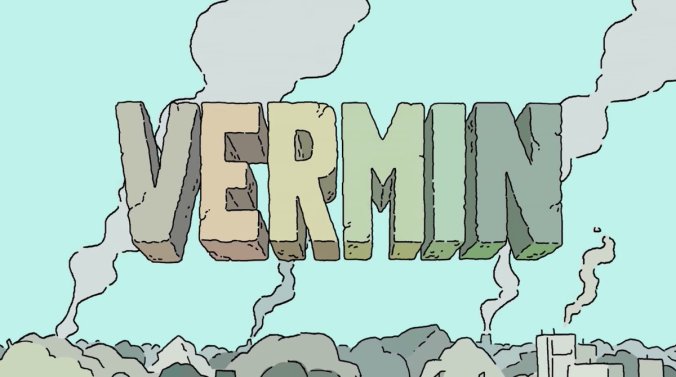
title.png

When talking about “Modern Animation” today, the focus tends to be predominantly on North-American and Japanese productions. But outside of this massive circle are other international productions that are absolutely worth of your attention.

One of these are the works of Balak and Studio Bobbypills (former Bobby Prod), a studio specifically setting out to do adult animation. In this case, “adult” meaning crass, explicit humour, satire and imagery, with the intensity and directness of an oncoming truck.

Previous works from the same staff include Les Kassos (or “The Wakos” in English), a French webseries about many popular pop culture figures trying to solve their problems with the help of a social worker.

For example: The Teletubbies fighting their drug problems, Han Solo not being able to cope with his father-in-law Mr. Vader, or Ash Ketchum getting into trouble for animal fighting, and many, many others. While these sound like classic jokes or “dark” concepts that have been already done, it’s the fast and direct presentation with snappy dialogue and impeccable comedic timing that makes these little skits shine. Especially the wild character design remakes which can go from parody to the straight-up grotesque, are fantastic highlights.

From “Star Wars” to “Game of Thrones”, over to “Teenage Mutant Ninja Turtles”, the “Smurfs” and “Astérix & Obélix”, you will find everyone in “Les Kassos”.

The whole series of Les Kassos can be found for free on Youtube, in French with English subtitles, or on the free Blackpills App in an English Dub. Three complete seasons exist, and they make for a very fun and highly inappropriate romp through nostalgic properties and through your laugh muscles.

So, what if this team sets out to do a new series that is not a sketch show, but an adult drama with original characters? Let us look at their newest production: Vermin.

DbOgjTMUQAAO1BE

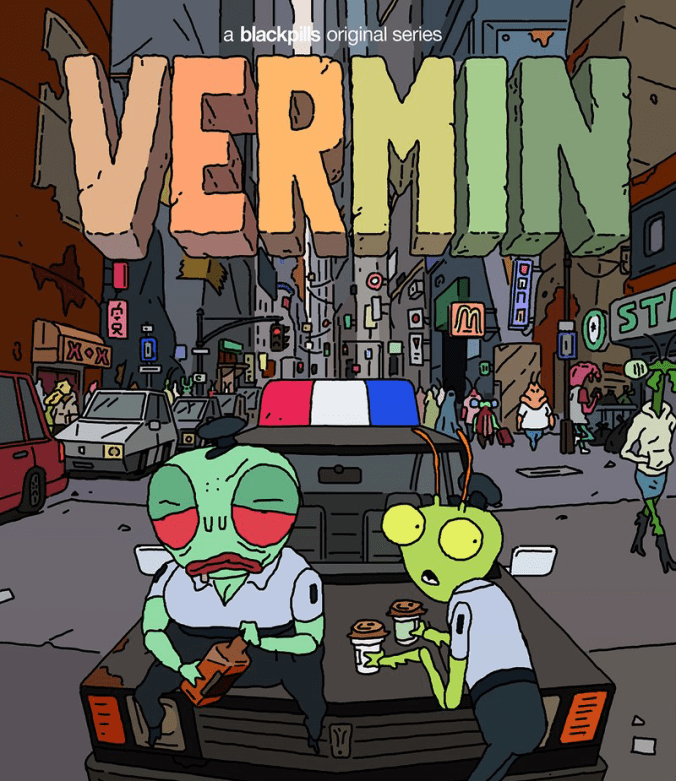
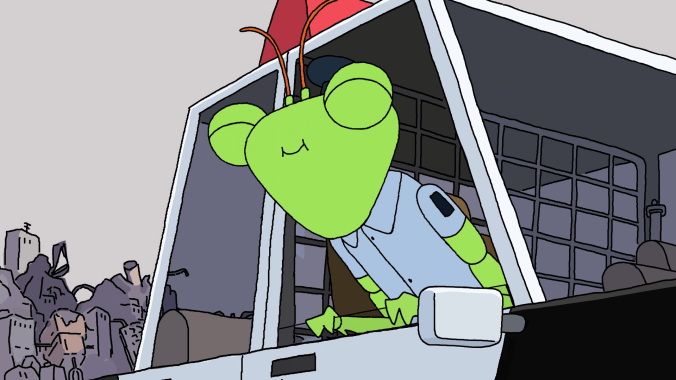
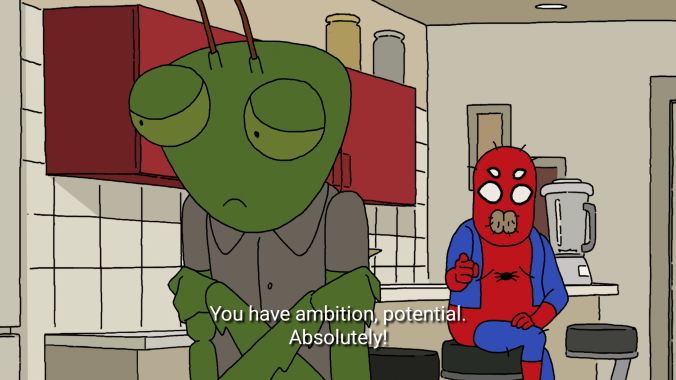
Vermin is the story of Mantos, a young praying mantis, who is finally old enough to start his job in the big city. Saying goodbye to his family and beloved fiancee, he is ready to walk into the foot steps of his father before him: to become a proper police officer.

Screenshot_20180425-003657.png

So young, so innocent.

And so, he embarks on his adventure.

Then all goes wrong.

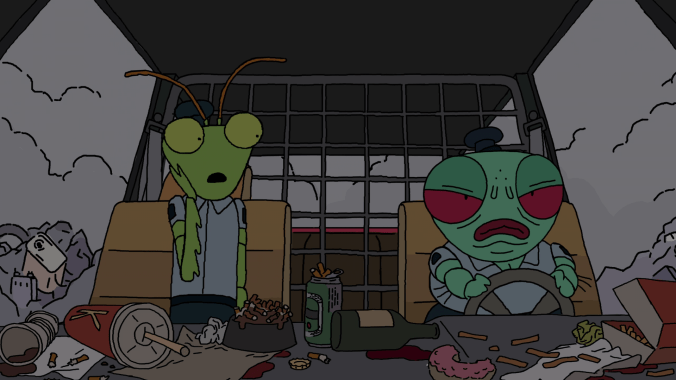
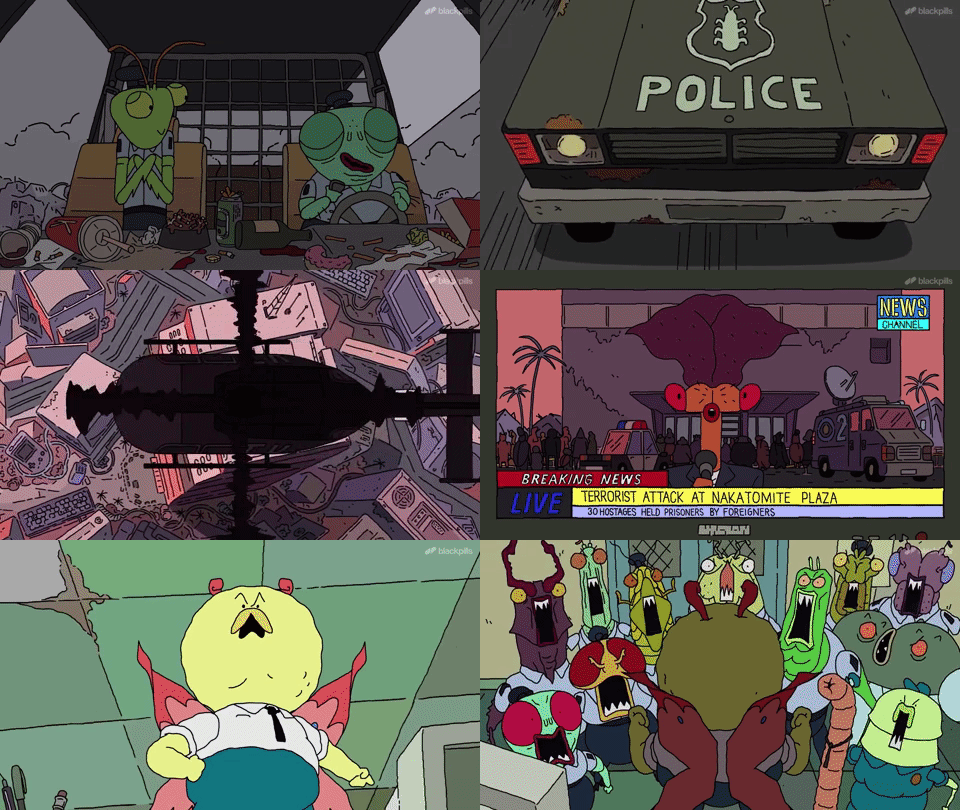
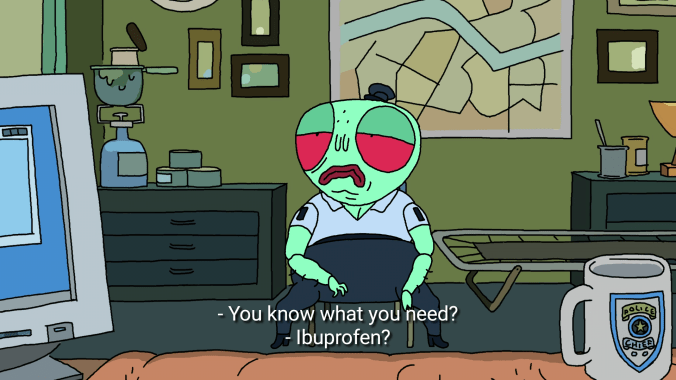
As it turns out, the big city is rough. Gang wars, prostitution, violence everywhere, decaying cityscape, crumbling society and his co-workers are a equally tough bunch. He is paired with Shermock, a fly, middle aged hard-drinking lady with a shady past and even shadier mindset.

Screenshot_20180425-003711

They don’t get along, really.

As these two worlds crash, this unlikely duo of Mantos and Shermock must solve cases, stop crime and grow together as a team, in 10 episodes, each 8 minutes long.

It is essentially the set-up for a classic buddy cop film, however, the two main characters are splendid. Especially refreshing is the middle-aged lady Shermock as a lead, who has seen far too much in life, and who has her own arc, together with Mantos, who in return must learn to be strong in this harsh world. The duo goes through many episodic adventures, with re-occuring characters and many different cases, from abductions to robberies.

While this still sounds like your standard cop story business, it’s the presentation, detail and care that his been put into this series that makes it shine brightly.

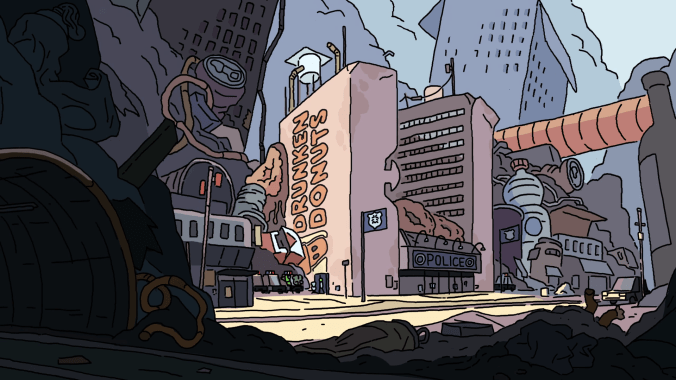
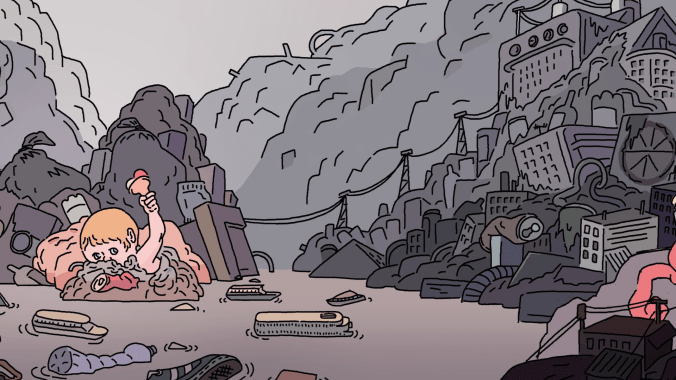
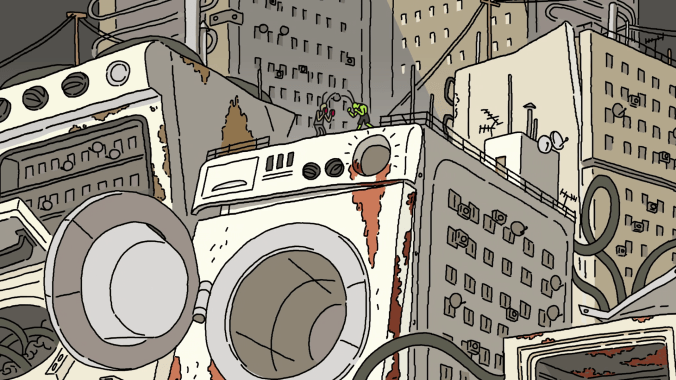
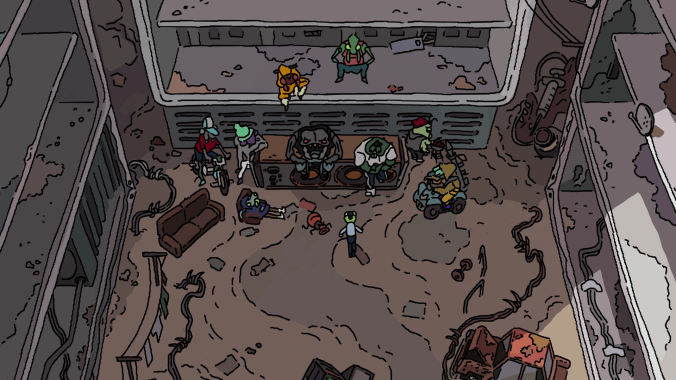
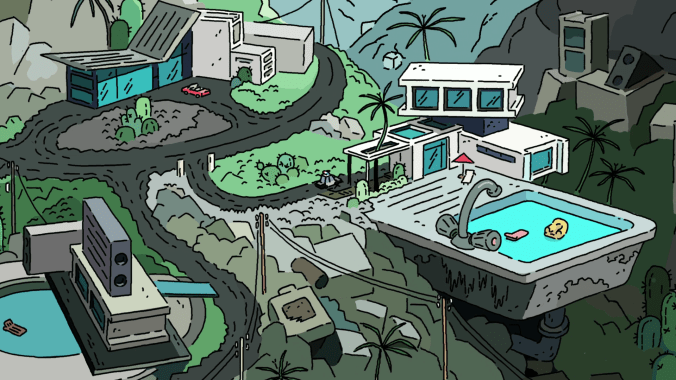
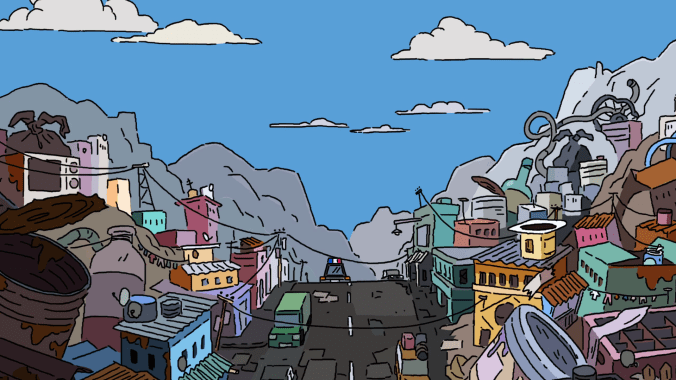
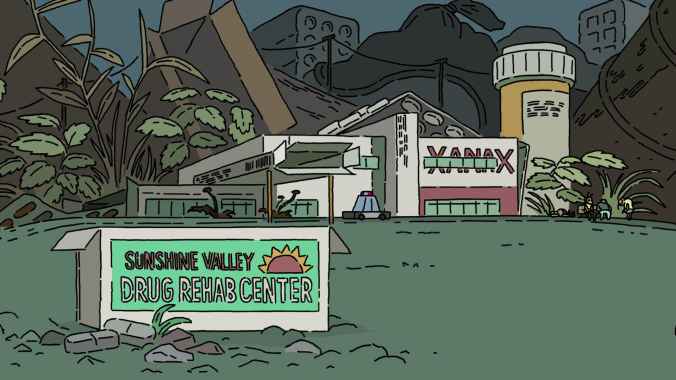
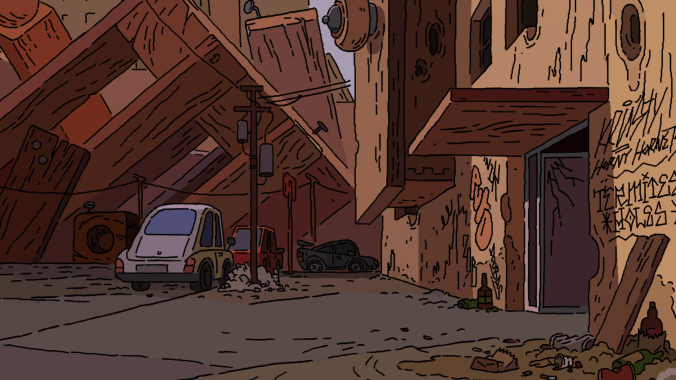
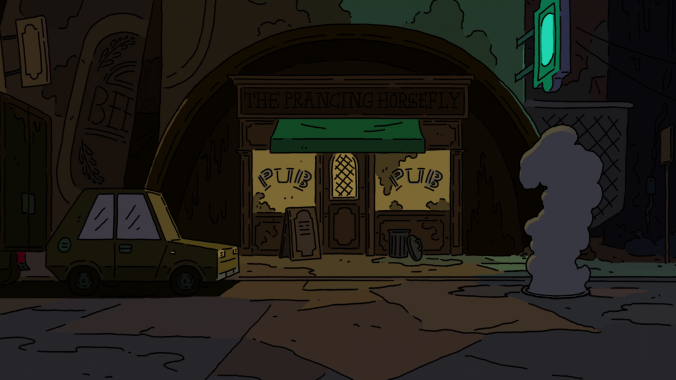
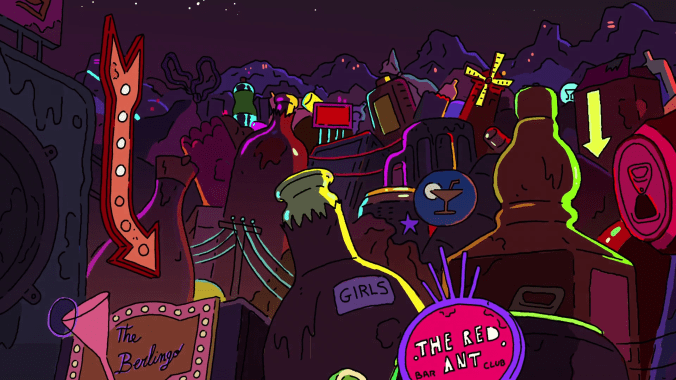
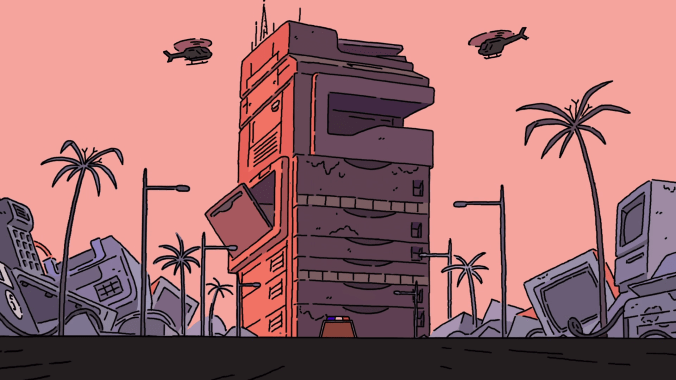
First of all, the art and animation. This megalopolis of insects has a unique and creative design of thrown away household items and trash, with many backdrops and fittingcolour choice that feel all unique, dirty and run-down at the same time: The worldbuilding and backgrounds are simply amazing.

Screenshot_20180425-003608Screenshot_20180425-003646Screenshot_20180425-003830Screenshot_20180425-003924Screenshot_20180428-180214Screenshot_20180428-181300Screenshot_20180428-181803Screenshot_20180428-182055Screenshot_20180428-182311Screenshot_20180428-183734Screenshot_20180428-183810Screenshot_20180428-184444

These backgrounds are fantastic highlights.

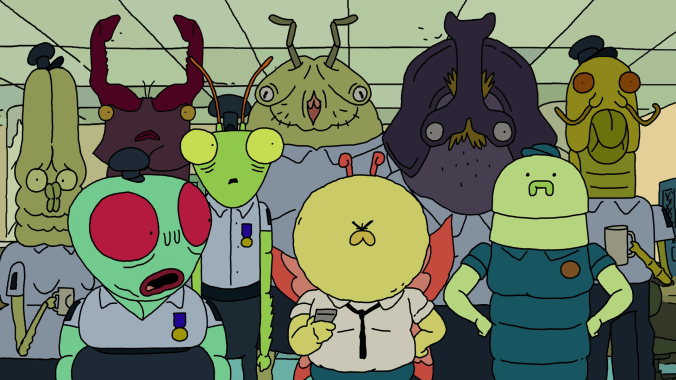
Same goes for the inhabitants of the city, who are mostly insects, some are smaller animals, like scorpions or snails for example, and some are pure original designs, where you can feel different animal elements coming together. In short, the visual design is unique and worth it, and fits the darker humour and adult themes of the story.

Screenshot_20180428-184408.png

The Police Department, many shapes and forms!

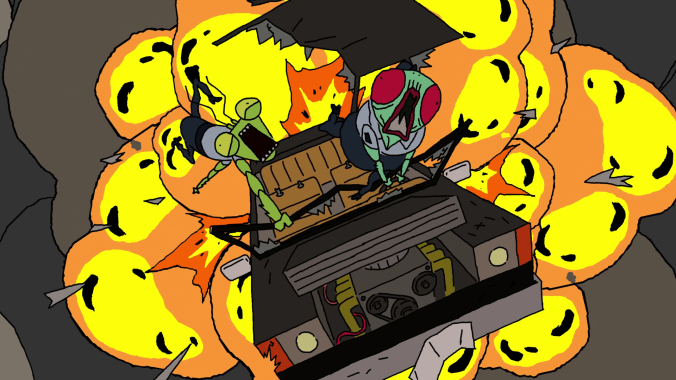
Not only is the artstyle of this series fitting, but the animation as well. The style is reminiscent of Les Kassos – however, while their previous series only dealt with one static POV camera as a stylistic choice, Vermin has the complete added benefit of being a buddy cop film, with fantastically framed and choreographed action scenes, which I won’t spoil here.

The animation seems to run on carefully chosen keyframes with not many inbetweens, giving a choppy feel to the look, but this is used to great effect, most notably in the comedic timing and immense speed of the action. Movement feels rapid, fast, frantic, and so energetic, that it brings the whole cast to life. Together with the “ligne claire” style of Franco-Belgian comic that date back to Hergé’s “The Adventures of Tintin” and its bold colour choice, it feels clean, snappy, and very satisfying.

giphy (1).gif

Movement makes a difference! (Source: Trailer)

There is, however, another thing that I must point out when approaching Vermin: Similar to Les Kassos, this series humour is dark, crass, on-the-nose, and to a level it will offend someone somewhere. We are talking full on NSFW scenes in nightclubs, crass language, alcohol and drug abuse, a high amount of graphic violence, and dark adult themes.

Screenshot_20180428-183747

A random tweet on my timeline brought me to this series, and it described Vermin as “a mix of Zootopia and Devilman crybaby” and this is quite fitting on many levels.

For one, the small town character going to the big city to become a great police officer and the city of animals setting feels very Zootopia, but it is the Devilman crybaby part I wish to elaborate on.

Masaaki Yuasa’s Devilman crybaby, a Netflix exclusive anime that aired in early 2018, was a new adaptation of Go Nagai’s classic manga Devilman from 1972. It built on the source material, putting a new modern spin on a long-running franchise, with many NSFW and explicit scenes of violence and sexual content – fitting for the equally groundbreaking source material.

However, this was mostly only possible due to this anime series being a web-exclusive. All of this content would have been omitted or adapted differently if it had to conform to the rules and restrictions of TV productions. With the freedom of being a series that doesn’t need to change itself in order to be broadcast, the creators can act with complete liberty in their own visions and ambitions. And this is a great step in animation, reminiscent of the times when hyperviolent OVAs could flourish in the 80’s and 90’s, simply because they did not run on television. Hidden behind a paywall, behind a VHS back in the day, and behind an app download or stream service today, they can do however they please. And this artistic freedom that allows for unique, new and surprising projects.

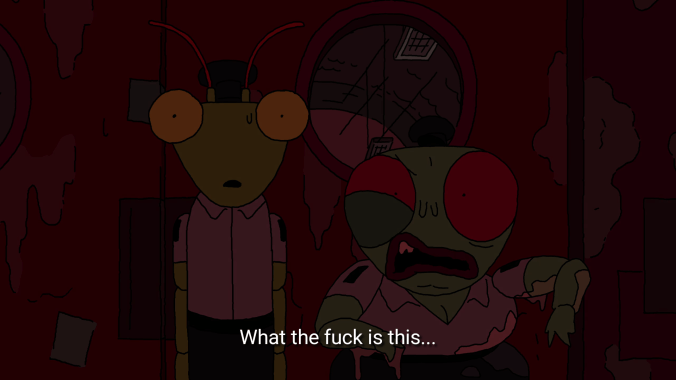
Just make sure that you know this going into Vermin. This show can get very intense and dark. And very, very explicit. Very much.

Screenshot_20180428-180427.png

Nope. Can’t show that here.

If you can deal with the direct approach this series takes to everything, you will have a fantastic time. The characters are endearing, the dialogue is snappy and fast, the action is intense and strong, and the comedy will have you in stitches.

In this raunchy, violent world are characters that look out for each other and try to do their best, even if their friendships start off on the wrong foot. Mantos is a great main character, one who has to grow and learn, and Shermock has to overcome her bad habits, sombre past and terrible lifestyle.

Screenshot_20180428-175554.png

Mantos. Young and inexperienced.

(Spider-Spider gives support. He is a superhero spider. Spider-Spider. Swings around with his butt.)

Screenshot_20180425-003517

Shermock. Shining justice.

Screenshot_20180425-004044

Mantos and Shermock. An unstoppable team.

Vermin is a great production by Studio Bobbypills that you should check out if you are even remotely interested (and if you have no problem with raunchy, violent and intense imagery). With its short runtime of 10 episodes à 8 minutes, you can easily binge the series in one or two days. Vermin is exclusive to the app Blackpills, a new streaming platform for short webseries, which is free to use, with only one or two 5-second ad breaks inbetween.

On the question of which version you should watch, there is a French Dub, an English Dub and a Spanish Dub, which you can all combine to your heart’s content with a plethora of subtitles, ranging from German, to Italian, to Arabic.

I watched Vermin in its French Dub with English subtitles, as it had the added benefit of a few re-occurring stellar voice actors I already knew from Les Kassos. I especially wish to praise French female rapper Casey for her performance as Shermock, who really breathed her character to life with her rough charme and deep lovable voice.

(I looked into the English and Spanish Dubs as well, and from a first impression, they sound absolutely fine to me too. Down below I have linked all three trailer versions, you are free to choose, as you can put your favourite subtitles under any version whatsoever.)

Conclusion

Vermin is one of those series that nail the premise of: “It’s not for everyone, but if it’s for you, it’s for you.” Not many comedy series can make me laugh so hard that I fall into a minute-long coughing fit, and I highly respect Vermin for that. In the end, it even felt too short, this series could have easily been full-length instead of short-form, as I wanted more of this world, these characters and their adventures. The finale was surprising and a bit abrupt, but fitting, and I certainly would be immensely happy about a Season 2.

Studio Bobbypills, (especially director Alexis Beaumont, producers Hafid F. Benamar and Balak) really have produced a little gem here that deserves more praise, coverage and spotlight. I had a ton of fun, and I will rewatch some of these episodes as they make me laugh hard, and more than once. As I said, if you are interested, check it out, and if not, at least keep this studio on the radar – they will do some more great productions in the future, I can already feel it.

The End.

ENGLISH TRAILER:

FRENCH TRAILER:

SPANISH TRAILER:

Sources: Wikipedia entry “OVA”, Vermin IMDB, Bobbypills, Bobby Prod [1 2 3 4]