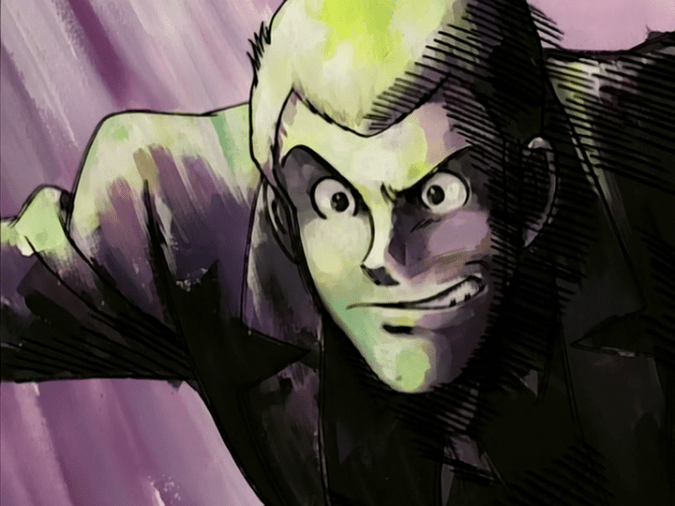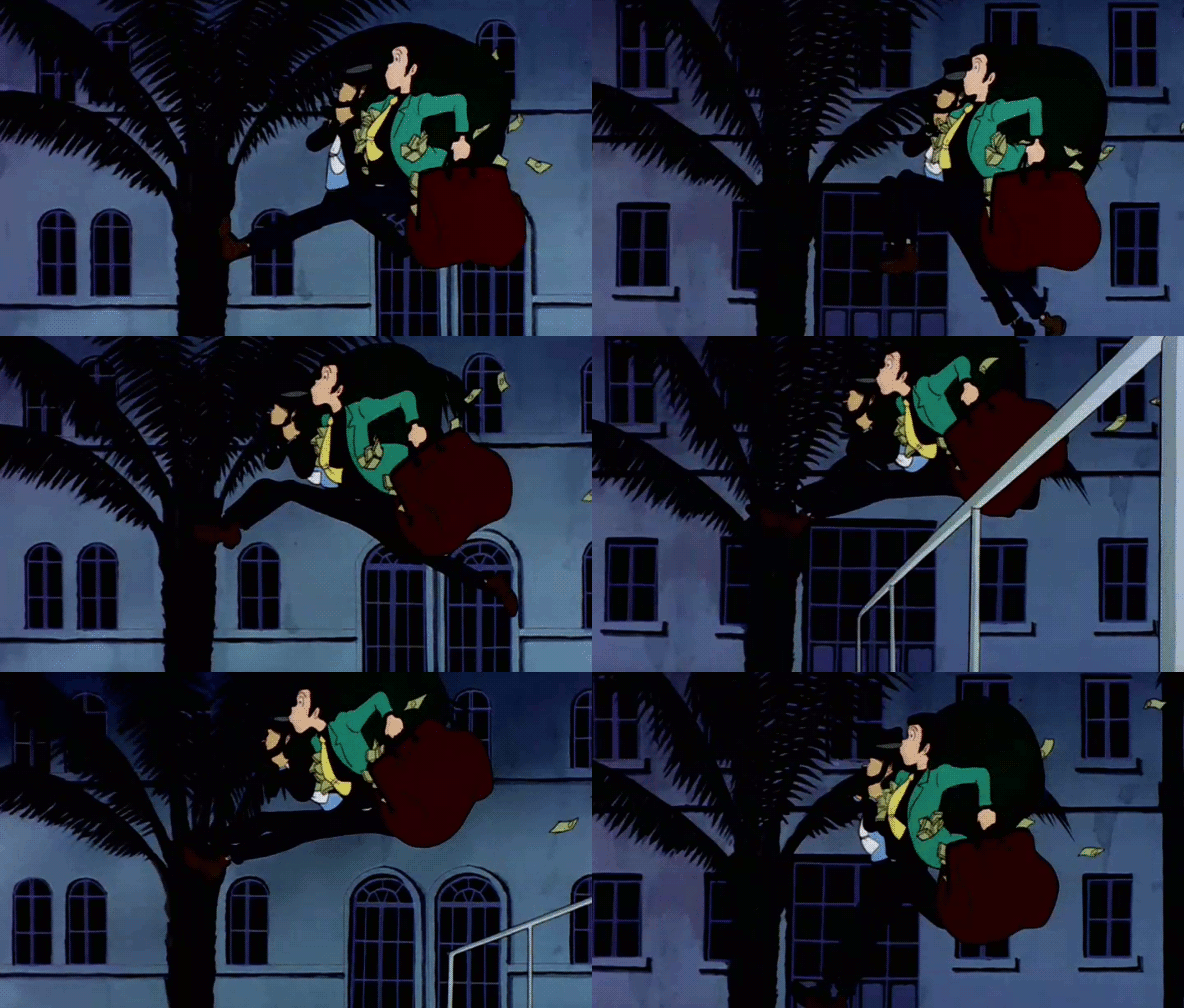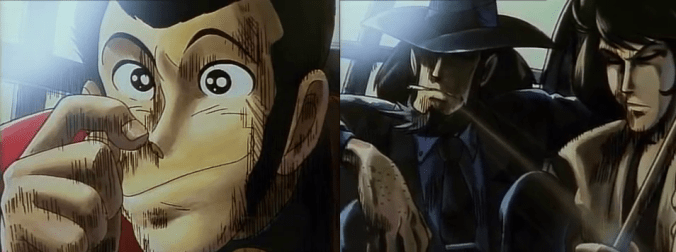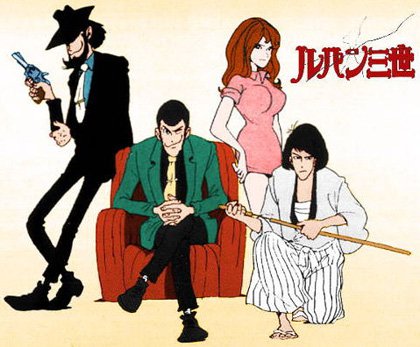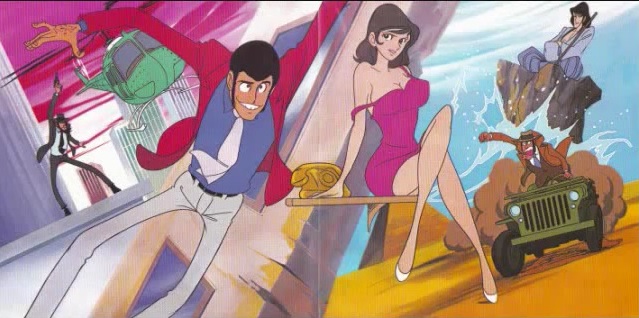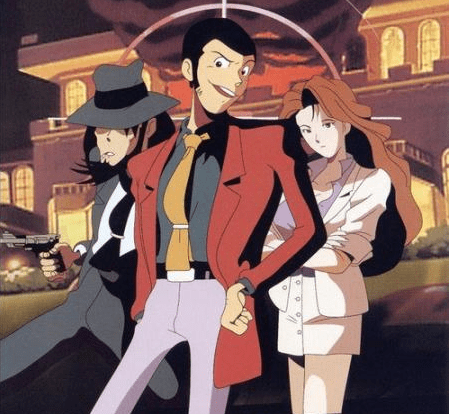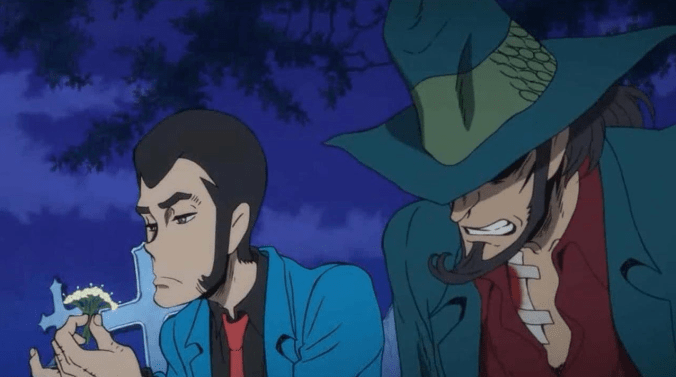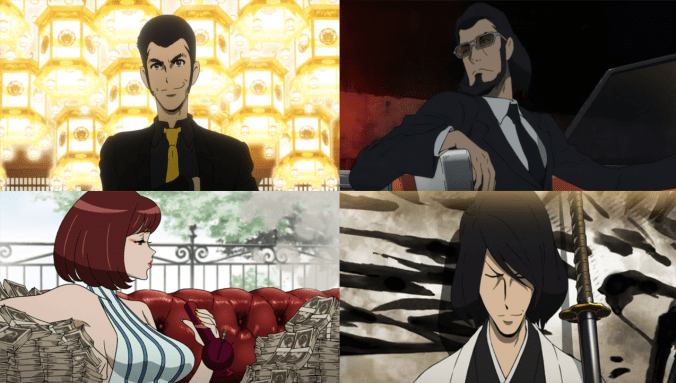
MANLY MONDAY: “Lupin III Episode 0: First Contact” – A Heartwarming Reboot Prequel

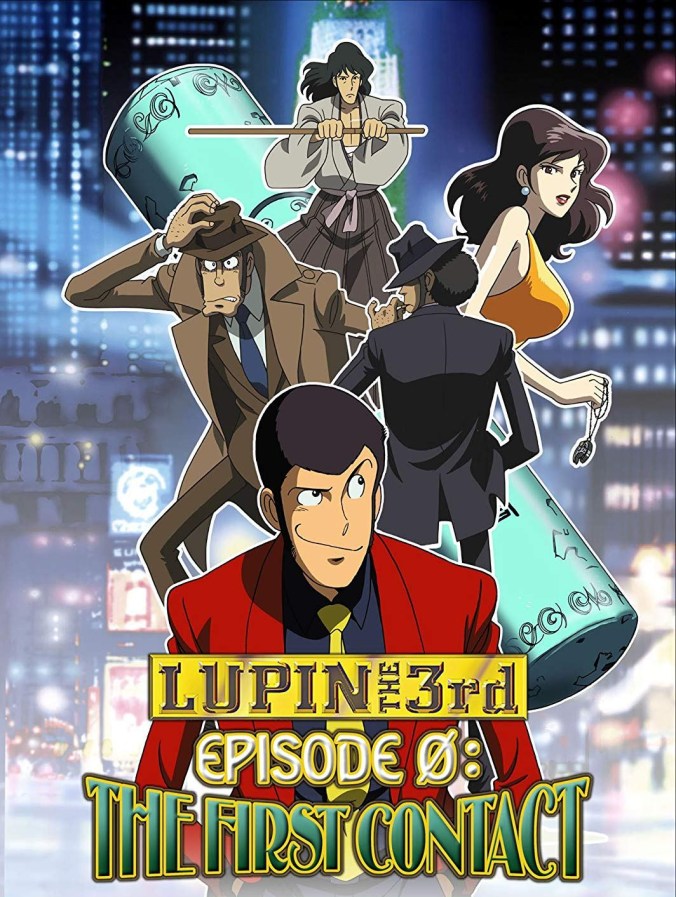
81gssjgkzpl-_sl1500_.jpg

The beauty of the Lupin III franchise is that it has so many diverse entries over the last five decades that you are bound to find the one that fits your taste perfectly.

However, the sheer number of works can seem overwhelming for someone looking in from the outside. Where do you even start with a series that strong in numbers?

I will shed a light on this in this special LUPIN MONTH of September 2018, where I present little gems and oddities from the franchise that can all be enjoyed without previous knowledge. I covered Takeshi Koike’s two films and the 2015 Part IV TV series already, but want to diver deeper with you all to explore this wonderful world.

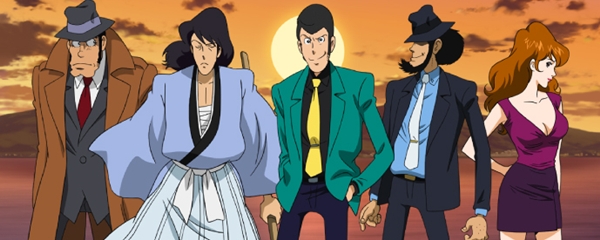
The status quo is always the same in all entries, making it accessible to everyone once you got the characters down: “Lupin The Third” is happy-go-lucky thief, “Jigen Daisuke” is a gunslinger with a 0.3 second quickdraw and is his partner in crime, “Goemon Ichikawa” is a stern samurai with a heart of gold who helps them, “Fujiko Mine” is Lupin’s love interest and thief rival, and bumbling “Inspector Zenigata” is always on the prowl to catch Lupin, in a never-ending game of cat and mouse.
82

From left to right: Zenigata, Goemon, Lupin, Jigen, Fujiko.

Here is where some specific entries will stand out which give the backstory to this cast of colourful characters. In 2013, A Woman Called Fujiko Mine reset the canon and told ist own continuity in an adult setting, being a starting point for many with ist unique direction and artstyle. But before that recent adaptation, some others have also set out to tell the story of how the Lupin cast found each other. One of these is the stellar 2002 film „Episode 0: First Contact“.

vlcsnap-2018-08-25-00h02m33s738.png

In a smoke-filled pub in some dinghy backroad, Jigen Daisuke is asked by a reporter to tell the story of how he met Lupin. The young woman is interested in writing a book about their adventures, the publishers are already supporting the idea without her having any info yet – the people just want to know.

Reluctantly, he starts, and as he dives deeper into long-forgotten memories that come back into the light clear as day, an unbelievable story of friendship, love and death unfolds.
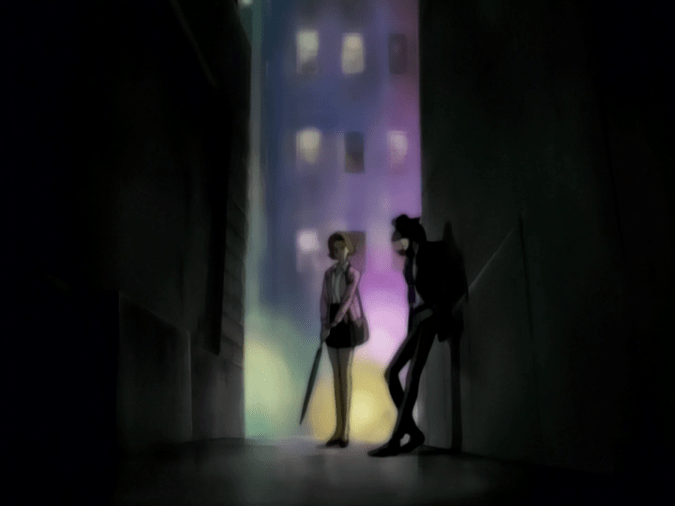
vlcsnap-2018-08-24-21h13m10s685.png

Going outside into the calm night, Jigen reminisces.

New York, many years ago.

Jigen is a hired gun for a high profile mafia boss, protecting him and his goods – Jigen’s life is calm and uninteresting. He is free to go wherever he wants to and earns good money, but the spark is missing.

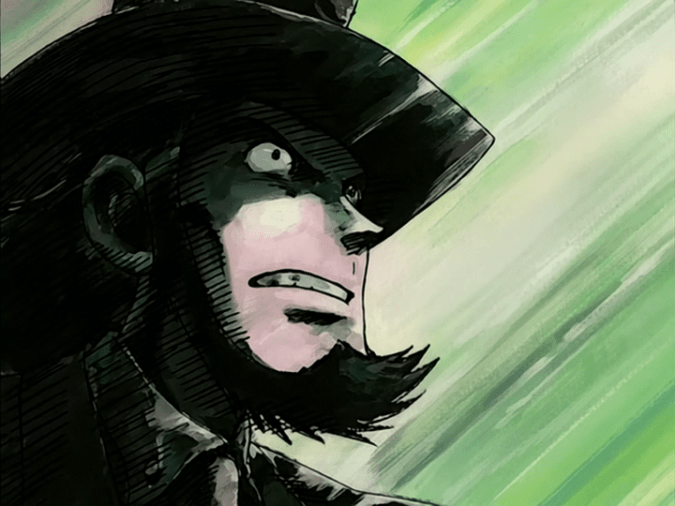
This changes one day as a man is breaking into the mafia boss’ villa, challenging Jigen for the first time in his career. He is playing with sneaky disguises and tricks, and manages to run away while dodging all of Jigen’s bullets. Jigen wins, the intruder is scared away, the boss is unharmed, the treasure in the safe remains untouched, but… Who was that man? One of the other henchmen responds: “That was Lupin! Lupin the Third!”

vlcsnap-2018-08-24-21h16m19s975vlcsnap-2018-08-24-21h16m23s104vlcsnap-2018-08-24-21h16m24s984

A short, but life-changing moment: Lupin and Jigen meet for the first time.

As it turns out, the treasure Jigen has to protect is quite valuable: It is a metal tube, called the “Cram of Hermes”, and inside it is the alchemy instruction to create one of the hardest metal substances ever, however, it can only be opened with a special key. And for different reasons, everyone of the core Lupin III characters will be involved around this object.

Essentially, we see how the original cast gets together: How Lupin and Fujiko find each other, and even see them interact as a romantic couple – which is very wholesome and a rare sight, as Fujiko is the on-and-off girlfriend and rival of Lupin. Goemon makes his appearance as well, Zenigata builds his passion of hunting Lupin and Jigen learns to accept the friendship of Lupin.

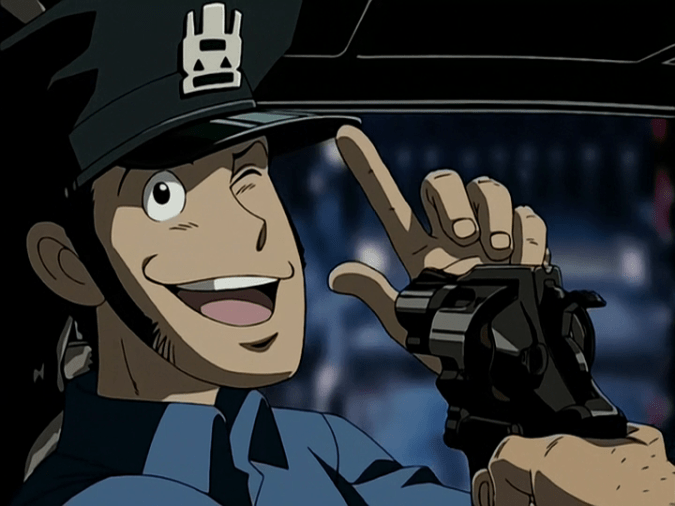
This will all be woven into one big fun adventure – involving bank heists, chase sequences on highways, in subways and even on water, and of course many hijinks, disguises and plans to trick one another. This is a very fun film that also takes time to unwind in some scenes, finding a great mix between “bouncy” and “chill”.
vlcsnap-2018-08-24-22h35m54s433

Fun for everyone!

Themes and Execution

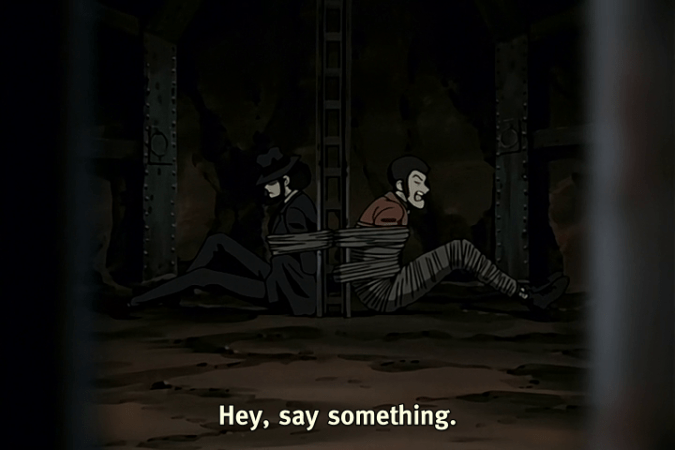
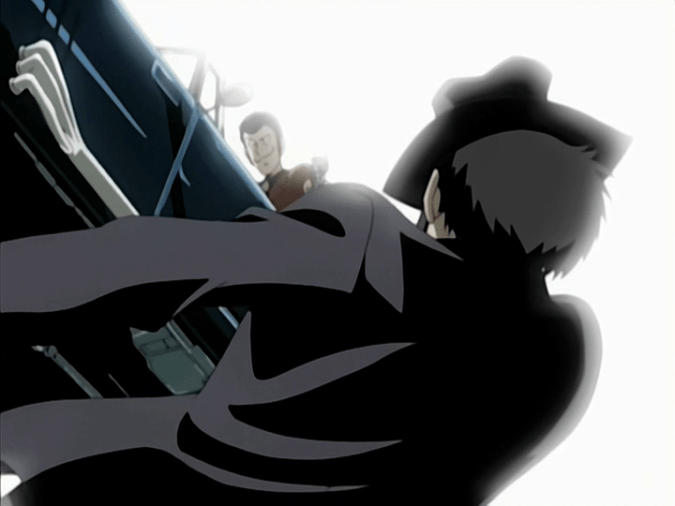
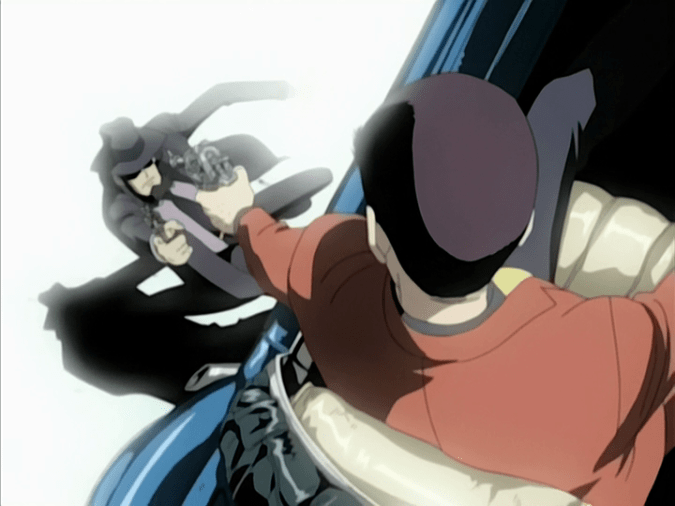
Lupin and Jigen form the thematic main axis of the film, two men who are destined to become partners in crime, but meet under conflicting circumstances, on different sides. While Lupin finds an immediate liking to his future friend, it is Jigen who is very reluctant and even dismissive of Lupin’s attempts of befriending him – resulting in many comedic and tension-filled scenes of action and banter.
vlcsnap-2018-09-10-18h42m09s226

vlcsnap-2018-09-10-18h43m32s045

If you pay attention, there is a charming reoccurring visual metaphor of Lupin trying to light Jigen’s cigarette on several occasions, (figuratively lightening up this partnership with a tiny flame), and Jigen refusing in many non-verbal ways: spitting out his cigarette, turning his head away to dodge the match or simply swatting Lupin‘s hand away.

To see this relationship grow from „deadly rivals“ to „bromance through thick and thin“ within a single film is a wholesome experience, and definitely a highlight in this movie.
vlcsnap-2018-08-24-21h31m02s129vlcsnap-2018-08-24-21h31m04s682

From foes to friends. But in the beginning, they are more preoccupied with trying to kill each other.

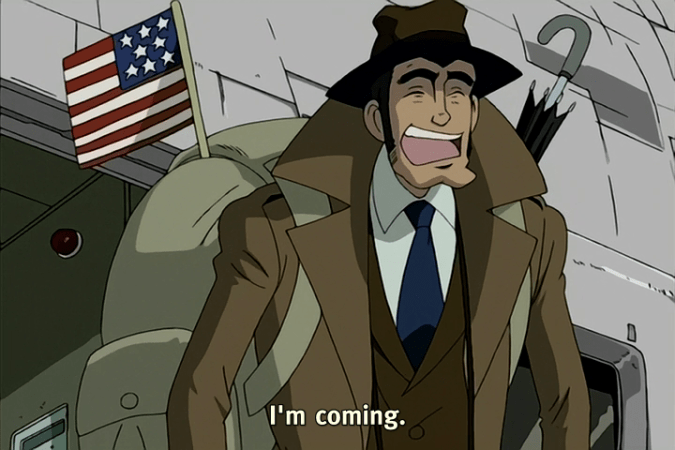
One of the most fun elements in the film is Inspector Zenigata. How does someone become so obsessed as to dedicate your whole being to chasing one single criminal? And especially: How was he before he found his purpose? Young Zenigata is a member of the Japanese police, and is sent to New York. It is here where his prequel-characterisation goes hand in hand with his position in the story, creating a fitting and fun substory that weaves itself into the main plot.

Zenigata is a capable police inspector – as he always loses against Lupin, he seems like a bumbling fool, he has to lose so that the protagonist can win. However, Zenigata is a police inspector, who later joins INTERPOL, so: This is a skilled cop right here. We might just not always see it.
vlcsnap-2018-08-24-21h41m59s156vlcsnap-2018-08-24-21h47m11s133

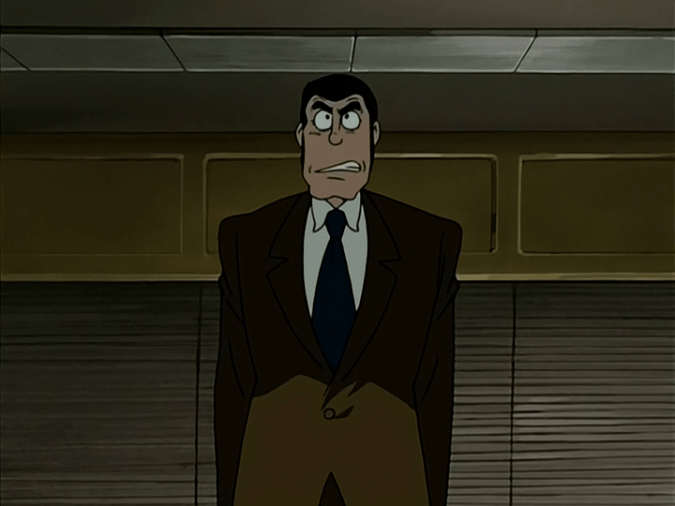
A young Zenigata dealing with the American way of doing things. There will be many culture crashes and yellings between him and his new boss.

Seeing Zenigata fight street crime and rigid US legal systems is a joy, and really shows that he deserves to be Lupin’s adversary. If the concept of “Zenigata vs. USA” sounds intriguing to you, then you could easily watch it for that alone.

This film takes place, as already mentioned, in New York City, and the metropolis looks simply marvelous. From well known sights to little back alleys, everything feels grounded, real and visually stunning. Together with the beautiful framing and storyboarding, this film is a beauty.

This slideshow requires JavaScript.

Here is just a small selection, I adore the overall “gritty yet warm” aesthetic.

There are people who are opposed to the early- to mid-2000s anime aesthetics, as it was a time where the 90s left, but the new zeitgeist hadn’t quite formed yet. Some anime from that time period hasn’t aged quite well in retrospect. However, Lupin III Episode 0 does not fall into the category. It wears its look with full pride and well-polished execution, showing no sign of bad ageing.

In addition to the visual flair, I must point out the fantastic soundtrack that accompanies this scenery. The Lupin III franchise always had catchy big band and jazz sounds and this is no exception: A great rendition of the main theme with a funky gospel-like choir makes for perfect opener and the orchestral sweeping scores that feel right out of an oldschool Hollywood film really sell New York as a setting.

Adding to the city’s melting pot status, two other additions were surprising, but more than welcome: A flamenco character theme for Jigen, and a bossa nova soundtrack for the whole film. The decision to give Jigen a dramatic acoustic guitar cue and castanets as a character theme is a perfect fit, making not only his appearances more dramatic, but give him a melancholic yet passionate melody, underlining his characterisation in the film – somebody who is stuck with an unsatisfying gangster job and who might need someone to pull him out to find his true call.

The bossa nova soundtrack, sung in authentic Brasilian Portuguese as well, gave the whole film a soft, laidback and immensely relaxing tone, underlining what the frame narrative already set up: it is the story of a late night reminiscence, of somebody recalling how they got to their point in life. The inclusion of these two Hispanic/Latin elements was a personal highlight for me, and made me very happy.

Have a listen here:

I was immensely smitten this soundtrack.

Conclusion

Lupin III Episode 0: First Contact is a heartwarming reboot prequel, that really delivers on all sides: fun character interaction, expressive animation, lovingly crafted backgrounds, and a great introduction for new fans. And even for older fans of the franchise, it delivers with its own lovely take on an established cast, and that is always fun to see.

With its comfortably snack-sized runtime of just 90 minutes and a lovely early 2000s aesthetic, it makes for a great adventure I would wholeheartedly recommend to anyone, be it old or new fan. It makes for a relaxing yet entertaining ride, so give it a watch when you feel like visiting the warm world of Lupin III in big, buzzing New York City.

vlcsnap-2018-08-24-21h22m43s643

The End.

LUPIN MONTH! For every Monday in September 2018, one more Lupin III entry!
MANLY MONDAY – “Avengers: Infinity War”, The Grand Finale 10 Years in the Making (SPOILER-FREE REVIEW)

dadd9e76fa61ca787557cf8ce6a7d8a1.jpg

Way, way back when I was a little kid in the midst of Europe, I didn’t grew up with superhero comics. My heroes were “normal heroes” with inseparable partners: Astérix and Obélix, Tintin and Haddock, Don Rosa’s Donald Duck and Uncle Scrooge stories, Vicky the Viking and the crew of his dad, or Alfred J. Kwak and his friends.

This all somewhat changed, when Spiderman by Sam Raimi hit the theatres, I must have been around 11 years old. I was just so fun! Spiderman 2 cemented that wonderful feeling, I went to see them with my childhood friend several times in the cinema.

The Spiderman 2 Gamecube game thus also holds a special place in my heart, not only for being a splendid game with a fantastic open world, but also for my childhood friend and me beating the final boss together. We both held the controller together, one pushing the button to dodge, the other with the punch button to wait for an opening to finally take down that villainous Doctor Octopus. What a wonderful time that was, to see the joined effort come together and to celebrate in the flicker of the end credits.

Many years later then, when I was in middle school, I heard of Iron Man in 2008, and I was surprised. There are even more heroes? And apparently they had been around for many decades? In comics? Like my Tintin and Astérix? My nostalgia was not for them, Spiderman was a lovely memory of my past, but nothing that would carry significantly into the present.

Iron Man and Thor were fun, the rest was so-so or didn’t even catch my interest, and when it was finally revealed that all these heroes would come together in a thing called “Avengers”, a name I had never heard before, I remember sitting in the cinema and muttering after the title came on screen: “Oh man, I would so laugh if this film sucks.”

I would be very wrong.

rFtsE7Lhlc2jRWF7SRAU0fvrveQ

Because it was very, very fun.

Avengers showed that the big superhero crossover was possible. Many heroes with backstories in their own films, then coming together in another movie, leaving time for the crossover event itself, not needing additional time for character introductions or presentations. Even the villain, Loki, had been introduced before, getting his chance to shine – with many jokes, big action setpieces and a simple, yet engaging plot, Avengers took the world by storm. In the background, it was also building up to something.

More heroes got introduced, the universe got bigger. Antman got my interest, as it was by one of my favourite directors, Edgar Wright, and even if he didn’t direct it in the end, his tone shined through, making it immensely fun. Guardians of the Galaxy came in with technicolour rainbow fun and an oldschool groovin’ soundtrack, and then the second Avengers rolled around, not as super satisfying as the first one, but still a great time in the theatre. And it was still building up to something.

Phase Three rolled around, where Marvel really got into their groove, and here you will find my favourites: Thor: Ragnarök and Guardians of the Galaxy Vol.2, films which combined emotional strength and comedy to entertaining cohesive bundles of joy – Doctor Strange and Spiderman: Homecoming also being very strong entries that I would wholeheartedly recommend. And they continued to build up to something.

That something has now arrived, after being 10 years in the making:

Avengers Infinity War.

https_blogs-images.forbes.comscottmendelsonfiles201804MV5BMTU3NDExMjQyNl5BMl5BanBnXkFtZTgwMjk2MTUwNTM@._V1_SX1500_CR001500999_AL_-1200x675

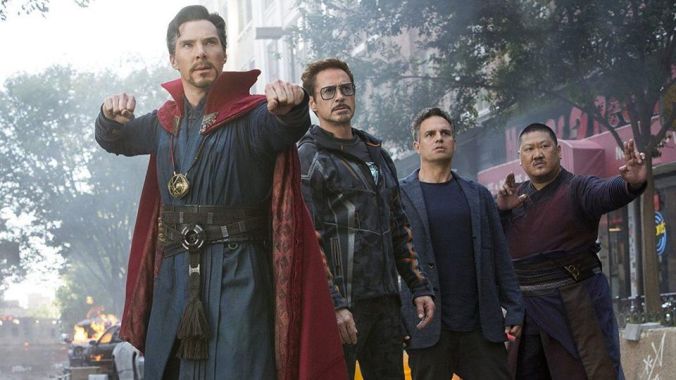
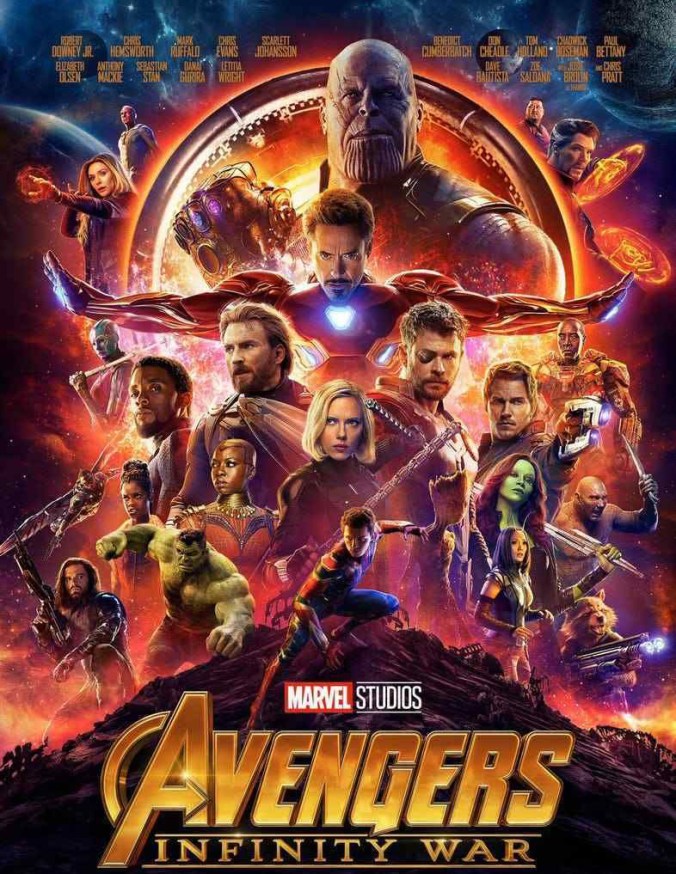
Just a fraction of the gigantic main cast, with three intersecting franchises: Doctor Strange, Iron Man and Hulk.

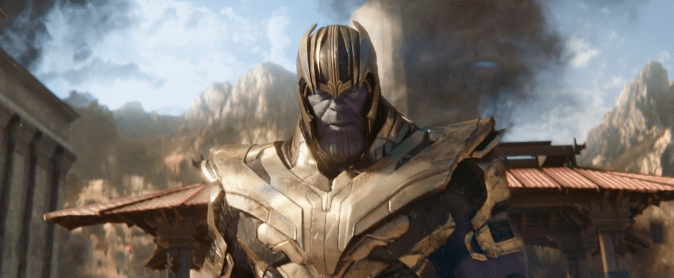
A gigantic threat is looming upon the galaxy: Thanos. A galactic overlord who wants to collect all six Infinity Stones, which grant the power to rewrite reality if they are combined into one weapon – a gauntlet in this case. In many different films before that, we know where the Infinity Stones are, and in some, they even played very big roles.

The plot is simple, yet effective: Thanos is coming, he must be stopped. And in order to do that, the power of all the Avengers and their friends is needed. Good guys set out to defeat the bad guy. Simple, straightforward, boom, done.

However: It’s the execution where this film shines. To take over 20 main characters and fit them into one big story is not an easy task, but it succeeds in an entertaining and satisfying way. Not all characters appear at the same time, they enter the stories at different points, and then get split up into groups. Some combinations are logical, the Guardians of the Galaxy are one group, surely, and Iron Man will team up with Spiderman, that much is clear from the previous films.

Avengers-Infinity-War-Cover

This team-up can only go well. Just look at them.

But over the course of the film, they get re-shuffled, and go to their own intertwining substories, and this is where the main fun is to be had. As the audience already knows all of these characters, the burning question is: How will they all react to each other? Will they get along? Will there be banter? Or will they end up as a harmonious bunch? Some of these combinations I had never seen coming, and also never expected them to work so well. Especially [backwards: tibbar hsart eht dna dog esron eht] was a duo that really hit home, and if you would have told me that before, I wouldn’t have believed you.

The character interactions are where the fun lies, and the smaller teams with unique combinations keep everything fresh and interesting. (Hence, I would also recommend that you watch many of the MCU films before Infinity War, if not all. Some people will tell you different things on what to skip or not, but I think most people will agree that you will absolutely need Thor: Ragnarök and Guardians of the Galaxy Vol.2, as the events of the two lead directly into this film.)

Of course, not everything is fun and games in this film, there will be emotional moments as well, and these blend perfectly into the comedic segments. It never feels like one mood is overstaying its welcome, the mix between “funny and sad” is balanced out extremely well, and gives a great flow to the film. In the 149 minutes of film, I never felt as if it had lengths or dragged out moments, everything felt snappy, powerful and going forward.

In addition, the villain of the story, Thanos, is given enough room, and even his own parallel plotline, so that he receives depth as well, making him one of the best, if not the best villain in the MCU so far. All I can say is: This finale (or rather, the first part of the finale, as the continuation will be next year) was absolutely worth the time waiting.

Screen-Shot-2018-03-16-at-12.50.13-PM.png

Sidenote: I also want to praise Klaus-Dieter Klebsch as the German voice of Thanos, he is one of my favourite voice actors, and he was born for that role. He has spoken many villains from my childhood as well, maybe adding that little bit of extra to my enjoyment.

Conclusion

Back in 2008, when I was saw Iron Man with doubtful eyes, I could have never imagined where it would all lead. I was proven very wrong in my prediction, and I am pretty sure that many were too, such a big film franchise had never been attempted before, and some other franchises have tried to copy it afterwards, but nobody achieving it to this extend.

While some initial films of Phase 1 or 2 were drab or not very engaging, Marvel has now found the perfect formula of entertainment, big bombastic fun with an equally big, beating heart, that ties everything together emotionally.

And Avengers Infinity War also managed something that many films hadn’t done recently: to surprise me. Not only in shocking moments, but also in emotional ones I hadn’t seen coming, without being “out of nowhere”. It’s a tight bundle of many cohesive and strong storylines, that comes together after many, many years. And it was beautiful.

Behind me in the cinema was a little kid with their parents, maybe 11 years old or so, and it was very well behaved, didn’t interrupt others, enjoyed the film and only occasionally spoke something out loud. And yet, I couldn’t help but smile at the little hollers and exclamations of “Oh no!”, “Yes!”, “Whoa!” and several very big “What?!”.

I remember a little kiddo also sitting in the cinema, being very excited about Spiderman 2, and looking forward to seeing my fantastic super heroes on screen, and going to see the films several times in the theatre, smiling at the visual fireworks of action and heart in front of my gleaming eyes.

The eyes full of doubt from a decade ago were finally shining again like they did on this very day.

The End.

MANLY MONDAY – Makoto Shinkai’s “Someone’s Gaze” – Emotional Strength in 6 Minutes

vlcsnap-2018-05-08-22h48m56s051.png

We all love big, far-reaching stories, in many shapes and forms. Either big space operas with gigantic casts and many factions to lose yourself in, or melodramas with intricate webs of drama and relationships, or big, bookish fantasy epics where the lore and history of the world could fill thousands and thousands of pages.

Such gigantic works are a marvel in itself, and if one finds the perfect one, be it Lord of the Rings, Game of Thrones or Legend of the Galactic Heroes, or whatever world rings true with you personally, you will have something that may accompany you for a long time, with a lot of content to look forward to.

However, there is a merit in the short form too, something that may get overlooked in a fast world with long-running series or franchises: It’s the standalone short film – little pieces of media that will easily get lost or underappreciated in the popular consciousness.

The beauty of short films is that they can bring an idea, a feeling or moment to perfection. Condense something into its purest form, so that it will reach its goal in a short amount of time, with careful planning, framing and narration. And depending on the topic, the look or simply the presentation alone can touch you deeper than any long-form piece of medium.

For me, one of these is Someone’s Gaze (“Dareka no Manazashi”) by director Makoto Shinkai.

vlcsnap-2018-05-08-22h48m27s566

vlcsnap-2018-05-08-22h48m39s022

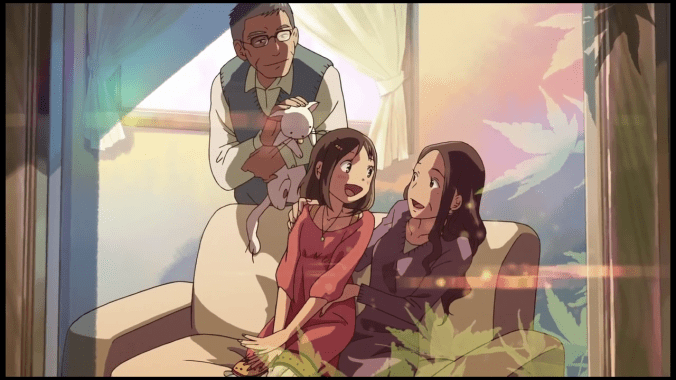
Someone’s Gaze is the story of Aachan and her family, to be more precise, her father. Her life is not going too well, she gets scholded by her boss at work, the stress is taking over her life, and on top of that, her parents are now calling to ask how things are going. She lies on her phone, exhausted from her day, saying that she has no time for a dinner with her father, because she is still at work.

vlcsnap-2018-05-08-22h49m28s263vlcsnap-2018-05-08-22h49m50s631

As it turns out, her father is lying too. 

As they both exchange light small talk of “everything going fine”, we see that her father’s life has not been going swell either. His office work is equally rough, his wife is away too often as she seems to work abroad, and on top of that, the family cat is getting old, little Mii-chan is not the bouncy kitten she once was. Behind the friendly soft words of both of them, sadness lingers.

Essentially, as I cannot tell too much about the short film without completely spoiling it, it is a story of growth, progress and going forward, and what all of that involves. One cannot go forward without change, and it is impossible to go back in life. And all of this is told through the lens of a child growing up, from Aachan’s point of view and from her father’s.

vlcsnap-2018-05-08-22h50m30s563.png

As beautiful as childhood can be, it has to end one day. Parents cannot watch over their children forever, and kids want their own freedom with time. This grows into full independence from your parents, a wonderful and scary feeling all in one. Freedom also means responsibility for one self, with all the good and bad. The other way around, a parent a must learn to let go, but still be supportive without being overbearing or clingy. All of these feelings, these two different situations and worldviews must be in balance, and the way to balance is a long and hard one.

The natural way of growing as a family and then growing apart, yet staying together, is fascinating, sad, and essential.

vlcsnap-2018-05-08-22h51m21s411vlcsnap-2018-05-08-22h51m26s632vlcsnap-2018-05-08-22h51m29s194

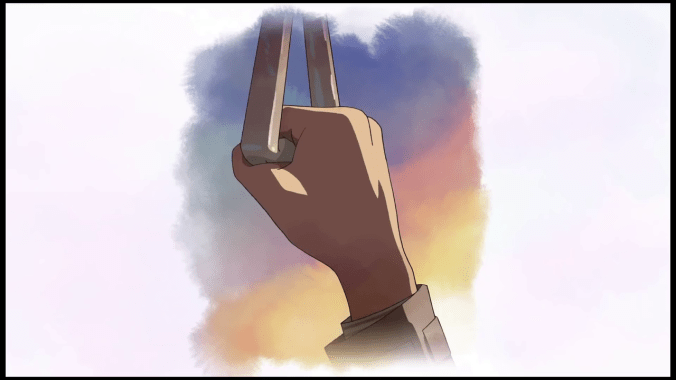
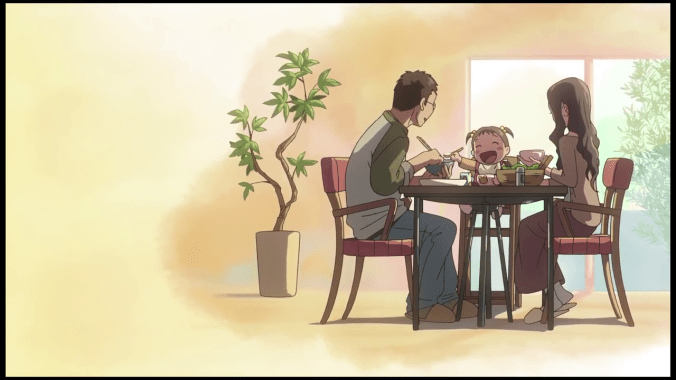
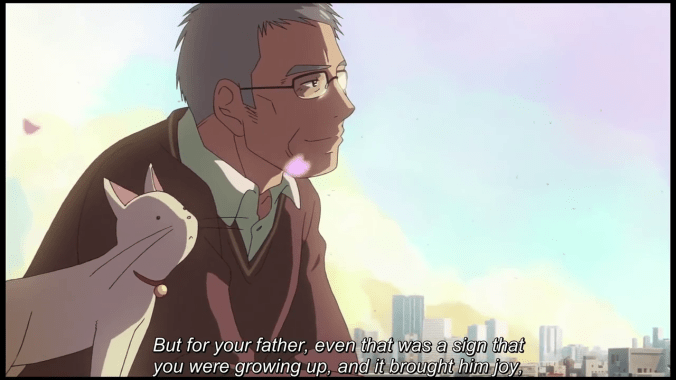
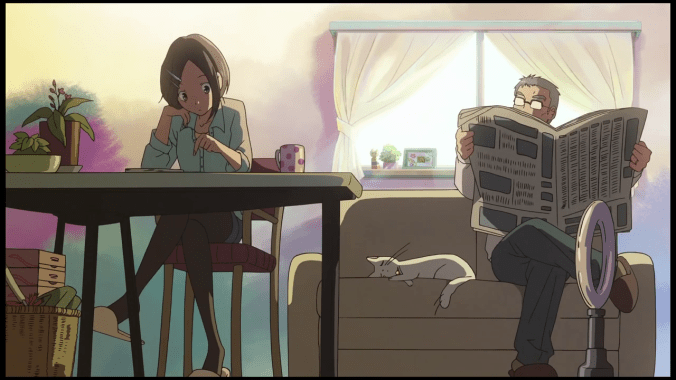
Someone’s Gaze uses strong, memorable imagery and excellently crafted montages to show the life of this family, from Aachan being a little child, to her being a young woman,  passing all the stations in life where one struggles and succeeds: elementary school, high school, moving out, studying, and getting your first job.

vlcsnap-2018-05-08-22h51m13s571.png

And so, time passes.

Director Makaoto Shinkai has recently gotten a lot of attention, as his last film your name. (“Kimi no Na wa.”, 2016), became the highest-grossing animated and Japanese film in history, earning critical acclaim and immense financial success, and making him a house-hold name even outside the anime world. With J.J. Abrams’ remake on the horizon too, his name will continue to carry weight and popularity. And his works are beloved by many, for their smooth and breathtaking animation, gentle and realistic colour schemes, and emotional stories.

I myself have sadly never been a great fan of his works, as they often missed the emotional impact they should have had, as I was missing strong characterisations and the power to hold every scene together in one concise big way. If you like Shinkai, please do not worry, I am in the minority. His works are beloved by many, and I can certainly see why: He tells big stories with even bigger visuals, and what he achieves visually with animation is simply unmatched.

And yet, Shinkai, to me, was always a director of “moments”. His films don’t always hold together, but if he wants to hit, he hits, with iconic imagery and shots. He is far better in presenting ideas and impacts in a single concentrated point than he is at painting characters and telling long stories.

Thus, I think, he is perfect at telling short films.

While none of his longer films have resonated with me, his short works (everything under 10 minutes) all have had a great impression on me, be it commercials, promotion videos, or, as we see here, short films. If Shinkai takes one idea and goes through with it, creating one “moment” as a standalone that does not need to tie itself to anything, he can reach fantastic heights.

vlcsnap-2018-05-08-22h53m43s609

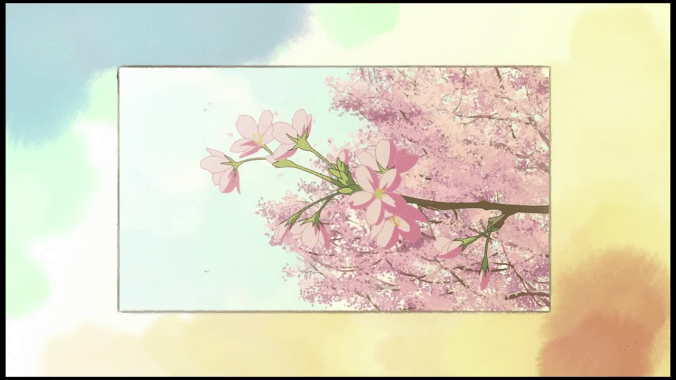
And Someone’s Gaze is the culmination of Shinkai for me, the perfect sweet spot of emotionality, nostalgia and progress showing the pain and joy of growing up. Such a universal theme, a concept that will be forever ingrained in humanity and that will continue in the future, is delivered in just a few minutes – and it hits all of the marks.

Someone’s Gaze was released alongside the very popular Garden of Words, it ran as a short film before the other one in cinemas, and is often found on the same home release too.

And yet, I have never really seen someone talk about this little film next to the big popular one, and I feel that it needs some more love and attention. It is a personal, small film that may not resonate with everyone, but make sure you don’t miss this tiny gem by Shinkai that will only take 6 minutes of your precious time.

vlcsnap-2018-05-08-22h54m22s930.png

The End.

Someone’s Gaze can be found on Youtube, and it starts about 30 seconds in.

Sources: Wikipedia entries on Makoto Shinkai, your name., and Someone’s Gaze.

MANLY MONDAY – The Hardboiled Beauty of Takeshi Koike’s “Lupin III”

vlcsnap-2014-12-16-00h33m42s199.png

The beauty of any long-running franchise is to see the different interpretations over time. How does the zeitgeist influence an adaptation? How does the director influence the style on a narrative or visual level? What does the new look or re-design say about the characters?

Here comes Lupin III into the game. This franchise about a suave thief and his team has had many entries over the decades, from the original manga by Monkey Punch in 1967, to long-form TV series 1969 and 1977, to many OVAs and films in the 80s and 90s – some even by great and popular names in the industry like Hayao Miyazaki’s Castle of Cagliostro and Osamu Dezaki’s Harimao’s Treasure. And every creator brought their signature styles to the table.

lup.gif

From Miyazaki’s bouncy fun and super-smooth animation… 

dezaki.png

… to Dezaki’s signature style “Postcard Memories” still frames.

This, to me, is the fun of Lupin III.

It’s essentially a gigantic toybox where any creator can come along and pick up the characters to play out a story for you, and in the end, they put the toys back for the next one to pick up. Do you have a favourite creator? Look up if they did anything on any Lupin III, they most likely will have an entry somewhere! You can explore freely through many styles and time periods, and find the Lupin III adaptation that you will like the most.

You only need to know the very basics and you’re good to go: Lupin is a thief, Fujiko is a rival thief and love/lust interest, Jigen is a relaxed gunslinger, Goemon is a honourable samurai, and frantic INTERPOL Inspector Zenigata is always hunting them. And then, adventures happen – car chases, shootouts, sword fights, trickery and thievery, helping friends and defeating foes, you name it.

This toybox freedom allows for great experiments and more outlandish interpretations of the characters. Lupin III: A Woman Called Fujiko Mine (2012) by Sayo Yamamoto for example told the story from Fujiko’s side of things, with heavy themes and explorations of sexuality – heterosexual and homosexual alike – giving the franchise a very adult and interesting not-very-canon-feeling entry.

To give you a short overview of styles through the ages:

cast.jpg

Lupin III: Part 1 (1972)

Lpn3

Lupin III: Part 2 (1977)

voy.png

Lupin III: Voyage to Danger (Special, 1993)

Fujiko-Mine

Lupin III: A Woman Called Fujiko Mine (2012)

lupin

Lupin III: Part V (2018)

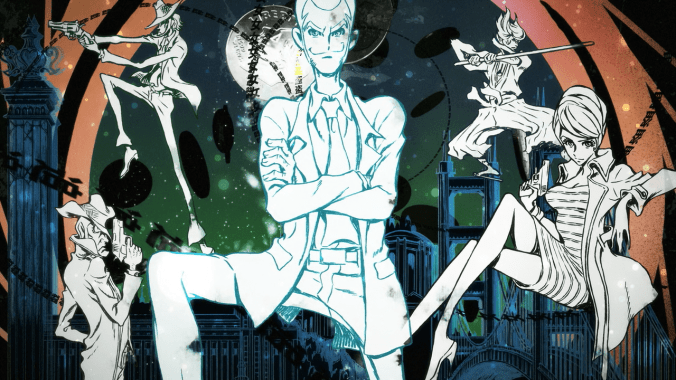
In 2015, the next Lupin III TV series started, called Part IV, with a light fun tone, classic thieving hijinks, and new characters to add to the roster. The opening alone will tell you the fun it has with itself, it certainly is a feel-good series where you can relax with a big smile. This year, in 2018, Lupin III Part V has started airing, with a heavier focus on the internet and the digital world, giving it its unique spin on the world too – and again, it has a fun opening, which underlines the sci-fi and digital aspect more, with Lupin’s little  signature Fiat 500 flying into space to install a camera on a satellite.

So, the TV series are doing fine and are absolutely fun, what else is going on? We have the funny Lupin III airing on TV, is there a serious Lupin III at the moment too? Some other interpretation? Another creator putting their own spin on the franchise?

Enter director and animator Takeshi Koike.

goemon.jpg

Takeshi Koike’s character design for Goemon Ichikawa.

Takeshi Koike made a name for himself with the animated film Redline, which is an absolute MUST-WATCH for any fan of animation. A story about intergalactic racers, a yakuza plot, three friends who must grow together, and the most insane race the universe has ever seen – I could speak for hours about this film, as it is one of my favourites. Koike was the director, storyboarder, character and machine designer (and probably even more, as he mostly went uncredited in his own work) for this film, and it is simply a masterpiece in the medium.

Even before his directorial debut with Redline he was a talented animator and worked on many projects: Koike is the protégée of Yoshiaki Kawajiri, the stellar director behind aesthetic and atmospheric masterpieces such as Vampire Hunter D Bloodlust, Ninja Scroll and Running Man. Koike even worked on some of these films under his mentor. And the influence is more than visible: Both use stylish sharp character design, precise and breathtaking slow motion, strong shadows with stark contrast. To this, Koike adds his own flavour: extreme and atmospheric camera angles, immense power and speed in action, and some realistic violence with impressive outlandish sword- and gunplay. (For more information and examples: Here is a sakuga compilation of his work and here a piece by The Canipa Effect.)

So, what happens if such a skilled director takes on the Lupin III franchise?

Detailed, powerful, well-directed pure fun. (Source: Jigen’s Gravestone)

Koike’s Lupin III films are intense, fun and an absolute blast.

As you can see from the scene above, Koike brings the fantastic car sequences from Redline into the mix, and as the franchise always has had outstanding chase sequences, it fits perfectly into the whole canon. Little details can be found as well, like Lupin cranking down the window and covering his ears before Jigen shoots, the outline smear on the villain when he the cars collide, or Lupin’s expressive yelling you can hear even without sound.

Takeshi Koike has so far directed and designed two Lupin III films, Jigen’s Gravestone (2014) and Goemon’s Spray of Blood (2017). They are considered “spin-off continuations” of A Woman Called Fujiko Mine (2012), however, the Fujiko series is not needed in order to watch these two, they work as a standalone duo of movies and do not reference the previous series.

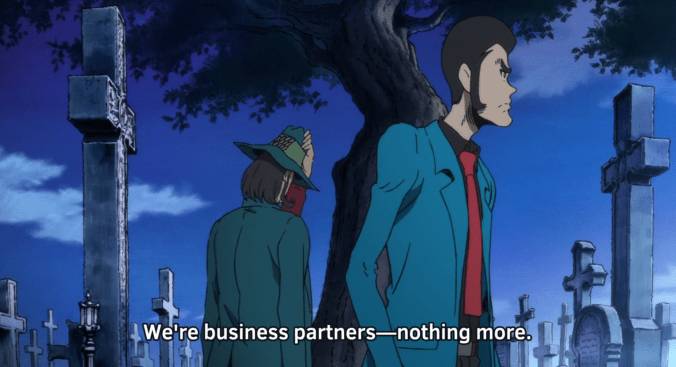
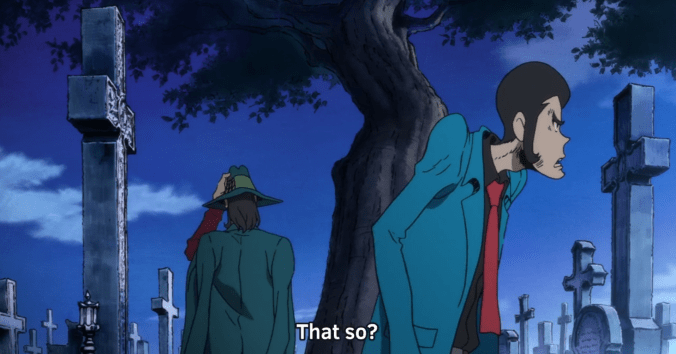
In the first film, Jigen’s Gravestone, Lupin the 3rd and Jigen Daisuke are a team of a thief and a sharpshooter – however, they are not yet the “best friends” they will grow into, they are only business partners at this point. But it soon turns out that the two are being trailed by a dangerous sniper, Okuzaki, who is set out to kill them – he already has prepared their graves for them to see: The titular gravestones. Jigen is not ok with this, as this sniper has also recently killed a client Jigen swore to protect. And so, the hunt and battle between the two begins.

grave-1.png

Jigen is upset, but Lupin is rather calm about getting a death threat.

In the second film, Goemon’s Spray of Blood, the two heroes Lupin and Jigen meet Goemon, a samurai they have seen a few times around. Goemon is the body guard of a yakuza boss, but as he fails to protect him, the clan turns against him. Not only that, Goemon’s spirit will be broken by the assassin of his former boss, a man called Hawk, a big, bearish unit of a lad who fights with heavy dual-wielding axes. This is the story of how Goemon joins the Lupin team and how he became what is today: one of the best samurai in the world.

e70f4aaaae1d123dd2045a6ef7118997d853e0b5_hq.jpg

Goemon vs. Hawk. This won’t go well.

As these films are quite short, about 50 minutes long each, I do not wish to talk too much about the plot of these. The are essentially introduction films, one for Jigen and his friendship to Lupin, and the other one as a character piece for Goemon, all held neatly together by the charming ensemble cast of the Lupin III franchise and charismatic villains they need to fight.

The big center pieces of the two films are the two main conflicts: Jigen vs. Okuzaki and Goemon vs. Hawk. And let me tell you that these are absolutely worth it – battles of strength, mentally and physically, but also of wit, observation and skill.

These are some of the more serious Lupin III entries, far away from the current jolly TV adaptations of Part IV and V. All of the fun aspects are still there, the car chases, the banter and the fights – however, they are all presented through a lens of hardboiled intensity. Meaning, if characters get hurt, they get hurt. It’s violent. Some of the most violent I have ever seen in the animated medium, and I like watching hyperviolent OVAs from the 80’s.

C-Iaa1-XUAAGURP

This is tame.

If you say: “But I can deal with splatter, no problem!”, then I will warn you of some of the body horror that swords, blades and guns can produce. You will definitely do your sharp air inhale of “Oooouh, that must’ve hurt.

And it’s this hardboiled intensity that is so strong and refreshing. It’s not trying to be “edgy” or deliberately over the top, it’s a whole new adaptation that paints the Lupin III franchise in the colours it always had if one thinks about it: Theft, murder, yakuza, gunmen, samurai, and the general underworld. The darker tone fits like a glove. It wants to be that, and it is exactly that.

But more than that, Koike finds the perfect balance between the fun action segments and heavier dramatic scenes, never feeling like a tonal break or betrayal of itself or the source material. These characters suffer, fight and grow, battle their fears and rivals, and in the end, you will be immensely satisfied.

Goemon’s Spray of Blood was such an adrenaline ride for me, that I watched the whole film with a smile, alternating between laughter at outlandish action scenes and quick comedy bits, and being in awe of the violence and intensity of the fights that carry importance to the characters and the overall story.

In addition, Takeshi Koike’s signature character design and artwork with thicker outlines than usual just fits perfectly to the Lupin III franchise. It is safe to say that the cast has rarely looked so suave.

codmp.png

Especially in “Goemon’s Spray of Blood”, with its yakuza setting.

Every character is animated extraordinarily well, not only in the big set-pieces, but also in dialogue scenes and small movements. Let’s take the scene I showed you a still frame earlier, the first round of Goemon vs. Hawk – katana against axe, samurai against biker, on an exploding ship, while Lupin, Jigen and Fujiko get away on a boat.

This is only the beginning. (Source: Goemon’s Spray of Blood)

The gigantic flames in the background, the water animation, the debris of flying roof tiles, the heaviness of Hawk, Goemon putting his sword away, the wind flying through his hair – there is so much love and care poured into film, from the big scenes, all the way into these tiny details.

Everything comes together perfectly, Koike’s style, animation, tone, action and drama, even the soundtrack, which, for example, gives gunslinger Jigen a James Bond style opening credits theme – I’m sure you will find something that especially stands out for you in these marvelous films.

Conclusion

I highly recommend watching Takeshi Koike’s two Lupin III films, Jigen’s Gravestone and Goemon’s Spray of Blood, purely because they are such fun, intense and wonderful productions, that ooze style and power in every second they are on screen. You can go in blind, or maybe check out another Lupin III adaptation that catches your interest, many start with Castle of Cagliostro, for example, for the taste of a young and fresh pre-Ghibli Hayao Miyazaki.

In the end, you will have a marvellous duo of films by one of the best directors in the industry. Two films that belong together, which also describe how one of the most beautiful friendships in the medium came to be. Lupin and Jigen – a friendship that has now existed for over 50 years.

And that alone is absolutely beautiful.

dai

dai2

dai3

dai4

The End.

Sources: Sakugabooru, Wikipedia entry “Lupin III: Jigen’s Gravestone“, MyAnimelist, Anime News Network

MANLY MONDAY – “Vermin” French Animation Goodness with Buddy Cop Insects

title.png

When talking about “Modern Animation” today, the focus tends to be predominantly on North-American and Japanese productions. But outside of this massive circle are other international productions that are absolutely worth of your attention.

One of these are the works of Balak and Studio Bobbypills (former Bobby Prod), a studio specifically setting out to do adult animation. In this case, “adult” meaning crass, explicit humour, satire and imagery, with the intensity and directness of an oncoming truck.

Previous works from the same staff include Les Kassos (or “The Wakos” in English), a French webseries about many popular pop culture figures trying to solve their problems with the help of a social worker.

For example: The Teletubbies fighting their drug problems, Han Solo not being able to cope with his father-in-law Mr. Vader, or Ash Ketchum getting into trouble for animal fighting, and many, many others. While these sound like classic jokes or “dark” concepts that have been already done, it’s the fast and direct presentation with snappy dialogue and impeccable comedic timing that makes these little skits shine. Especially the wild character design remakes which can go from parody to the straight-up grotesque, are fantastic highlights.

From “Star Wars” to “Game of Thrones”, over to “Teenage Mutant Ninja Turtles”, the “Smurfs” and “Astérix & Obélix”, you will find everyone in “Les Kassos”.

The whole series of Les Kassos can be found for free on Youtube, in French with English subtitles, or on the free Blackpills App in an English Dub. Three complete seasons exist, and they make for a very fun and highly inappropriate romp through nostalgic properties and through your laugh muscles.

So, what if this team sets out to do a new series that is not a sketch show, but an adult drama with original characters? Let us look at their newest production: Vermin.

DbOgjTMUQAAO1BE

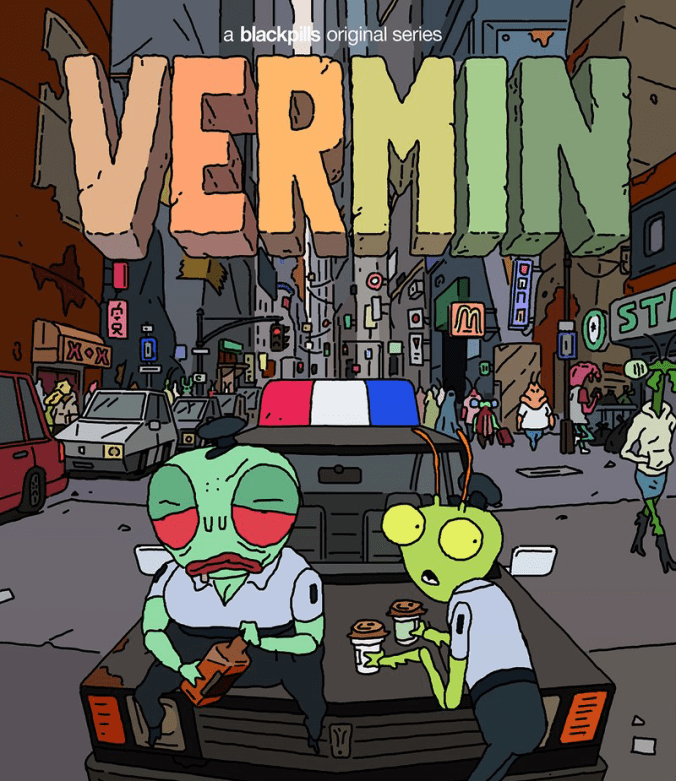
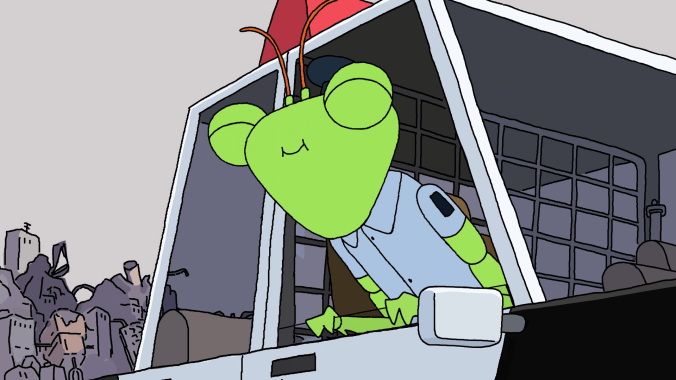
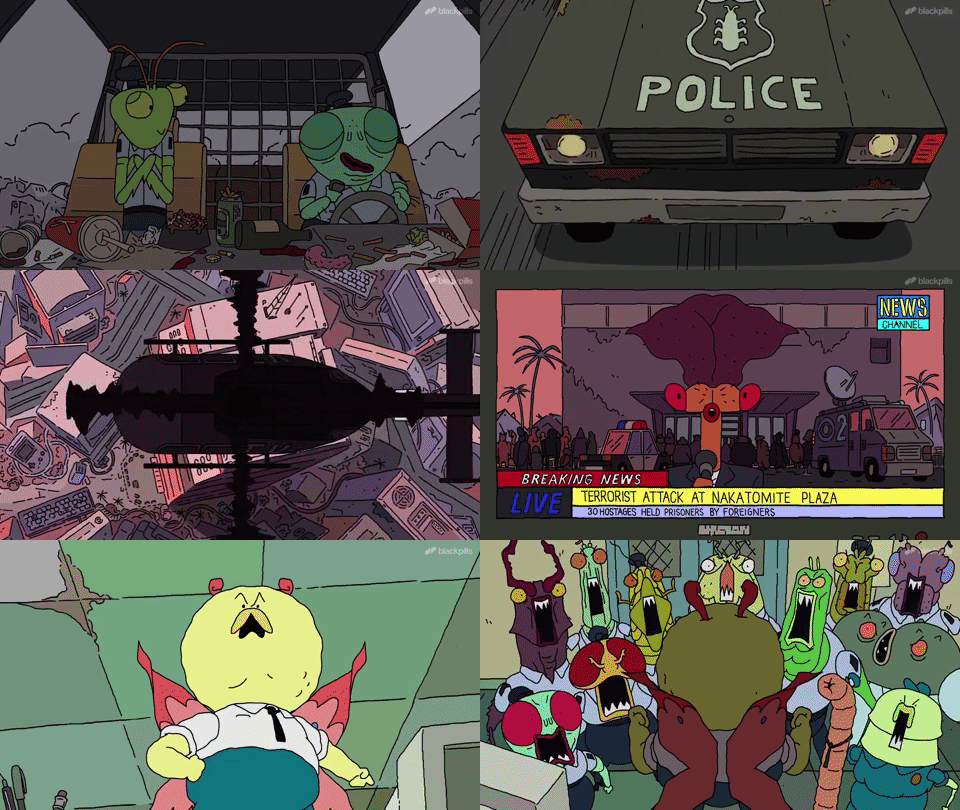
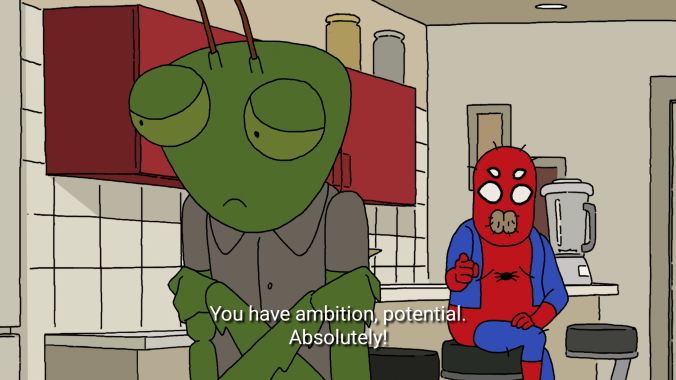
Vermin is the story of Mantos, a young praying mantis, who is finally old enough to start his job in the big city. Saying goodbye to his family and beloved fiancee, he is ready to walk into the foot steps of his father before him: to become a proper police officer.

Screenshot_20180425-003657.png

So young, so innocent.

And so, he embarks on his adventure.

Then all goes wrong.

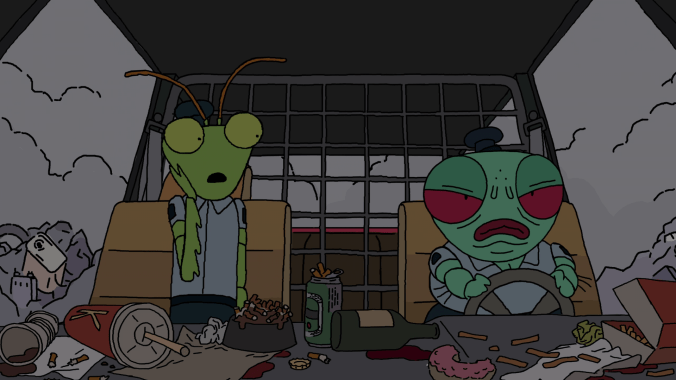
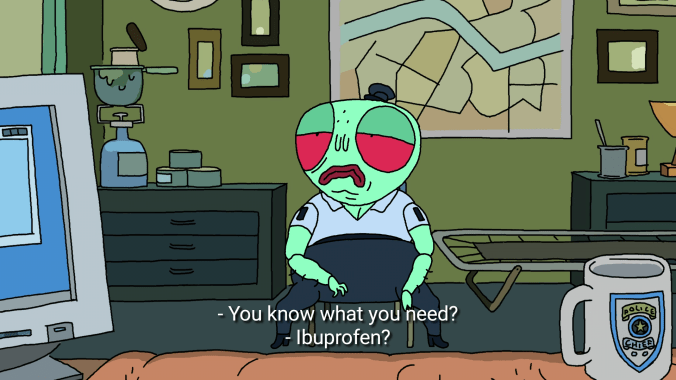
As it turns out, the big city is rough. Gang wars, prostitution, violence everywhere, decaying cityscape, crumbling society and his co-workers are a equally tough bunch. He is paired with Shermock, a fly, middle aged hard-drinking lady with a shady past and even shadier mindset.

Screenshot_20180425-003711

They don’t get along, really.

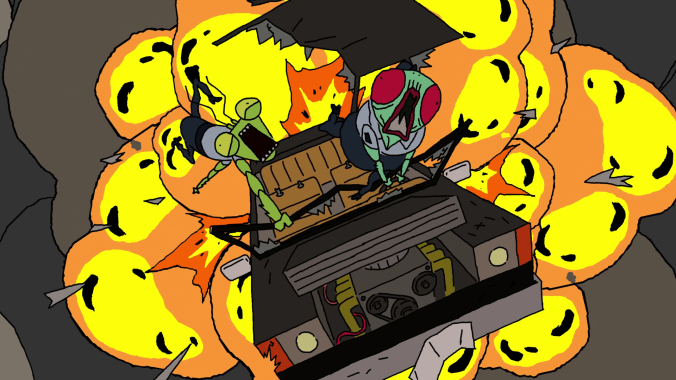
As these two worlds crash, this unlikely duo of Mantos and Shermock must solve cases, stop crime and grow together as a team, in 10 episodes, each 8 minutes long.

It is essentially the set-up for a classic buddy cop film, however, the two main characters are splendid. Especially refreshing is the middle-aged lady Shermock as a lead, who has seen far too much in life, and who has her own arc, together with Mantos, who in return must learn to be strong in this harsh world. The duo goes through many episodic adventures, with re-occuring characters and many different cases, from abductions to robberies.

While this still sounds like your standard cop story business, it’s the presentation, detail and care that his been put into this series that makes it shine brightly.

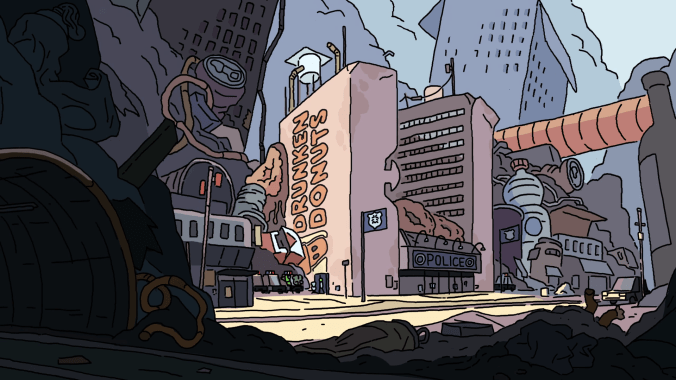
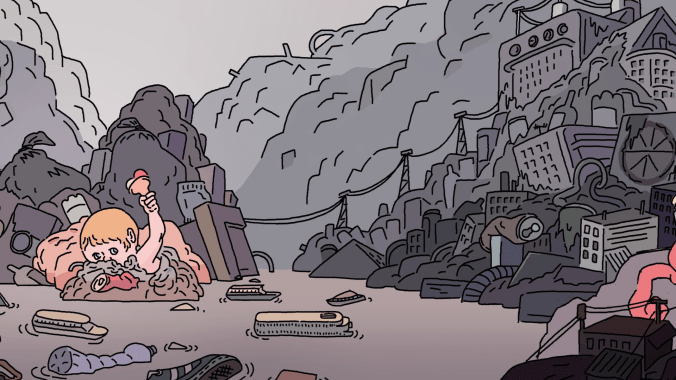
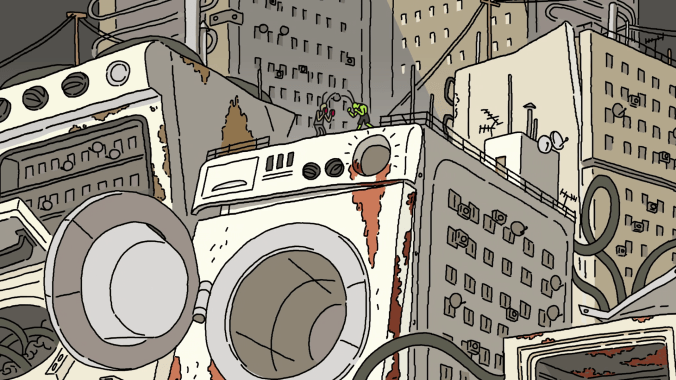
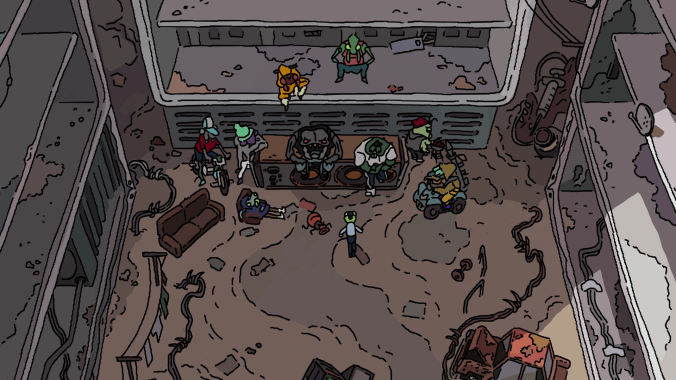
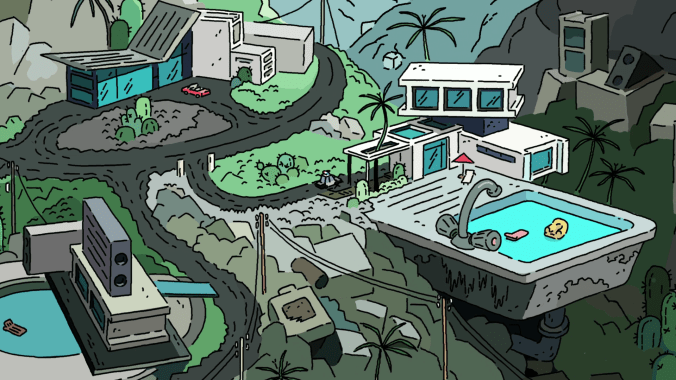
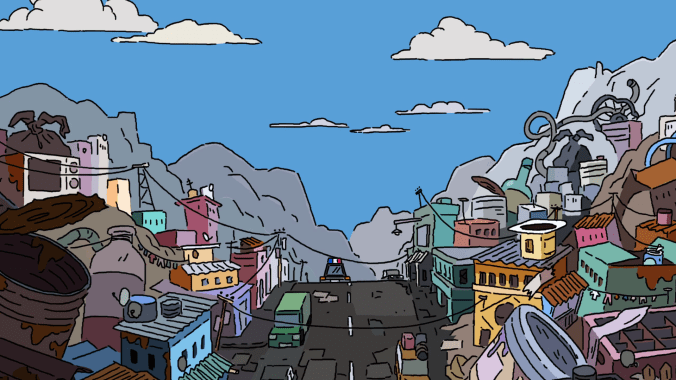
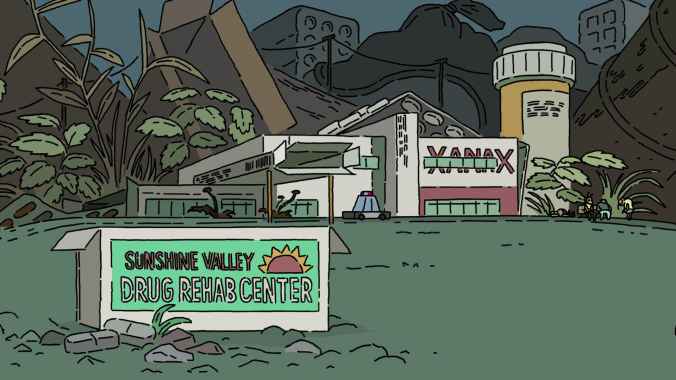
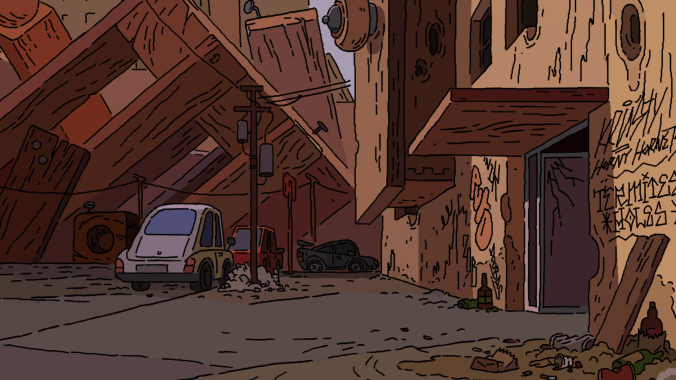
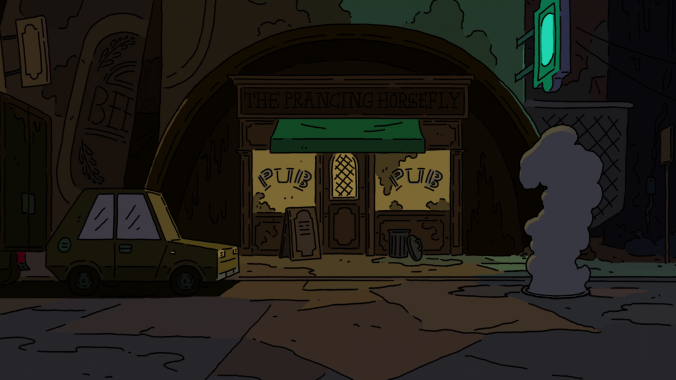
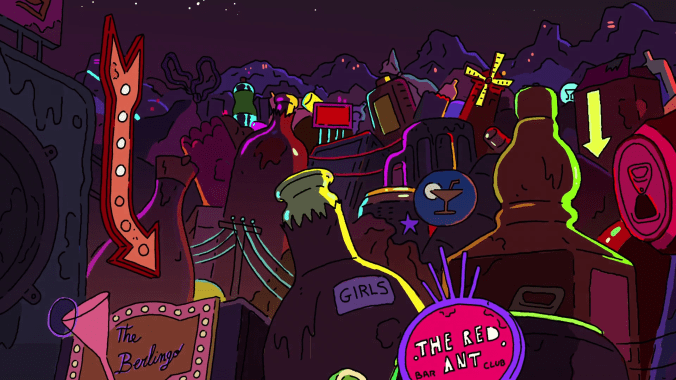
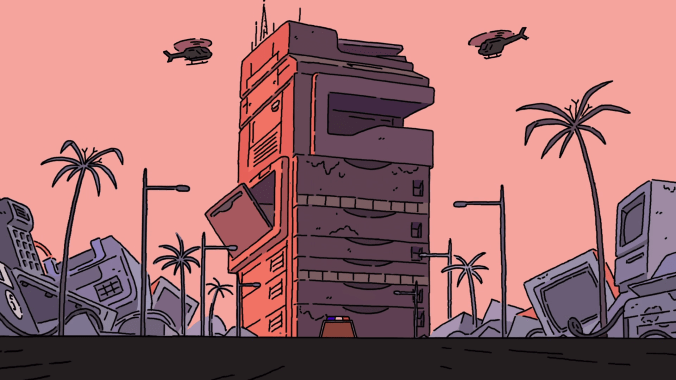
First of all, the art and animation. This megalopolis of insects has a unique and creative design of thrown away household items and trash, with many backdrops and fittingcolour choice that feel all unique, dirty and run-down at the same time: The worldbuilding and backgrounds are simply amazing.

Screenshot_20180425-003608Screenshot_20180425-003646Screenshot_20180425-003830Screenshot_20180425-003924Screenshot_20180428-180214Screenshot_20180428-181300Screenshot_20180428-181803Screenshot_20180428-182055Screenshot_20180428-182311Screenshot_20180428-183734Screenshot_20180428-183810Screenshot_20180428-184444

These backgrounds are fantastic highlights.

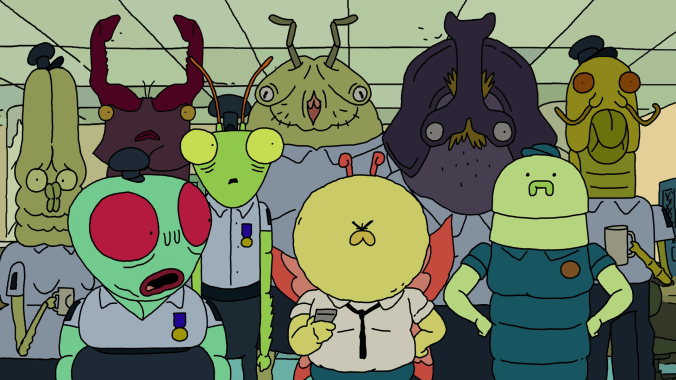
Same goes for the inhabitants of the city, who are mostly insects, some are smaller animals, like scorpions or snails for example, and some are pure original designs, where you can feel different animal elements coming together. In short, the visual design is unique and worth it, and fits the darker humour and adult themes of the story.

Screenshot_20180428-184408.png

The Police Department, many shapes and forms!

Not only is the artstyle of this series fitting, but the animation as well. The style is reminiscent of Les Kassos – however, while their previous series only dealt with one static POV camera as a stylistic choice, Vermin has the complete added benefit of being a buddy cop film, with fantastically framed and choreographed action scenes, which I won’t spoil here.

The animation seems to run on carefully chosen keyframes with not many inbetweens, giving a choppy feel to the look, but this is used to great effect, most notably in the comedic timing and immense speed of the action. Movement feels rapid, fast, frantic, and so energetic, that it brings the whole cast to life. Together with the “ligne claire” style of Franco-Belgian comic that date back to Hergé’s “The Adventures of Tintin” and its bold colour choice, it feels clean, snappy, and very satisfying.

giphy (1).gif

Movement makes a difference! (Source: Trailer)

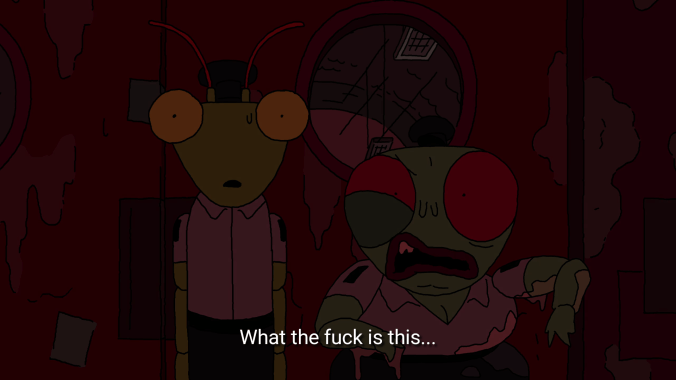
There is, however, another thing that I must point out when approaching Vermin: Similar to Les Kassos, this series humour is dark, crass, on-the-nose, and to a level it will offend someone somewhere. We are talking full on NSFW scenes in nightclubs, crass language, alcohol and drug abuse, a high amount of graphic violence, and dark adult themes.

Screenshot_20180428-183747

A random tweet on my timeline brought me to this series, and it described Vermin as “a mix of Zootopia and Devilman crybaby” and this is quite fitting on many levels.

For one, the small town character going to the big city to become a great police officer and the city of animals setting feels very Zootopia, but it is the Devilman crybaby part I wish to elaborate on.

Masaaki Yuasa’s Devilman crybaby, a Netflix exclusive anime that aired in early 2018, was a new adaptation of Go Nagai’s classic manga Devilman from 1972. It built on the source material, putting a new modern spin on a long-running franchise, with many NSFW and explicit scenes of violence and sexual content – fitting for the equally groundbreaking source material.

However, this was mostly only possible due to this anime series being a web-exclusive. All of this content would have been omitted or adapted differently if it had to conform to the rules and restrictions of TV productions. With the freedom of being a series that doesn’t need to change itself in order to be broadcast, the creators can act with complete liberty in their own visions and ambitions. And this is a great step in animation, reminiscent of the times when hyperviolent OVAs could flourish in the 80’s and 90’s, simply because they did not run on television. Hidden behind a paywall, behind a VHS back in the day, and behind an app download or stream service today, they can do however they please. And this artistic freedom that allows for unique, new and surprising projects.

Just make sure that you know this going into Vermin. This show can get very intense and dark. And very, very explicit. Very much.

Screenshot_20180428-180427.png

Nope. Can’t show that here.

If you can deal with the direct approach this series takes to everything, you will have a fantastic time. The characters are endearing, the dialogue is snappy and fast, the action is intense and strong, and the comedy will have you in stitches.

In this raunchy, violent world are characters that look out for each other and try to do their best, even if their friendships start off on the wrong foot. Mantos is a great main character, one who has to grow and learn, and Shermock has to overcome her bad habits, sombre past and terrible lifestyle.

Screenshot_20180428-175554.png

Mantos. Young and inexperienced.

(Spider-Spider gives support. He is a superhero spider. Spider-Spider. Swings around with his butt.)

Screenshot_20180425-003517

Shermock. Shining justice.

Screenshot_20180425-004044

Mantos and Shermock. An unstoppable team.

Vermin is a great production by Studio Bobbypills that you should check out if you are even remotely interested (and if you have no problem with raunchy, violent and intense imagery). With its short runtime of 10 episodes à 8 minutes, you can easily binge the series in one or two days. Vermin is exclusive to the app Blackpills, a new streaming platform for short webseries, which is free to use, with only one or two 5-second ad breaks inbetween.

On the question of which version you should watch, there is a French Dub, an English Dub and a Spanish Dub, which you can all combine to your heart’s content with a plethora of subtitles, ranging from German, to Italian, to Arabic.

I watched Vermin in its French Dub with English subtitles, as it had the added benefit of a few re-occurring stellar voice actors I already knew from Les Kassos. I especially wish to praise French female rapper Casey for her performance as Shermock, who really breathed her character to life with her rough charme and deep lovable voice.

(I looked into the English and Spanish Dubs as well, and from a first impression, they sound absolutely fine to me too. Down below I have linked all three trailer versions, you are free to choose, as you can put your favourite subtitles under any version whatsoever.)

Conclusion

Vermin is one of those series that nail the premise of: “It’s not for everyone, but if it’s for you, it’s for you.” Not many comedy series can make me laugh so hard that I fall into a minute-long coughing fit, and I highly respect Vermin for that. In the end, it even felt too short, this series could have easily been full-length instead of short-form, as I wanted more of this world, these characters and their adventures. The finale was surprising and a bit abrupt, but fitting, and I certainly would be immensely happy about a Season 2.

Studio Bobbypills, (especially director Alexis Beaumont, producers Hafid F. Benamar and Balak) really have produced a little gem here that deserves more praise, coverage and spotlight. I had a ton of fun, and I will rewatch some of these episodes as they make me laugh hard, and more than once. As I said, if you are interested, check it out, and if not, at least keep this studio on the radar – they will do some more great productions in the future, I can already feel it.

The End.

ENGLISH TRAILER:

FRENCH TRAILER:

SPANISH TRAILER:

Sources: Wikipedia entry “OVA”, Vermin IMDB, Bobbypills, Bobby Prod [1 2 3 4]