Nobuyuki Fukumoto, or nicknamed “FKMT” for short, is most known for his unique, sharp expressive artstyle, and hard-boiled underworld stories, that cut to the core of human emotions.
Since the 90’s, he is a successful mangaka, with several long-running series, that are all beloved by critics and fans alike. But one of the downsides would be that therefore his work is not easily accessible. His manga are fantastic, but insanely long -“Kaiji” and “Akagi” have both been running for 20 years now, and other series have had spin-offs, parodies, prequels and sequels. The “Fukumotoverse” is immensely big and vast, yet so very lovely to get lost in. Intense long stories all around.
So, is there a way to get a glimpse of his work, for a newcomer for example? A “snack-sized” FKMT story?
There are two short stories written by him, illustrated by Kaiji Kawaguchi (Ha! Kaiji!), that are short, intense and have all the traits of the author. These two manga are “LifE” and “Confession”.


LifE
“LifE” or “Seizon Life” is the story of Masao Takeda. His wife died after a hard and long fight with cancer, and now, he has been diagnosed with the same cancer as well. Devastated and emotionally destroyed, he wants to take his own life.
But as he steps up to the noose to hang himself, his phone suddenly rings.
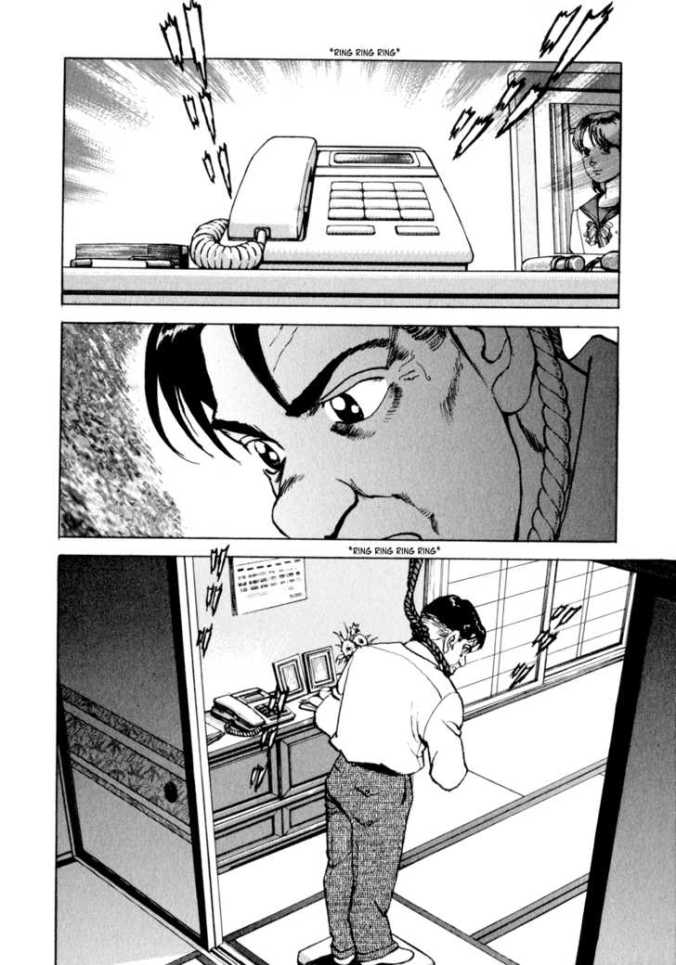

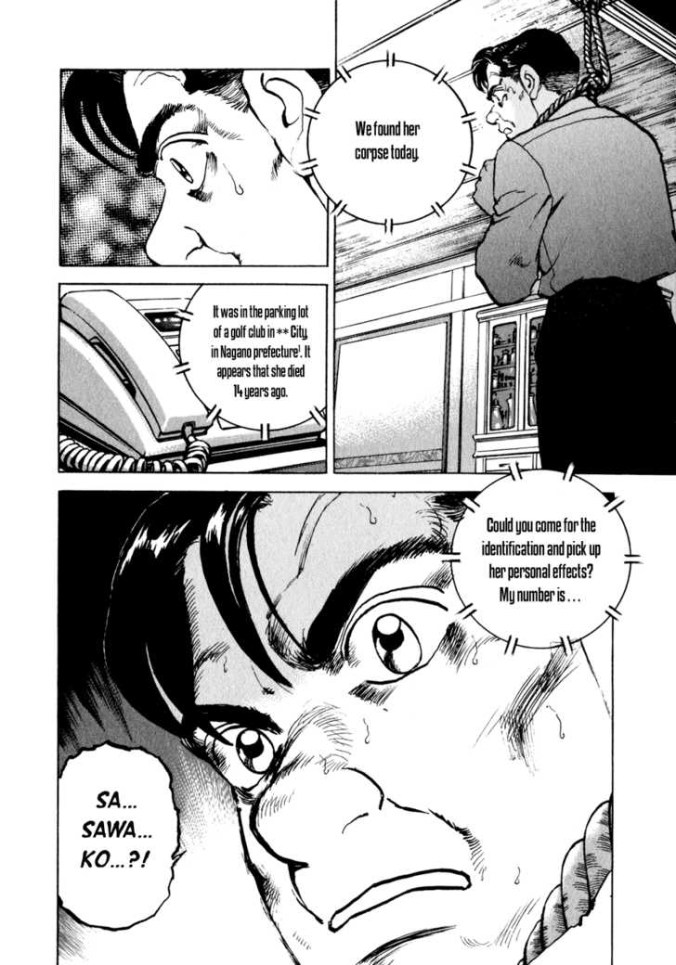
They found the corpse of his teenage daughter, Sawako, who went missing about 14 years ago. As he goes to the police station, and finally sees his daughter, he asks if the murderer can be found. He is informed of a crucial fact:
The “statute of limitations”. When 15 years pass, a case is dropped and closed, even when the true culprit has been found. Sawako has been found after 14 years and 6 months. In 6 months time, the killer will walk away unpunished.
Takeda cannot accept this. He waited so long for the confirmation of his daughter’s death and the finding of her body to give her a proper burial. He wants to take action. He will find the killer. Come what may. Yet his doctor is not ok with this.

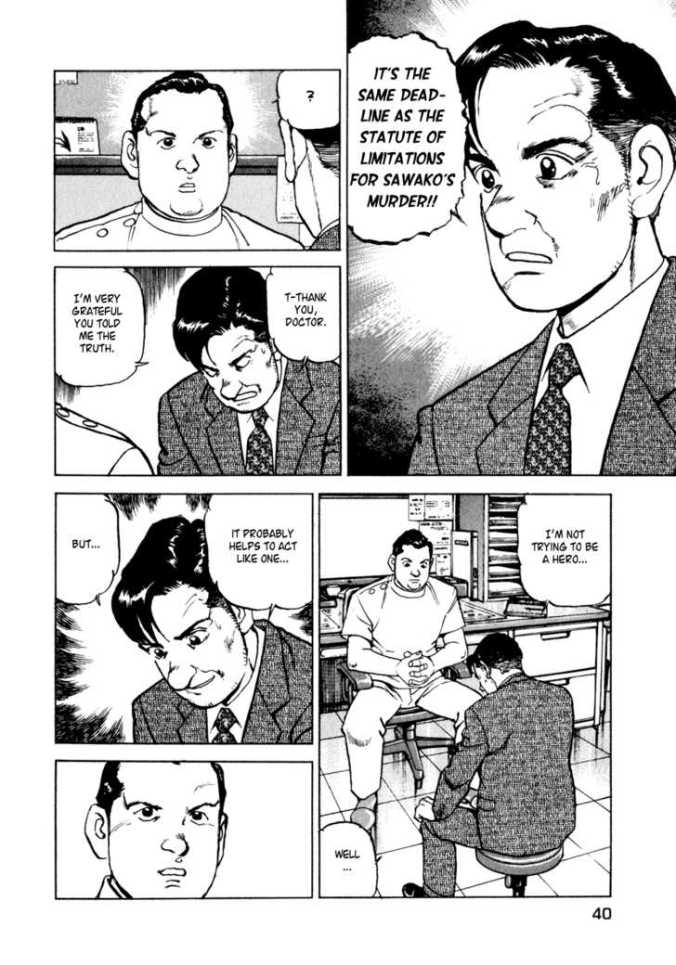
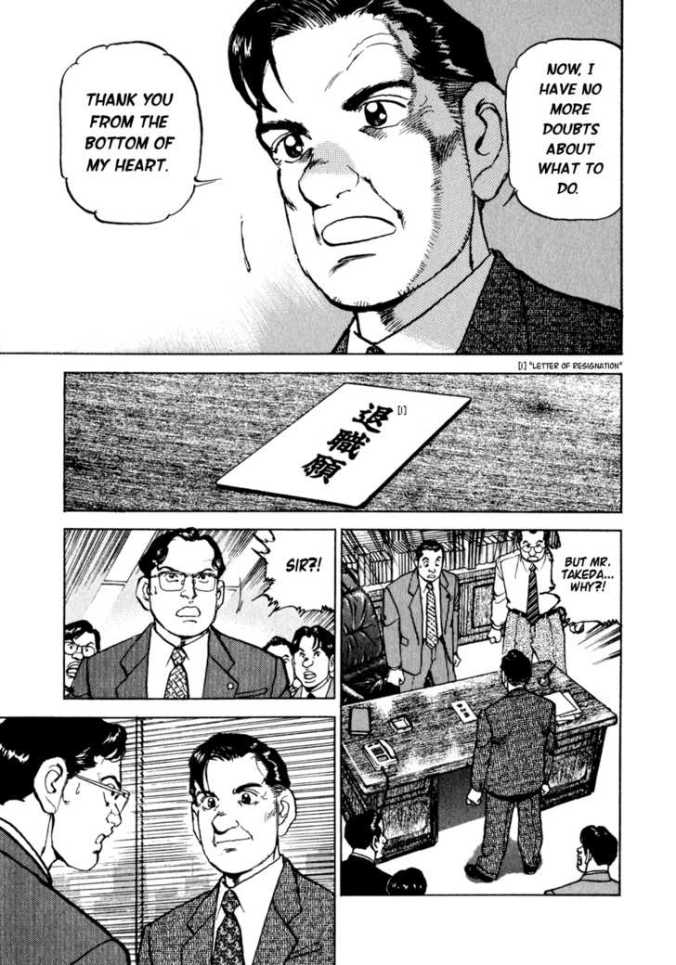
He hands in his resignation and walks away.
6 months until his death. 6 months until the murderer is free. This cannot be a coincidence, he thinks. And so, he goes on his very last mission: Find the killer of his daughter.
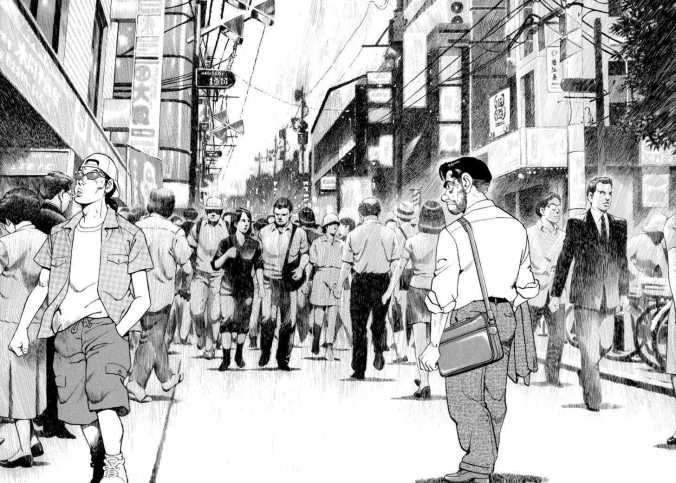
He is somewhere. Out there. A free man, unpunished.
The story unfolds, and reveals single pieces of mystery and detective work, as Masao Takeda tries to walk the same path his daughter did on the fateful day she died. As he retreads his memories, Takeda sees himself as a bad father during her lifetime. He was too cold, distant, didn’t really care for her interests and hobbies, and was always at work.
But now, all he can and even must do, is to look at her life and interests.
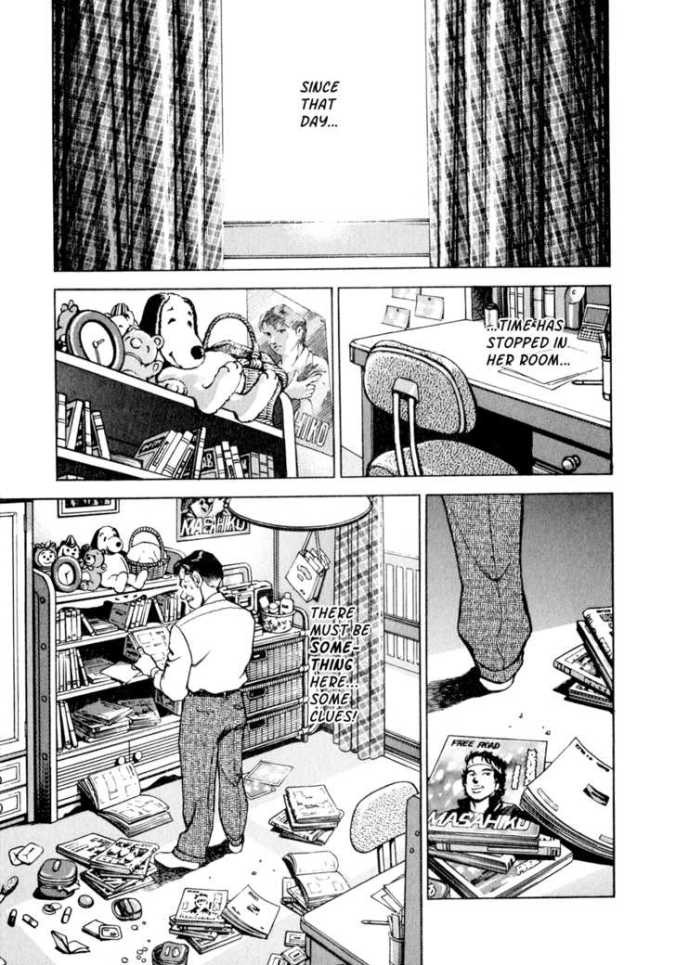
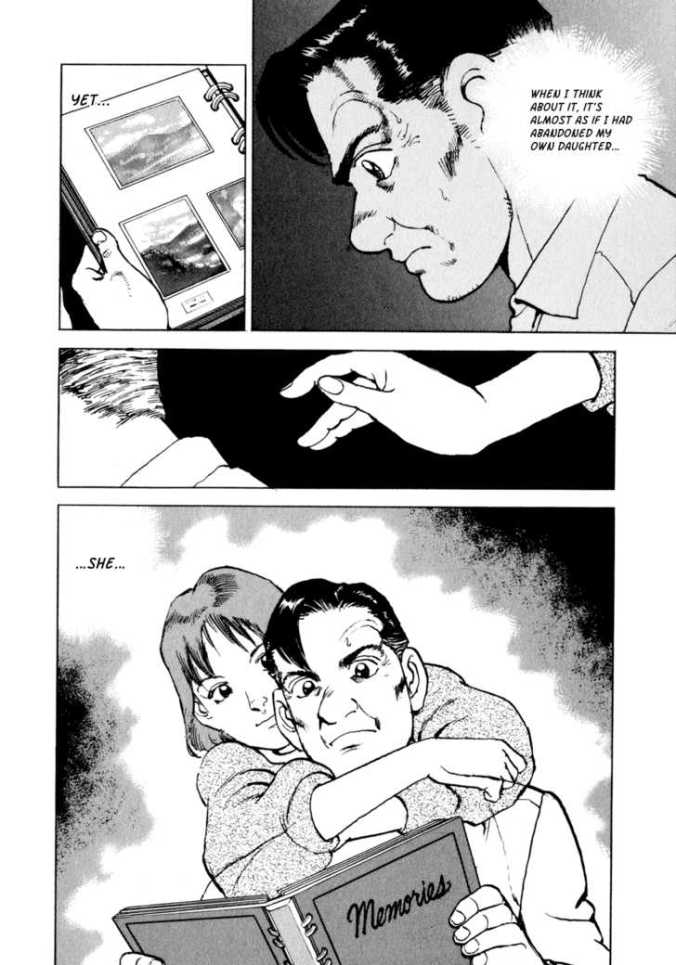
And so, they reunite from beyond the grave to find the killer and their lost time – together.
A big criticism of FKMT’s body of work has always been that he doesn’t include romance or important female characters in his stories. While largely true, this does not impact the strength and importance of his work. It is not his focus, and it may also be his way of breaking with his “Shoujo Manga Artist” past. He was once an artist who wrote and drew romance, even winning awards with it, but it left him unhappy. It was not what he wanted to do. So, he left the magazine he worked for, and went to a tiny Majongg manga magazine. And this is where his career took off. But now, it is nearly impossible to find his old work before he started doing Seinen.
Instead, he has found his way. He understands and paints “relationships”, especially between male characters, more than any other: be it top-down unbalanced friendships, true friendship, naive falling for fake relationships, false admiration, extensive villainy, a mix of all of them, or in this case: Family. And as he has shown in other works – most noteably in Kaiji Part 4 – that “family” is theme he can do perfectly. It’s even a more rare case here: The bond between daughter and father – a theme way too often overlooked and underexplored in media. “LifE” shows it in a beautiful, strong light, that may bring a tear to your eyes and make your heart swell.
Takeda only has 6 months to solve the case, and to live on this planet. It is his last stand and final action. The clock is ticking. 15 years are a long time. Many things have changed. This is not going to be easy.
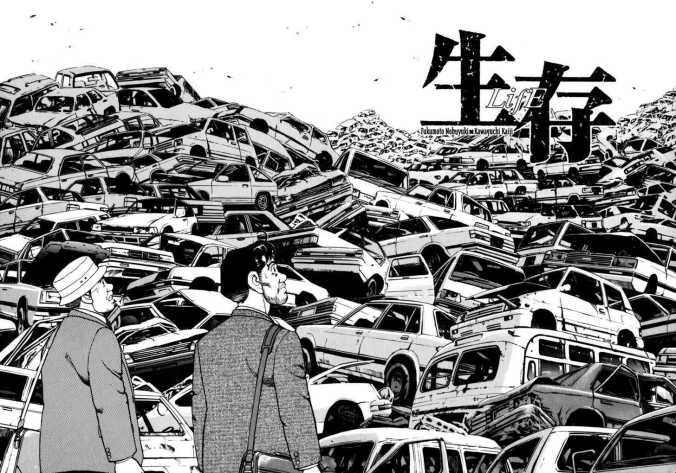
It’s like finding a needle in a haystack. Or a clue in a junkyard full of cars.
Complementing FKMT’s writing is Kawaguchi’s artwork, a very detailed, but still slightly cartoonish look, that gives it a strong sense of realism. A special focus should be put onto protagonist Takeda. His grave, sad, expressive face is what carries this manga. In addition, cancer is eating away at Takeda’s general health, meaning that he becomes more and more thin and gaunt the more time passes. The visual clock of his well-being is ticking away too.
Takeda must also walk the fine line between “handing the murderer to the police”, and “not turn into a raging vigilante”, which is also a theme in the story. When sadness and grief builds up for so long, it can cause immense damage.
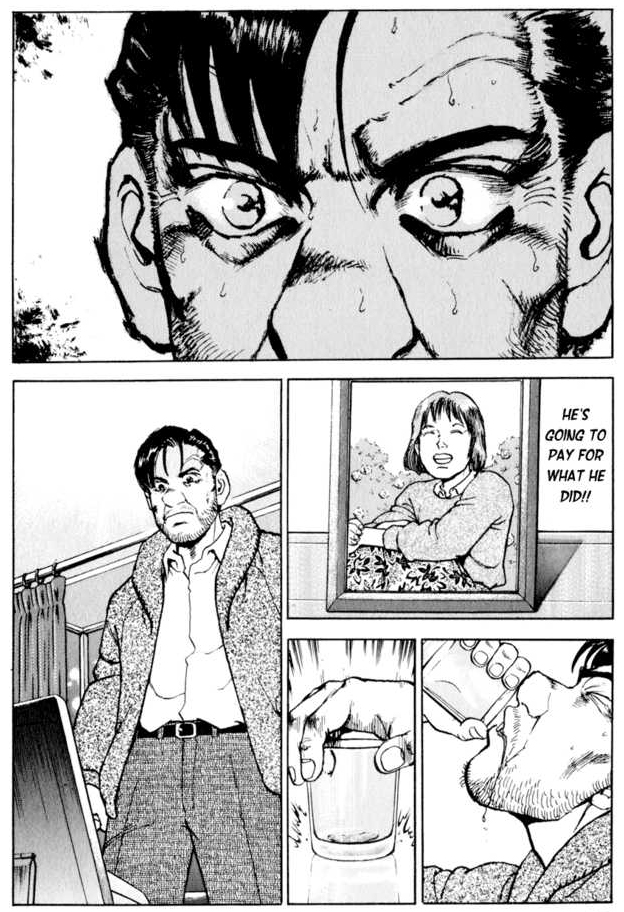
“Shining Justice” certainly looks different.
While this story seems inherently sad from the outlook and may scare some readers away, I can more than recommend it for its intense detective/mystery story, but also for the heartwarming moments. “LifE” is a story of hope and sadness, reuniting of a family, the bond between father and daughter, and the race against death – for one last act of justice.
“LifE” is concluded in 3 volumes, and would make for a really good movie length-wise. FKMT’s writing and Kawaguchi’s artstyle really compliment each other and create a strong, emotional impression, with a touching story and expressive art.

After this heartwarming/breaking story, let us focus on FKMT’s other short story and main strength: Intensity and Thrill.
Confession
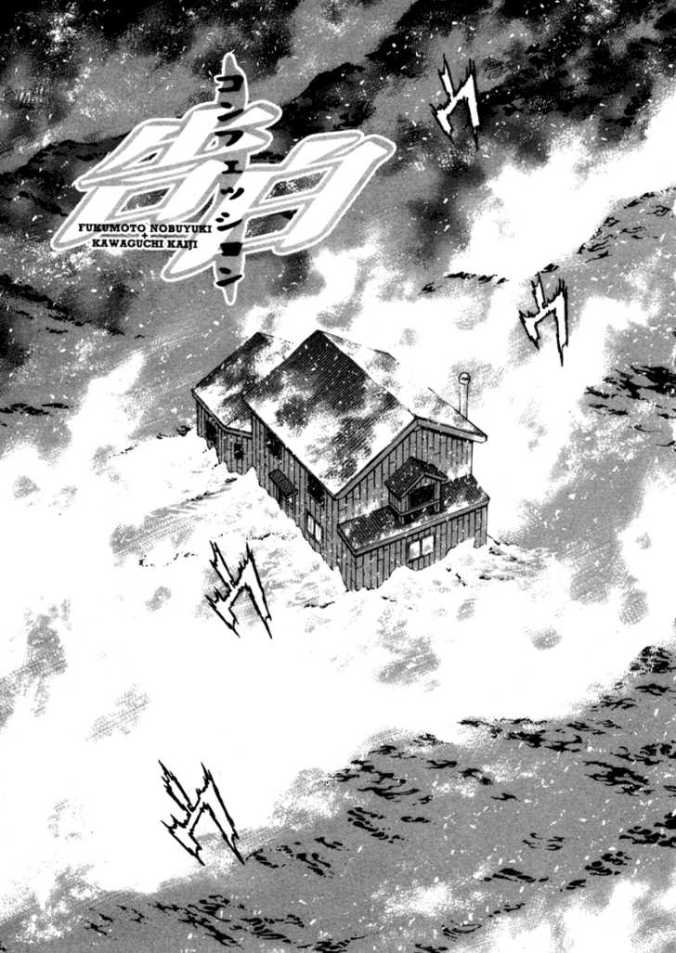
“Confession” or “Confession: Kokuhaku” is the story of two friends, Asai and Ishikura, who go hiking in the snowy mountains, but get lost in a snowstorm.
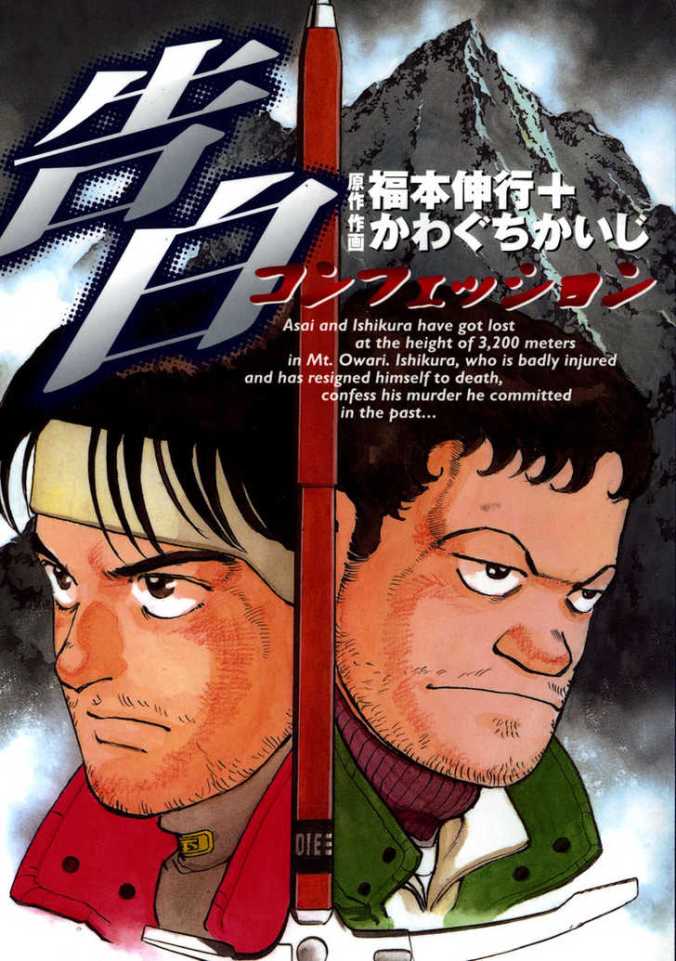
Now, you may look at this cover and think, “Man, why would you write such a spoiler on your cover?” There is a point to that. It is the initial setting.
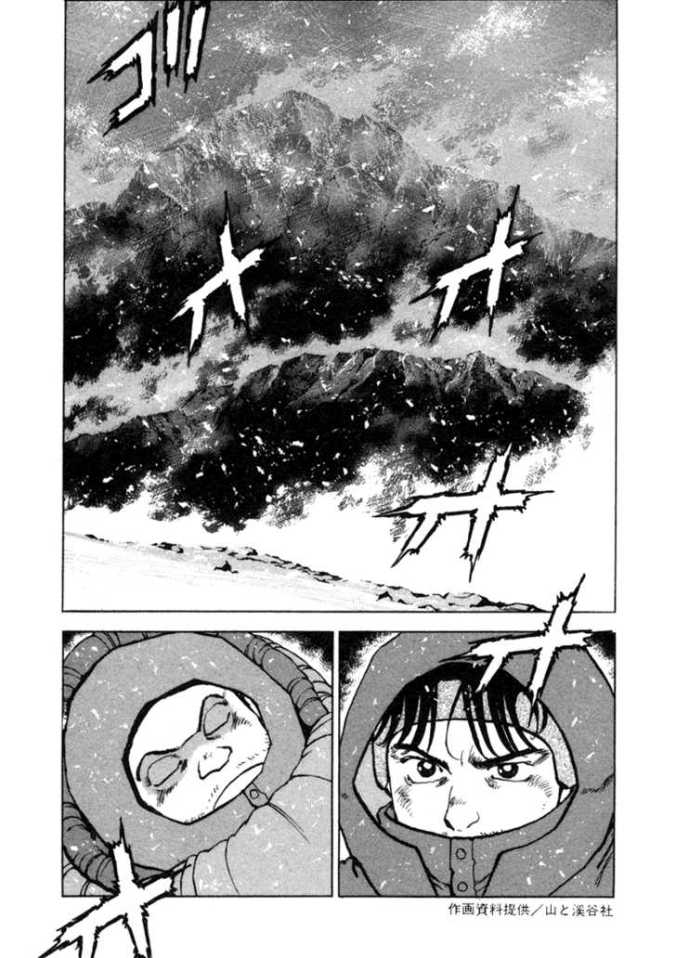
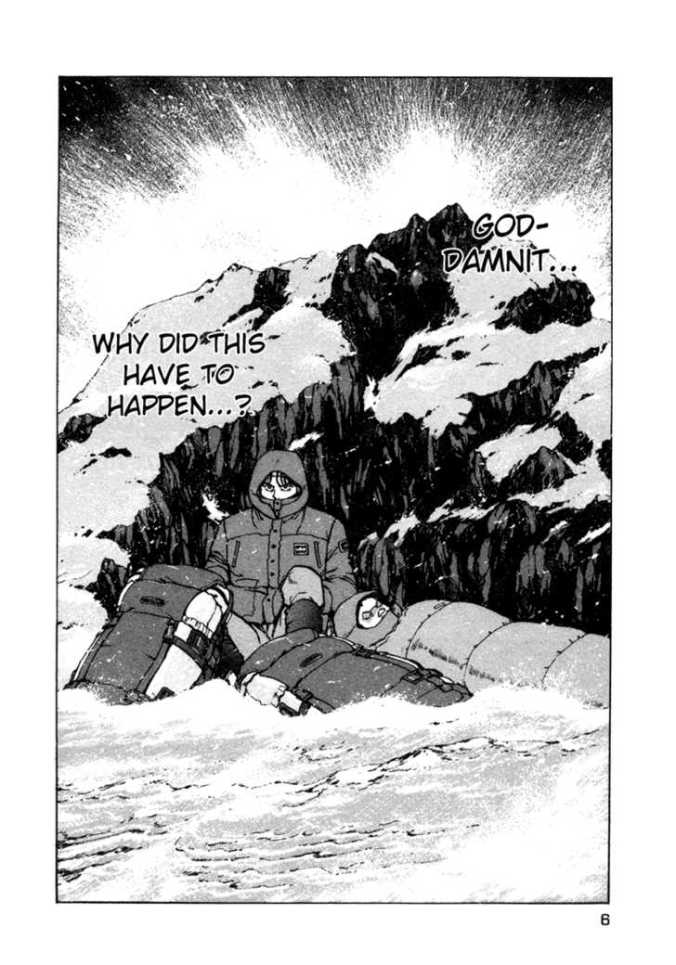
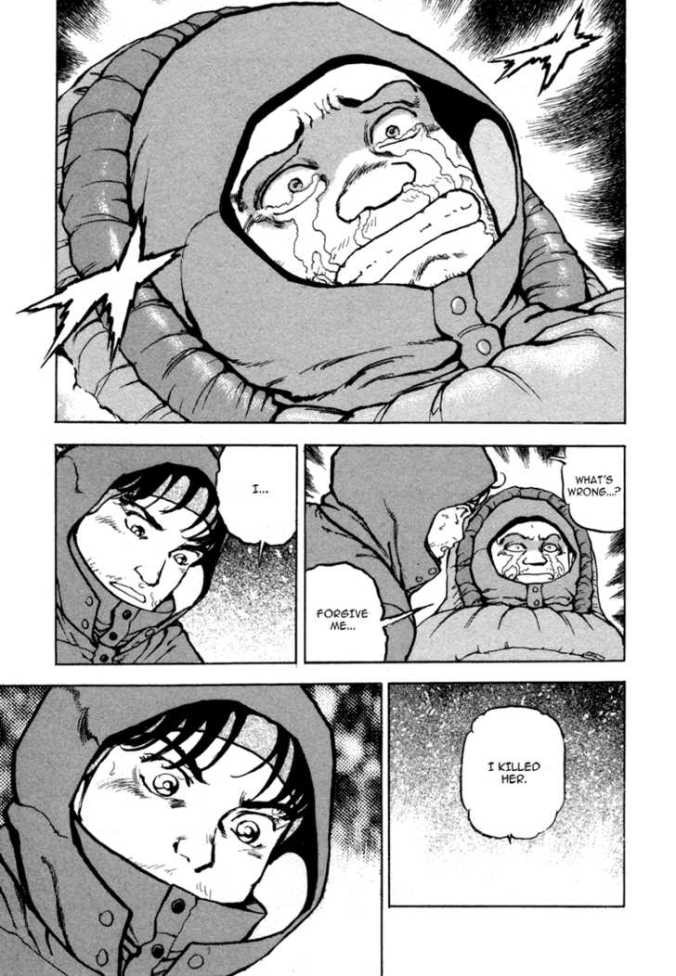
This happens in the first 15 pages.
Ishikura confesses that he killed one of their friends during a past hiking trip. He is certain that they will both die in this snowstorm together, so he wants to confess his sins, to, at least, die in peace.
Asai is understanding in this extreme situation. How can he deny his dying friend’s last wish?
But as Asai gets up, for a desperate try to look for help, suddenly:
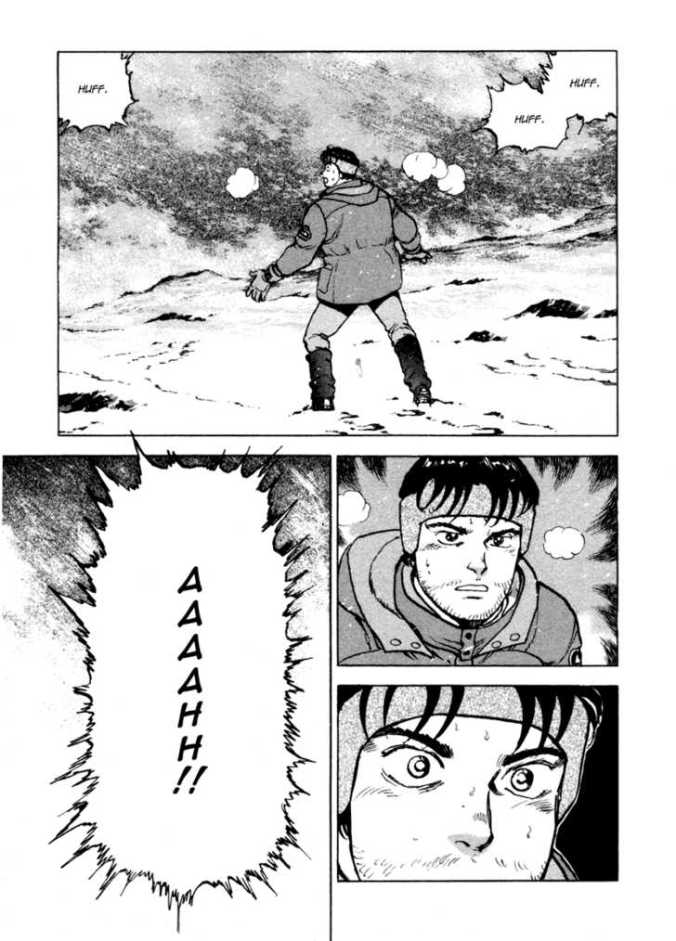
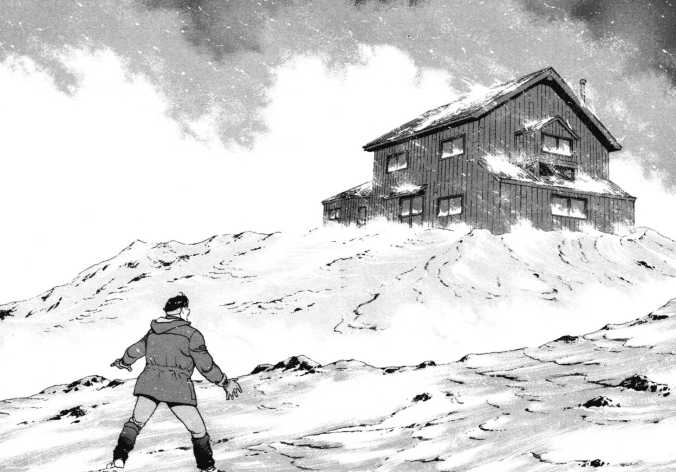
They weren’t far from their original destination, a mountain lodge.
Saved! They are not going to die out here in the cold! So, he simply needs to carry his wounded friend up there and call for help! Everything is going to turn out ok, is it?
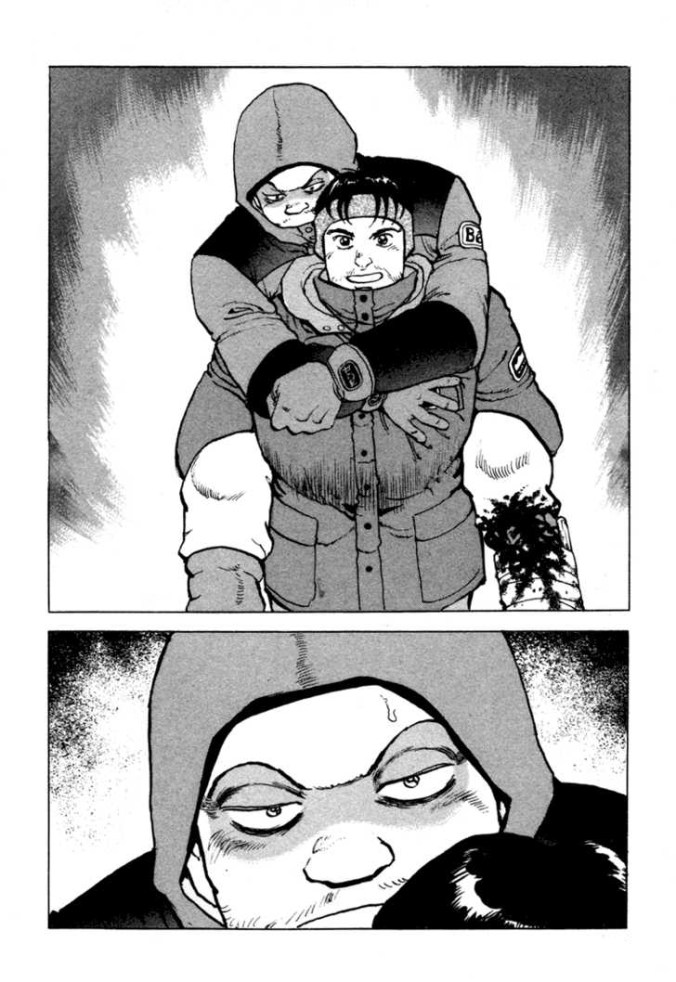
…
No.
In fact, everything has become worse. Ishikura just confessed a murder. And he survives. His dying wish has turned into a massive regret. Maybe into something more.
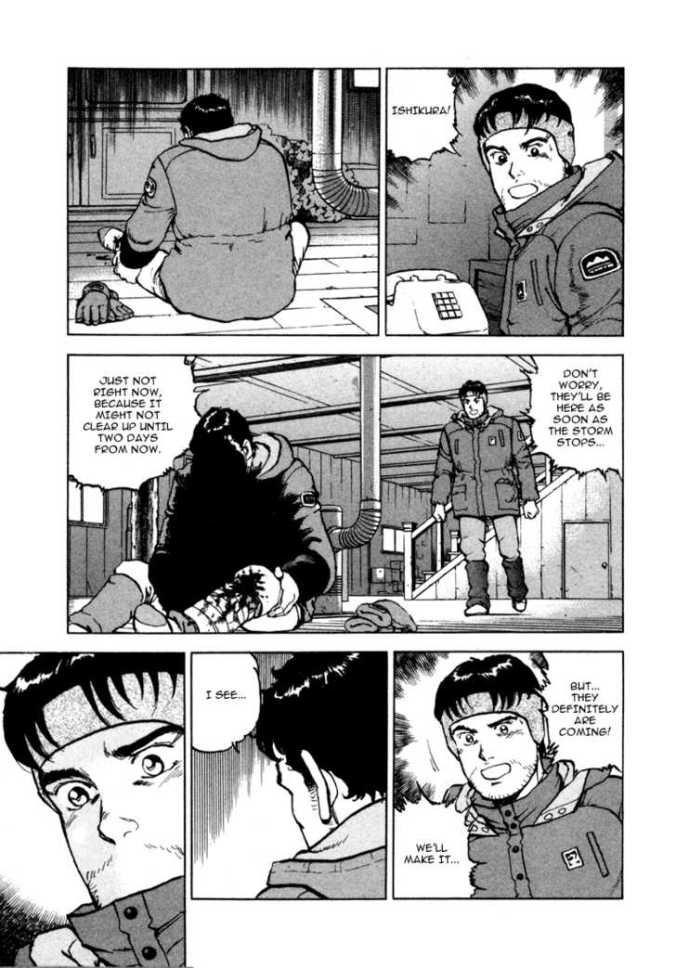

Something is not alright.
And so, the manga starts. 2 days until help arrives. 2 men in a single room. One of them is a murderer, who just confessed. But he is hurt, so he cannot move.
What to do now?
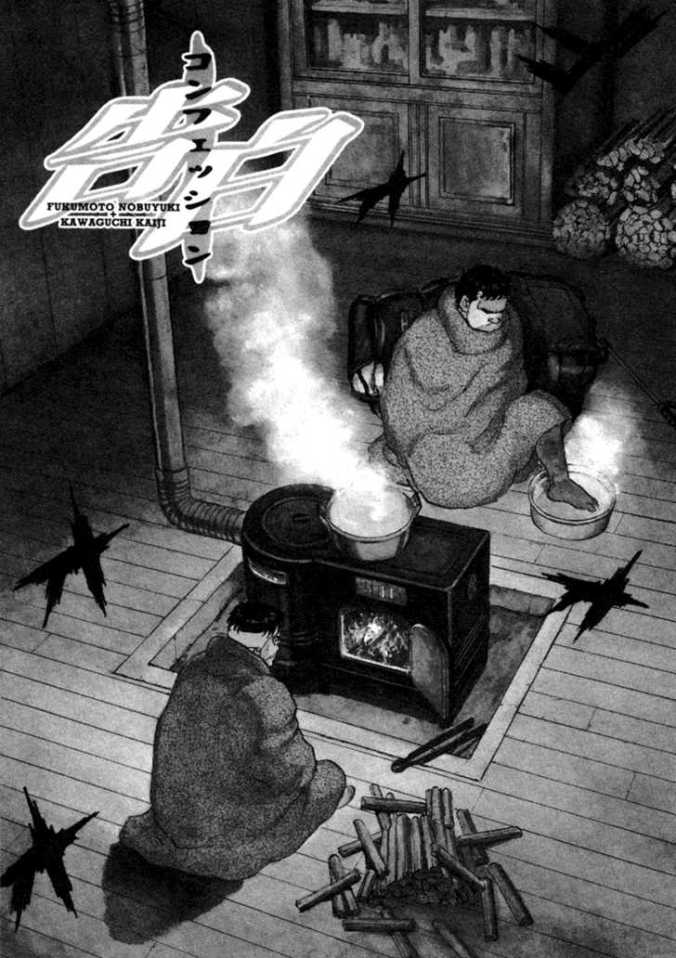
They wait.
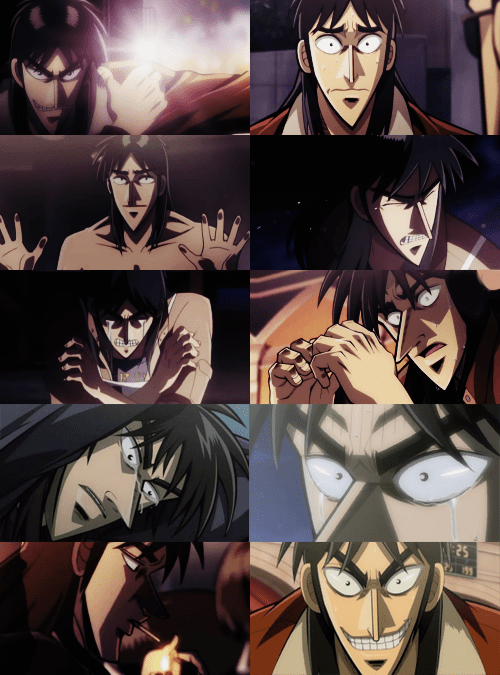
Kawaguchi’s artstyle really shines in this story, as he also shows a stylistic preference and focus that FKMT prefers in his manga: Eyes.
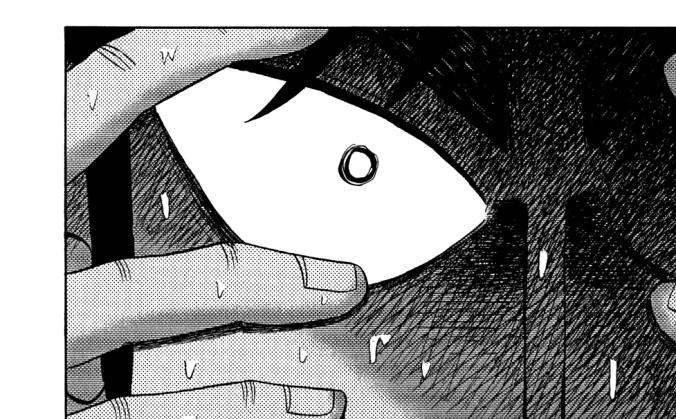
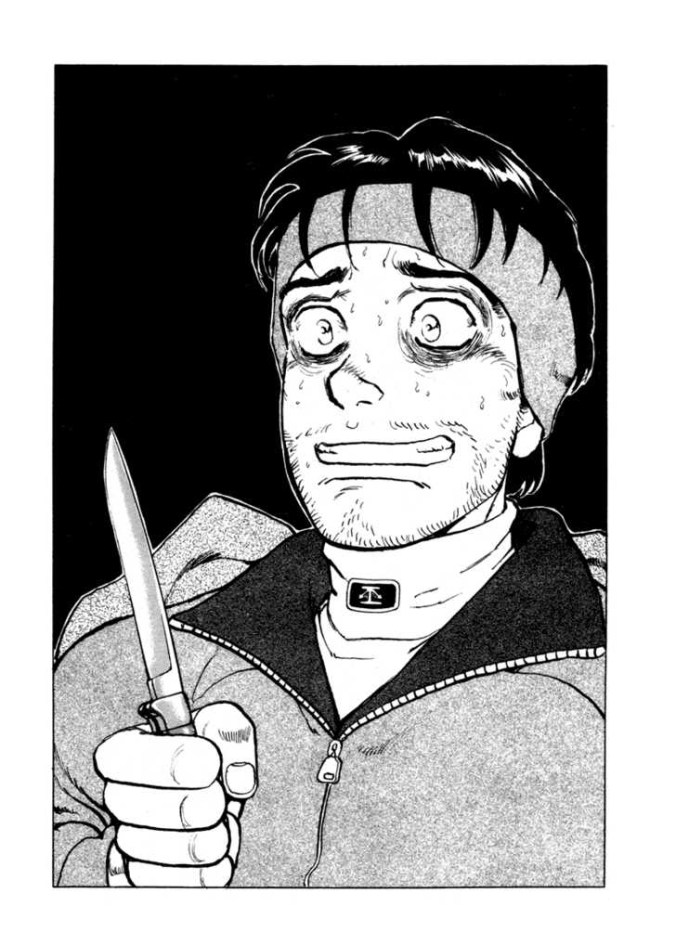
Eyes say more than a thousand words.
This is peak FKMT writing: Psychological warfare with real physical threat between two characters. We see both sides and it has the genre of a “chamber play” – a whole story that plays out in a single room. His writing influences the artstyle as well, a lot of reaction panels, atmospheric shots and internal monologue that just flies by. His writing is so smooth, you won’t notice going through many, many pages.
I do not wish to tell you more than this setting, because this story is best experienced blind, without prior knowledge. Just let it be known that FKMT is a master of dialogue, suspense and Thriller.
“Confession” is only one volume, about 300 pages long, and yet it has you on the edge of your seat at every page turn.
Conclusion
If you ask me personally, I prefer “Confession” over “LifE”, as it had me cling to my table while reading it. This does not mean that “LifE” is bad, far from it. Both works are brilliant short pieces, but fundamentally different in tone and narrative structure, so that it comes down to personal preference. While “Confession” glued me to the pages and sucked me in with pure intensity and rough power, “LifE” made my eyes teary in empathy and understanding.
Both stories have aspects that many fans and critics love about FKMT’s writing: Heartwarming and heartbreaking moments, raw emotion, intruiging characters, difficult and interesting relationships, unique situations, psychological aspects and intense atmosphere.
If you are a fan of FKMT already, these stories are interesting additions to his canon and great observations about his writing, to see it detached from his unique, yet “something-to-get-used-to” artstyle.
If you haven’t read anything by FKMT yet, or have been put off by his artstyle, this may be your chance to check him out as an author and see the appeal that his trusty, long-living fanbase loves him so much for.
The End.



 Elena DS