MANLY MONDAY – Recommendations for the Best German TV Shows!

With me writing about many different pieces of media around the globe, I rarely talk about Germany, the country I was born and live in. I’ve had some people ask me what German TV series I can recommend, either to learn and get a feel for the not-so-easy language, or to check out the culture and media landscape.

So, I compiled this list to present a few German TV series that are good and worth watching! A first draft of this list I had made available as a PDF on social media, but such things often get buried very quickly in the sands of time, so have an extended version here as an article!

(Some of those have English subtitles, others don’t, I will recommend all of them nontheless, one might never know if an international/digital release comes around.)

Stromberg_S4_F03-15_07.jpg

Stromberg („Stromberg“ / lit. „Current/River Mountain“)

5 seasons, 46 episodes and 1 film, ProSieben 2004-2012, 2014

IMDB | Wikipedia

This is Germany’s „The Office“, while it doesn’t share the name with the UK original, it certainly is an adaptation, they even got sued after their second season for being too similar to The Office.

This series leans more towards the hard-hitting cringe comedy of the UK version instead of the surreal and lighter US version. But it is more than just a carbon copy. We have the eponymous Mr. Stromberg, who is the boss of a little office branch, and he wants to be accepted as „The Papa“, the helper for everything and a person of respect, but constantly fails. „Ernie“, a bumbling co-worker, portrayed as a character from the old GDR gets a lot of love from fans, and character constellations differ from other international adaptations. Mr. Stromberg is insanely quotable and honest, this is some of Germany’s finest comedy.

In Germany, it is available under Amazon Prime. I have no information on English subtitles.
71kw2SArv6L._SL1500_.jpg

Der Tatortreiniger („Crime Scene Cleaner”)

6 seasons, 27 episodes, NDR, since 2011, ongoing

IMDB | Wikipedia

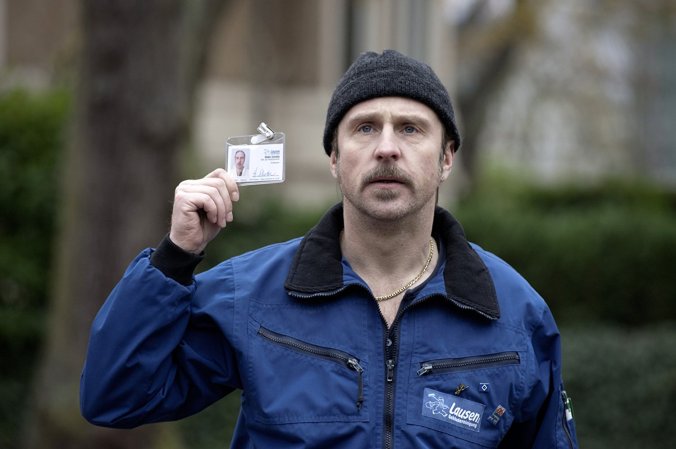
Heiko “Schotty” Schotte is crime scene cleanup. After a murder has happened and the police is done with their gathering of information and evidence, he cleans the place professionally. Middle aged and a calm Northern lad, he normally just wants to do his job. And of course, everything escalates always in a different way.

Either he is called to a pub and starts a discussion there, or is at a magicians house, where he doesn’t know how to deal with the whole tricky furniture. He always meets colourful people, from caring grandmas, to strange kids, to friends mourning, or evil exes.

This is often considered to be the crème de la crème of German TV. Surreal, black humour and unpredictable, every episode plays out completely differently. And very often just in one room, like a theatre play.

“Der Tatortreiniger” won an important culture award for one of its episodes that plays out in a Neonazi party house, where a member was killed. The dialogue is always sharp and hilarious, but this one was pure brilliance. Shotty is fun and honest chill character, and this TV series is a must watch for anyone who wants to look at German TV.

This series is available on German Amazon Prime, I have no information on English subtitles.
41302676.jpg

Generation War („Unsere Mütter Unsere Väter“ / Our Mothers Our Fathers)

1 season, 3 episodes, ZDF 2013

IMDB | Wikipedia

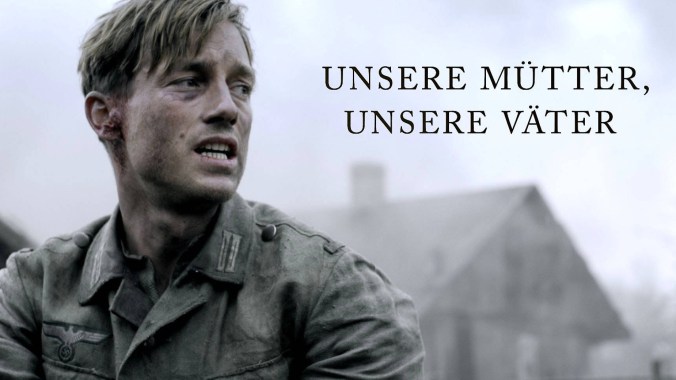
A miniseries on WWII. While there are certainly a lot of films and series about the topic, this one is special and caused a lot of discussions in Germany.

It shows the war period from a civilians point of view, and how they lived their lives during the Third Reich. Five friends meet for one last night, and swear to come back, excited by the war and the new age that is upon them. This series shows the cruelty of the military, but also the propaganda, misdirection and guilt of the common people. A perspective not often found in such media.

Productionwise, this is first class. Special effects, cruelty of war, four intertwining storylines and an intense  presentation. This one should have German subtitles and be available, as the BBC localised it and broadcast it on TV.
m1500.jpg

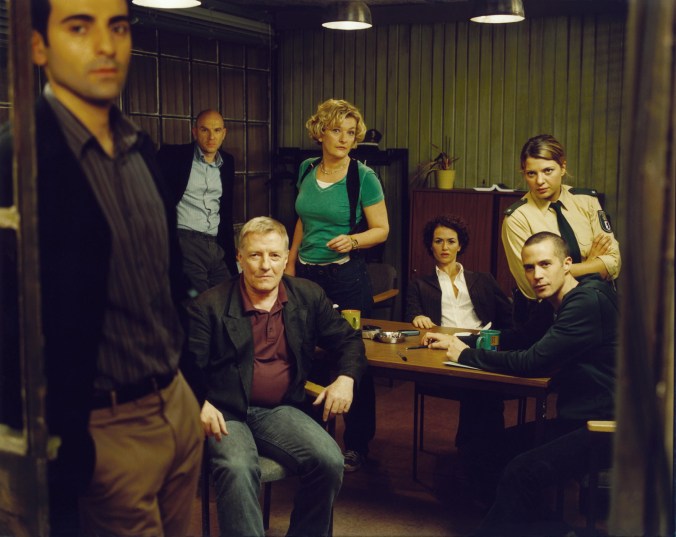
KDD – Berlin Crime Squad (Kriminaldauerdienst / “24h crime investigation service”)

3 seasons, 28 episodes, ZDF & arte, 2007-2010

IMDB | Wikipedia

The KDD, the 24h Crime Squad, are the guys who first arrive on a crime scene, and do the initial work, but also follow up on it, if necessary. They are the tough guys who always have to be ready for the worst. And it certainly is consuming them mentally.

We follow 7 different main characters, and see their shift changes over 24h day and night. Everyone has their own problems, from drug-taking kids, to losing their partners, to freshly building a family, to dealing with grief. Basically: everyone is severely screwed up. And it’s not getting better.

This series got overwhelmingly positive reviews, but was considered “too dark” by the  general public, who wanted lighter police action, not hard drama.

It therefore became a cult classic, and moved to the “artsy channel” arte in it’s third season. This feels far more akin to a Scandinavian series, with a dark mood, broken characters and depressing storylines. Cleverly written with shifting perspectives with a diverse cast of different ethnicities, genders and ages, this is an often overlooked gem.

This series is available in German on DVD and Bluray, but I have no information on subtitles. As an English version of the title exists, there should be some somewhere.
tatort-muenster-team-100__v-gseagaleriexl.jpg

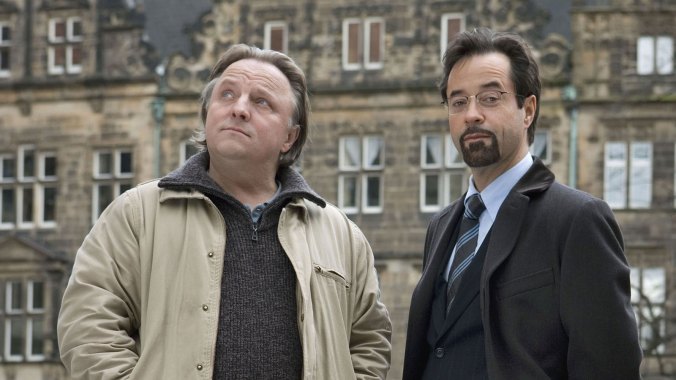
Tatort: Münster (Crime Scene: Münster)

31 episodes, all over the place, WDR, Das Erste, since 1970, but Münster since 2002-ongoing

IMDB | Wikipedia

The “Tatort” series is a great classic in German TV, every Sunday, ever since 1970, there is a new episode, but, here is the kicker: While they are all called “Tatort”, there are different teams of investigators in every big major city. Berlin, Cologne, Stuttgard, Saarbrücken… Over 15 teams are out there, each with their own city, own team, and own feeling and writing.

And the team from “Münster” is the most beloved and a fan favourite. You got a team of two guys: Frank Thiel, a hard Northern police investigator who loves football and is divorced, and pathologist Karl-Friedrich Boerne, an elitist opera goer and high society man.

The amount of bickering and banter between the two is legendary. They are friends, even living in the same house opposite each other, but they very often behave like an old couple. Boerne being especially fun, since he always wants to be where the action happens, but very often reality catches up with him: he is not a cop, neither mentally nor physically. The whole “Elitism vs. Proletariat” is strong in this one, and super fun.

The supporting cast is what makes this series perfect. Valkyrie chainsmoking prosecutor Klemm, who is constantly mistaken for a man on the phone due to her deep voice, Nadeshda, cute slav policewoman sidekick who is often smarter than the two and has to help out, and Thiel’s dad, 70 year old weed-smoking hippie, who drives a taxi and is always informed when something is going on in the city.

The perfect blend of comedy and crime series, this version of Tatort always has the highest ratings and is beloved by all. Always keep an eye out if a “Münster” episode is on!

This series is available on DVD, but I have no information if English subtitles exist.
ff0e122d-bbd8-4710-b1fa-39ca9045fea9.jpg

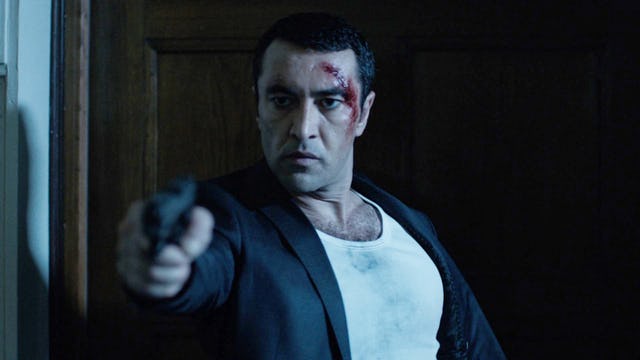
Tatort: Hamburg (Crime Scene: Hamburg / Cenk Batu: Undercover Agent)

6 episodes, Das Erste, since 1970, but Hamburg 2008 – 2012

IMDB | Wikipedia

Before Til Schweiger took over the Hamburg “Tatort” and turned it into a very self-congratulatory Hollywood spectacle show about himself and his real life daughter, there was another man guarding the city of Hamburg: Cenk Batu.

Mr. Batu was the first investigator of Turkish decent (a very important step, as the biggest migrant minority in Germany is from Turkey, with 14,6%) and his run was dark and intense. Only 6 episodes long, but nearly ever single one of them stood with me.

He is an undercover agent, having to go deep into gang warfare and terrorism plots, and thus, his private life suffers. He is depressed, has no friends, and is always in hiding. There are no police meetings, no cosy offices, he is always on the front line.

Together with the dark waters of Hamburg as a setting, this series was one of the shining ones on German TV, but it sadly ran too short, even with its conclusive ending.

Cenk Batu’s run received an international release, under the name of “Cenk Batu: Undercover Agent” and is available on DVD with English subtitles. (Although it seems out of print.) The episodes seem to be also available for purchase on Youtube.
3da7064809ebd6e35d3123694a1e388d.png

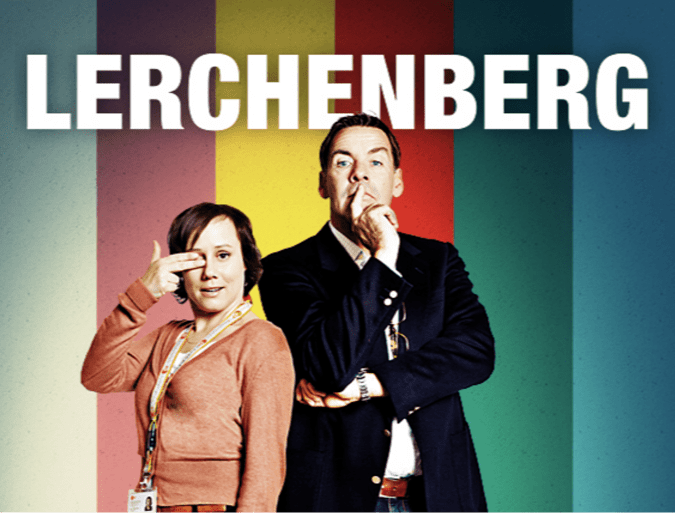
Lerchenberg (Lark Hill)

2 seasons, 8 episodes, ZDFneo, 2013

IMDB | Wikipedia

This series is a self-deprication and ironic outlook on German TV landscape itself, playing in the institution of the ZDF. (Comparable to BBC Two, license fee funded as well.)

We follow Billie, a young female junior producer who wants to make it at the ZDF, but soon notices that this whole institution is bonkers. She gets teamed up with Sascha Hehn, an older actor who lives in his car and is only doing schmaltzy cheap romance films. Her job: Get this guy back on track. And thus, the mayhem starts. People stealing projects, funding running out, live broadcasts going wrong, you name it.

Very real and often full of dark humour, this is a fun and sharp series. Although it is pretty short, it manages to parody a lot of the German TV landscape.

The name “Lark Hill” is where the real studios of the ZDF are, so it also gets an added bonus of showing how the real studios look. A lot of actors play themselves, thus this series could be compared to the UK series Extras, just from more a production kind of view.

My DVD copy of Lerchenberg had English subtitles on it, so you should be fine with the German release, if you wish to import that one.

81qM7WLD0RL._SL1500_.jpg

Ijon Tichy Raumpilot (Ijon Tichy: Space Pilot)

2 seasons, 14 episodes, ZDF 2006-2011

IMDB | Wikipedia

Now here we have a cult classic, a sci-fi satire series, based on Stanislaw Lem’s “Space Diaries”. Ijon, a slav chill space hero, rides through space with his hologram friend in a “three-bedroom-rocket” and is looking for adventure. An episodic space series, full of fun and madness, that is insanely cheap produced and not hiding it – with great success. Spaceships look like household appliances, and everything is cardboard or tin foil. And yet, it has a lot of fun with its world of cheapness.

I have only caught a few episodes here and there, but the low production value and serious passion make this one a lovely little gem to look at.

According to Wikipedia, only the second season has English subtitles on its DVD.
maxresdefault.jpg

Alarm für Cobra 11 (Alarm for Cobra 11)

22 seasons, 317 episodes, RTL, 1996-ongoing

IMDB | Wikipedia

Ok. Listen here.

German Autobahn without speed limits.

Meets.

Michael Bay-like EXPLOSIONS.

That’s it.

This show has been going on for 20 years now, with great success. It’s popcorn TV, and it has been exported all over the world. “Cobra 11” are the special unit for highway crime. It’s fast, it’s a spectacle, stuff will explode. A lot will explode. Like BIG EXPLOSIONS AND CAR PILEUPS AND PEOPLE JUMPING OUT OF CARS AND-

Here is a Japanese trailer with the VA Fumihiko Tachiki. Yes, Gendo Ikari  from Neon Genesis Evangelion or Kaiji’s narrator.

Definitely not ”””Quality Television””””, but a good time and some of the finest practical stunt work Germany has brought out.

As this series has been exported into over 120 countries, there should be one version in your language.
das-millionenspiel.jpg

Das Millionenspiel (The Game of Millions)

1 episode, event, “live television”, Das Erste, 1970

IMDB | Wikipedia

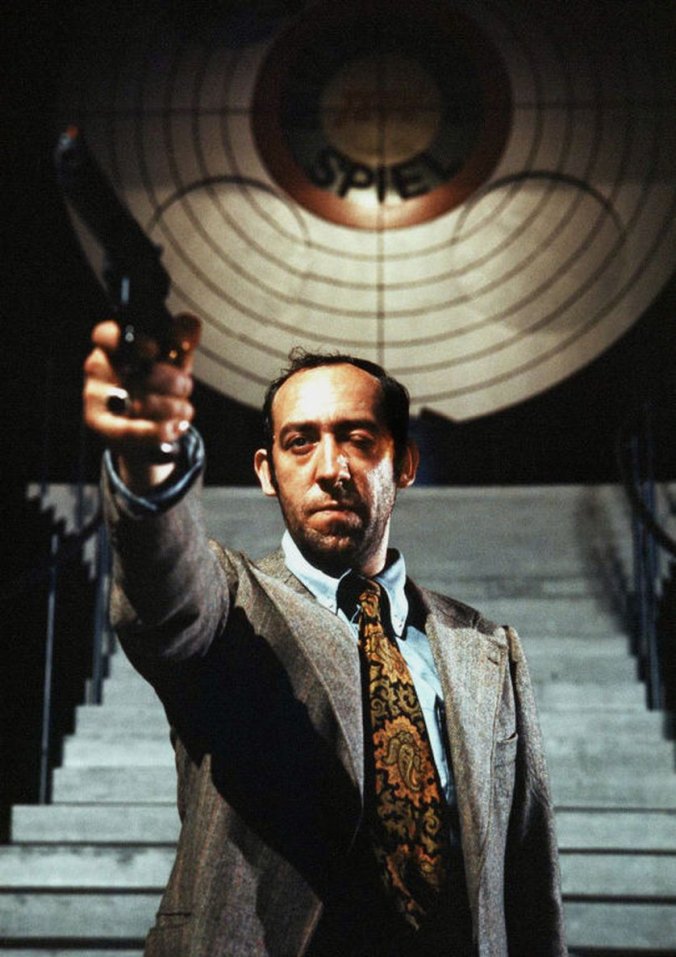
To include a classic of German TV, Das Millionenspiel needs to be in there. It was a scripted show, but broadcast and presented as a live show. 14 men are being hunted all throughout Germany, free to kill, by designated “hunters” who wear firearms.

Most of them have been killed already and we follow the last man, Lotz. In order to win the prize, one million marks, he has to reach the live studio. A cruel race begins.

This was presented as a sadistic Live Game Show, with open telephone lines for people to call. It became a scandal and harsh social experiment as many people gave angry calls, but also many wanting to be “hunted” or “hunters”. A lot of people fell for the fictitious show, and it marks an important moment in German TV history.

While the film can be found uploaded on Youtube, I have no information on English subtitles.
1200px-Switch_reloaded_Logo.jpg

Switch Reloaded (Switch Reloaded)

6 seasons, 102 episodes, ProSieben, 2007-2012

IMDB | Wikipedia

Switch Reloaded is a sketch comedy series that parodies all sorts of films and TV series. German ones and US ones as well! From CSI:Miami to Bones, to House MD, to Monk, there are a lot of parodies to be found here!

And even though you might not recognise all of the original TV series, you will have a blast with them. Television formats are the same all over the world, after all.

DVD releases and Youtube channels exist, but I have no information on English subtitles.
899826-0-q80.jpg

Walulis sieht fern (Walulis watches TV / lit. Walulis looks far)

4 seasons, 20 episodes, ZDFneo, 2011-2014

IMDB | Wikipedia

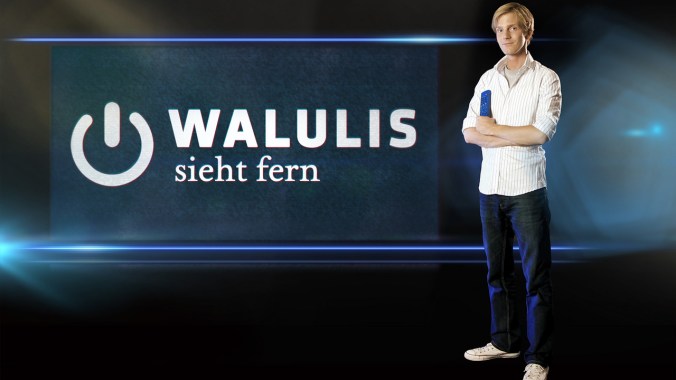
Phillip Walulis analyses the current TV landscape and how it works, all with parody sketches and media satire. His show is a direct adaptation of BBC Charlie Brooker’s ScreenWipe. As it has a bigger focus on German media and its tropes, it is worth looking at. Especially the short skits are fun, with reoccurring characters and a mix of analysis, information and satire, it is a worthwhile show that will make laugh and learn something.

Walulis is now working on Youtube, with weekly analysis videos, even on US media, and has his old episodes online as well. There don’t seem to be English subtitles.
angesehen-03-pastewka-staffel-8-01.jpg

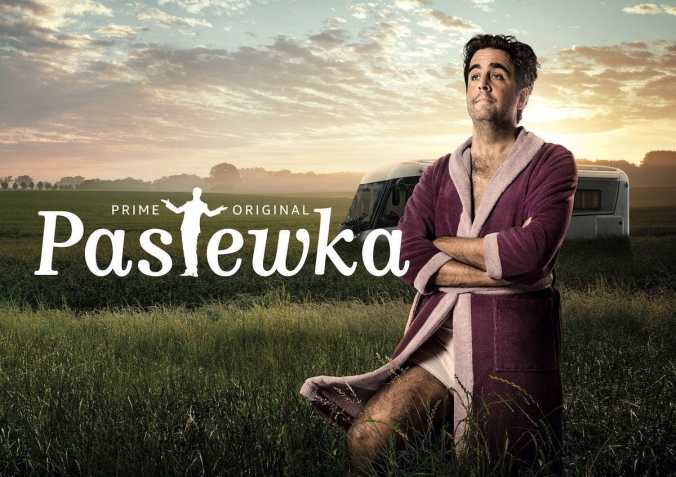
Pastewka

8 seasons, 77 episodes, 2005-ongoing, Sat.1, Amazon Prime

IMDB | Wikipedia

Comedian and writer Bastian Pastewka plays himself in his eponymous series. A comedy slice of life with surreal elements as well as hint of truths here and there, as this series is an exaggerated version of his own turbulent life. Guest actors will play themselves as well, this series gets often compared to Seinfeld and Curb Your Enthusiasm, and has won several awards, German and European alike.

The series ran from 2005-2014, and recently got a sequel-revival in 2018 on German Amazon Prime. No information on English subtitles.

game_one.jpg

Game One (former MTV’s Game One)

12 seasons, 307 episodes, 2006-2014, MTV Germany

IMD | Wikipedia (German only)

Now here we have something beloved, influential, and emotional to many, many people in Germany. Game One was a TV show that combined video game reviews with sketch comedy.

Back in 2006, MTV Germany wanted its own format about video games, and brought over a few nerds from a small show called GIGA Games, and told them to do something fresh and new for a young audience. And so, they did.

This was a weekly show, always airing on Friday evening, and soon became one of the flagships of MTV Germany. The two main hosts, Daniel “Budi” Budiman and Simon Krätschmer, became cult heroes to a new generation of gamers, who would lead the show with fun, charm and lot and lots of laughter. Their usually low budget soon became their own aesthetic, obvious greenscreens, lots of slapdash costumes and a big heart to hold everything together. Their self-proclaimed leitmotif: “Hauen und Pappe!”, meaning “Beatings and cardboard!”, was the peak of what this show was: lots of excellent practical humour and cheap sets.

Throw together “British surreal comedy” and “video games”, and you got Game One. Many sketches and phrases of theirs have entered the popular mindset of Germans everywhere, and when the cancellation of the show was imminent, they came together for one last hurrah: The final episode will bring tears to practically everyone who even remotely knew the show.

However, they would not disappear: They founded “Rocketbeans”, a digital TV channel, and have even revived their show as Game Two, under the new license-fee funded digital branch of ARD and ZDF called “funk”.

Game One will be fondly remembered by millions of people, and Rocketbeans are continuing their adventure to a bright future. Even if they don’t have subtitles, give the lads some love. Here is the library with all their past Game One episodes (which will always be uploaded on Youtube too somewhere), here is their new Youtube channel Rocketbeans, and here is their own presentation in 60 seconds, and it perfectly encapsulates what Game One was all about:

And that concludes the first batch of recommendations, if there is more need, I will be recommend some more, feel free to reach out!

Have fun watching them, and all the best!
MANLY MONDAY – “Blacksad” When Ex-Disney goes Film Noir

The Disney Company owns quite a lot of franchises these days: From Star Wars to Marvel, the Big Mouse has accumulated a vast gallery of rights, artists and studios under its white-gloved hands. Many wonder what Disney doesn’t own at this point.

This poses a more important and certainly more intriguing question: What if someone leaves Disney? What do they do after their time at one of the biggest companies in the world? Here is one of them: Juanjo Guarnido.

Juanjo Guarnido, born 1967 in Spain, always had a love for comics. He drew and joined many fanzines, gained the attention of Marvel, and started doing work for them. In 1993, Guarnido became an animator at Disney Animation Studios in Montreuil, France, and I am fairly certain that you have seen some of his animation work: strong and classy “Helga” in Atlantis: The Lost Empire, the expressive and emotional “Hades” in Hercules, and he was the lead animator of villainous leopard “Sabor” in Tarzan.

However, Guarnido decided to leave Disney and to rejoin with one of his older friends from his comic days in Spain: Juan Díaz Canales – they had been discussing producing comics together for a long time. And so, both of them came together as an artist-writer team to produce their own original comic, which was published in 2000: Blacksad.

They surely couldn’t imagine what this comic would later become: Universally loved by critics and the public, a strong, respected and recognisable franchise with 5 comics in total, and several outstanding awards, such as the Eisner Award in 2011 for the whole series. Let us take a look at this wonderful graphic novel:

68d33259fd0a85a9a028db27ad0a9db3

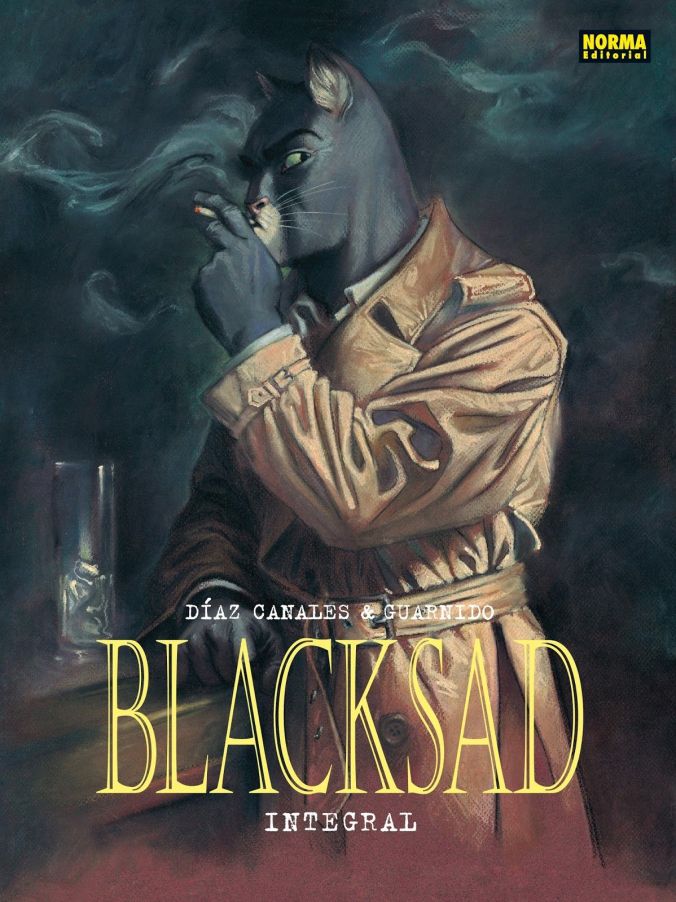
[Spanish Complete Edition Cover.]

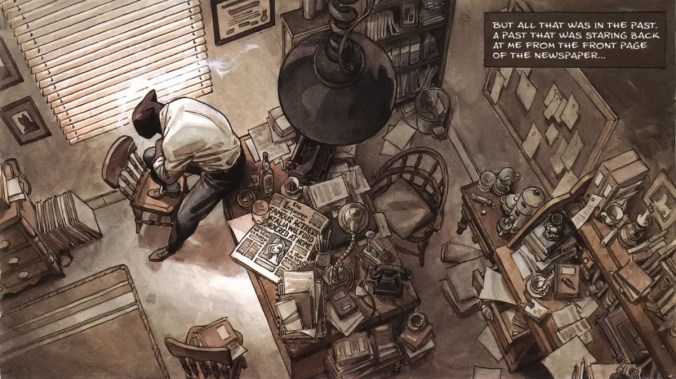
Blacksad is the story of the title-giving John Blacksad, black cat and private detective. His cases range from investigating a murder, to being a bodyguard, to simply fighting for his life which has gone downhill. Blacksad himself is the classic Film Noir protagonist, complete with badass traits and strength, but also emotional vulnerability and other flaws. The first volume, Somewhere Within The Shadows, shows the broken cat man in his messy yet functional office, telling of the character that works here.

blacksad-2

Guarnido’s backgrounds are brimming with detail.

The first volume is a celebration of all that makes the Noir genre, chiseled men who believe in justice, bad guys who must be defeated, shady bars full of questionable characters, and a looming sense of villainy seeping through every rusty crack of the city. The Blacksad series is the distillation of 1950’s America: freedom, style, beatnik, jazz, but also racism, inequality, street violence, and everpresent crime.

blacksad_within-shadows_2000_03.jpg

Every volume plays in a different setting with a different theme, keeping the feeling fresh and interesting, with a reoccuring cast of colourful characters introduced slowly over time. And of course, these adventures will be intense, as the hardboiled genre asks it – action will go down.

blacksad

C54FNQ5

blacksad19

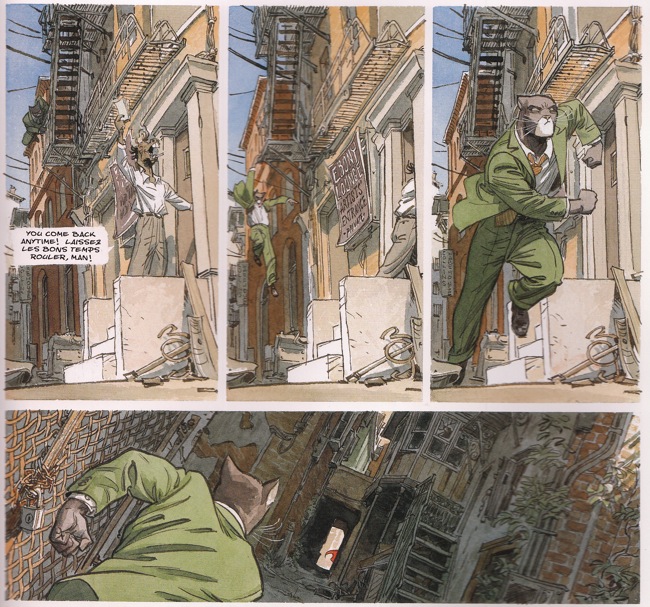
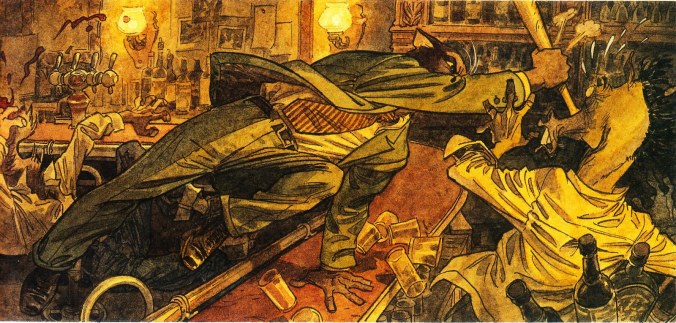
Action inBlacksad” is strong, clear and perfectly framed.

Here is where Guranido’s artwork shows its pure strength: Due to his experience as an animator, of drawing art in motion, he is masterful in his depiction of movement. Shots, punches, beatdowns and explosions all look visceral, right in the execution, as if stopped in a wonderous intense timeframe where one can look at all the details that only a comic book can allow.

If you wish to explore his animation style a bit closer, to also understand his way of framing action, look no further than his animated music video Freak of the Week by Swedish metal band Freak Kitchen. This 5-minute kickstarter-funded marvel is filled with some of the most vivid and expressive character animation in recent years, showing musicians in their fiery strong element, with rough outlines full of camera turns and fluid motion.

Especially that wonderful metal hair animation, fantastic. Sakugabooru.

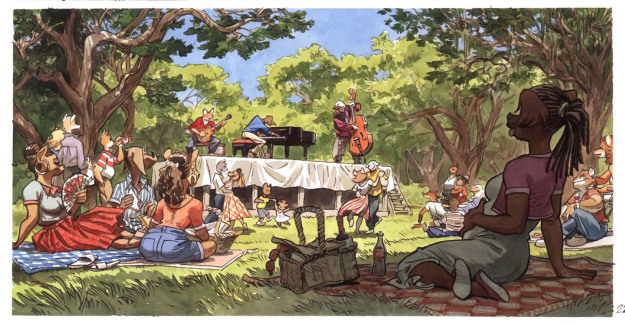
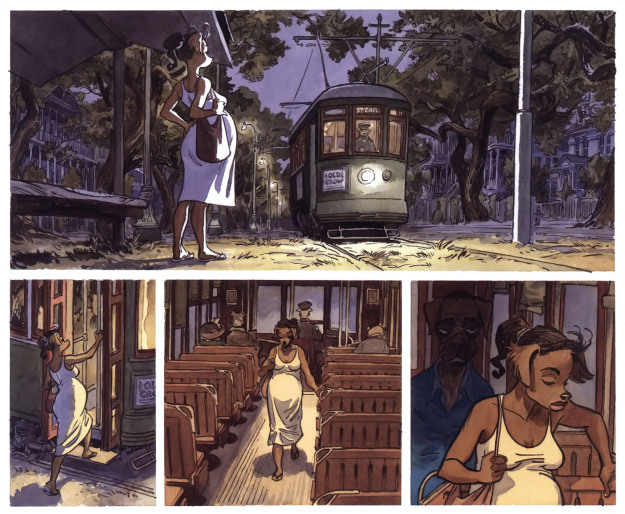
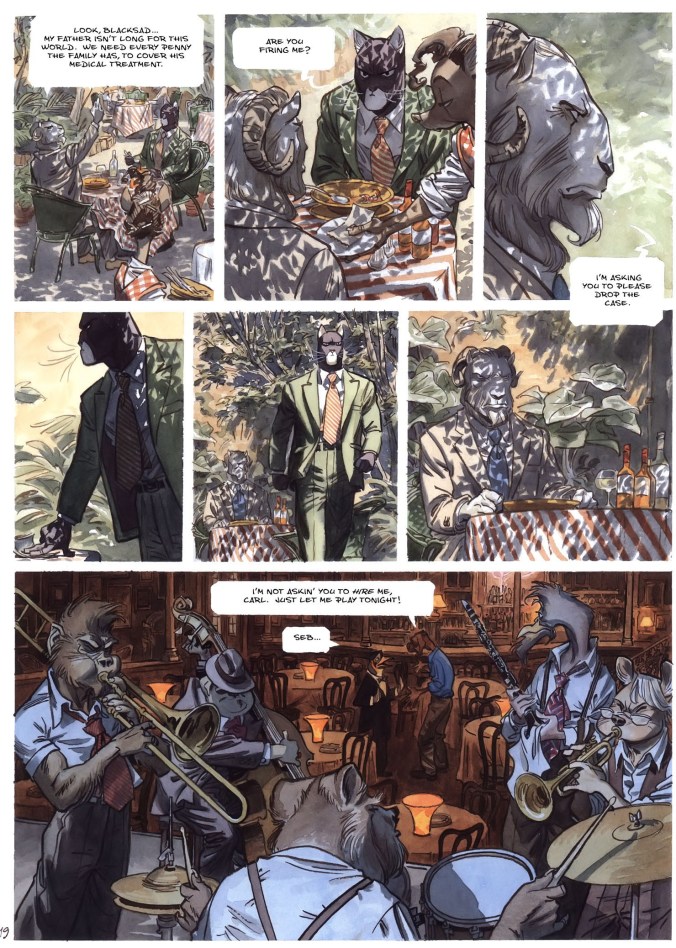
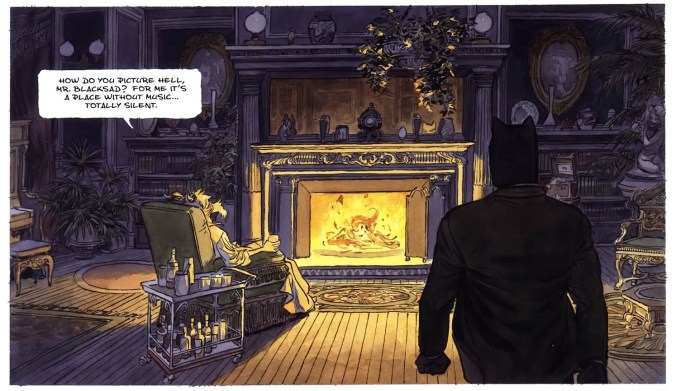
But not only is the action stellar, the colouring and lighting are wonderfully crafted as well. The watercolour settings spring to life, with astonishing detail and such a graspable sense of space that one wishes to simply step into the frame.

blacksad_a-silent-hell_2012_02blacksad_a-silent-hell_2012_04blacksad_a-silent-hell_2012_03blacksad_a-silent-hell_2012_06

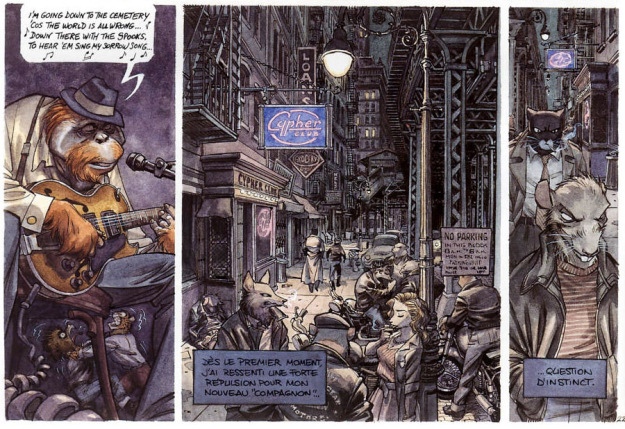
All frames from Vol. 4, “Hell, Silence”, which focuses on the world of jazz.

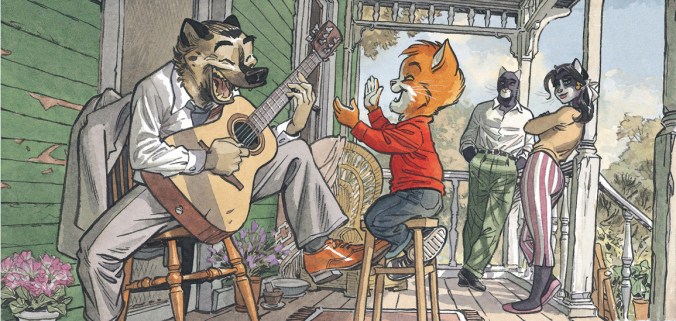
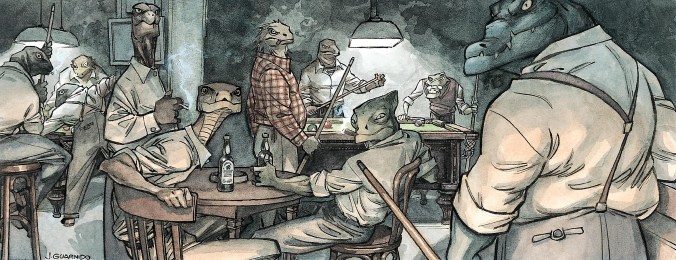
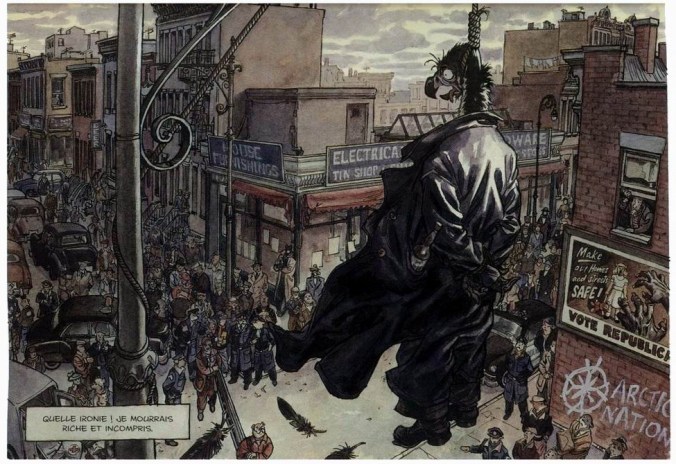
To adress the elephant in the room and the reason many people start this series in the first place: the world is inhabited by anthropomorphised animals. And to see these Disney-esque character designs in dark stories is intriguing as a concept in itself. Together with the brilliant execution and talent of artist Guarnido and writer Díaz Canales, it has an inescapable charm and fascination – and when these bright character designs clash with the harsh reality of society, it is exponentially more shocking.

blacksad-5-750

From happy times with friends…

565587.jpg

…to shady places of the underground…

blacksad_arctic-nation_2003_02

…to the hatecrime against a black-feathered bird in a small town.

This “Disney but not-Disney” feel is one of the main points that draws readers initially in. These themes and topics would never be touched by the family friendly corporation, but with Blacksad, it opens the possibility to a dreamland what-if scenario: What if Disney had never left 2D animation, and had started becoming adult with its content?

However, one should not reduce this graphic novel series to the past of one of the creators. These are expertly crafted comic books with masterful artwork, and I highly recommend that you experience this series yourself. (There was even word around of a Hollywood adaptation with a budget of up to 100 million dollars, however, the project seems to be stuck in development hell since 2009. This is not a problem, as the comics can easily stand on their own.)

An additional note I want to make here: Blacksad was released in France first, and was thus intended for the standard publishing size of that market. Franco-Belgian comic books have a larger format than their international brethren, which is perfect for detailed artwork and has a long tradition in itself. Hence, I would not recommend buying Blacksad digitally, as it can easily lose its impact on a small screen. Treat yourself to the physical release of your choice, Collector’s Edition or single volumes, and enjoy Blacksad as it was intended.

20180525_101112.jpg

From left to right: manga size, American comic size, and the French standard size. Above, you see the full effect of the artwork if the book is flipped open.

Blacksad is a fantastic graphic novel series that I would recommend to anyone who is even remotely interested in comics, artwork and/or colouring. For fans of the Noir genre, this is an absolute must, and even if you are not into the genre – open the pages and let yourself soak in this retro atmosphere of a time long gone, now told with a charismatic cat man by a beloved and insanely talented artist/writer duo.

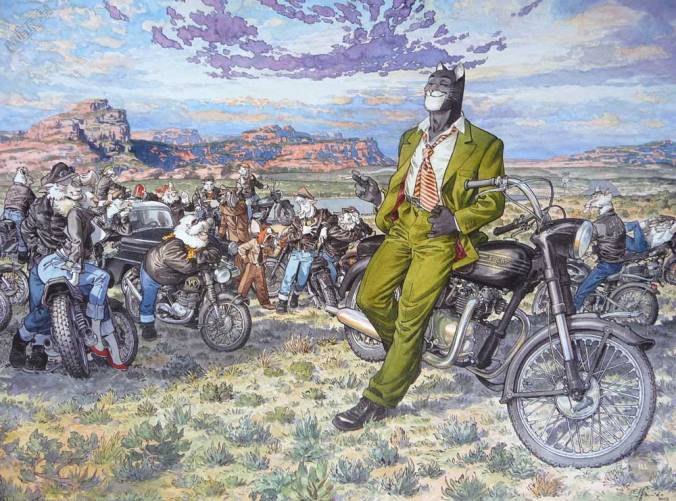
juanjo-guarnido-affiche-art-poster-bd-deco-illustration-blacksad-amarillo-road

The End.

Sources: Wikipedia “Junjo Guarnido” “Blacksad”, Disney Wiki “Juanjo Guarnido”, Sakugabooru.

MANLY MONDAY: “LifE”and “Confession”- Fukumoto Double Feature

Nobuyuki Fukumoto, or nicknamed “FKMT” for short, is most known for his unique, sharp expressive artstyle, and hard-boiled underworld stories, that cut to the core of human emotions.

Since the 90’s, he is a successful mangaka, with several long-running series, that are all beloved by critics and fans alike. But one of the downsides would be that therefore his work is not easily accessible. His manga are fantastic, but insanely long -“Kaiji” and “Akagi” have both been running for 20 years now, and other series have had spin-offs, parodies, prequels and sequels. The “Fukumotoverse” is immensely big and vast, yet so very lovely to get lost in. Intense long stories all around.

So, is there a way to get a glimpse of his work, for a newcomer for example? A “snack-sized” FKMT story?

There are two short stories written by him, illustrated by Kaiji Kawaguchi (Ha! Kaiji!), that are short, intense and have all the traits of the author. These two manga are “LifE” and “Confession”.
LifE

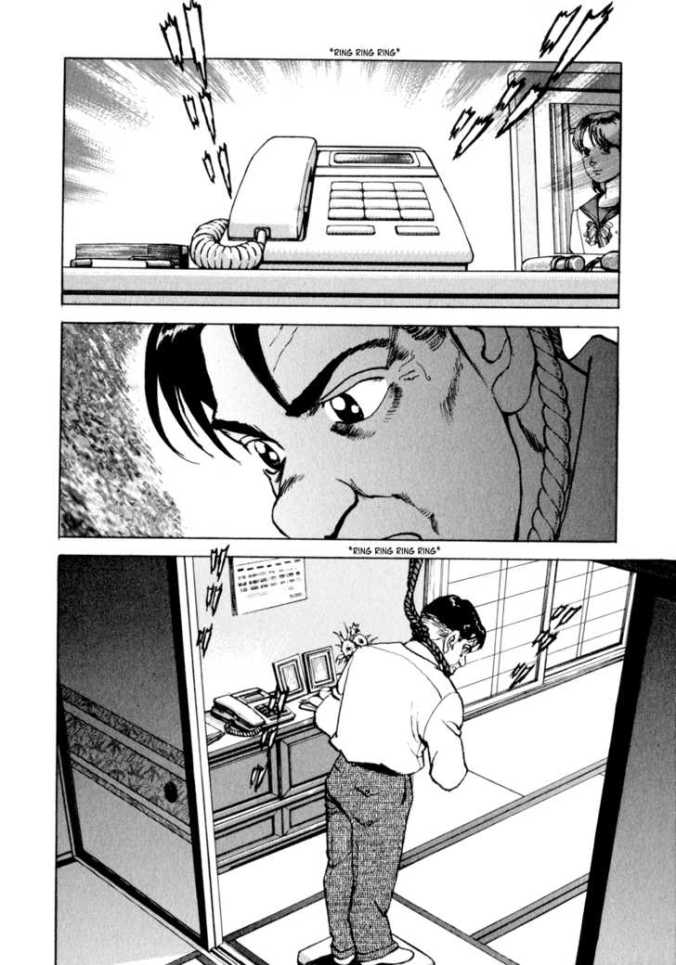
“LifE” or “Seizon Life” is the story of Masao Takeda. His wife died after a hard and long fight with cancer, and now, he has been diagnosed with the same cancer as well. Devastated and emotionally destroyed, he wants to take his own life.

But as he steps up to the noose to hang himself, his phone suddenly rings.

edc3852bbddba4e00c5b07e9ec84adb20ac74559e7af3b86bd7e3656369bc8121cb8d8403866c552b16846a90aeff2b6

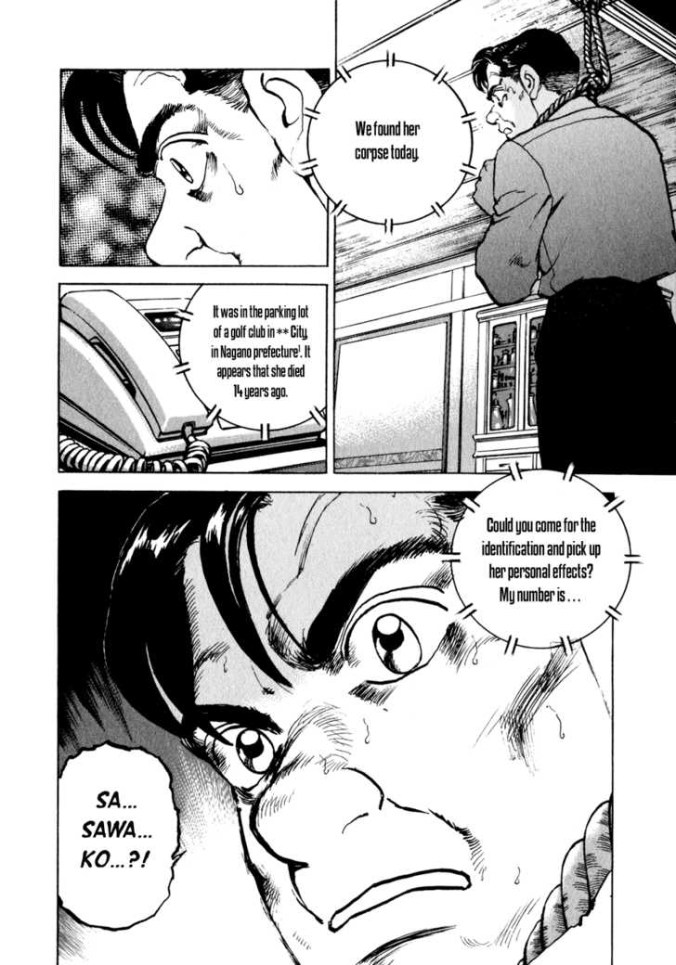
They found the corpse of his teenage daughter, Sawako, who went missing about 14 years ago. As he goes to the police station, and finally sees his daughter, he asks if the murderer can be found. He is informed of a crucial fact:

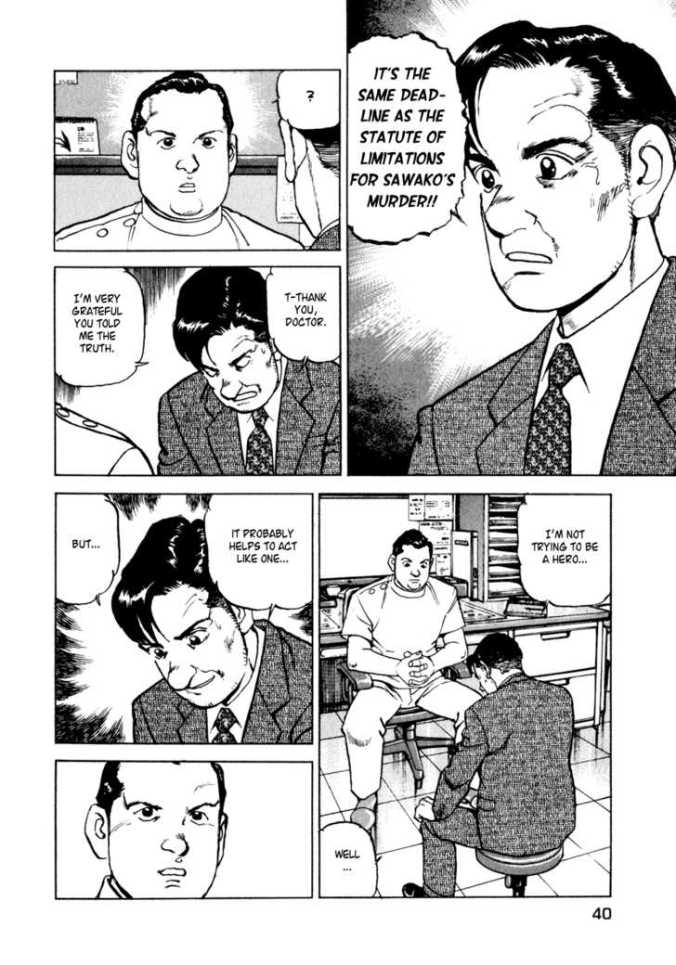
The “statute of limitations”. When 15 years pass, a case is dropped and closed, even when the true culprit has been found. Sawako has been found after 14 years and 6 months. In 6 months time, the killer will walk away unpunished.

Takeda cannot accept this. He waited so long for the confirmation of his daughter’s death and the finding of her body to give her a proper burial. He wants to take action. He will find the killer. Come what may. Yet his doctor is not ok with this.

f17a7b4c41d57d671309870e1c66196e57644cda74f144a838ac1f41a25641706314630e914f5c38a5451e46ef699be0

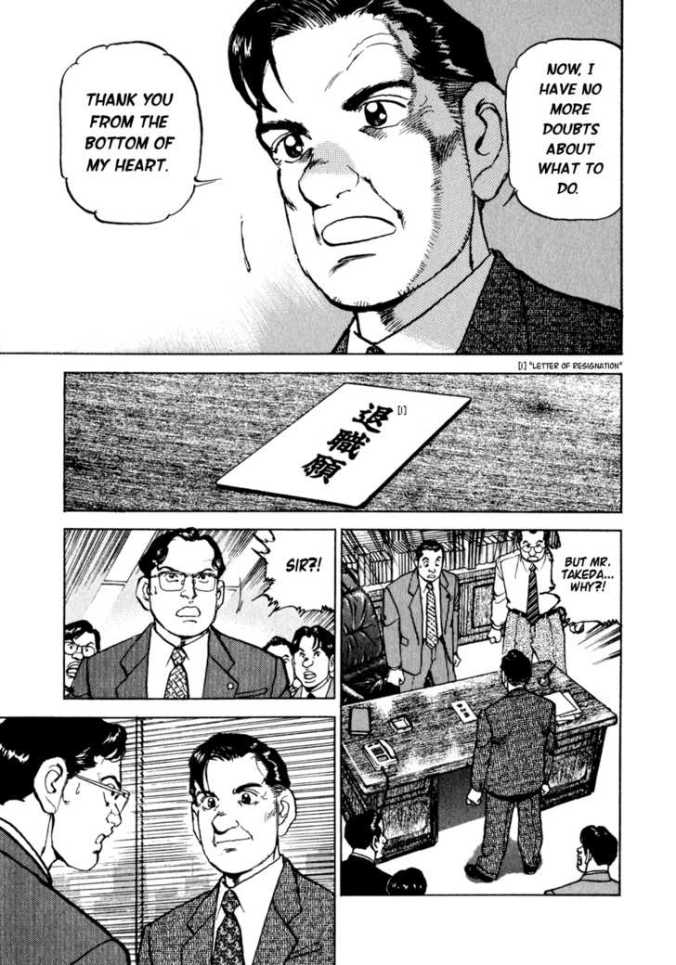
He hands in his resignation and walks away.

6 months until his death. 6 months until the murderer is free. This cannot be a coincidence, he thinks. And so, he goes on his very last mission: Find the killer of his daughter.

life-1

He is somewhere. Out there. A free man, unpunished.

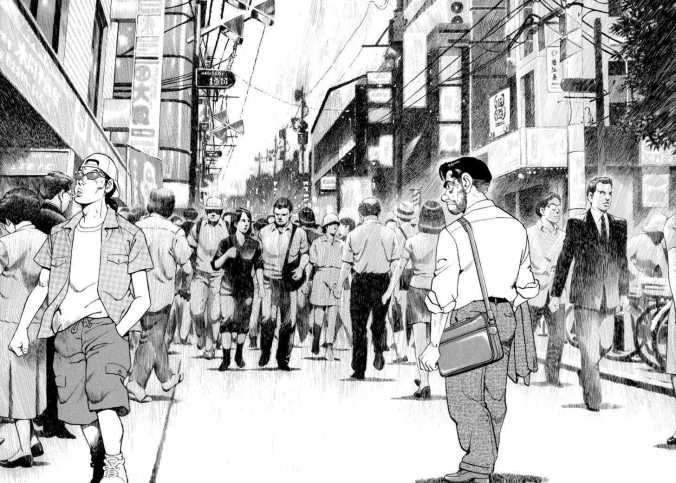
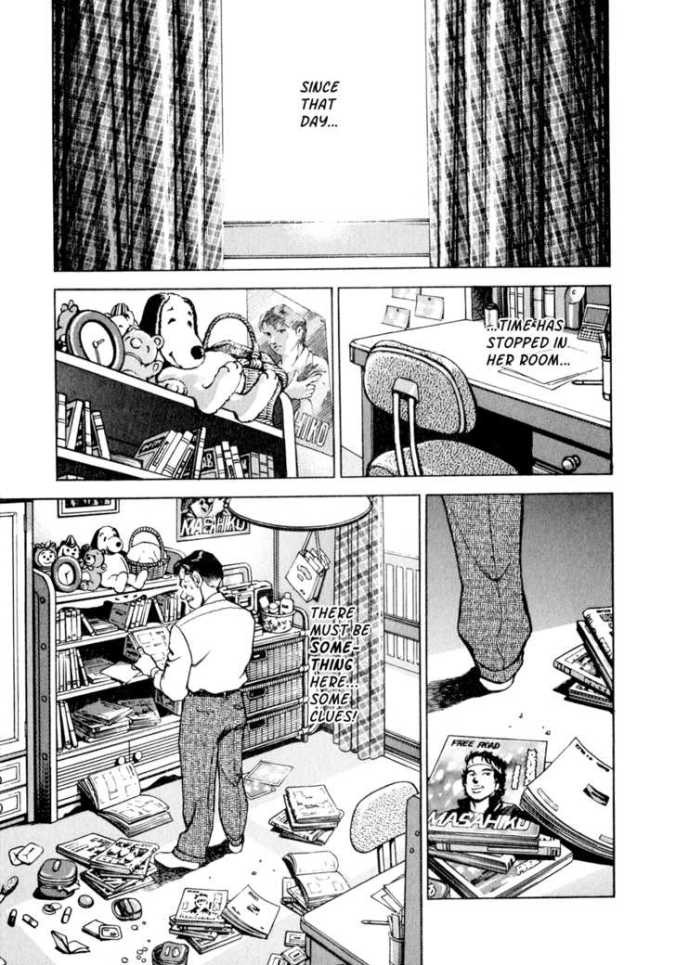
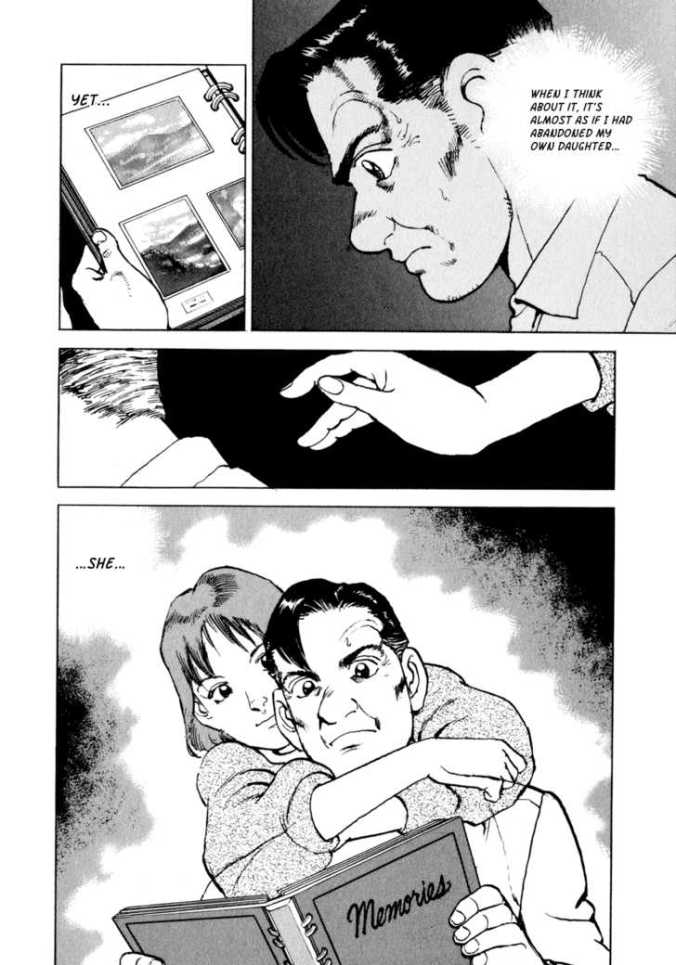
The story unfolds, and reveals single pieces of mystery and detective work, as Masao Takeda tries to walk the same path his daughter did on the fateful day she died. As he retreads his memories, Takeda sees himself as a bad father during her lifetime. He was too cold, distant, didn’t really care for her interests and hobbies, and was always at work.

But now, all he can and even must do, is to look at her life and interests.

5f210497582ad7896b38455dbcbb10c22ded9dac1720c6afa021f2ddbff3090f

And so, they reunite from beyond the grave to find the killer and their lost time – together.

A big criticism of FKMT’s body of work has always been that he doesn’t include romance or important female characters in his stories. While largely true, this does not impact the strength and importance of his work. It is not his focus, and it may also be his way of breaking with his “Shoujo Manga Artist” past. He was once an artist who wrote and drew romance, even winning awards with it, but it left him unhappy. It was not what he wanted to do. So, he left the magazine he worked for, and went to a tiny Majongg manga magazine. And this is where his career took off. But now, it is nearly impossible to find his old work before he started doing Seinen.

Instead, he has found his way. He understands and paints “relationships”, especially between male characters, more than any other: be it top-down unbalanced friendships, true friendship, naive falling for fake relationships, false admiration, extensive villainy, a mix of all of them, or in this case: Family. And as he has shown in other works – most noteably in Kaiji Part 4 – that “family” is theme he can do perfectly. It’s even a more rare case here: The bond between daughter and father – a theme way too often overlooked and underexplored in media. “LifE” shows it in a beautiful, strong light, that may bring a tear to your eyes and make your heart swell.

Takeda only has 6 months to solve the case, and to live on this planet. It is his last stand and final action. The clock is ticking. 15 years are a long time. Many things have changed. This is not going to be easy.

life-3

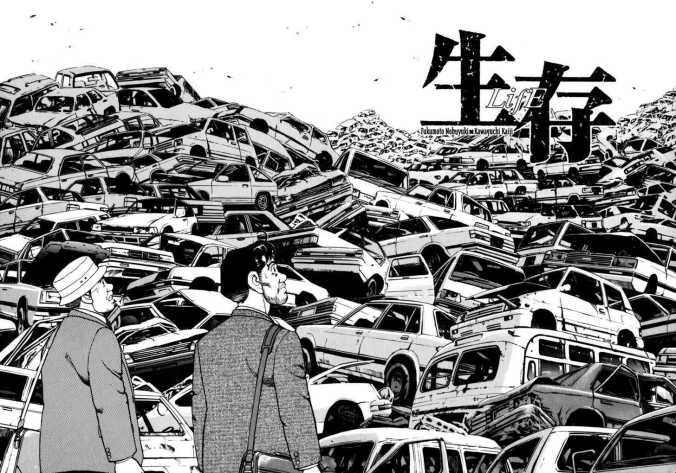
It’s like finding a needle in a haystack. Or a clue in a junkyard full of cars.

Complementing FKMT’s writing is Kawaguchi’s artwork, a very detailed, but still slightly cartoonish look, that gives it a strong sense of realism. A special focus should be put onto protagonist Takeda. His grave, sad, expressive face is what carries this manga. In addition, cancer is eating away at Takeda’s general health, meaning that he becomes more and more thin and gaunt the more time passes. The visual clock of his well-being is ticking away too.

Takeda must also walk the fine line between “handing the murderer to the police”, and “not turn into a raging vigilante”, which is also a theme in the story. When sadness and grief builds up for so long, it can cause immense damage.

6835e044630dc80e5712e1fe08129e08

“Shining Justice” certainly looks different.

While this story seems inherently sad from the outlook and may scare some readers away, I can more than recommend it for its intense detective/mystery story, but also for the heartwarming moments. “LifE” is a story of hope and sadness, reuniting of a family, the bond between father and daughter, and the race against death – for one last act of justice.

“LifE” is concluded in 3 volumes, and would make for a really good movie length-wise. FKMT’s writing and Kawaguchi’s artstyle really compliment each other and create a strong, emotional impression, with a touching story and expressive art.

57706141800f05de310aee185008a893

After this heartwarming/breaking story, let us focus on FKMT’s other short story and main strength: Intensity and Thrill.

Confession

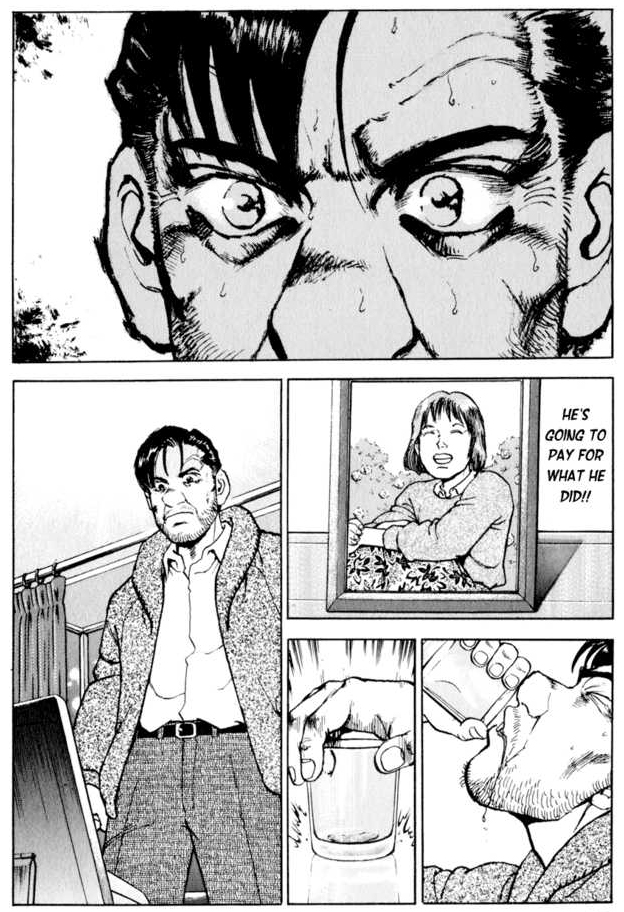
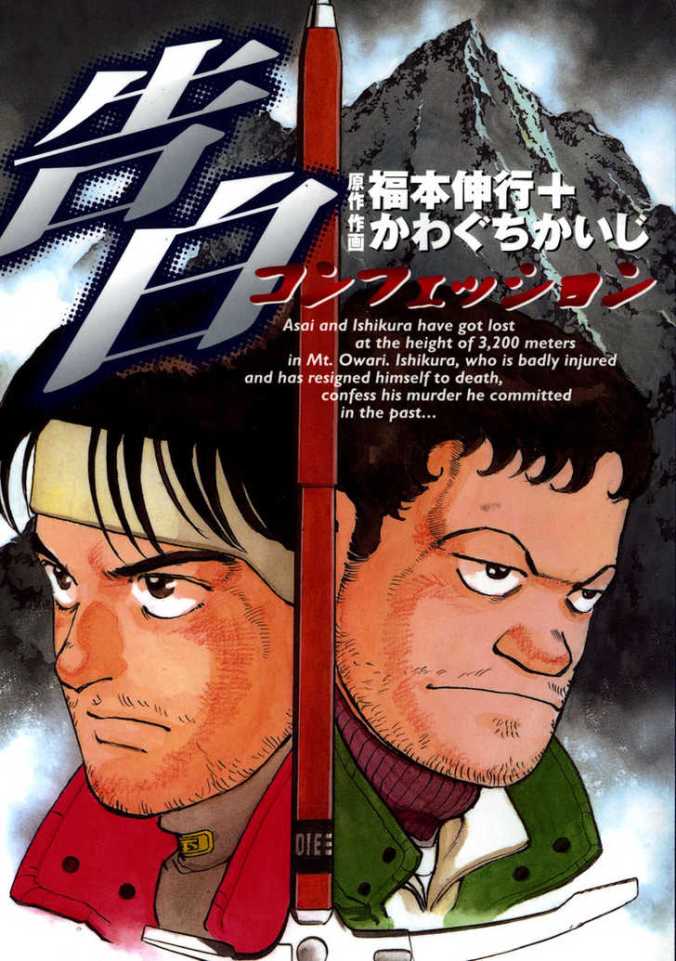
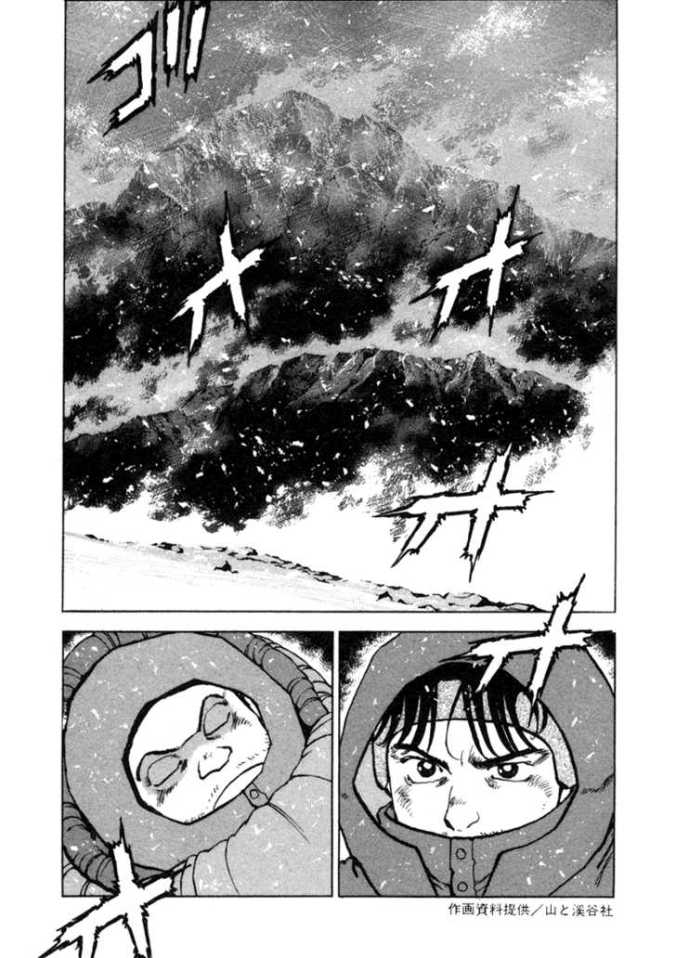
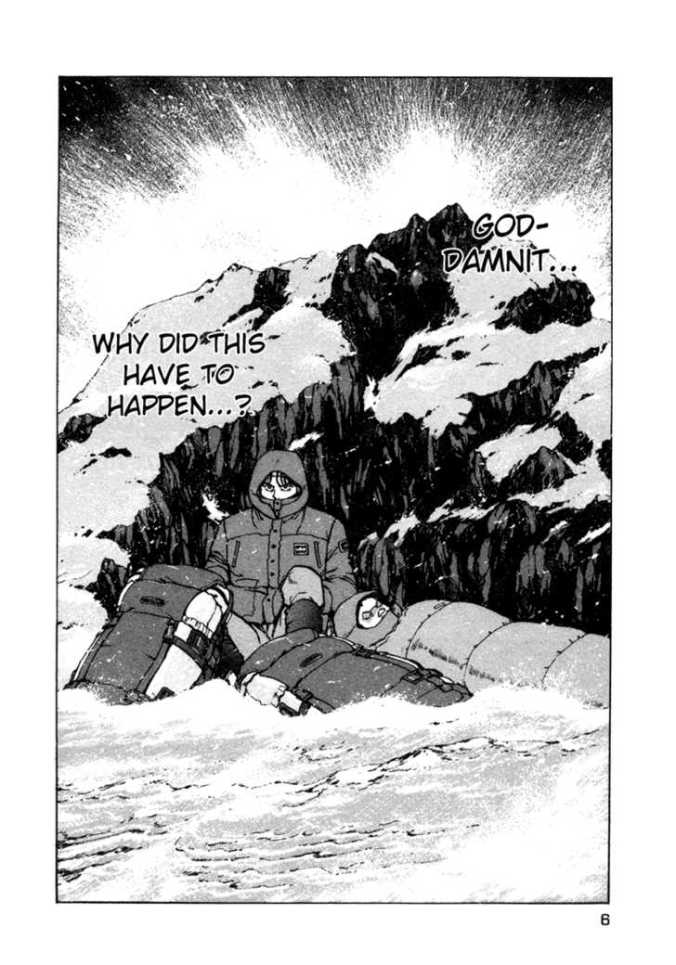
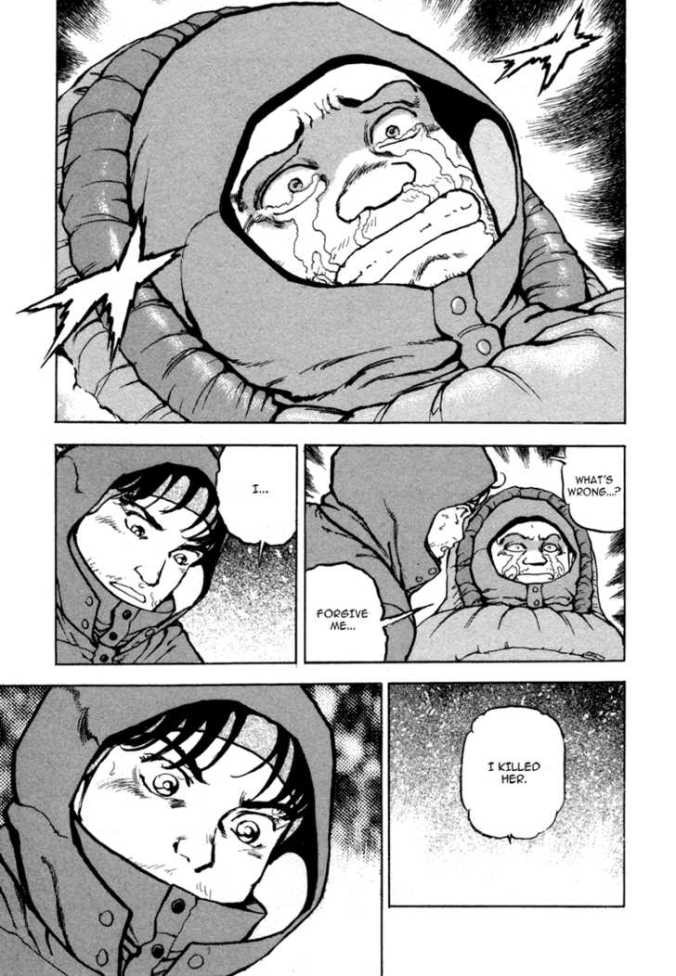
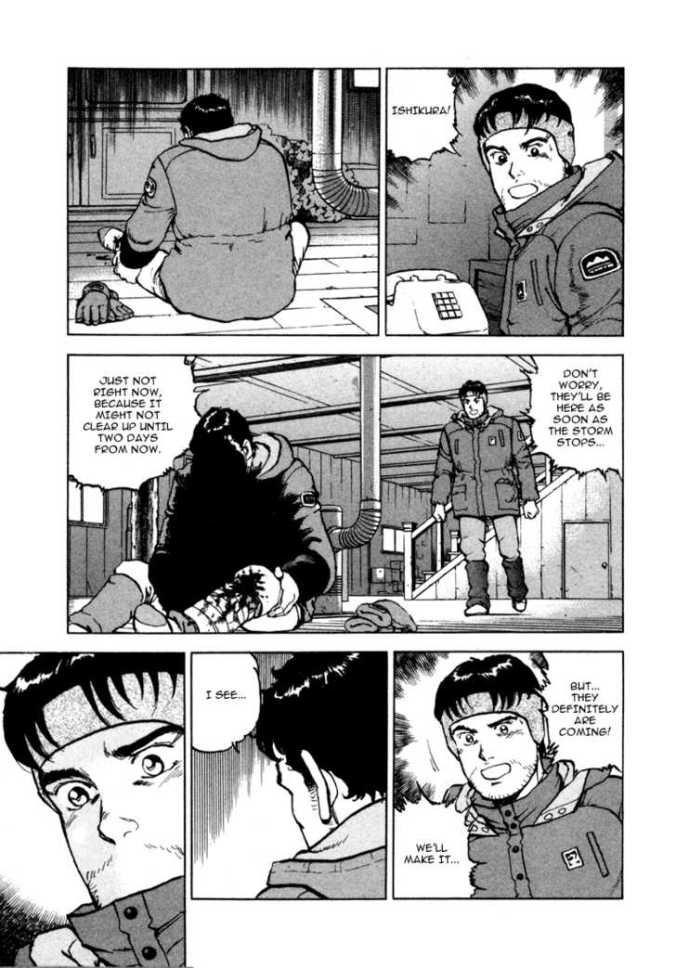
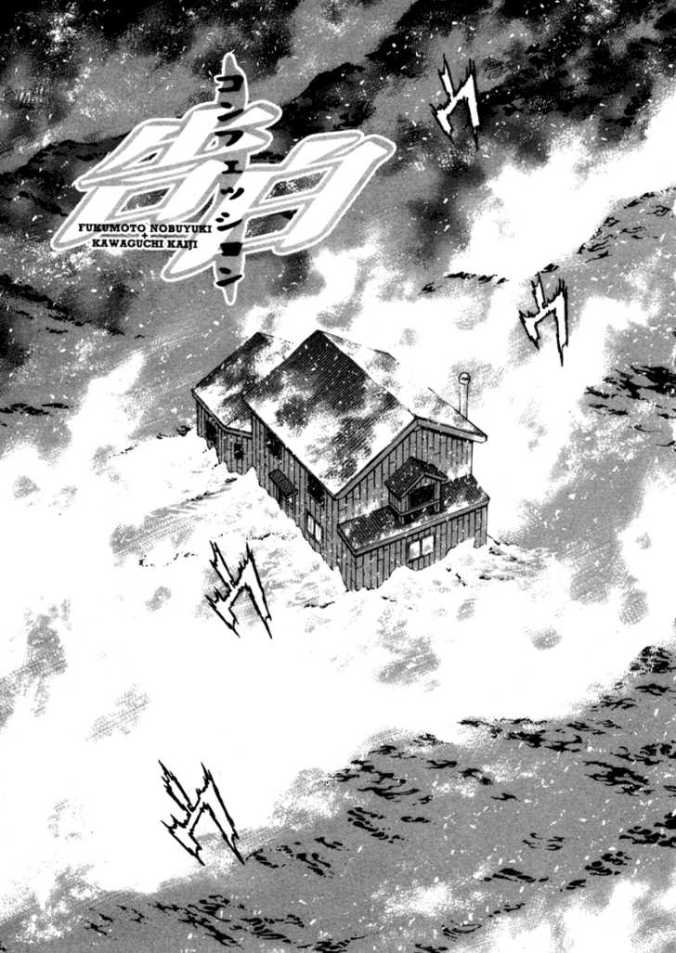
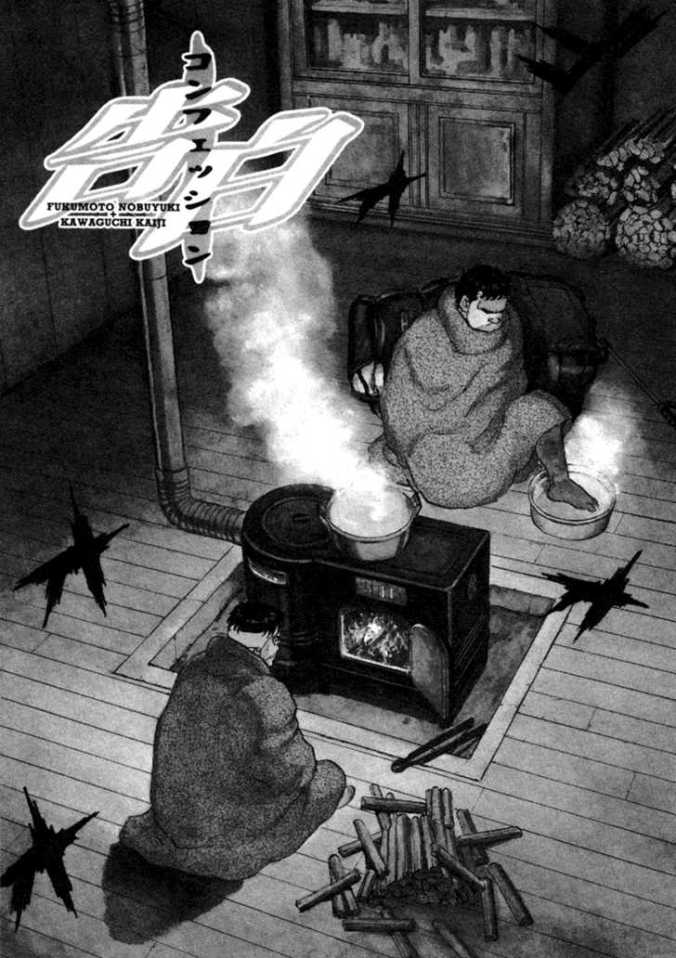
“Confession” or “Confession: Kokuhaku” is the story of two friends, Asai and Ishikura, who go hiking in the snowy mountains, but get lost in a snowstorm.

31903dcad677faf541906944f8298dc4

Now, you may look at this cover and think, “Man, why would you write such a spoiler on your cover?” There is a point to that. It is the initial setting.

5f94a67af7da8b95876aa7a9af32177d49bdcd676c8eea469eb7ad1ff9a160a578ebf42a56d54be2bb04414b6d76a2e0

This happens in the first 15 pages.

Ishikura confesses that he killed one of their friends during a past hiking trip. He is certain that they will both die in this snowstorm together, so he wants to confess his sins, to, at least, die in peace.

Asai is understanding in this extreme situation. How can he deny his dying friend’s last wish?

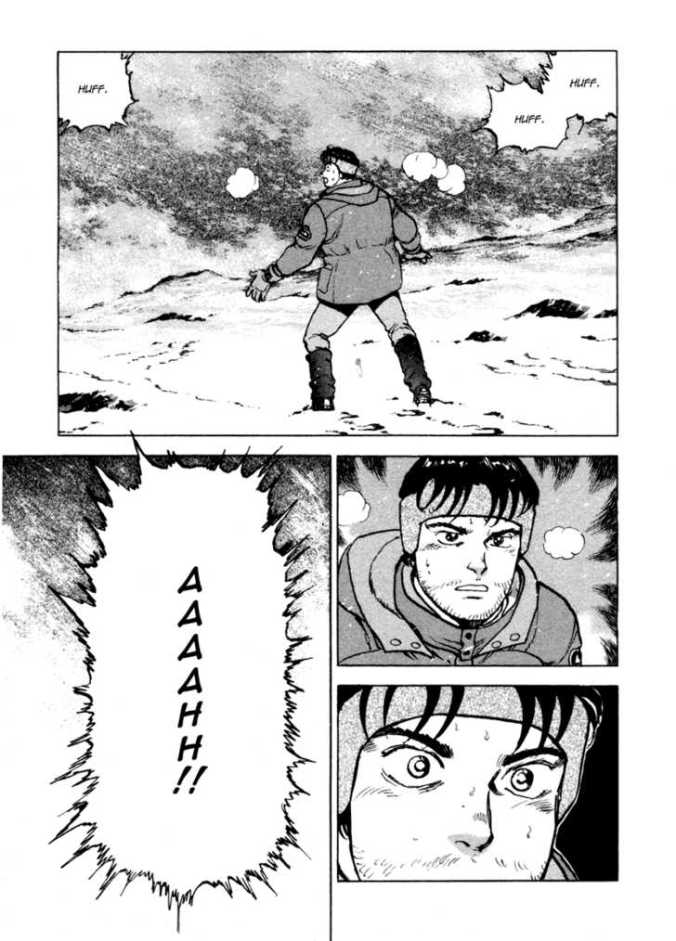
But as Asai gets up, for a desperate try to look for help, suddenly:

ea6259b60fcfee2f484a3ca95179bbbc214272010ad5b46da5eb8044ac1aa436

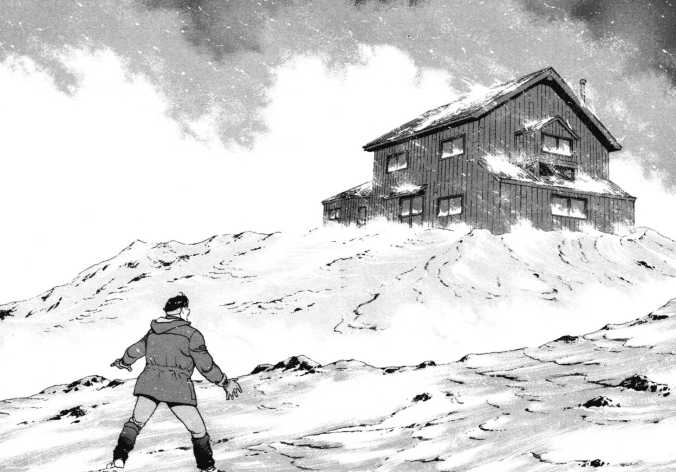
They weren’t far from their original destination, a mountain lodge.

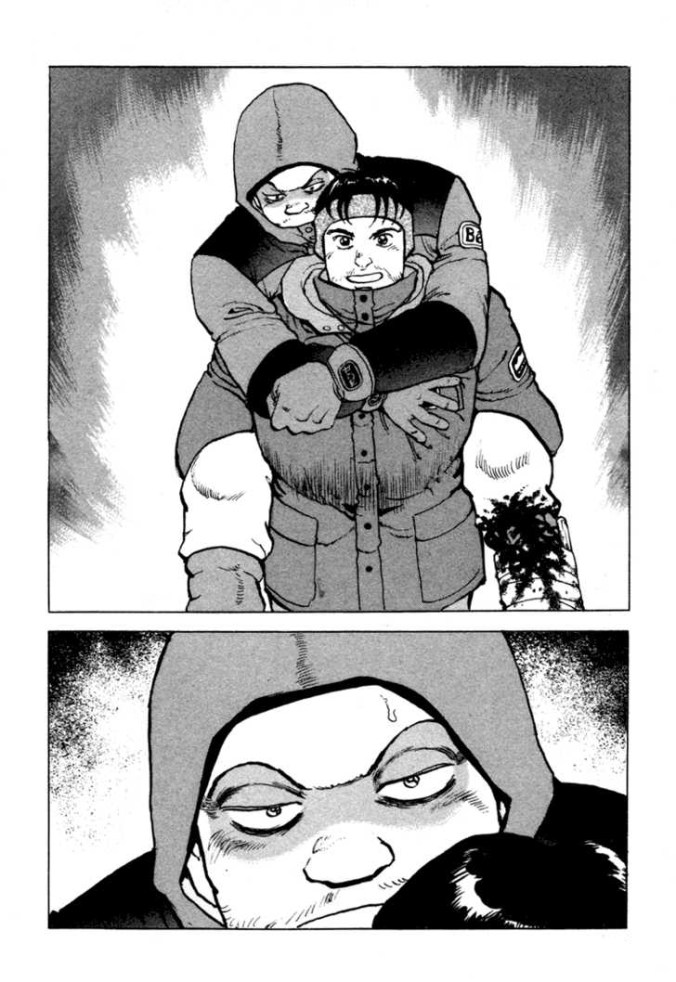
Saved! They are not going to die out here in the cold! So, he simply needs to carry his wounded friend up there and call for help! Everything is going to turn out ok, is it?

fce7cf159e3bdf36e8387eb9261192ce

No.

In fact, everything has become worse. Ishikura just confessed a murder. And he survives. His dying wish has turned into a massive regret. Maybe into something more.

19da7d7b98e747ae25e1e7256fbdaa95733c225803a84d2eb29d3ce7ff2b96ab

Something is not alright.

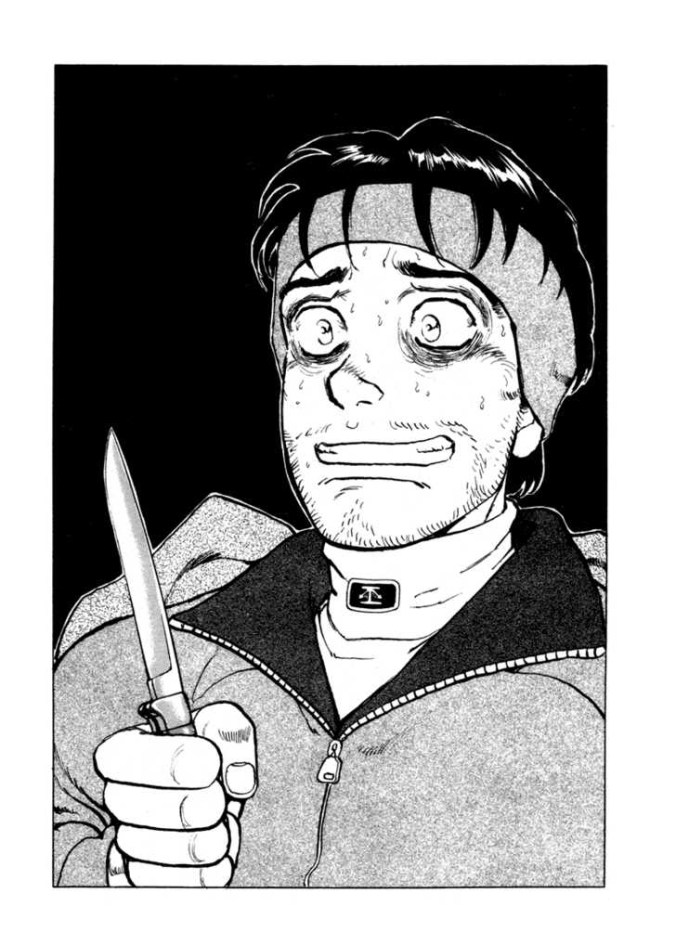
And so, the manga starts. 2 days until help arrives. 2 men in a single room. One of them is a murderer, who just confessed. But he is hurt, so he cannot move.

What to do now?

6c9057b9d60e4aaacc4e5774d235d68b

They wait.

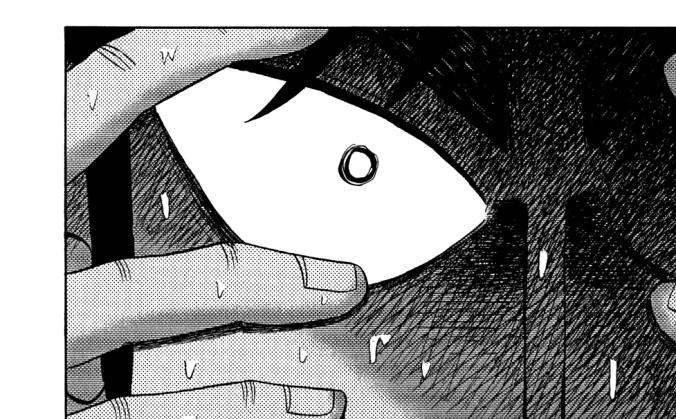
Kawaguchi’s artstyle really shines in this story, as he also shows a stylistic preference and focus that FKMT prefers in his manga: Eyes.

eye

confession

Eyes say more than a thousand words.

This is peak FKMT writing: Psychological warfare with real physical threat between two characters. We see both sides and it has the genre of a “chamber play” – a whole story that plays out in a single room. His writing influences the artstyle as well, a lot of reaction panels, atmospheric shots and internal monologue that just flies by. His writing is so smooth, you won’t notice going through many, many pages.

268b50cef47e51940c15cd8b352bd580

I do not wish to tell you more than this setting, because this story is best experienced blind, without prior knowledge. Just let it be known that FKMT is a master of dialogue, suspense and Thriller.

“Confession” is only one volume, about 300 pages long, and yet it has you on the edge of your seat at every page turn.

Conclusion

If you ask me personally, I prefer “Confession” over “LifE”, as it had me cling to my table while reading it. This does not mean that “LifE” is bad, far from it. Both works are brilliant short pieces, but fundamentally different in tone and narrative structure, so that it comes down to personal preference. While “Confession” glued me to the pages and sucked me in with pure intensity and rough power, “LifE” made my eyes teary in empathy and understanding.

Both stories have aspects that many fans and critics love about FKMT’s writing: Heartwarming and heartbreaking moments, raw emotion, intruiging characters, difficult and interesting relationships, unique situations, psychological aspects and intense atmosphere.

If you are a fan of FKMT already, these stories are interesting additions to his canon and great observations about his writing, to see it detached from his unique, yet “something-to-get-used-to” artstyle.

If you haven’t read anything by FKMT yet, or have been put off by his artstyle, this may be your chance to check him out as an author and see the appeal that his trusty, long-living fanbase loves him so much for.

The End.

MANLY MONDAY: “My Brother’s Husband” – LGBT Slice of Life with a Big Heart

e03301

In the vast landscape of manga, there is a niche. A tiny one, apart from all the others: The Bara genre, or Gei komi. Gay manga for gay men – far away from the feminine bishonen look of Shonen-ai and Yaoi. This is a genre of sexual content that the favours all male body types. From big to short, to curvy or hairy. Generally: A lot more “manly aesthetics”.

To understand this niche, you need to know: Being gay in Japan is not easy. Traditional world views are still in place, heterosexuality is the norm, homosexuality is seen as just “something silly” on TV. It is not being talked about, and swept under the rug. Coming out is hard, and parents will be highly disappointed or flat out destroyed at the prospect of not having grandchildren.

How does one deal in this environment as a gay person? What is this society? How can we talk about this? Here, Gengoroh Tagame comes in.

The grandfather of Bara/Gei Komi is Gengoroh Tagame. Born in 1964 and openly gay, he is the one that brought the overlooked, tiny genre to new heights – with explicit drawings, historical settings, and a lot of BDSM works, ever since the 80’s. (Please do not “Google Image Search” his name lightly, his art is extremely explicit NSFW.)

In 2014, Tagame would start his first mainstream, not sexually themed manga, in Monthly Action – the magazine that recently published “Orange”. A manga about LGBT issues in Japan, that was the plan. But he would not be angry or preachy, do something shocking, or try to disrupt the social norms – no.

He decided to do a Slice of Life manga.

This is “Otouto no Otto” or “My Brother’s Husband”.

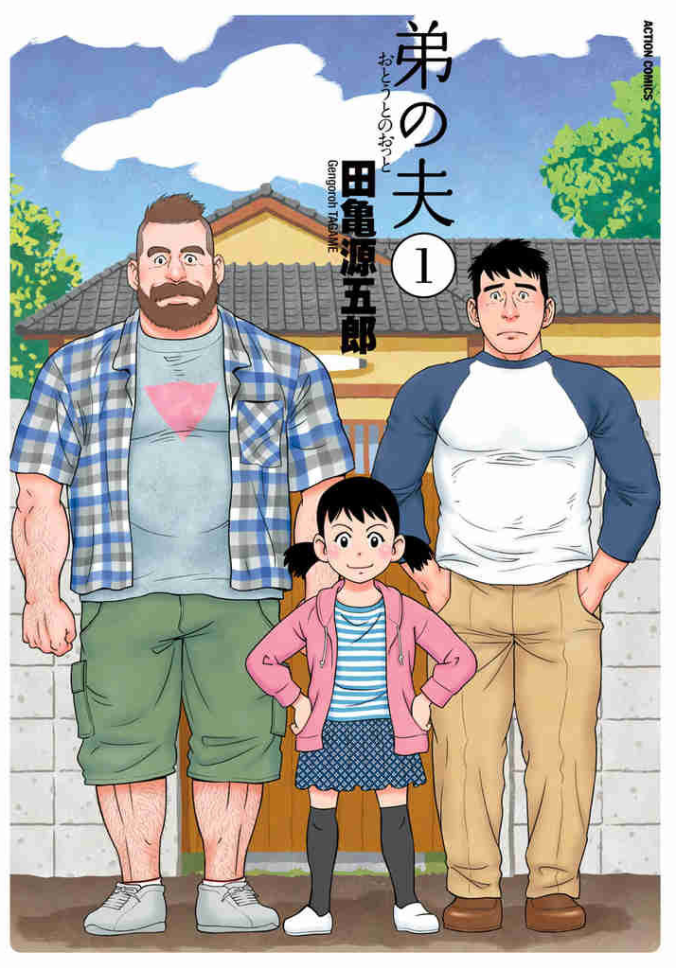
00cover.png

Story

Yaichi and Ryochi were twin brothers, but their parents died when they were young, and so, they tackled life and its difficulties together.

But one day, Ryochi outed himself as gay, and went to Canada, to live his life the way he wanted to, leaving Yaichi alone in Japan. Apart from each other, they lived their lives. Yaichi is now a grown man, and a stay-at-home single dad, living with his daughter Kana.

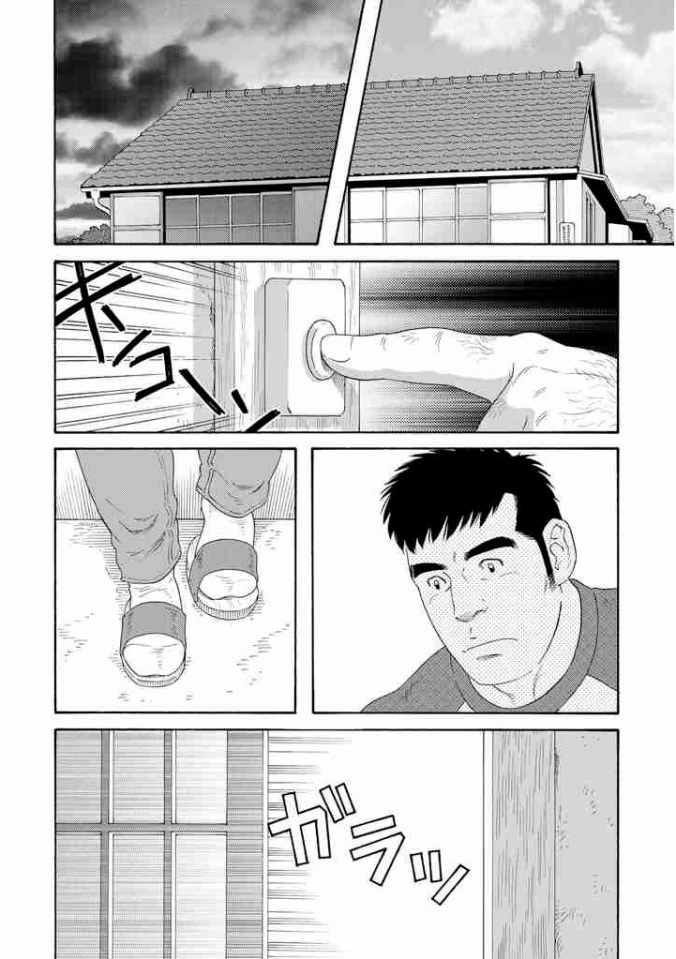
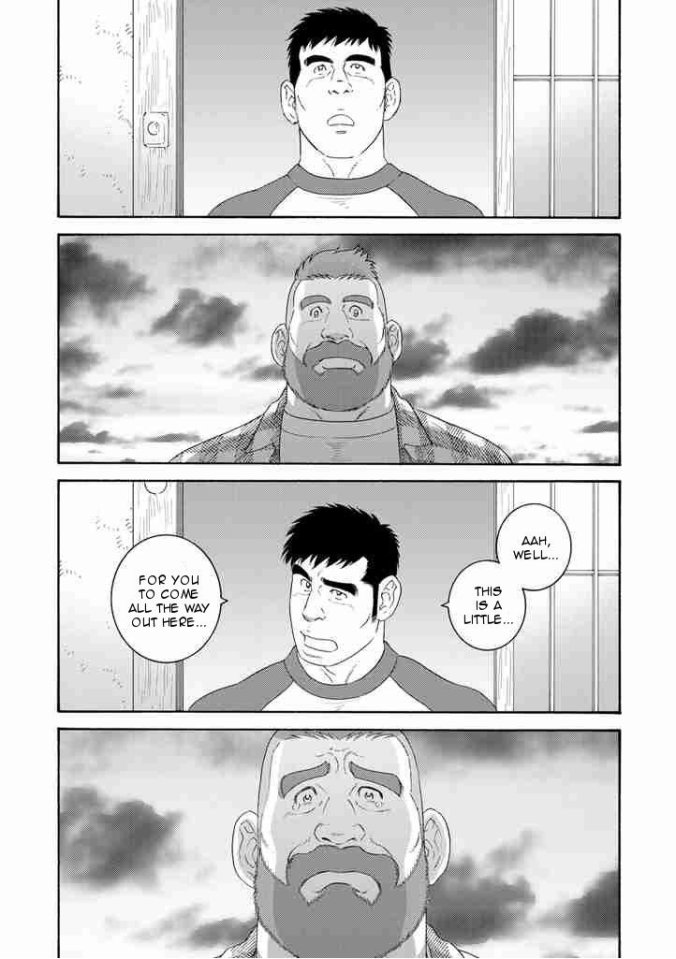
Unfortunately, Ryochi died just one month ago, leaving Yaichi in grief. But right now, this is not his biggest worry. Someone he doesn’t know is about to visit his house.

It’s his late brother’s husband.

d014

d015

d016

d017

d019

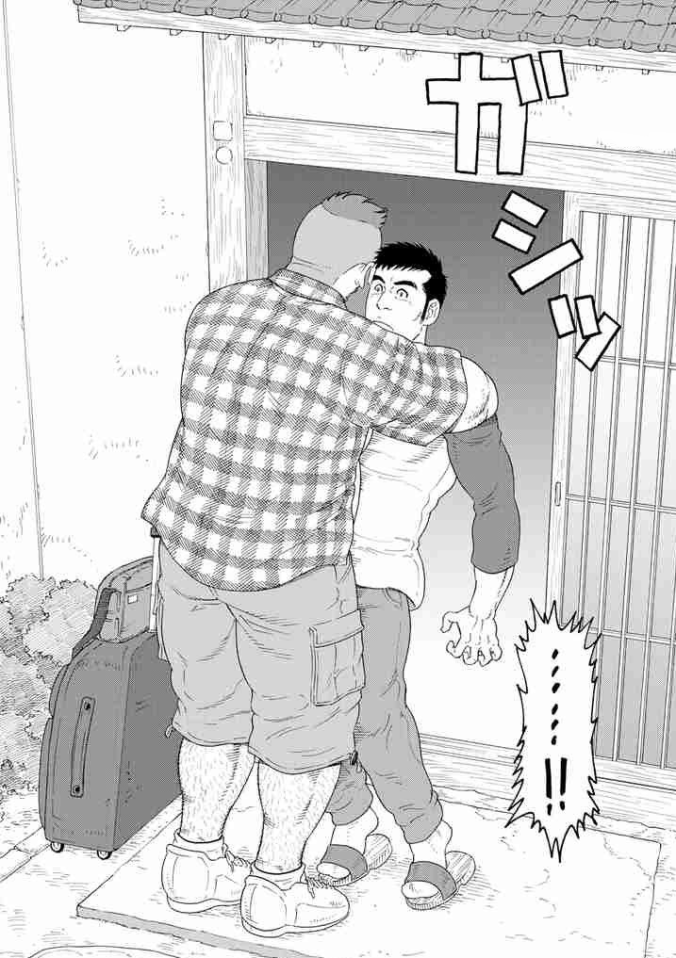
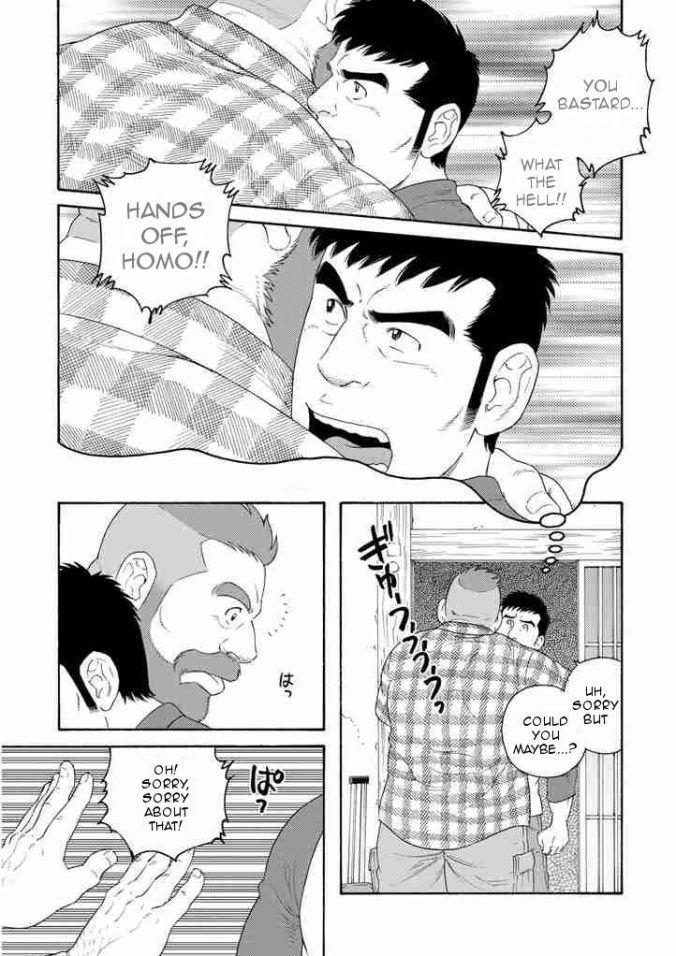
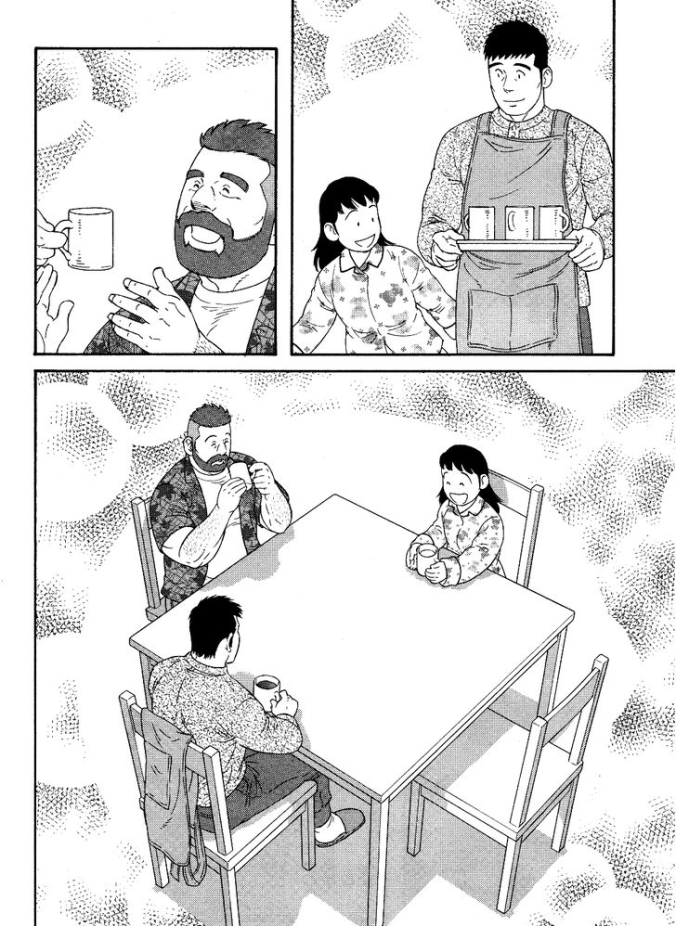
Unfortunately, initial awkwardness happens.

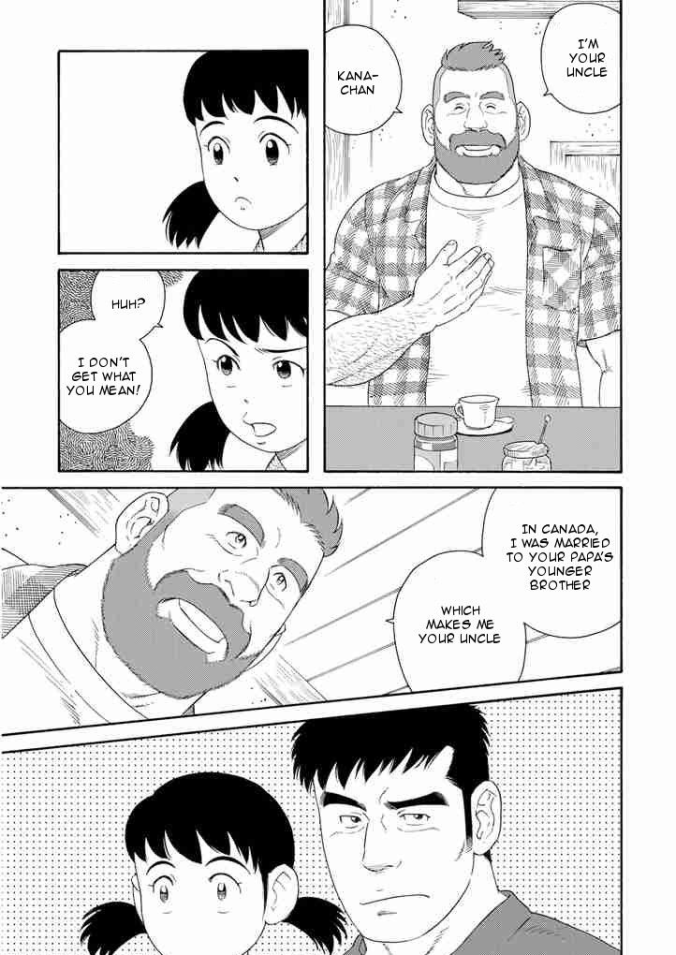
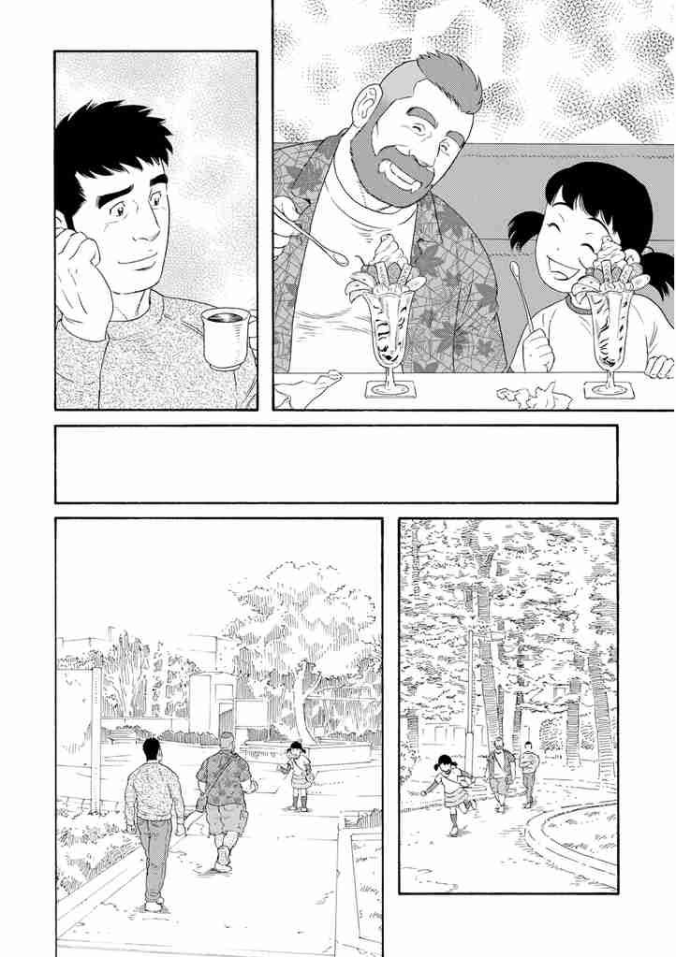
And thus, Mike, a big, bearish Canadian man, enters his household for a holiday. He was married to his twin brother Ryochi, and, now a widower, he wants to visit his late husband’s family and country, to see how he lived and to share memories.

Yaichi is not really amused by this. Of course, family is important, he can’t simply ignore his brother-in-law … but he is not comfortable with having “this homosexual foreigner” under his roof.

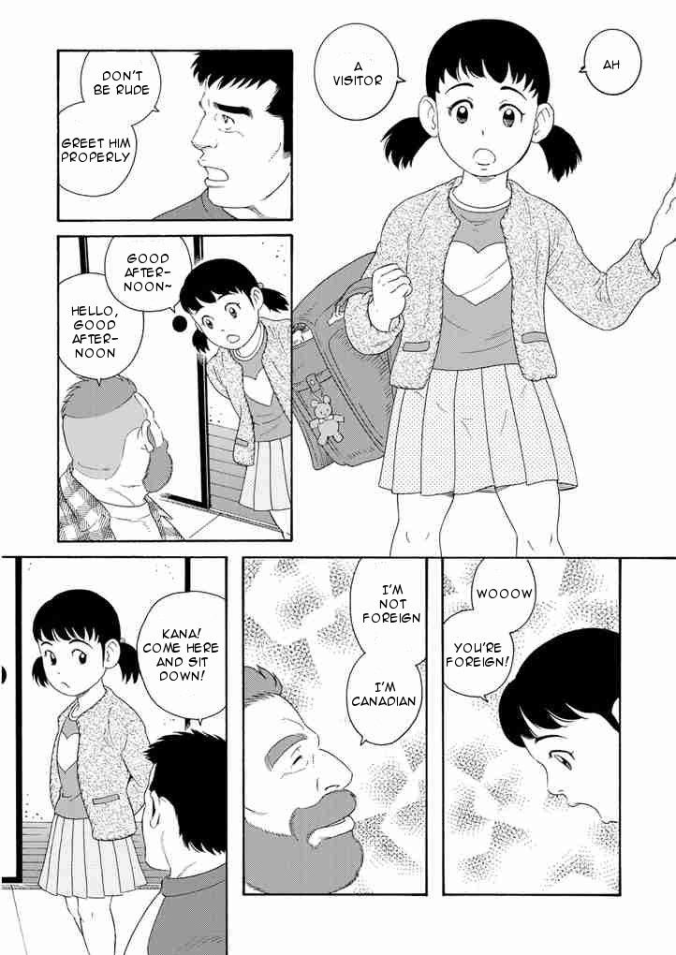
His daughter Kana, however, is different.

d021

d023

d024

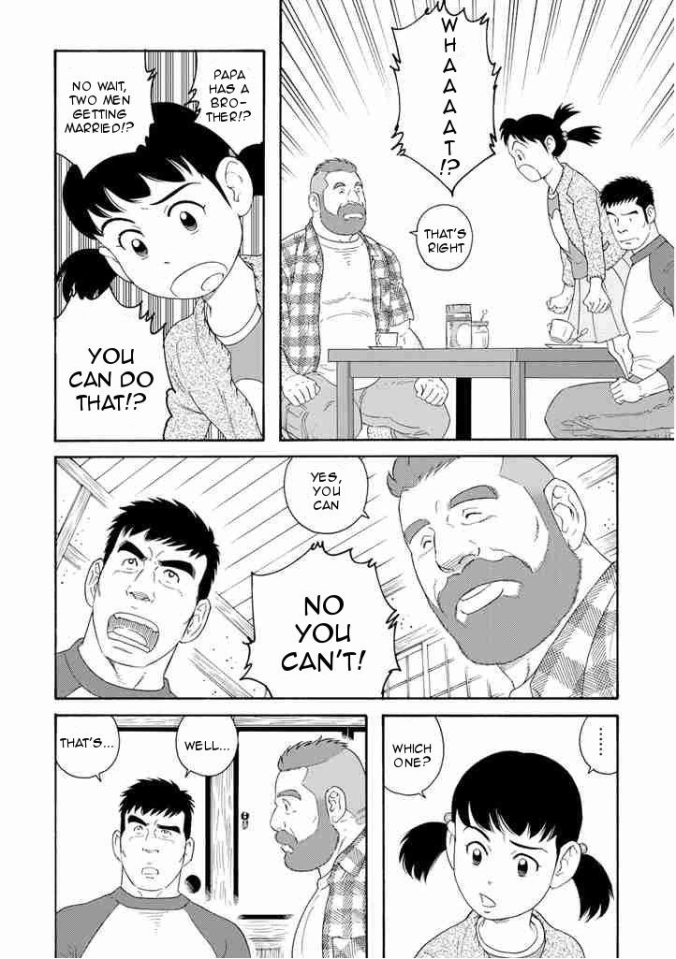
His daughter Kana is experiences her first culture crash.

g022.png

But in the end, she is happy!

And so, the slice of life story of Ryochi, Kana and Mike begins.

Culture and Understanding

This manga is a cultural and social observation, from three different point of views. Ryochi, the rather reserved and lightly traditional Japanese man, sad about his brother’s death; Kana, the young child who sees no problem in having a new uncle; and Mike, the gentle grieving widower, who wants to experience his beloved partner’s culture and explore the past.

The main strength of “My Brother’s Husband” is the portrayal of culture and society. It would be way too easy to say “Japanese society is bad!” and just leave it at that. Instead, this manga becomes a story of sharing: culture, stories and memories.

Mike is interested in visiting Japan and its culture, he is very happy about it, although he sometimes still makes cultural mistakes, like hugging people, or pronouncing names wrong. Ryochi hadn’t seen his brother in many years, and he is interested in hearing how life was in Canada.

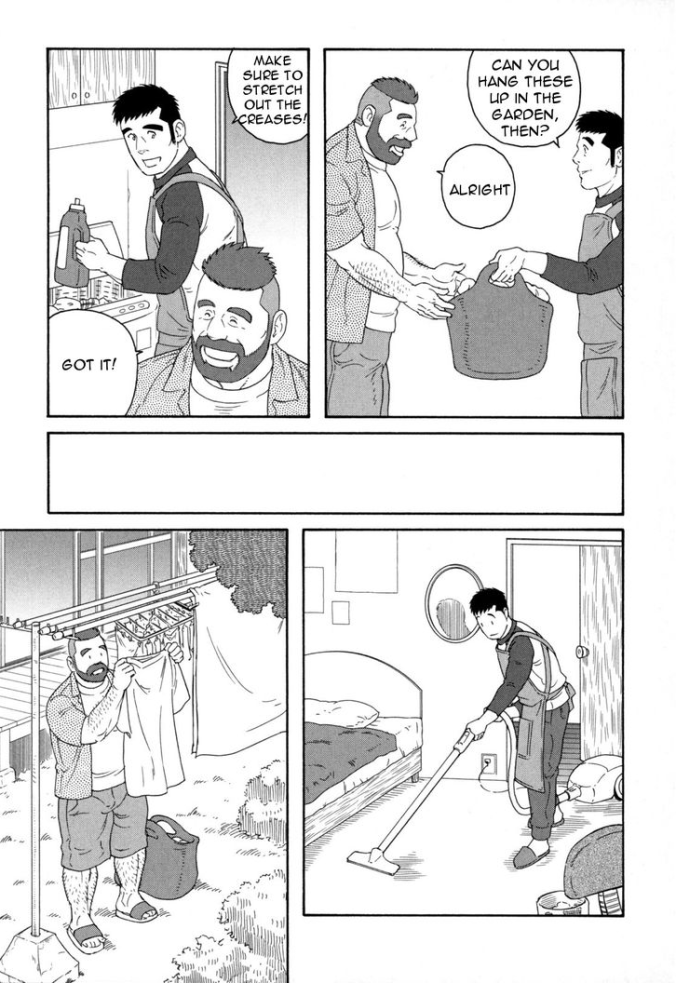
To present his country in the best manner possible, Ryochi integrates Mike into his household, doing day to day things togther, and going on trips, to explore Japan and to explain this new, interesting culture to Mike who only knew it through his husband.

e008.png

Slice of Life goodness.

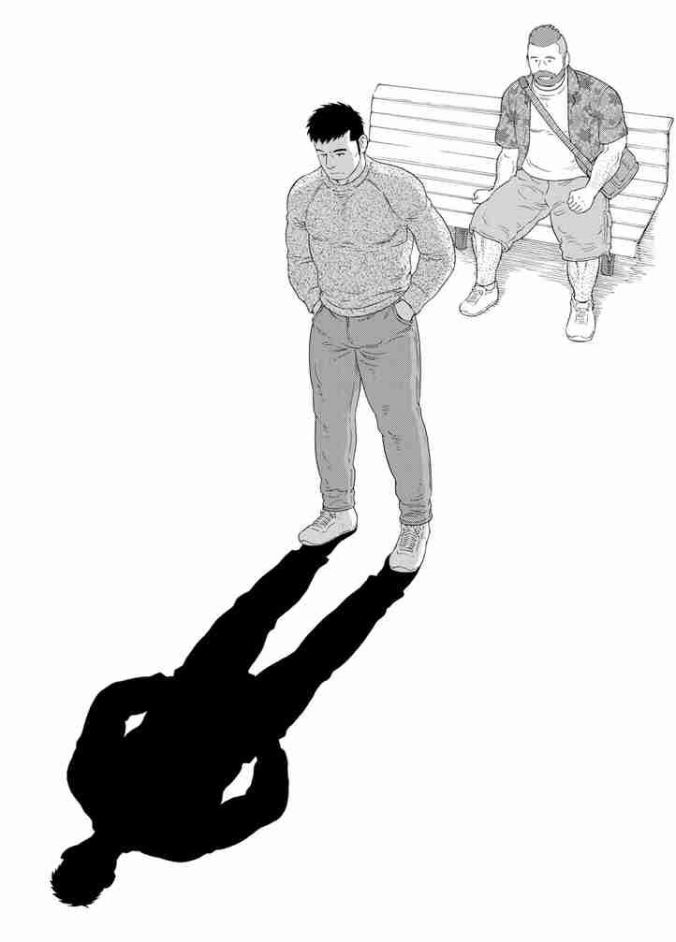
Mike has seen a side of Yaichi that Ryochi never saw, while Ryochi has only memories of his brother when they were younger. Kana never got to know her real uncle.

Hence, the dialogue becomes important in the story. It evolves slowly into more than sharing history, and both men soon start talking about their feelings of loss and sadness, as they open up to each other. The two very different men become friends.

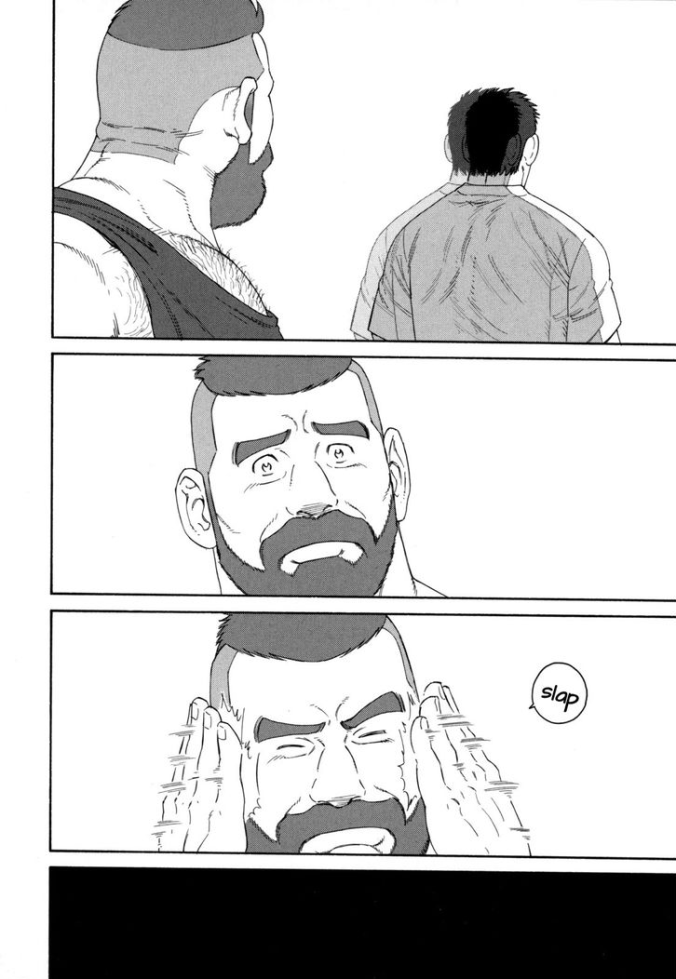
While the “slice of life moments” are really heartwarming and lovely, this manga can really hit you hard with emotion. Both men are in grief – one has lost his brother, the only family he had left, the other one has lost his beloved partner for life.

e018.png

The shadow of his former twin brother…

m013.png

… and the image of his late husband.

Conclusion

“My Brother’s Husband” is a melancholic, yet heartwarming slice of life manga, about a topic that is not often talked about. It approches the theme of LGBT in Japan with great care and love, without ever being preachy or condecending.

There are other themes explored as well, and the cast gets bigger as more people are introduced. I do not wish to spoil the manga here any further, as it is best read blind. It is currently ongoing, with 20 chapters in 3 volumes, and will most likely continue. I am normally not the type to recommend an ongoing series, but the future looks stellar.

If you don’t like slice of life, this is a very skilled and warm approach to it, that may introduce you to the genre. Some people are scared away from SoL, as they often see it as just a genre where “cute girls do cute things”, but this is really not the case here. (You can still see Tagame’s Bara roots just by the detailed and careful way he draws body hair, or men’s physique in general.)

If you like slice of life, I can more than recommend it. The themes of family, sharing and heartwarming togetherness are a beauty.

The manga won the 19th Japan Media Arts Festival Excellence Award in 2015. With other family themed manga like “Barakamon” and “Sweetness and Lightning”, I can only hope that this manga will have an anime one day too, be it just a short series, or even a movie. It fits well as a “slightly more muscly” entry into the Slice of Life “Golden Age” that we are now in. It would not only be a unique take on the genre, but the first time that the genre and authorship of Bara would be recognised in anime – a huge step for LGBT in Japan.

Do yourself a favour and read “Otouto no Otto” or “My Brother’s Husband”, and enjoy the wonderful, not so traditional, lovely family of Ryochi, Kana and Mike.

o006

b8273d908c10249bb0f25124637aad30

The End

MAL “My Brother’s Husband”

Wikipedia “Gengoroh Tagame”

Wikipedia “Bara”

Edit: An English Omnibus release is out now! Amazon Link!

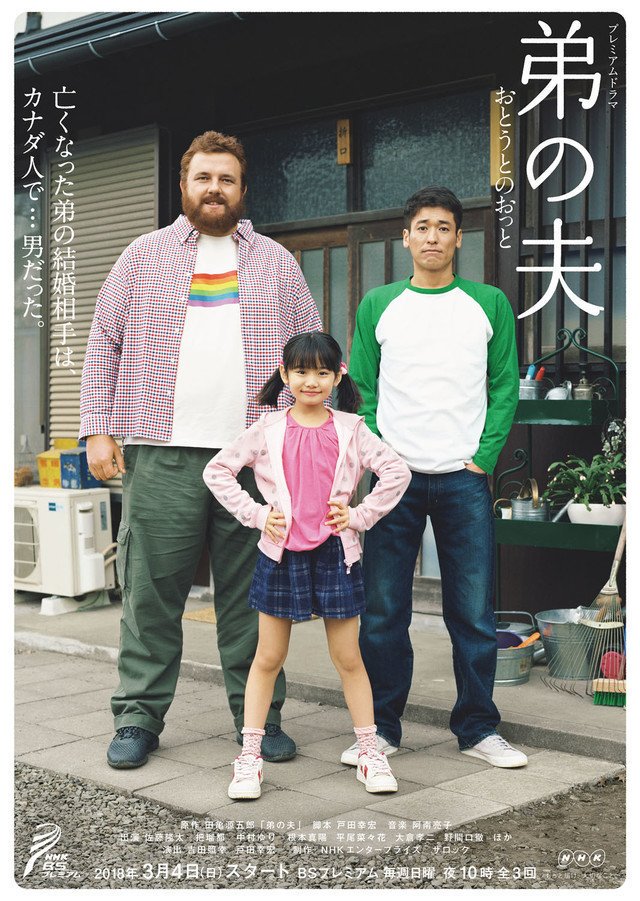
And a TV series was announced to air in March 2018!

DV4tQMNVQAAw9AG