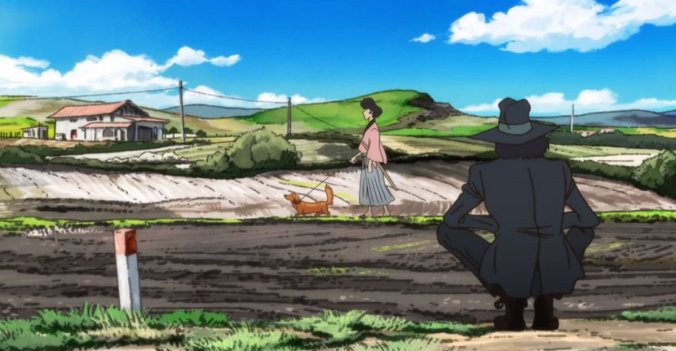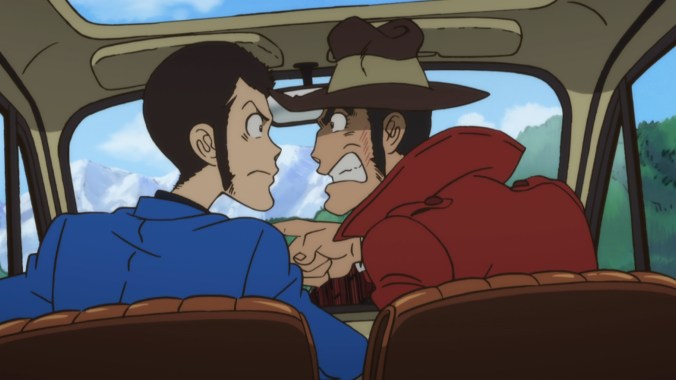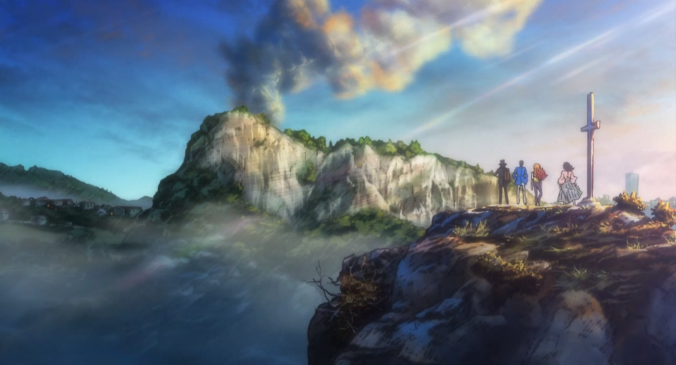
Natsunagu – The Importance of Community and Online Friendships

natsunagu

Anime seasons come and go. Every “season” is about 3 months long, and there are four each year, starting with Winter, Spring, Summer and finally Autumn. Each one of these seasons brings a new wave of anime to an international audience, who are more than happy to consume the tasty new media on the market.

However, with these many new releases, not all of them get the attention they deserve, and some even outright sink in this ocean of novelty – underrated, underwatched, forgotten. For me, those are the interesting ones, the ones that are far away from the bustling mainstream of long-awaited manga or light novel adaptations. Because in this little “underwatched” pile can be small gems, if you have the patience and curiosity to uncover them.

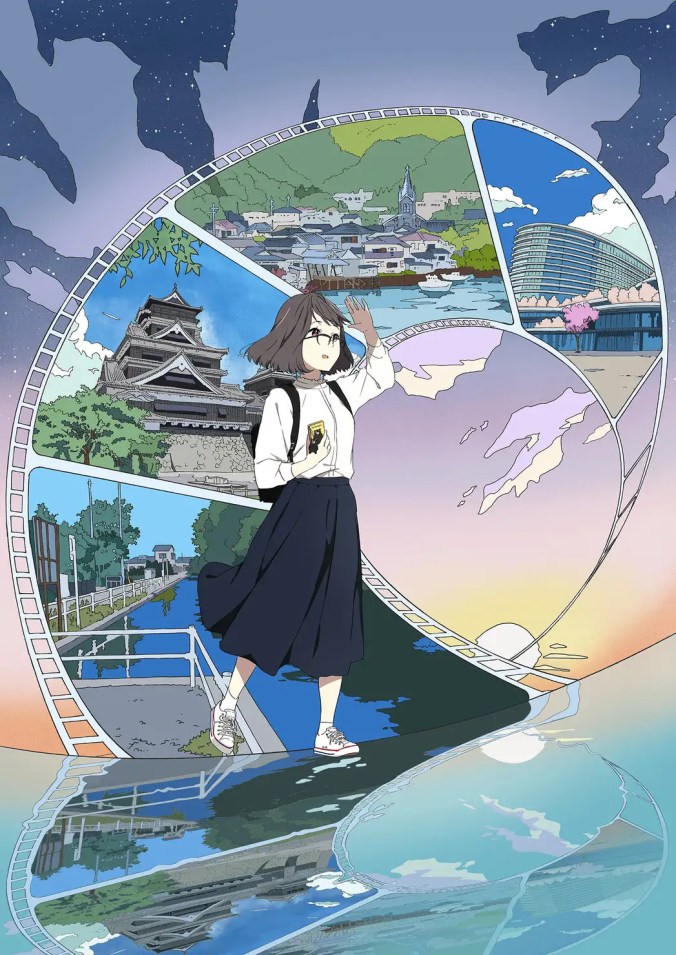
And one of those I would like to present to you, from Winter 2020, the anime short series: “Natsunagu“.

Story

vlcsnap-2020-04-12-13h35m19s531

Protagonist Natsuna, chatting with her online friend, Izumi.

College students Natsuna and Izumi have been friends online for many years, but recently, the contact has calmed down a little. They often drew art together and shared many stories about their families and other worries. Despite never having seen each other, only their cute little avatars, they are good friends who can trust each other.

However, one day out of the blue, Izumi messages Natsuna that she wishes to see her.

In real life.

But before Natsuna can answer, the social media platform they had used all these years to communicate shuts down. With this unexpected and sudden course of events, they have no more means of talking to each other.

Natsuna is worried, especially since Izumi wants to talk with her now. She only knows one address, from way back when, and she knows that Izumi lives in the prefecture of Kumamoto.

With no more means and leads, Natsuna decides to go to this address, and check if her online friend is alright.

But as Natsuna arrives at the rural airport of Kumamoto, she soon is faced with the ugly truth: The address is too old. The house that once stood there was destroyed in an earthquake a few years ago.

With no more money in her pockets and no idea where to go next, a small road movie unfolds – to find her beloved online friend Izumi.
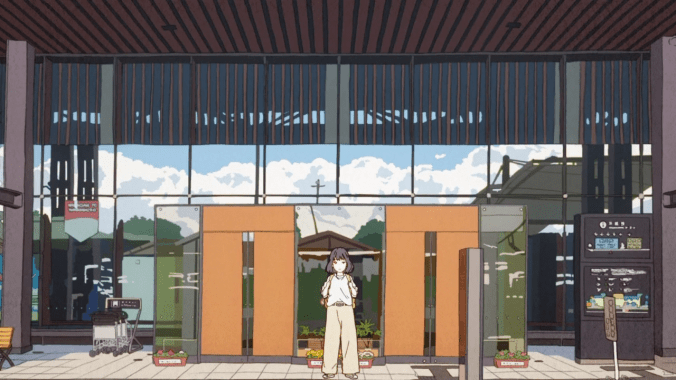
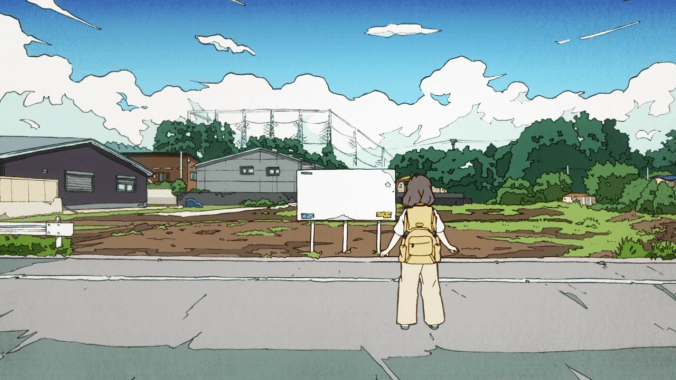
vlcsnap-2020-04-12-13h35m39s335vlcsnap-2020-04-12-13h35m53s805

Unknown region, no more house, and flat broke: It’s not looking good.

In 12 short 4-minute episodes, we follow Natsuna in her quest to find Izumi, and it will take a lot of help from locals and newly-gained friends.

And these characters in this rural town have a true core underneath it, which is worth looking at.

Fictional Characters, Real Setting

The region of Kumamoto is a real prefecture in Japan which suffered a major earthquake in 2016. And if you look closely in the credits of the anime, you can see that this anime was indeed produced by the Kumamoto prefecture.

This anime was intended to be not only a tourist advertisement for the prefecture, with real life sights and places, but also to raise funds for the rebuilding projects after the earthquake: A region paints a picture of itself to help itself.

And so, the region in this anime is real, but inhabited with fictional characters. Colourful locals from different professions, and they all try to help the protagonist out. If you look closely in the ED of every episode, you can see that the characters depicted change, depending on the story.
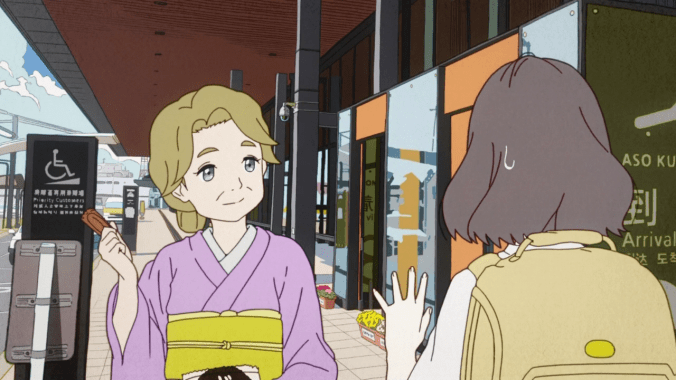
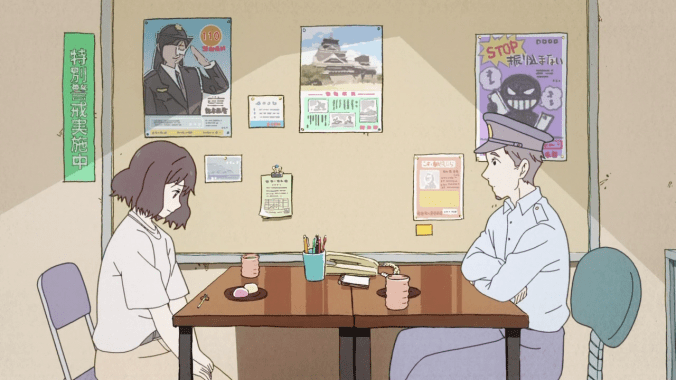
vlcsnap-2020-04-12-13h35m47s026vlcsnap-2020-04-12-13h36m26s613

The friendly grandma, or the supportive police man from around the corner.

If one were cynical, they might think that this initial setup would just end in a big advertisement that is either sappy or hollow, but it has a purpose within the story. These people show our protagonist what is important: community. More specifically, an offline community, which can help her to find a member of her online community that got shut down.

It is important to support and help each other, and to listen to each other if someone is in need. And even more so if it’s a person you care about. This small rural town in Kumamoto acts as a network in which Natsuna has to find and restore her connection with her online friend.

And as you can imagine, it’s not going to be easy.
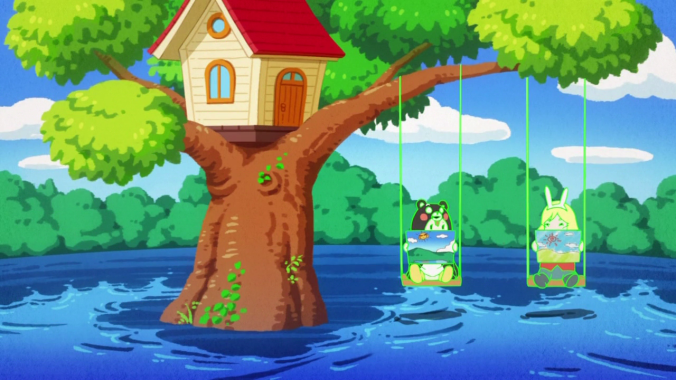
vlcsnap-2020-04-11-23h37m40s544

In their online world, Natsuna and Izumi used to draw together.

As the series is very short, 12 x 4 minutes, -1 minute for recap and ending, you can watch the entire season in just over 35 minutes. And yet, in this short span, this series managed to deliver an emotional punch in the end that I hadn’t seen so far in anime.

Online relationships can differ a bit in how they perform, if you only have text messages to communicate, without voice or body language. But they are just as valid and important as relationship in real life, even if they have different rules.

If you think about them yourself, what do they mean to you? A friend not reacting to an emotional post you did? Someone leaving you on read? Getting ghosted and ignored by someone you are close to?

And the anime tackles some of those internet-specific rules of online friendships and behaviour that are worth exploring and addressing.

vlcsnap-2020-04-11-09h18m13s564

The mascot of the Kumamoto prefecture: Kumamon, the bear!

Conclusion

“Natsunagu” is certainly not perfect or the “next underdog masterpiece”. It sadly feels way too short, the themes that are addressed could take far more exploration – but it could also be easily expanded into a full-length slice of life anime one day.

However, as a small underwatched snack, it is exceptionally pleasant. The style is soft, the outlines are in many different colours melding into the whole pastel aesthetic. The director, Yasuyuki Honda, had only worked so far as a storyboarder and episode director on larger series, (Aikatsu!, Gurren Lagann, Saint Seiya Lost Canvas), this is their directorial debut. But I would love to see more of them in the future, as this style is far too precious to be only used in an anime short series.

I would like to recommend this tiny anime, simply for the niche status it has, and  for the heart it displays – for its own real life community and the small story of saving an online friendship.
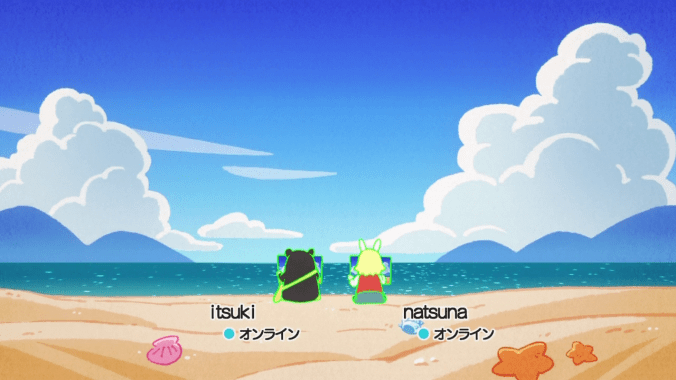
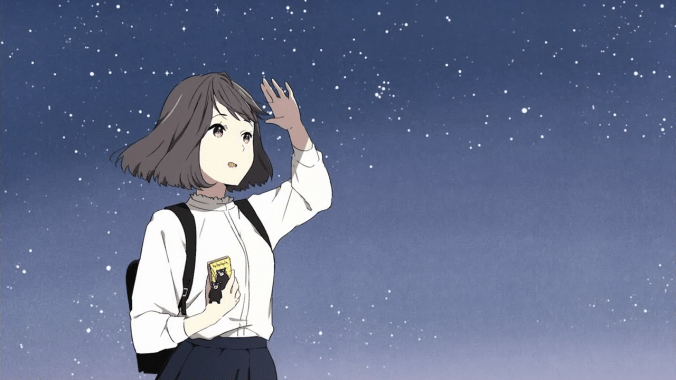
vlcsnap-2020-04-11-23h35m57s621

vlcsnap-2020-04-11-23h38m48s854

THE END


Thank you for reading!


Sources:

https://en.wikipedia.org/wiki/Kumamon

https://en.wikipedia.org/wiki/Kumamoto_Prefecture

https://www.animenewsnetwork.com/encyclopedia/anime.php?id=22911
https://www.animenewsnetwork.com/news/2019-11-17/kumamoto-prefecture-produces-natsunagu-tv-anime-for-january-2020/.153378


MANLY MONDAY: Lupin VIII – The Story of a Cancelled Sci-Fi Pilot

lupin viii.png

The Lupin III franchise is now celebrating its 50th anniversary, with countless entries and works over many years. While I covered a few of my favourite works already, it is interesting to look not only look at the beloved, but also at the ones that are overlooked.

Or in this specific case, the ones that never made it to the public. Not every entry can be successful in this fast world of entertainment, and some get outright cancelled before they see the light of day. Such as this little pilot episode to a new series called Lupin VIII in 1982.

Let’s take a look at this unusual pilot and what lead to its early cancellation.

vlcsnap-2018-09-16-15h42m31s060

Lupin VIII, “Arsène & Company” in French.

Story and Changes

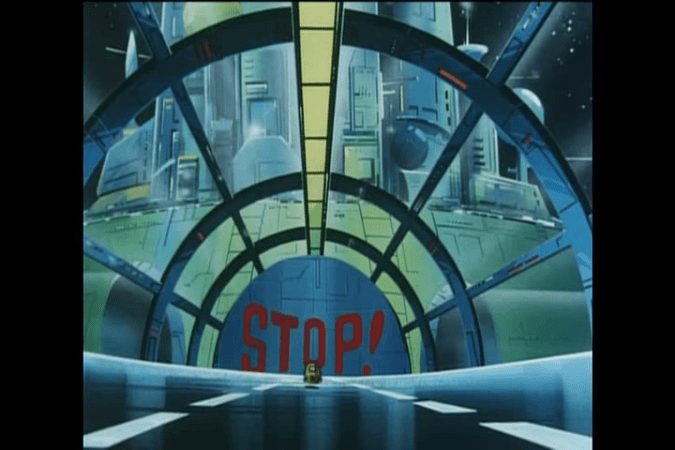
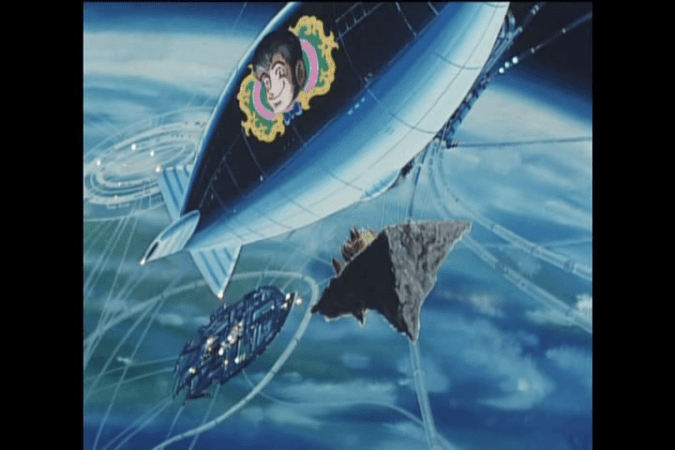
Lupin VIII takes place in the far future, space travel is a day-to-day occurrence and Earth’s orbit is full of space stations, galactic highways and private rockets, big and small.

This slideshow requires JavaScript.

Lovingly designed backgrounds that establish the world in the intro.

Inmidst all of these flies a space ship in the shape of a zeppelin – it’s the office of freelance detective Lupin VIII. Together with his friends Jigen The Fifth and Goemon XVIII, they solve mysteries for many clients. Love interest Fujiko Mine (no extra number given) is also around, but having her own adventures that intersect with the other main characters coincidentally.

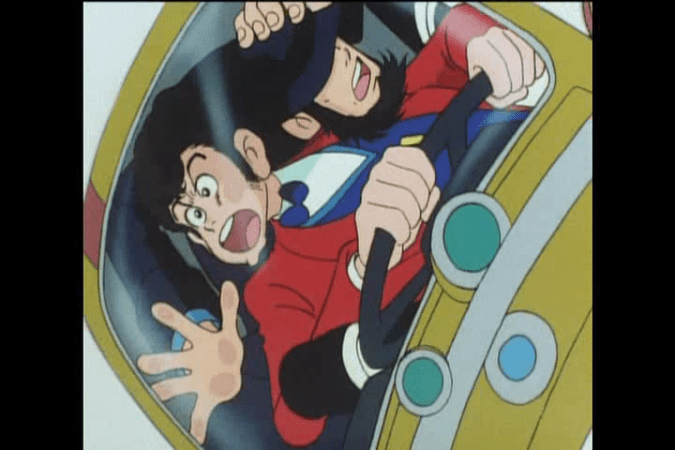
In this pilot, a little girl comes to visit the detective agency of Lupin VIII. She has a message in a music box from one of her ancestors to “wake him up” after 100 years. Those 100 years are nearly over, and she doesn’t know what to do about it. Lupin VIII and Jigen V accept the case and go on a mission, which will involve car chases on galactic highways, shootouts, a treasure hidden on the Moon and evil greedy villains to defeat.

vlcsnap-2018-09-16-17h55m24s296vlcsnap-2018-09-16-17h55m26s828

A girl giving them a mission…

vlcsnap-2018-09-16-12h43m58s363vlcsnap-2018-09-16-12h44m27s333vlcsnap-2018-09-16-12h51m09s274vlcsnap-2018-09-16-12h51m20s017

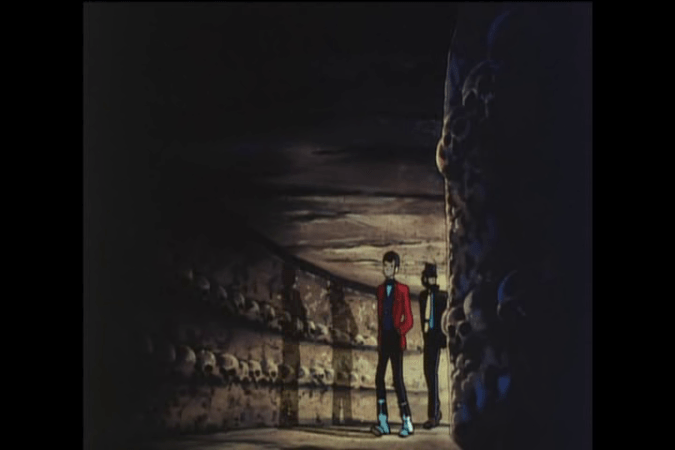
…ends in damp catacombs and with raging robot sharks.

If one reads this plot outline, it leads to the natural conclusion of “So, it’s Lupin III in Space?”, and while that is largely true, the amount of minor changes add up to quite a significant deviation from the original series’ topics and feeling.

Lupin VIII was supposed to be a kid’s show, and hence, it couldn’t have a “thief” as a main character – stealing is illegal, so a good example needs to be set – protagonist Lupin VIII is a detective now.

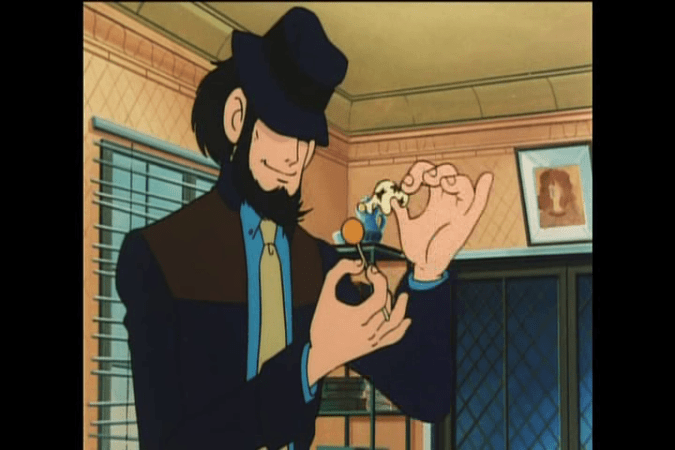
In addition, weapons and tobacco are also taboo. This means that both Lupin and Jigen swap their signature pistol and revolver for laser guns, and Goemon receives a lightsaber. This decision is fine, as it fits with the given sci-fi setting, but it also means that Jigen Daisuke (who is normally seen smoking) has a lollipop 24/7.

vlcsnap-2018-09-16-15h43m08s744

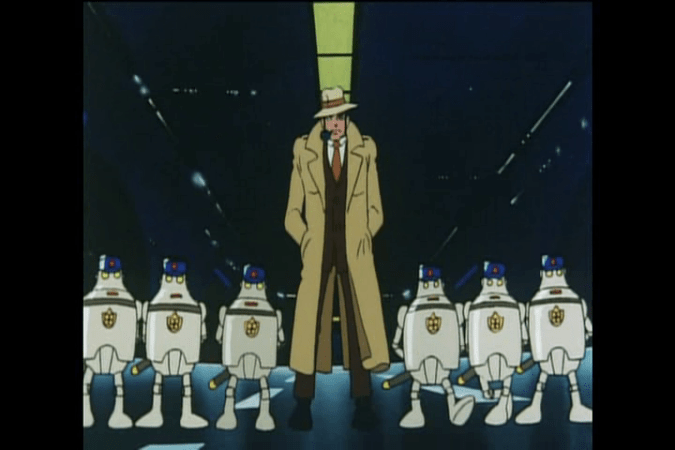
The change from “thief” to “detective” poses another problem if one thinks of the original cast: What does Zenigata, Lupin’s adversary, do now? Lupin VIII is not a criminal, he follows a normal job.

Here is the kicker: Zenigata still thinks Lupin VIII is worth suspecting, and that one day he might show his “true colours”. Convinced that he is the descendant of many criminals from several generations ago, he certainly must be up to no good.

vlcsnap-2018-09-16-18h02m56s108vlcsnap-2018-09-16-18h03m02s680

His little robo police is very adorable, though. (And the pipe is a communicator!)

This fact is played for laughs (with Lupin VIII flatly saying that this outlook is “Good for him” to have), it feels a bit out of place for Zenigata, a capable police inspector, to have someone under general suspicion purely for their ancestry.

To have the cast look exactly the same (just add five generations as a number and you’re done) feels like a concept held back by its own self. Instead of creating its own character design, it simply repeats the classic and censors them for a younger audience.

“Descendants of the Lupin III cast in a sci-fi future” could be a very interesting visual design to tackle, but some decisions feel a bit out of place – such as Goemon’s space suit being futuristic samurai armour. It makes sense as an idea, but the armour is not giving him the visual finesse and elegance he normally has and that is part of his character. But it is positively goofy and grand, and thus very fitting for a kid’s show!

vlcsnap-2018-09-16-12h54m50s658

vlcsnap-2018-09-16-12h54m58s602

Not his usual sleek self, but still as cool.

So, a few elements are changed, giving this pilot its own visual identity and feel, why was that?

An International Production

Lupin VIII was a French-Japanese production, collaborating with DiC Entertainment, who are known to many as the creators of the Inspector Gadget animated series, as well as co-productions with US studios on series such as Sonic The Hedgehog and Captain N. As a studio that mainly produced kid’s shows, it was only logical to make their Lupin VIII also one.

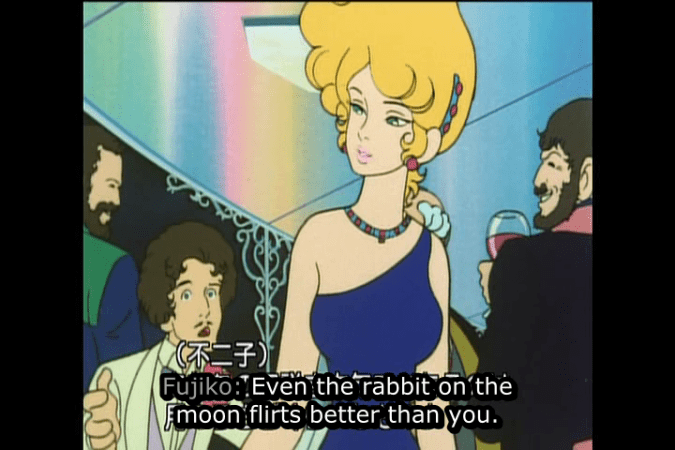
This international creative process may explain some of the character designs by Shingo Araki, who also did the designs for Part III (Pink Jacket Lupin) from 1984-1985. His character designs in Lupin VIII, especially his Fujiko Mine, feel more oriented towards a “80’s Western Animation” aesthetic. Fujiko especially reminded me personally of Jem and the Holograms (which is also a Japanese co-production!) or Michel Vaillant, if we compare her directly to her Part III contemporary.

vlcsnap-2018-09-16-12h46m39s365

vlcsnap-2018-09-16-18h39m28s206

To compare: Fujiko Mine in “Lupin VIII” in 1982…

part iii

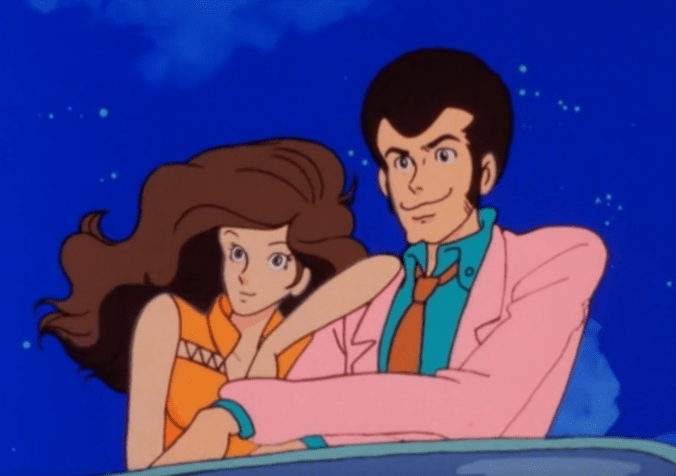
…and Fujiko Mine in “Lupin Part III” in 1984. Same character designer, different feel.

Why was it cancelled?

Lupin VIII was cancelled not due to its content, but due to the use of the nameLupin VIII / Arsene & Company. The heir of the original author, Maurice Leblanc, who wrote the Arsène Lupin novels in 1905, did not give his permission for this anime, and thus, the project was doomed to fail – production was cancelled before the pilot could be finished.

Regarding the production and checking available sources, it seems like 6 episodes were planned, 2 were scripted, and only 1 episode made it to a near-finished stage. Some sources credit Rintaro as the director of this pilot, an acclaimed veteran who has worked on many anime such as Astro Boy, Space Pirate Captain Harlock and Metropolis, but no bullet-proof confirmation is given.

Should you by this point have checked out the pilot for yourself, you will notice a sad fact: there is no voice acting. Music and sound effects are present (and are nice!), but the dialogue only exists in subtitles. It never got to the production stage of “recording voice actors”. Unfortunately, these subtitles were hardsubbed [i.e. burned] into the visuals, so I apologise for those in the screenshots.

This pilot, in its mute and unfinished form, was released in the 2012 Lupin III Master File box set, as a relic and an inside look into a project that could have been lost in time entirely, and thankfully has survived.

Conclusion

All in all, Lupin VIII really is an interesting glance at a thing that never was – but also something that maybe wouldn’t have had the critical success as its contemporaries. To make a “Lupin for kids” is a noble goal, and could have been a hit with children – however, as a personal opinion, it would have been a better decision to do a “Lupin for everyone”, such as Hayao Miyazaki’s Castle of Cagliostro or Masayuki Ōzeki’s The Fuma Conspiracy, which can be enjoyed by the whole family as fun and action-packed adventures without the need to censor any original element. It also could have been its own thing with brand-new character design ideas, not held back by the legacy and influence of the original Lupin III.

However, one should not think too much about the “what ifs” and “should haves” of life, but rather see what is present. And so, we have Lupin VIII, a pilot for a show that never got the chance to prove itself – but that was nonetheless a brave attempt and beautifully crafted in its world design and animation, with a unique mix of French and Japanese art and aesthetic. I sincerely hope that we may get another attempt one day, as the idea of “Lupin III in Space” with rocket ships, orbital highways, robo police and lightsabers is too good to miss.

vlcsnap-2018-09-16-18h02m33s665

The End.

Sources: “Lupin VIII” entries on AnimeNewsNetwork, Lupin III Encyclopedia, Wikipedia. DiC Entertainment Wikipedia Article, in French and English.

MANLY MONDAY: “Lupin III Episode 0: First Contact” – A Heartwarming Reboot Prequel

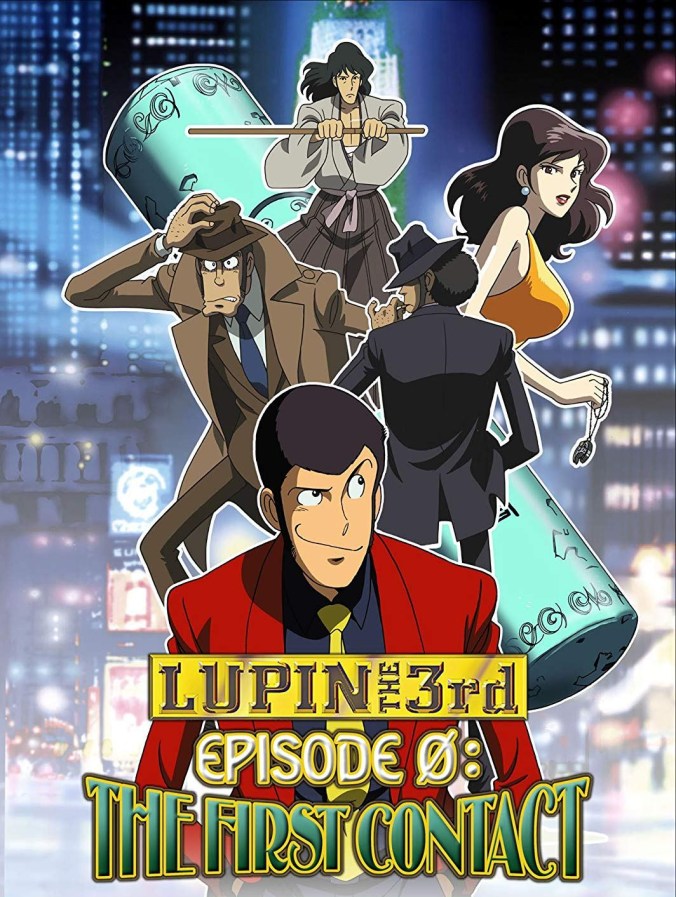
81gssjgkzpl-_sl1500_.jpg

The beauty of the Lupin III franchise is that it has so many diverse entries over the last five decades that you are bound to find the one that fits your taste perfectly.

However, the sheer number of works can seem overwhelming for someone looking in from the outside. Where do you even start with a series that strong in numbers?

I will shed a light on this in this special LUPIN MONTH of September 2018, where I present little gems and oddities from the franchise that can all be enjoyed without previous knowledge. I covered Takeshi Koike’s two films and the 2015 Part IV TV series already, but want to diver deeper with you all to explore this wonderful world.

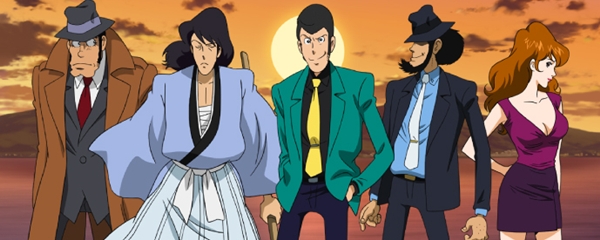
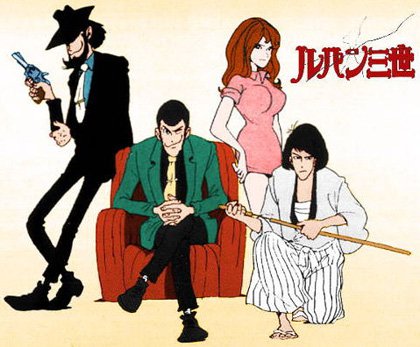
The status quo is always the same in all entries, making it accessible to everyone once you got the characters down: “Lupin The Third” is happy-go-lucky thief, “Jigen Daisuke” is a gunslinger with a 0.3 second quickdraw and is his partner in crime, “Goemon Ichikawa” is a stern samurai with a heart of gold who helps them, “Fujiko Mine” is Lupin’s love interest and thief rival, and bumbling “Inspector Zenigata” is always on the prowl to catch Lupin, in a never-ending game of cat and mouse.

82

From left to right: Zenigata, Goemon, Lupin, Jigen, Fujiko.

Here is where some specific entries will stand out which give the backstory to this cast of colourful characters. In 2013, A Woman Called Fujiko Mine reset the canon and told ist own continuity in an adult setting, being a starting point for many with ist unique direction and artstyle. But before that recent adaptation, some others have also set out to tell the story of how the Lupin cast found each other. One of these is the stellar 2002 film „Episode 0: First Contact“.

vlcsnap-2018-08-25-00h02m33s738.png

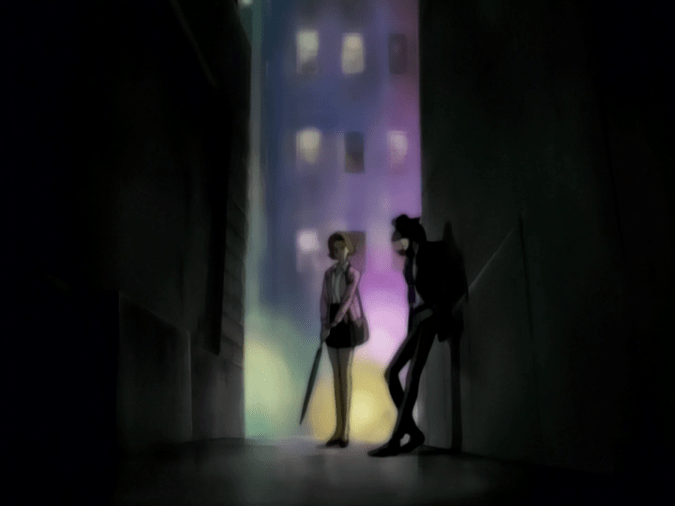
In a smoke-filled pub in some dinghy backroad, Jigen Daisuke is asked by a reporter to tell the story of how he met Lupin. The young woman is interested in writing a book about their adventures, the publishers are already supporting the idea without her having any info yet – the people just want to know.

Reluctantly, he starts, and as he dives deeper into long-forgotten memories that come back into the light clear as day, an unbelievable story of friendship, love and death unfolds.

vlcsnap-2018-08-24-21h13m10s685.png

Going outside into the calm night, Jigen reminisces.

New York, many years ago.

Jigen is a hired gun for a high profile mafia boss, protecting him and his goods – Jigen’s life is calm and uninteresting. He is free to go wherever he wants to and earns good money, but the spark is missing.

This changes one day as a man is breaking into the mafia boss’ villa, challenging Jigen for the first time in his career. He is playing with sneaky disguises and tricks, and manages to run away while dodging all of Jigen’s bullets. Jigen wins, the intruder is scared away, the boss is unharmed, the treasure in the safe remains untouched, but… Who was that man? One of the other henchmen responds: “That was Lupin! Lupin the Third!”

vlcsnap-2018-08-24-21h16m19s975vlcsnap-2018-08-24-21h16m23s104vlcsnap-2018-08-24-21h16m24s984

A short, but life-changing moment: Lupin and Jigen meet for the first time.

As it turns out, the treasure Jigen has to protect is quite valuable: It is a metal tube, called the “Cram of Hermes”, and inside it is the alchemy instruction to create one of the hardest metal substances ever, however, it can only be opened with a special key. And for different reasons, everyone of the core Lupin III characters will be involved around this object.

Essentially, we see how the original cast gets together: How Lupin and Fujiko find each other, and even see them interact as a romantic couple – which is very wholesome and a rare sight, as Fujiko is the on-and-off girlfriend and rival of Lupin. Goemon makes his appearance as well, Zenigata builds his passion of hunting Lupin and Jigen learns to accept the friendship of Lupin.

This will all be woven into one big fun adventure – involving bank heists, chase sequences on highways, in subways and even on water, and of course many hijinks, disguises and plans to trick one another. This is a very fun film that also takes time to unwind in some scenes, finding a great mix between “bouncy” and “chill”.

vlcsnap-2018-08-24-22h35m54s433

Fun for everyone!

Themes and Execution

Lupin and Jigen form the thematic main axis of the film, two men who are destined to become partners in crime, but meet under conflicting circumstances, on different sides. While Lupin finds an immediate liking to his future friend, it is Jigen who is very reluctant and even dismissive of Lupin’s attempts of befriending him – resulting in many comedic and tension-filled scenes of action and banter.

vlcsnap-2018-09-10-18h42m09s226

vlcsnap-2018-09-10-18h43m32s045

If you pay attention, there is a charming reoccurring visual metaphor of Lupin trying to light Jigen’s cigarette on several occasions, (figuratively lightening up this partnership with a tiny flame), and Jigen refusing in many non-verbal ways: spitting out his cigarette, turning his head away to dodge the match or simply swatting Lupin‘s hand away.

To see this relationship grow from „deadly rivals“ to „bromance through thick and thin“ within a single film is a wholesome experience, and definitely a highlight in this movie.

vlcsnap-2018-08-24-21h31m02s129vlcsnap-2018-08-24-21h31m04s682

From foes to friends. But in the beginning, they are more preoccupied with trying to kill each other.

One of the most fun elements in the film is Inspector Zenigata. How does someone become so obsessed as to dedicate your whole being to chasing one single criminal? And especially: How was he before he found his purpose? Young Zenigata is a member of the Japanese police, and is sent to New York. It is here where his prequel-characterisation goes hand in hand with his position in the story, creating a fitting and fun substory that weaves itself into the main plot.

Zenigata is a capable police inspector – as he always loses against Lupin, he seems like a bumbling fool, he has to lose so that the protagonist can win. However, Zenigata is a police inspector, who later joins INTERPOL, so: This is a skilled cop right here. We might just not always see it.

vlcsnap-2018-08-24-21h41m59s156vlcsnap-2018-08-24-21h47m11s133

A young Zenigata dealing with the American way of doing things. There will be many culture crashes and yellings between him and his new boss.

Seeing Zenigata fight street crime and rigid US legal systems is a joy, and really shows that he deserves to be Lupin’s adversary. If the concept of “Zenigata vs. USA” sounds intriguing to you, then you could easily watch it for that alone.

This film takes place, as already mentioned, in New York City, and the metropolis looks simply marvelous. From well known sights to little back alleys, everything feels grounded, real and visually stunning. Together with the beautiful framing and storyboarding, this film is a beauty.

This slideshow requires JavaScript.

Here is just a small selection, I adore the overall “gritty yet warm” aesthetic.

There are people who are opposed to the early- to mid-2000s anime aesthetics, as it was a time where the 90s left, but the new zeitgeist hadn’t quite formed yet. Some anime from that time period hasn’t aged quite well in retrospect. However, Lupin III Episode 0 does not fall into the category. It wears its look with full pride and well-polished execution, showing no sign of bad ageing.

In addition to the visual flair, I must point out the fantastic soundtrack that accompanies this scenery. The Lupin III franchise always had catchy big band and jazz sounds and this is no exception: A great rendition of the main theme with a funky gospel-like choir makes for perfect opener and the orchestral sweeping scores that feel right out of an oldschool Hollywood film really sell New York as a setting.

Adding to the city’s melting pot status, two other additions were surprising, but more than welcome: A flamenco character theme for Jigen, and a bossa nova soundtrack for the whole film. The decision to give Jigen a dramatic acoustic guitar cue and castanets as a character theme is a perfect fit, making not only his appearances more dramatic, but give him a melancholic yet passionate melody, underlining his characterisation in the film – somebody who is stuck with an unsatisfying gangster job and who might need someone to pull him out to find his true call.

The bossa nova soundtrack, sung in authentic Brasilian Portuguese as well, gave the whole film a soft, laidback and immensely relaxing tone, underlining what the frame narrative already set up: it is the story of a late night reminiscence, of somebody recalling how they got to their point in life. The inclusion of these two Hispanic/Latin elements was a personal highlight for me, and made me very happy.

Have a listen here:

I was immensely smitten this soundtrack.

Conclusion

Lupin III Episode 0: First Contact is a heartwarming reboot prequel, that really delivers on all sides: fun character interaction, expressive animation, lovingly crafted backgrounds, and a great introduction for new fans. And even for older fans of the franchise, it delivers with its own lovely take on an established cast, and that is always fun to see.

With its comfortably snack-sized runtime of just 90 minutes and a lovely early 2000s aesthetic, it makes for a great adventure I would wholeheartedly recommend to anyone, be it old or new fan. It makes for a relaxing yet entertaining ride, so give it a watch when you feel like visiting the warm world of Lupin III in big, buzzing New York City.

vlcsnap-2018-08-24-21h22m43s643

The End.

LUPIN MONTH! For every Monday in September 2018, one more Lupin III entry!

MANLY MONDAY – Golgo 13 (TV): First Impressions of a Sniper’s Life

vlcsnap-2018-04-22-23h55m20s777

The Golgo 13 series has been one of the longest running manga series of all time, first published in 1968, and still being going on today without a break. Artist Takao Saito is still drawing the series, and even with his over 80 years of age, he is still keeping up the schedule and the series he had created.

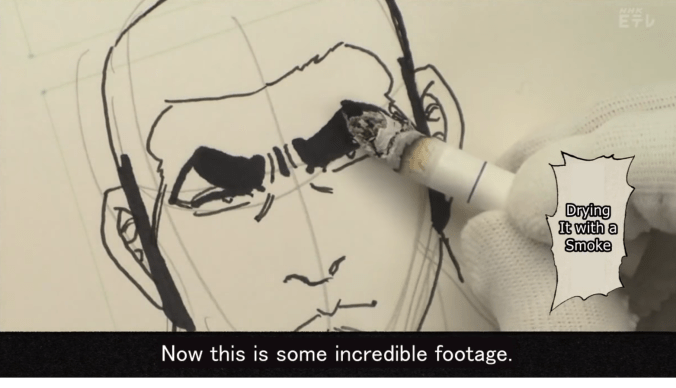
He has a fantastic drive and creative spirit, and if you wish to see how he does his work, I highly recommend the “Manben” documentary series, where his work process if recorded and commented by himself. For example, he uses his own cigarette to dry the white-out spaces on the page. To the question if he has burned the page before, he simply answers with “Yes, many times.”

manben2.png

A technique as rad as his own drawings. (Source)

And of course, his works have been adapted many times, into films and TV series of all sorts.

Golgo 13: The Professional (1983) by acclaimed and beloved director Osamu Dezaki is a fantastic way to enter the franchise, as it tells a self-contained hard-boiled story of a family drama that professional sniper “Golgo 13”, or Duke Togo as he calls himself, gets pulled into. This film is also widely known as the first anime to ever use CGI in its animation, and it truly is something to marvel at how far we have come. Seeing the 2D and 3D segments clash is simply astonishing, especially since Dezaki’s directional style is very aesthetic and precise in its framing, which is then broken with a free camera moving low poly helicopter scene. I recommend this film to anyone who enjoys a good adult crime or spy thriller, and to fans of the medium for Dezaki’s superb style, action and framing.

While the film is fondly remembered and often discussed, there is another adaptation that I wish to talk about. The 2008 TV series, simply named Golgo 13.

This series spans 50 episodes in total, I have now seen 8 episodes and want to give you my first impressions.

vlcsnap-2018-04-23-00h22m29s104.png

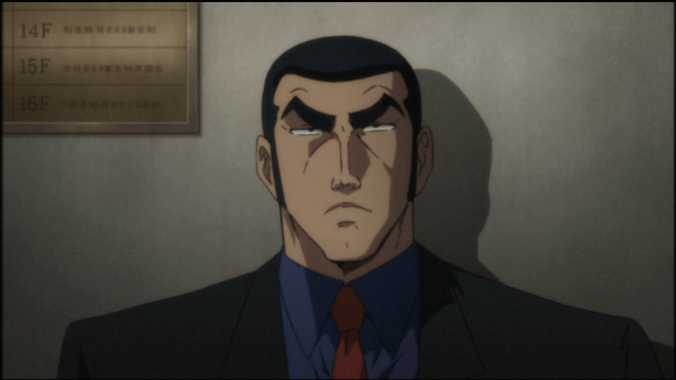
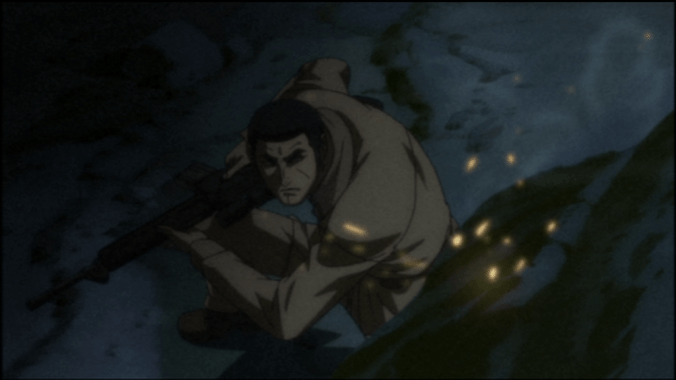
Duke Togo is a professional sniper, the best in the trade. He works under the codename “Golgo 13” and practically no information is given about him: we don’t know his age, his nationality, his background or anything else. All we have is a stone-faced hitman with no internal monologue – we cannot see inside his head, neither the narrator, nor the viewer.

Togo’s days seem to follow the same structure every time. He is called by a client, he is told his mission, he starts preparing, he shoots said target, and then disappears as silently as he arrived. He gets a job, then he gets the job done. As simple as that.

While this may sound monotonous on paper, it’s the execution and variation that makes this series.

Maybe Duke will be caught halfway through the episode, and the rest is just him trying to escape the police’s grasp with mindgames. Or maybe, his client falls in love with him, so he needs to deal with this inconvenience. Or maybe, Duke is supposed to interrupt a weapon’s deal from happening.

vlcsnap-2018-07-19-20h32m10s645.png

Duke Togo. The man, the mystery, the person with the single most permanent scowl.

Essentially, Golgo 13 excels in the creativity of its cases and how these are framed. As a sniper, the main goal is not to kill some, it is to shoot somebody or something. And these can range from killing a corrupt politican, to killing a yakuza boss, but also towards shooting a violin string.

A violin master is humiliated during an important concert when one of his strings snaps. As this string is vital for the performance, he cannot play anymore and is booed off-stage. When he hears that one of his most hated rival musicians is supposed to replace him, he wants to humiliate him just the way the audience did back then: Duke is supposed to shoot the fourth string of his violin during a concert. With everyone watching. Without the musician noticing that this was sabotage. And the whole episode is dedicated to this music feud and Duke figuring out on how to do such an impossible job – planning, observing, gathering tools and then executing this complicated plan.

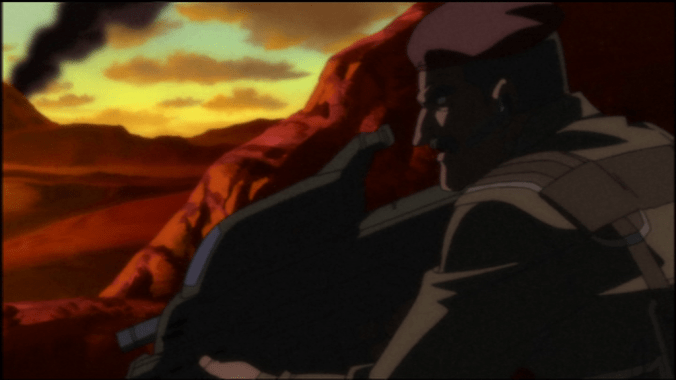
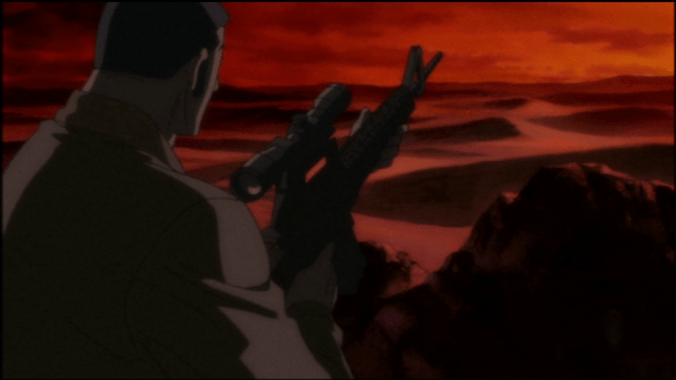
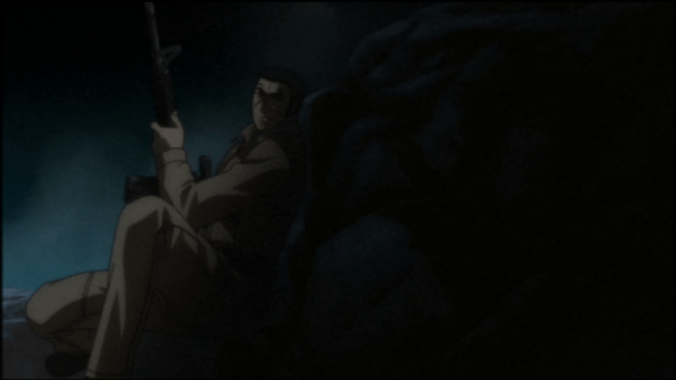
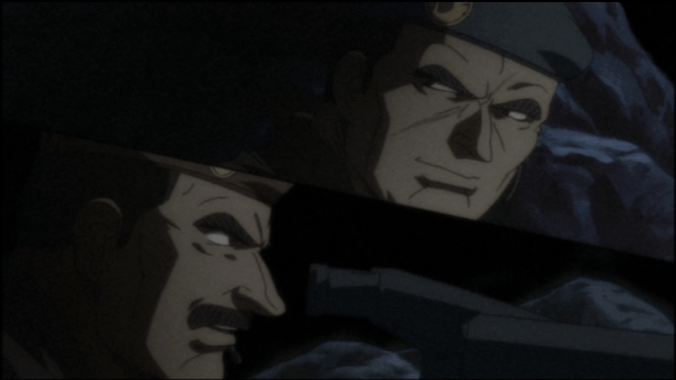
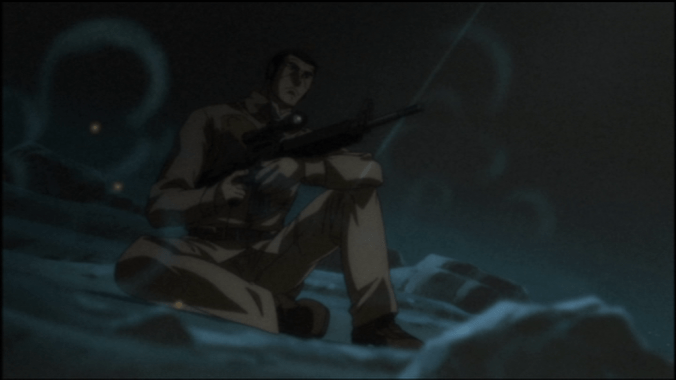
In another episode, Duke must fight again two ultra-modern military snipers in a desert, which slowly unfolds in a delicate and deadly game of hiding and seeking in the sand. And as these episodes tend to be quite slow and careful in its depiction of a sniper’s work, the surroundings can shine with their beautiful designs and atmosphere.

vlcsnap-2018-04-24-00h01m06s610 - Kopie

vlcsnap-2018-04-24-00h01m26s016

vlcsnap-2018-04-24-00h01m36s654

vlcsnap-2018-04-24-00h05m53s009

vlcsnap-2018-04-24-00h06m50s529

vlcsnap-2018-04-24-00h07m38s027

vlcsnap-2018-04-24-00h07m39s703

vlcsnap-2018-04-24-00h09m31s510

vlcsnap-2018-04-24-00h10m10s023

vlcsnap-2018-04-24-00h11m05s077

The battle goes far into the night, and the colour work is fantastic.

For a sniper, the surroundings are essential to their work, making a shot possible or impossible, so it is extraordinary to see how much care the Golgo 13 TV series puts into those. They may not be of the highest quality or most elaborate architecture, but the backgrounds and setting make everything grounded and easy to grasp.

But a world is nothing without the characters it inhabits. And here, Golgo 13 has great fun in its episodic structure, always building a little microcosm of relationships and people to visit. And this is where Duke Togo shines.

Looking at this unit of a man, one might think that he is an emotionless killer machine who just does his job and nothing else. Here is where this initial impression is wrong: By pairing him with different foes and friends to play off of, his deadpan attitude and seemingly emotionless face achieves either strong respect or a blissful comedic status.

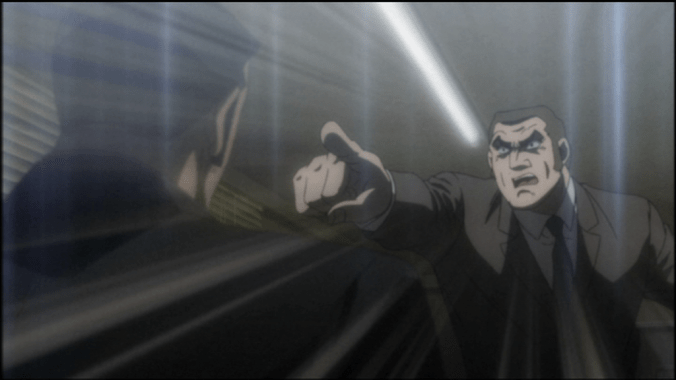
Especially in one episode where Duke gets caught after an assassination by an equally bearish police commissioner, who is dead-set on arresting Duke. The whole argument and trying to unmask him as the true culprit feels similar to a bonkers court case, where evidence and testimonies are thrown against each other in rapid fashion.

vlcsnap-2018-07-19-22h15m41s135

You!

vlcsnap-2018-07-19-22h12m55s814

Duke Togo’s unmoving face truly is the best.

And so, this stone face becomes one of the greatest assets of the series, be it as a comedic reaction, an expression of repressed melancholy, or maybe even something more enigmatic when Duke gets entangled in romantic or life-threatening situations. And if you see his face move, be it just a twitch of the eyebrow or a silent drip of sweat running down his temples, you know that the situation is drastic.

Those rare moments really make for a nice treat, and so, Golgo 13 delivers its emotional core just a bit differently – but to great effect.

Conclusion

Of course, giving a final rating to a 50-episode show after only 8 episodes is nonsensical. However, the direction it has taken looks absolutely entertaining, and reading from other reviews, the series is not dropping its episodic structure. And so, we will get 50 little adventures in the life of Duke Togo, the sniper called “Golgo 13”.

If one looks at the staff list, we find 20 different episode directors, and maybe this is also why everything feels so fresh every time: Many different creators telling stories about the same man, all from different angles and perspectives.

Will he win every time? Sure he will, he is Duke Togo – one of the best marksmen in the world. He has done this job for over 50 real-life years now. Many stories, many cases, many clients – and yet, he continues with that unwavering face of his.

And this is what made this show a very comfy watch for me, something lovely to put on in the evening to relax. The slow preparing and planning of his jobs, the certainty that all will go well, but mixed with that light suspense of not know exactly “how”. The creativity and the wonderful execution make this simple concept shine, and I can’t wait to continue watching this series. Will it be funny, will it be dramatic? Who will he fight against, the FBI, the yakuza, or just a private person? We can only find out by taking more short but serene glimpses into the life of a Duke Togo, the sniper called “Golgo 13”.

The End.

Sources: Manben Episode “Takao Saito”, Wikipedia, AnimeNewsNetwork & MyAnimeList “Golgo 13 (TV)”

All images are taken from my French release DVD.

MANLY MONDAY – Lupin III Part IV “The Italian Adventure” TV Series – (Review and Episode Recommendations)

lupins 2015.jpg

In one of my latest Manly Mondays, I talked about the Lupin III films by director Takeshi Koike, and how the hardboiled tone really fits the series.

As already mentioned in that article, the beauty of the now 50 year old “Lupin The Third” franchise is that it comes in many shapes, zeitgeists and forms: long running TV series, big cinema releases or short-running experimental shows.

Koike’s films in 2014 and 2017 were intended for a mature audience, given the depiction of violence and intensity of the themes it portrayed, and director Saya Yamamoto’s entry in 2012, A Woman Called Fujiko Mine, was equally adult – yet with a different focus as it explored sexuality and identity of the long-established characters.

However, Lupin III had always long-running TV series as a main focus, which were split into “Parts”. In addition, each of these Parts had a different suit jacket colour for protagonist Lupin to wear, so that it was immediately clear from the first glance which series you were watching: Part 1: Green Jacket (1971-1972), Part 2: Red Jacket (1977-1980), Part 3: Pink Jacket (1984-1985).

Each “jacket colour” is also unique in feel and tone, I highly recommend checking some episodes out to see what you might like the best. As these series are very often of episodic nature, you may pick and choose to your heart’s content.

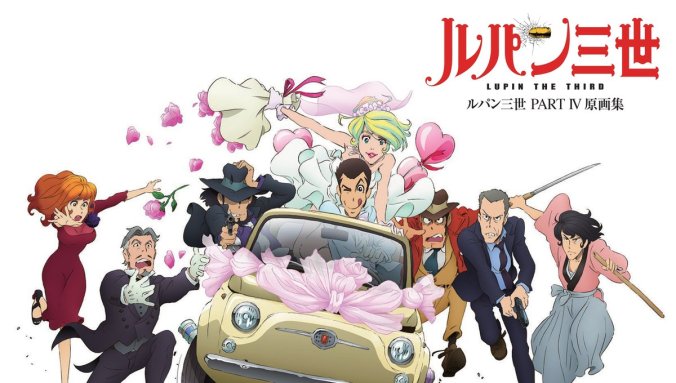
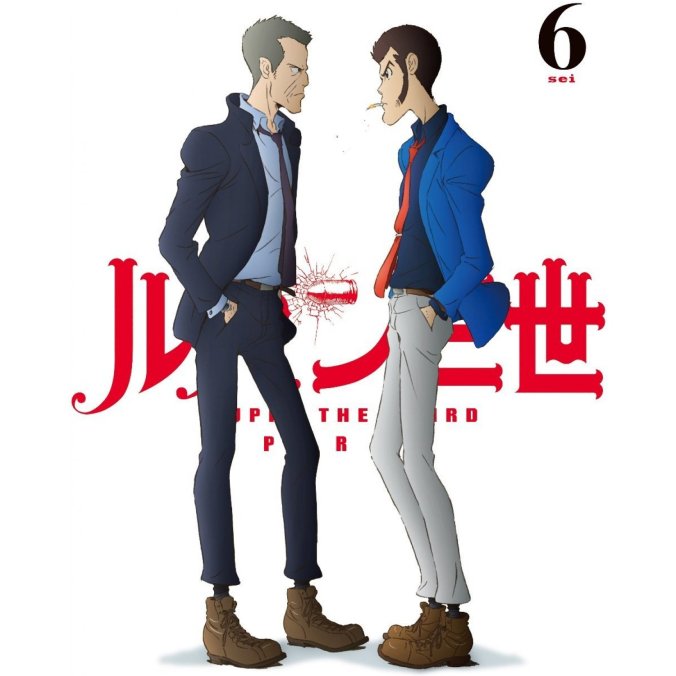
And in 2015, a new TV series came around – Part 4: Blue Jacket (2015-2016).

Let’s take a look at this new series in retrospective, what did it do and what was added to the long-running legacy of the franchise?

lupin2.jpg

A Love Letter to Italy

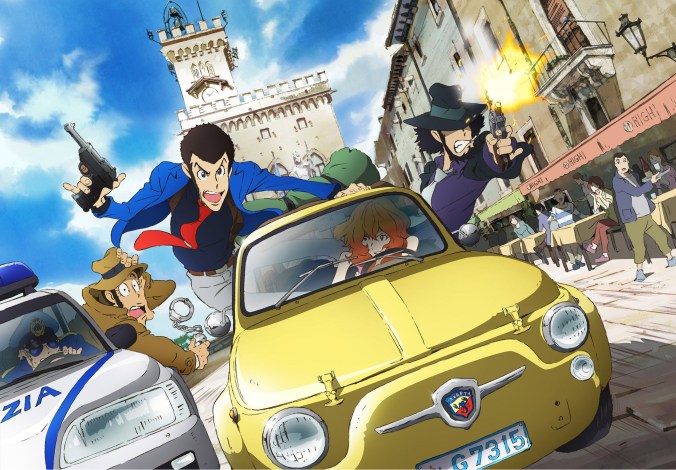
The story of Lupin III is very much grounded in the usual set-up: Lupin is a thief, roaming the lands with Jigen, his gun-slinging friend, in a tiny yellow Fiat 500, where they will be entangled in all sorts of adventures. On this journey, they will be supported by Goemon, a friendly yet stern samurai, and Fujiko Mine, a rival thief and love interest to Lupin. They are constantly chased by Inspector Zenigata from the ICPO, whose only goal in life it is to finally bring Lupin behind bars.

Lupin III Part 4 “L’avventura italiana” takes place, as the title says, in Italy, which makes for a gorgeous setting. The Mediterranean feeling with the sunny, bright lighting is always is a beautiful sight, and as the team has to flee and chase very often, we see a lot of Italy – the countryside, the beaches, the castles, and old inner cities.

city

goe castle

Dgzvjv-WkAEjVqs

Dg75pVHXkAAhD__.jpg

Apart from the usual sights and landmarks, the care that went into the details is astounding: euros are used throughout as currency, license plates are in the European style, and even newspapers, signs and police cars are in Italian, really selling the setting as a graspable place to be. In addition, Part 4 aired in Italy before it did in Japan, which is unusual, but fitting for this series, as Lupin III enjoys its cult status in this country.

New Friends and Foes

88c52a5142354d12ba114dbf38ce9285.jpg

Part 4 brings some new additions to the usual cast, most notably Rebecca and Nix. It’s difficult to introduce new characters to a web of already established relationships, but this series manages it quite well.

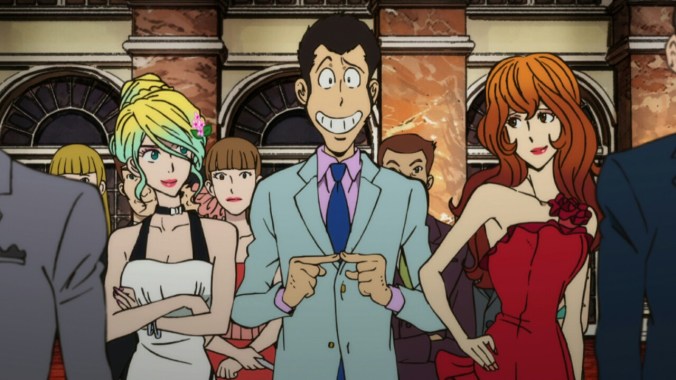
Rebecca Rossellini is a rich, spoiled, but quirky and fun girl with green-yellow hair, who has an acting career, a financial empire and good looks. Having lost her parents and now the sole heir of the conglomerate, she seeks thrills in her perfect life, things she cannot buy with money.

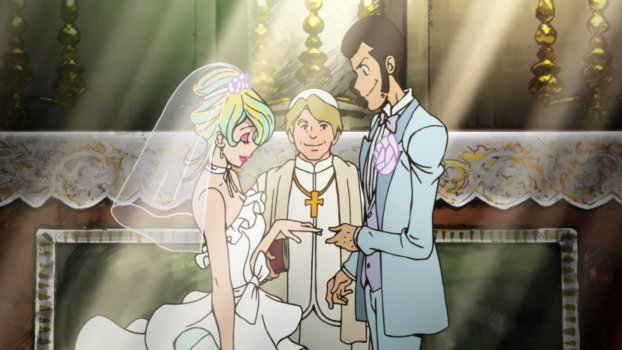
Lupin makes a marriage proposal to her, and surprisingly, she agrees – and after less than a month, they are standing in front of the altar. It turns out, of course, that this was all an elaborate plot by Lupin to steal a certain treasure, however, all the paperwork for the marriage already went through: Rebecca has become Ms. Lupin. What should have been a short scam turns out to be more complicated, and Lupin is officially married now – it will be one of his main goals over the course of the series to get Rebecca to sign the divorce papers.

But this creates an interesting love triangle with Fujiko Mine, as well as a thematic clash of femininity: Rebecca, the fun, young and quirky girl on one side, and Fujiko, the classy, mature and experienced woman on the other side. And while they are not explicitly fighting over Lupin, the banter, conflicts and hijinks that ensue are quite fun, even from Jigen and Goemon’s side who both cannot believe that Lupin is a “husband” now.

lupin3adultswim.jpg

Time to decide, Lupin!

Rebecca makes for a fun rival/romantic interest, but she is not universally present in every episode, nor does she have major influence on the complicated main story.

For me, it was the other new character that I was very fond of:

Nix, a British MI6 agent. He strictly follows his orders and thus has a few run-ins with Lupin’s crew, eiter because he actively has to fight them, or because their paths randomly cross.

nix.jpg

Agent Nix. (“Nix” being colloquial German for “Nothing”, not sure if intended.)

His design was a standout for me: the short slightly military-tinged haircut, the stern look, the wrinkles that give his face age and character, and especially the pointy ears (which serve not only an aesthetic purpose!)

While Nix seems like an uptight and efficient spy who doesn’t do anything besides following orders to 100%, more and more details about him will be revealed over the course of the series, and in the end, I was immensely happy to have him in this series.

As it turns out, Nix has problems to keep his emotions under control, and is often in danger of “snapping”, which might be hazardous for everyone involved. When his missions carry out well, he stays calm, but if he fails or a loved one is in danger, hell breaks loose. Nix is not only a spy, he is also a family man, with three cute daughters and a strong wife, so may God have mercy on your soul if you ever intend on hurting his family.

Nix carries emotional weight in his job and in his private life, and his role of being a responsible father clashes with his dangerous profession. He is a well-round character with a slightly tragic side too, but his likability and his switching between “deadpan serious” and “full on burning rage” serves for impressive, as well as funny moments within the story.

lupin-iii-part-iv-vol-6-468053.2.jpg

Nix, a great rival for Lupin.

As Nix is an important character with a lot of action segments and character acting, he gets some amazing animation cuts in Part 4, for example this cut by Shinya Ohira, where he fights a rebel spy. The unusual artstyle break and the pencil shading outlines give Nix’ actions visual power and strength.

Story and Standout Episodes

The story of Lupin III Part 4 is not the tightest, as not all episodes are here to drive the main plot forward. It is episodic, with an “Adventure of the Week” format, where you can enjoy every episode on its own, and occasionally be reminded of the big scheme in the background. The story goes off the rails somewhat to longer it goes, with some pretty incredible story twists and introductions, but it is all in good fun, as the strong cast can hold any outlandish plot together. The season finale might not have the biggest impact, but a nice ending overall.

However, there are some episodes that are able to absolutely stand on their own. If you want to get a taste, or if you simply want to visit the highlights this series has to offer, here is a small selection from my personal experience:

Themarriageoflupiniii_1

Episode 1: Lupin’s Wedding

“Rating”: Give it a Try!

Obvious choice to take the season opener, but this episode is a great character piece, with Lupin’s and Rebecca’s wedding and the controversy it causes with Fujiko, Jigen and Goemon. In addition, the animation is top-notch and delievers movie-quality action scenes to establish Rebecca’s character. A fun intro to the series!

img_30_m.jpg

Episode 3, 7 and 19: 0.2% Chance of SurvivalThe Zapping Operation and Dragons Sleep Soundly

“Rating”: Give it a Try!

Three episodes for Agent Nix, one being his introduction to his character and his skillset, being on par with Lupin and Jigen, and the other episode to show his family side and the caring father that he is. The third episode however takes a very dark spin on the spy business, with harsh violence and great danger to the protagonists. It makes for a strong tonal break that is worth checking out, if you are interested. (Keep in mind though that his episodes are more intertwined with the main plot and are not “pure” standalones!)

img_3344.jpg

Episode 13: The End of Lupin III

“Rating”: MUST WATCH

The mid-season finale and the episode that deeply touched me emotionally. In a surprising twist of events, Zenigata catches Lupin. Now that he has achieved his life goal, he gets a new goal: Keep Lupin behind bars. By removing the rest of the cast and only leaving Lupin and Zenigata in a 1-on-1 theatre piece in prison and total isolation, it goes far into the relationship of the two rivals.

I was highly impressed by this episode, and I would recommend it blindly to absolutely anyone.

DgDxdt0XcAAVp7n

Episode 16: Lupin’s Day Off

“Rating”: MUST WATCH

A simple premise: Lupin, Jigen and Goemon have a day off, so they book a table at a fancy sushi restaurant. They have to arrive at 6 PM, and it is only a short drive through the countryside to get there.

This episode is slice of life beauty with perfect comedic delivery, and how much a simple idea can escalate into madness. This one had me in stitches, from the fast action to the quick jokes. A jolly good time of an episode.

1516610431894.jpg

Episode 20: To Hear You Sing Again

“Rating”: Highly Recommended

A melancholic episode that I don’t want to spoil too much of. It is the story of an old Italian diva and her husband, and how long such a love can last through all the ages, through the good and the bad. A touching story that may move you to tears.

1646249_English_KeyArt-OfficialVideoImage_88e80ffd-4ba2-e711-8175-020165574d09

Episode 26: Nonstop Rendezvous

“Rating”: ABSOLUTE MUST WATCH

This second special Bluray episode, sometimes called “Episode 26”, serves as a prequel to all of Part 4 and is an all out action romp with everything you could wish for: Fun character interaction, high-speed chase scenes, action shenanigans and full on physical comedy of the first degree. It reminds me of other amazing car chases I have only seen in films so far, and it will have you thoroughly entertained! The last few minutes may be a bit slow, as it only serves as a lead-up to Episode 1, but everything before that is pure fun and the essence of Lupin III comedy action.

Conclusion

Lupin III Part 4 was a good time, and especially cosy to watch over a long time, basically like it aired, one episode per week and going faster if you feel like it. Not all episodes are stellar, some are outright bland, such as Episode 15 where Lupin infiltrates a high school to simply fight against bumbling teachers, but overall, I had a splendid time with a few amazing highlights.

If you want to get into the Lupin III franchise, I would maybe recommend other films instead, (The Castle of Cagliostro, The Fuma Conspiracy or Jigen’s Gravestone) as you may already need a bit of a grasp on who all these characters are, before you see them interact with newer ones. I’m still happy about the introduction of Nix, I hope that he may return for the next currently airing Part 5 in 2018.

The Italian adventure makes for a comfortable series to watch as a mood piece, to just see the cast hang out and enjoy themselves, with some great action sprinkled in here and there. It’s not the best of the franchise, but a very solid entry that you can check out if you want to – and if not, you can enjoy the standalone episodes I recommended to you as short film snacks.

Overall, I’m happy that I watched it, and I look forward to more adventures of the wonderful Lupin III cast.

end.png

The End.

Sources: Wikipedia “Lupin III”, MyAnimeList “Lupin III Part 4”

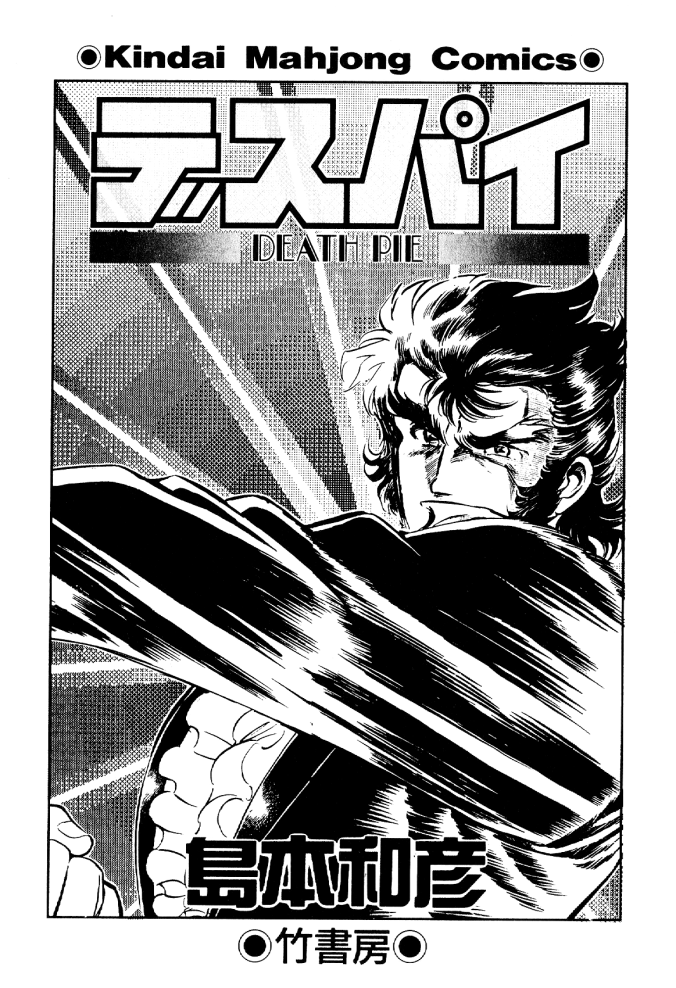
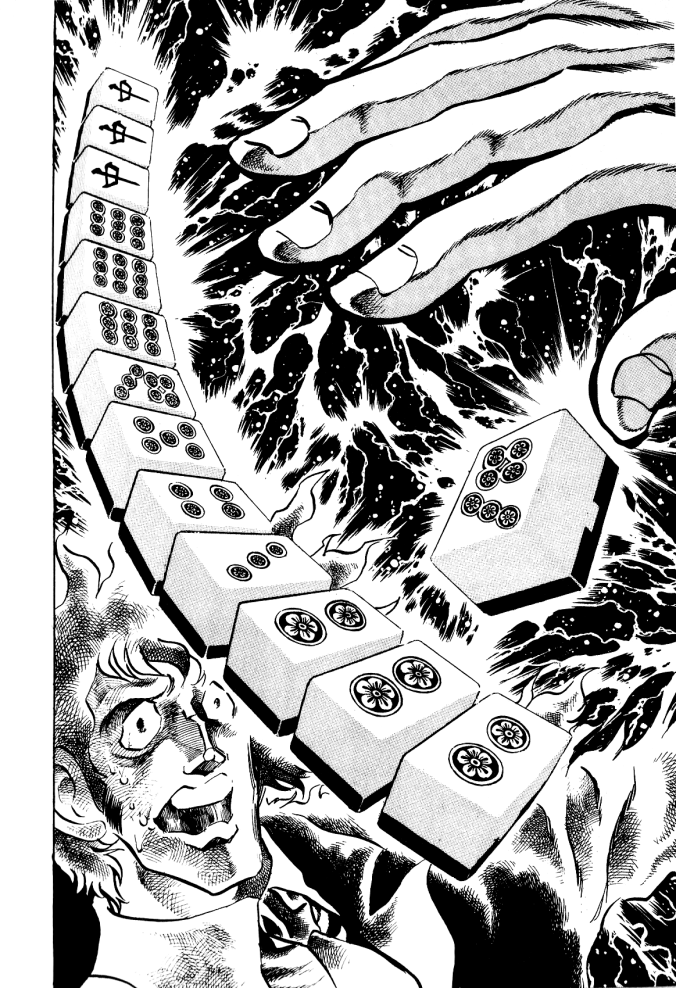
MANLY MONDAY – “Death Pie”: Like James Bond with Mahjong

T4.png

There are many niches in the manga world, and one of the most unique ones is the “mahjong manga”. The monthly magazine Kindai Mahjong by the publishing house Takeshobo first hit the shelves in 1972 as a text magazine, and a manga magazine followed in 1980. Ever since then it has brought many interesting beloved series to the world, and even kickstarted the career of Nobuyuki Fukumoto, who would gain critical and popular success with his two hit series Akagi: Yami ni Oritatta Tensai and Ten: Tenhou-doori no Kaidanji.

Now, the idea of a mahjong magazine seems odd: All the manga that are released here have to feature this game of tiles – something not everyone is familiar with, especially outside Japan. It poses a simple yet deserved question: If everything is centered around a single game that must be the focus, doesn’t it get awfully stale or boring really fast? Surely the authors must be limited in their choice of stories and characters, right?

Surprisingly, this is not the case.

In fact, if one looks at it closer, it gives a lot of freedom. There must be mahjong in it, surely, but the rest can be chosen freely and this has led to some amazing series: Akagi and Ten both combine yakuza and villain plots with deep human drama, Tetsunaki no Kirinji by Uhyosuke is about a divorced single father dealing with his online mahjong addiction to take care of his daughter, Getter Robo High! mixes Go Nagai mecha, mahjong and high school, and Legend of Koizumi by Hideki Oowada is, well, world politics on crack.

12928-620x-snapshot20100102011631

If you haven’t seen Legend of Koizumi, I highly recommend that you do.

The best proof of this freedom is that Kindai Mahjong is not only still going after 38 years, but also that it has spawned many spinoff magazines with different readerships. Kindai Mahjong is not one of the biggest magazines out there, but it enjoys its stable cult status and continues its run.

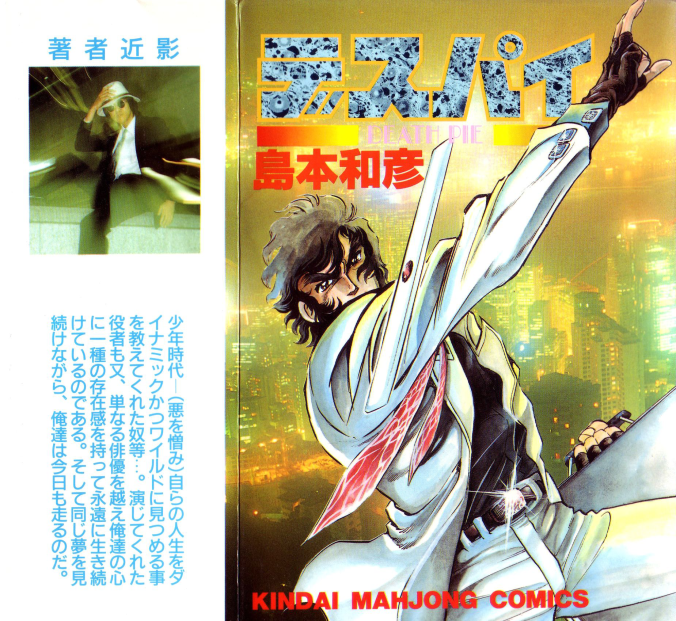
I wish to present one short series from this magazine, to show what is possible within this mahjong frame: Death Pie by Kazuhiko Shimamoto, from 1989.

img000001 (1).png

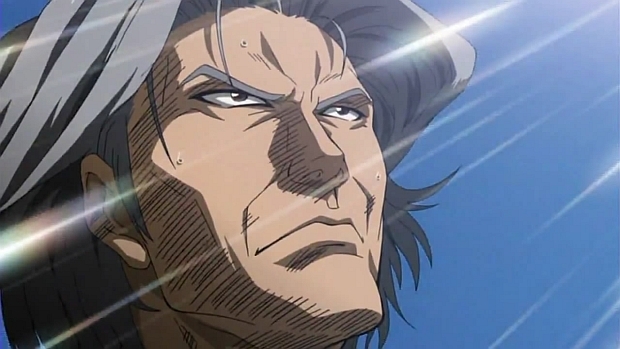
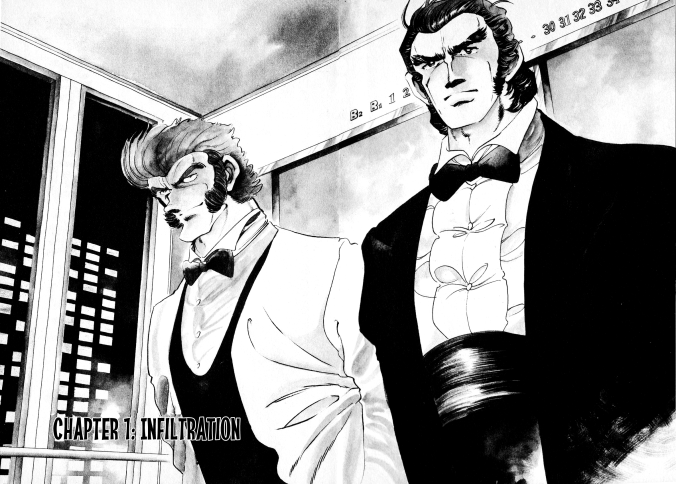
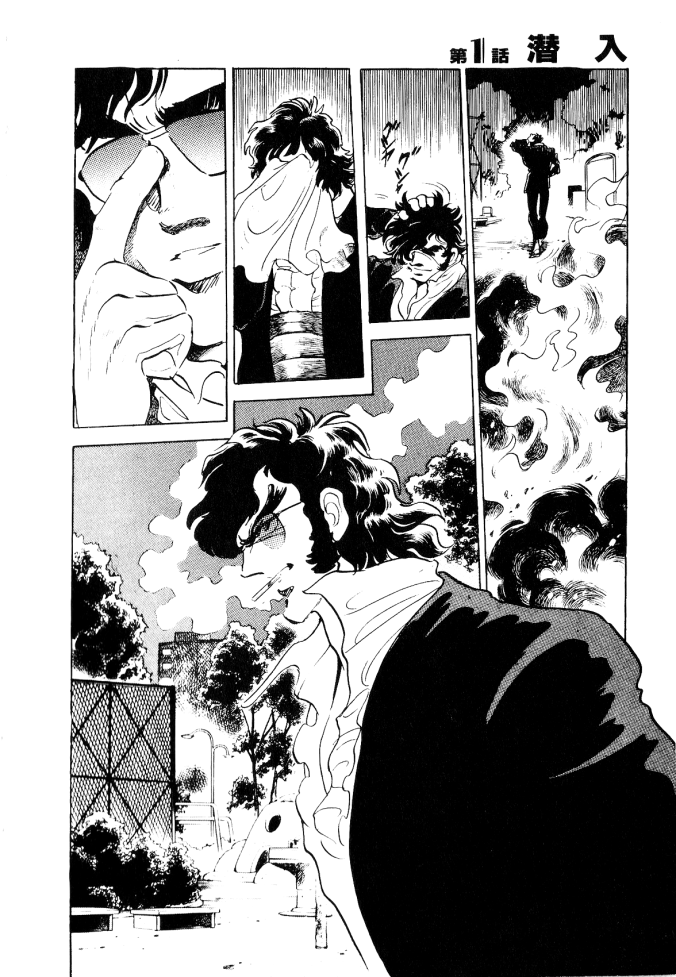
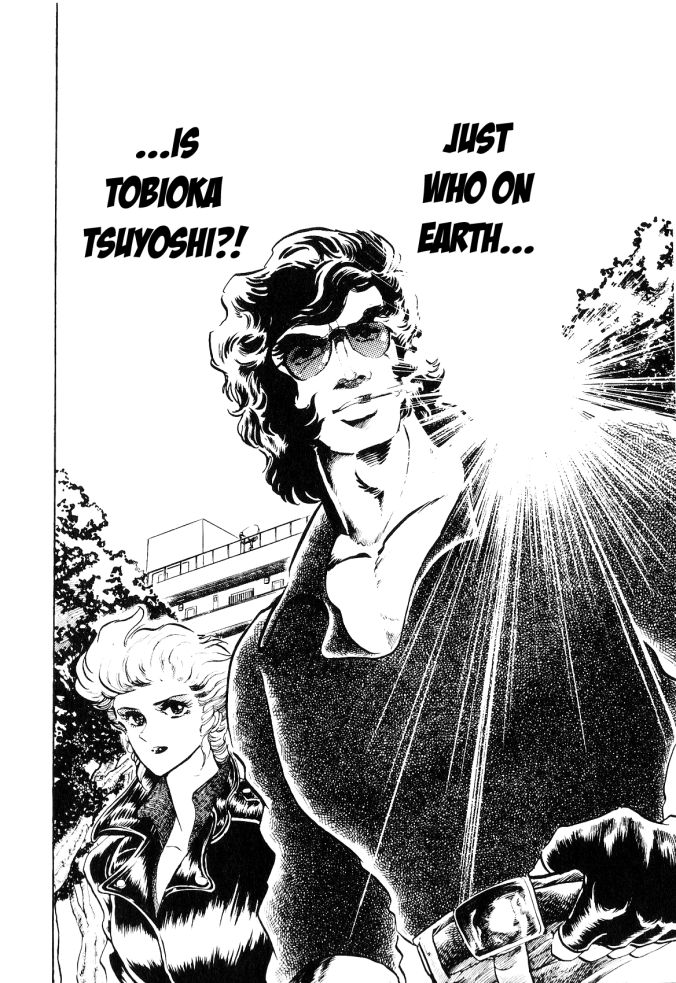
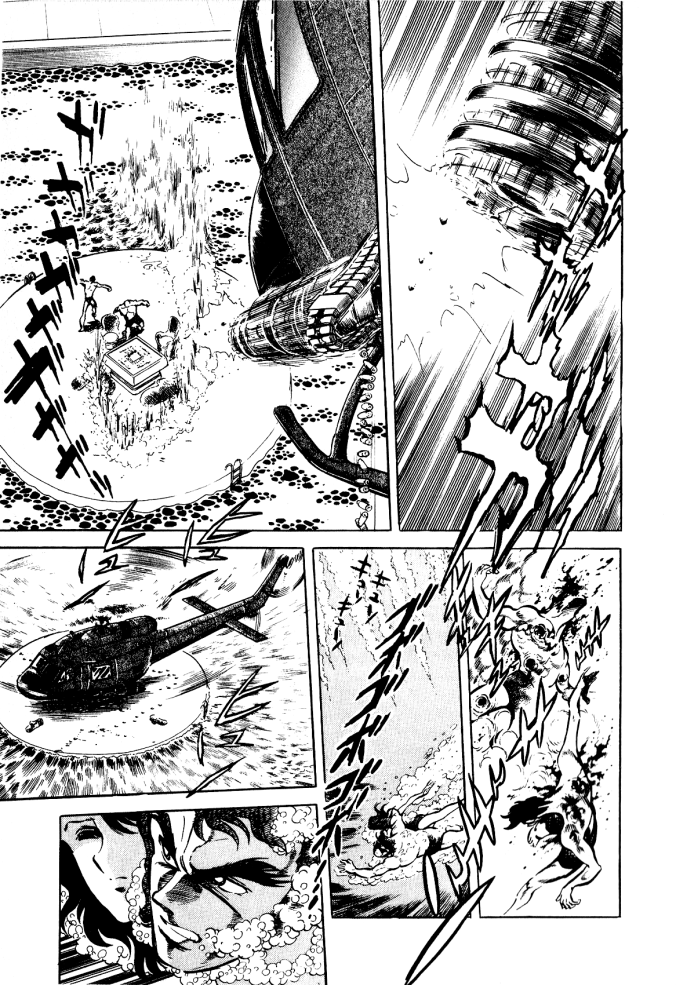
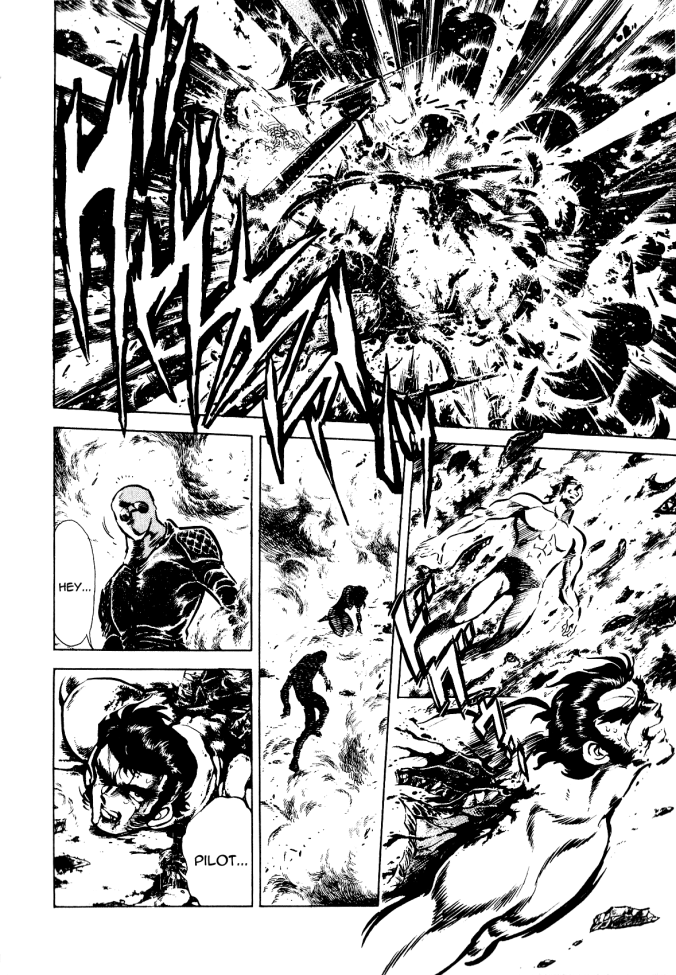
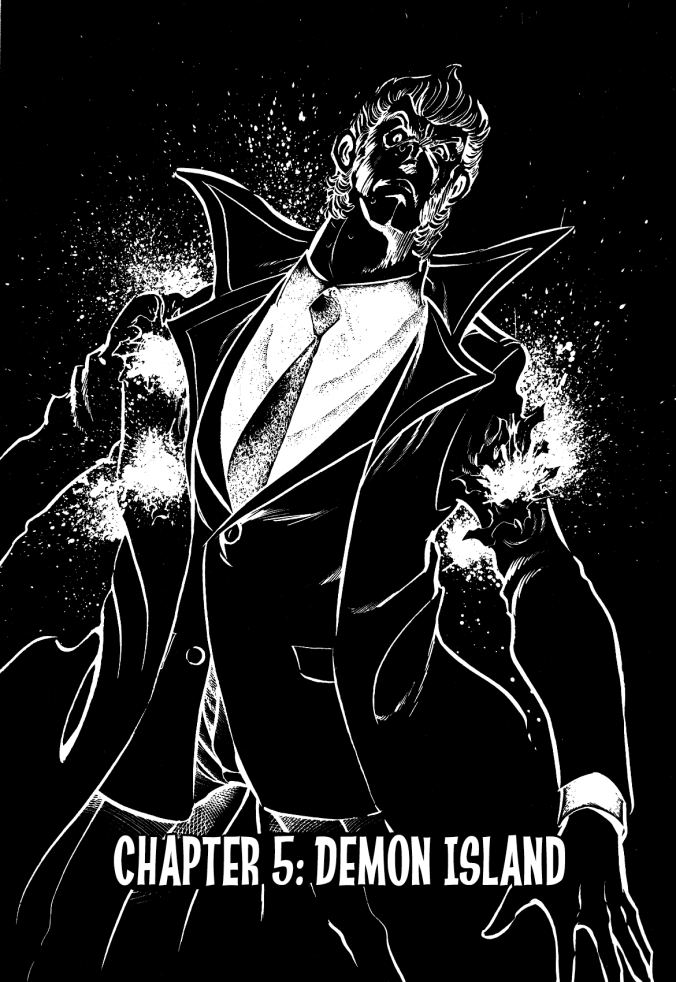
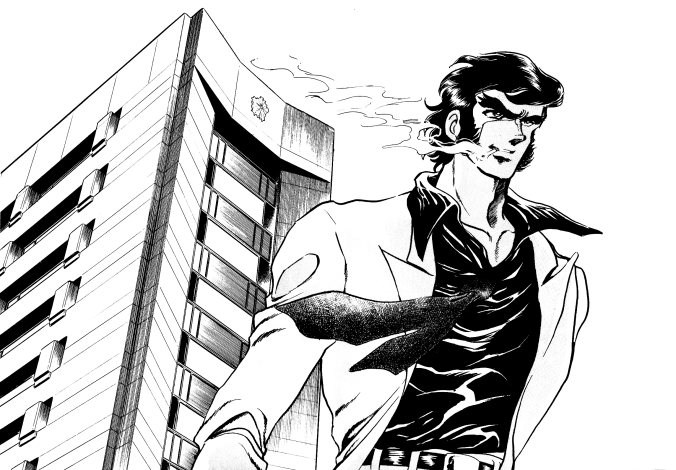
Death Pie is the story of Tobioka Tsuboshi, an ex-cop fighting against drug cartels, who plays mahjong against big yakuza clans and defeats them monetarily. Of course, more plot threads will open: undercover missions, secret infiltrations, backstabbings and fights for life and death with tiles and guns. It feels distinctly “James Bond” in its story beats, but in its look and characters as well:

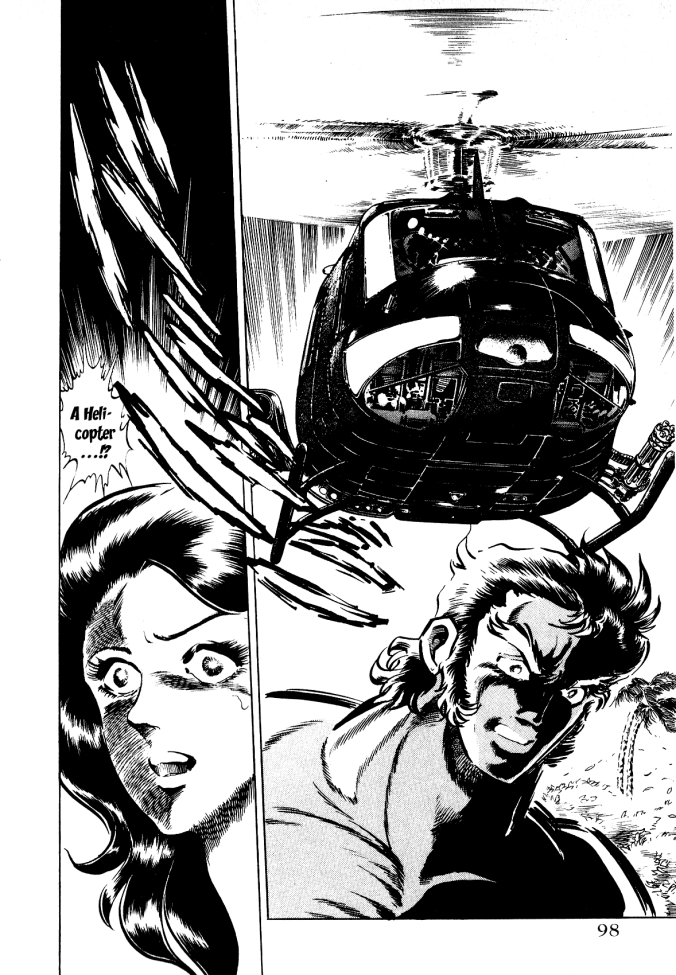
Smooth manly men in suits, good-looking classy women, overly evil villains, capable dangerous henchmen, high stakes gambling, secret casinos, action scenes and explosions in helicopters, cars and ships – everything that simply says “007” is here. Despite its yakuza setting, it borrows the feel of a Western style action film, and it fits.

img000007

img000022

img000028

A very rad action protagonist. Who also plays mahjong.

The look of the series brings me to another great quality this manga has: the art by Kazuhiko Shimamoto. He is mostly known for his “Blazing Transfer Student” series, but also other series that feature flames and blazes in the title, such as the autobiographical “Blue Blazes” (which has a fantastic TV adaptation) and “Burning Pen”. “Blazing Transfer Students REBORN” also received a Netflix live action reboot/revival in 2017, which I also highly recommend.

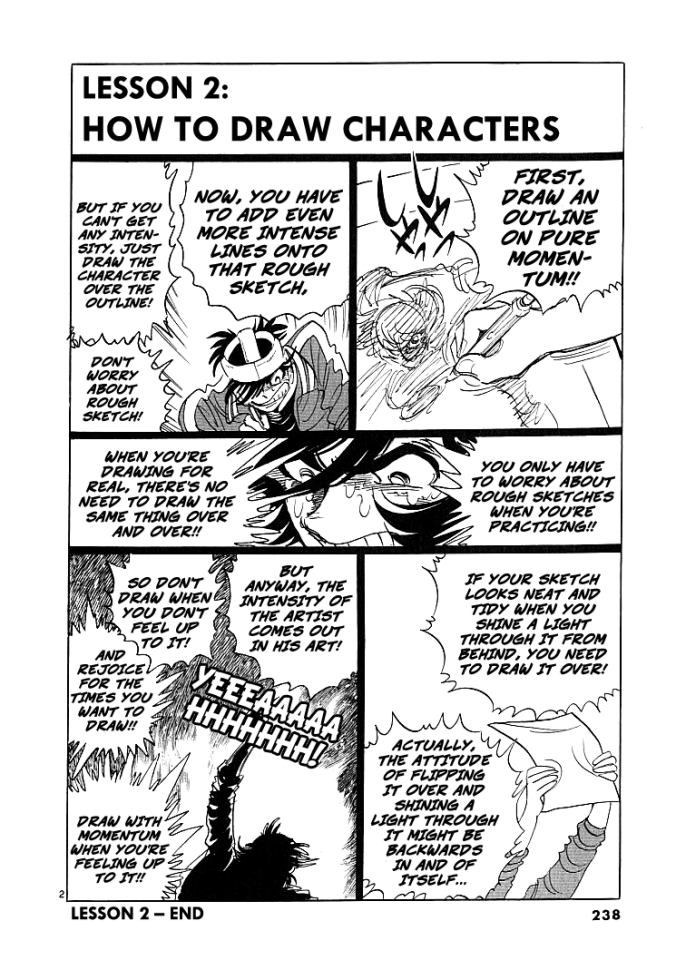
And as you can probably tell from that selection,  his series are characterised by BURNING PASSION and HOTBLOODED ACTION. Here you will find big emotions, huge clashes, and energetic characters who will fight for what they believe in. This is reflected in his artstyle, which is drawn with the same amount of power. Shimamoto does not only tell stories with fire, he IS the fire.

x16

Shimamoto explaining HOTBLOODED DRAWING.

In his making-of/behind the scenes manga Burning Pen he describes his approach to drawing: Have the same amount of passion as your characters, and bring that directly onto the paper. And it shows, with heavy contrast, stark brushstrokes modeling his characters, and thick outlines that make objects and sound words come alive.

z15

z16

z19

That’s one way to end a mahjong pool party.

I wish to especially point out the use of ink brushes, especially to draw the male characters hair, which gives everything a great sense of movement. The linework is outstanding, and gives the whole series an immense energetic feel.

r1 (1)

Of course, as Death Pie is very short, with only 9 chapters, I do not wish to talk a lot more about the story, and as I already said earlier, the plot feels distinctly James Bond, with the personal touch of Shimamoto.

But how does mahjong fit in with all of this?

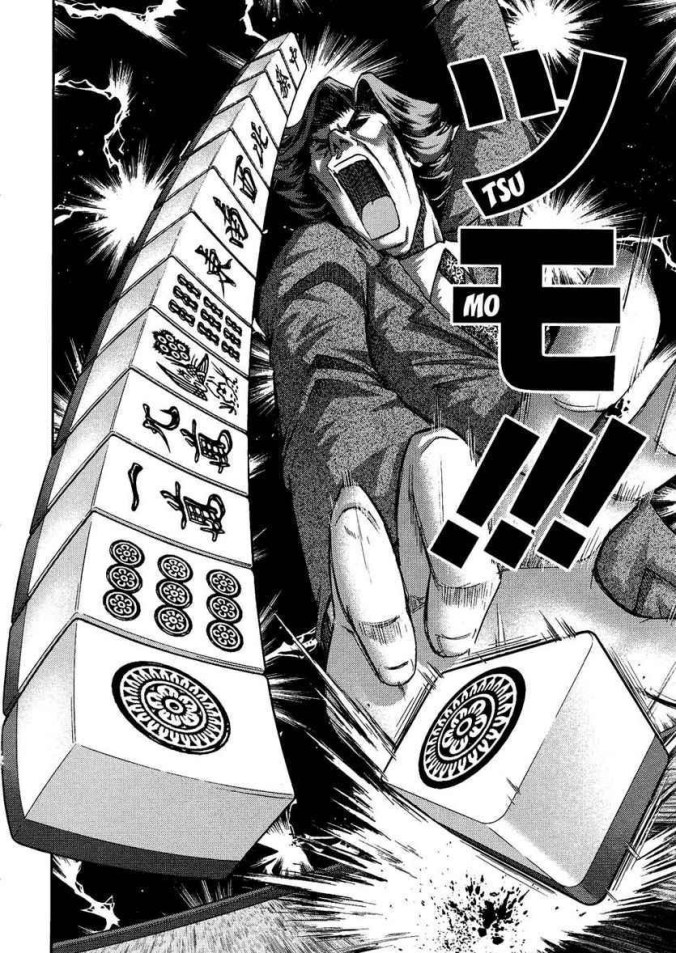
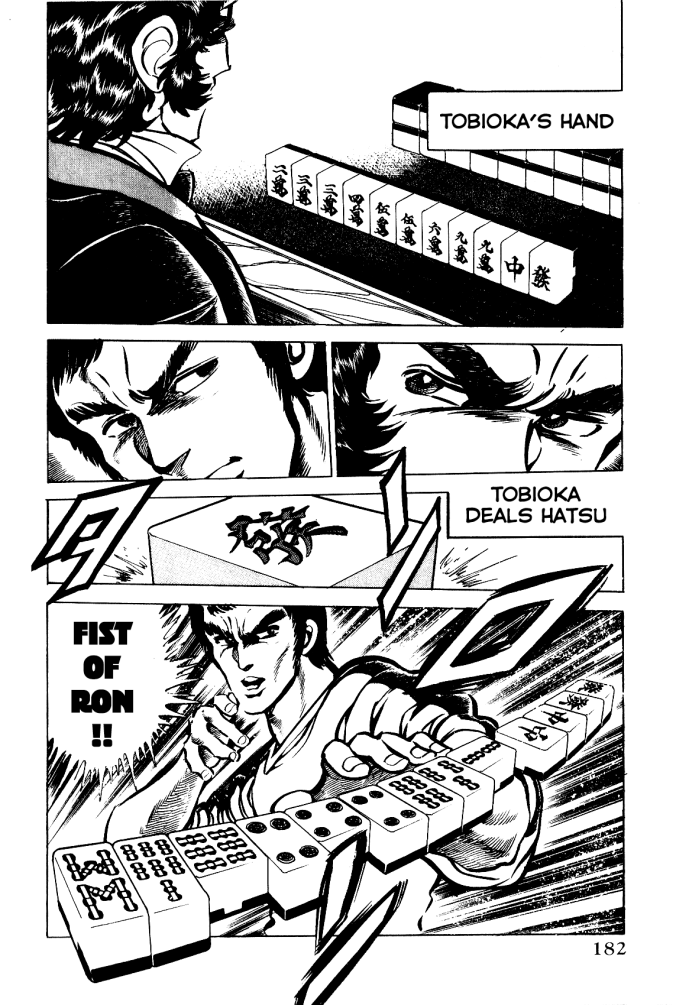
The underworld and gambling go together hand in hand already, and so it does in this story as well. But Shimamoto’s presentation lifts it to another level. Most mahjong manga have intense games with outlandishly gigantic imagery, such as the visual metaphors in Akagi, or the special attacks in Legend of Koizumi, and Shimamoto’s trademark HOTBLOODEDNESS brings it’s own visual look to the table.

DLge8gjVwAAkUFt

For comparison: Nobuyuki Fukumoto’s Akagi…

a2829e3e8e5173ed190b69585bf65c801.jpeg

…Hideki Oowada’s Legend of Koizumi…

X23.png

… and Kazuhiko Shimamoto’s Death Pie.

And for those worrying about not knowing the rules of mahjong, this series does not put an immense focus on it. It is rather the surroundings and settings that make it fun, as well as the villains. The serious action film look with the over the top presentation of the mahjong manga creates a fantastic feeling, that is worth reading this series for. The plot can get a bit convoluted, or you may lose track of some characters, but in the end, it is all worth it: for the artstyle, the character design, the drawings, and the fact that one of the henchmen is Mahjong Bruce Lee.

img000020

Death Pie is a little gem that I would like to recommend to everybody. With its very short run of 9 chapters, you can easily read it in an afternoon and enjoy it to your heart’s content.

There will be something for everyone in here, be it the thrill of mahjong, the energetic artstyle, the larger than life characters, or simply the interest to check something out from a decade long past, in a niche manga magazine that has lived for many years and will for many years to come.

img000011.png

The End.

Sources: Wikipedia: Kindai Mahjong, MyAnimeList: Death Pie, Mahjongkrazy Scanlation Notes

MANLY MONDAY – “Zombiepowder.” Tite Kubo’s Early Western Fun

zombie-powder-vol-1.png

Back in the day when I was a little kid, the book shop was my world. I read many manga there, even right into the teenage years, as the store had comfy couches and chairs to sit on, so that you could browse and read for an unlimited time. It was here that I found Zombiepowder for the first time, by an author I had only heard a bit about: Tite Kubo, most famous for his series Bleach.

I would later find out in school exchanges and travels outside of Germany that Bleach was actually a huge thing. The internet told me that it was on the level with One Piece and Naruto, the “Big Three” of Shonen Jump, and I was quite surprised. Bleach was never a gigantic thing in Germany, most likely due to the anime not being widely available, especially in the “golden early days”. (One Piece ran since 2003, Naruto since 2006 – in a dreadful version, don’t remind me of the opening, the One Piece one is amazing, watch that instead – both on the big channel RTL II, while Bleach started only in 2010, on a niche channel called Animax.)

And so, in 2008, I held a volume of Zombiepowder in my hands, not knowing about Bleach, and started reading this new series I had never seen before. 10 years later, I revisited it.

02-03

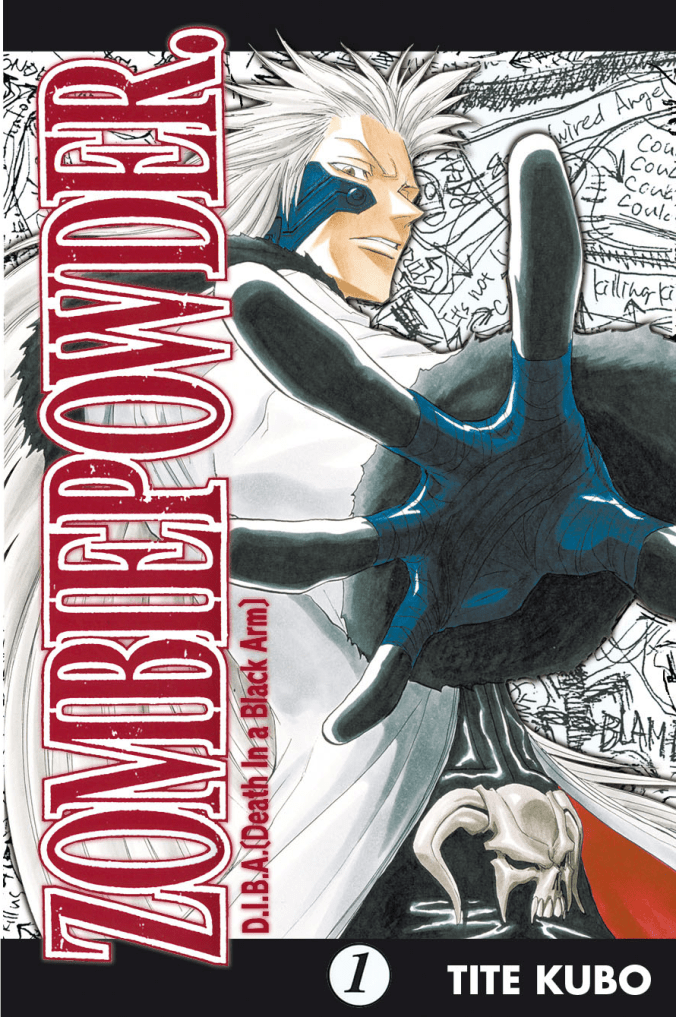
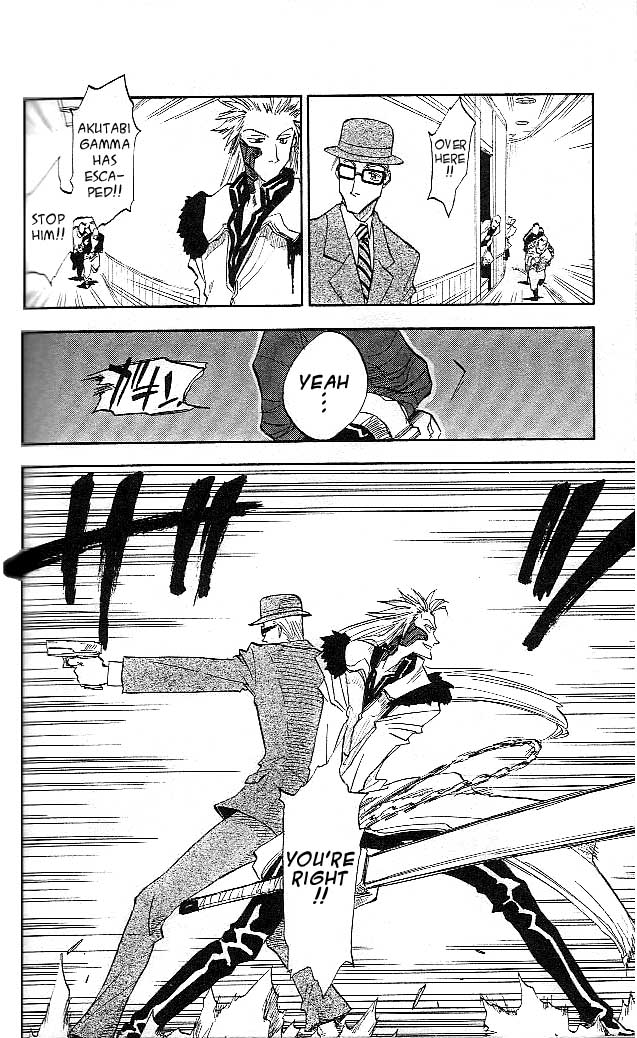
Zombiepowder is the story of Gamma Akutabi, a silverhaired hero with a big sword and big heart, in a Wild Western world. He is a “powder hunter”, someone who is on the quest to hunt down the “Rings of Death”. If you collect all twelve rings, you can produce the eponymous “zombie powder”, a substance that brings life: If used on a dead person, that person becomes alive again, and if used on a living person, that person becomes immortal.

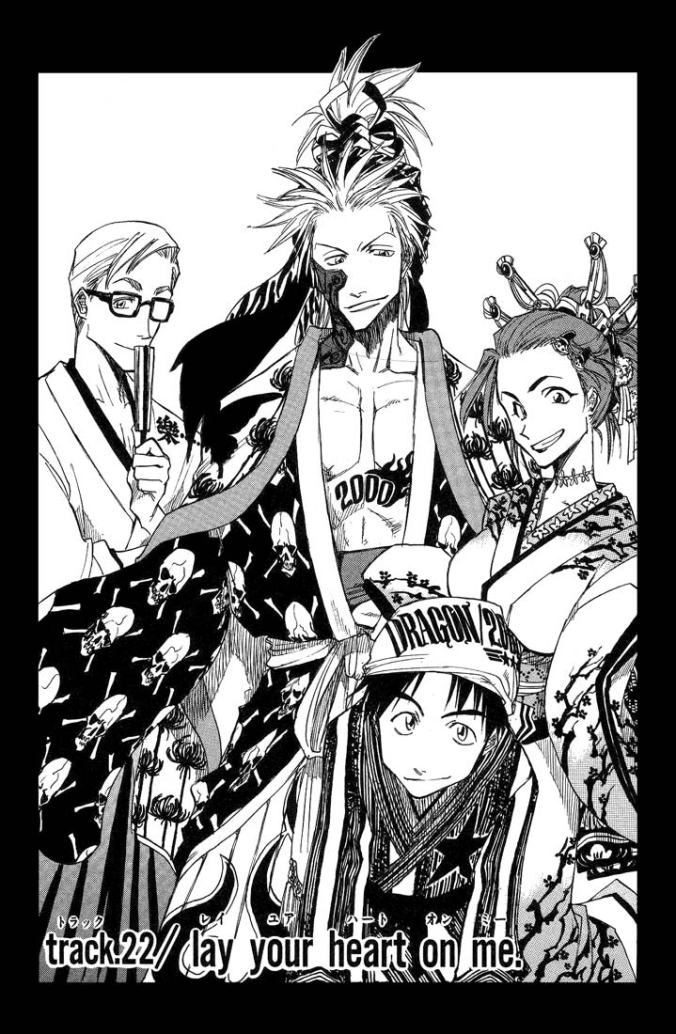
Hence, many people are after these rings for different reasons, and so far, no one has managed to gather all twelve into one place. Gamma Akutabi is after it for the immortality, and on his quest three other characters will join: C.T. Smith, his partner in crime, a very upright classy gunslinger complete with suit and bowler hat, Elwood, a young teenage pickpocket, and Wolfina, an energetic paparazzi  lady who fights with forged press releases and a modified tripod.

x2 (1)

From left to right: Elwood, Smith, Gamma and Wolfina.

As this manga is quite short, with 27 chapters only before it was cancelled by Shonen Jump, I wish to talk less about the plot and more about the characters and style that Kubo shows us here.

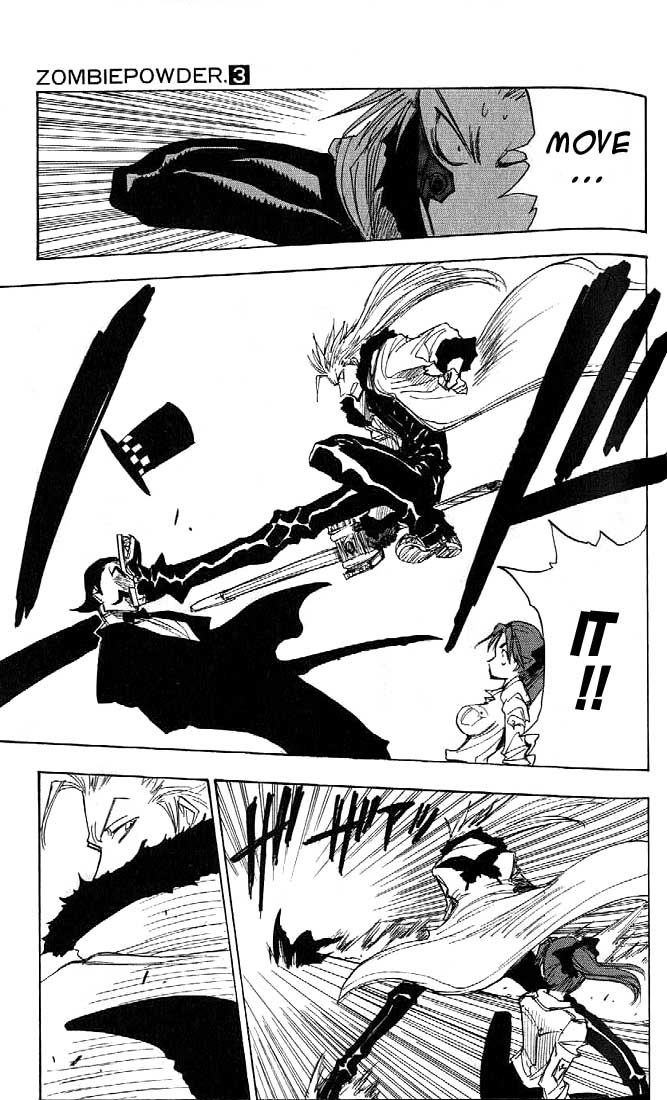
Kubo’s artstyle and linework have always been immensely stylish. Even though I have never seen or read much of Bleach, I can tell you that his design is instantly recognisable and very pleasing to look at. Clothes are wonderfully designed and fitted, characters have sleek shapes and sharp features, and the action makes it all shine with simple to understand panelling and framing.

x11
x17 (1)

x18

Simple, clear, and straight to the point.

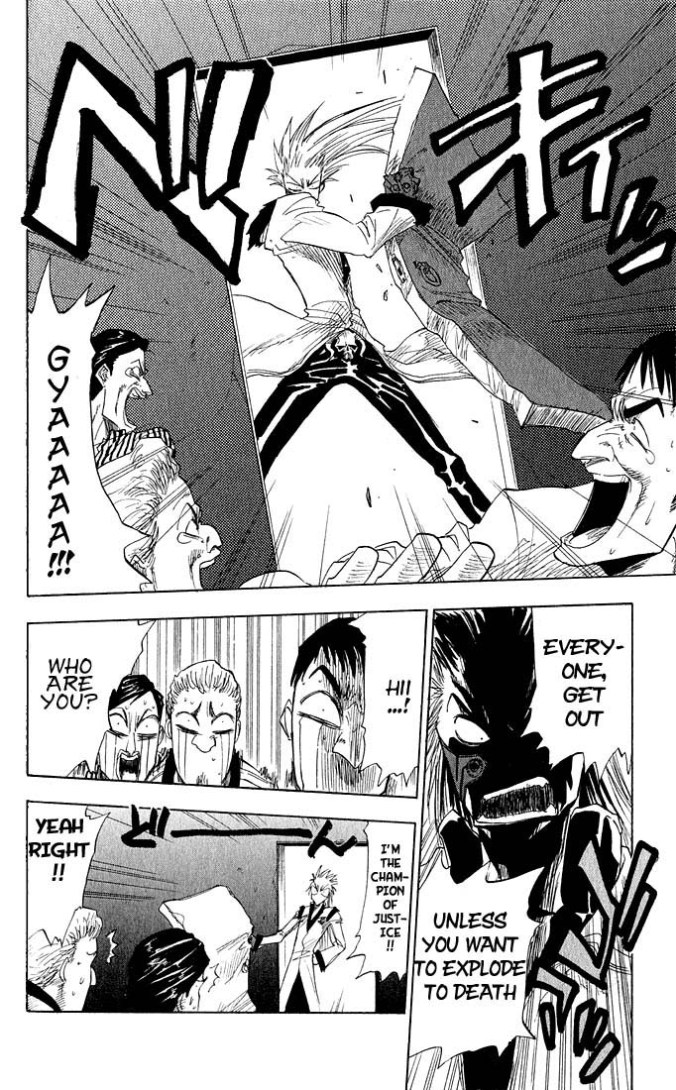
The tone of the series alternates between “serious” and “goofy” quite easily, and the characters can carry it as well. The more outlandish moments serve as nice breathers between the onslaught of action.

x37

From serious busting through a wall…

x9.jpg

…to silly busting through a door.

And there is A LOT of action in Zombiepowder, the series consists of battles pretty much every chapter, and – surprisingly – it works! Characterisation is interwoven with the respective fighting styles of the protagonists, everyone with their own strengths and weaknesses. Cool stuff happening with cool people, nice.

Gamma Akutabi’s design, the silver hair and coat, together with his chainsaw sword and later magic use was a design I particularly loved, and sadly it had to go too soon. He could have been a classic Shonen protagonist to stand alongside others, even with the slight accusations of Kubo taking too much visual inspiration of Trigun and Western/Mad Max settings à la Fist of the North Star and Battle Angel Alita.

xff46

That’s rad.

While I recommend reading Zombiepowder to everyone, it’s going to be interesting what you take away from it.

It’s pre-Bleach, opening itself up to comparison, but it’s also its own thing of a young upcoming artist trying to find his voice.

It’s also a short Shonen riddled with strange decisions, as Kubo says in the behind-the-scenes: This was his first work in the magazine Shonen Jump, and he was under “great emotional trauma” while drawing Zombiepowder – due to the crushing workload of having to produce a chapter each week, and due to him not knowing how to communicate with his editor, sometimes taking decisions he didn’t want to, accepting them without discussion.

The manga ends abruptly as well, it manages to round off its first arc, and then suddenly introduces three finishing chapters with many new characters and a sort of style-breaking feeling. While I was not a fan of how it leads to the ending – it leaves two protagonists behind in an uncertain path and has some questionable character designs – it does leave on a nice, if short bitter-sweet note.

If you wish to read Zombiepowder, I will recommend the physical release in 4 volumes, as it comes with a lot of making-ofs, other early Tite Kubo manga (which are all worth of analysis as well), special artwork and even a playlist of music for every character in the manga. Hey, I didn’t knew Kubo liked Rhapsody, an Italian powermetal band, one of my absolute favourites!

Conclusion

Essentially, this manga is a great stepping stone into a genre that Kubo would help to shape, and a short fun romp by someone who would later on do great things. To my personal shame, I must confess that Zombiepowder was the reason I put off Bleach for a decade: Gamma Akutabi and his gang were so energetic and fun, that Ichigo Kurosaki and his friends paled for me in comparison. Given, of course, that I had only read the first volume of Bleach, but alas, I was having more fun with this Wacky Western than Supernatural Highschool.

10 years later, it’s still very fun, even if a bit wonky in retrospect, and I will check out Bleach soon, it’s about time I reckon. And while I do that, walk the path into the other direction, and check out Zombiepowder, and see how you will like it. It may not be your new favourite, but it will be a powerful time capsule to rediscover.

x3 (3)

The End.

Sources: Zombiepowder Wikipedia, Zombiepowder making-ofs (Physical Release, Tokyopop)

MANLY MONDAY – Makoto Shinkai’s “Someone’s Gaze” – Emotional Strength in 6 Minutes

vlcsnap-2018-05-08-22h48m56s051.png

We all love big, far-reaching stories, in many shapes and forms. Either big space operas with gigantic casts and many factions to lose yourself in, or melodramas with intricate webs of drama and relationships, or big, bookish fantasy epics where the lore and history of the world could fill thousands and thousands of pages.

Such gigantic works are a marvel in itself, and if one finds the perfect one, be it Lord of the Rings, Game of Thrones or Legend of the Galactic Heroes, or whatever world rings true with you personally, you will have something that may accompany you for a long time, with a lot of content to look forward to.

However, there is a merit in the short form too, something that may get overlooked in a fast world with long-running series or franchises: It’s the standalone short film – little pieces of media that will easily get lost or underappreciated in the popular consciousness.

The beauty of short films is that they can bring an idea, a feeling or moment to perfection. Condense something into its purest form, so that it will reach its goal in a short amount of time, with careful planning, framing and narration. And depending on the topic, the look or simply the presentation alone can touch you deeper than any long-form piece of medium.

For me, one of these is Someone’s Gaze (“Dareka no Manazashi”) by director Makoto Shinkai.

vlcsnap-2018-05-08-22h48m27s566

vlcsnap-2018-05-08-22h48m39s022

Someone’s Gaze is the story of Aachan and her family, to be more precise, her father. Her life is not going too well, she gets scholded by her boss at work, the stress is taking over her life, and on top of that, her parents are now calling to ask how things are going. She lies on her phone, exhausted from her day, saying that she has no time for a dinner with her father, because she is still at work.

vlcsnap-2018-05-08-22h49m28s263vlcsnap-2018-05-08-22h49m50s631
As it turns out, her father is lying too. 

As they both exchange light small talk of “everything going fine”, we see that her father’s life has not been going swell either. His office work is equally rough, his wife is away too often as she seems to work abroad, and on top of that, the family cat is getting old, little Mii-chan is not the bouncy kitten she once was. Behind the friendly soft words of both of them, sadness lingers.

Essentially, as I cannot tell too much about the short film without completely spoiling it, it is a story of growth, progress and going forward, and what all of that involves. One cannot go forward without change, and it is impossible to go back in life. And all of this is told through the lens of a child growing up, from Aachan’s point of view and from her father’s.

vlcsnap-2018-05-08-22h50m30s563.png

As beautiful as childhood can be, it has to end one day. Parents cannot watch over their children forever, and kids want their own freedom with time. This grows into full independence from your parents, a wonderful and scary feeling all in one. Freedom also means responsibility for one self, with all the good and bad. The other way around, a parent a must learn to let go, but still be supportive without being overbearing or clingy. All of these feelings, these two different situations and worldviews must be in balance, and the way to balance is a long and hard one.

The natural way of growing as a family and then growing apart, yet staying together, is fascinating, sad, and essential.

vlcsnap-2018-05-08-22h51m21s411vlcsnap-2018-05-08-22h51m26s632vlcsnap-2018-05-08-22h51m29s194

Someone’s Gaze uses strong, memorable imagery and excellently crafted montages to show the life of this family, from Aachan being a little child, to her being a young woman,  passing all the stations in life where one struggles and succeeds: elementary school, high school, moving out, studying, and getting your first job.

vlcsnap-2018-05-08-22h51m13s571.png

And so, time passes.

Director Makaoto Shinkai has recently gotten a lot of attention, as his last film your name. (“Kimi no Na wa.”, 2016), became the highest-grossing animated and Japanese film in history, earning critical acclaim and immense financial success, and making him a house-hold name even outside the anime world. With J.J. Abrams’ remake on the horizon too, his name will continue to carry weight and popularity. And his works are beloved by many, for their smooth and breathtaking animation, gentle and realistic colour schemes, and emotional stories.

I myself have sadly never been a great fan of his works, as they often missed the emotional impact they should have had, as I was missing strong characterisations and the power to hold every scene together in one concise big way. If you like Shinkai, please do not worry, I am in the minority. His works are beloved by many, and I can certainly see why: He tells big stories with even bigger visuals, and what he achieves visually with animation is simply unmatched.

And yet, Shinkai, to me, was always a director of “moments”. His films don’t always hold together, but if he wants to hit, he hits, with iconic imagery and shots. He is far better in presenting ideas and impacts in a single concentrated point than he is at painting characters and telling long stories.

Thus, I think, he is perfect at telling short films.

While none of his longer films have resonated with me, his short works (everything under 10 minutes) all have had a great impression on me, be it commercials, promotion videos, or, as we see here, short films. If Shinkai takes one idea and goes through with it, creating one “moment” as a standalone that does not need to tie itself to anything, he can reach fantastic heights.

vlcsnap-2018-05-08-22h53m43s609

And Someone’s Gaze is the culmination of Shinkai for me, the perfect sweet spot of emotionality, nostalgia and progress showing the pain and joy of growing up. Such a universal theme, a concept that will be forever ingrained in humanity and that will continue in the future, is delivered in just a few minutes – and it hits all of the marks.

Someone’s Gaze was released alongside the very popular Garden of Words, it ran as a short film before the other one in cinemas, and is often found on the same home release too.

And yet, I have never really seen someone talk about this little film next to the big popular one, and I feel that it needs some more love and attention. It is a personal, small film that may not resonate with everyone, but make sure you don’t miss this tiny gem by Shinkai that will only take 6 minutes of your precious time.

vlcsnap-2018-05-08-22h54m22s930.png

The End.

Someone’s Gaze can be found on Youtube, and it starts about 30 seconds in.

Sources: Wikipedia entries on Makoto Shinkai, your name., and Someone’s Gaze.

MANLY MONDAY – The Hardboiled Beauty of Takeshi Koike’s “Lupin III”

vlcsnap-2014-12-16-00h33m42s199.png

The beauty of any long-running franchise is to see the different interpretations over time. How does the zeitgeist influence an adaptation? How does the director influence the style on a narrative or visual level? What does the new look or re-design say about the characters?

Here comes Lupin III into the game. This franchise about a suave thief and his team has had many entries over the decades, from the original manga by Monkey Punch in 1967, to long-form TV series 1969 and 1977, to many OVAs and films in the 80s and 90s – some even by great and popular names in the industry like Hayao Miyazaki’s Castle of Cagliostro and Osamu Dezaki’s Harimao’s Treasure. And every creator brought their signature styles to the table.

lup.gif

From Miyazaki’s bouncy fun and super-smooth animation… 

dezaki.png

… to Dezaki’s signature style “Postcard Memories” still frames.

This, to me, is the fun of Lupin III.

It’s essentially a gigantic toybox where any creator can come along and pick up the characters to play out a story for you, and in the end, they put the toys back for the next one to pick up. Do you have a favourite creator? Look up if they did anything on any Lupin III, they most likely will have an entry somewhere! You can explore freely through many styles and time periods, and find the Lupin III adaptation that you will like the most.

You only need to know the very basics and you’re good to go: Lupin is a thief, Fujiko is a rival thief and love/lust interest, Jigen is a relaxed gunslinger, Goemon is a honourable samurai, and frantic INTERPOL Inspector Zenigata is always hunting them. And then, adventures happen – car chases, shootouts, sword fights, trickery and thievery, helping friends and defeating foes, you name it.

This toybox freedom allows for great experiments and more outlandish interpretations of the characters. Lupin III: A Woman Called Fujiko Mine (2012) by Sayo Yamamoto for example told the story from Fujiko’s side of things, with heavy themes and explorations of sexuality – heterosexual and homosexual alike – giving the franchise a very adult and interesting not-very-canon-feeling entry.

To give you a short overview of styles through the ages:

cast.jpg

Lupin III: Part 1 (1972)

Lpn3

Lupin III: Part 2 (1977)

voy.png

Lupin III: Voyage to Danger (Special, 1993)

Fujiko-Mine

Lupin III: A Woman Called Fujiko Mine (2012)

lupin

Lupin III: Part V (2018)

In 2015, the next Lupin III TV series started, called Part IV, with a light fun tone, classic thieving hijinks, and new characters to add to the roster. The opening alone will tell you the fun it has with itself, it certainly is a feel-good series where you can relax with a big smile. This year, in 2018, Lupin III Part V has started airing, with a heavier focus on the internet and the digital world, giving it its unique spin on the world too – and again, it has a fun opening, which underlines the sci-fi and digital aspect more, with Lupin’s little  signature Fiat 500 flying into space to install a camera on a satellite.

So, the TV series are doing fine and are absolutely fun, what else is going on? We have the funny Lupin III airing on TV, is there a serious Lupin III at the moment too? Some other interpretation? Another creator putting their own spin on the franchise?

Enter director and animator Takeshi Koike.

goemon.jpg

Takeshi Koike’s character design for Goemon Ichikawa.

Takeshi Koike made a name for himself with the animated film Redline, which is an absolute MUST-WATCH for any fan of animation. A story about intergalactic racers, a yakuza plot, three friends who must grow together, and the most insane race the universe has ever seen – I could speak for hours about this film, as it is one of my favourites. Koike was the director, storyboarder, character and machine designer (and probably even more, as he mostly went uncredited in his own work) for this film, and it is simply a masterpiece in the medium.

Even before his directorial debut with Redline he was a talented animator and worked on many projects: Koike is the protégée of Yoshiaki Kawajiri, the stellar director behind aesthetic and atmospheric masterpieces such as Vampire Hunter D Bloodlust, Ninja Scroll and Running Man. Koike even worked on some of these films under his mentor. And the influence is more than visible: Both use stylish sharp character design, precise and breathtaking slow motion, strong shadows with stark contrast. To this, Koike adds his own flavour: extreme and atmospheric camera angles, immense power and speed in action, and some realistic violence with impressive outlandish sword- and gunplay. (For more information and examples: Here is a sakuga compilation of his work and here a piece by The Canipa Effect.)

So, what happens if such a skilled director takes on the Lupin III franchise?

Detailed, powerful, well-directed pure fun. (Source: Jigen’s Gravestone)

Koike’s Lupin III films are intense, fun and an absolute blast.

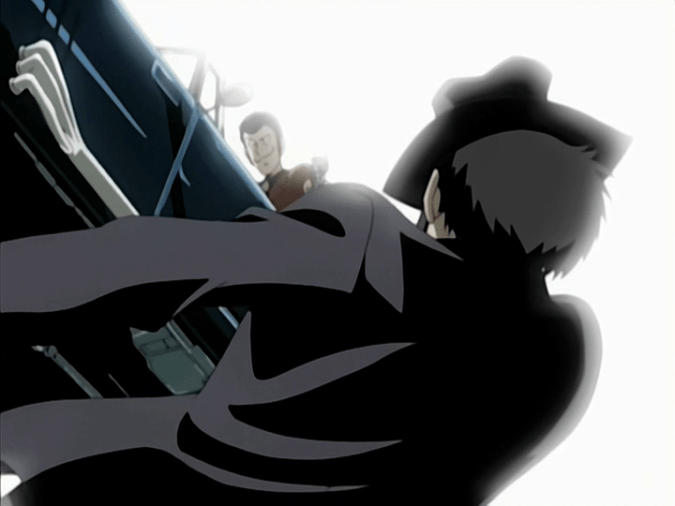
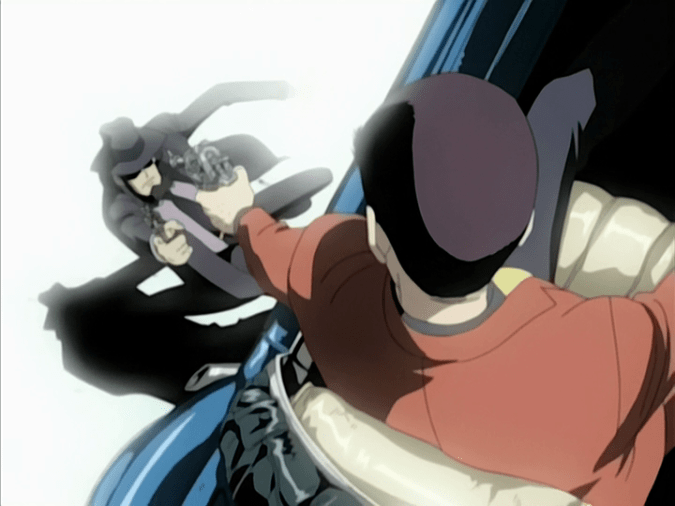
As you can see from the scene above, Koike brings the fantastic car sequences from Redline into the mix, and as the franchise always has had outstanding chase sequences, it fits perfectly into the whole canon. Little details can be found as well, like Lupin cranking down the window and covering his ears before Jigen shoots, the outline smear on the villain when he the cars collide, or Lupin’s expressive yelling you can hear even without sound.

Takeshi Koike has so far directed and designed two Lupin III films, Jigen’s Gravestone (2014) and Goemon’s Spray of Blood (2017). They are considered “spin-off continuations” of A Woman Called Fujiko Mine (2012), however, the Fujiko series is not needed in order to watch these two, they work as a standalone duo of movies and do not reference the previous series.

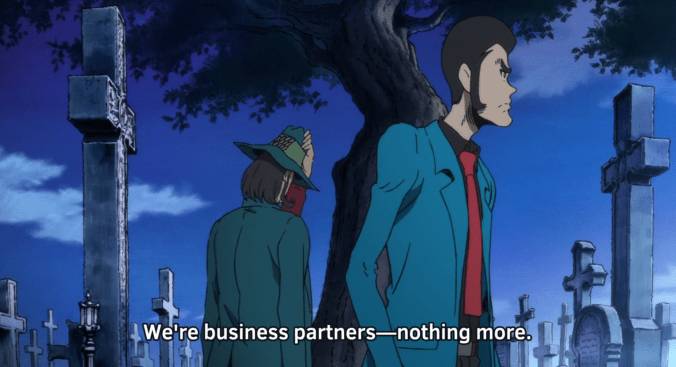
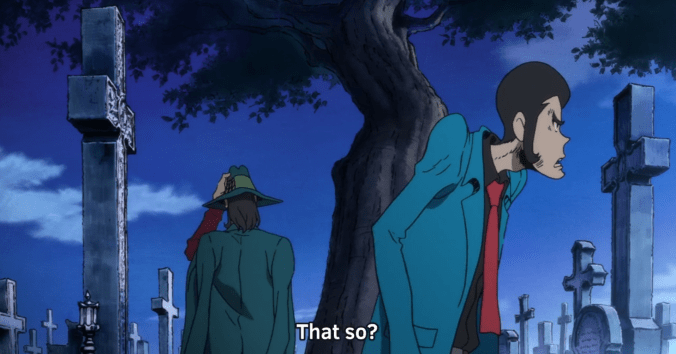
In the first film, Jigen’s Gravestone, Lupin the 3rd and Jigen Daisuke are a team of a thief and a sharpshooter – however, they are not yet the “best friends” they will grow into, they are only business partners at this point. But it soon turns out that the two are being trailed by a dangerous sniper, Okuzaki, who is set out to kill them – he already has prepared their graves for them to see: The titular gravestones. Jigen is not ok with this, as this sniper has also recently killed a client Jigen swore to protect. And so, the hunt and battle between the two begins.

grave-1.png

Jigen is upset, but Lupin is rather calm about getting a death threat.

In the second film, Goemon’s Spray of Blood, the two heroes Lupin and Jigen meet Goemon, a samurai they have seen a few times around. Goemon is the body guard of a yakuza boss, but as he fails to protect him, the clan turns against him. Not only that, Goemon’s spirit will be broken by the assassin of his former boss, a man called Hawk, a big, bearish unit of a lad who fights with heavy dual-wielding axes. This is the story of how Goemon joins the Lupin team and how he became what is today: one of the best samurai in the world.

e70f4aaaae1d123dd2045a6ef7118997d853e0b5_hq.jpg

Goemon vs. Hawk. This won’t go well.

As these films are quite short, about 50 minutes long each, I do not wish to talk too much about the plot of these. The are essentially introduction films, one for Jigen and his friendship to Lupin, and the other one as a character piece for Goemon, all held neatly together by the charming ensemble cast of the Lupin III franchise and charismatic villains they need to fight.

The big center pieces of the two films are the two main conflicts: Jigen vs. Okuzaki and Goemon vs. Hawk. And let me tell you that these are absolutely worth it – battles of strength, mentally and physically, but also of wit, observation and skill.

These are some of the more serious Lupin III entries, far away from the current jolly TV adaptations of Part IV and V. All of the fun aspects are still there, the car chases, the banter and the fights – however, they are all presented through a lens of hardboiled intensity. Meaning, if characters get hurt, they get hurt. It’s violent. Some of the most violent I have ever seen in the animated medium, and I like watching hyperviolent OVAs from the 80’s.

C-Iaa1-XUAAGURP

This is tame.

If you say: “But I can deal with splatter, no problem!”, then I will warn you of some of the body horror that swords, blades and guns can produce. You will definitely do your sharp air inhale of “Oooouh, that must’ve hurt.

And it’s this hardboiled intensity that is so strong and refreshing. It’s not trying to be “edgy” or deliberately over the top, it’s a whole new adaptation that paints the Lupin III franchise in the colours it always had if one thinks about it: Theft, murder, yakuza, gunmen, samurai, and the general underworld. The darker tone fits like a glove. It wants to be that, and it is exactly that.

But more than that, Koike finds the perfect balance between the fun action segments and heavier dramatic scenes, never feeling like a tonal break or betrayal of itself or the source material. These characters suffer, fight and grow, battle their fears and rivals, and in the end, you will be immensely satisfied.

Goemon’s Spray of Blood was such an adrenaline ride for me, that I watched the whole film with a smile, alternating between laughter at outlandish action scenes and quick comedy bits, and being in awe of the violence and intensity of the fights that carry importance to the characters and the overall story.

In addition, Takeshi Koike’s signature character design and artwork with thicker outlines than usual just fits perfectly to the Lupin III franchise. It is safe to say that the cast has rarely looked so suave.

codmp.png

Especially in “Goemon’s Spray of Blood”, with its yakuza setting.

Every character is animated extraordinarily well, not only in the big set-pieces, but also in dialogue scenes and small movements. Let’s take the scene I showed you a still frame earlier, the first round of Goemon vs. Hawk – katana against axe, samurai against biker, on an exploding ship, while Lupin, Jigen and Fujiko get away on a boat.

This is only the beginning. (Source: Goemon’s Spray of Blood)

The gigantic flames in the background, the water animation, the debris of flying roof tiles, the heaviness of Hawk, Goemon putting his sword away, the wind flying through his hair – there is so much love and care poured into film, from the big scenes, all the way into these tiny details.

Everything comes together perfectly, Koike’s style, animation, tone, action and drama, even the soundtrack, which, for example, gives gunslinger Jigen a James Bond style opening credits theme – I’m sure you will find something that especially stands out for you in these marvelous films.

Conclusion

I highly recommend watching Takeshi Koike’s two Lupin III films, Jigen’s Gravestone and Goemon’s Spray of Blood, purely because they are such fun, intense and wonderful productions, that ooze style and power in every second they are on screen. You can go in blind, or maybe check out another Lupin III adaptation that catches your interest, many start with Castle of Cagliostro, for example, for the taste of a young and fresh pre-Ghibli Hayao Miyazaki.

In the end, you will have a marvellous duo of films by one of the best directors in the industry. Two films that belong together, which also describe how one of the most beautiful friendships in the medium came to be. Lupin and Jigen – a friendship that has now existed for over 50 years.

And that alone is absolutely beautiful.

dai

dai2

dai3

dai4

The End.

Sources: Sakugabooru, Wikipedia entry “Lupin III: Jigen’s Gravestone“, MyAnimelist, Anime News Network

MANLY MONDAY: “LifE”and “Confession”- Fukumoto Double Feature

Nobuyuki Fukumoto, or nicknamed “FKMT” for short, is most known for his unique, sharp expressive artstyle, and hard-boiled underworld stories, that cut to the core of human emotions.

Since the 90’s, he is a successful mangaka, with several long-running series, that are all beloved by critics and fans alike. But one of the downsides would be that therefore his work is not easily accessible. His manga are fantastic, but insanely long -“Kaiji” and “Akagi” have both been running for 20 years now, and other series have had spin-offs, parodies, prequels and sequels. The “Fukumotoverse” is immensely big and vast, yet so very lovely to get lost in. Intense long stories all around.

So, is there a way to get a glimpse of his work, for a newcomer for example? A “snack-sized” FKMT story?

There are two short stories written by him, illustrated by Kaiji Kawaguchi (Ha! Kaiji!), that are short, intense and have all the traits of the author. These two manga are “LifE” and “Confession”.

LifE

“LifE” or “Seizon Life” is the story of Masao Takeda. His wife died after a hard and long fight with cancer, and now, he has been diagnosed with the same cancer as well. Devastated and emotionally destroyed, he wants to take his own life.

But as he steps up to the noose to hang himself, his phone suddenly rings.

edc3852bbddba4e00c5b07e9ec84adb20ac74559e7af3b86bd7e3656369bc8121cb8d8403866c552b16846a90aeff2b6

They found the corpse of his teenage daughter, Sawako, who went missing about 14 years ago. As he goes to the police station, and finally sees his daughter, he asks if the murderer can be found. He is informed of a crucial fact:

The “statute of limitations”. When 15 years pass, a case is dropped and closed, even when the true culprit has been found. Sawako has been found after 14 years and 6 months. In 6 months time, the killer will walk away unpunished.

Takeda cannot accept this. He waited so long for the confirmation of his daughter’s death and the finding of her body to give her a proper burial. He wants to take action. He will find the killer. Come what may. Yet his doctor is not ok with this.

f17a7b4c41d57d671309870e1c66196e57644cda74f144a838ac1f41a25641706314630e914f5c38a5451e46ef699be0

He hands in his resignation and walks away.

6 months until his death. 6 months until the murderer is free. This cannot be a coincidence, he thinks. And so, he goes on his very last mission: Find the killer of his daughter.

life-1

He is somewhere. Out there. A free man, unpunished.

The story unfolds, and reveals single pieces of mystery and detective work, as Masao Takeda tries to walk the same path his daughter did on the fateful day she died. As he retreads his memories, Takeda sees himself as a bad father during her lifetime. He was too cold, distant, didn’t really care for her interests and hobbies, and was always at work.

But now, all he can and even must do, is to look at her life and interests.

5f210497582ad7896b38455dbcbb10c22ded9dac1720c6afa021f2ddbff3090f

And so, they reunite from beyond the grave to find the killer and their lost time – together.

A big criticism of FKMT’s body of work has always been that he doesn’t include romance or important female characters in his stories. While largely true, this does not impact the strength and importance of his work. It is not his focus, and it may also be his way of breaking with his “Shoujo Manga Artist” past. He was once an artist who wrote and drew romance, even winning awards with it, but it left him unhappy. It was not what he wanted to do. So, he left the magazine he worked for, and went to a tiny Majongg manga magazine. And this is where his career took off. But now, it is nearly impossible to find his old work before he started doing Seinen.

Instead, he has found his way. He understands and paints “relationships”, especially between male characters, more than any other: be it top-down unbalanced friendships, true friendship, naive falling for fake relationships, false admiration, extensive villainy, a mix of all of them, or in this case: Family. And as he has shown in other works – most noteably in Kaiji Part 4 – that “family” is theme he can do perfectly. It’s even a more rare case here: The bond between daughter and father – a theme way too often overlooked and underexplored in media. “LifE” shows it in a beautiful, strong light, that may bring a tear to your eyes and make your heart swell.

Takeda only has 6 months to solve the case, and to live on this planet. It is his last stand and final action. The clock is ticking. 15 years are a long time. Many things have changed. This is not going to be easy.

life-3

It’s like finding a needle in a haystack. Or a clue in a junkyard full of cars.

Complementing FKMT’s writing is Kawaguchi’s artwork, a very detailed, but still slightly cartoonish look, that gives it a strong sense of realism. A special focus should be put onto protagonist Takeda. His grave, sad, expressive face is what carries this manga. In addition, cancer is eating away at Takeda’s general health, meaning that he becomes more and more thin and gaunt the more time passes. The visual clock of his well-being is ticking away too.

Takeda must also walk the fine line between “handing the murderer to the police”, and “not turn into a raging vigilante”, which is also a theme in the story. When sadness and grief builds up for so long, it can cause immense damage.

6835e044630dc80e5712e1fe08129e08

“Shining Justice” certainly looks different.

While this story seems inherently sad from the outlook and may scare some readers away, I can more than recommend it for its intense detective/mystery story, but also for the heartwarming moments. “LifE” is a story of hope and sadness, reuniting of a family, the bond between father and daughter, and the race against death – for one last act of justice.

“LifE” is concluded in 3 volumes, and would make for a really good movie length-wise. FKMT’s writing and Kawaguchi’s artstyle really compliment each other and create a strong, emotional impression, with a touching story and expressive art.

57706141800f05de310aee185008a893

After this heartwarming/breaking story, let us focus on FKMT’s other short story and main strength: Intensity and Thrill.

Confession

“Confession” or “Confession: Kokuhaku” is the story of two friends, Asai and Ishikura, who go hiking in the snowy mountains, but get lost in a snowstorm.

31903dcad677faf541906944f8298dc4

Now, you may look at this cover and think, “Man, why would you write such a spoiler on your cover?” There is a point to that. It is the initial setting.

5f94a67af7da8b95876aa7a9af32177d49bdcd676c8eea469eb7ad1ff9a160a578ebf42a56d54be2bb04414b6d76a2e0

This happens in the first 15 pages.

Ishikura confesses that he killed one of their friends during a past hiking trip. He is certain that they will both die in this snowstorm together, so he wants to confess his sins, to, at least, die in peace.

Asai is understanding in this extreme situation. How can he deny his dying friend’s last wish?

But as Asai gets up, for a desperate try to look for help, suddenly:

ea6259b60fcfee2f484a3ca95179bbbc214272010ad5b46da5eb8044ac1aa436

They weren’t far from their original destination, a mountain lodge.

Saved! They are not going to die out here in the cold! So, he simply needs to carry his wounded friend up there and call for help! Everything is going to turn out ok, is it?

fce7cf159e3bdf36e8387eb9261192ce

No.

In fact, everything has become worse. Ishikura just confessed a murder. And he survives. His dying wish has turned into a massive regret. Maybe into something more.

19da7d7b98e747ae25e1e7256fbdaa95733c225803a84d2eb29d3ce7ff2b96ab

Something is not alright.

And so, the manga starts. 2 days until help arrives. 2 men in a single room. One of them is a murderer, who just confessed. But he is hurt, so he cannot move.

What to do now?

6c9057b9d60e4aaacc4e5774d235d68b

They wait.

Kawaguchi’s artstyle really shines in this story, as he also shows a stylistic preference and focus that FKMT prefers in his manga: Eyes.

eye

confession

Eyes say more than a thousand words.

This is peak FKMT writing: Psychological warfare with real physical threat between two characters. We see both sides and it has the genre of a “chamber play” – a whole story that plays out in a single room. His writing influences the artstyle as well, a lot of reaction panels, atmospheric shots and internal monologue that just flies by. His writing is so smooth, you won’t notice going through many, many pages.

268b50cef47e51940c15cd8b352bd580

I do not wish to tell you more than this setting, because this story is best experienced blind, without prior knowledge. Just let it be known that FKMT is a master of dialogue, suspense and Thriller.

“Confession” is only one volume, about 300 pages long, and yet it has you on the edge of your seat at every page turn.

Conclusion

If you ask me personally, I prefer “Confession” over “LifE”, as it had me cling to my table while reading it. This does not mean that “LifE” is bad, far from it. Both works are brilliant short pieces, but fundamentally different in tone and narrative structure, so that it comes down to personal preference. While “Confession” glued me to the pages and sucked me in with pure intensity and rough power, “LifE” made my eyes teary in empathy and understanding.

Both stories have aspects that many fans and critics love about FKMT’s writing: Heartwarming and heartbreaking moments, raw emotion, intruiging characters, difficult and interesting relationships, unique situations, psychological aspects and intense atmosphere.

If you are a fan of FKMT already, these stories are interesting additions to his canon and great observations about his writing, to see it detached from his unique, yet “something-to-get-used-to” artstyle.

If you haven’t read anything by FKMT yet, or have been put off by his artstyle, this may be your chance to check him out as an author and see the appeal that his trusty, long-living fanbase loves him so much for.

The End.