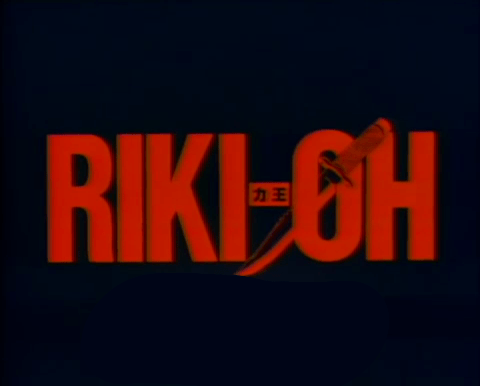
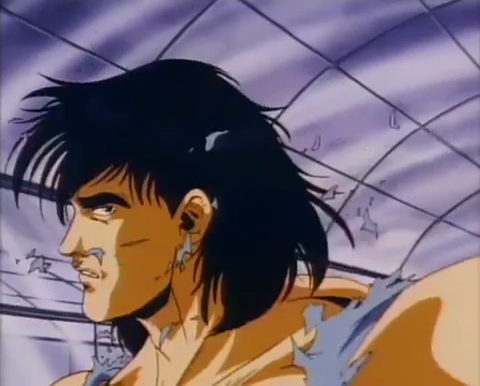
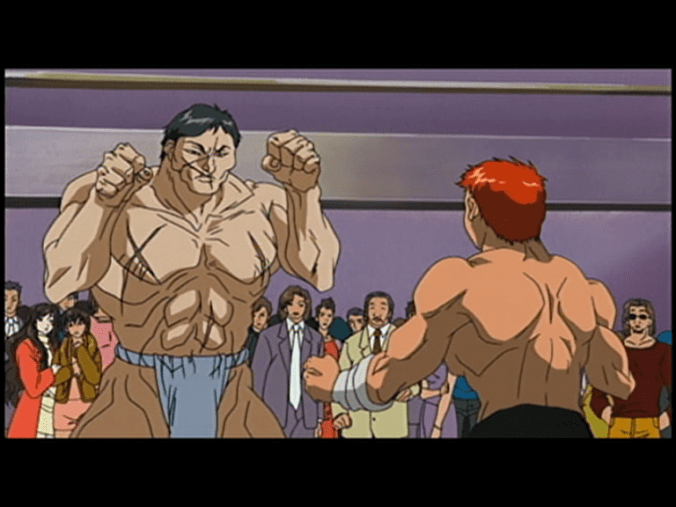
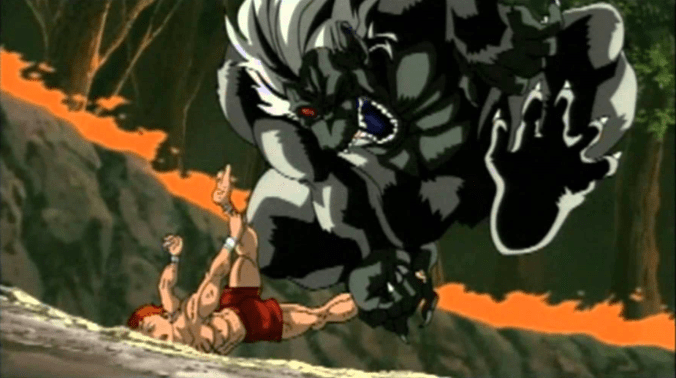
MANLY MONDAY – Riki-Oh: The Wall of Hell OVA

riki_oh_v01c01p003

The 80’s are a wonderful time capsule for media. It presents an aesthetic that is out of fashion now, but still beloved by the general consensus for its zeitgeist of the decade.

In this age, the manly, hypermasculine hero was the protagonist to have. Muscles, Justice, Violence and lot of Punching – this is the formula most of 80’s media pieces follow. Not only in films, with well-oiled Arnold Schwarzenegger and Silvester Stallone, between Robocop and the Terminator: The same goes for anime and manga, where “Fist of the North Star” and “Jojo’s Bizarre Adventure” were born and would take the world by storm. But many of these series are forgotten by time and widespread media, sitting still placidly in the 80’s, waiting for someone to come and look at them.

And this is exactly what we will do now!

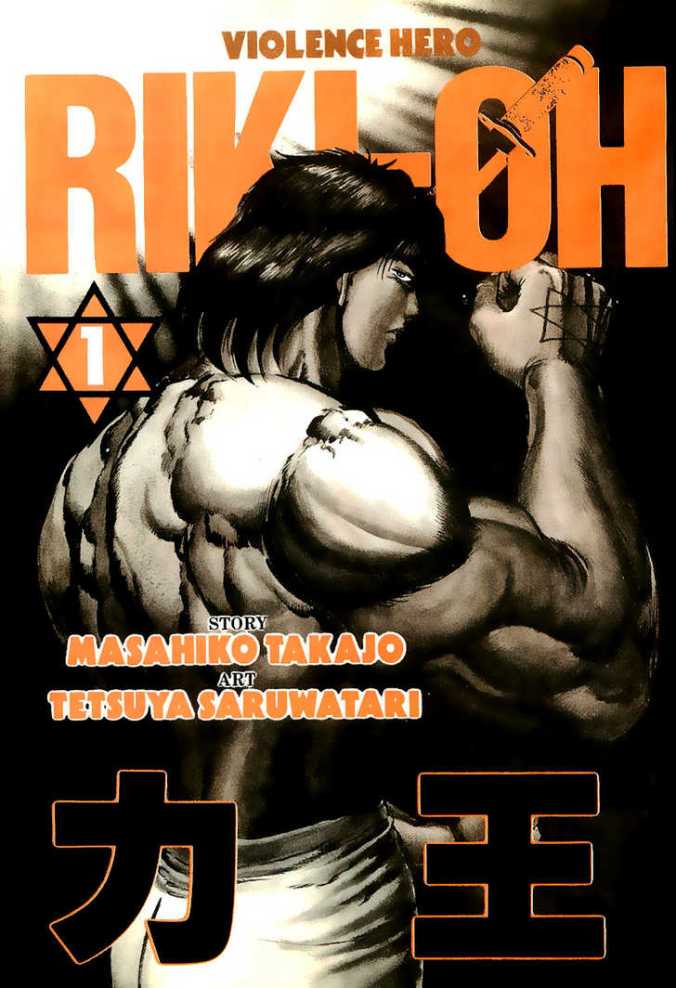
“Riki-Oh” is one of these series. Published in Buisness Jump, a Seinen magazine from Shueisha’s Jump family, this is a manga that has all the tropes you could wish for: dystopia, yakuza, martial arts, manlyness galore, and prison hell. The manga ran for 12 volumes, between 1988 and 1990. Two OVAs have been released, and a live action movie as well, that received a cult following for being an over the top, trash, silly gorefest with a lot of mindblowing practical effects. But this is a story for another day, we will focus on the first OVA, from 1989. Off we go!

riki 1.png

Story and Characters

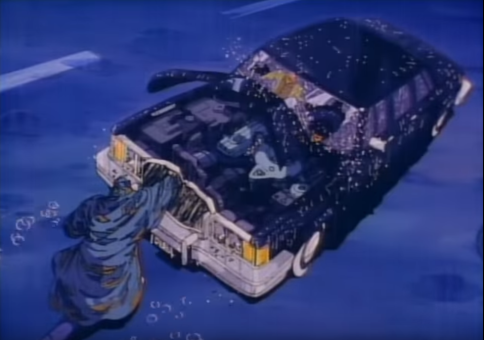
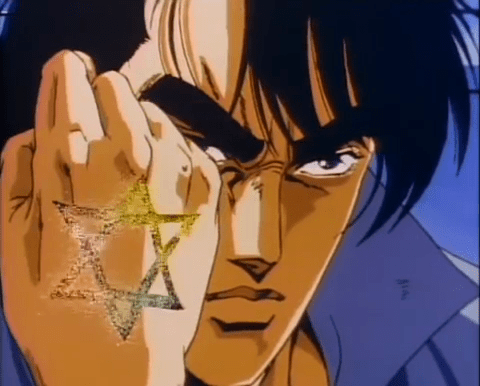
In a post-apocalyptic Japan, everything is awful. People are dying, injustice is roaming the streets and the air is polluted. In this dreadful world, Riki is one hard dude. A mysterious vibe is around him, he bears a star on his right hand, and he is insanely strong. After his girlfriend dies by the hands of the yakuza, he battles the man responsible, but gets caught while performing his revenge.

car.png

Screw your car!

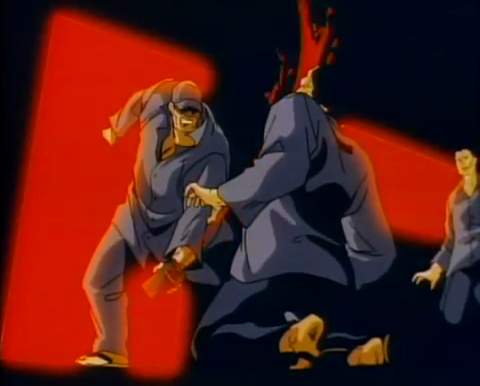
Our protagonist finds himself in a Tokyo State Prison that is now privately owned. Injustice is a daily matter, people are hurt or killed, and life is hell. Riki makes some friends, but loses them to the cruelties of prison pecking order, and therefore, tries to take the bad guys down.

vlcsnap-2016-08-13-23h10m43s012

Prison life is not lovely.

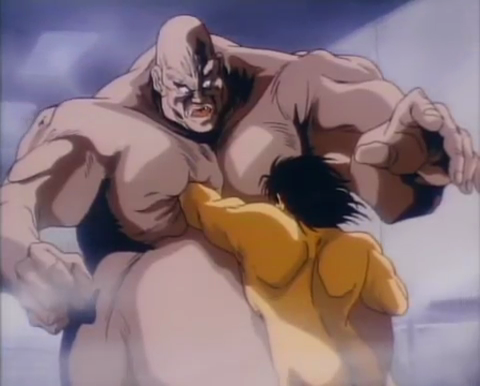
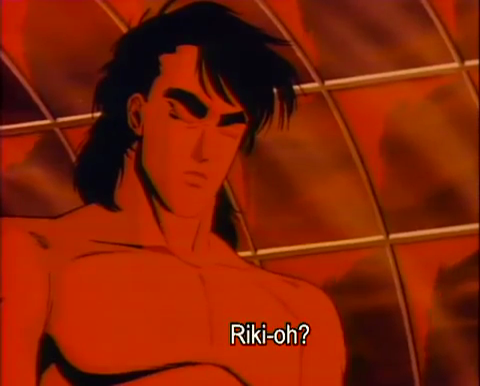
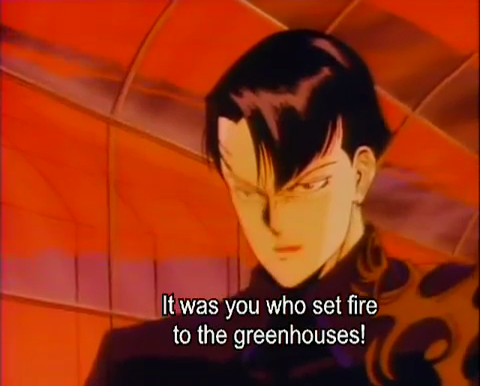
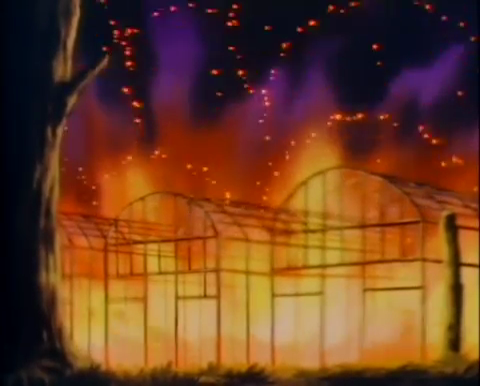
Everything escalates as Riki finds out that the prison is using the inmate’s workforce as a drug producing factory. He burns down the greenhouses and confronts the bosses of the prison, the chairman, his yakuza boss and their right hand fighter. More on him later.

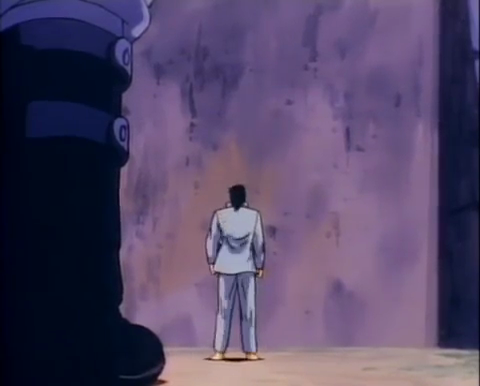
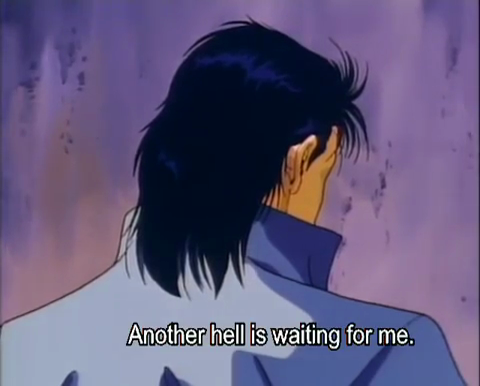
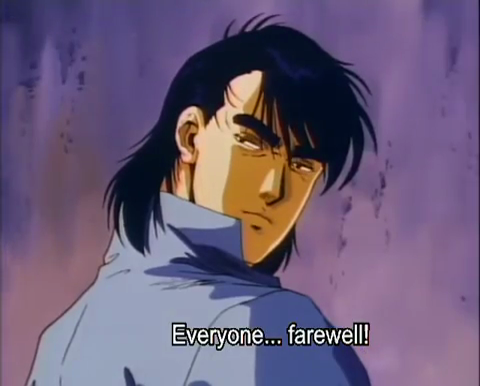
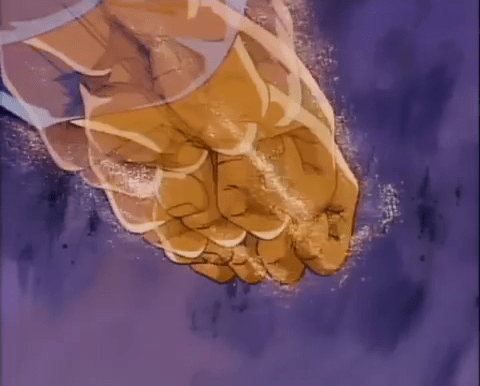
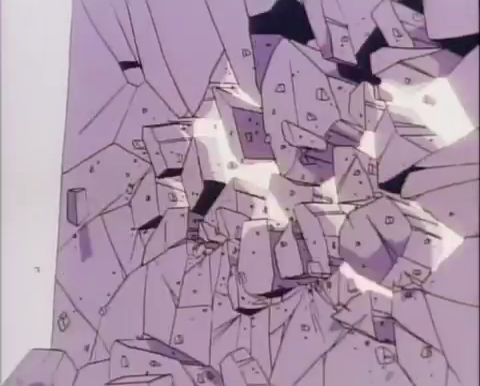
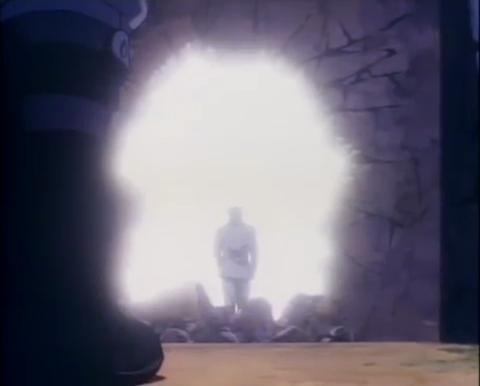
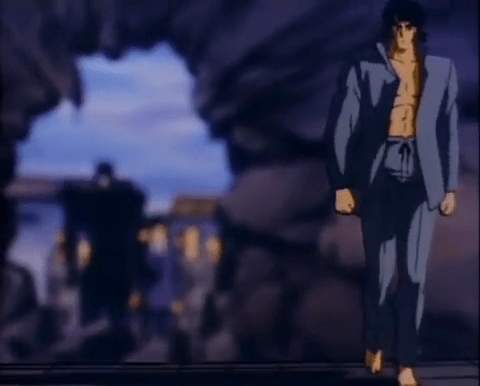
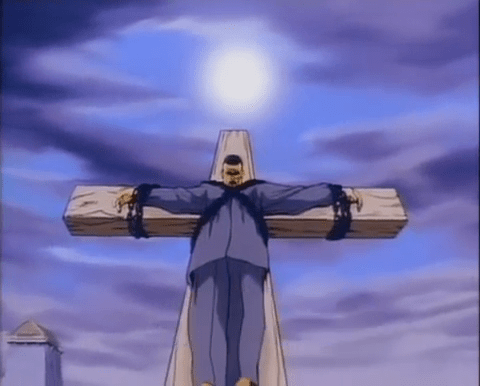
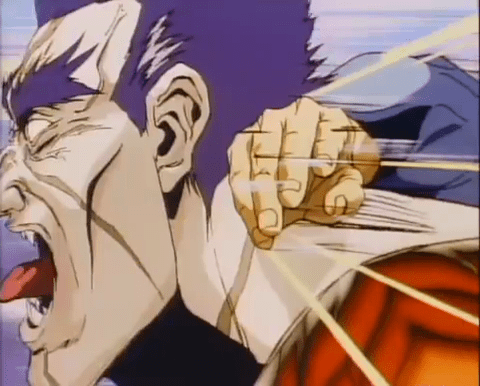
After a lot of violence, a prison riot, and people getting hurt, Riki punches through the prison wall and leaves, towards new adventures.

vlcsnap-2016-08-14-00h23m54s143

vlcsnap-2016-08-14-00h23m58s394

vlcsnap-2016-08-14-00h24m00s804

vlcsnap-2016-08-14-00h24m06s070

vlcsnap-2016-08-14-00h24m08s520

vlcsnap-2016-08-14-00h24m11s160

vlcsnap-2016-08-14-00h24m15s411

vlcsnap-2016-08-14-00h24m25s257

vlcsnap-2016-08-14-00h24m27s678

This is how you exit.

The story is streamlined and not as complex as in the manga, there is for example only one main prison fighter, instead of four, and characters are omitted, while others are changed completely. But it does not hurt the story, it becomes its own thing.

As you can see, the story is explained pretty fast, but it is not the main focus of the OVA anyway. When you watch Riki-Oh, you are here for the spectacle.

Artstyle and Visuals

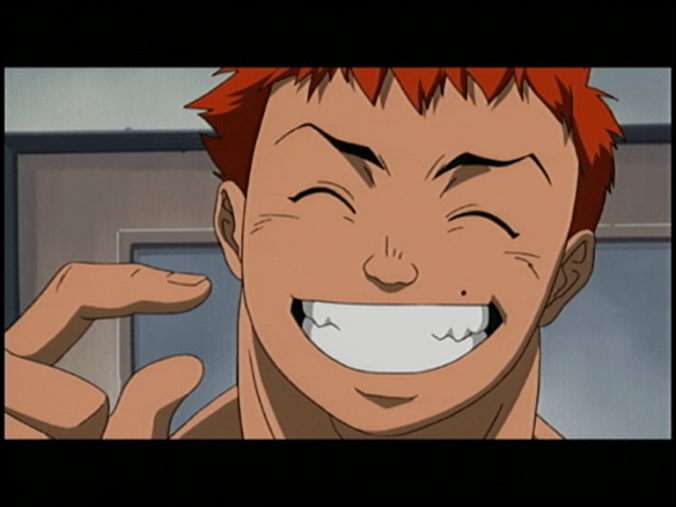
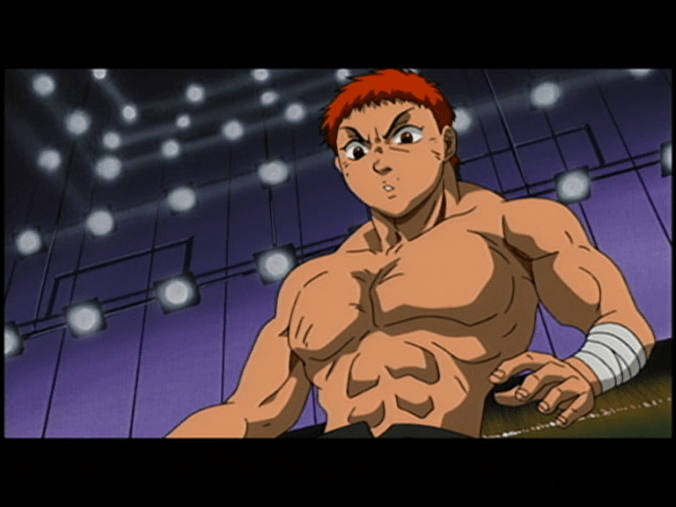
There is no point in denying that this OVA puts a great emphasis on bodies and the presentation thereof. Given that the violence involves a lot of body horror, it makes sense, but the amount of half-naked men in a prison is through the roof. The hypermasculinity of the 80’s comes with a fetish-isation and cult of manlyness that ends up being so over the top that it becomes ridiculous. And I wouldn’t want it any other way.

vlcsnap-2016-08-13-23h17m37s357.png

Naked fight in a prison shower. Man gets punched in boobs. I never thought these two sentences go together.

vlcsnap-2016-08-13-23h58m16s079.png

Riki gets punched and his clothes explode, leaving him topless.

vlcsnap-2016-08-14-00h06m16s522

His sit-ups sparkle!

vlcsnap-2016-08-14-00h03m26s885.png

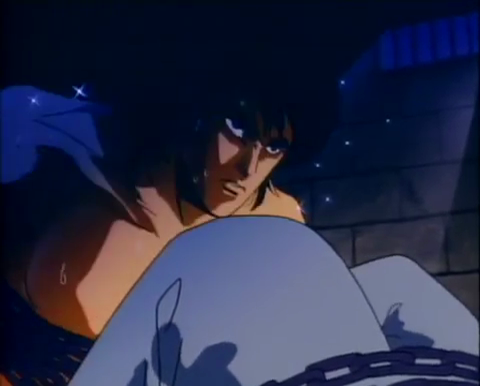
Naked Riki is in chains, BDSM undertones included.

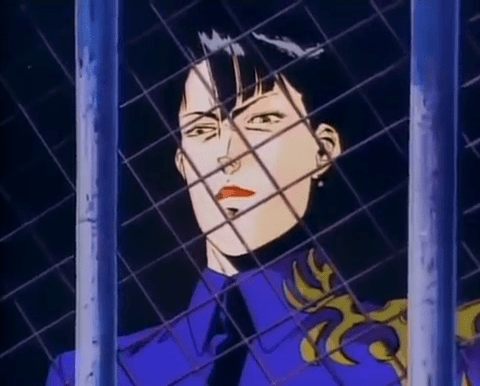
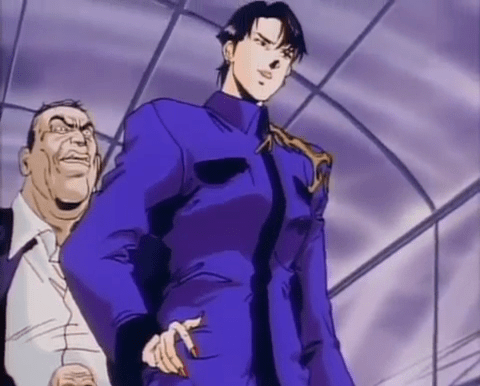
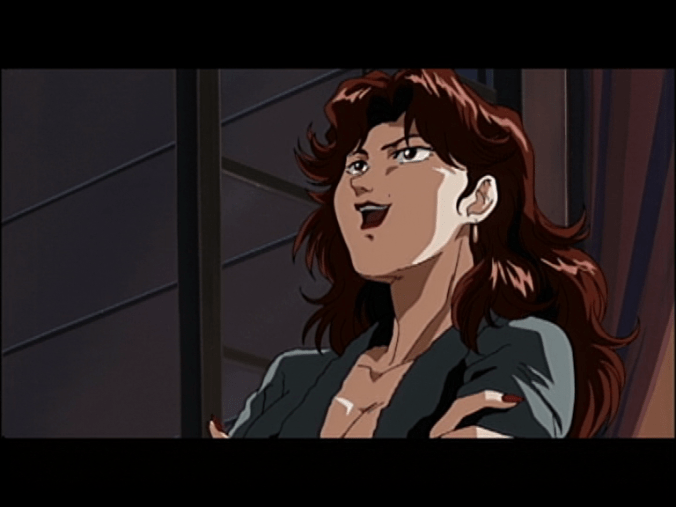
The 80’s fetish of men, and the muscles they have are one thing, but another aspect impressed me, a trope that I really much like in these types of shows: The feminine guy. If everybody has gigantic muscles, strong jawlines and incredible punching power, the nimble, slender and soft-faced guy visually stands out. And that can only mean one thing: That guy is going to kick immense amount of ass. Contrasting gender performances seeing eye to eye and are to be taken seriously!

vlcsnap-2016-08-13-23h55m46s928.png

OH SHIT

vlcsnap-2016-08-13-23h57m47s056.png

Now that is one badass man who can rock those fingernails! (Not pictured here: His superdeep voice.)

vlcsnap-2016-08-13-23h58m33s531vlcsnap-2016-08-13-23h58m38s827vlcsnap-2016-08-13-23h58m46s058

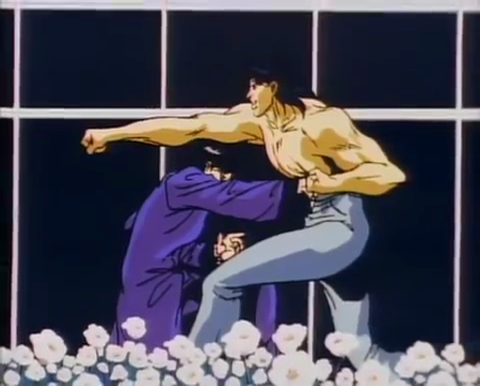
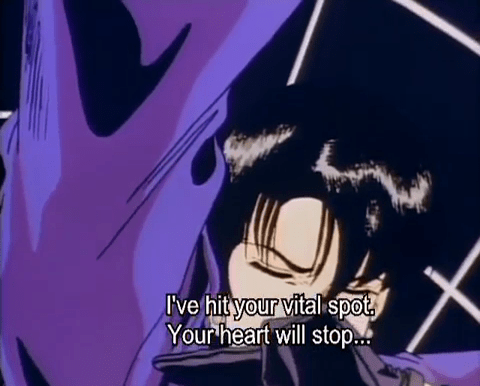
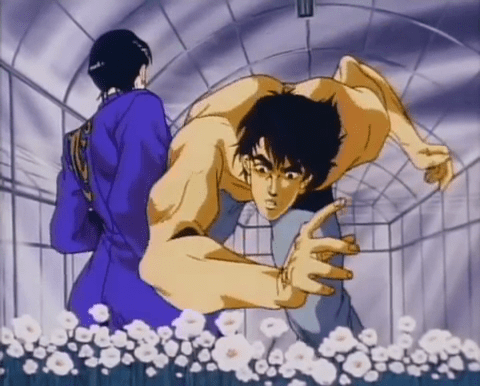
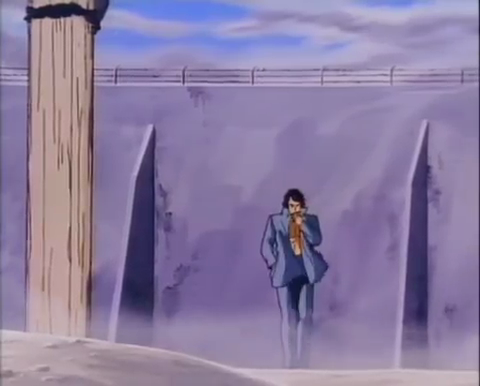
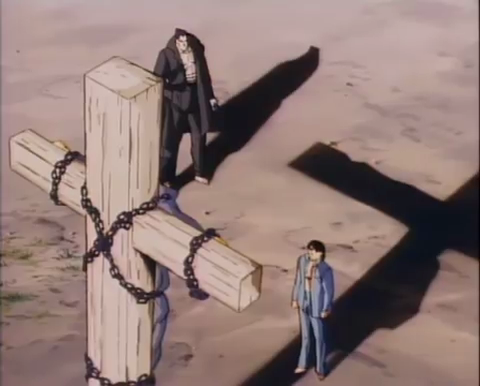
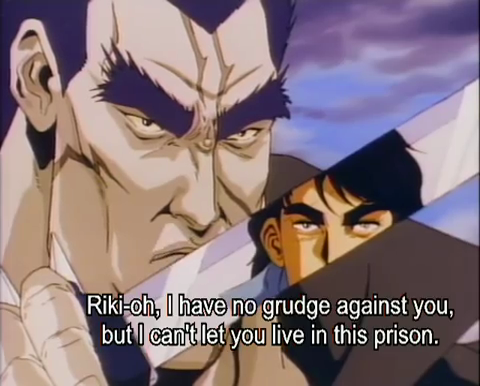
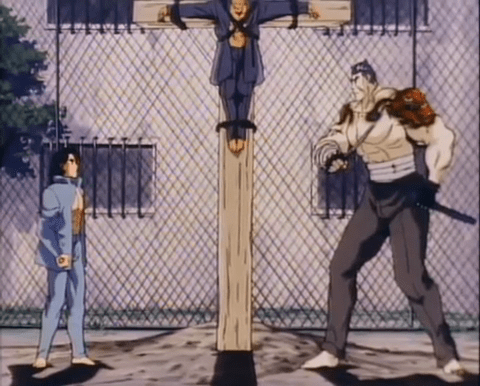
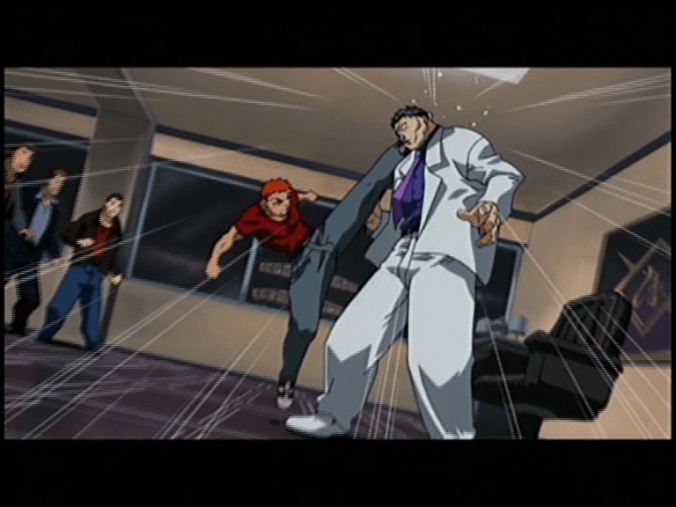
On the matter of framing and presentation, Riki-Oh has some beautifully composed shots, that really do shine in the fight scenes. The animation is not extraordinary, but it gets the job done. Gory shots and violence are animated well, the rest is very static, but still pleasing to the eye. The cinematography in those scenes is lifted straight from the manga and it really shines.

 vlcsnap-2016-08-13-23h34m58s750

vlcsnap-2016-08-13-23h35m57s343

vlcsnap-2016-08-13-23h36m03s730

vlcsnap-2016-08-13-23h36m11s486

vlcsnap-2016-08-13-23h37m25s651

Simple, clean, nicely framed shots that look good. What more do you need?

vlcsnap-2016-08-13-23h39m09s590

vlcsnap-2016-08-13-23h39m15s725

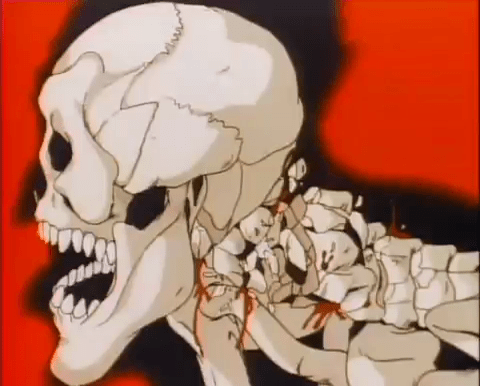
X-ray “impact frame” that shows up only for less than a second. A nice touch.

vlcsnap-2016-08-14-00h12m31s434

vlcsnap-2016-08-14-00h12m32s889

vlcsnap-2016-08-14-00h12m39s280

vlcsnap-2016-08-14-00h16m15s972

vlcsnap-2016-08-14-00h16m24s388

vlcsnap-2016-08-14-00h16m34s301

vlcsnap-2016-08-14-00h16m35s276

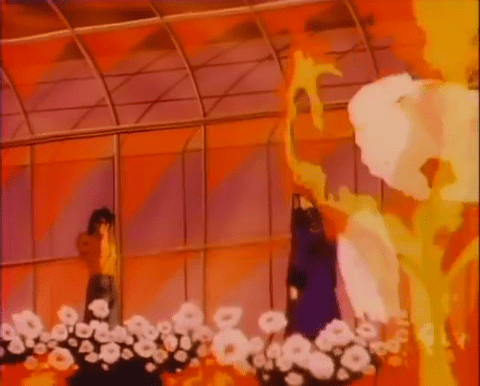
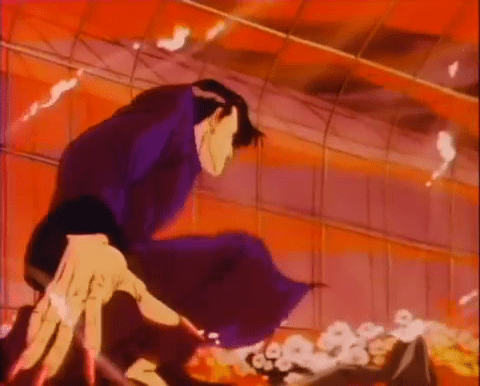
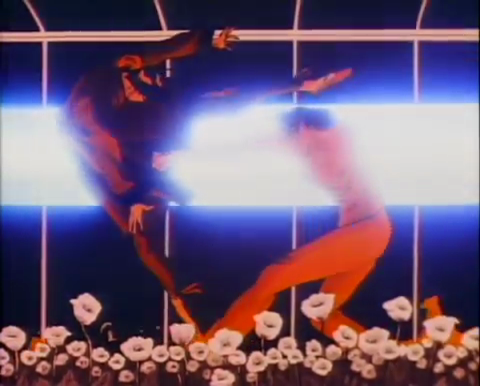
The final fight in the burning greenhouse. Visually pretty impressive!

Conclusion

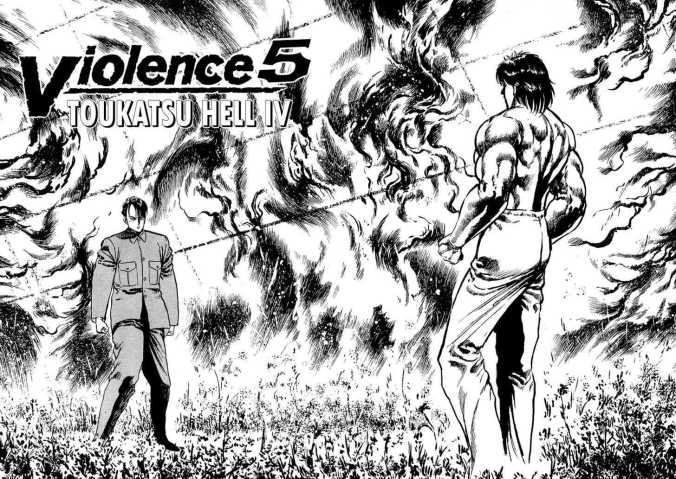
While Riki-Oh is a neat OVA that is very much a child of its time, I would personally love to read the manga some more, for the “way-too-realistic”, yet “too-over-the-top” violence. The violence in the OVA is toned down. Yes, the OVA is tame in comparison to the manga. Eyes get stabbed, people get skinned and the violence never stops. It becomes an insane gallery you walk through and go “Oh, no I never thought you could actually do that!” In addition, it does seem that the OVA does not give the original artwork 100% justice.

riki_oh_v01c05p160_161vlcsnap-2016-08-14-00h12m39s280

The balancing of black and white, as well as the artstyle are stylish. The OVA loses a bit of the “oomph”.

While the original story is a lot longer and features more characters, the Riki-Oh OVA does not waste your time. The pacing is fast and it trims the fat so strongly, that you are only left with the crucial plot points and main fights. Is that bad? No. Instead of an epos, it becomes a snack-sized anime of condensed 80’s that you can watch in one go and think: “Oh yeah, that was a nice trip to the past!”

If you are interested in the time capsule that is Riki-Oh, give it a watch. It is not a landmark of the genre, but a cult classic – well, that title would rather go to the manga and the live action adaptation – but it is a nice short action flick for a rainy afternoon, when you craving fun and camp goodness.

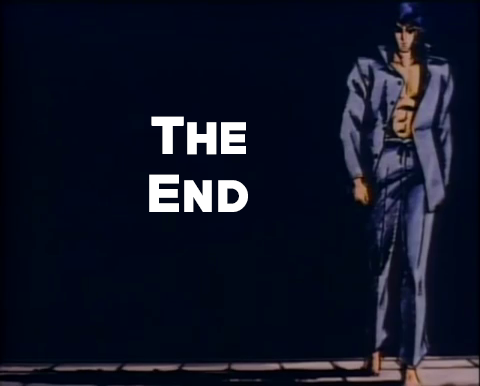
end

This has been Riki-Oh: Toukatsu Jigoku (The Wall of Hell)

MAL

Wikipedia

The Anime of Second Chances – Finding your “Want” and “Need”

We are in a good time of anime. The slice of life genre flourishes, there is a newly-found appreciation for animation and love of sakuga, independant studios and kickstarters can produce unique and interesting works, and the possibilities of legal streaming have opened the doors for a whole new set of fans.

One could say that all seems fine and dandy in this age of japanese animation. But I see a worrying trend in the choice of stories that get anime adaptations.

I call them “The Anime of Second Chances”.

They are things the audience “wants”, but not necessarily “needs”. More on that later.

Let us start by looking at them first: They can be broadly split into two groups: “The Change of Setting” and “The Past Redone”.

Unbenannxxt-1.png

The Change of Setting

Mostly a trend with light novels, this type of genre takes a protagonist and throws him into a new world. As a blank slate ha can start a new life, make his own adventure, and have many girls fall for him. No ties to the real world will hold him back, he is the protagonist. Maybe he even gets plot armour, that protects him from all harm. The nerd is victorious.

“Sword Art Online” may be the crowning jewel and starting point for this genre – as most setting changes involve “getting trapped into an MMORPG” in some form.

The more recent adaptations try to show faults and mistakes of the protagonists, making them a bit more grounded, but one thing never changes: They get a second chance at life. Without any merit, rhyme or reason, a person who has failed at life gets a new start.

Wouldn’t it be so much more fun to press the reset button and start anew, with your knowledge intact? With a whole new world to explore, far away from the shackles of reality? To use your nerdy wisdom, that is practically useless in the real world, in order to succeed? And have all the girls fall for you, just because you are you?

No matter how you twist and turn it: It is pure wish-fulfillment.

Is that bad? Well, we humans do love escapism! Switch your life off, and switch another one’s life on. Imagine yourself as the self-insert protagonist and come back refeshed. And as I have gathered from most discussion forums, it is a guilty pleasure for a lot of people. The genre tropes are obvious and play by the numbers, although with some variation. It is easily digested entertainment. Blazing action, juicy fanservice, intersting story, and a familiar, yet newly done setting of MMORPGs. Of course a lot of anime fans will watch that. It appeals to the “nerd” demographic.

These animes are the equivalent of Hollywood entertainment, and they will always exist. One can easily avoid these series if you don’t like them. (You will just run into a Kirito and Asuna couple-cosplay in every convention. That is unavoidable. It is a rule of the universe that you will run into them! It must happen!)

But those are obvious “wish-fulfillment” series. The next one is more subtle.

Unbenaxxxnnt-2.png

The Past Redone

This is another form of “Second Chance”, but this time, the setting stays the same. Through to some plot convinience and supernatural/technical/medicinal help, the protagonist gets a chance to change the past, in order to succeed in the future. Go back to the past and fix the mistakes.

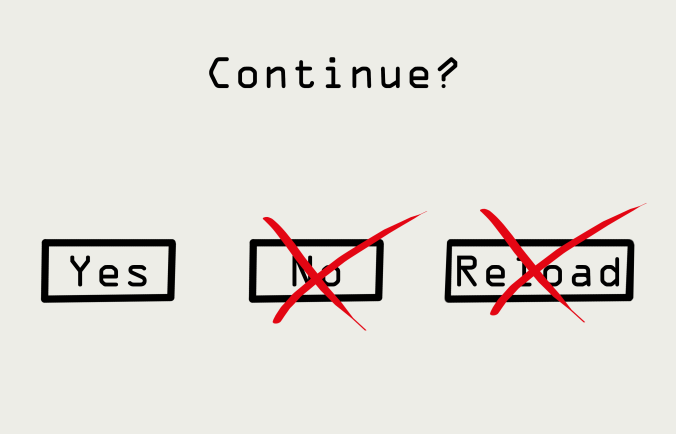
But I have this odd feeling that these kinds of anime series are not there to show growth or understanding for one’s current situation. They just give a second chance, in real life, and that is even more wish-fulfillment than the first case. It still has an element of video games: Are you stuck in that visual novel we call “Real Life”? Just reload one of your saves and make some other decisions! Maybe you’ll get the “good ending” this time! Haha!

Instead of dealing with the consequences of the choices the protagonist has taken, he or she can redo all of the past! It is escapism done wrong: running away from your problems and the decisions that led up to it. Smash it all, do it again.

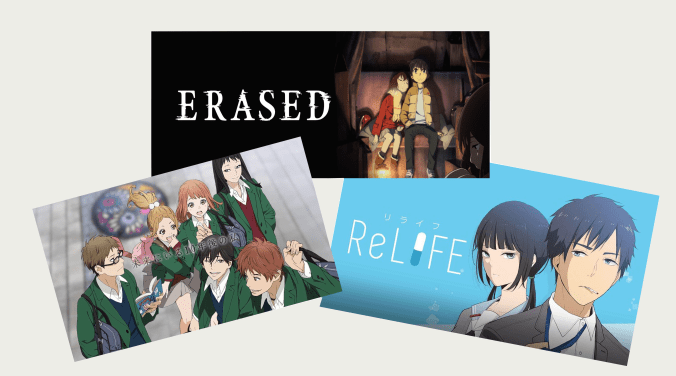
I was tricked twice by the current season of anime, Summer 2016. I rarely read any of the descriptions for upcoming anime, maybe I’ll watch the first PV but nothing more, I want to jump in as blind as possible. And I was taken aback by two series: “Orange” and “ReLife”.

“ReLife” was obvious, right from the title. Our failed twenty-something protagonist gets a second chance at high school, he takes a pill from the government, gets younger, and gets to relive the glorious days of high school, hopefully getting a job at the end. Am I interested in this? No. For me personally, going back to high school would be hell on Earth. I am happy being in university and doing the things that I like. This is not my dream, nor my kind of show.

“Orange” was the one that made me want to write this article. I only knew that this was going to be a character drama with a group of friends. Having enjoyed “Kiznaiver” just a season earlier, I was on board to give it a shot. And it threw me off within the first minutes.

I was terribly excited to see 26 year old protagonists, digging out a time capsule, with letters from their 16 year old selves. Would it show the rift between the ages? Would it have clashing world views and futures? How are these friends doing now? What happend in the past and how does it look now? I want to know!

Finally! Some characters that are not … in … high … school. Oh.

It was a flash forward. The series actually plays in high school, with the female protagonist getting letters on how she can improve her future life by taking different decisions.

That was not nice, “Orange”. Not nice. Now I am stuck with an high school anime again. I know, you are probably a good series, I will probably continue you, but don’t throw a curveball at me like that!

Maybe if you like high school, this show is for you. But this setting has been done to death for me. Most series are fueled by this nostalgia that high school was the greatest time of your life – romanticising the setting through the heavens and beyond. And if you have no nostalgia for it, just experience it again as somebody else! Get the first love you never had, meet with your group of friends or join the club that you never dared to go to.

Go back, reload the old save file! Come on!

But there are no secondary save files in the “Real Life” VN.

Unbenaxxxnnt-3.png

The Twenty-Somethings and Consequences

One vital part of growing up is taking responsibility and facing the results of personal decisions. Understand consequences and learn from them. Yes, you will fail in life sometimes, but you will learn from these experiences.

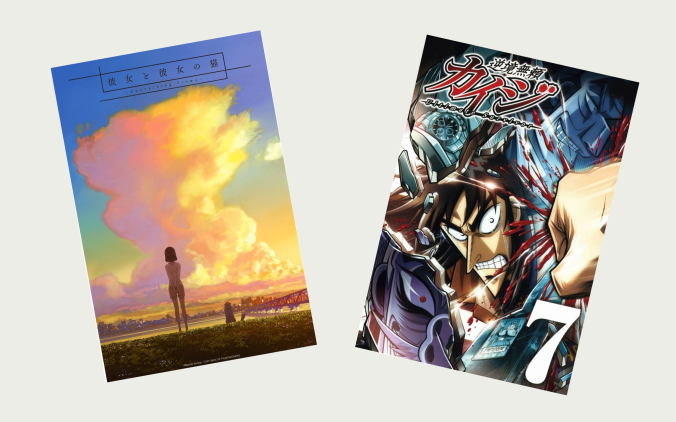
And there is anime about exactly that. Two series that are very close to my heart for this very reason are She and Her Cat: Everything Flows and Kaiji.

maxresdefault

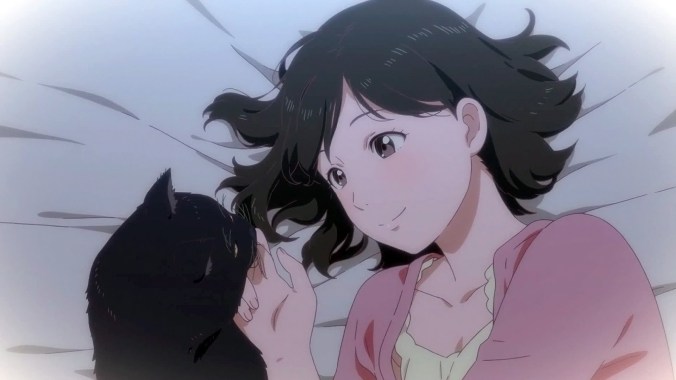
“She and Her Cat: Everything Flows” is a short format 4-part OVA series that ran in March 2016. It’s the story of a young woman, living with her cat that she had since childhood. She is struggling with life, going from job interview to job interview, being alone, finding a new appartment to live in, and having arguments about her future with her single mother. And it is all told from the perspective of the cat.

The cat understands her emotions, but not the reasons, as he cannot understand human speech. It is a reduced story with a small focus, but it will aim straight at you and your position in life. A soft, emotional, heartwarming series, that will move you to tears.

i want to live 2

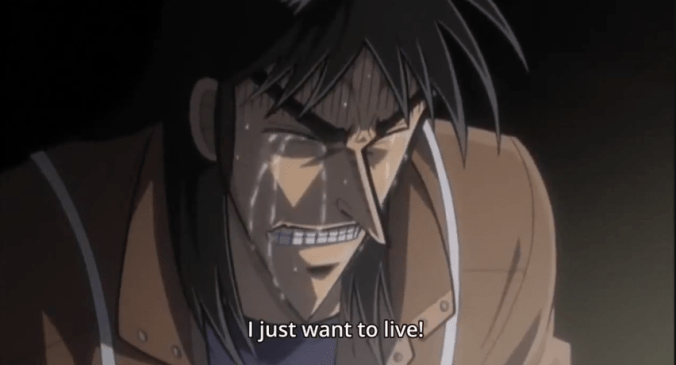
“Kaiji” is the story of eponymous Kaiji Itoh, a young man being a failure at life. He is in his early twenties and lives alone in a tiny apartment. With huge gambling debts and no job, he is suddenly forced by loan sharks to take care of his life. And he does so by entering the underground gambling world of the yakuza. He finally wants to take his life into his own hands. But this world is not beautiful. Every decision he takes will have consequences, ranging from “very good” to “hellishly gruesome”. He portrays life struggle like no other protagonist. He must take every step on his own responsibility, and the result will be even more emotional, as it was all his personal decision, consciously taken and planned.

Combine this intense concept with an overly emotional, possibly depressed, underdog protagonist, that you will root for and suffer with, and you have a series full of hype and melancholy. It will hit you hard, reminding you of the real world through a mirror of visual and narrative expressionism.

Both series were intensely supportive and have taught me something about myself. They had relateble protagonists without being self-inserts and they were both in insecure positions in their lives. But they fight, onwards, no matter what the future may hold. I don’t want to go back into the past, I have already learned from it. I want to look into the future. I am not a teenager anymore. I am 24. Life goes on and so do you. And you are not alone.

Maybe I am just getting older. Or maybe I just need more Seinen and Josei in my life.

I still haven’t seen “The Tatami Galaxy” and “Welcome to the NHK” yet. From what I’ve read, I’m already sure that I will love them. And they will give me something in return.

Conclusion – “Want” and “Need”

If “The Anime of Second Chances” help you in your life, that’s great. But the “teenage fulfillment” and “high school nostalgia” may just not be enough – without the audience noticing. And as the anime fanbase gets bigger and, consequently, older, I see an upcoming niche that nobody notices was there before.

In the end, it all boils down to a question of “Want” and “Need”.

What do you want in an anime? Action, fanservice, high schools, violence, splatter, romance, mechas, idols, moe, tsunderes, danderes, yanderes, harems, manservice…

What do you need from anime? Emotional catharsis, support, help, understanding, advice,  happyness, companionship, courage, sympathy…

Knowing what you “want” is easy. You know the genres and tropes you love. But you have to know yourself well in order to figure out your “need”. Be honest to yourself. Outside of that pool of same genres lies something that you didn’t know you needed. Once you are ready for it, you will be happier and learn something about yourself.

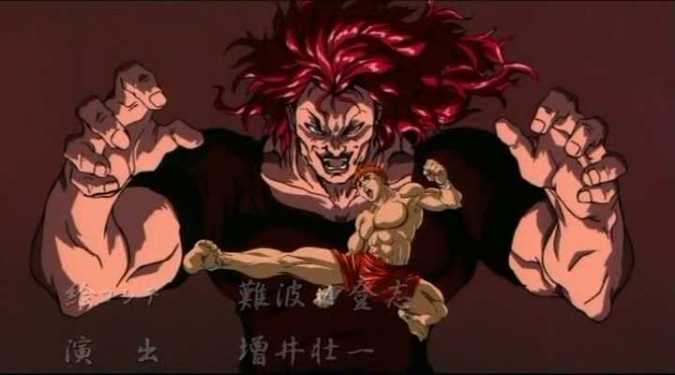
Watching a series that you “want” is not wrong, absolutely not! For godness’ sake, I am watching “Baki: The Grappler” right now, because I “want” more manly men, as Jojo Part 4 once a week does not fill the quota of manly manlyness. I don’t “need” it, but I sure as hell “want” to watch it.

But right now, most new anime only give the audience what it “wants”. More light novel adaptations, more manga that redoes the past, more shows that tick all the popular genre boxes.

My opinion on the matter? Maybe, what we need in anime is a bit less “wish-fulfillment” and tiny bit more “confrontation”. For example, this season’s “Sweetness and Lightning” came to my surprise. A story about a single father raising his daughter, struggling after his wife’s passing, but giving his best. He deals with the consequences life has thrown at him – and the portrayal is realisticly melancholic, yet intensely heartwarming. It was not a show I wanted, but once I started watching it – I knew that it was a show I needed.

That “Real Life” VN is going on right now.

You only have one save file. Use it well.

continue.png

Grappler Baki – First Impression

baki

A lot of anime viewers have a weekness for the “cute girls doing cute things” genre, and I love the “manly men doing manly things” genre.

I have a soft spot for that certain aesthetic in anime and manga. There is nothing more entertaining than seeing over-the-top burly, muscular characters fighting over something very, very important – the love of their life, the name of the family, execution of justice or plain old “saving the world”. I simply adore it. It fills me with hype, power and happiness.

But if you know your manly stories, you know that they come in different flavours.

Some are straight up serious Seinen. Berserk and Fist of the North Star fit the bill, with dark stories and adult themes, where characters are hurt and justice must be served. A dystopian setting helps and the main characters themselves are not without sombre back stories. This is intense and serious.

Some others are fun Shonen. Jojo’s Bizarre Adventure and Toriko would fall into this category. There are serious moments, sure, but the main attraction is “fun”. Strong characters having big fights and a lot of comedy on the side. Have fun, sit back, enjoy the sillyness!

And then there is Grappler Baki.

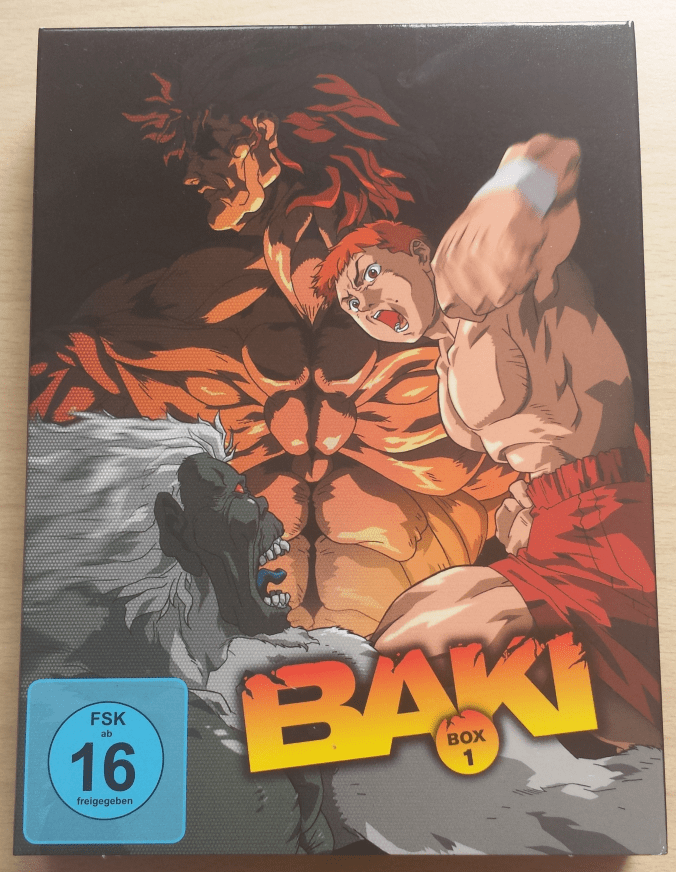
I picked up this show because it was a special offer at an anime convention. Both boxsets, 48 episodes, for about 20€. I couldn’t argue at the value, and the guys at the booth were really happy when I bought them. “This was the first anime we ever licensed! We didn’t know what to do back then and we have way too many around! Thank you for buying them!” They are now the German distributors for Akame ga Kill, Free!, Assassination Classroom, Kill la Kill and Sword Art Online, and, well, they had to start somewhere.

20160625_134721.jpg

Look those covers. I couldn’t walk past them.

I had heard of Baki before, on the the AnimeHERO, an English-speaking hispanic anime reviewer, who specialises in MANLY anime and Seinen. Of course I am subscribed to him, what do you think. It’s right up my alley!

Anyways, here I am with my two DVD boxes. And I decided to check them out – what is this manly show? I have now watched 7 episodes out of 48, what are my impressions?

1490504-grappler20baki20201yi5

Baki and his dad. Not the best of relationships.

The series falls oddly between those two previously mentioned groups.

There is a family drama going on. Baki, a young 13 year old delinquent, is overshadowed by the legacy of his father and the protection of his mother. His dad was the hardest arsehole out there, and after he disappeared and left the underworld in ruins, the yakuza are out after his son. Baki’s mum has a big buisness and wants to do everything for her son. Baki himself cannot be bothered with all of this. He simply wants to be the strongest, on his own merit. And defeat the yakuza that simply want to kill him because of his father.

And thus starts the story. Baki wants to be strong, and for that he has to defeat many foes. So, a battle anime it is. The concept is also nothing new. Baki himself is strong, but small, of compact build. And right on episode 2, he goes into a training arc in a forest, to fight … a mountain gorilla.

You see, this series tries to be serious and then it doesn’t. It stikes a very strange balance between the two, while being visually over-the-top.

We need to talk about the character design.

Baki himself is a great protagonist. Happy, but strong-willed if the situation calls for it, and a delinquent with a heart of gold. He will find his way through life, even if that means getting beaten down once in while.

vlcsnap-2016-06-24-19h55m46s519.png

Look at that happy face.

vlcsnap-2016-06-24-19h43m55s597.png

Small, but not to be underestimated.

So far, so good. He is the burly version of the protagonist of Haikyuu! Small, with flaming orange hair and incredible jumping power. Just with less volleyball and more gangsters.

I also love the design of Baki’s mother. This is something I have always loved about those “manly” series. If you have strong guys, you can’t just make women frail and weak. (Looking at you, light novels.) No, they have to be badasses as well.

[MMM] JoJo's Bizarre Adventure 16 - [1A04BE2F].mkv_snapshot_22.03_[2013.02.25_22.23.21]

Like “Lisa Lisa” from Jojo’s Bizarre Adventure.

vlcsnap-2016-06-24-19h26m48s124

Baki’s mother. Hard buisnesswoman with a softer side.

vlcsnap-2016-06-25-13h23m01s188.png

The happy boss of everything.

The idea of “manlyness” transcends gender. Everyone, man or woman, gets badass. I love this concept. We all get “badassery equality” over here.

Well, that poses a question: How much is “too much”?

vlcsnap-2016-06-25-12h55m24s963.png

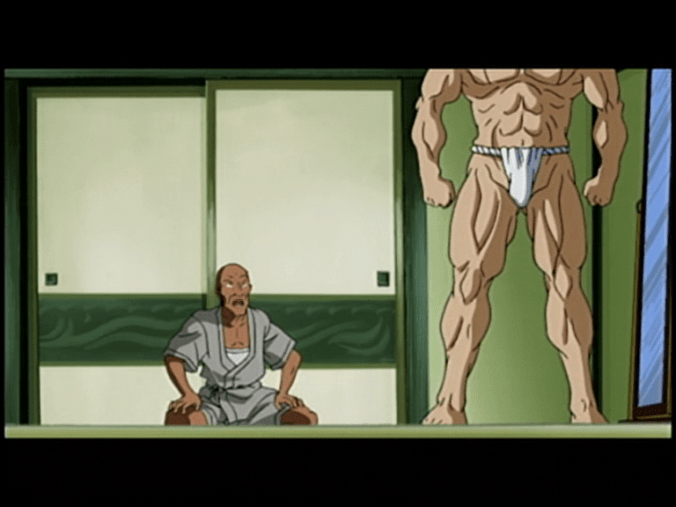
That dude is 13 years old? 

bakidvd.png

The inside of the first box. Baki fighting the mountain gorilla, but what is this background? Are we looking at someone’s back or front? Do these muscles even exist?

vlcsnap-2016-06-25-12h46m02s601.png

WHAT THE

vlcsnap-2016-06-25-12h46m50s350.png

WE HAVE REACHED THE OUTER LIMIT OF MANSERVICE

vlcsnap-2016-06-25-12h54m47s797.png

WAT

vlcsnap-2016-06-25-13h05m24s128.png

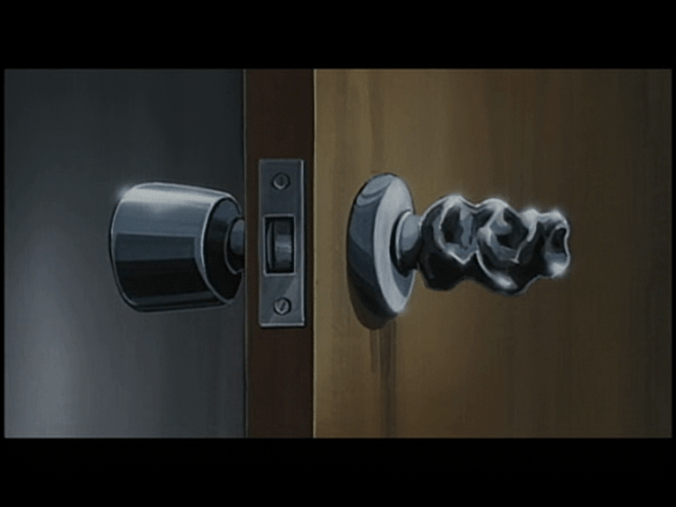
SO MANLY THE DOOR BROKE

vlcsnap-2016-06-24-19h20m20s182.png

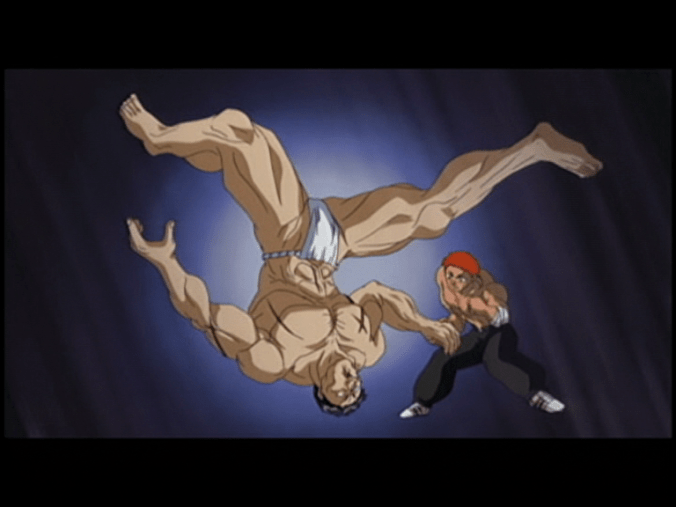
WOLF HELICOPTER PUNCH

vlcsnap-2016-06-25-13h04m01s284.png

JUST HOW HUGE ARE YOU JESUS

bakigor.png

I FORGOT ABOUT THE GORILLA

And I am only 7 episodes in. The design and situations are ridiculous. Too much. Of everything. With the two of my other favourite series that are visually different, I know which artstyle I am at. Kaiji and Akagi are pointy and expressive, and Jojo’s Bizarre Adventure is colourful and fabulous, but this is just: muscles. Muscles everywhere. So many.

And the series is not attempting to be anything supernatural! It is essentially a family drama set in the underworld. And yet: gorilla fights. Baki is simultaniously too serious and too silly, stuck in an odd limbo balance.

Baki is a 90’s manga and it shows. But this over-the-top attitude has something really charming to it. The anime is from 2001, but they respectfully kept the cheesy nineties feeling. The eurobeat soundtrack that occasionally shows up is fantastic, straight out of Initial D. And as I am enjoying this anime in the German dub, that is equally over-the-top, I am really having fun.

I like this series. It has everything I wanted from it, big and small muscly men fighting for a bigger cause, a lovely protagonist and a lot of episodes to dig myself into. I can even continue to read the manga afterwards if I want to! I am excited to see what is about to come, as at the end of episode 7, it is revealed that Baki’s father comes back! Now the story really starts! The artstyle is not fantastic, but, hey, it actually fits the story! If it finds its balance and knows what it wants, this series will become really great. But even now, I am having fun!

I am glad that I bought this series. Because sometimes, what you need in life, is just a lot of manly men doing manly things.

My 3×3 Favourite Anime

mosaic23cb9526a46e7711e81413c3071f852802708cca

This is my 3×3 of “My Favourite Animes”. What are they and why do I love them? What makes them special to me? Here are my thoughts, come and join me!

Kaiji
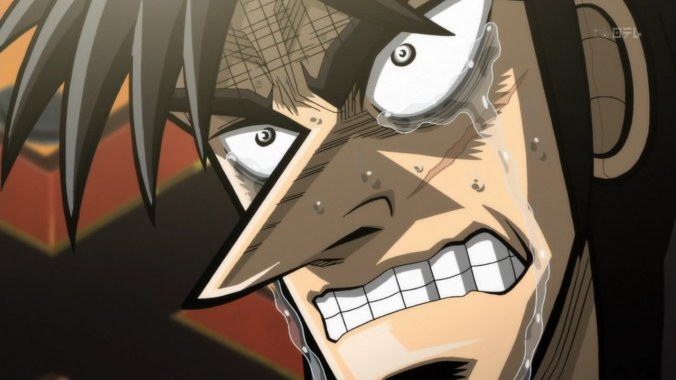
tugeCq9

I have a weakness for remakes and old mangas getting new adaptations. Seeing classics being brushed up, cleaned and given a fresh coat of paint makes me happy. It often shows how timeless a series really is, how it precisely captured a zeitgeist, or what beauty is hidden under timely dust. “Kaiji” is one of those.

In the financial crisis of 90’s Japan, Kaiji, a young good-for-nothing dude, is failing at life. Racking gambling debts with friends, drinking and smoking, jobless, living alone in his tiny apartment, he lives a sad life that he wants to change. Due to a stroke of tragic destiny, he suddenly gains a lot more debt, as he absent-mindedly signed a contract for one of his co-workers a few years ago. Now a loan-shark stands in front of him, telling him that he is  3,850,000 Yen (~35,500$) in debt. And they want their money back. Now.

Thus starts the adventure of Kaiji, through a lot of manly tears, addiction, tragedy, happiness, gambles, pain and twisted gameshows. It’s a depressingly uplifting tale, with an endearing, overly-emotional protagonist who is all too relatable. Aren’t we all procrastinators, who will only work if pushed to the extreme?

Jojo’s Bizarre Adventure
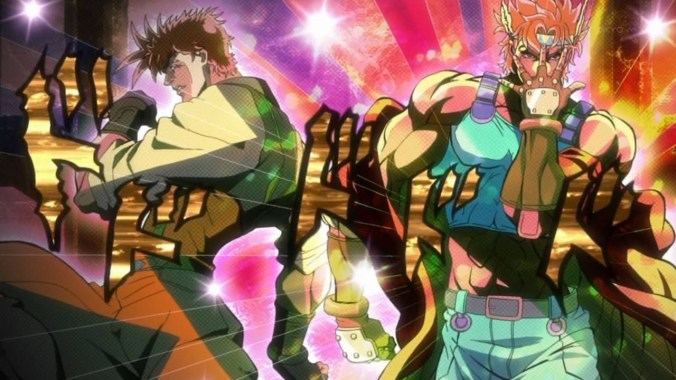
maxresdefault

Another classic in a new dress. From the 80s, that brought you the manly action genre starring Arnold Schwarzenegger and Silvester Stallone, comes this blast from the past.

Stretching many generations and many story parts, the Joestar family will be involved in bizarre incidents, starting in the 1800’s in Victorian England. From there, we will see vampires using ice powers, undead Mayan gods being incredibly fabulous, a French muscly man wanting to be a mangaka, Japanese high schoolers solving crimes Scooby-Doo style, Italian mafia with superpowers and all-female prisons with Spiderwoman. And that’s not even all the parts and settings!

The series knows exactly what it wants to be, and has gigantic amounts of fun rolling around in its lore. It works simultaneously as a parody of Shonen, while also being a straight-up Shonen. And its importance for the whole manga and anime, and even beyond that, towards fashion and video games, is mind-blowing. It’s fun, it’s fabulous, every part is different, and there will be a big universe for you to dive into.

Kill la Kill
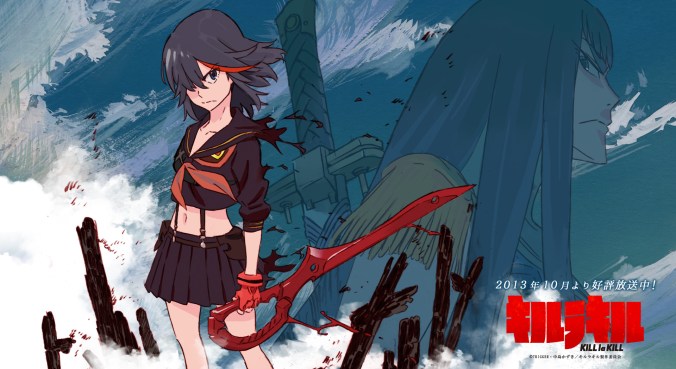
36918_kill_la_kill

This series refuelled my love for anime. I came back to anime in 2013, and this was the hype-filled beauty that I didn’t know I needed.

Poking fun at anime tropes and fanservice, while slowly evolving from a simple revenge story to a Greek tragedy was beautiful. The characters, from their designs to their story arcs, were all fascinating to watch. The middle part dragged on a bit, but the ending picked itself up so well, that I was literally on the edge of my seat. Trigger has become my favourite studio next to Madhouse for making this series. A satisfying ending, and a lovely final OVA make this series a round, well-polished treasure.

Saint Young Men (The Film)

tumblr_static_tumblr_static__640

Jesus and Buddha, after hanging out for millennia in the afterlife, are best friends – as Nirvana and Heaven just happen to be next to each other. They want to take a break from all this being-gods business, and take a vacation on Earth. So, they decide to live in Tokyo, as they are so many Shinto gods there, they’ll surely don’t stick out, do they? (Also, Buddha gets ill from the water in India and Jesus cannot live without a decent internet connection – well, Japan it is.) Living together in a little flat as roommates, we will see a whole year in the life of Jesus and Buddha on Earth, from spring to winter.

The main strength of this film is the double lead of the two gods – as they are canonical to their religious selves. Jesus is a man of simple carpenter background, a happy-go-lucky bachelor, who writes reviews of TV shows on the internet, loves Santa, and is generally outgoing and caring. He loves people and people love him. (He is also often confused by people for being Johnny Depp.) Buddha is an aristocrat, who threw his privileged life away in order to become in ascetic. He is very calm and overly caring, very careful with money, prefers loneliness and meditation, and is a vegetarian, as he can command all animals, even if he doesn’t want to. Both protagonists respect each other, admire each other’s approach to life in general and support each other. For example, Jesus takes loneliness-loving Buddha to Disneyland for a fun day and Buddha has to stop tech-happy Jesus from buying a new gaming PC. (Heaven has a tight budget, you know?)

It’s a beautiful friendship, two foreigners discovering the culture of Japan, and an acoustic soundtrack that is so soothing, you want to smile through the whole day. The sketchy artstyle with strong colours paints a dazzling, gorgeous image of Tokyo. This is one of the most heartwarming slice-of-life masterpieces I have ever seen.

One Piece: Baron Omatsuri and the Secret Island
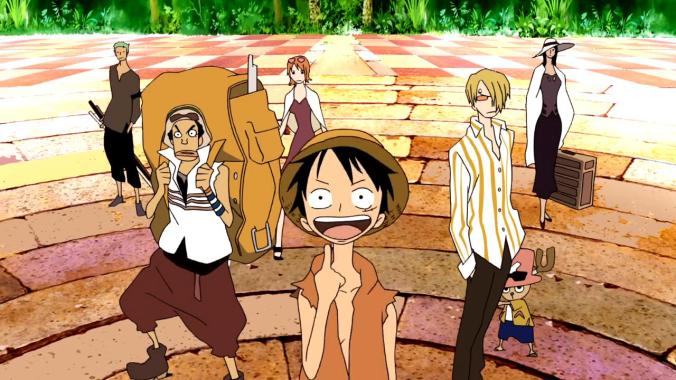
mni-one-piece-movie-6-baron-omatsuri-and-the-secret-island-720p-mkv_snapshot_00-06-52_2015-02-21_16-28-19

“One Piece” has been a big part of my life. I discovered the anime and then the manga, and I have been in love ever since. I own all the books, including all the making-of books and some artbooks, and I am intensely proud of my collection. It is my #1 manga of all time.

One day, young teenage me discovered that my local anime/manga store had a section on Japanese DVDs. I went through it and saw some One Piece movies. Overly happy with joy, I picked the one with the pretty flowers on the cover and went home, in order to watch some new Strawhat Pirate adventures! Hurray!

What followed was one of the most harrowing experiences of my film life. It felt as if I was had been smacked in the face, with a unique artstyle, overwhelming sakuga, finest voice acting, an excellently executed story and some of the heaviest themes I have ever seen touched upon in One Piece. And that means something. Little did I know that this was the work of a certain Mamoru Hosoda.

I think this should tell you everything you need to know, as Hosoda also did my favourite Digimon film: “Our War Game”. This man knows how to add gravitas to a light-hearted series, keeping the spirit of the original without feeling like a grimdark rip-off. Thank you, Hosoda, for showing just how good anime can be.

Nichijou
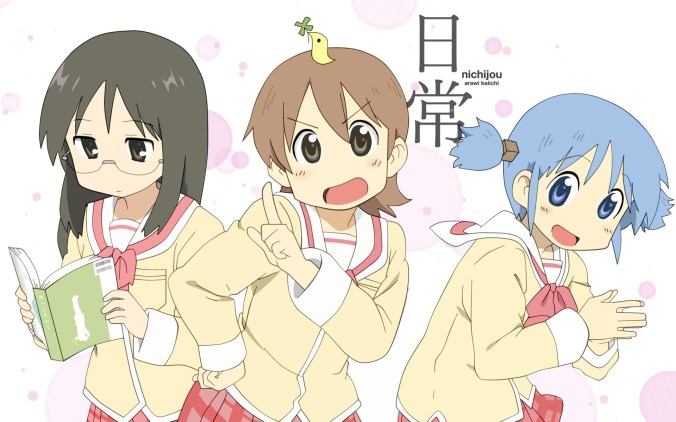
37745_nichijou

Ah, Nichijou. You marvellous bundle of joy. Before I start talking about this series, let me tell you something about comedy.

I love comedy. I really do. I loooove it. Intensely. Monty Python and Edgar Wright are my personal heroes. I specified in comedy during my film theory classes, analysed many films, know a lot of theory, have written many papers on comedy, started playing improv at my university and read way too many books on the topic. But as it often is… if you specify in something, you become a snob. A big one. My taste has become extreme. Either I love the humour and it clicks immediately, getting gigantic laughing fits out of me, or it collapses right there on the spot, not even wringing a chuckle out of me. I noticed it strongly at a screening of the “Love Live: The School Idol Movie” at an anime film festival. Everyone was laughing and having a blast, and I am sitting there thinking: “Yes, I recognise that this was a joke. It fell flat because of reasons A, B, and C. It wasn’t funny. I am not laughing.” I laughed once during the entire film, due to a fantastic, unexpected line by best girl Rin. Rinse and repeat for other “comedy” series. I sit there like an addict: Only the really good stuff gets a reaction out of me. Which is a bit sad. But that reaction will be amazing. It’s hardcore black and white.

And then, I found the series which hit exactly that sweet spot of comedy that I had yearned for so long. It came in the form of “Nichijou”. The surrealism, the adorable characters, the slow twisting of loose story strings, the overstatements, the intense animation, the relatable situations, the perfect execution of comedic rules: it is a masterpiece. The laughing fits I had from this series were hysterical. The charismatic, heart warming cast of characters makes this anime shine like sun. The longer this show runs, the more you understand the universe, and the whole structure that keeps this world of “Nichijou” going. This is, to this day, my favourite show by Kyoto Animation.

Redline
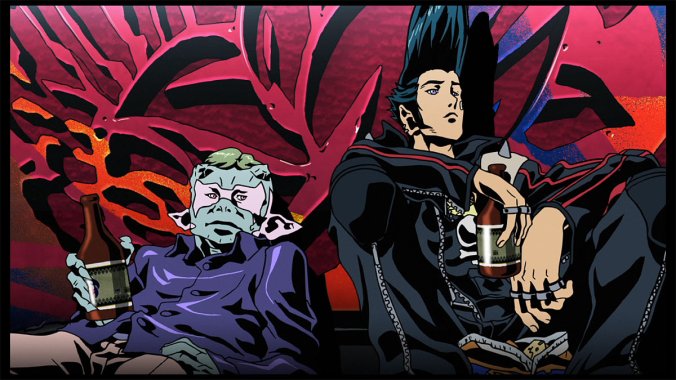
1446257210-5a9e8468d1227862508b8657f11ee00e

Well, one of my favourite studio is Madhouse, as I already mentioned above. (Come to think of it, 4 out of my 9 favourite series are Madhouse. Huh.) And this may be one of the most visually appealing work of art they have ever done. If you were to ask me how much sakuga is in it, I would say: “All of it.” Every shot, every camera movement, every little character animation is filled to the brim with charm, talent, and pure beauty.

The story is simple, yet effective. A young man, called J.P., is the best race driver around, yet he cannot take off, as his friend and business partner is entangled into illegal betting deals. These races, akin to Star Wars Pod Races, just with more speed and hype, are the most watched sport in all the galaxy. The eponymous Redline race is the main event, but the film takes time to introduce all the racers and gives them personality and backstories. By the point the race actually starts, you know them all, and are in for the most hype ride of your life. See it in the best quality possible, with a dub, as you, believe me, do not want subtitles with this crowning jewel of animation.

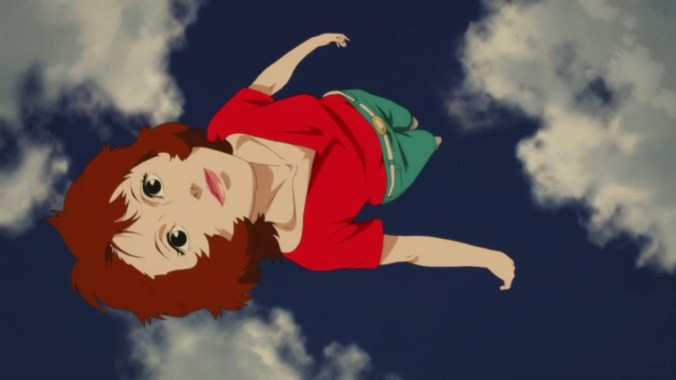
Paprika
maxresdefault1

If there is one thing that a film student will go crazy about, it’s “editing”. Satoshi Kon was one of the greatest in this field, and his talent did not stop there. His scene transitions and shot compositions were nothing short of amazing, and his stories are in-depth character studies.

It is only natural that one of his films would feature a psychologist one day. But not any old psychotherapy is presented here, the central theme is dreams. The main protagonist enters her patients dreams to analyse and help them – but one day, one of the dream-entering devices is stolen. With this machine, it is possible to simulate dreams and making people think that they could do anything. What happens when the border between dream and reality is broken? What is real, what can be trusted, how does this dream logic work? How do you hold on to yourself? Can this power be used for good?

All these many questions are wrapped into a colourful, vibrant, eye-opening film which is so densely edited, that you have to give it several watches just to catch the whole scope of this movie.

Akagi
ba76c81e1aeb5b76037753fdcccb1c0c1378825468_full

Another Fukumoto adaptation? Another Madhouse series? Another character with a big nose? Didn’t we have “Kaiji” already?

Well, the 9th spot was hard to pick. My guilty pleasure “Symphogear” was a contender, but I haven’t seen the third season (GX) yet, and I have been told that all goes downhill from there. I have to watch it for myself before I can judge. Another runner-up was “Shouwa Genroku Rakugo Shinjuu”. I acknowledge its beauty and narrative craftsmanship, but in the end, it felt like an extended prequel for season two, that got announced immediately after S1 finished. If season two continues with the same quality, it will catapult itself into the godly heaven of anime. Don’t screw this up, Studio DEEN!

Anyways!

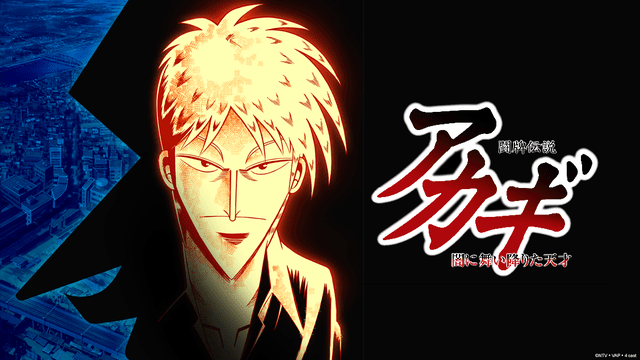
“Akagi” is, to me at least, a little miracle. It should not work and yet it does. It’s Fukumoto at his best: angular artstyle, thick outlines, sharp character design, gambling, psychological and hard-boiled, serious Seinen. It’s essentially “Kaiji’s big brother”, from the source material to the anime staff. Both protagonists even share the same voice actor.

But it is so radically different. In post-WWII Japan, everything is awful. Gambling runs rampant, violence is in the streets, yakuzas control nearly everything, and politicians are corrupt and dysfunctional.

Out of a dark storm, in midst rain and thunder, a young boy, 13 years old, enters a Majong parlor. He doesn’t speak much, he is soaked in water, he has an uneasy vibe about him. And he starts obliterating his opponents in a game of Majong. This is no ordinary boy. This is Akagi. This is a demon. From there on, we follow Akagi, on his self-proclaimed quest to destroy the yakuza. He hits them where it hurts the most: their wallets.

This is how you do an “overpowered main character” right: By showing the surrounding people’s thoughts, not the MCs inner monologue. Akagi is flat out a creepy, scary character. Always speaking in monotone, with narrow, piercing eyes that will never let you go. He is screwed up, he doesn’t care about his own safety, and will always be cold and calculating. If he doesn’t risk his life, he is bored. This is the perfect character for this twisted setting and he is an absolute blast to watch. He makes Majong interesting. Full of hype, even. How does this even work? It does, with perfect characterisation, intense OST, and interesting mind games. I just never want to meet Akagi in person. He gives me shivers, guargh. With Kaiji however, I want to share a beer and give him a huge pat on the shoulder.

Conclusion

I love all of the above series and films, and they all hold a special place in my heart. This is just a little overview, as I could easily write full reviews on all of them, which I will hopefully do in the future! I hope you enjoyed this little overview of my 9 favourite series. I will continue watching anime and discover new favourites to love! Have a wonderful day!
Hello and Welcome!
Hello, I am EyebrowScar!

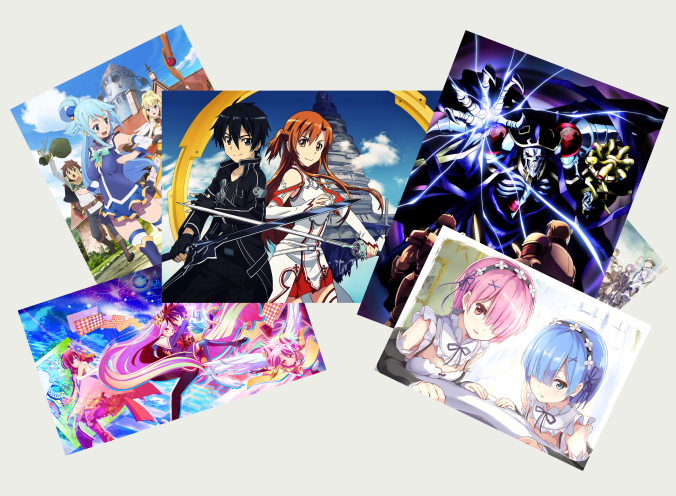
I intend to do anime reviews and general nerdstuff on this website that I now call my own!

I am excited and sincerely happy to start my own thing!

Feel free to follow me on this adventure!

Yours sincerely,

EyebrowScar