MANLY MONDAY – “Death Pie”: Like James Bond with Mahjong

T4.png

There are many niches in the manga world, and one of the most unique ones is the “mahjong manga”. The monthly magazine Kindai Mahjong by the publishing house Takeshobo first hit the shelves in 1972 as a text magazine, and a manga magazine followed in 1980. Ever since then it has brought many interesting beloved series to the world, and even kickstarted the career of Nobuyuki Fukumoto, who would gain critical and popular success with his two hit series Akagi: Yami ni Oritatta Tensai and Ten: Tenhou-doori no Kaidanji.

Now, the idea of a mahjong magazine seems odd: All the manga that are released here have to feature this game of tiles – something not everyone is familiar with, especially outside Japan. It poses a simple yet deserved question: If everything is centered around a single game that must be the focus, doesn’t it get awfully stale or boring really fast? Surely the authors must be limited in their choice of stories and characters, right?

Surprisingly, this is not the case.

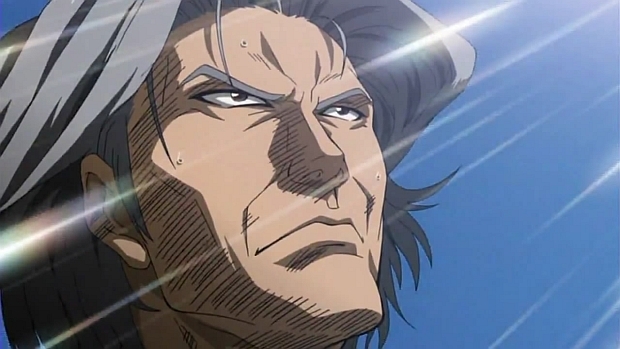
In fact, if one looks at it closer, it gives a lot of freedom. There must be mahjong in it, surely, but the rest can be chosen freely and this has led to some amazing series: Akagi and Ten both combine yakuza and villain plots with deep human drama, Tetsunaki no Kirinji by Uhyosuke is about a divorced single father dealing with his online mahjong addiction to take care of his daughter, Getter Robo High! mixes Go Nagai mecha, mahjong and high school, and Legend of Koizumi by Hideki Oowada is, well, world politics on crack.
12928-620x-snapshot20100102011631

If you haven’t seen Legend of Koizumi, I highly recommend that you do.

The best proof of this freedom is that Kindai Mahjong is not only still going after 38 years, but also that it has spawned many spinoff magazines with different readerships. Kindai Mahjong is not one of the biggest magazines out there, but it enjoys its stable cult status and continues its run.

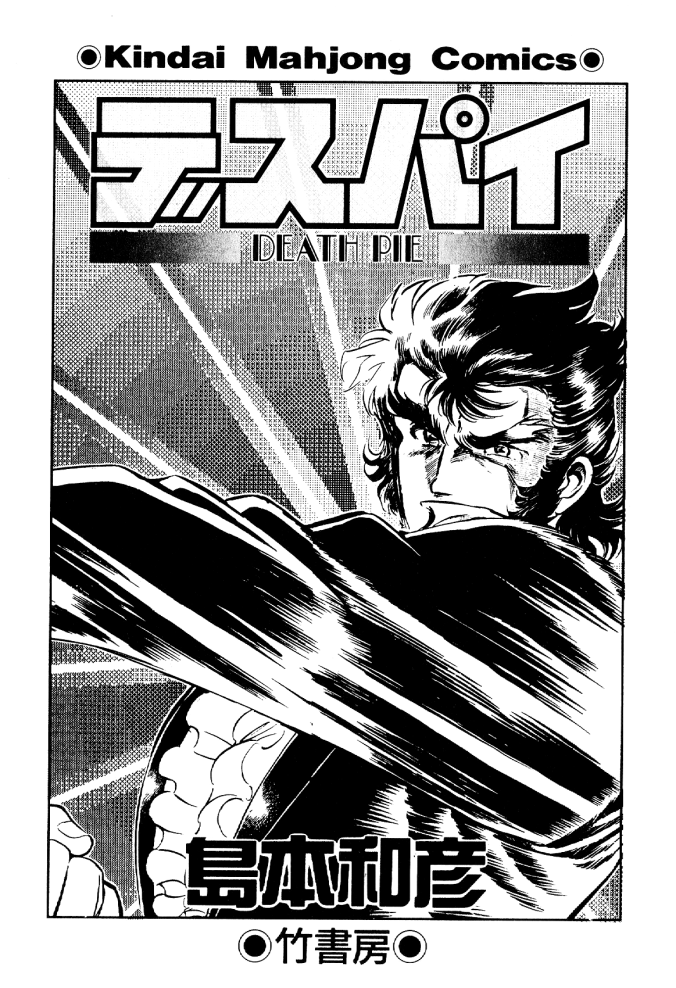
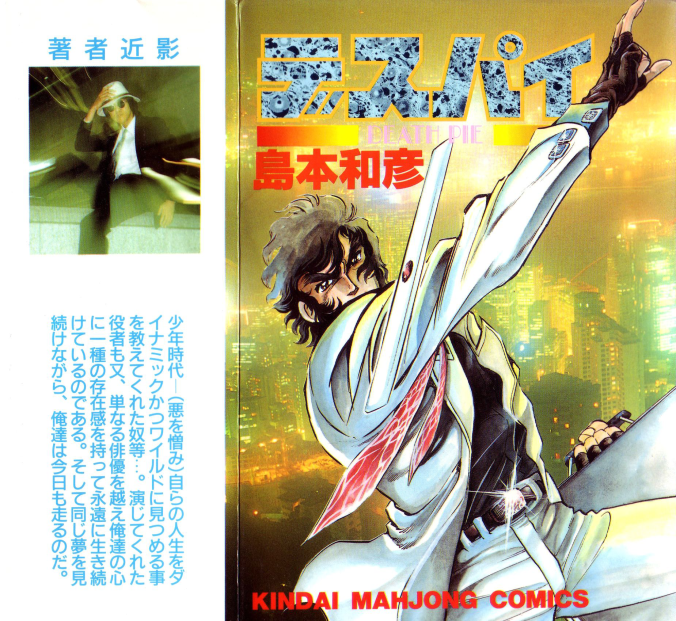
I wish to present one short series from this magazine, to show what is possible within this mahjong frame: Death Pie by Kazuhiko Shimamoto, from 1989.
img000001 (1).png

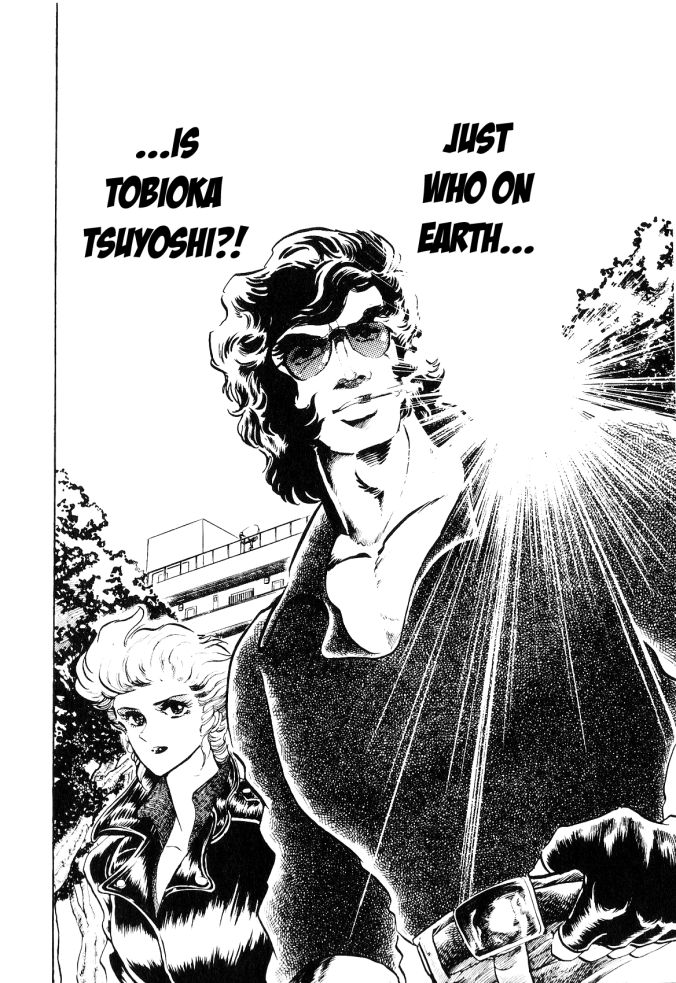
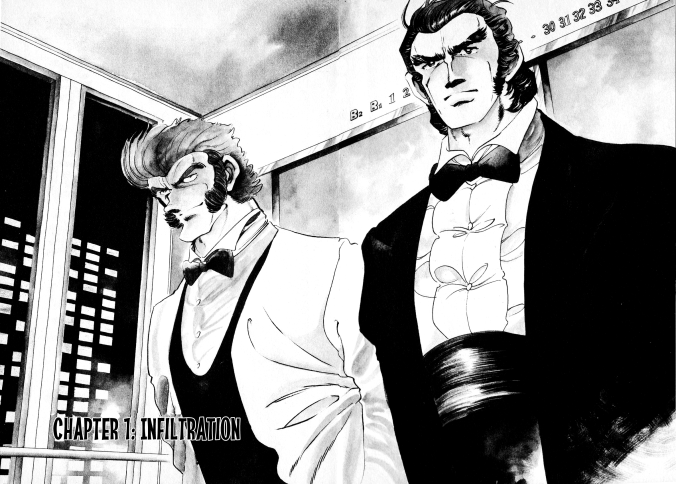
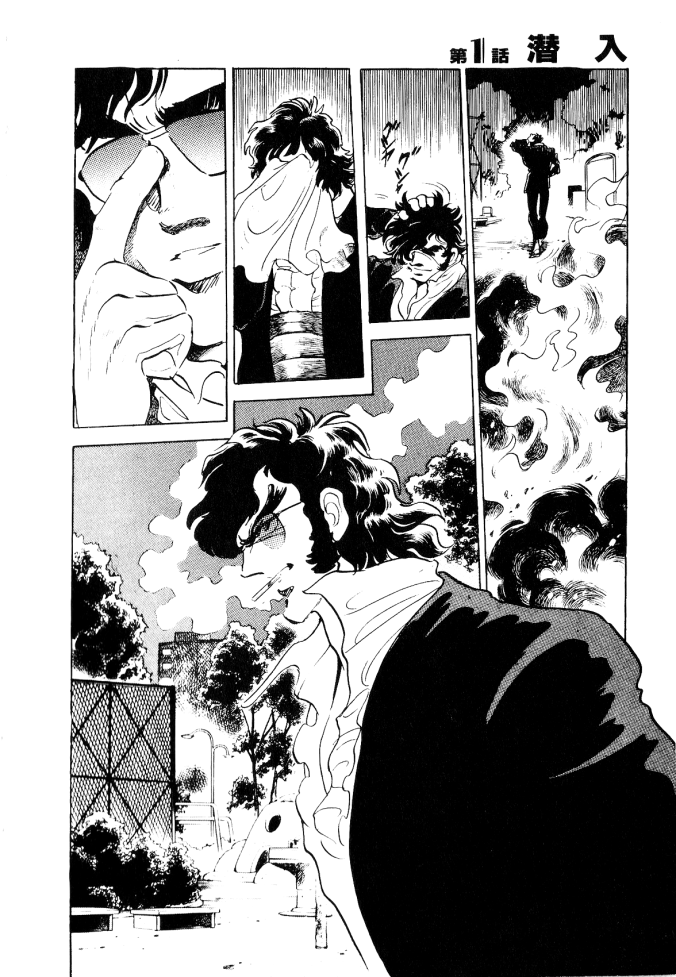
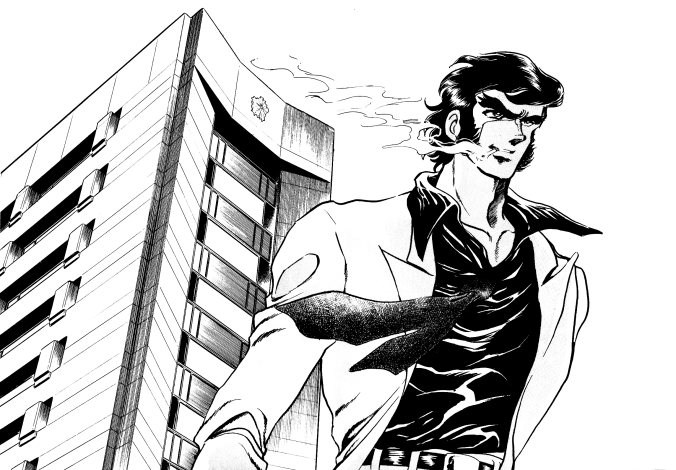
Death Pie is the story of Tobioka Tsuboshi, an ex-cop fighting against drug cartels, who plays mahjong against big yakuza clans and defeats them monetarily. Of course, more plot threads will open: undercover missions, secret infiltrations, backstabbings and fights for life and death with tiles and guns. It feels distinctly “James Bond” in its story beats, but in its look and characters as well:

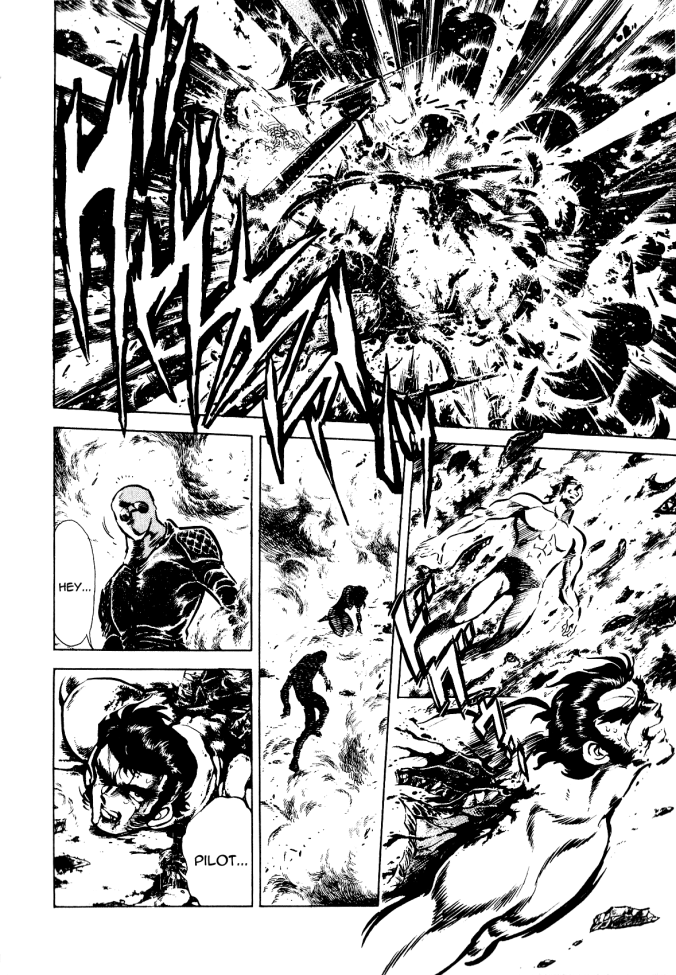
Smooth manly men in suits, good-looking classy women, overly evil villains, capable dangerous henchmen, high stakes gambling, secret casinos, action scenes and explosions in helicopters, cars and ships – everything that simply says “007” is here. Despite its yakuza setting, it borrows the feel of a Western style action film, and it fits.
img000007

img000022

img000028

A very rad action protagonist. Who also plays mahjong.

The look of the series brings me to another great quality this manga has: the art by Kazuhiko Shimamoto. He is mostly known for his “Blazing Transfer Student” series, but also other series that feature flames and blazes in the title, such as the autobiographical “Blue Blazes” (which has a fantastic TV adaptation) and “Burning Pen”. “Blazing Transfer Students REBORN” also received a Netflix live action reboot/revival in 2017, which I also highly recommend.

And as you can probably tell from that selection,  his series are characterised by BURNING PASSION and HOTBLOODED ACTION. Here you will find big emotions, huge clashes, and energetic characters who will fight for what they believe in. This is reflected in his artstyle, which is drawn with the same amount of power. Shimamoto does not only tell stories with fire, he IS the fire.
x16

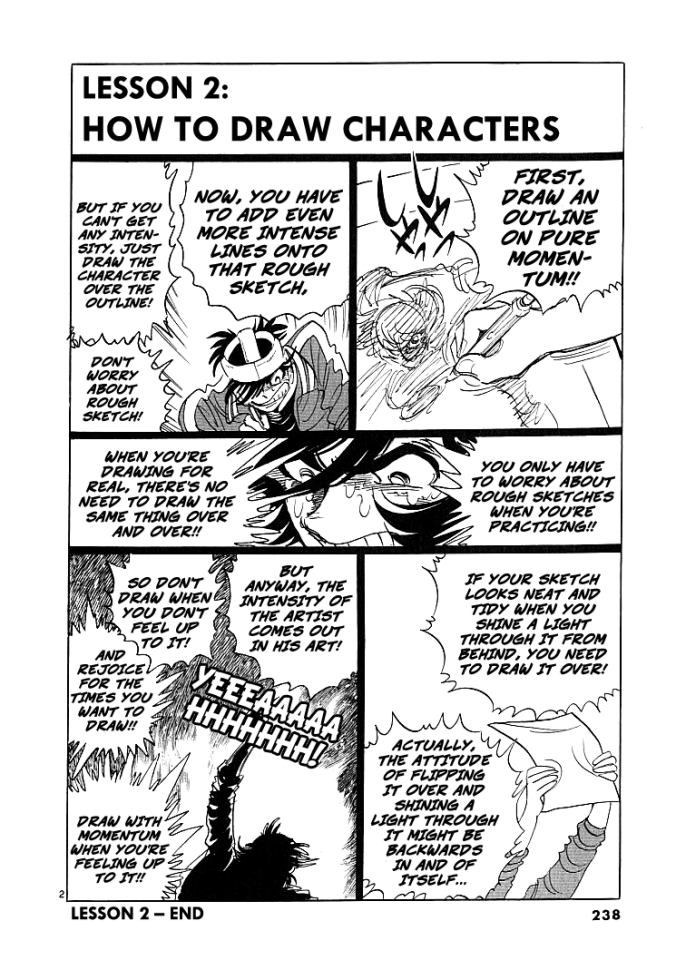
Shimamoto explaining HOTBLOODED DRAWING.

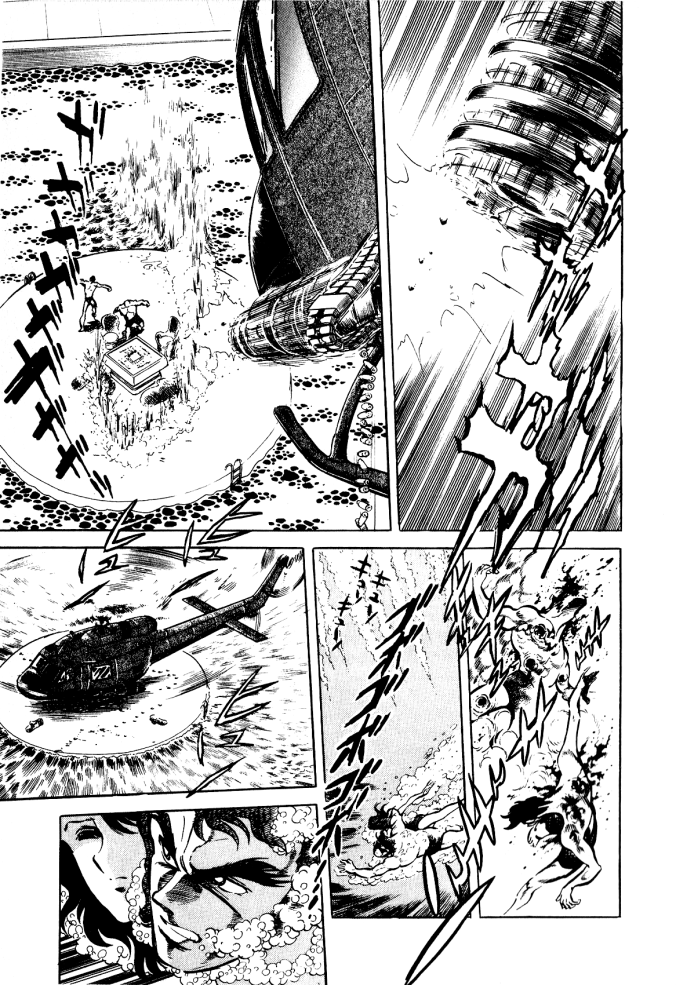
In his making-of/behind the scenes manga Burning Pen he describes his approach to drawing: Have the same amount of passion as your characters, and bring that directly onto the paper. And it shows, with heavy contrast, stark brushstrokes modeling his characters, and thick outlines that make objects and sound words come alive.
z15

z16

z19

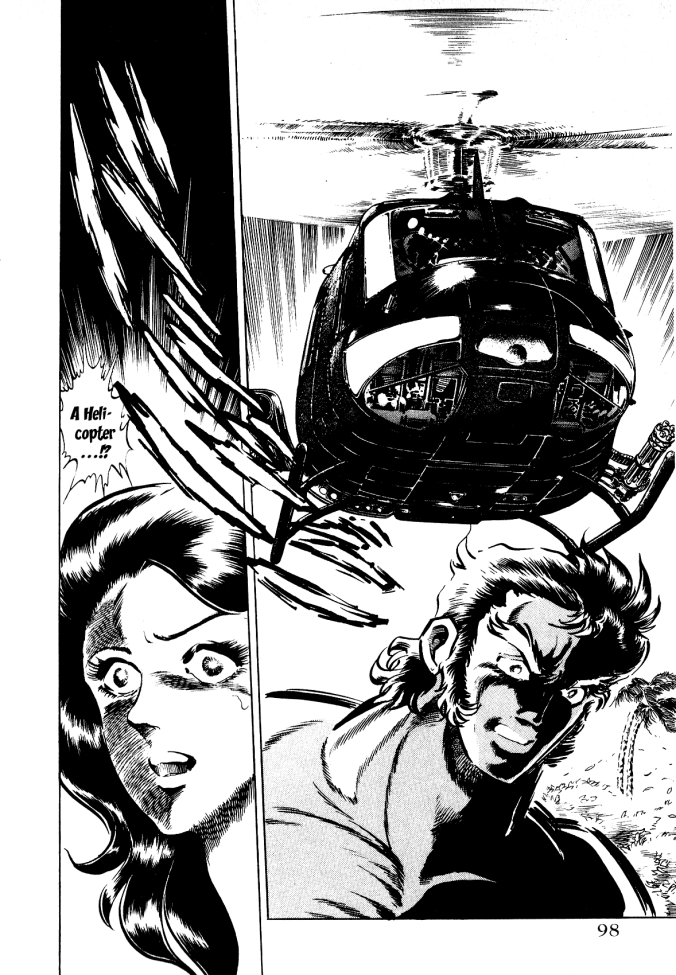
That’s one way to end a mahjong pool party.

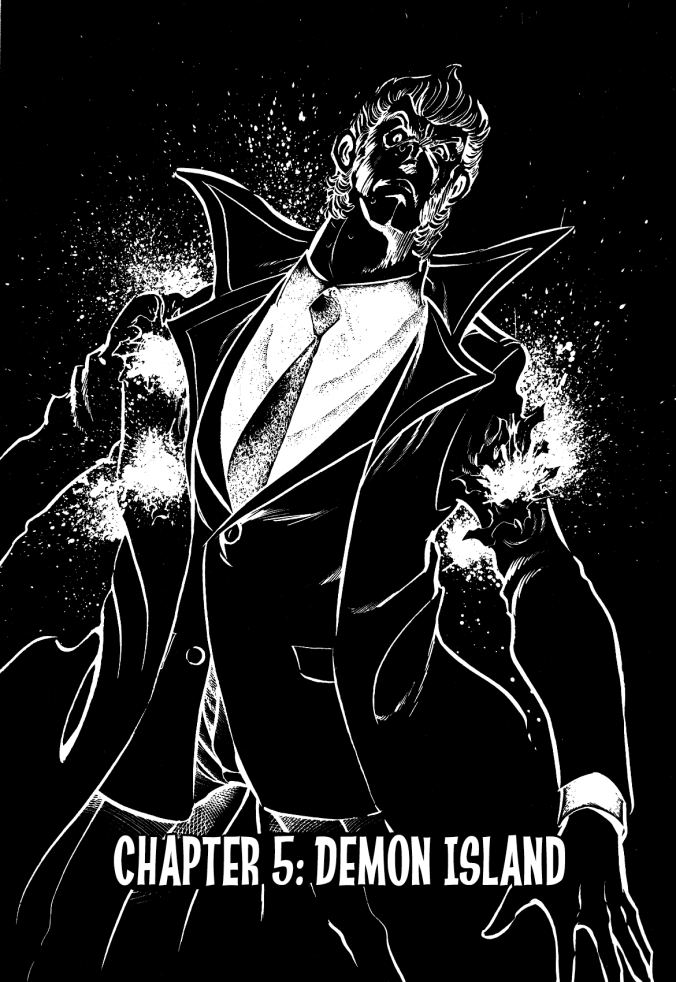
I wish to especially point out the use of ink brushes, especially to draw the male characters hair, which gives everything a great sense of movement. The linework is outstanding, and gives the whole series an immense energetic feel.
r1 (1)

Of course, as Death Pie is very short, with only 9 chapters, I do not wish to talk a lot more about the story, and as I already said earlier, the plot feels distinctly James Bond, with the personal touch of Shimamoto.

But how does mahjong fit in with all of this?

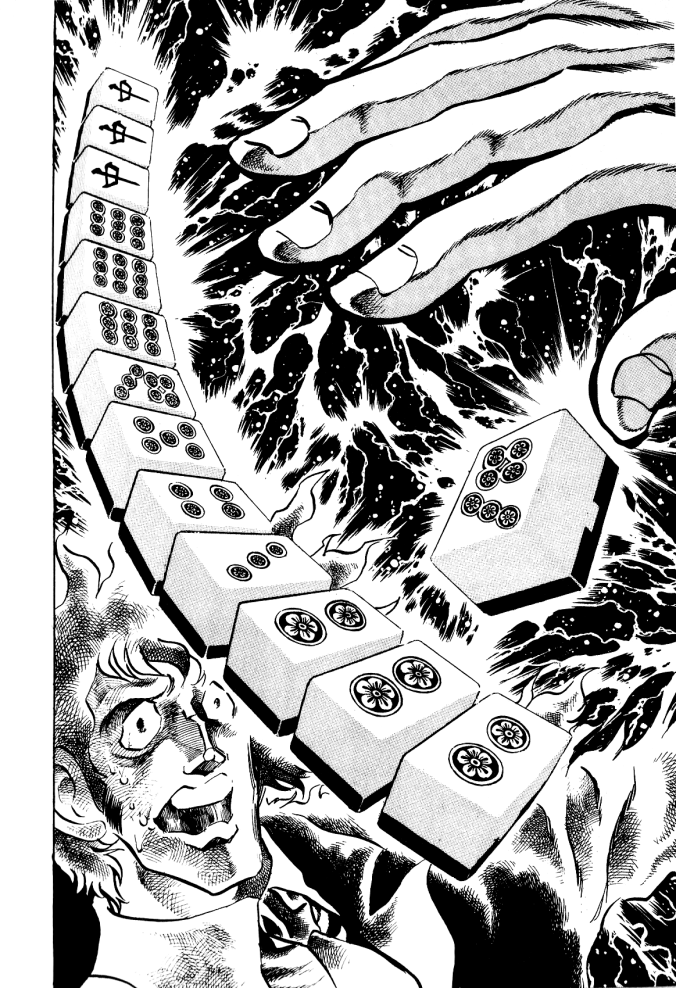
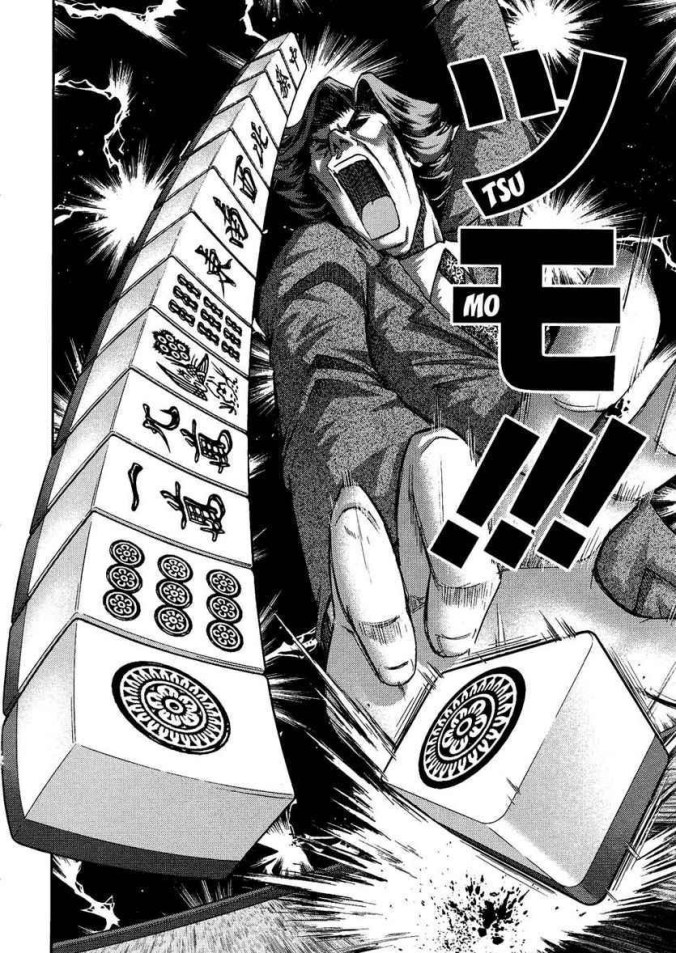
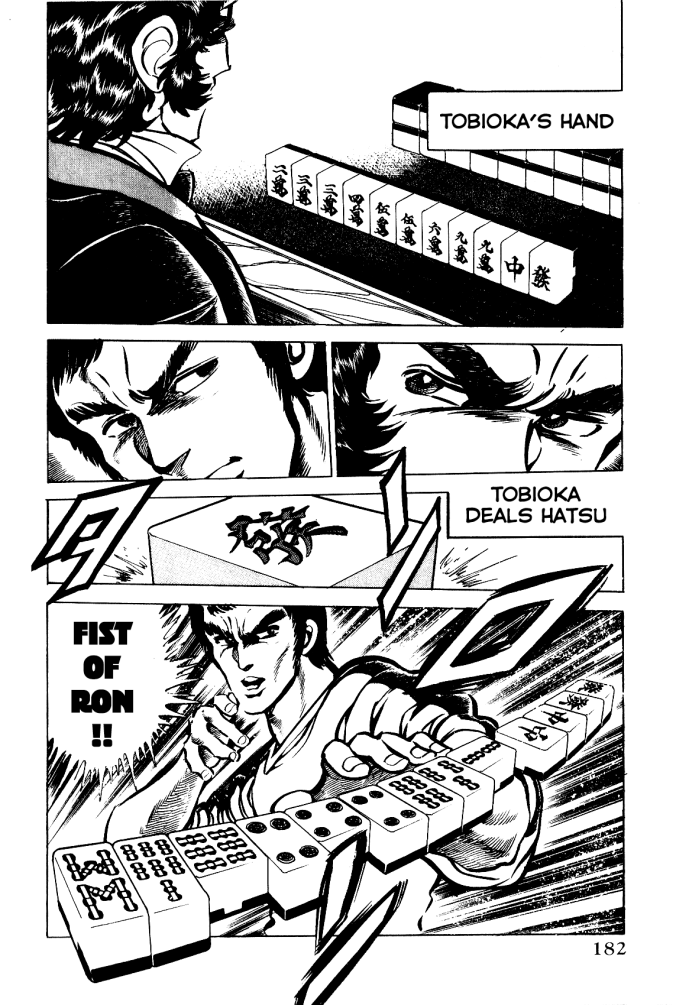
The underworld and gambling go together hand in hand already, and so it does in this story as well. But Shimamoto’s presentation lifts it to another level. Most mahjong manga have intense games with outlandishly gigantic imagery, such as the visual metaphors in Akagi, or the special attacks in Legend of Koizumi, and Shimamoto’s trademark HOTBLOODEDNESS brings it’s own visual look to the table.

DLge8gjVwAAkUFt

For comparison: Nobuyuki Fukumoto’s Akagi…
a2829e3e8e5173ed190b69585bf65c801.jpeg

…Hideki Oowada’s Legend of Koizumi…

X23.png

… and Kazuhiko Shimamoto’s Death Pie.

And for those worrying about not knowing the rules of mahjong, this series does not put an immense focus on it. It is rather the surroundings and settings that make it fun, as well as the villains. The serious action film look with the over the top presentation of the mahjong manga creates a fantastic feeling, that is worth reading this series for. The plot can get a bit convoluted, or you may lose track of some characters, but in the end, it is all worth it: for the artstyle, the character design, the drawings, and the fact that one of the henchmen is Mahjong Bruce Lee.
img000020

Death Pie is a little gem that I would like to recommend to everybody. With its very short run of 9 chapters, you can easily read it in an afternoon and enjoy it to your heart’s content.

There will be something for everyone in here, be it the thrill of mahjong, the energetic artstyle, the larger than life characters, or simply the interest to check something out from a decade long past, in a niche manga magazine that has lived for many years and will for many years to come.
img000011.png

The End.

Sources: Wikipedia: Kindai Mahjong, MyAnimeList: Death Pie, Mahjongkrazy Scanlation Notes
MANLY MONDAY – “Zombiepowder.” Tite Kubo’s Early Western Fun

zombie-powder-vol-1.png

Back in the day when I was a little kid, the book shop was my world. I read many manga there, even right into the teenage years, as the store had comfy couches and chairs to sit on, so that you could browse and read for an unlimited time. It was here that I found Zombiepowder for the first time, by an author I had only heard a bit about: Tite Kubo, most famous for his series Bleach.

I would later find out in school exchanges and travels outside of Germany that Bleach was actually a huge thing. The internet told me that it was on the level with One Piece and Naruto, the “Big Three” of Shonen Jump, and I was quite surprised. Bleach was never a gigantic thing in Germany, most likely due to the anime not being widely available, especially in the “golden early days”. (One Piece ran since 2003, Naruto since 2006 – in a dreadful version, don’t remind me of the opening, the One Piece one is amazing, watch that instead – both on the big channel RTL II, while Bleach started only in 2010, on a niche channel called Animax.)

And so, in 2008, I held a volume of Zombiepowder in my hands, not knowing about Bleach, and started reading this new series I had never seen before. 10 years later, I revisited it.

02-03

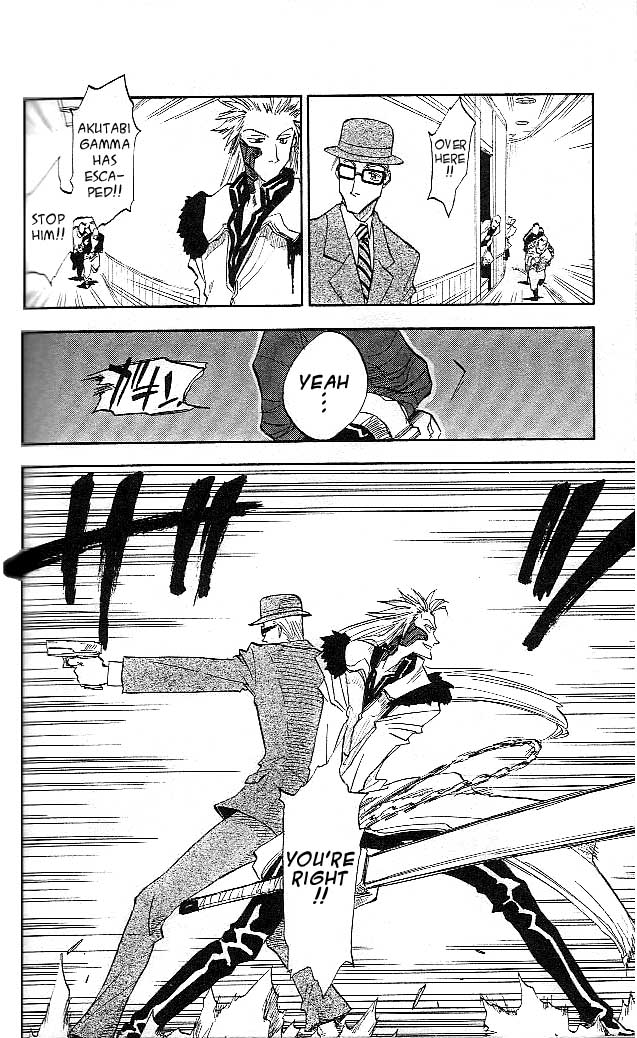
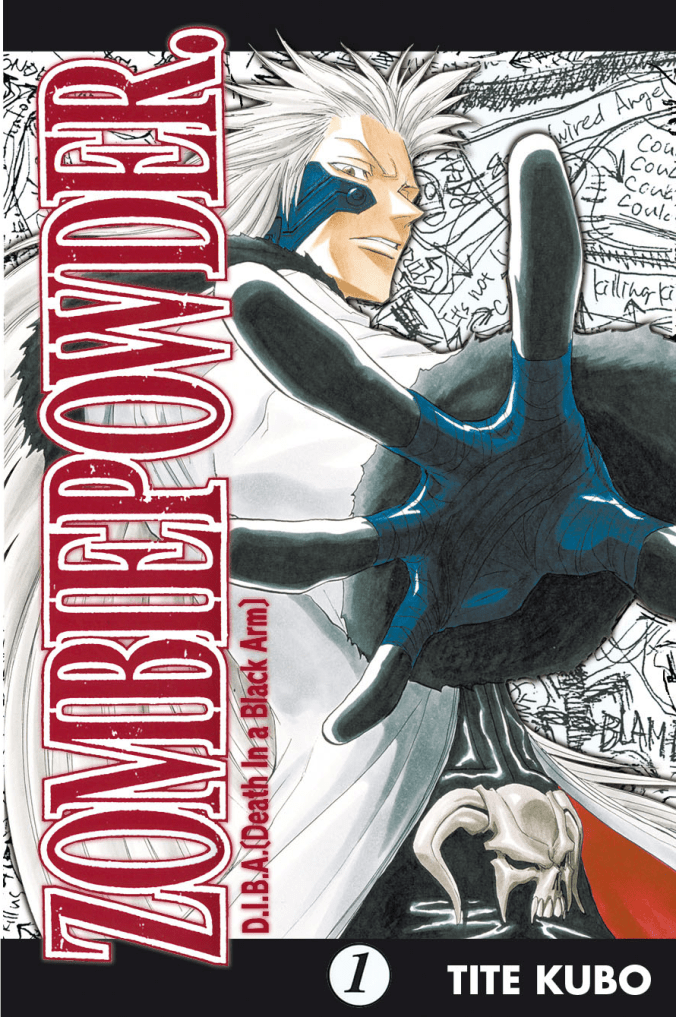
Zombiepowder is the story of Gamma Akutabi, a silverhaired hero with a big sword and big heart, in a Wild Western world. He is a “powder hunter”, someone who is on the quest to hunt down the “Rings of Death”. If you collect all twelve rings, you can produce the eponymous “zombie powder”, a substance that brings life: If used on a dead person, that person becomes alive again, and if used on a living person, that person becomes immortal.

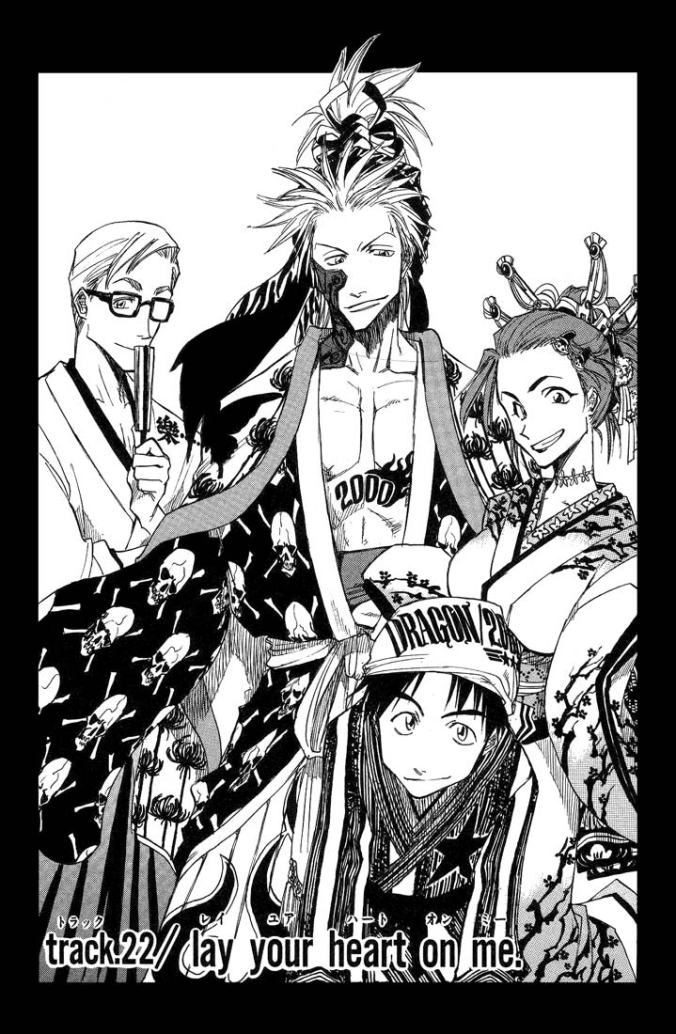
Hence, many people are after these rings for different reasons, and so far, no one has managed to gather all twelve into one place. Gamma Akutabi is after it for the immortality, and on his quest three other characters will join: C.T. Smith, his partner in crime, a very upright classy gunslinger complete with suit and bowler hat, Elwood, a young teenage pickpocket, and Wolfina, an energetic paparazzi  lady who fights with forged press releases and a modified tripod.

x2 (1)

From left to right: Elwood, Smith, Gamma and Wolfina.

As this manga is quite short, with 27 chapters only before it was cancelled by Shonen Jump, I wish to talk less about the plot and more about the characters and style that Kubo shows us here.

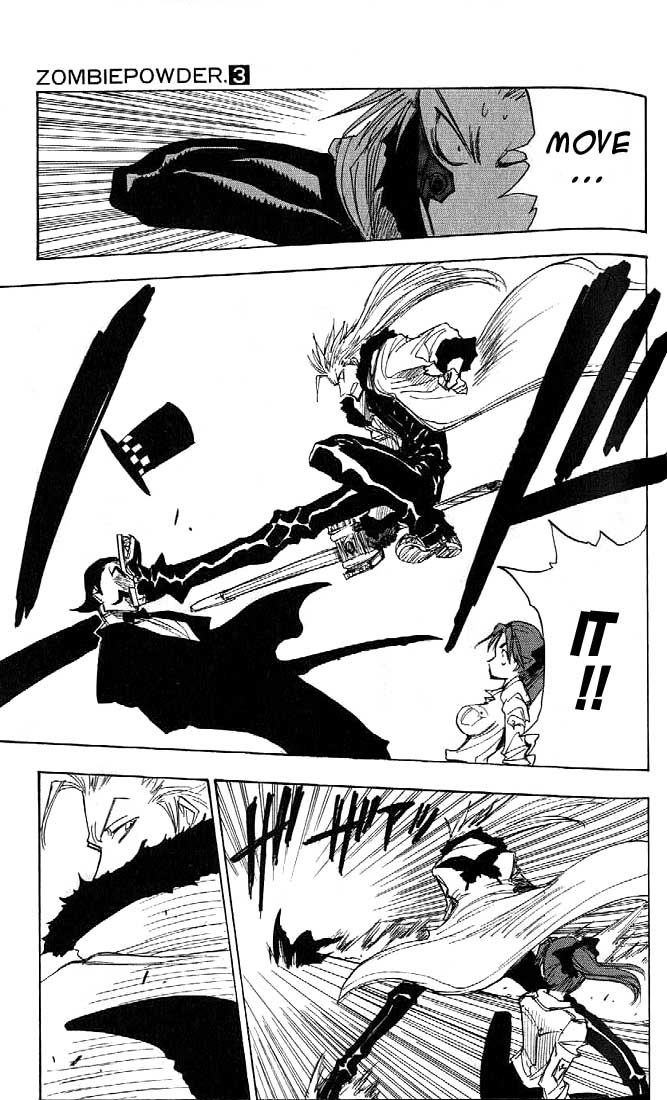
Kubo’s artstyle and linework have always been immensely stylish. Even though I have never seen or read much of Bleach, I can tell you that his design is instantly recognisable and very pleasing to look at. Clothes are wonderfully designed and fitted, characters have sleek shapes and sharp features, and the action makes it all shine with simple to understand panelling and framing.

x11

x17 (1)

x18

Simple, clear, and straight to the point.

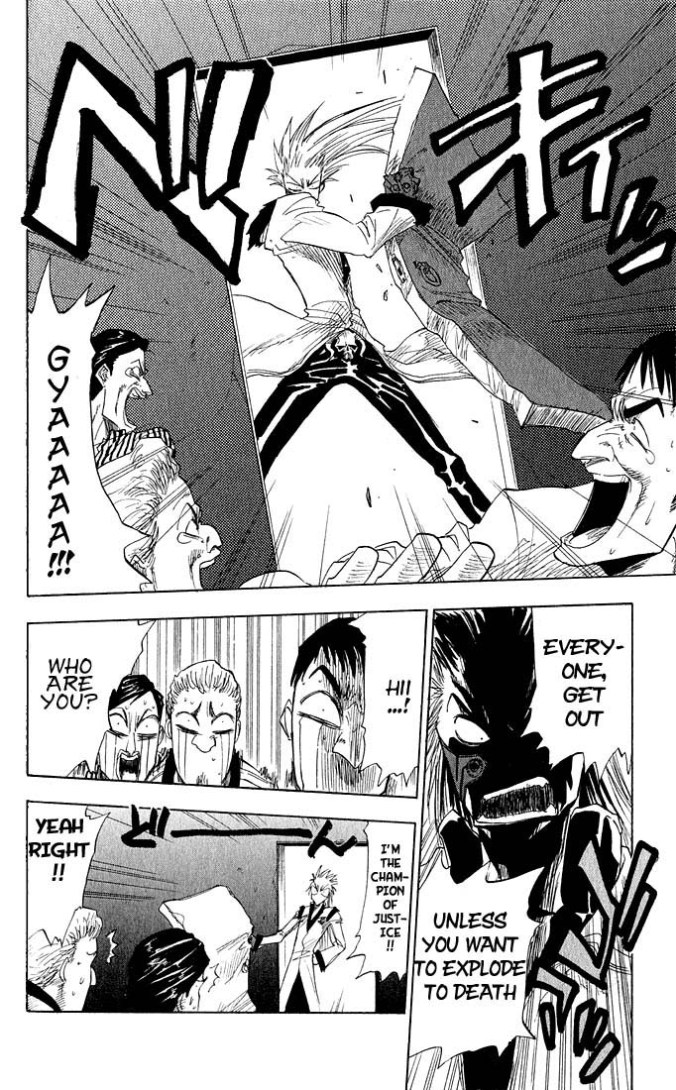
The tone of the series alternates between “serious” and “goofy” quite easily, and the characters can carry it as well. The more outlandish moments serve as nice breathers between the onslaught of action.

x37

From serious busting through a wall…

x9.jpg

…to silly busting through a door.

And there is A LOT of action in Zombiepowder, the series consists of battles pretty much every chapter, and – surprisingly – it works! Characterisation is interwoven with the respective fighting styles of the protagonists, everyone with their own strengths and weaknesses. Cool stuff happening with cool people, nice.

Gamma Akutabi’s design, the silver hair and coat, together with his chainsaw sword and later magic use was a design I particularly loved, and sadly it had to go too soon. He could have been a classic Shonen protagonist to stand alongside others, even with the slight accusations of Kubo taking too much visual inspiration of Trigun and Western/Mad Max settings à la Fist of the North Star and Battle Angel Alita.

xff46

That’s rad.

While I recommend reading Zombiepowder to everyone, it’s going to be interesting what you take away from it.

It’s pre-Bleach, opening itself up to comparison, but it’s also its own thing of a young upcoming artist trying to find his voice.

It’s also a short Shonen riddled with strange decisions, as Kubo says in the behind-the-scenes: This was his first work in the magazine Shonen Jump, and he was under “great emotional trauma” while drawing Zombiepowder – due to the crushing workload of having to produce a chapter each week, and due to him not knowing how to communicate with his editor, sometimes taking decisions he didn’t want to, accepting them without discussion.

The manga ends abruptly as well, it manages to round off its first arc, and then suddenly introduces three finishing chapters with many new characters and a sort of style-breaking feeling. While I was not a fan of how it leads to the ending – it leaves two protagonists behind in an uncertain path and has some questionable character designs – it does leave on a nice, if short bitter-sweet note.

If you wish to read Zombiepowder, I will recommend the physical release in 4 volumes, as it comes with a lot of making-ofs, other early Tite Kubo manga (which are all worth of analysis as well), special artwork and even a playlist of music for every character in the manga. Hey, I didn’t knew Kubo liked Rhapsody, an Italian powermetal band, one of my absolute favourites!

Conclusion

Essentially, this manga is a great stepping stone into a genre that Kubo would help to shape, and a short fun romp by someone who would later on do great things. To my personal shame, I must confess that Zombiepowder was the reason I put off Bleach for a decade: Gamma Akutabi and his gang were so energetic and fun, that Ichigo Kurosaki and his friends paled for me in comparison. Given, of course, that I had only read the first volume of Bleach, but alas, I was having more fun with this Wacky Western than Supernatural Highschool.

10 years later, it’s still very fun, even if a bit wonky in retrospect, and I will check out Bleach soon, it’s about time I reckon. And while I do that, walk the path into the other direction, and check out Zombiepowder, and see how you will like it. It may not be your new favourite, but it will be a powerful time capsule to rediscover.

x3 (3)

The End.

Sources: Zombiepowder Wikipedia, Zombiepowder making-ofs (Physical Release, Tokyopop)

MANLY MONDAY – “Thumper” That Inescapable Lovecraftian Rhythm Violence

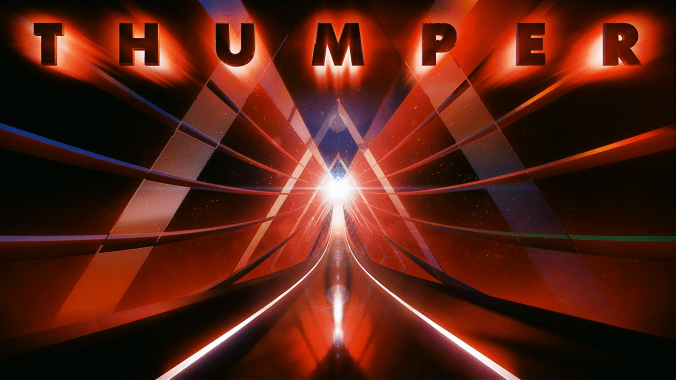
thumper_cover_loop.png

I love rhythm games. The combination of music and gameplay that comes together with precise timing and satisfying crispy button presses is always great fun. It can make your adrenaline rise like nothing else, make yourself dissolve into music, thinking only about keeping and following the rhythm. And once you succeed at a very hard level, you can relax and marvel how you even made it through that onslaught of notes.

Quite a few games have accompanied me in the past, some even right into the present, Donkey Konga (with bongo controllers!), Elite Beat Agents (basically Proto-Osu!), Love Live School Idol Festival (my first entry point into the Love Live franchise, don’t look at me like that), Final Fantasy Theatrhythm (Why is “One-Winged Angel” DLC?), and Audiosurf 1 & 2 (which let you play your own music!). It is a little dream of mine to own a Dance Dance Revolution arcade machine one day, as I ever saw them in films and my country doesn’t have arcades – and people who know me in real life know that I will immediately play it if I encounter one. I’m not super good at DDR, but, goddamn, do I love it.

Once I saw the trailer for this specific game here last year ago, I was interested. It looked sort of like Audiosurf, but more intense, far more intense. However, it just trickled to the back of my mind to stay there, not a huge wish to immediately pick it up, but maybe I would give it a shot one day. And as one Steam sale rolled around, I finally bought it for myself.

It was a trip I had never experienced before.

437132-Thumper crystalline

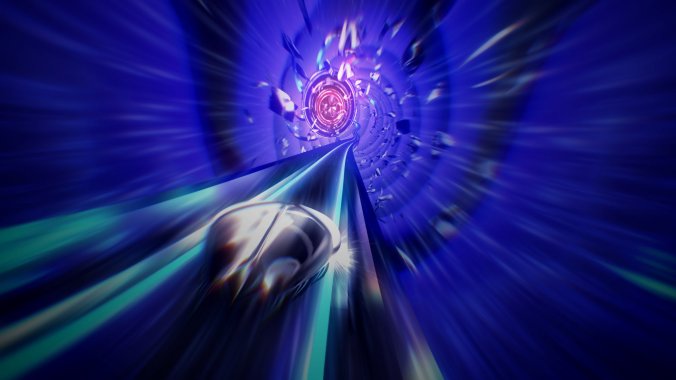
The game was called Thumper. You are a little metallic space beetle, rushing along a single path in an unknown galaxy. Little spots of light are on your track, you press a button to hit them with a shockwave. Some metallic barriers will spring up in curves, so you need to lean in with the control stick to not frontally hit them. And sometimes, laser barriers will get into your path that you must speed through while holding the same button. Essentially, all you need it a control stick and a button. These obstacles follow the same rhythm as the music, no problem. It’s one big track separated into little segments, you can even quit midway through a song and return at a later time. As simple as that.

Or so one might think.

This world is visceral, dark, haunting and fast. Two hits and you’re dead. When you hit a curve barrier or a laser, your metal wings get blown off, leaving you only with your riffled little beetle body whizzing along a nightmarish highway through space. Of course, you get your wings back if you finish a section of a level, but it puts pressure on you. You want to protect yourself and your beetle. What your beetle does or what they feel, but the goal is clear: forward. The only way is forward for you and your space beetle.

And the most driving factor of your quest forward is the music. Although, can it be described as music? I had extraordinary fun with Donkey Konga and Elite Beat Agents, as they feature songs from Earth, Wind and Fire, Queen and even Smash Mouth, all songs you recognise and can sing along to to your heart’s content. They make you tap your foot and bop your head to the music, and they will be earworms for the rest of the day!

Not so in Thumper. You cannot sing to Thumper.

The music is a beat, from ‘calm and eerie’ to ‘loud and clanging’, and you are building on the beat by interacting with the obstacles that come at you: barriers make a “clank” sound and “swoosh” past you as you lean so far into the curve that the rear end of your beetle touches the wall for a second, the spots of light go “booom” as you give them a shockwave, and the laser barriers break with high “click click” sounds. To that, once you notice that you can spread your wings to fly, a risky but rewarding move, you can add “ding ding dings” as your metal wings break little light arcs above the track. And once you manage to successfully fly and land from soundwave to soundwave spot, you smash downwards with a satisfying “FOOOOMF” that even makes your screen go into slow-motion for a second.

To all of this rhythmic noise in time signatures foreign to untrained ears comes the background – a deep, heavy sound carpet that spreads all over, a dissonant and intimidating soundscape that does more than just to amplify the empty space you fly in. You notice it, this is more than just a long metal highway through the galaxy, it is something else. And as the track suddenly grows insect-like legs and narrow geometric tunnels that close in on you, the doom orchestra in the background doesn’t stop with its loud drums and haunting strings, all it does is pushing you forward, forward, forward – towards what? What is the goal? What is the purpose? The bosses are too big to understand, too strange to grasp, fighting in ways you need to analyse to survive, twisting, disrupting, blocking your path, that never ending path hurtling towards them. You need to follow the beat to continue. The droning beat dictating your heart.

thumper4.png

To make a long story short: Thumper is a lovecraftian rhythm horror game.

“Horror” not the sense of spooky imagery or jumpscares, “horror” in the sense of existential dread and the fear of not knowing what will come next. New types of enemies may appear, the music might change, or tunnels might block your view, pushing the reaction time further down. All with that fast and immense pressure of timing, understanding and reading in a matter of seconds. The visuals in combination with the music alone are haunting, putting you in a state of alertness, but what is the true kicker is the gameplay, which merges perfectly with the rest – creating one cohesive dark beauty.

This game is difficult. The learning curve is steep, but it remains always 100% fair. If you died, it was absolutely your own fault for not reacting in time. Every obstacle is clearly telegraphed, not only with a distinguishable colour and look (sound spots are blue, barriers are red-silver and appear vertically, lasers are red-only and appear horizontally) but also with a sound. Barriers come up with a big “clack“, lasers shoot in from the side with a “clink” and enemies slither in with a “shhhhh” or intimidate you with a loud “BWAAM“. Combining with all of these sound words I already described earlier: That’s a lot of noise. Noise that becomes music. Noise that is useful.

I have talked a lot about this game now, and haven’t actually shown you any gameplay footage yet. Take a look at the trailer:

It’s an onslaught of information, strange imagery and rhythmic loudness that wants your full concentration and focus. Game marketing loves to talk about “immersive gameplay”, but I have rarely seen it more fitting here. The game draws you in with its carpet of noise, the ungraspable atmosphere and quick, unforgiving, but fair judgement of your skills. As I said, the game is fair, the learning curve is steep, but it never feels disheartening. This game pushes you to go forward, forward, forward – the same way your little beetle goes forward, forward, forward. And the only way to do that is to simply ‘git gud’.

I only played it with headphones, which I highly recommend, and there is a VR version available as well. From what I’ve seen in other reviews, this version is even far more intense, and my head-phones-only adventure already was. You will be frustrated, you will put the controller down, only to return after 2 minutes, as the noise and the lights draw you inside again. You will scream, yell, be relieved, celebrate and curse a lot, and that’s beautiful.

Conclusion

Thumper is an intense game that I would recommend to everyone who loves fast and furious precise gameplay with strong immersion. It’s “short”, with only 9 levels, but you will have to bite and fight yourself through those, so I was entertained for a few weeks. Post-game contents include world-wide leaderboards, highscores and rankings, and you will love to return to it and be astonished at how fast your accumulated skill crumbles apart again.

The “story” is simple, if there even is any, and yet it managed to surprise me in the end with one of the most memorable and gameplay-bending end bosses. Any game that can make me have my jaw fall to the ground in surprise and dread is a great one, and Thumper managed it several times.

If you like rhythm games, this one is a must-play for you, for everyone else, this is a trip you should not miss out on. Dive into the lovecraftian world of noise and loudness, and fight your way forward and ever forward.

3138612-thumper-screenshot-boss-hit-ps4-us-5jun15

To infinity and beyond.

The End.

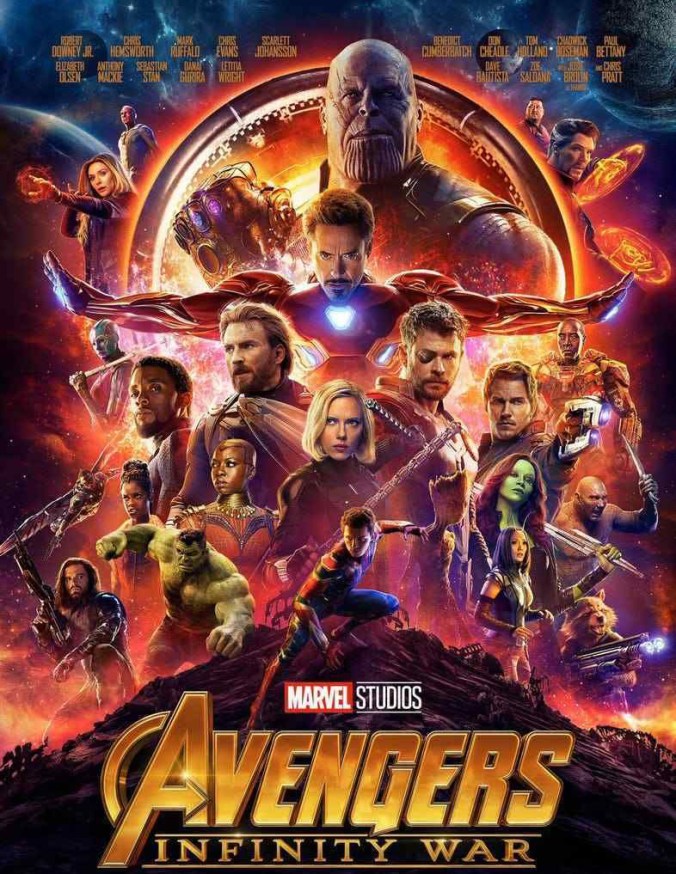
MANLY MONDAY – “Avengers: Infinity War”, The Grand Finale 10 Years in the Making (SPOILER-FREE REVIEW)

dadd9e76fa61ca787557cf8ce6a7d8a1.jpg

Way, way back when I was a little kid in the midst of Europe, I didn’t grew up with superhero comics. My heroes were “normal heroes” with inseparable partners: Astérix and Obélix, Tintin and Haddock, Don Rosa’s Donald Duck and Uncle Scrooge stories, Vicky the Viking and the crew of his dad, or Alfred J. Kwak and his friends.

This all somewhat changed, when Spiderman by Sam Raimi hit the theatres, I must have been around 11 years old. I was just so fun! Spiderman 2 cemented that wonderful feeling, I went to see them with my childhood friend several times in the cinema.

The Spiderman 2 Gamecube game thus also holds a special place in my heart, not only for being a splendid game with a fantastic open world, but also for my childhood friend and me beating the final boss together. We both held the controller together, one pushing the button to dodge, the other with the punch button to wait for an opening to finally take down that villainous Doctor Octopus. What a wonderful time that was, to see the joined effort come together and to celebrate in the flicker of the end credits.

Many years later then, when I was in middle school, I heard of Iron Man in 2008, and I was surprised. There are even more heroes? And apparently they had been around for many decades? In comics? Like my Tintin and Astérix? My nostalgia was not for them, Spiderman was a lovely memory of my past, but nothing that would carry significantly into the present.

Iron Man and Thor were fun, the rest was so-so or didn’t even catch my interest, and when it was finally revealed that all these heroes would come together in a thing called “Avengers”, a name I had never heard before, I remember sitting in the cinema and muttering after the title came on screen: “Oh man, I would so laugh if this film sucks.”

I would be very wrong.

rFtsE7Lhlc2jRWF7SRAU0fvrveQ

Because it was very, very fun.

Avengers showed that the big superhero crossover was possible. Many heroes with backstories in their own films, then coming together in another movie, leaving time for the crossover event itself, not needing additional time for character introductions or presentations. Even the villain, Loki, had been introduced before, getting his chance to shine – with many jokes, big action setpieces and a simple, yet engaging plot, Avengers took the world by storm. In the background, it was also building up to something.

More heroes got introduced, the universe got bigger. Antman got my interest, as it was by one of my favourite directors, Edgar Wright, and even if he didn’t direct it in the end, his tone shined through, making it immensely fun. Guardians of the Galaxy came in with technicolour rainbow fun and an oldschool groovin’ soundtrack, and then the second Avengers rolled around, not as super satisfying as the first one, but still a great time in the theatre. And it was still building up to something.

Phase Three rolled around, where Marvel really got into their groove, and here you will find my favourites: Thor: Ragnarök and Guardians of the Galaxy Vol.2, films which combined emotional strength and comedy to entertaining cohesive bundles of joy – Doctor Strange and Spiderman: Homecoming also being very strong entries that I would wholeheartedly recommend. And they continued to build up to something.

That something has now arrived, after being 10 years in the making:

Avengers Infinity War.

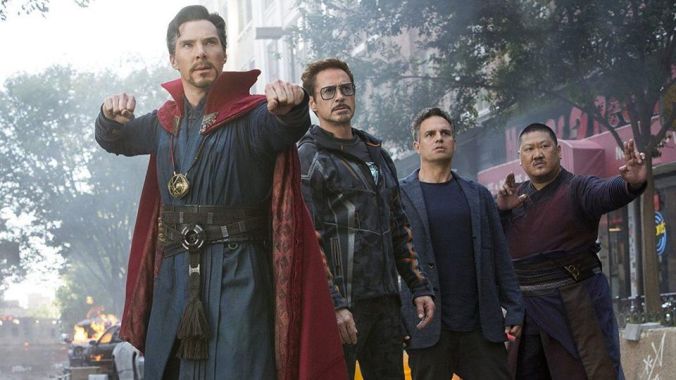
https_blogs-images.forbes.comscottmendelsonfiles201804MV5BMTU3NDExMjQyNl5BMl5BanBnXkFtZTgwMjk2MTUwNTM@._V1_SX1500_CR001500999_AL_-1200x675

Just a fraction of the gigantic main cast, with three intersecting franchises: Doctor Strange, Iron Man and Hulk.

A gigantic threat is looming upon the galaxy: Thanos. A galactic overlord who wants to collect all six Infinity Stones, which grant the power to rewrite reality if they are combined into one weapon – a gauntlet in this case. In many different films before that, we know where the Infinity Stones are, and in some, they even played very big roles.

The plot is simple, yet effective: Thanos is coming, he must be stopped. And in order to do that, the power of all the Avengers and their friends is needed. Good guys set out to defeat the bad guy. Simple, straightforward, boom, done.

However: It’s the execution where this film shines. To take over 20 main characters and fit them into one big story is not an easy task, but it succeeds in an entertaining and satisfying way. Not all characters appear at the same time, they enter the stories at different points, and then get split up into groups. Some combinations are logical, the Guardians of the Galaxy are one group, surely, and Iron Man will team up with Spiderman, that much is clear from the previous films.

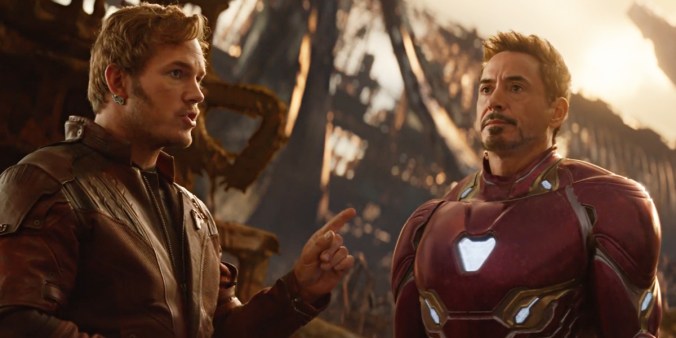
Avengers-Infinity-War-Cover

This team-up can only go well. Just look at them.

But over the course of the film, they get re-shuffled, and go to their own intertwining substories, and this is where the main fun is to be had. As the audience already knows all of these characters, the burning question is: How will they all react to each other? Will they get along? Will there be banter? Or will they end up as a harmonious bunch? Some of these combinations I had never seen coming, and also never expected them to work so well. Especially [backwards: tibbar hsart eht dna dog esron eht] was a duo that really hit home, and if you would have told me that before, I wouldn’t have believed you.

The character interactions are where the fun lies, and the smaller teams with unique combinations keep everything fresh and interesting. (Hence, I would also recommend that you watch many of the MCU films before Infinity War, if not all. Some people will tell you different things on what to skip or not, but I think most people will agree that you will absolutely need Thor: Ragnarök and Guardians of the Galaxy Vol.2, as the events of the two lead directly into this film.)

Of course, not everything is fun and games in this film, there will be emotional moments as well, and these blend perfectly into the comedic segments. It never feels like one mood is overstaying its welcome, the mix between “funny and sad” is balanced out extremely well, and gives a great flow to the film. In the 149 minutes of film, I never felt as if it had lengths or dragged out moments, everything felt snappy, powerful and going forward.

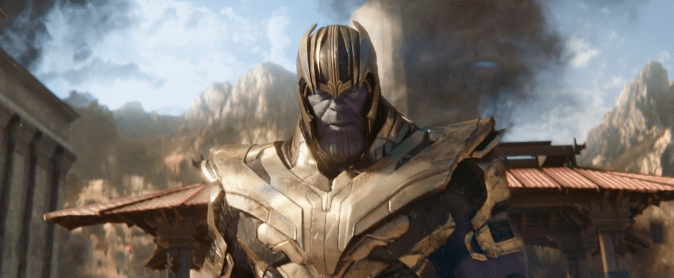
In addition, the villain of the story, Thanos, is given enough room, and even his own parallel plotline, so that he receives depth as well, making him one of the best, if not the best villain in the MCU so far. All I can say is: This finale (or rather, the first part of the finale, as the continuation will be next year) was absolutely worth the time waiting.

Screen-Shot-2018-03-16-at-12.50.13-PM.png

Sidenote: I also want to praise Klaus-Dieter Klebsch as the German voice of Thanos, he is one of my favourite voice actors, and he was born for that role. He has spoken many villains from my childhood as well, maybe adding that little bit of extra to my enjoyment.

Conclusion

Back in 2008, when I was saw Iron Man with doubtful eyes, I could have never imagined where it would all lead. I was proven very wrong in my prediction, and I am pretty sure that many were too, such a big film franchise had never been attempted before, and some other franchises have tried to copy it afterwards, but nobody achieving it to this extend.

While some initial films of Phase 1 or 2 were drab or not very engaging, Marvel has now found the perfect formula of entertainment, big bombastic fun with an equally big, beating heart, that ties everything together emotionally.

And Avengers Infinity War also managed something that many films hadn’t done recently: to surprise me. Not only in shocking moments, but also in emotional ones I hadn’t seen coming, without being “out of nowhere”. It’s a tight bundle of many cohesive and strong storylines, that comes together after many, many years. And it was beautiful.

Behind me in the cinema was a little kid with their parents, maybe 11 years old or so, and it was very well behaved, didn’t interrupt others, enjoyed the film and only occasionally spoke something out loud. And yet, I couldn’t help but smile at the little hollers and exclamations of “Oh no!”, “Yes!”, “Whoa!” and several very big “What?!”.

I remember a little kiddo also sitting in the cinema, being very excited about Spiderman 2, and looking forward to seeing my fantastic super heroes on screen, and going to see the films several times in the theatre, smiling at the visual fireworks of action and heart in front of my gleaming eyes.

The eyes full of doubt from a decade ago were finally shining again like they did on this very day.

The End.