
In the vast landscape of manga, there is a niche. A tiny one, apart from all the others: The Bara genre, or Gei komi. Gay manga for gay men – far away from the feminine bishonen look of Shonen-ai and Yaoi. This is a genre of sexual content that the favours all male body types. From big to short, to curvy or hairy. Generally: A lot more “manly aesthetics”.
To understand this niche, you need to know: Being gay in Japan is not easy. Traditional world views are still in place, heterosexuality is the norm, homosexuality is seen as just “something silly” on TV. It is not being talked about, and swept under the rug. Coming out is hard, and parents will be highly disappointed or flat out destroyed at the prospect of not having grandchildren.
How does one deal in this environment as a gay person? What is this society? How can we talk about this? Here, Gengoroh Tagame comes in.
The grandfather of Bara/Gei Komi is Gengoroh Tagame. Born in 1964 and openly gay, he is the one that brought the overlooked, tiny genre to new heights – with explicit drawings, historical settings, and a lot of BDSM works, ever since the 80’s. (Please do not “Google Image Search” his name lightly, his art is extremely explicit NSFW.)
In 2014, Tagame would start his first mainstream, not sexually themed manga, in Monthly Action – the magazine that recently published “Orange”. A manga about LGBT issues in Japan, that was the plan. But he would not be angry or preachy, do something shocking, or try to disrupt the social norms – no.
He decided to do a Slice of Life manga.
This is “Otouto no Otto” or “My Brother’s Husband”.
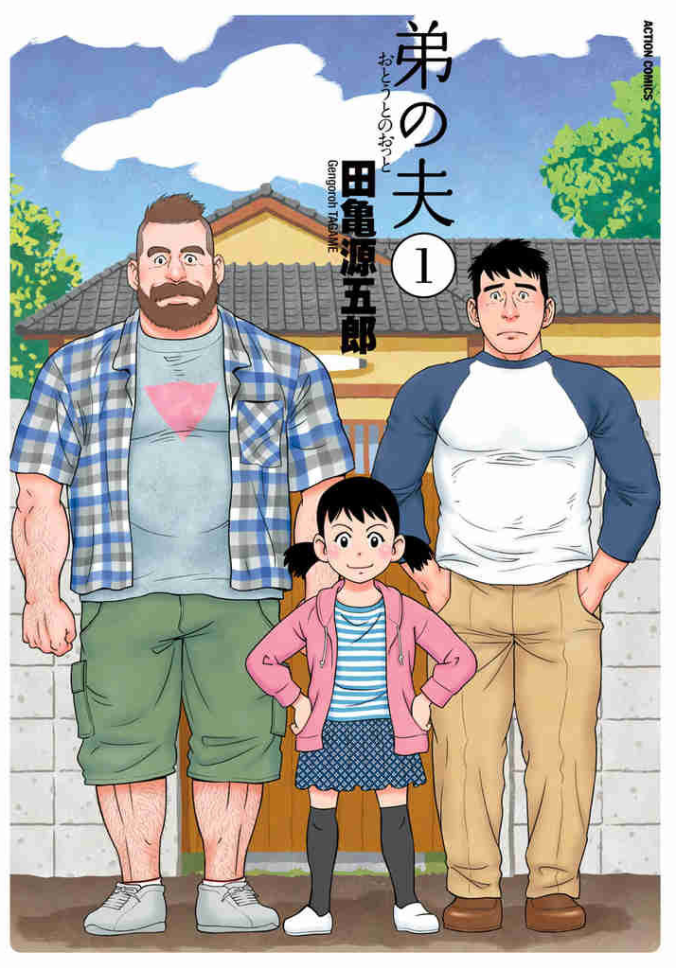
Story
Yaichi and Ryochi were twin brothers, but their parents died when they were young, and so, they tackled life and its difficulties together.
But one day, Ryochi outed himself as gay, and went to Canada, to live his life the way he wanted to, leaving Yaichi alone in Japan. Apart from each other, they lived their lives. Yaichi is now a grown man, and a stay-at-home single dad, living with his daughter Kana.
Unfortunately, Ryochi died just one month ago, leaving Yaichi in grief. But right now, this is not his biggest worry. Someone he doesn’t know is about to visit his house.
It’s his late brother’s husband.
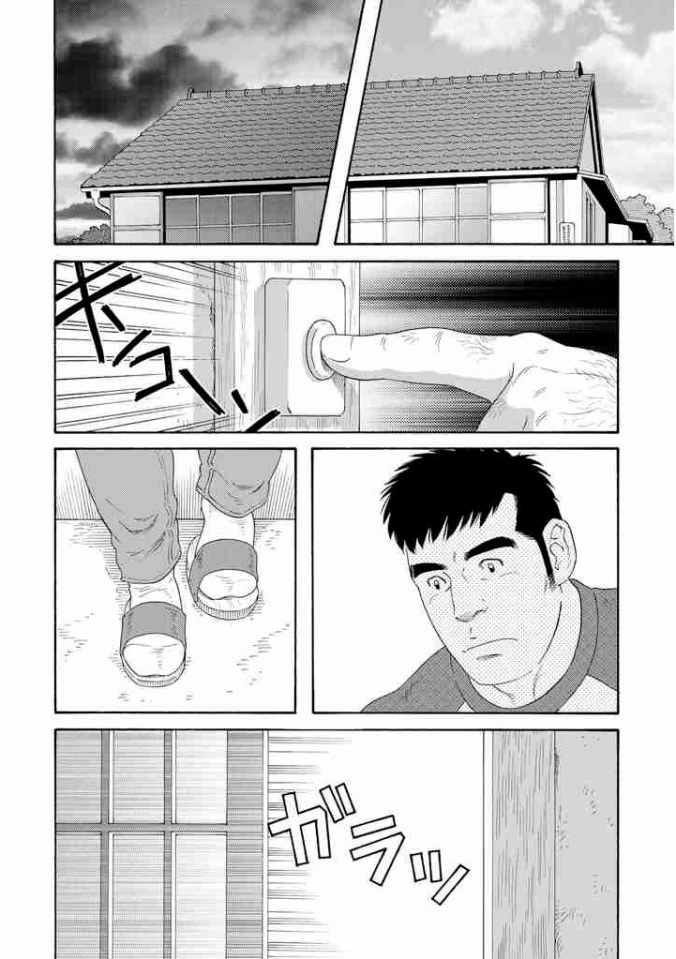
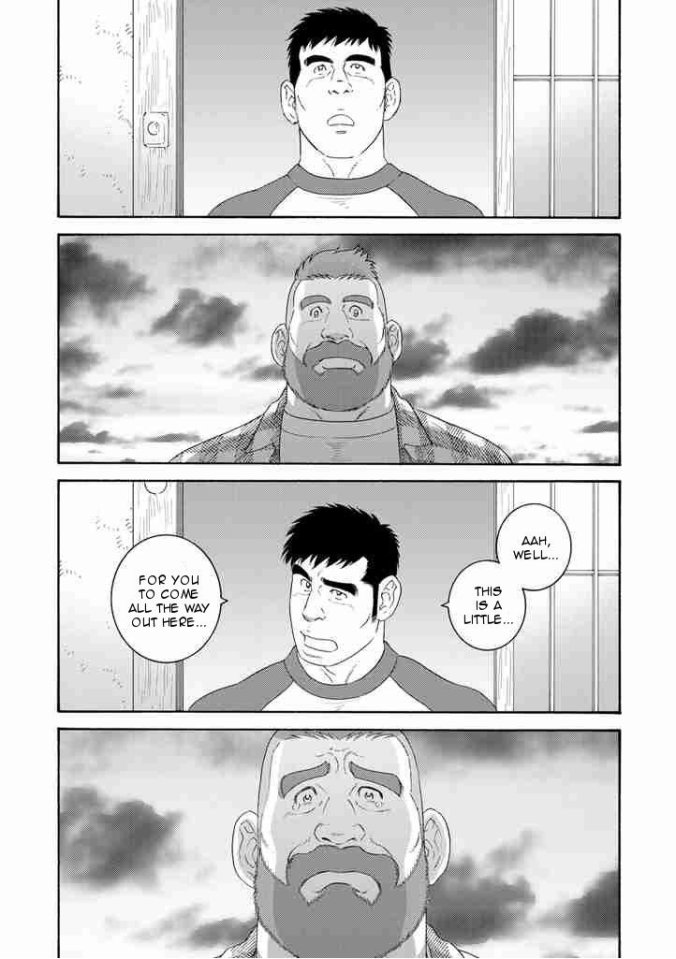
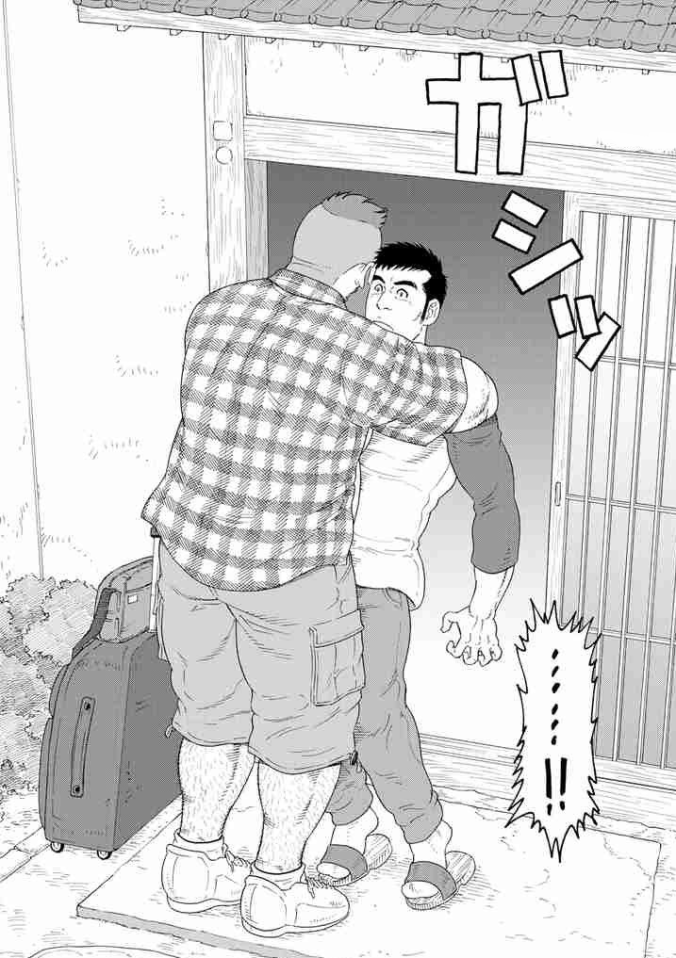
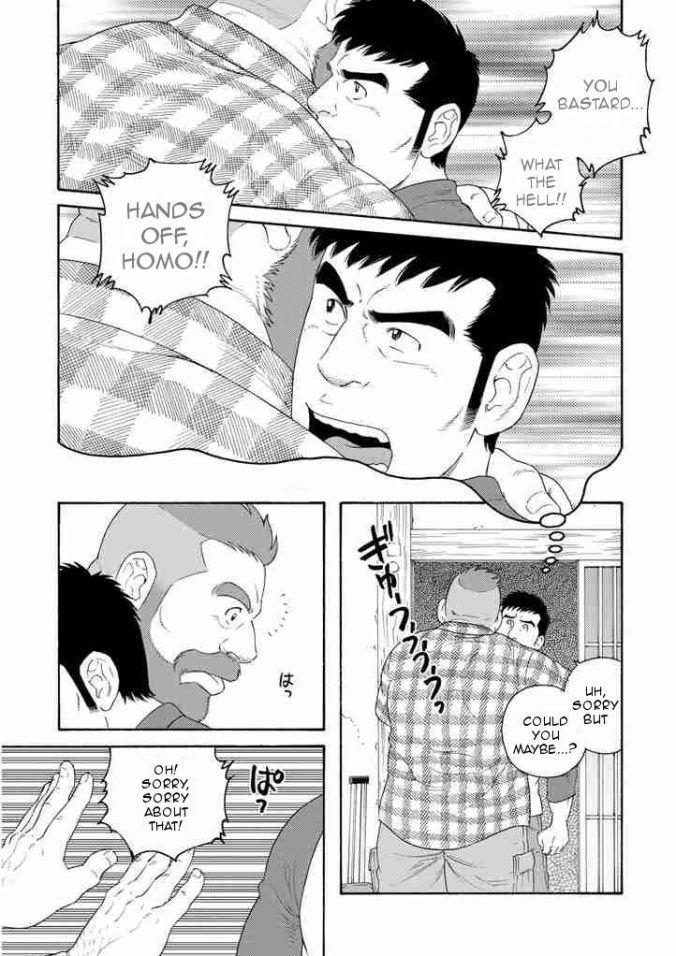

Unfortunately, initial awkwardness happens.
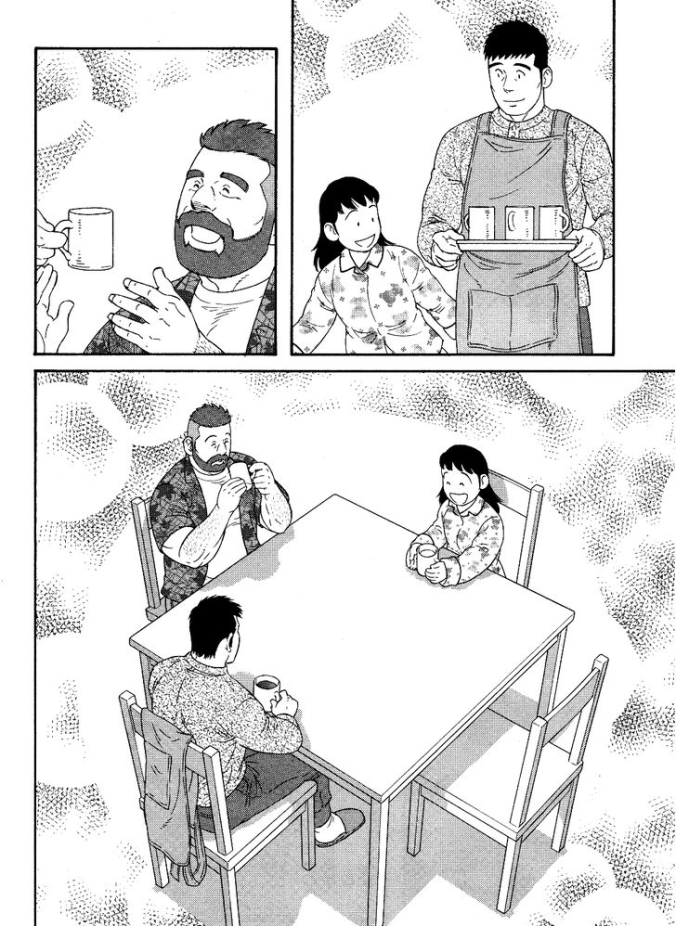
And thus, Mike, a big, bearish Canadian man, enters his household for a holiday. He was married to his twin brother Ryochi, and, now a widower, he wants to visit his late husband’s family and country, to see how he lived and to share memories.
Yaichi is not really amused by this. Of course, family is important, he can’t simply ignore his brother-in-law … but he is not comfortable with having “this homosexual foreigner” under his roof.
His daughter Kana, however, is different.
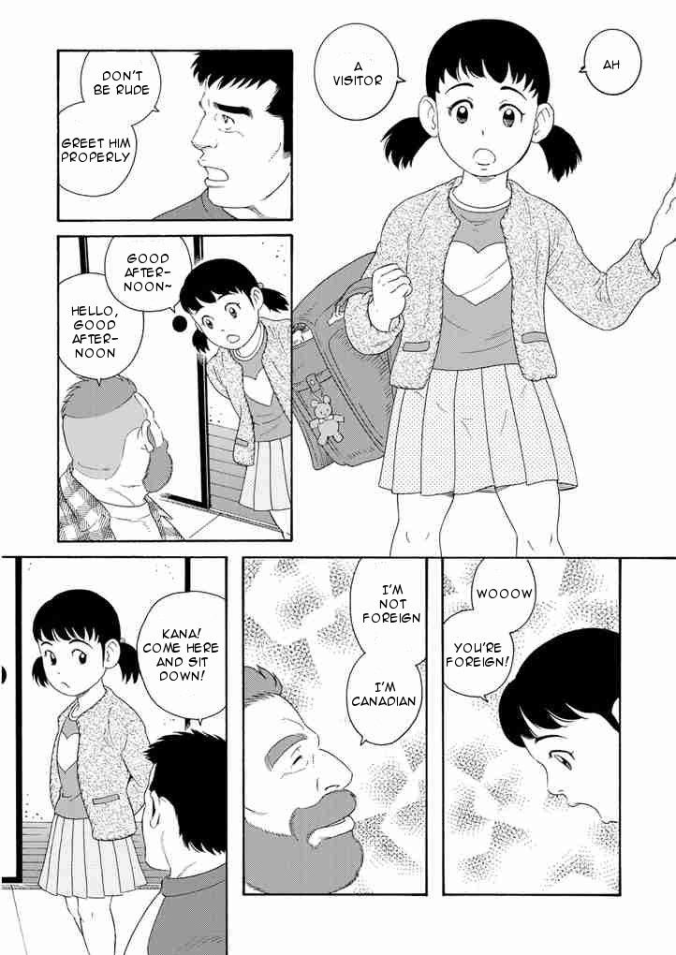
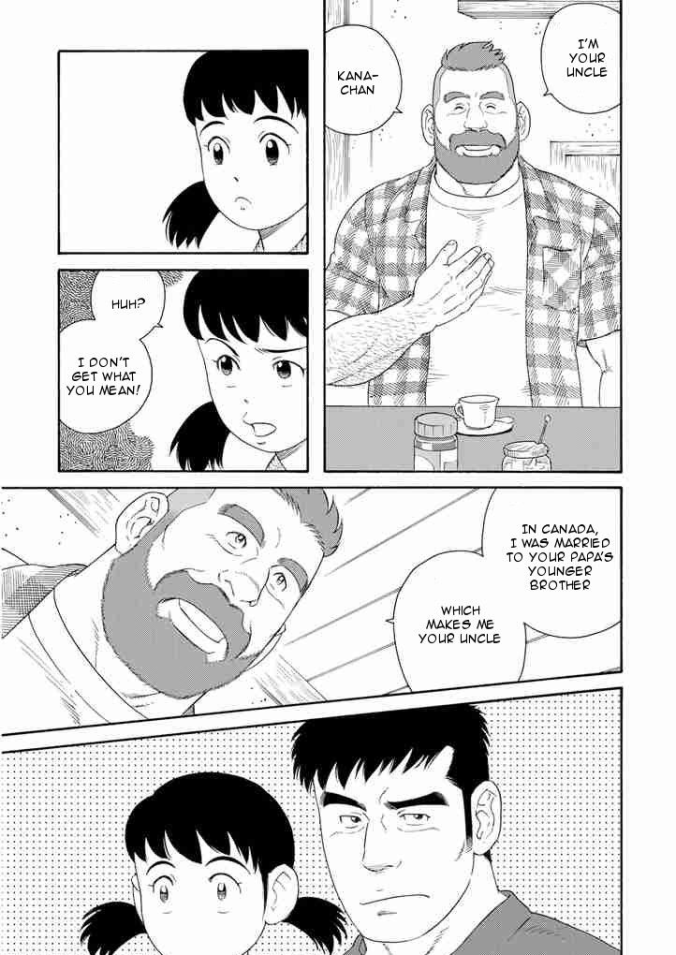
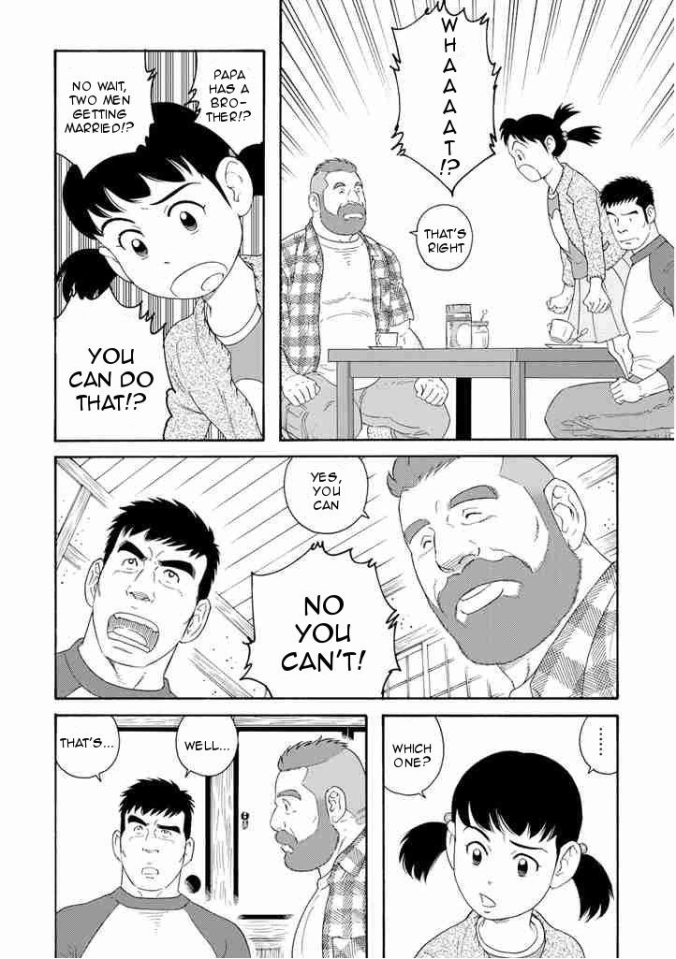
His daughter Kana is experiences her first culture crash.

But in the end, she is happy!
And so, the slice of life story of Ryochi, Kana and Mike begins.
Culture and Understanding
This manga is a cultural and social observation, from three different point of views. Ryochi, the rather reserved and lightly traditional Japanese man, sad about his brother’s death; Kana, the young child who sees no problem in having a new uncle; and Mike, the gentle grieving widower, who wants to experience his beloved partner’s culture and explore the past.
The main strength of “My Brother’s Husband” is the portrayal of culture and society. It would be way too easy to say “Japanese society is bad!” and just leave it at that. Instead, this manga becomes a story of sharing: culture, stories and memories.
Mike is interested in visiting Japan and its culture, he is very happy about it, although he sometimes still makes cultural mistakes, like hugging people, or pronouncing names wrong. Ryochi hadn’t seen his brother in many years, and he is interested in hearing how life was in Canada.
To present his country in the best manner possible, Ryochi integrates Mike into his household, doing day to day things togther, and going on trips, to explore Japan and to explain this new, interesting culture to Mike who only knew it through his husband.
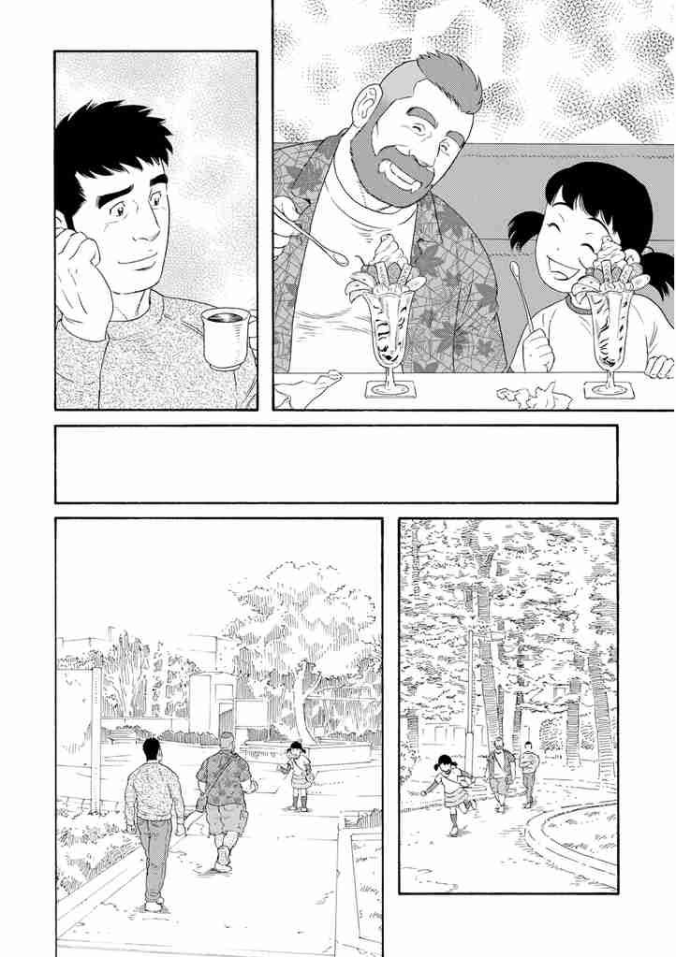
Slice of Life goodness.
Mike has seen a side of Yaichi that Ryochi never saw, while Ryochi has only memories of his brother when they were younger. Kana never got to know her real uncle.
Hence, the dialogue becomes important in the story. It evolves slowly into more than sharing history, and both men soon start talking about their feelings of loss and sadness, as they open up to each other. The two very different men become friends.
While the “slice of life moments” are really heartwarming and lovely, this manga can really hit you hard with emotion. Both men are in grief – one has lost his brother, the only family he had left, the other one has lost his beloved partner for life.
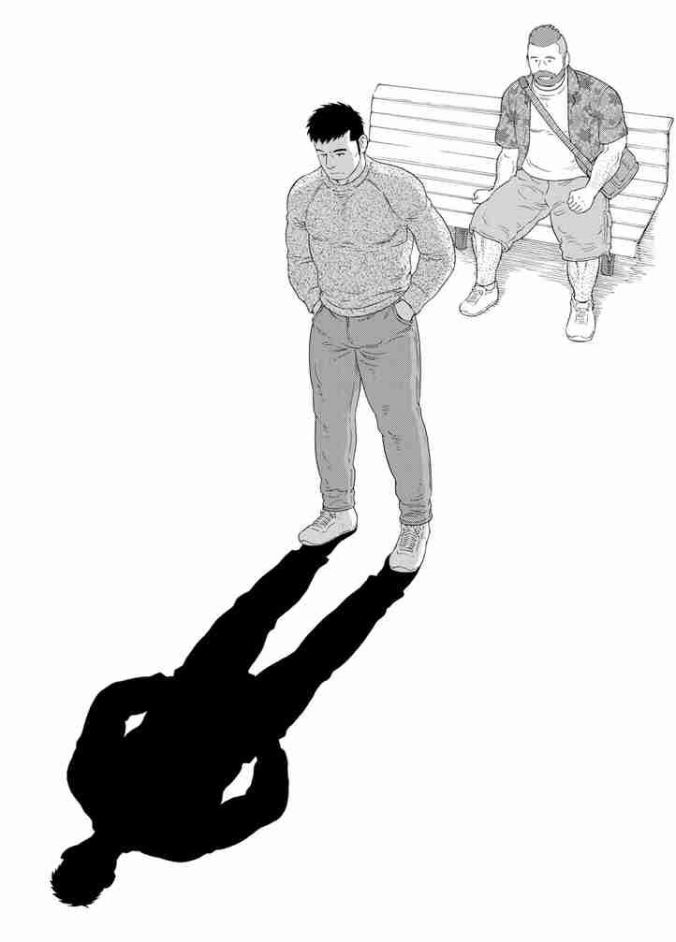
The shadow of his former twin brother…
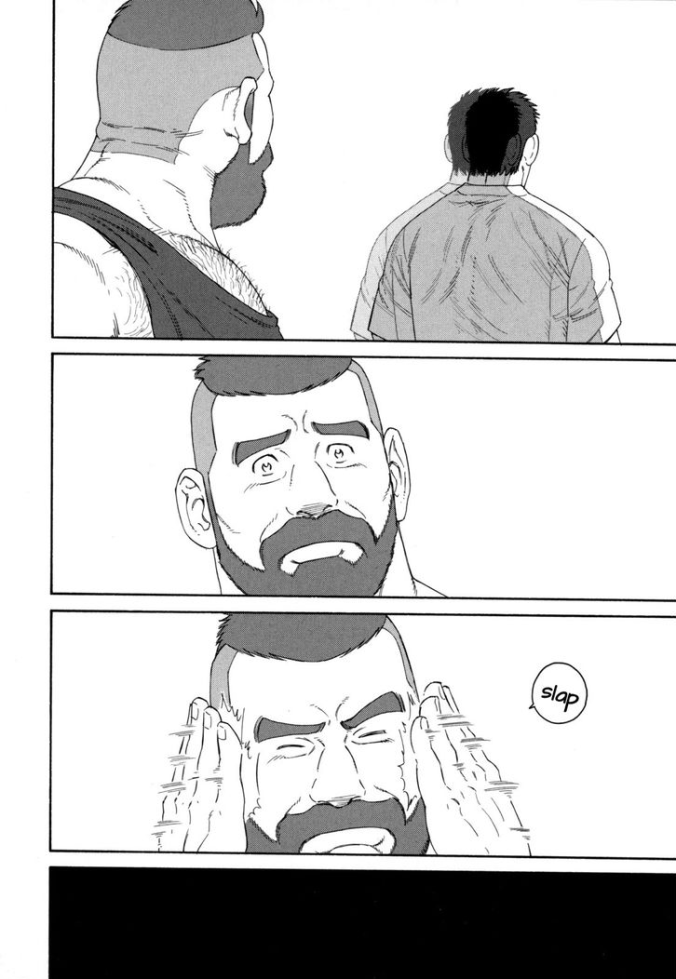
… and the image of his late husband.
Conclusion
“My Brother’s Husband” is a melancholic, yet heartwarming slice of life manga, about a topic that is not often talked about. It approches the theme of LGBT in Japan with great care and love, without ever being preachy or condecending.
There are other themes explored as well, and the cast gets bigger as more people are introduced. I do not wish to spoil the manga here any further, as it is best read blind. It is currently ongoing, with 20 chapters in 3 volumes, and will most likely continue. I am normally not the type to recommend an ongoing series, but the future looks stellar.
If you don’t like slice of life, this is a very skilled and warm approach to it, that may introduce you to the genre. Some people are scared away from SoL, as they often see it as just a genre where “cute girls do cute things”, but this is really not the case here. (You can still see Tagame’s Bara roots just by the detailed and careful way he draws body hair, or men’s physique in general.)
If you like slice of life, I can more than recommend it. The themes of family, sharing and heartwarming togetherness are a beauty.
The manga won the 19th Japan Media Arts Festival Excellence Award in 2015. With other family themed manga like “Barakamon” and “Sweetness and Lightning”, I can only hope that this manga will have an anime one day too, be it just a short series, or even a movie. It fits well as a “slightly more muscly” entry into the Slice of Life “Golden Age” that we are now in. It would not only be a unique take on the genre, but the first time that the genre and authorship of Bara would be recognised in anime – a huge step for LGBT in Japan.
Do yourself a favour and read “Otouto no Otto” or “My Brother’s Husband”, and enjoy the wonderful, not so traditional, lovely family of Ryochi, Kana and Mike.
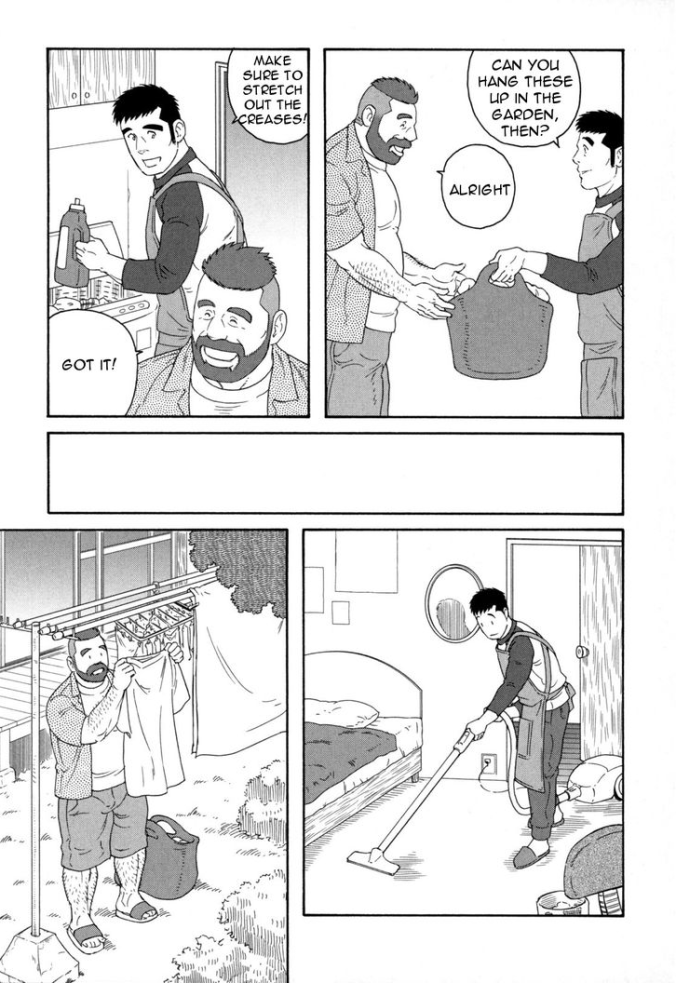
The End
Edit: An English Omnibus release is out now! Amazon Link!
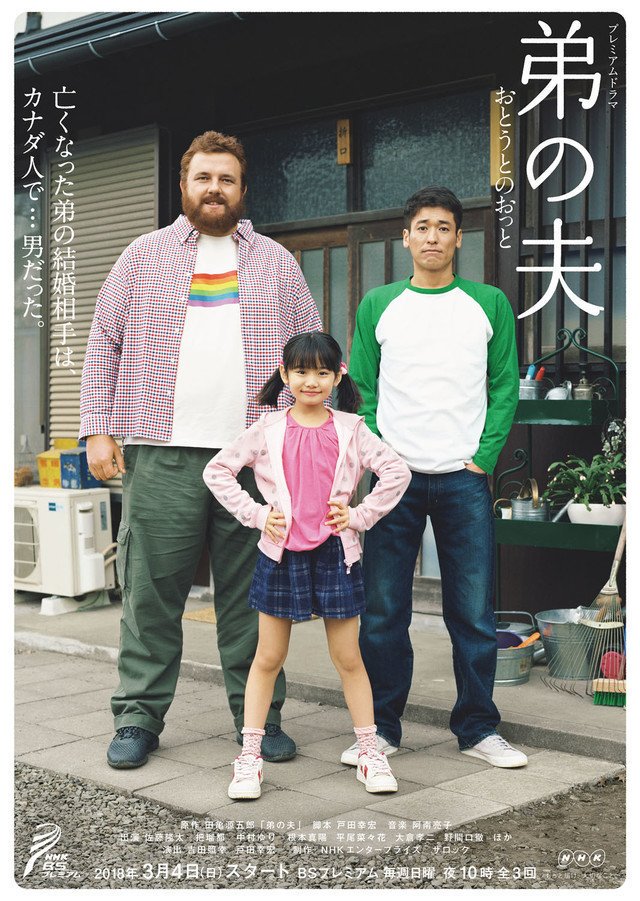
And a TV series was announced to air in March 2018!



















 Elena DS